
The Flight Manual
Step-by-step lawn care guides with zero ambiguity. Difficulty, time, and cost on every mission. Built for Long Island and the Northeast, tuned to Zone 7B.
Start Here
New to the manual? These 4 get you off the ground.Lawn Care for Beginners: Where to Start and What to Do First
New to lawn care and overwhelmed by where to begin? Start here. This is your roadmap: the exact order to tackle a lawn so every step makes the next one easier. Lawn care is a sequence, not a pile of random chores, and doing it in the right order is the difference between a lawn that steadily improves and one you keep fighting. Follow these five phases and use the guide links along the way.
MAP-01How to Measure Your Lawn
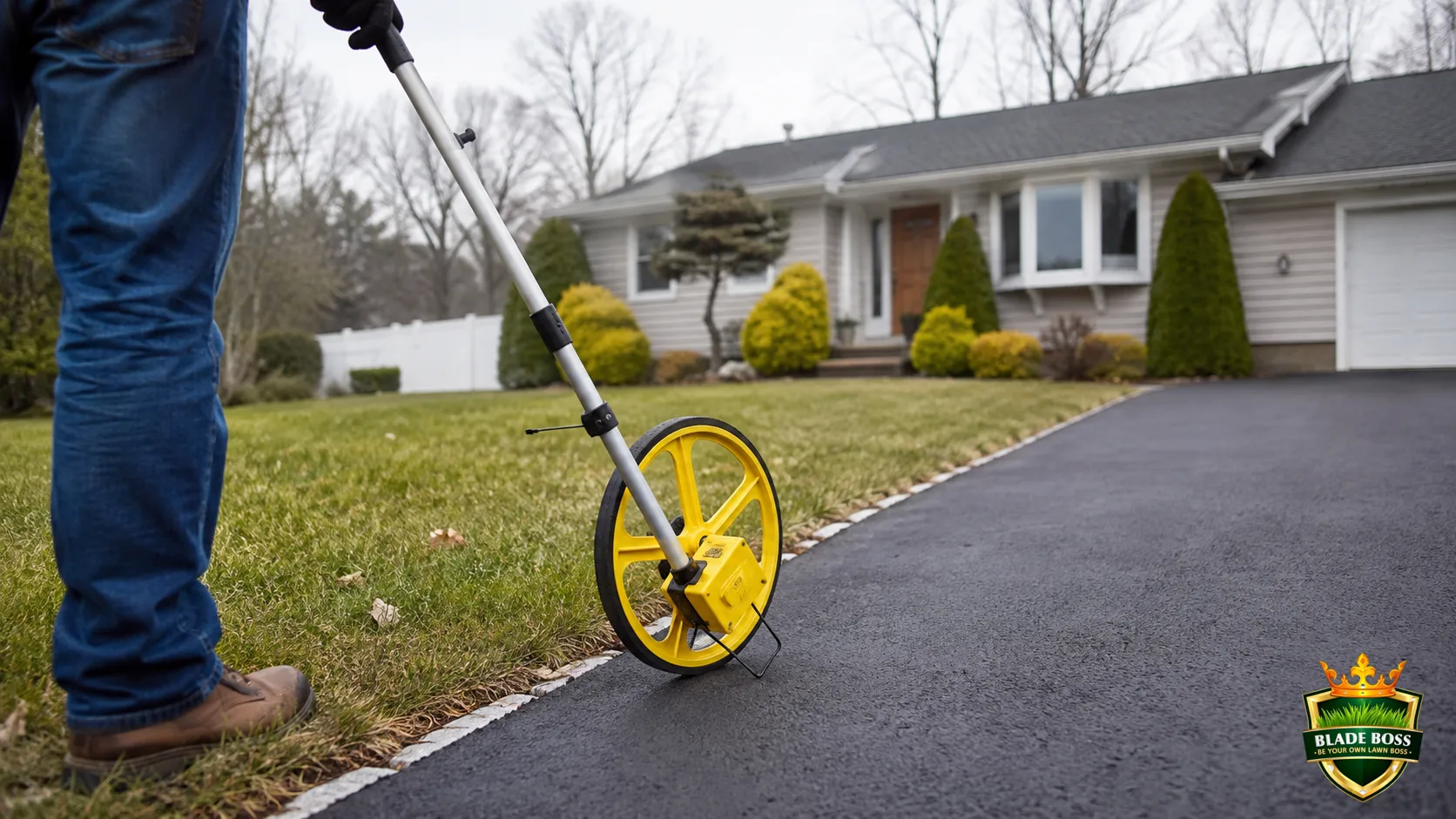
Every product you will ever buy for your lawn is dosed per 1,000 square feet. Seed, fertilizer, lime, grub control, fungicide, all of it. Which means if your square footage is wrong, every single application after it is wrong too, in the same direction, forever. This is the first number you need and almost nobody has it right. Here is how to get it, three different ways.
SOIL-01How to Do a Soil Test
Everything that happens on your lawn starts underground. A soil test is the single highest-value 20 minutes you'll spend all year. It tells you exactly what your soil has, what it's missing, and what to stop wasting money on.
DIAG-00What Is Wrong With My Lawn? The Master Diagnosis Guide
Something is wrong with your lawn and you have no idea what. Start here. In about five minutes this guide narrows your problem down to one of four culprits, a weed, a disease, a bug, or the environment, and sends you straight to the exact guide that fixes it. Do not buy or spray anything until you know which one you are dealing with, because all four need completely different solutions.
Soil & Testing 2 guides
Read your soil and fix what is actually wrong.
 SOIL-01
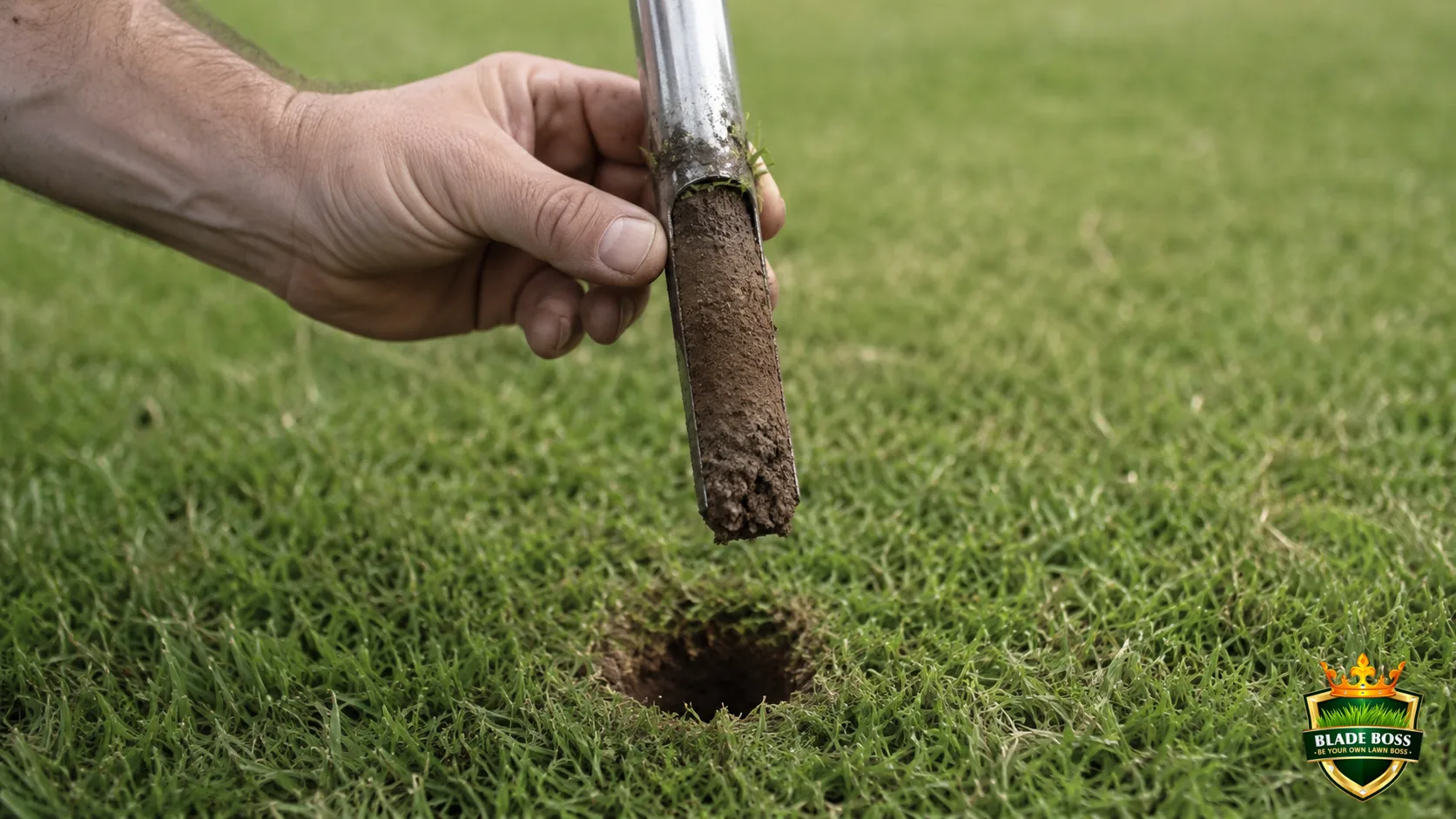
How to Do a Soil Test
Everything that happens on your lawn starts underground. A soil test is the single highest-value 20 minutes you'll spend all year. It tells you exactly what your soil has, what it's missing, and what to stop wasting money on.
 SOIL-02
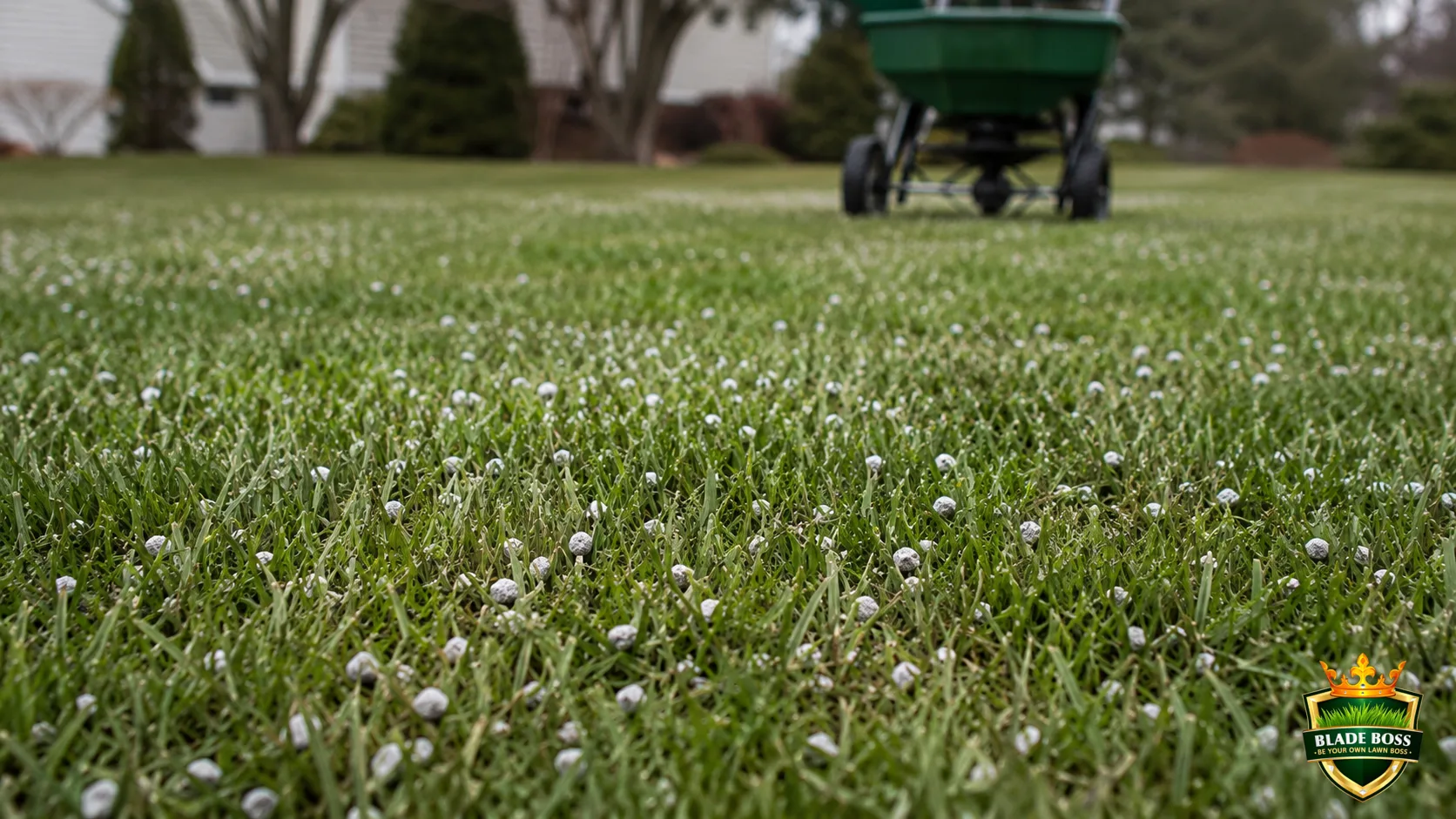
How to Adjust Your Soil pH (Lime or Sulfur)
Your soil test came back and the pH is off. On Long Island that usually means too acidic, and it matters more than almost any product you can buy, because when pH is wrong the grass cannot even use the fertilizer you are paying for. The fix is straightforward: lime raises a low pH, sulfur lowers a high one, and the right amount comes from your test, not a guess. The one thing you cannot do is rush it. This is how to correct your pH the right way and actually make it stick.
Diagnostics 5 guides
Not sure what is wrong? Start here to identify the problem.
 DIAG-00
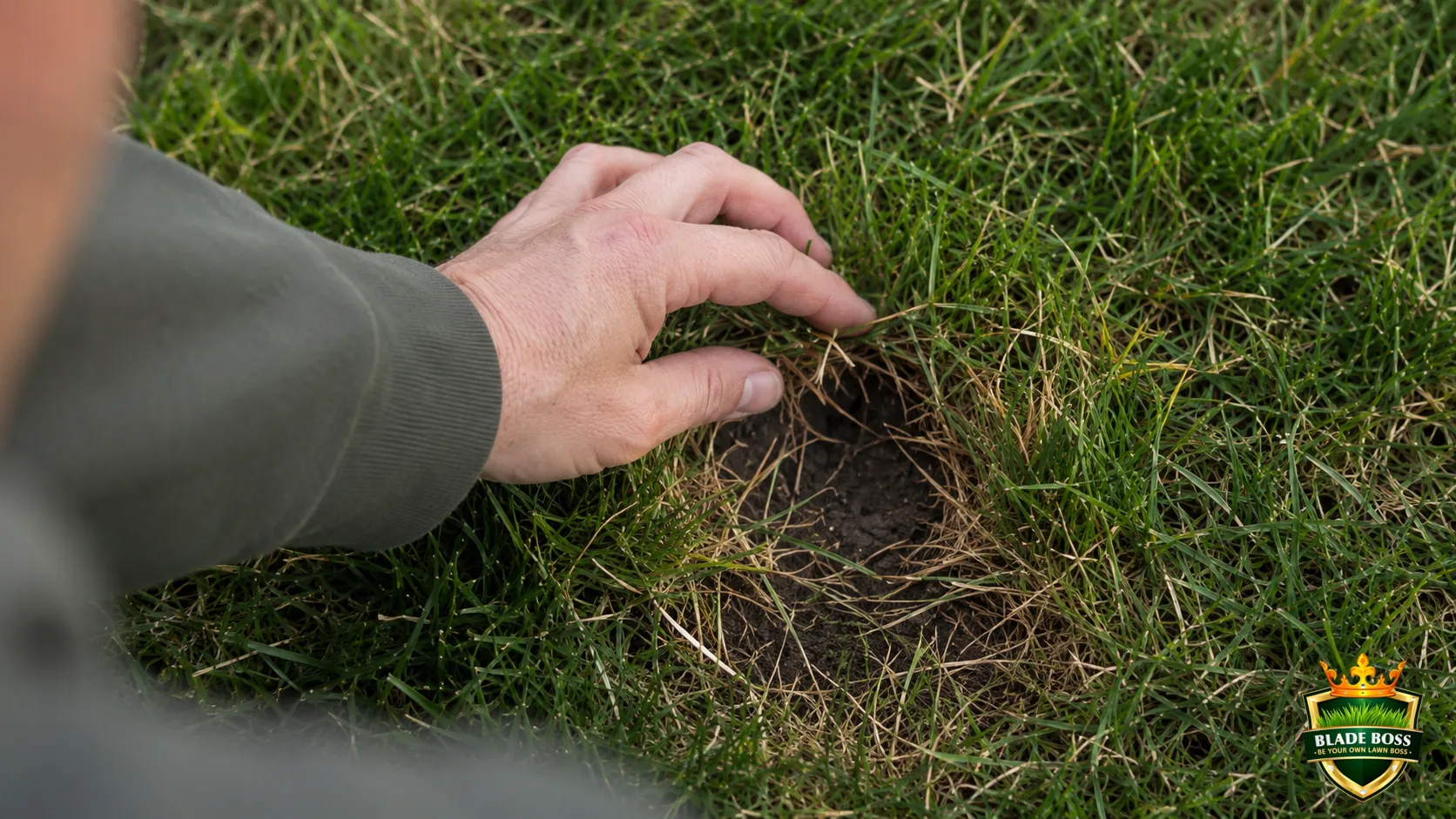
What Is Wrong With My Lawn? The Master Diagnosis Guide
Something is wrong with your lawn and you have no idea what. Start here. In about five minutes this guide narrows your problem down to one of four culprits, a weed, a disease, a bug, or the environment, and sends you straight to the exact guide that fixes it. Do not buy or spray anything until you know which one you are dealing with, because all four need completely different solutions.
 DIAG-01
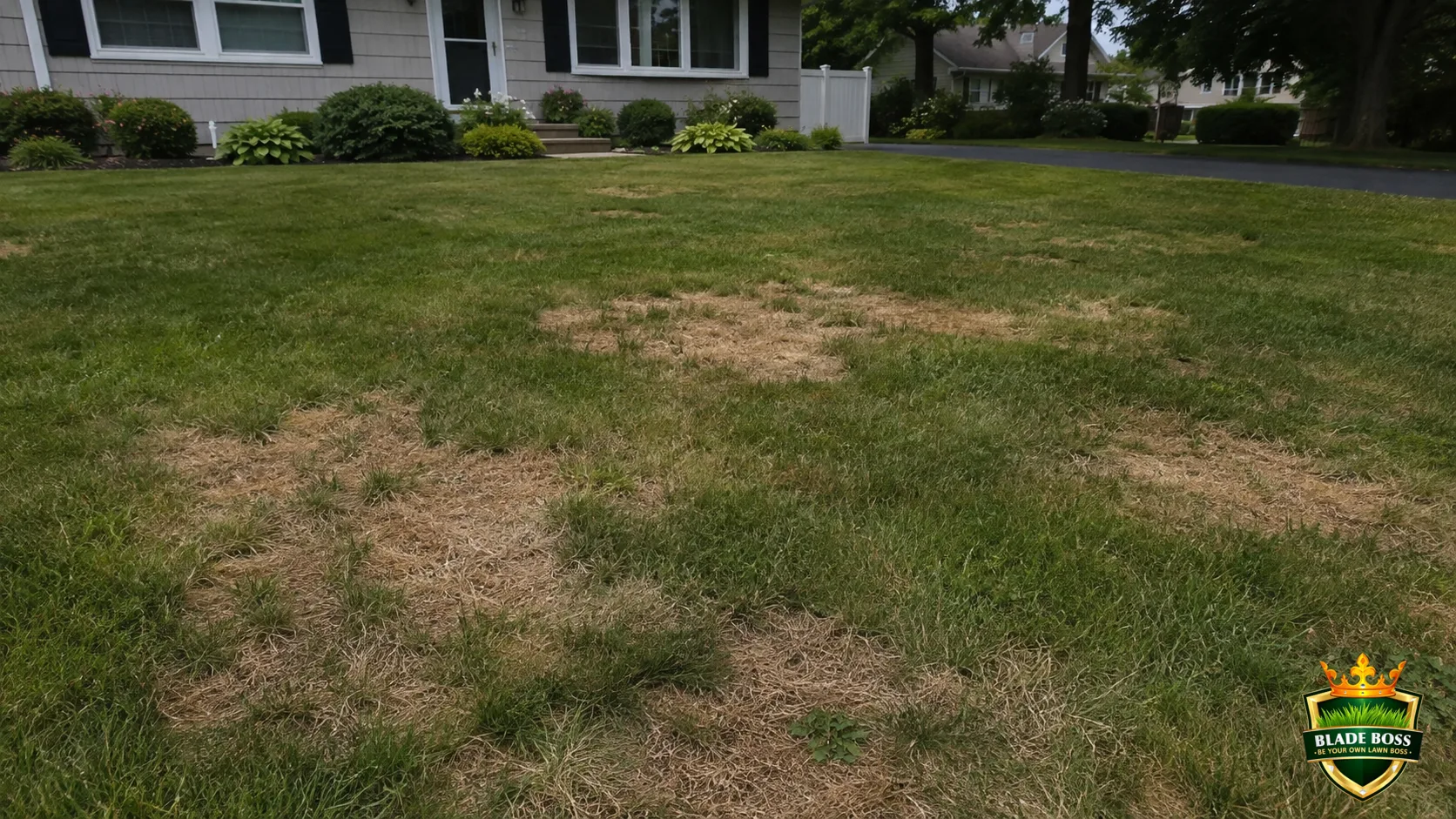
What's Wrong With My Lawn? Brown Patches and Dead Spots, Diagnosed
Before you spray a single drop of fungicide, read this. The brown patch spreading across your lawn is fungus maybe half the time. The rest of the time it is grubs, drought, dog urine, a dull mower blade, or a sprinkler that misses that spot, and every one of those needs a completely different fix. Spraying fungicide on a grub problem wastes your money and kills nothing. This is how to tell what you are actually looking at, in five checks, before you spend a cent on treatment.
 DIAG-02
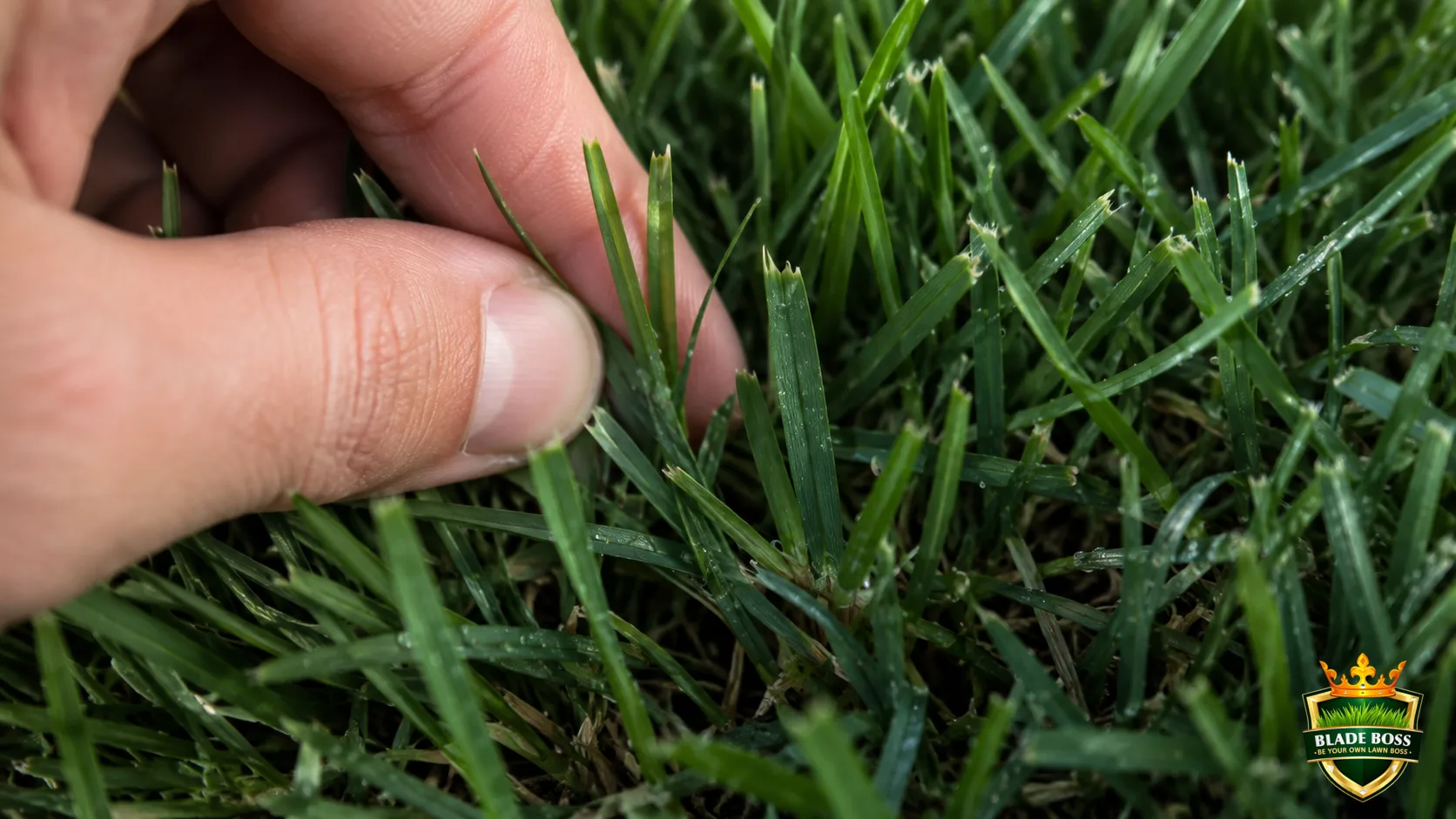
What Type of Grass Do I Have? How to Identify Your Lawn
Almost every decision you make about your lawn depends on one thing you probably do not know: what grass you are actually growing. Mowing height, how much water it needs, which seed matches, which diseases it gets, how much you feed it, all of it changes by type. The good news is you do not need a lab. On a cool-season Long Island lawn there are really only four grasses to sort between, and a few close looks at a single blade will tell you which ones you have. This is how to read them.
 DIAG-03
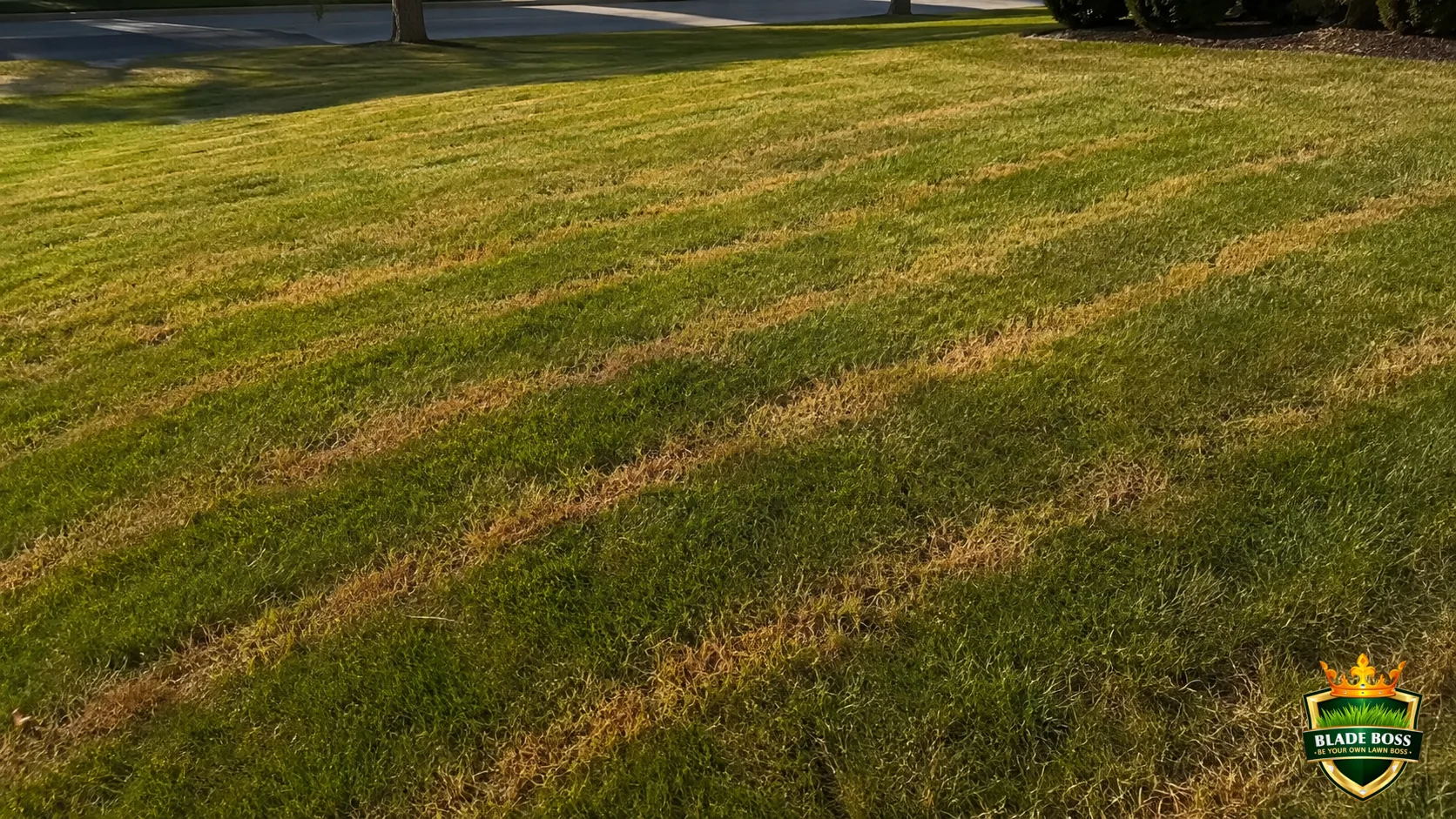
How to Fix Fertilizer Burn
You fed your lawn to help it, and days later it is streaked with yellow and brown. That is fertilizer burn, and the sinking feeling is real, especially after you put in the work. Here is the good news: if you move fast, most of it is fixable, and the fix is simple. The bad news is that the clock is ticking, the first day or two matters most. This guide shows you how to confirm it is actually burn, flush it out before it gets worse, nurse the lawn back, and make sure you never do it again.
 DIAG-04
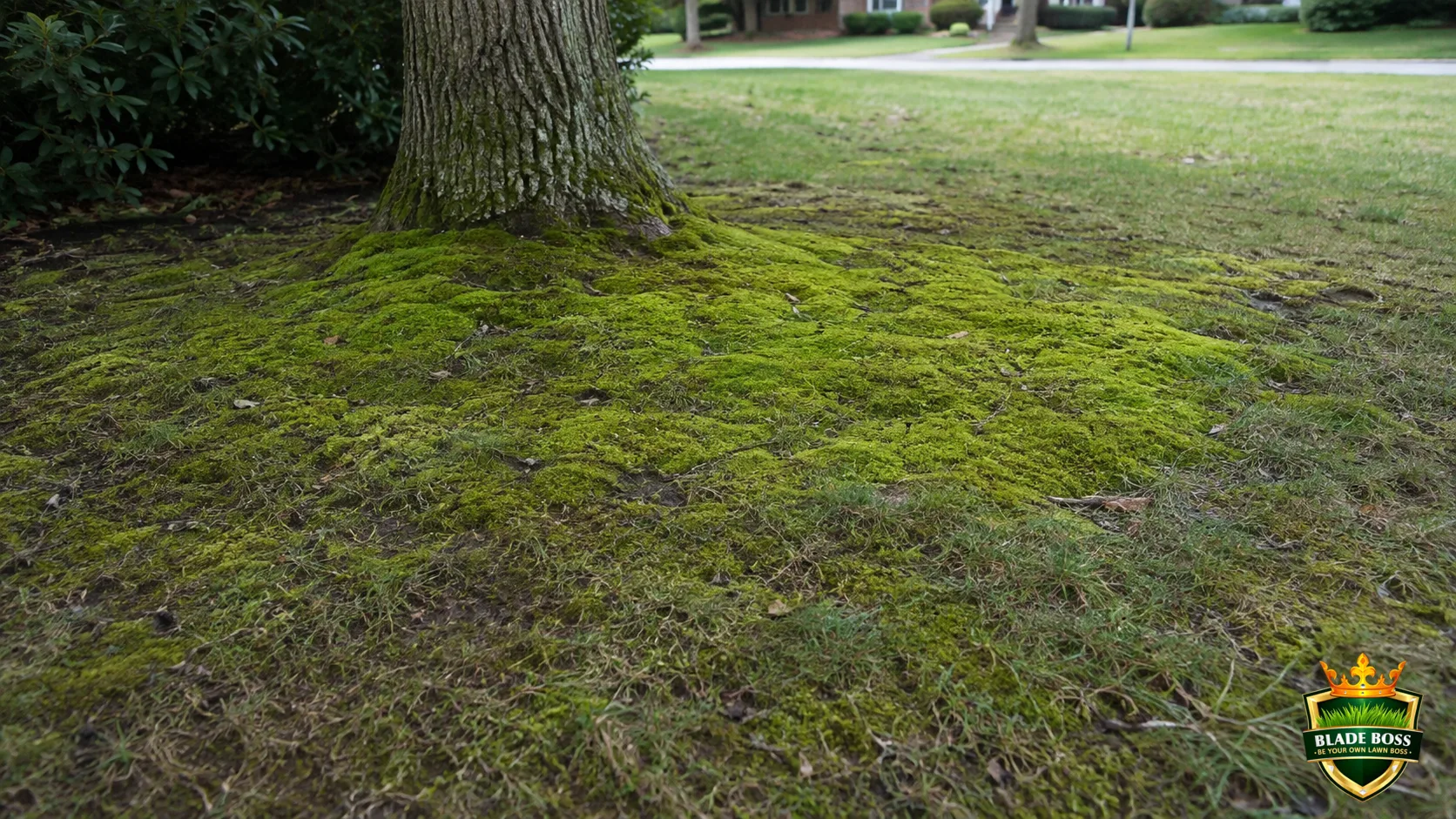
How to Get Rid of Moss in Your Lawn
Here is the truth almost nobody tells you about moss: the moss is not really the problem. Moss is a symptom. It moves into the exact spots where grass is struggling, too shady, too wet, too compacted, too acidic, or too starved to compete. You can scrape it all out or torch it with iron, and it feels great for a week, but if you do not fix why the grass gave up there, the moss walks right back in. This guide shows you how to clear the moss AND fix the real reason it showed up, so grass wins the spot back for good.
Fertilizing 3 guides
Feed on a Zone 7B schedule, not by guesswork.
 FERT-01
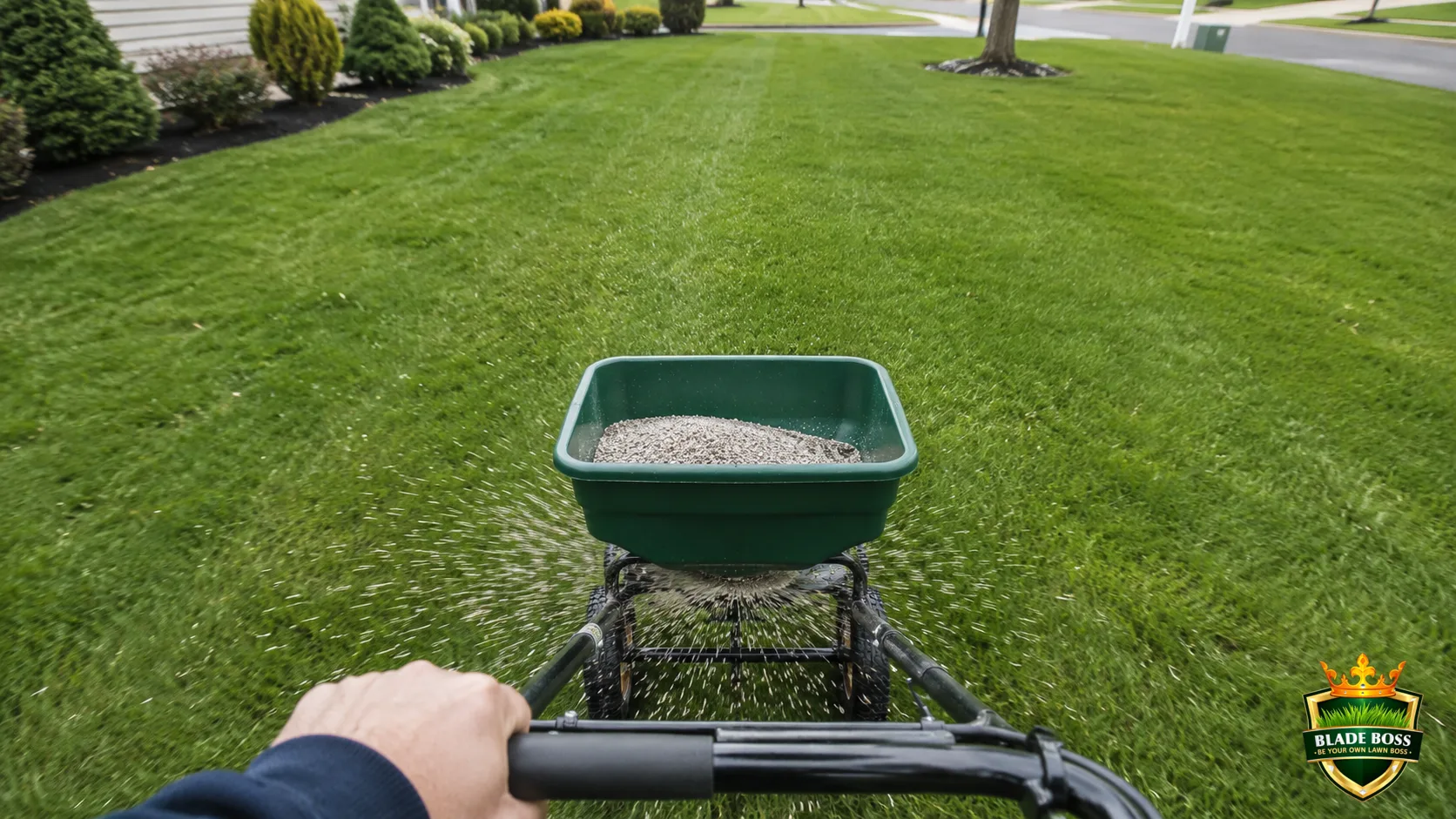
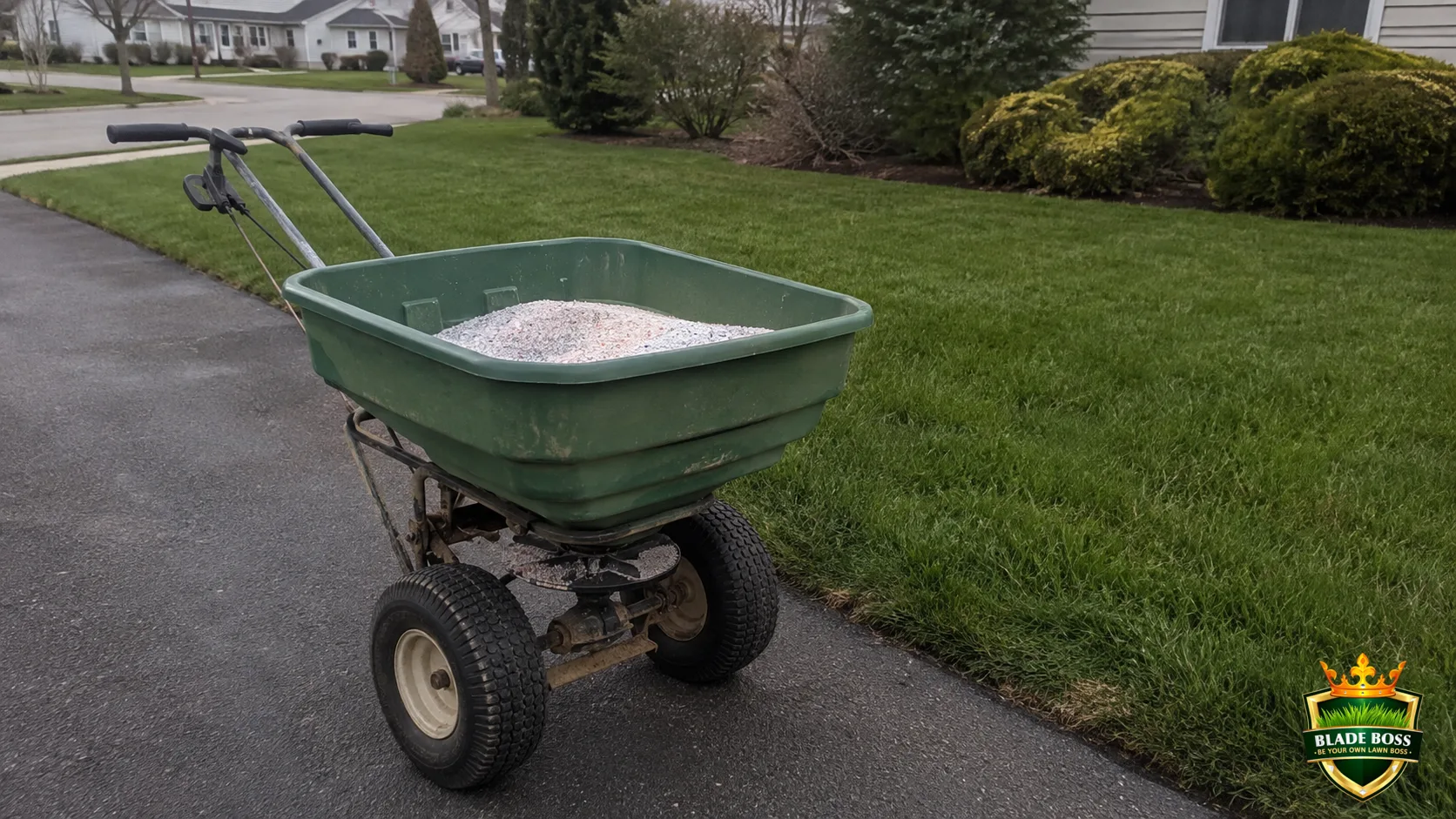
How to Apply Granular Fertilizer
Buying the right bag is the easy part. Putting it down correctly is where lawns get striped, burned, and where fertilizer ends up in the storm drain instead of the soil. This is the walk: how to set the spreader, how to pattern the lawn so you never streak, how to keep every granule out of the street, and how to stay on the right side of Long Island's fertilizer laws, which are among the strictest in the country.
 FERT-02
How to Calibrate Your Spreader
The number on your spreader dial is not a rate. It is a guess printed by someone who never met your spreader, your walking speed, or the bag in your garage. Calibration is how you turn that guess into an actual measured rate, and it is the difference between feeding a lawn and burning one. It takes thirty minutes, once, and every application after it is precise.
 FERT-03
How to Winterize Your Lawn (Winterizer and Final Mow)
Winterizing is the last and most overlooked job of the season, and it is the one that decides how your lawn looks next April. A late-fall feeding of potassium and a properly staged final mow send the grass into winter with stored energy and hardened cells, so it survives the cold and greens up weeks earlier than an unfed lawn. There is a narrow window to get it right, roughly two to three weeks before your first frost, and once the ground freezes you cannot make it up. This is how to nail it.
Mowing 2 guides
Cut height, blade care, and the habits that build density.
 MOW-01
How to Sharpen Your Lawn Mower Blades
A dull blade tears your grass instead of cutting it, and torn tips brown out, lose water, and let disease walk right in. Sharpening is the highest-leverage fifteen minutes in lawn care, and it is dead simple once you know the four things that actually matter: cut the power, keep the factory angle, balance it, and torque it to spec.
 MOW-02
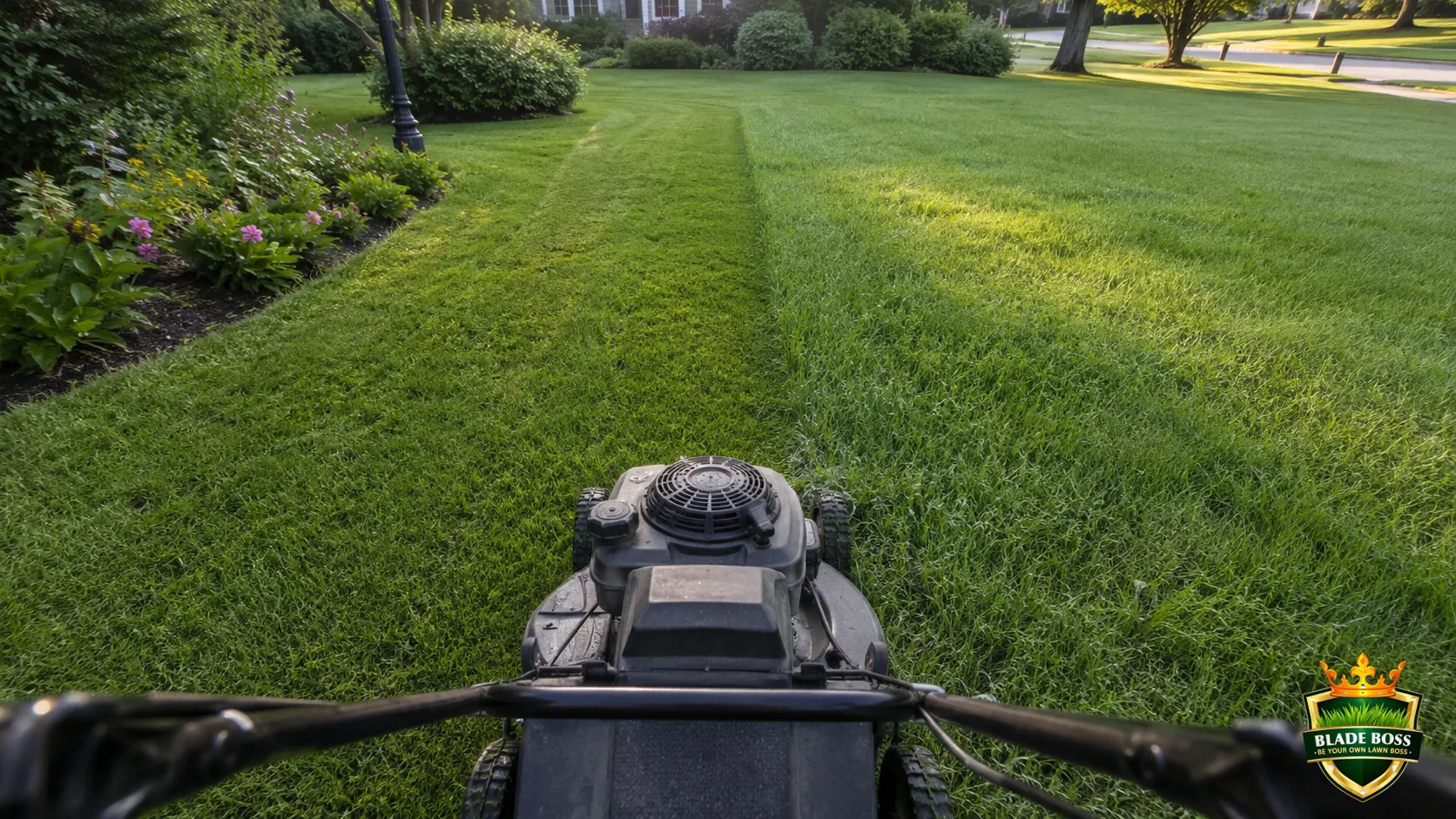
How to Mow Your Lawn the Right Way
Mowing is the thing you do to your lawn more than anything else, and it is the thing most people get wrong. Cut too short, cut too often on the wrong schedule, cut wet, cut with a dull blade, and you create most of the disease, weed, and drought problems you then spend money fixing. Get mowing right and half your lawn problems never start. There are only a few rules. This is all of them.
Irrigation 4 guides
Size, test, and dial in your sprinkler system.
 IRR-01
How to Measure Your Sprinkler System's Flow and Pressure
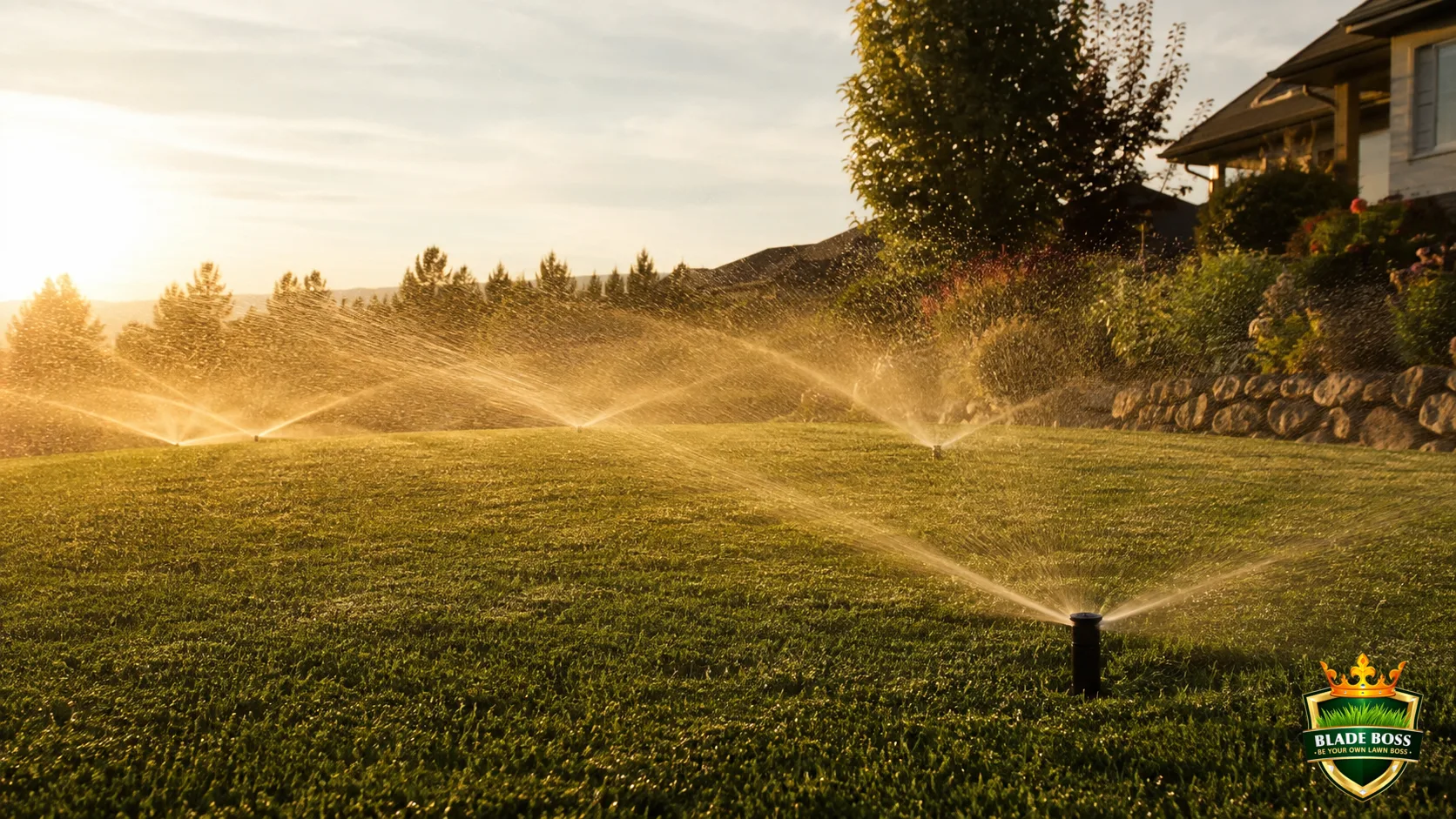
Before you design a zone, fix a dry spot, or set a single run time, you need two numbers: how much water your system produces (flow) and how hard it pushes that water (pressure). Both take about 15 minutes and under $30 of gear. Skip them and every watering decision after is a guess.
 IRR-02
How to Read a Sprinkler Nozzle Chart and Size Your Zones
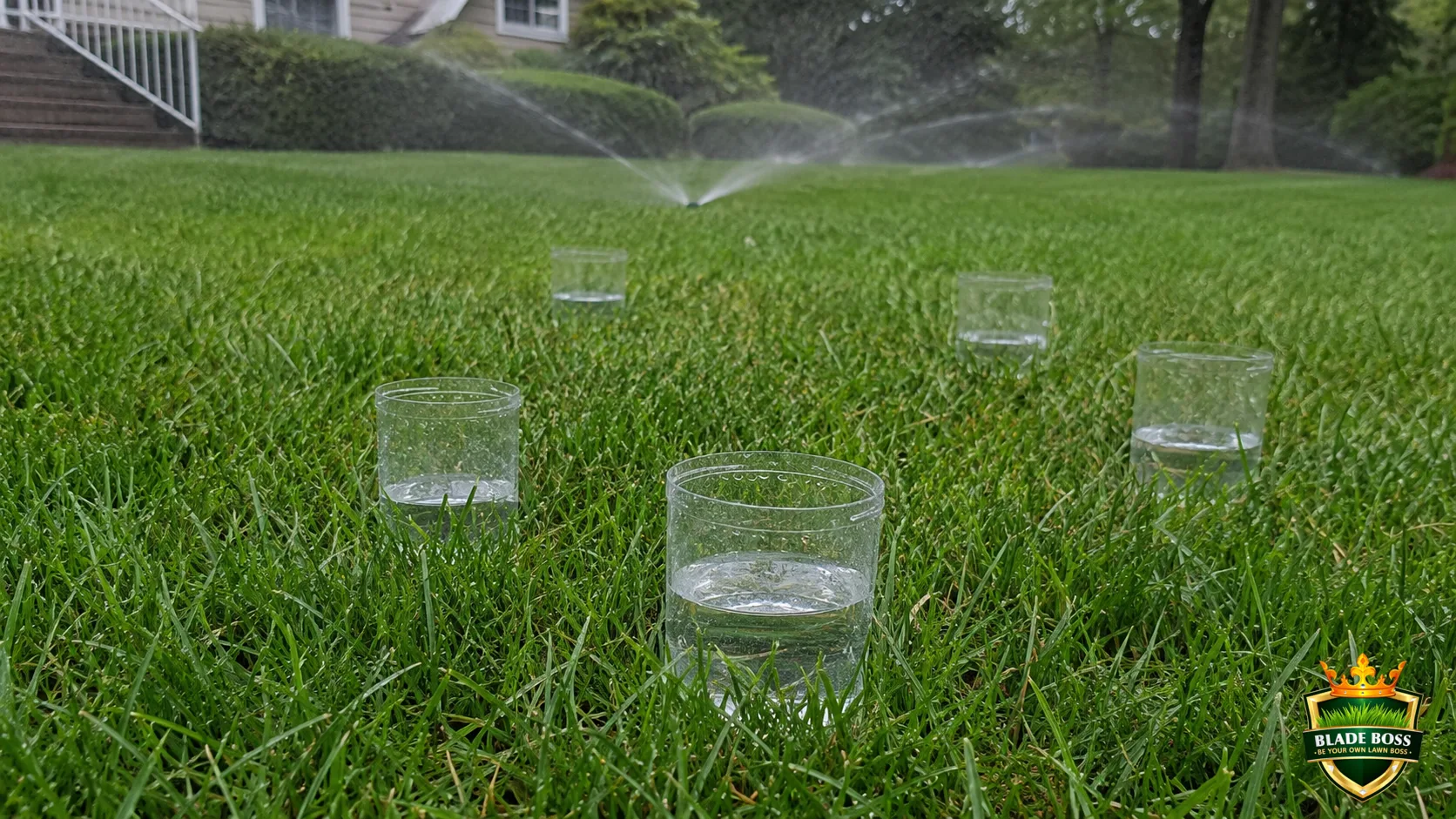
This is the part of irrigation that scares people off: the chart full of tiny numbers and the math behind how many heads you can run. It is simpler than it looks. Once you can read one nozzle chart and do one piece of division, you can design or fix a zone on any system, any brand, with confidence.
 IRR-03
How to Do a Catch Cup Test and Find Your Real Run Times
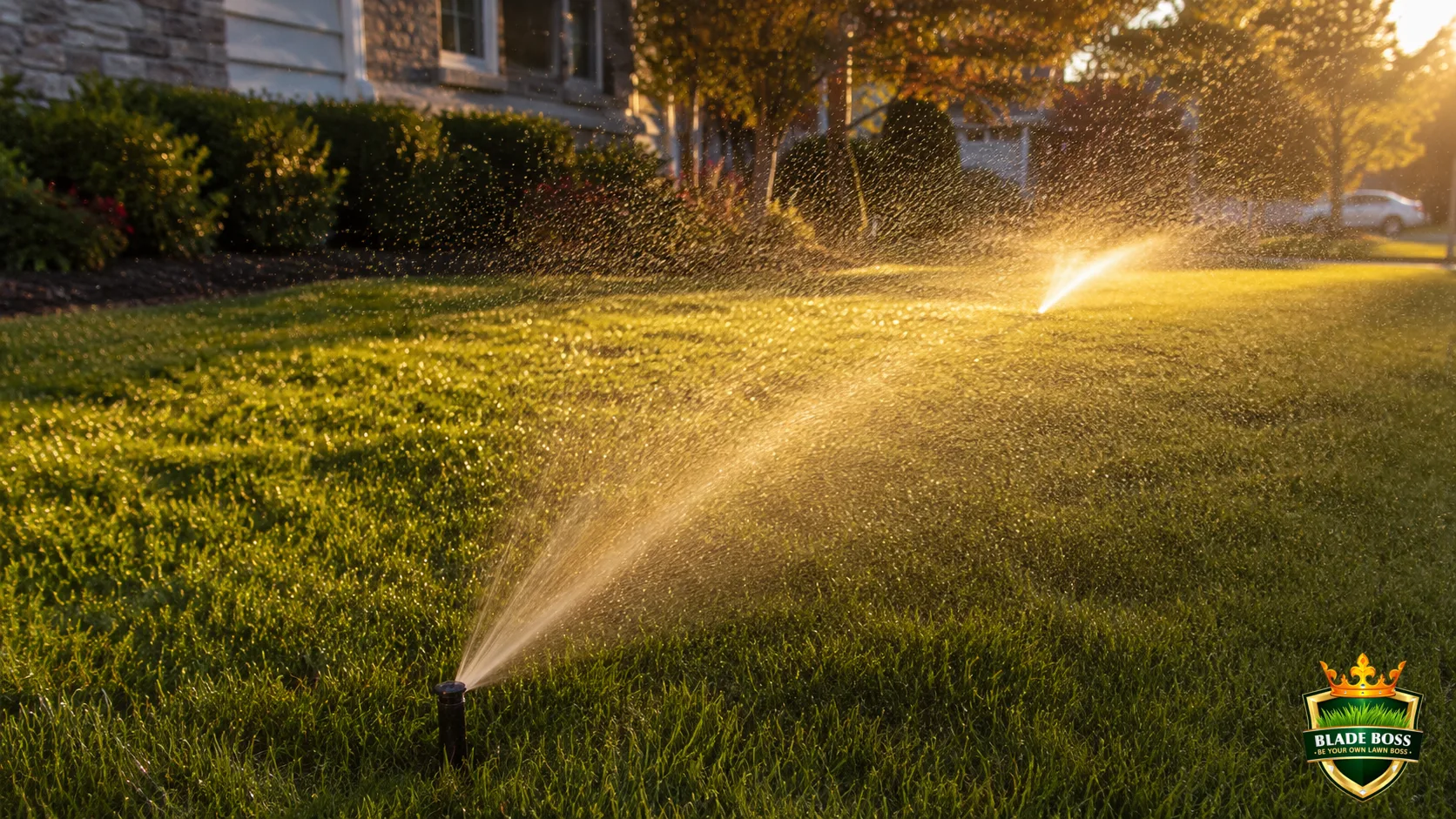
You measured your water supply and you sized your zones. This is the test that proves it all actually works. A catch cup test tells you two things no spec sheet can: how evenly your sprinklers really cover the lawn, and exactly how many minutes to run each zone. Without it, every run time on your controller is a guess.
 IRR-04
How to Calculate Your Lawn's Watering Needs and Run Times
Your controller came with run times someone guessed at a factory. They have no idea what grass you grow, what your soil is, or how hard the July sun hits your yard. This guide replaces the guess with a number, the same water math every pro uses, and AquaSync Pro does all of it for you from your address.
Weeds 12 guides
Identify, kill, and prevent every weed that hits your lawn.
 WEED-00
Lawn Weed Identification Guide (What Is This Weed?)
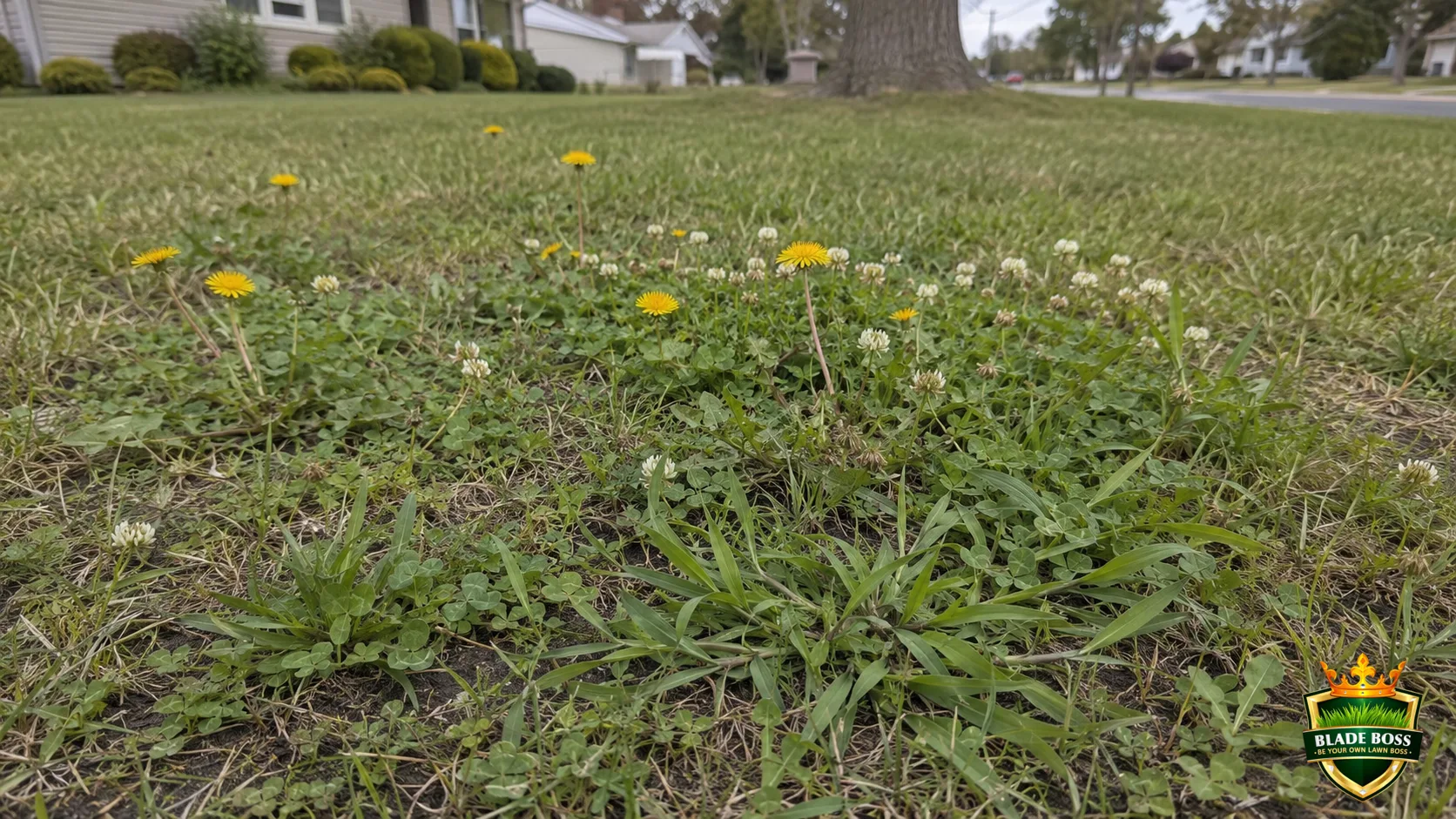
See a weed in your lawn and have no idea what it is? This is your field guide. Twenty-four of the most common lawn weeds across the Northeast, with a clear top-down photo of each, the quick tell to confirm it, and a direct link to the exact guide that kills it. Find your weed, confirm it, then click through to the fix.
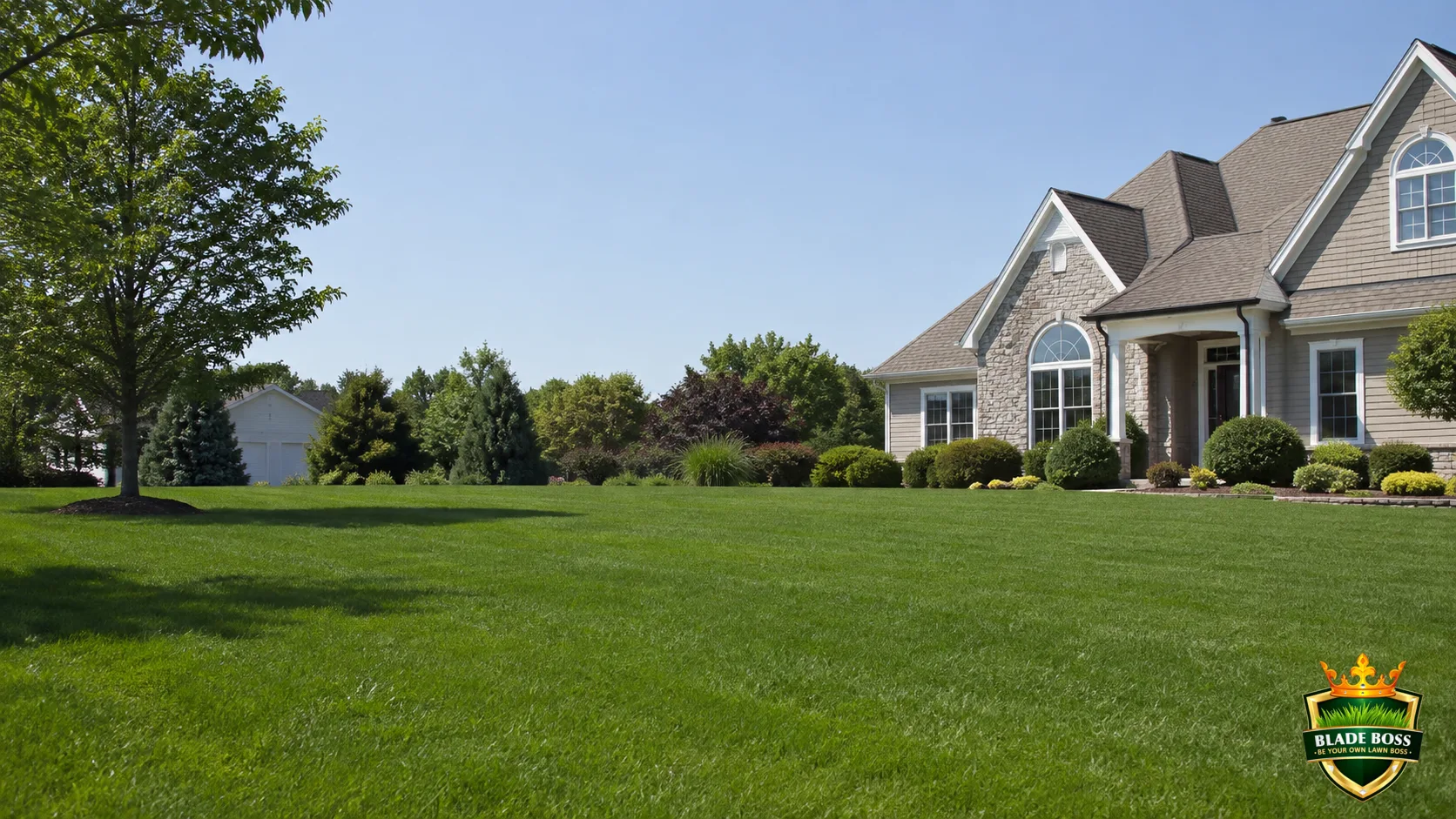 WEED-00A
How to Prevent Weeds Before They Start (The Long Island Pre-Emergent Program)
The best weed is the one that never grows. A pre-emergent stops weed seeds from sprouting, so crabgrass and annual bluegrass never appear in the first place. This is the whole Long Island program in plain numbers: 5 rounds, 2 products you can buy anywhere, the exact amount to use each time, and when to put it down. Follow the chart and you spend the summer mowing instead of spraying.
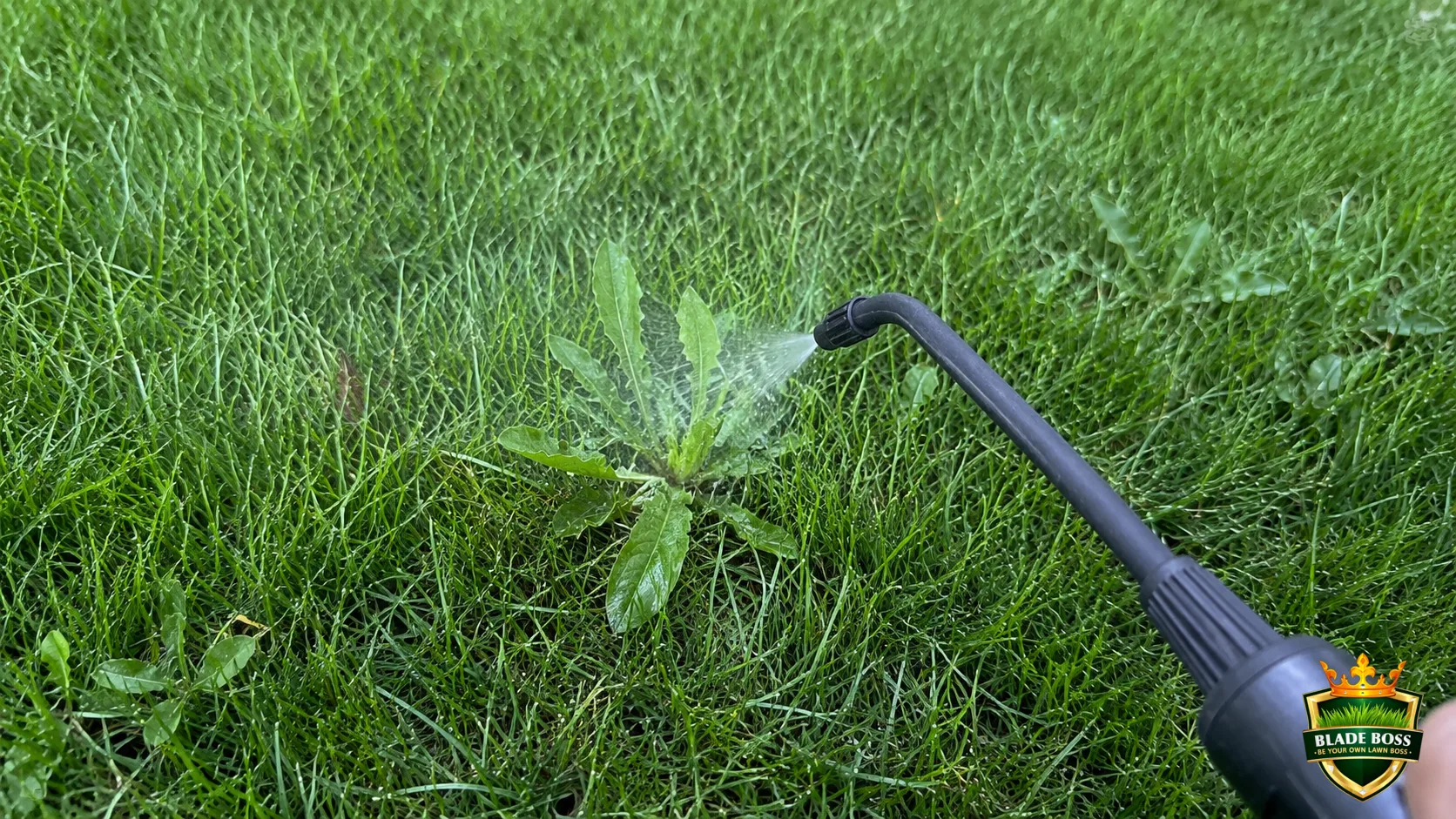 WEED-01
How to Spray Weeds Without Killing Your Lawn
The right herbicide in the wrong hands still wrecks a lawn. People buy the correct product, then spray it on a hot windy afternoon at triple the rate with no surfactant and burn a brown streak across the yard. Which herbicide to buy is a decision the blog side handles. This is the other half: how to mix it, how to spray it, and how to not poison your grass, your garden, or yourself doing it.
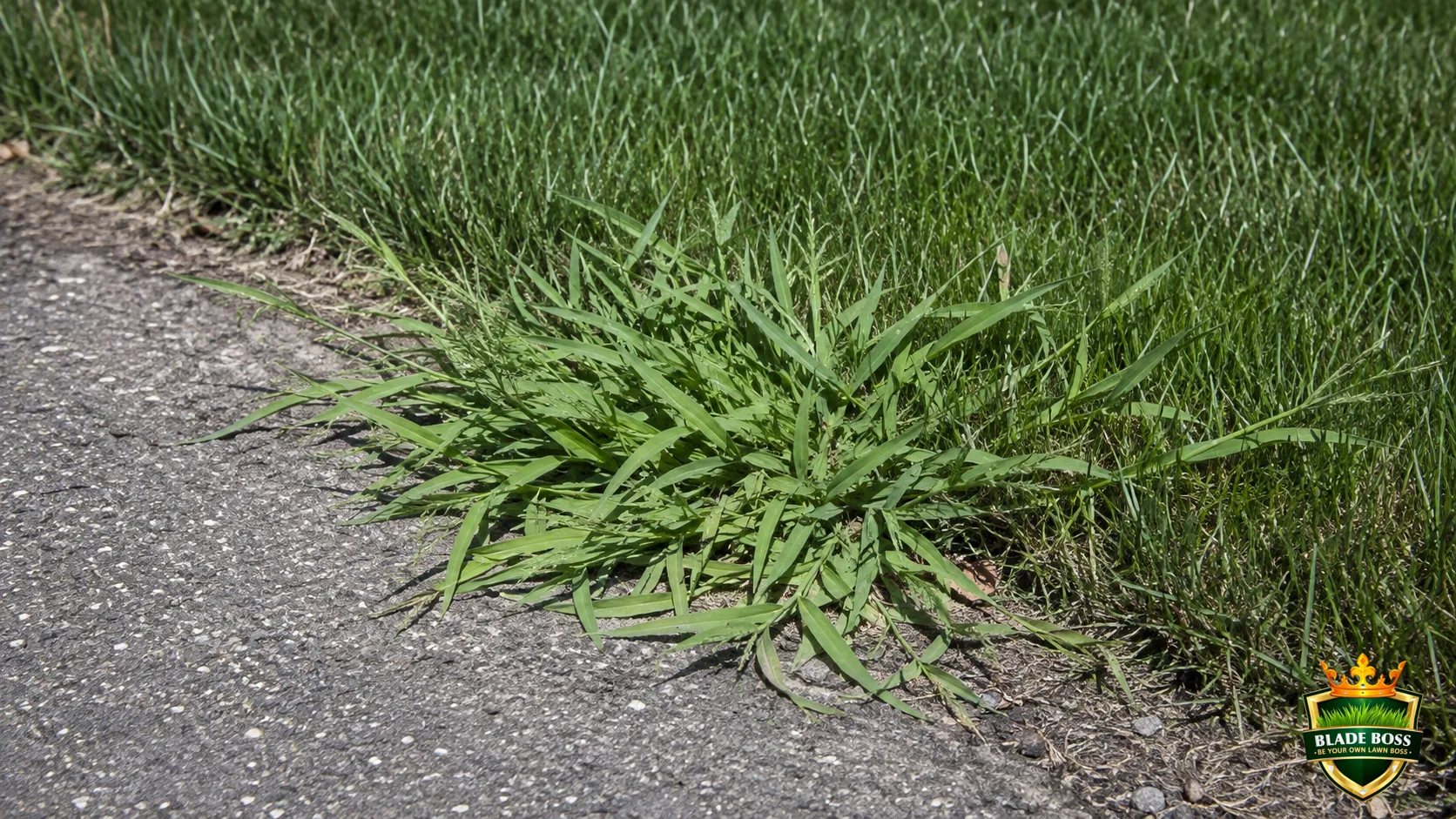 WEED-02
How to Kill Crabgrass in Your Lawn
Crabgrass is the low, spreading, light-green weed that fans out like a splayed hand and takes over by mid-summer. Once it is up and growing, pulling it barely helps and most hose-end sprays disappoint. The tool that actually works, even on mature crabgrass, is a post-emergent called quinclorac (sold as Drive XLR8) mixed with a surfactant. This is a herbicide, so we are going to do it carefully: right rate, right timing, right protection. Follow this and you can knock out crabgrass without hurting your lawn or yourself.
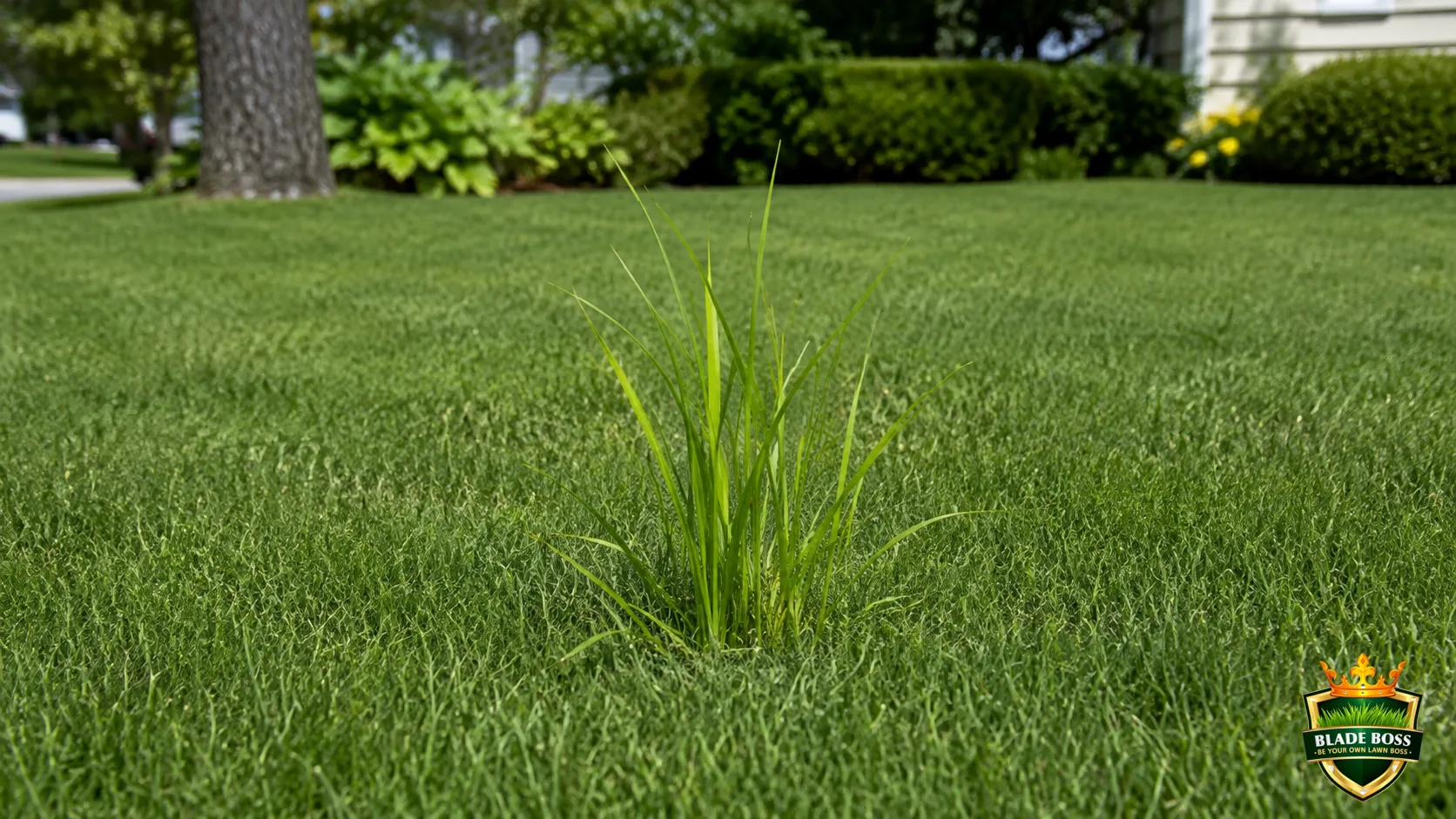 WEED-03
How to Kill Nutsedge in Your Lawn
Nutsedge is that fast-growing, glossy, pale-green, grassy-looking weed that shoots up above your lawn a few days after you mow, always taller than everything else. It looks like grass but it is not, and here is the trap: the worst thing you can do is pull it. Nutsedge grows from underground nutlets, and yanking the plant just triggers them to sprout more. The real fix is a selective herbicide called halosulfuron (SedgeHammer) that travels down and kills the whole plant, nutlets included. This guide walks you through doing it right.
 WEED-04
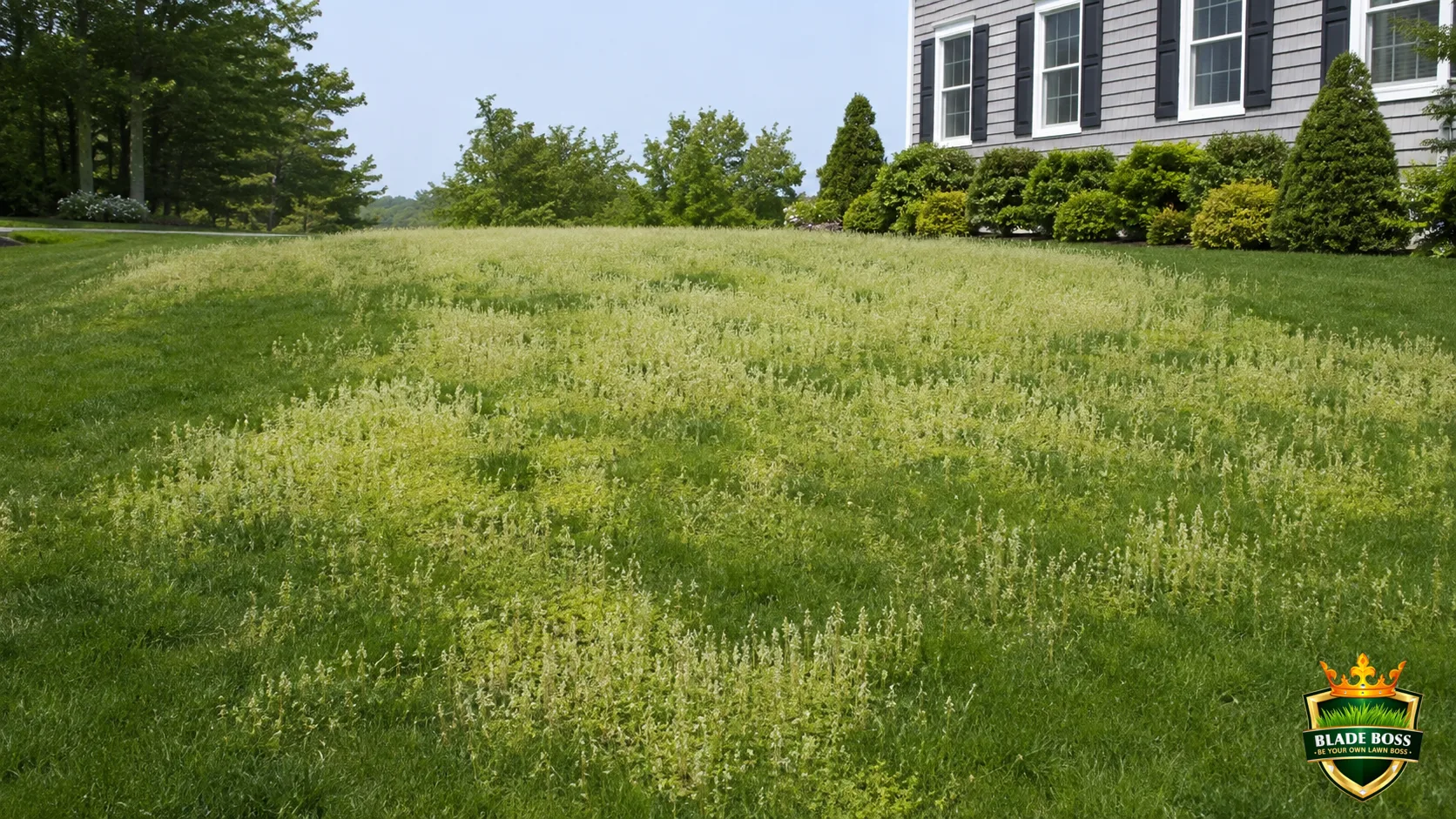
How to Get Rid of POA (Annual Bluegrass)
Poa annua (annual bluegrass) is that patchy, light-green weed grass that erupts with ugly white seedheads in spring, then dies out in summer and leaves bare spots. The hard truth: you cannot easily kill it in a cool-season lawn, because it is a grass too. The real war against POA is won by prevention, and prevention is all about timing. This guide covers both: handling the POA you have now, and building a year-long pre-emergent barrier to stop it coming back, on a schedule that is actually legal on Long Island (most are not).
 WEED-05
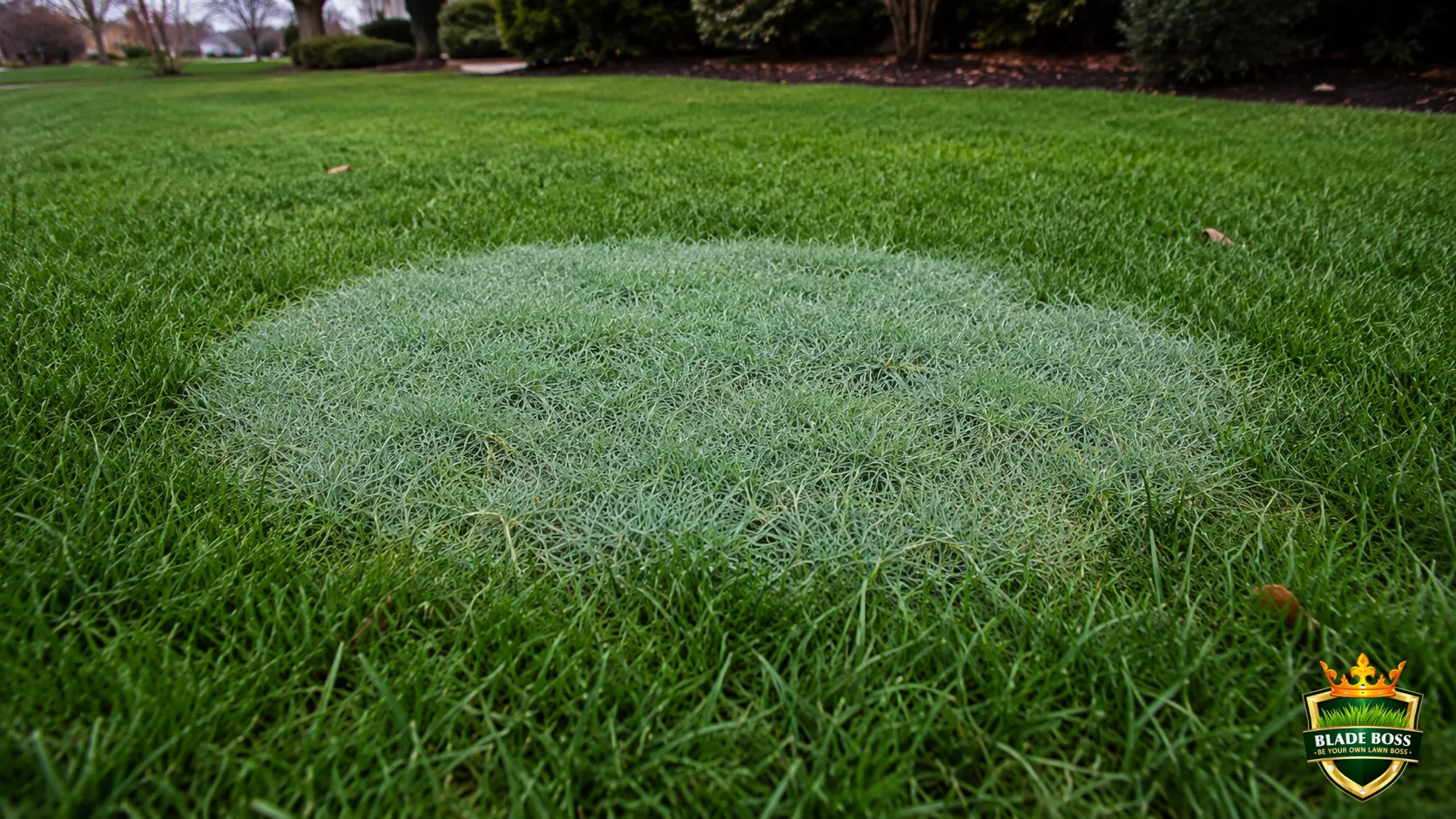
How to Get Rid of Bentgrass in Your Lawn
Bentgrass is a golf-course grass that invades home lawns and forms those puffy, light-green patches that look terrible at normal mowing height. Here is the truth: you cannot maintain bentgrass in a regular lawn and have it look good. You either mow it like a putting green or you kill it and replace it. This guide covers the two real ways to get rid of it: selective removal with Tenacity if the bentgrass is patchy, or a full nuclear renovation if it has taken over. Either way, plan on a two-year campaign, not a weekend fix.
 WEED-06
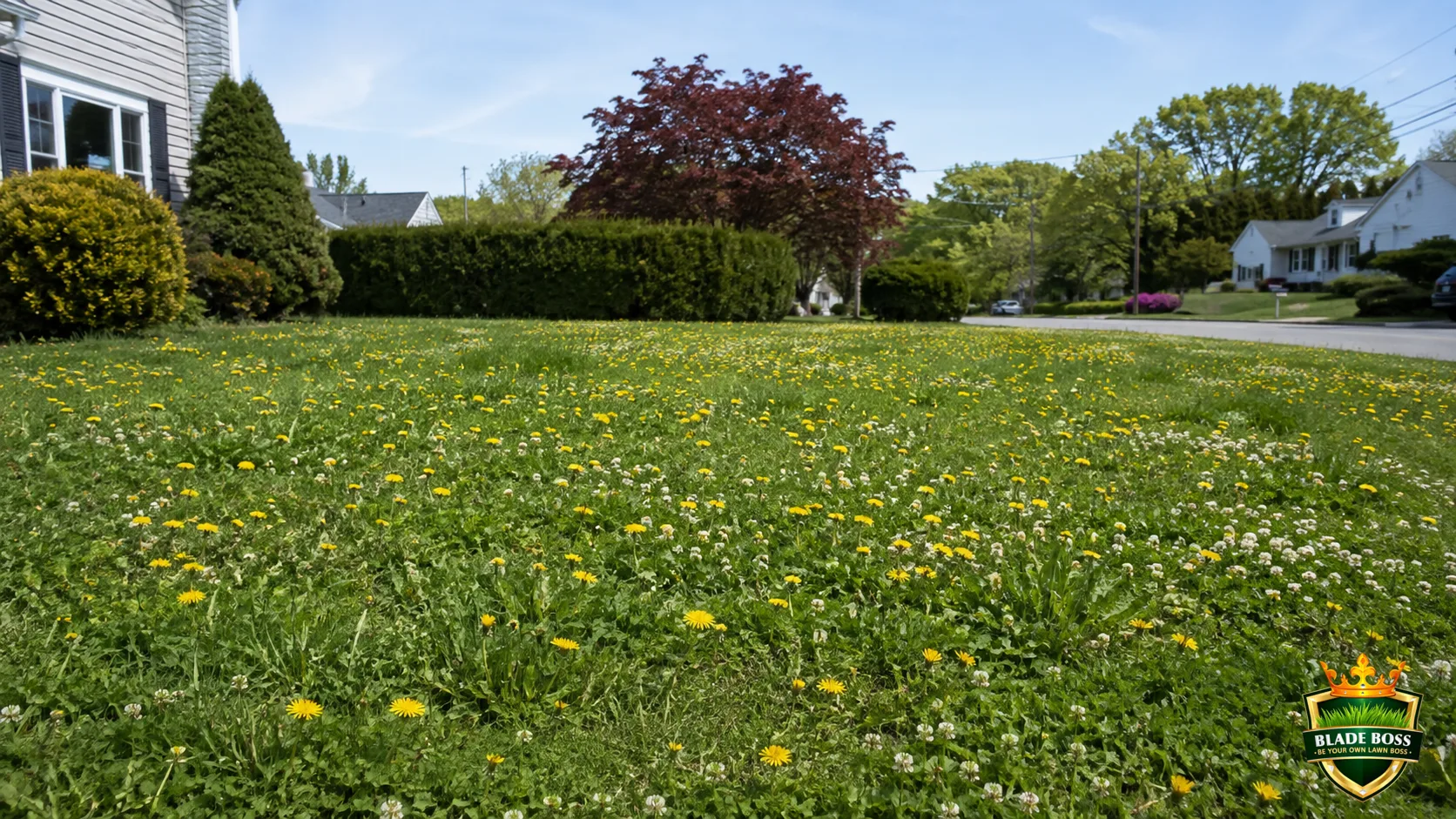
How to Kill Broadleaf Weeds in Your Whole Lawn
Dandelions, clover, plantain, chickweed, oxalis, ground ivy: the wide-leaf weeds scattered across your lawn are broadleaf weeds, and one product handles almost all of them at once. A 3-way selective herbicide like Weed B Gon kills over 250 broadleaf weeds down to the root without hurting your grass. This guide shows you how to blanket-treat the whole lawn safely with a hose-end sprayer, get the rate right, and avoid the drift and timing mistakes that turn a simple job into a damaged garden.
 WEED-07
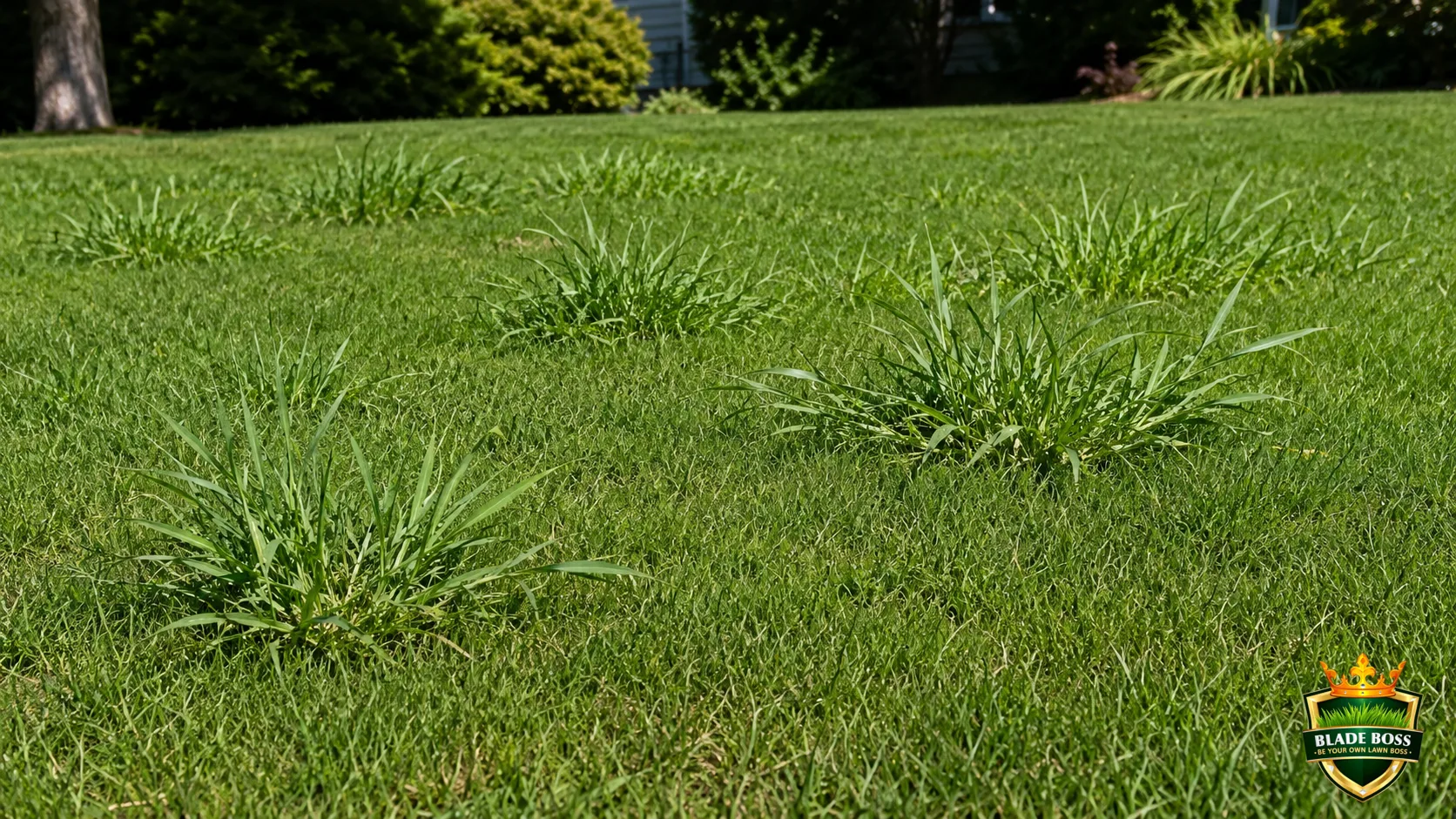
How to Kill Grassy Weeds (the Ones Weed B Gon Misses)
Broadleaf weed killer wiped out your dandelions and clover, but those clumps of coarse, off-color grass are still there. Those are grassy weeds, and here is the hard truth: there is no single product that kills them all the way one 3-way handles broadleaf weeds. Grassy weeds look like your lawn because they basically are grass, so you have to identify the specific weed and match it to the specific tool. This guide shows you how: which grassy weeds have a selective fix, which ones only die to glyphosate and a reseed, and how to tell them apart.
 WEED-08
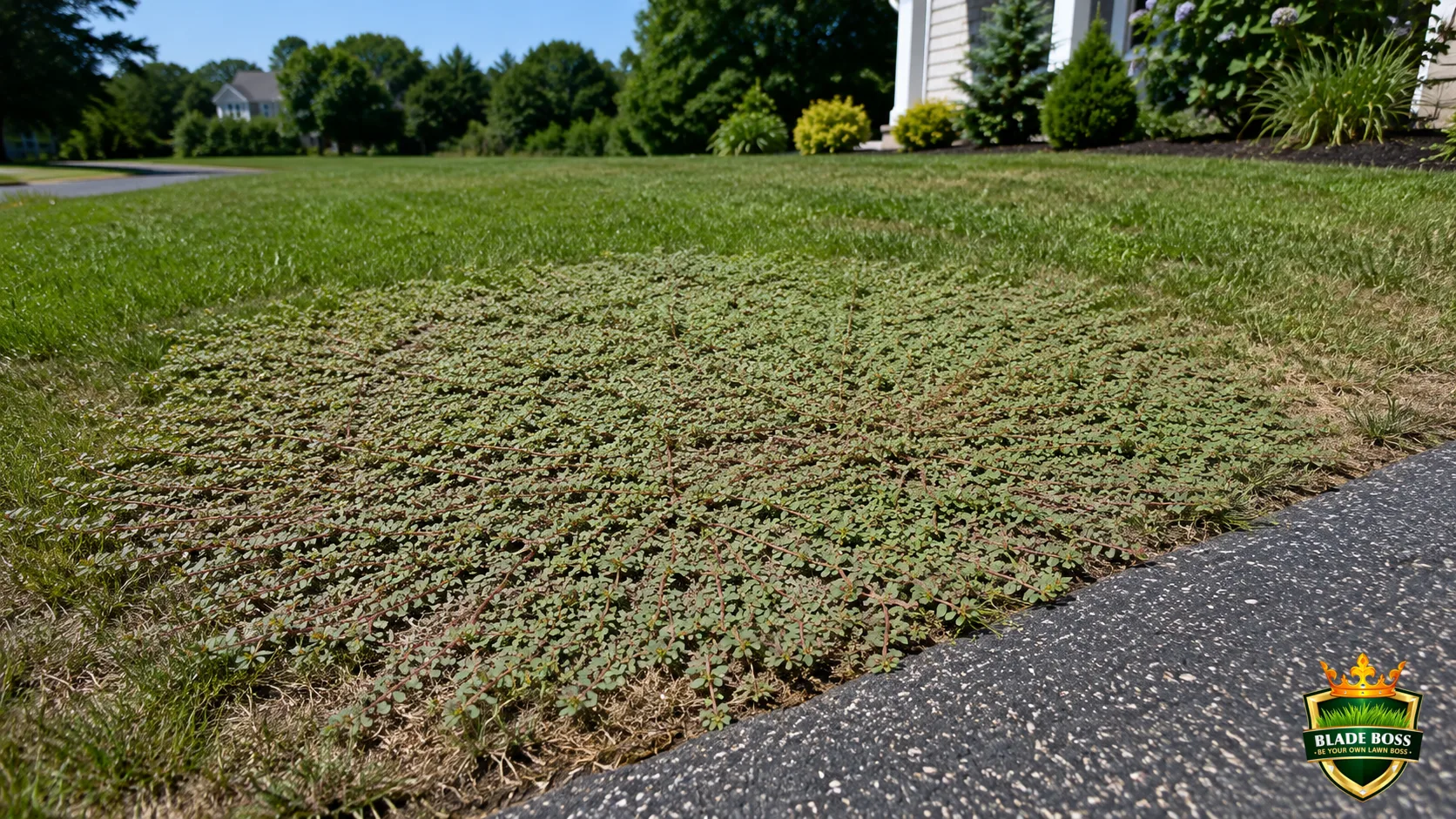
How to Kill Spurge (Spotted and Prostrate Spurge)
That flat, sprawling mat with tiny leaves taking over your thin spots and driveway edges is spurge, a fast-growing summer annual that bleeds milky white sap when you break it. Good news: unlike the truly stubborn perennials, spurge is beatable if you hit it right. This guide gives you the exact product, the exact mix ratio, and the timing to kill it, plus the prevention that stops it from coming back, all tuned for a Long Island lawn.
 WEED-09
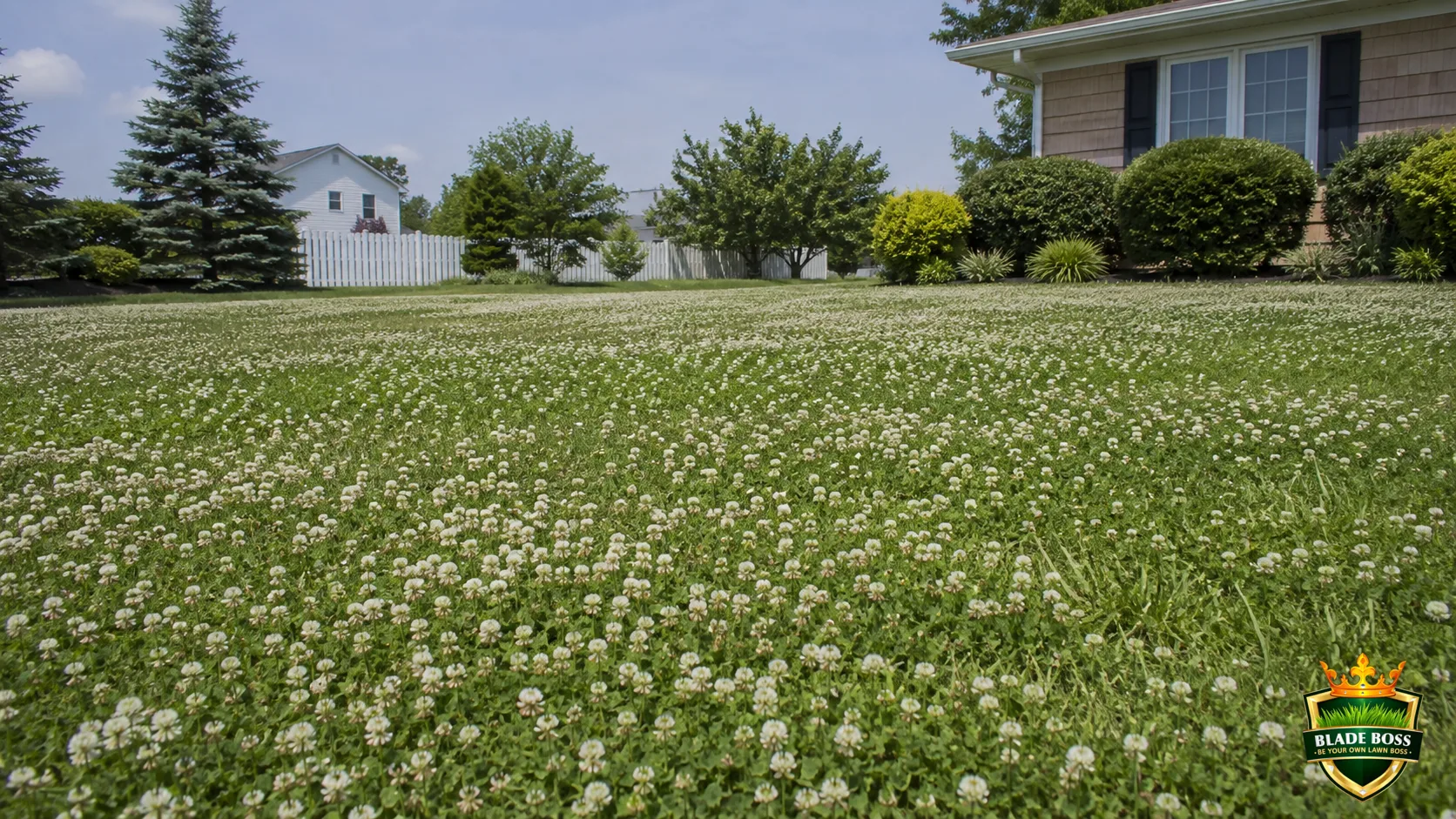
How to Get Rid of Clover in Your Lawn
Those low, creeping patches of three-leaf clover with little white puffball flowers are easy to kill, but here is the twist most guides skip: clover is telling you something. It is a legume that makes its own nitrogen, so it only takes over when your grass is underfed. Spray it wrong (or skip the real fix) and it comes right back. This guide does both halves: the exact product and rate to kill it, and the feeding that keeps it gone for good.
 WEED-10
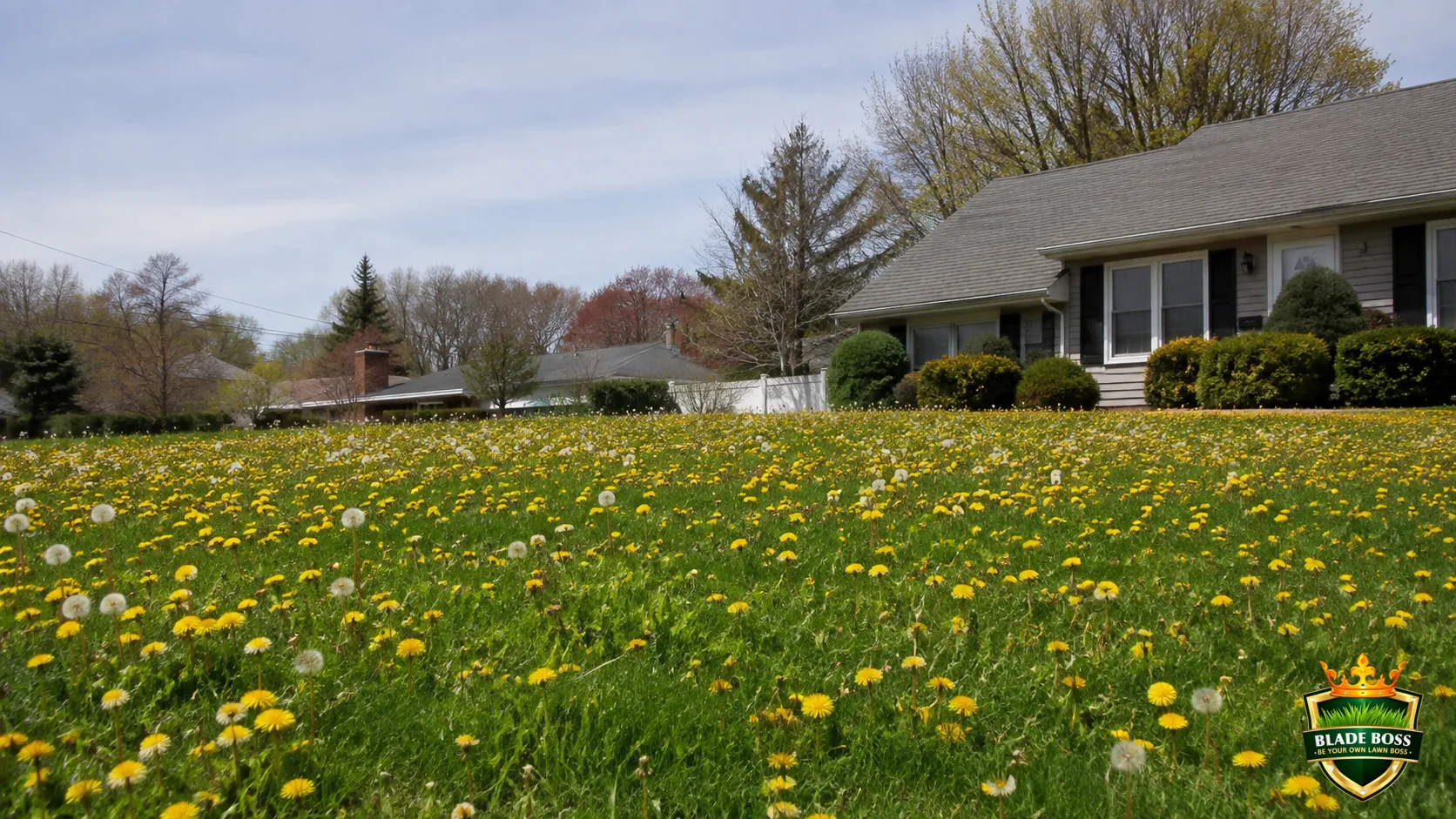
How to Kill Dandelions in Your Lawn
Dandelions look intimidating with those bright yellow flowers turning into puffballs everywhere, but here is the good news: they are one of the easiest lawn weeds to kill. Unlike clover, a cheap standard weed killer crushes them. The two things that trip people up are the deep taproot (which is why yanking them never works) and the puffball seed heads (which is why they keep spreading). This guide handles both: kill them to the root the easy way, and stop them from reseeding your whole yard.
Pests 2 guides
Spot the damage and stop grubs and lawn insects.
 GRUB-00
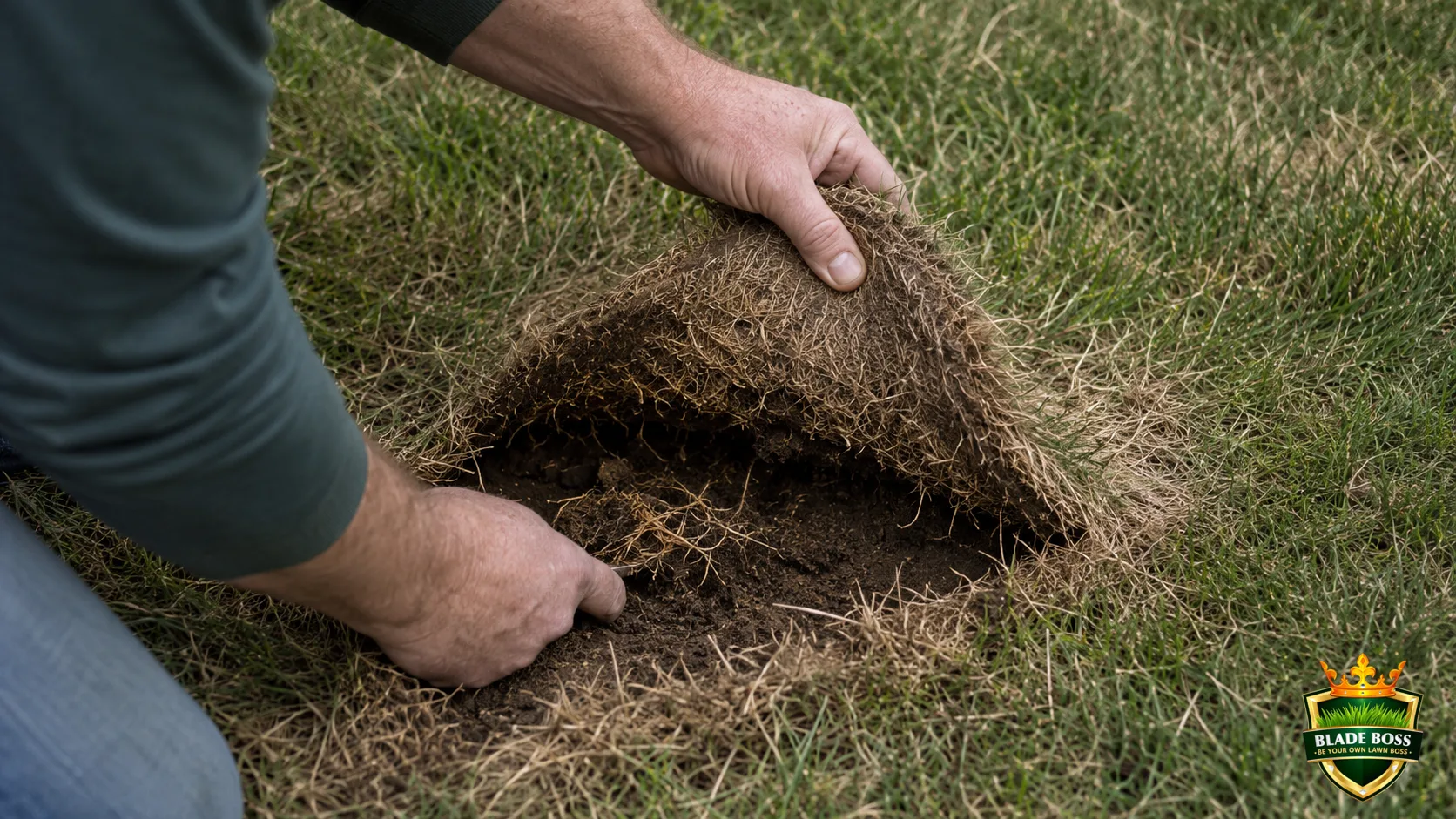
Lawn Pest Identification Guide (What Is Eating My Lawn?)
Something is chewing, tunneling, or eating your lawn and you want to know what. This is your visual field guide to the insects and animals that damage Long Island and Northeast lawns, grouped by what you actually see: turf that lifts like carpet, spreading brown patches, or tunnels and mounds. Match your lawn to the photos, confirm the tell, then treat the right pest the right way. Identify before you spray anything.
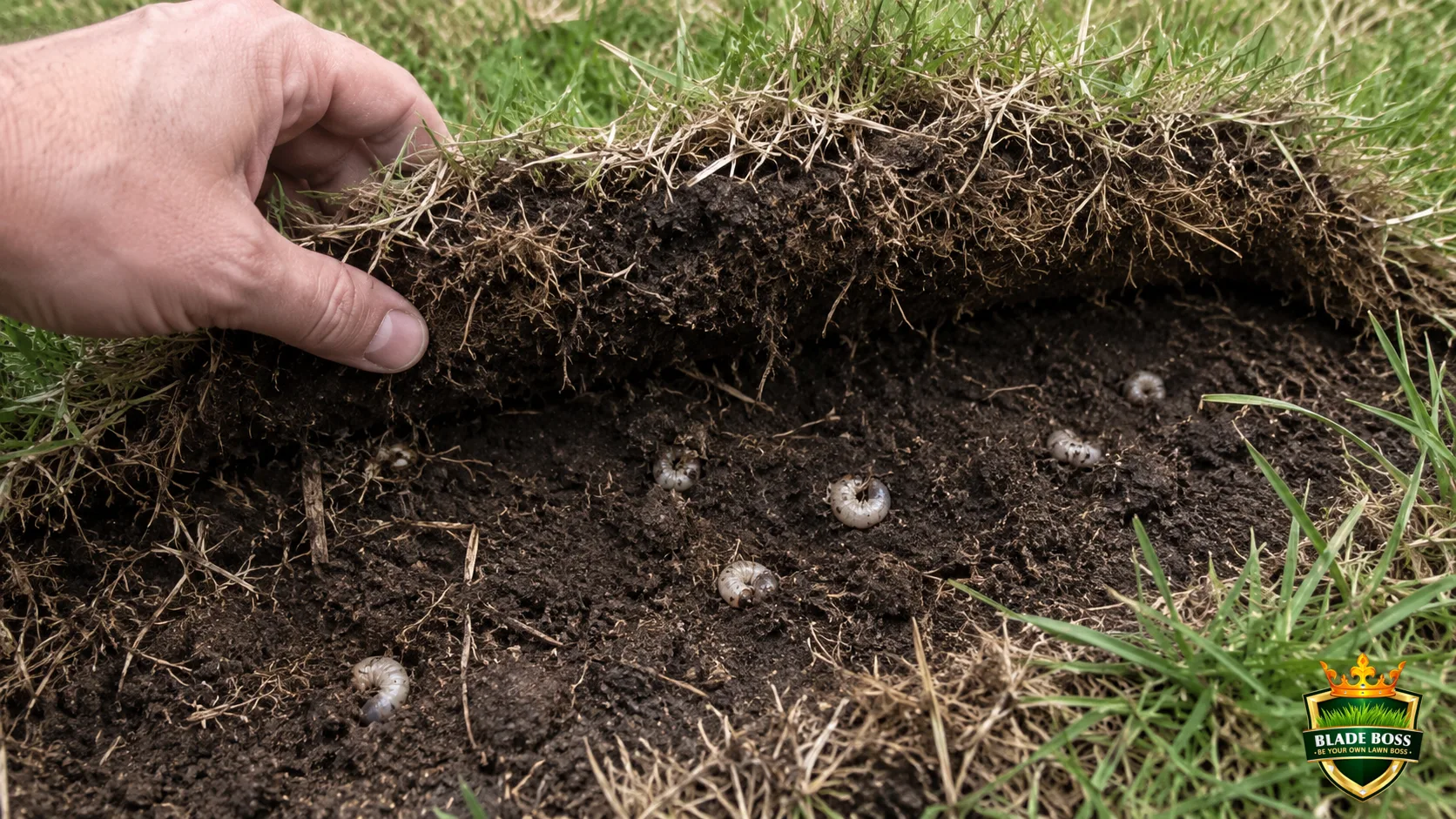 GRUB-01
How to Identify and Treat Lawn Grubs
Grubs are beetle larvae that eat grass roots from below, and they are the most misdiagnosed cause of a dying lawn. Here is the uncomfortable truth for Long Island: the single best grub product in the country is banned in your county, the second best becomes illegal statewide at the end of 2026, and roughly four out of five lawns never needed treatment in the first place. This guide shows you how to confirm you actually have grubs, why the best chemistry is off-limits here, and the legal program that genuinely works instead.
Disease 4 guides
Diagnose lawn disease and rotate fungicides the right way.
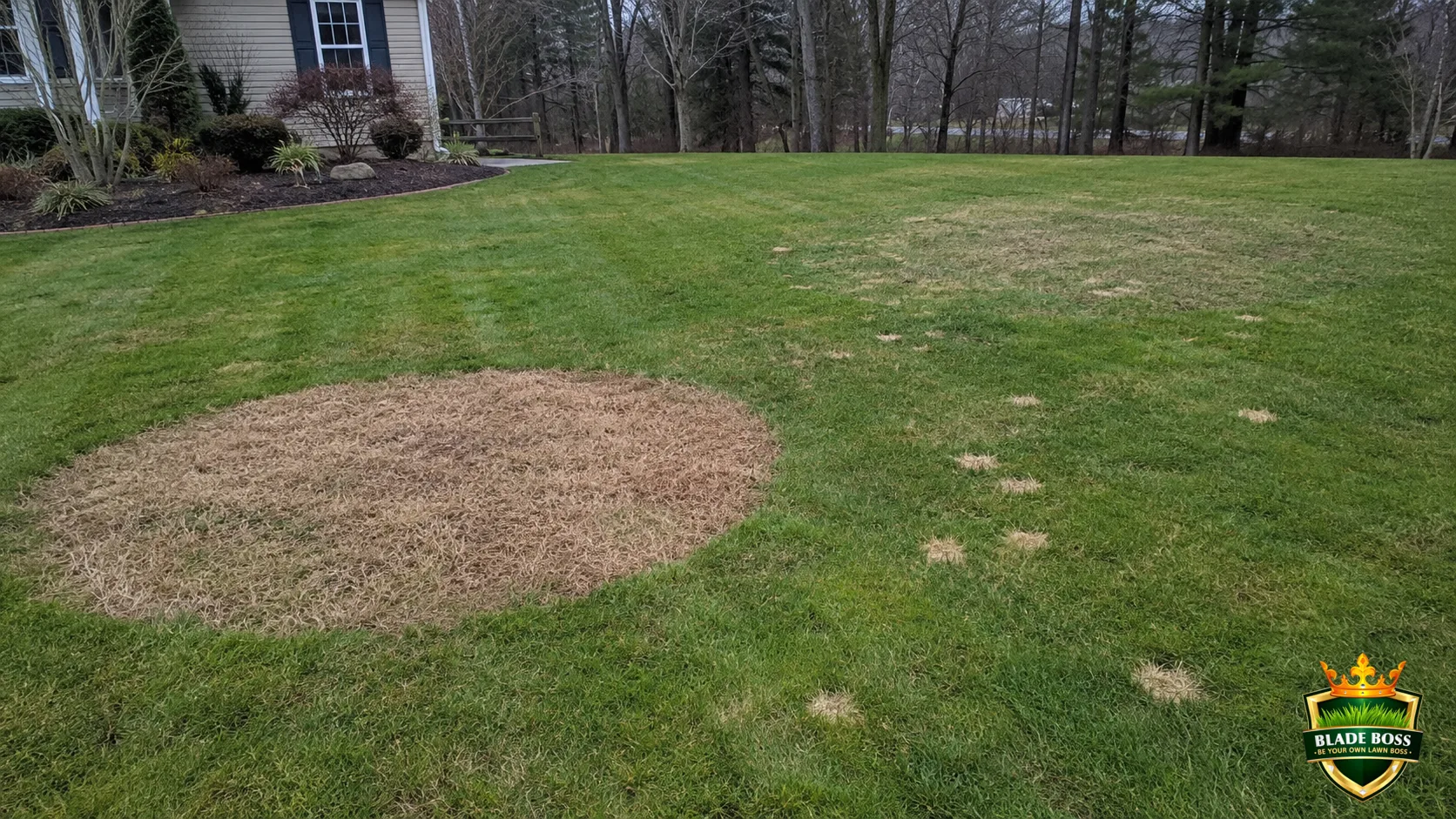 FUNG-00
Lawn Disease Identification Guide (What Is Wrong With My Grass?)
Brown spots, dead rings, weird threads or powder on your grass? Before you spray anything, find out what it actually is. This is your visual field guide to the 18 lawn diseases that hit Long Island and Northeast cool-season lawns, grouped by what you see, with the quick tell to confirm each one and the fix. Match your lawn to the photos, confirm the tell, then treat it right.
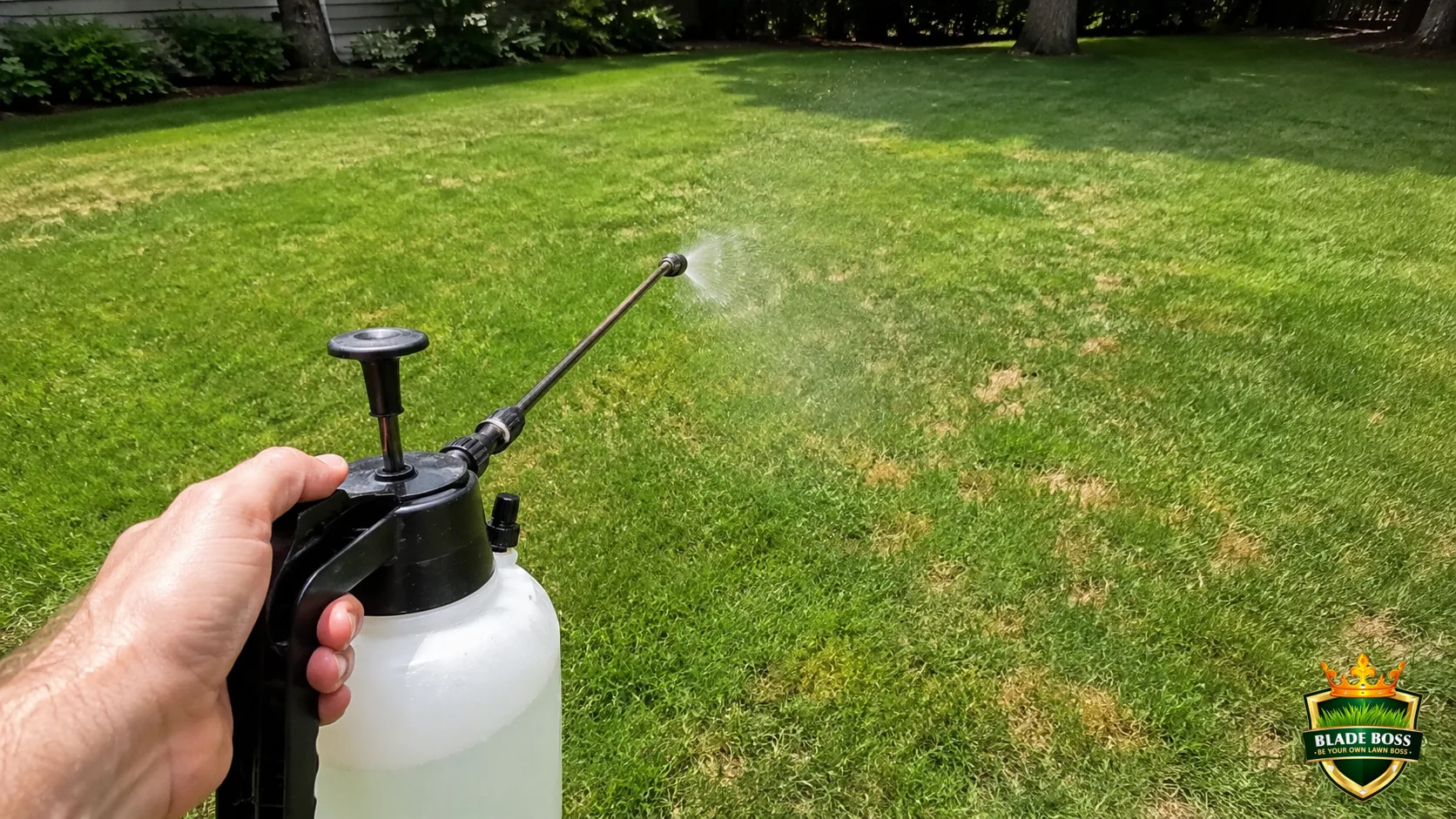 FUNG-01
How to Apply Lawn Fungicide: The Beginner's Box-Store Rotation
Your lawn browned out last summer and you want to stop it this year without buying pro gear. This is the simplest honest way to start: two bottles from the store, a real two-group rotation, and a clear-eyed look at exactly where this approach helps and where it runs out of runway.
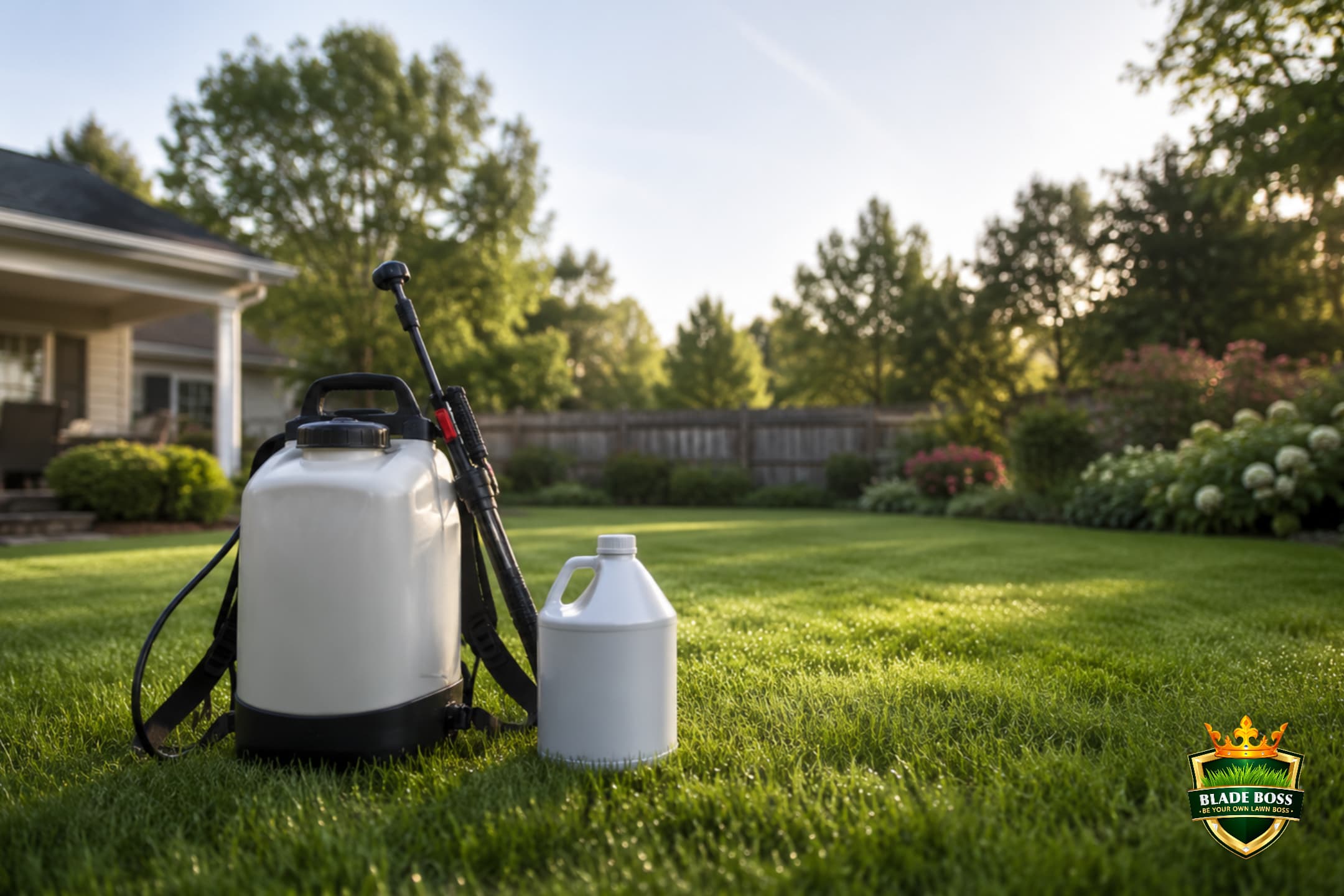 FUNG-02
How to Apply Lawn Fungicide: The Two-Product Concentrate Rotation
You ran the box-store rotation and you are ready for real control. This is the step up: two professional concentrates, exact rates measured to the milliliter, and a clear split between preventive doses and the heavier curative doses you reach for when disease is already active.
FUNG-03
How to Apply Lawn Fungicide: The Four-Group Legal Rotation
This is the complete program. Four FRAC groups in a GDD-timed rotation that holds the line through the worst Long Island disease summer, built only from products that are legal to apply here, with preventive and curative rates. Two of the four are professional products not labeled for homeowner use, so this is the tier where a licensed pro earns their keep.
Renovation 8 guides
Bigger projects: resets, regrades, and full rebuilds.
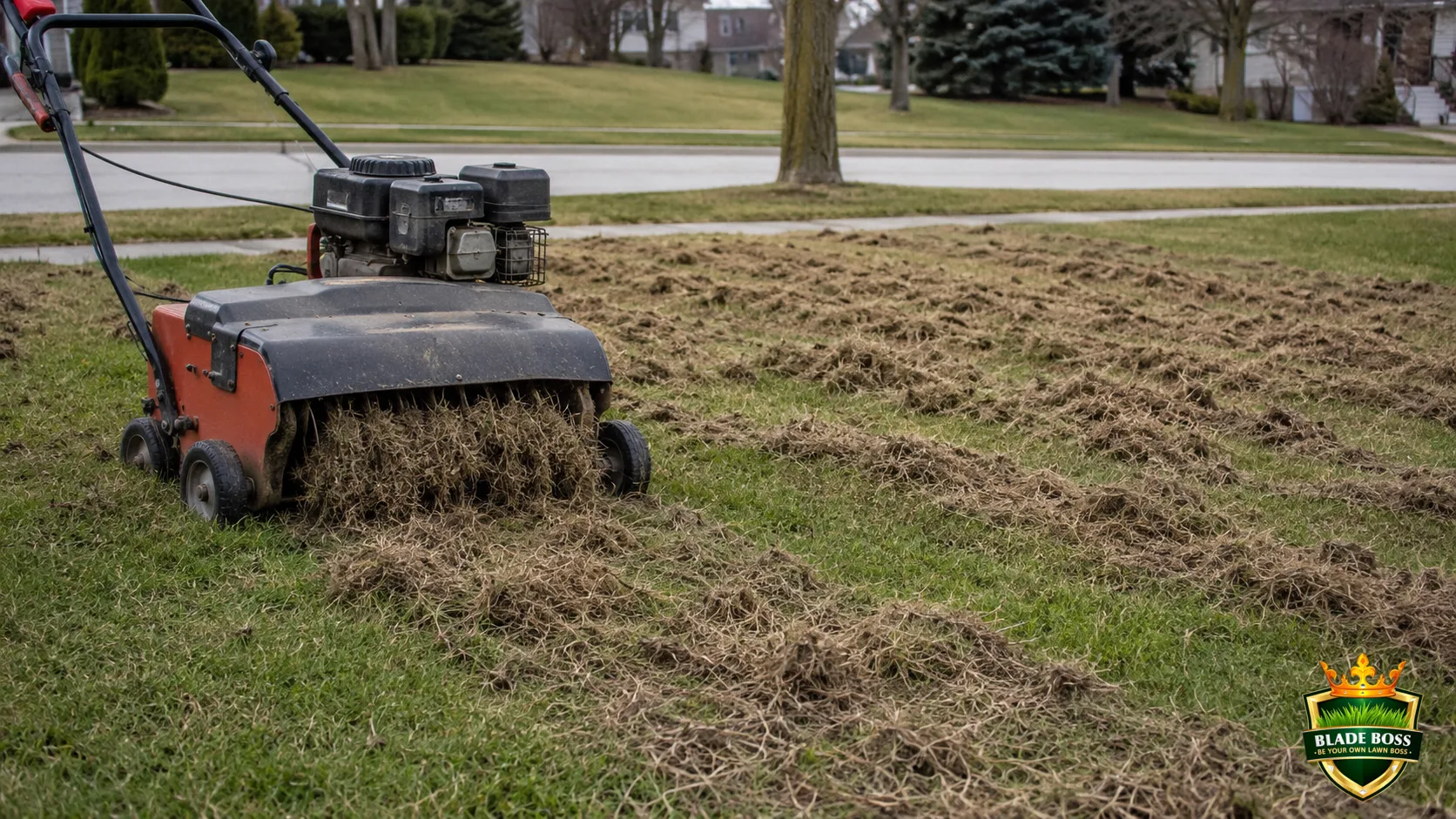 PREP-01
How to Dethatch Your Lawn
Thatch is the half-inch of dead stems and roots choking your lawn from the soil line up, and once it passes half an inch it blocks water, air, and fertilizer while it hides disease underneath. Dethatching pulls that mat out of the way so everything you do next actually reaches the soil. Do it in the right season, flag your sprinkler heads first, and pull it before you aerate and seed, and it is the single best move for resetting a tired lawn.
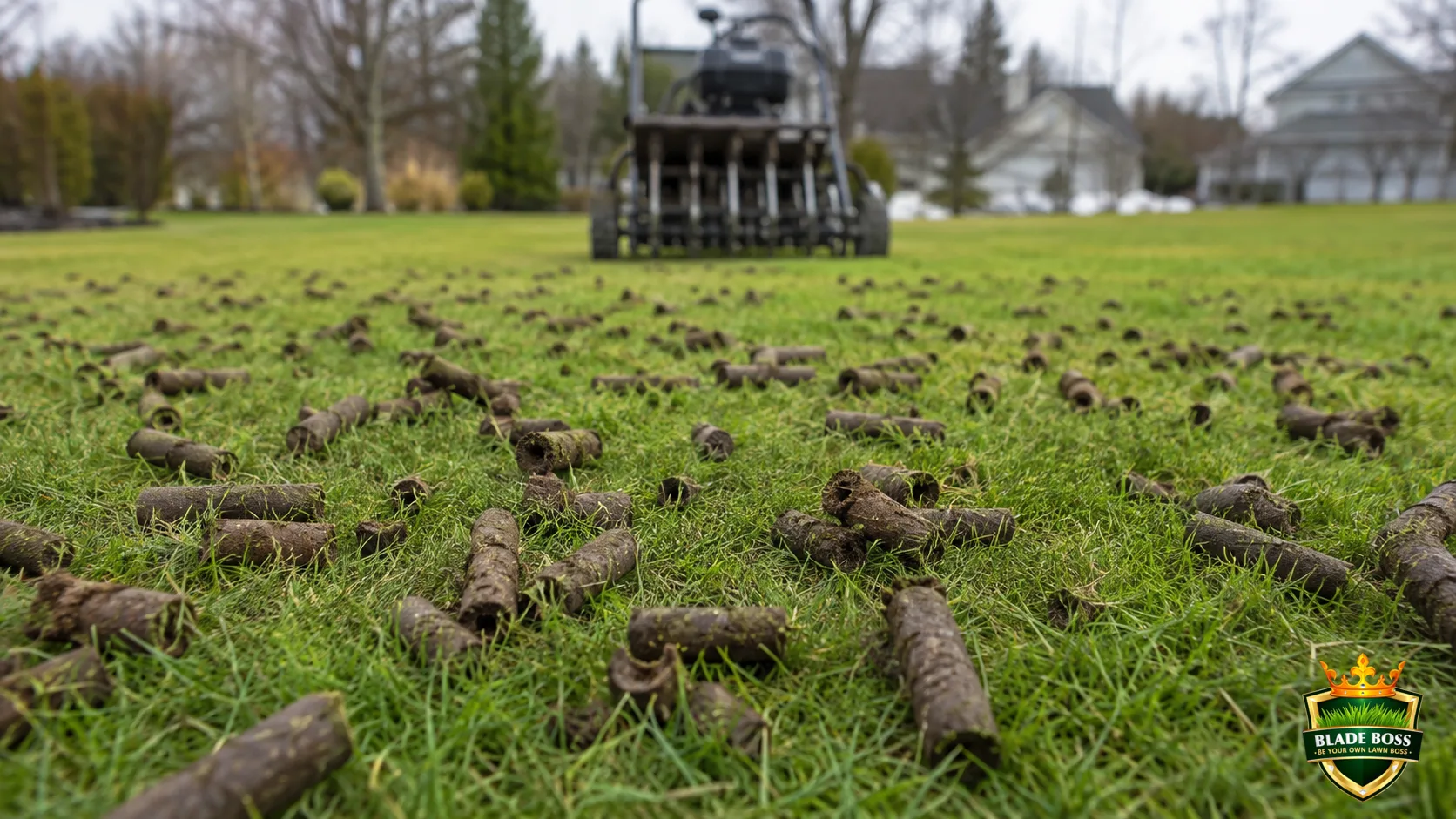 PREP-02
How to Aerate Your Lawn
Compacted soil strangles a lawn from below. Roots cannot push through it, water runs off instead of soaking in, and fertilizer sits on top doing nothing. Core aeration pulls thousands of plugs out of the ground and gives the soil somewhere to breathe. Do it in fall, on moist soil, right after you dethatch and right before you seed, and it is the single highest-return thing you can do for a tired lawn.
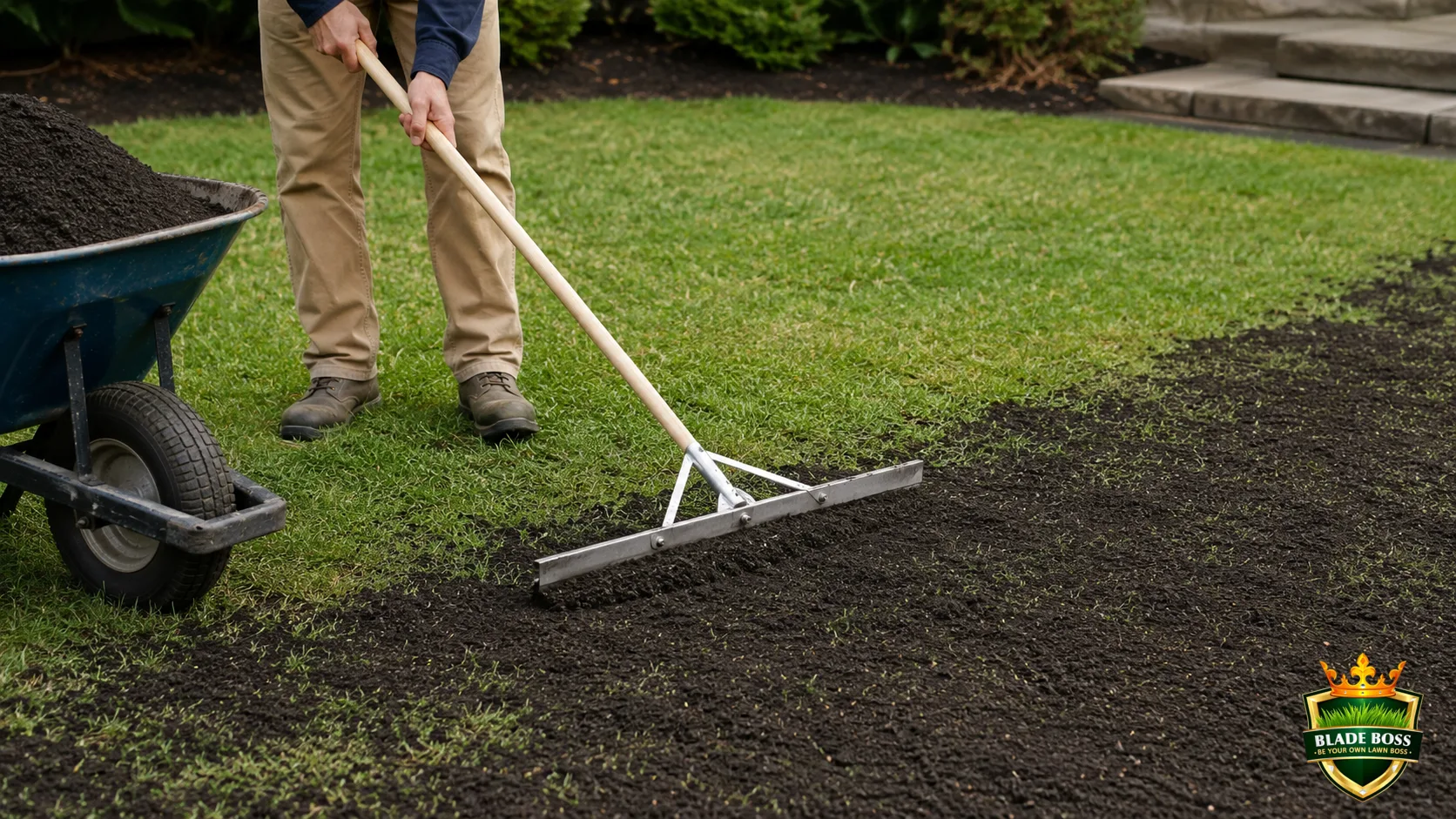 PREP-03
How to Topdress and Level Your Lawn
Topdressing is spreading a thin layer of soil, sand, or compost across your lawn. Done right, it levels bumps, smooths dips, and slowly rebuilds the soil underneath. Done wrong, it buries and suffocates the grass you were trying to help. The entire skill is in one word: thin. This is how to do it in the right order, at the right depth, without smothering a single blade.
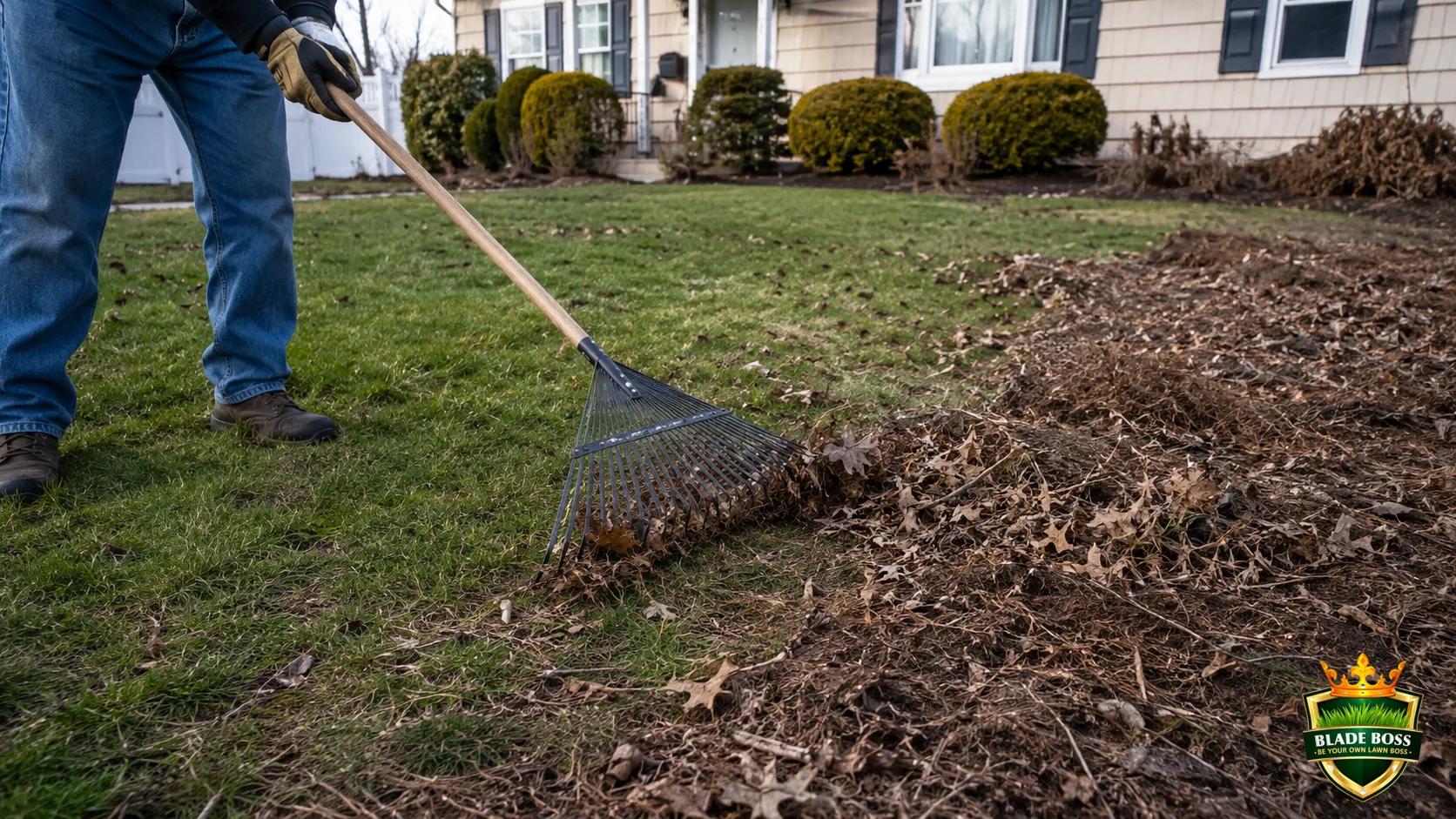 PREP-04
How to Do a Spring Lawn Cleanup
Spring cleanup is the first job of the season and the one that sets up everything after it. All winter your lawn collected matted leaves, fallen twigs, and dead debris that now sit on the crowns blocking the light and air the grass needs to wake up. Clearing it off, gently and at the right time, is what lets your lawn green up evenly instead of in patches. It is simple work, but the timing and a light touch matter more than people think. This is how to open the season right.
 SEED-01
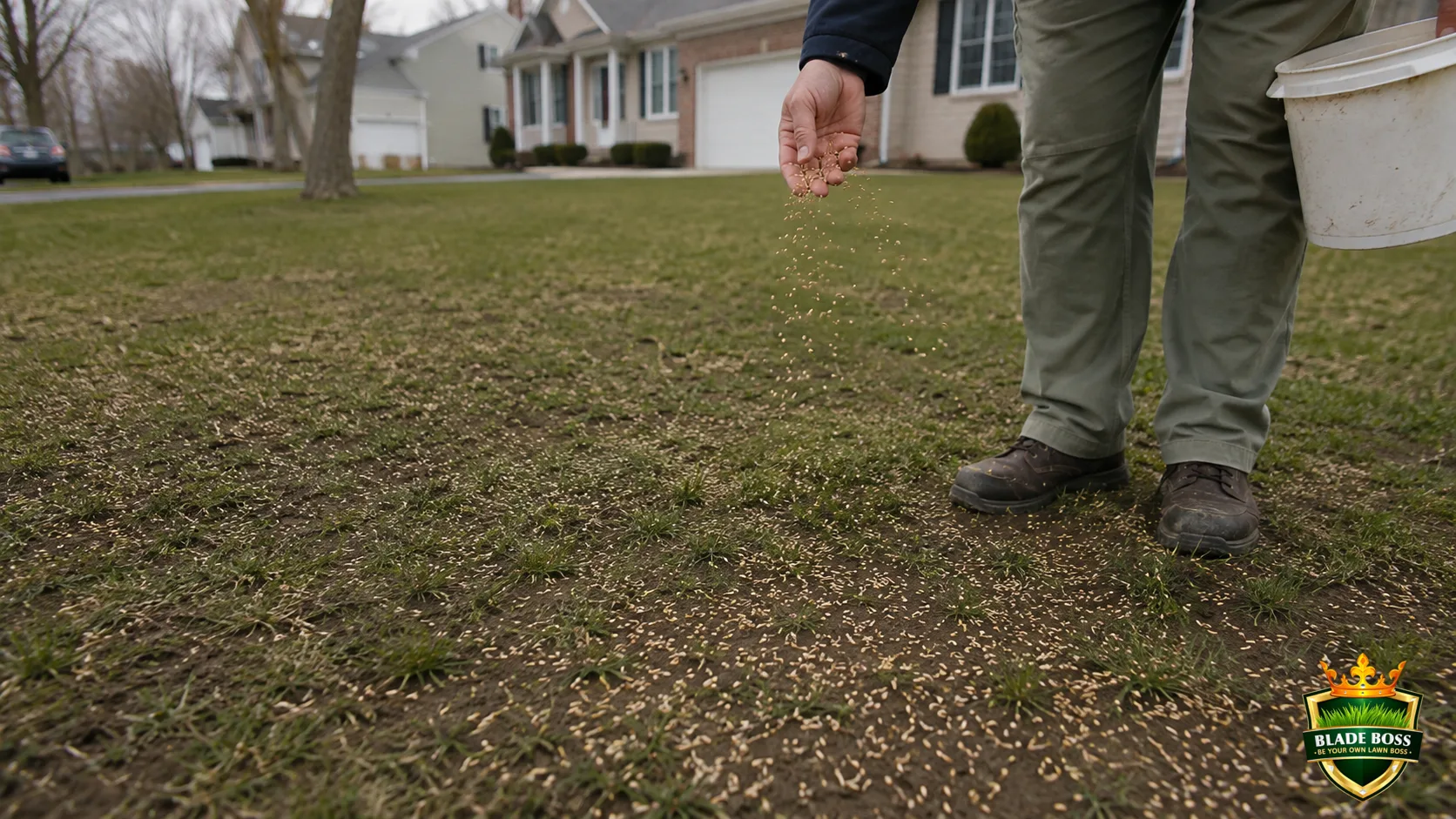
How to Overseed Your Lawn
Overseeding is how a thin, tired lawn gets thick again. It is also the step people fumble the most, because they buy the wrong seed, guess at the rate, throw it on hard ground, and then let it dry out on day four. Seed does not care how much you spent. It cares about soil contact and constant moisture. Get those two right in the fall window and you will not recognize the lawn next spring.
 SEED-02
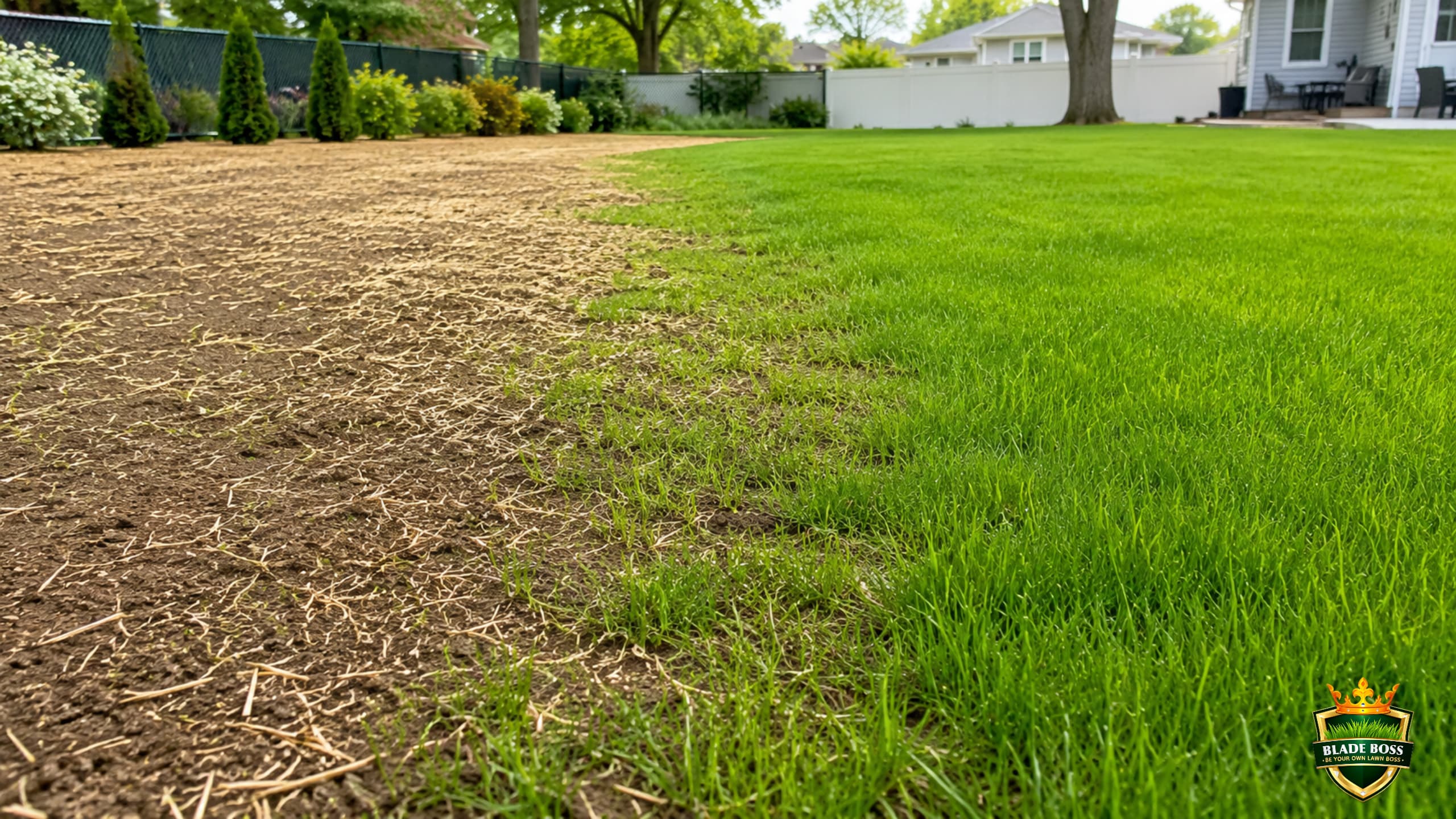
How to Start a New Lawn From Bare Soil
Starting a lawn from bare dirt is the most rewarding lawn project you can take on, and the easiest to get wrong. Almost every failed new lawn traces back to the same mistake: someone threw seed on unprepared ground and hoped. The grass you will be mowing for the next twenty years is decided in the two weeks before a single seed goes down, and it is decided in the soil. Get the soil right and seeding is easy. Skip it and no amount of seed, water, or money fixes what you built on. This is the full job, done in the right order.
 SEED-03
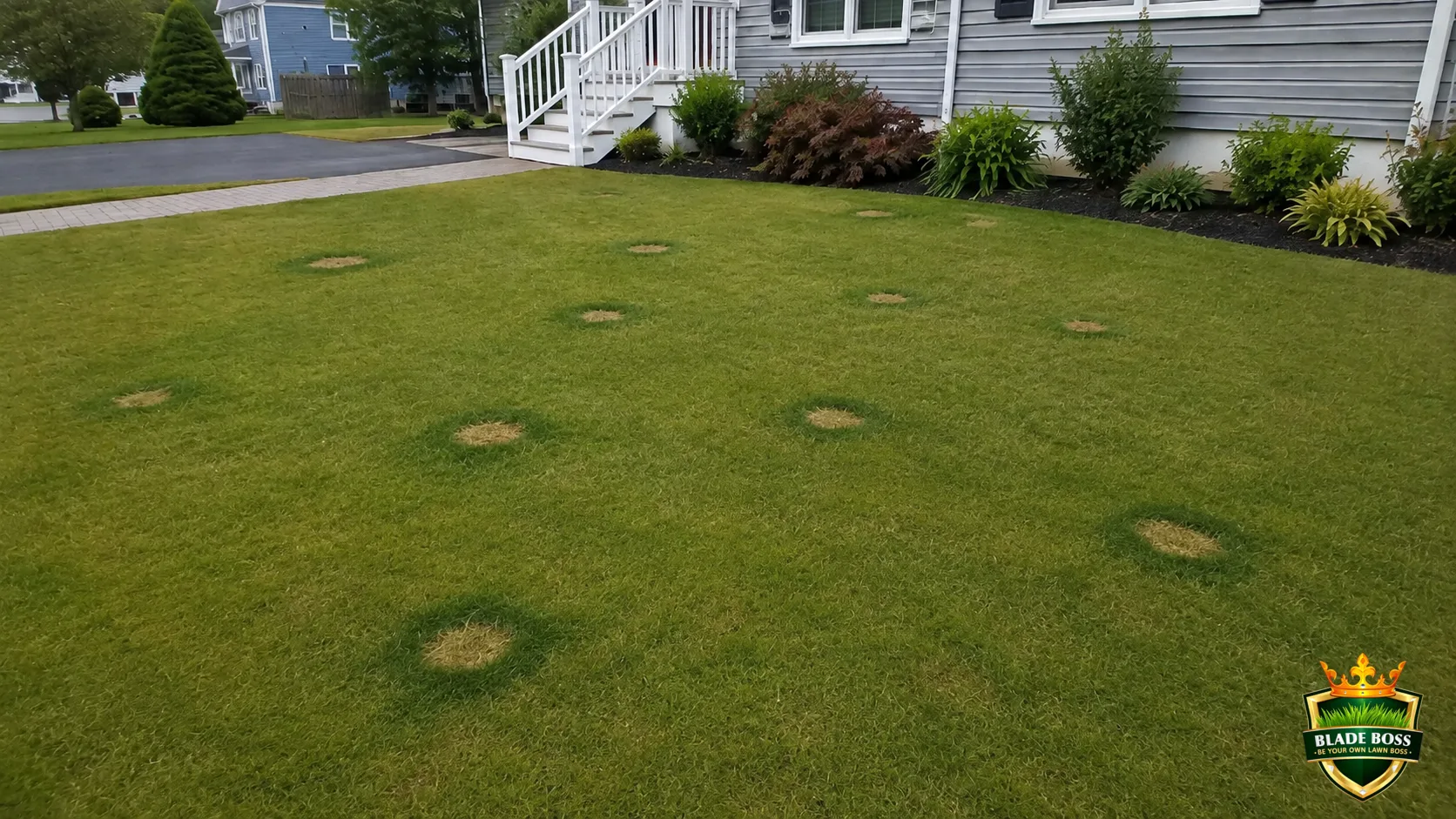
How to Fix Dog Urine Spots in Your Lawn
Those round dead patches with a suspiciously green ring around them are not a disease or a fungus, they are a dog problem, and the cause is simpler than the internet makes it sound. Dog urine burns grass because it dumps concentrated nitrogen and salts in one small spot, the same way a pile of fertilizer would. Once you understand that, the fix is straightforward and most of the products sold to prevent it are a waste of money. This is how to actually repair the spots and cut down on new ones.
 SEED-04
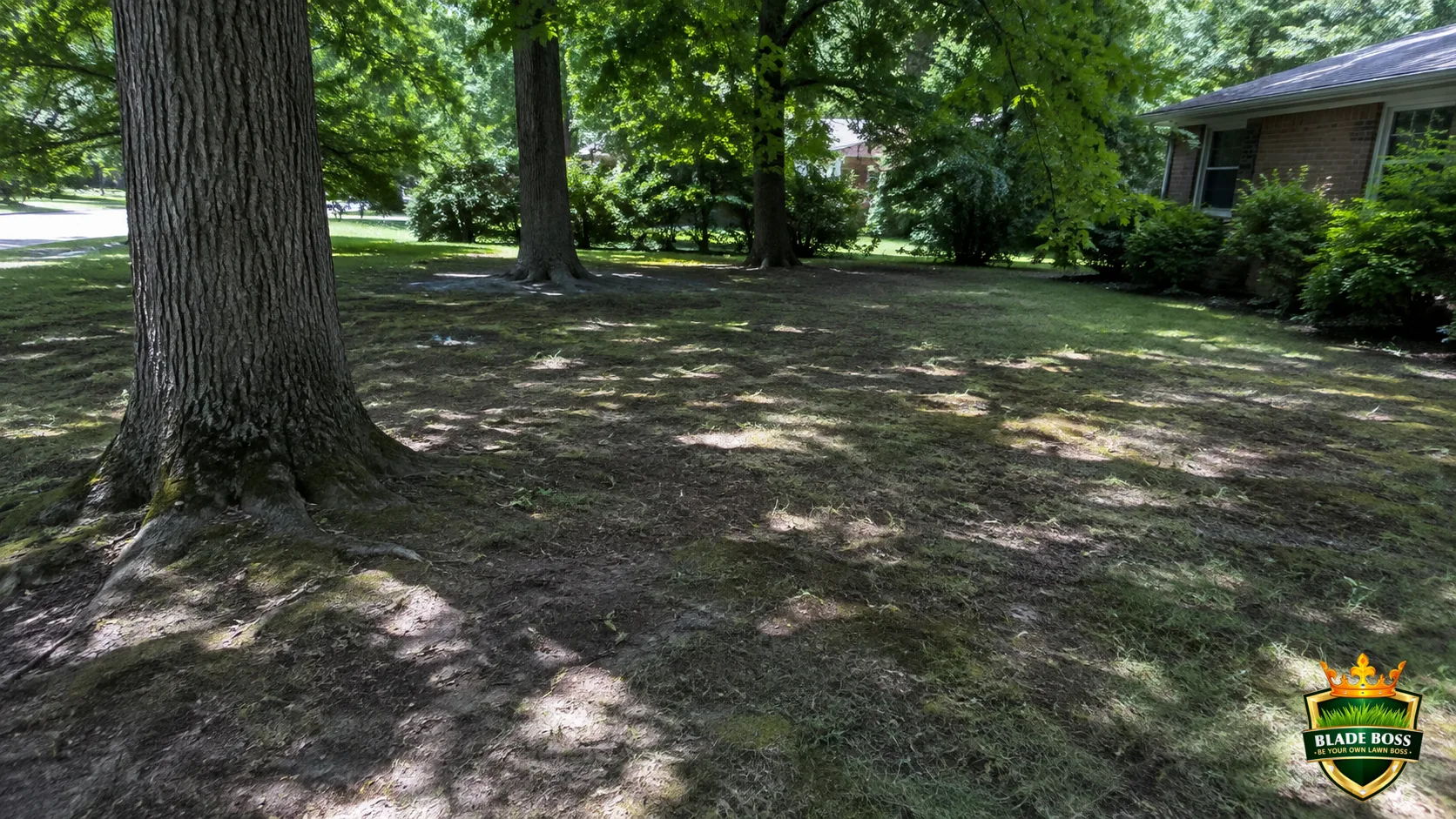
How to Grow Grass in Shade (What Actually Works)
Grass struggling under your trees is not a fertilizer problem or a watering problem, it is a light problem, and most of the advice out there ignores that. Cool-season grass needs a real minimum of daily light, and below that floor no amount of seed or feeding will save it. The good news: with the right grass, the right light, and honest expectations, most part-shade areas can carry a respectable lawn. This is what actually works, and where to stop fighting and change the plan.
Platform Guides 1 guides
Get the most out of your Blade Boss tools.
Planning 1 guides
No guides match that search. Try a different term, or request a guide.
Guides Tell You How. Blade Boss Tells You Exactly What.
Every guide funnels into a precision tool: your numbers, your zones, your plan. Satellite mapping, 20+ calculators, and Zone 7B schedules built for your exact lawn.