

GUIDE WEED-00A · REV D
How to Prevent Weeds Before They Start (The Long Island Pre-Emergent Program)
The best weed is the one that never grows. A pre-emergent stops weed seeds from sprouting, so crabgrass and annual bluegrass never appear in the first place. This is the whole Long Island program in plain numbers: 5 rounds, 2 products you can buy anywhere, the exact amount to use each time, and when to put it down. Follow the chart and you spend the summer mowing instead of spraying.
Pre-Flight Checklist - What You Need
As an Amazon Associate, Blade Boss earns from qualifying purchases. It never costs you a penny more.
Rules of Engagement (ROE's)
The Flight Plan - Step by Step
How It Works (30 Seconds)
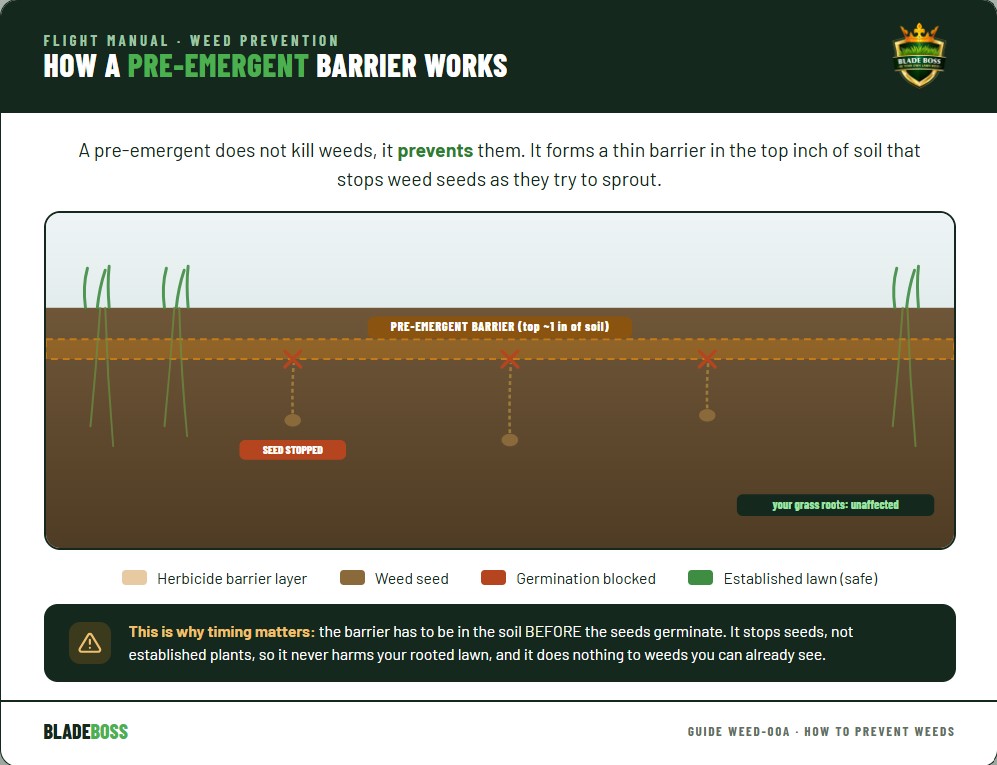
You do not need chemistry class. Here is all you need to know: when you spread a pre-emergent and water it in, it makes a thin barrier just under the surface. Weed seeds try to sprout up through it and die before they reach the top. Your lawn grass is already rooted below the barrier, so it is not affected.
- It stops seeds, not grown weeds. Use it before weeds appear, not after.
- It wears off. On our sandy soil each round lasts about 8 weeks, which is why one is not enough.
- Do not dig it up. Aerating or raking after you apply breaks the barrier, do that stuff first.
The 5-Round Program (When, What, How Much)
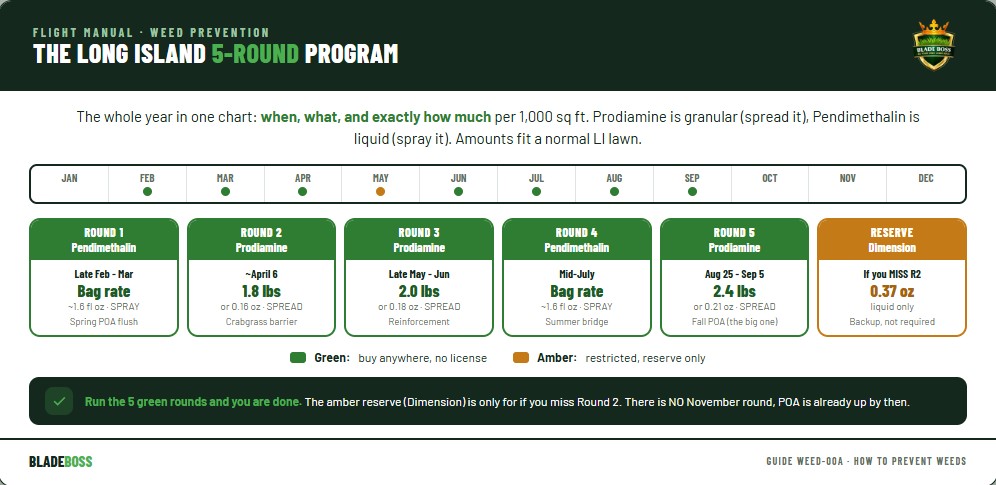
This is the whole program in one chart. Screenshot it. You start in late winter and run through fall. Every round tells you the date, the product, and the exact amount per 1,000 square feet. These amounts work for almost every Long Island lawn (Kentucky bluegrass, ryegrass, and tall fescue).
- Round 1, late winter (late Feb to early Mar), Pendimethalin (spray): bag rate, about 1.6 fl oz liquid, per 1,000 sq ft. This is where you start the year, it catches the early-spring weeds and the spring POA flush.
- Round 2, early spring (around April 6), Prodiamine (spread): 1.8 lbs granular, or 0.16 oz liquid, per 1,000 sq ft. Your crabgrass barrier, down before crabgrass sprouts.
- Round 3, late spring (late May to June), Prodiamine (spread): 2.0 lbs granular, or 0.18 oz liquid, per 1,000 sq ft. Reinforces the barrier through summer.
- Round 4, mid-summer (mid-July), Pendimethalin (spray): bag rate, about 1.6 fl oz liquid, per 1,000 sq ft. Holds coverage into the fall.
- Round 5, fall (Aug 25 to Sep 5), Prodiamine (spread): 2.4 lbs granular, or 0.21 oz liquid, per 1,000 sq ft. Your POA barrier, and the single most important round of the year, since most annual bluegrass sprouts in the fall.
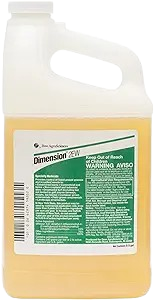
- Reserve (only if you MISS Round 2), Dimension: 0.37 fl oz liquid per 1,000 sq ft. A backup that also knocks down just-sprouted crabgrass. This one is amber-tier (see Step 3), so use it only if you slip.
- Shady, fine-fescue lawn? Go about 25% lighter on every prodiamine round, fine fescue is more sensitive. Everyone else uses the amounts above.
Which Products to Buy (Green Means Go)
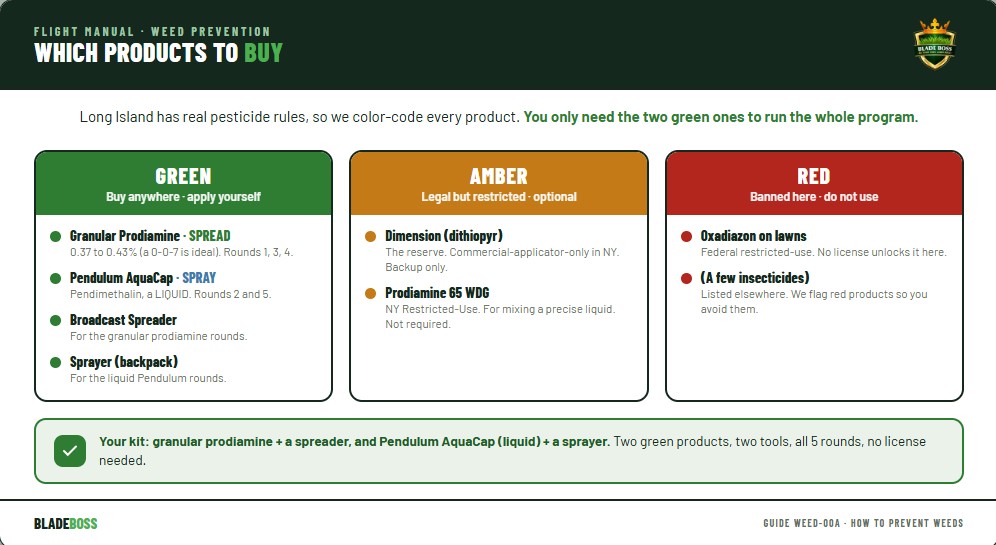
Long Island has real pesticide rules, so we color-code every product. You only need the two green ones to run the entire program. The others are optional.
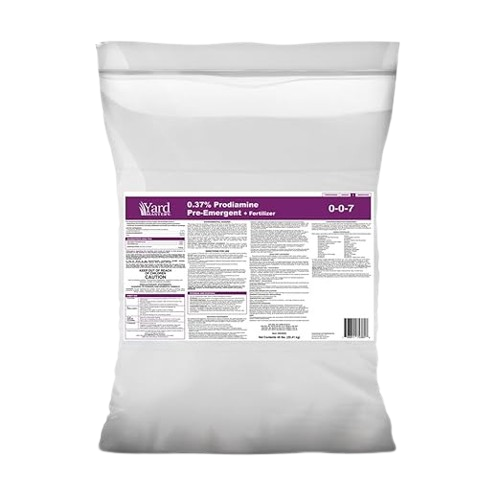
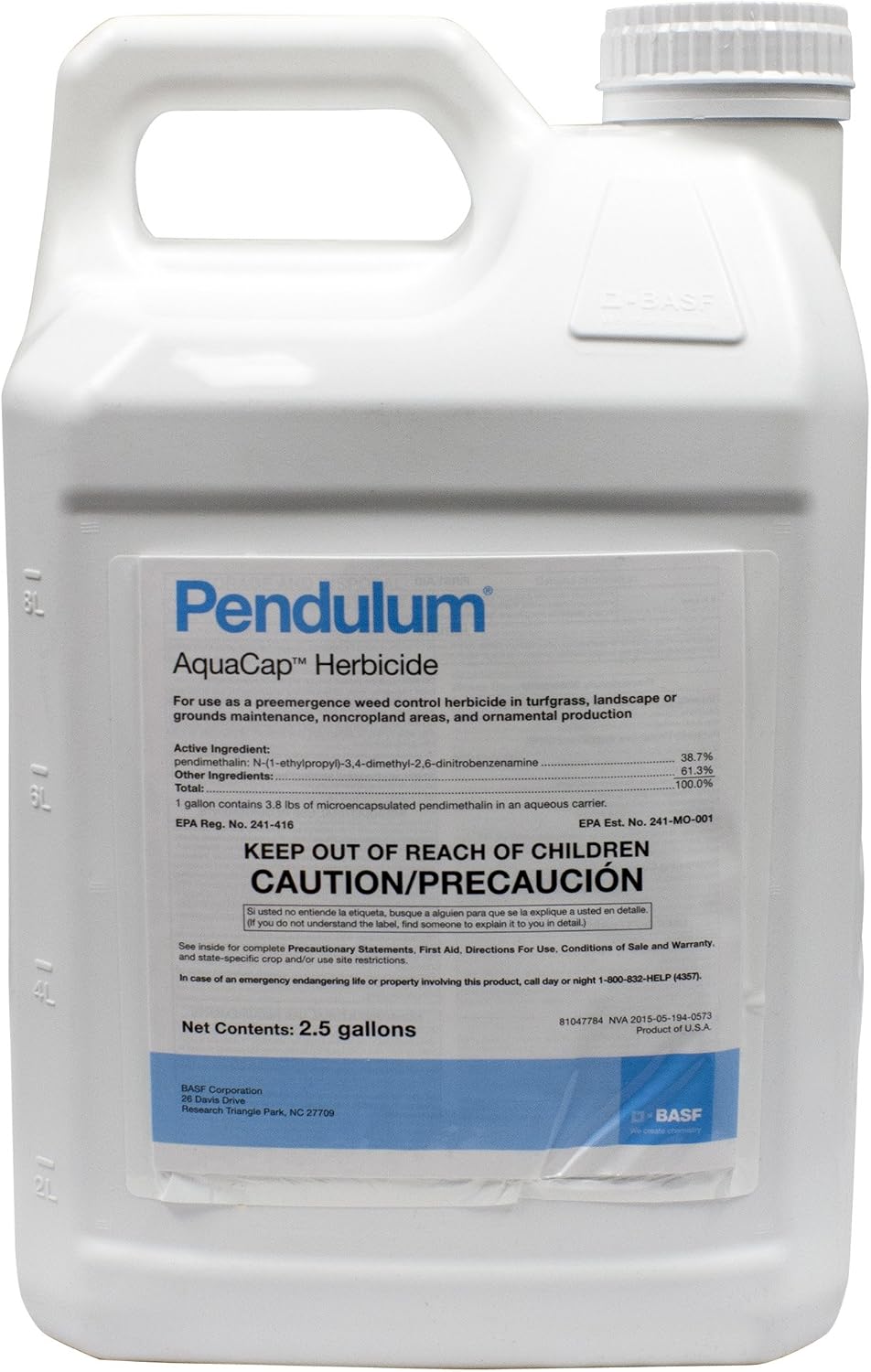
- GREEN, buy anywhere and apply yourself: granular prodiamine (a 0-0-7 with prodiamine is perfect, and it skips the Suffolk fertilizer ban), which you SPREAD, and pendimethalin (Pendulum AquaCap), a liquid you mix and SPRAY. These two run all 5 rounds.
- AMBER, legal but restricted, optional: Dimension (the reserve, commercial-applicator-only in New York) and prodiamine 65 WDG (a New York restricted-use product for people who want to mix a precise liquid). You never have to touch these.
- RED, banned here for everyone, do not use: oxadiazon on lawns and a few insecticides. No license unlocks them. We list them only so you know to avoid them.
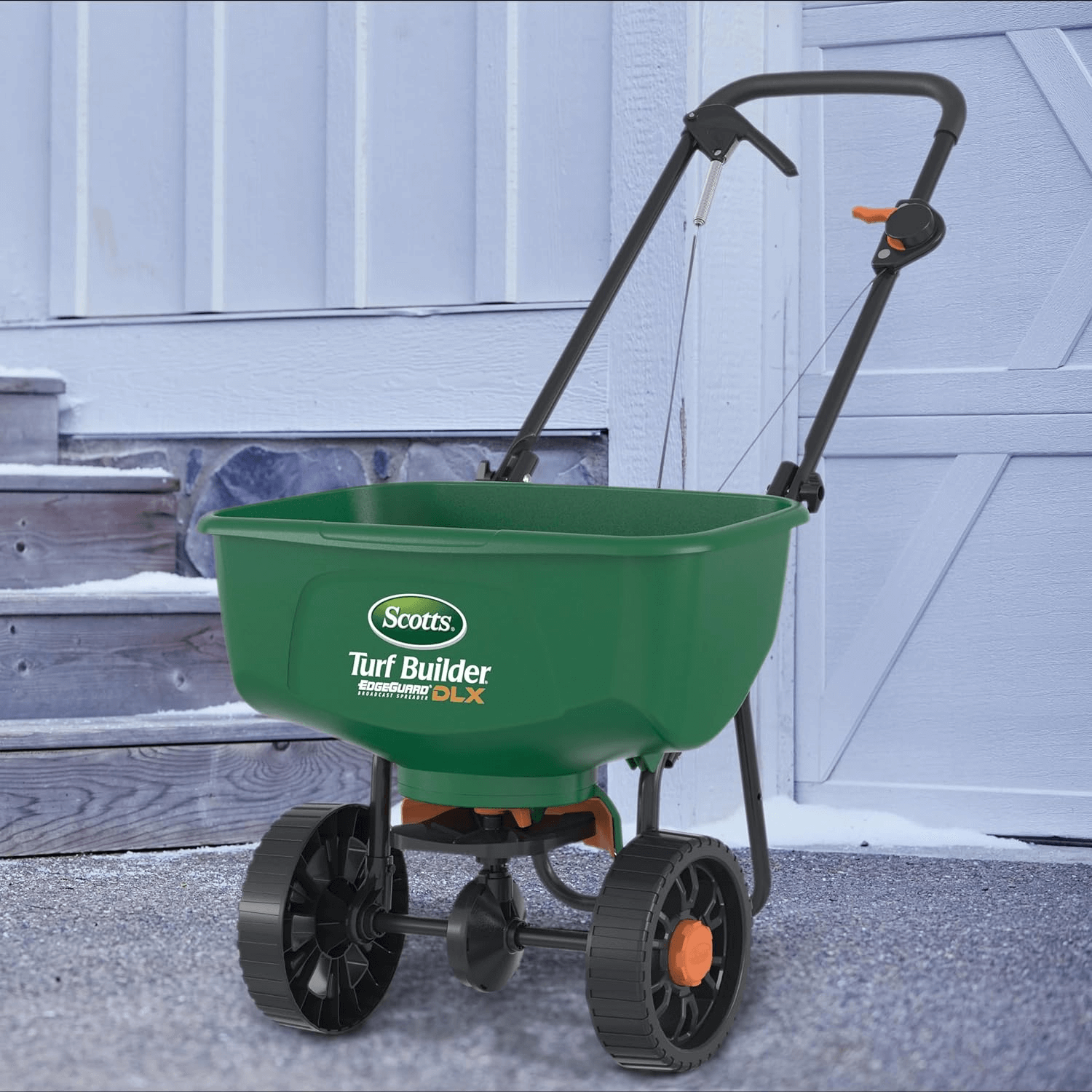
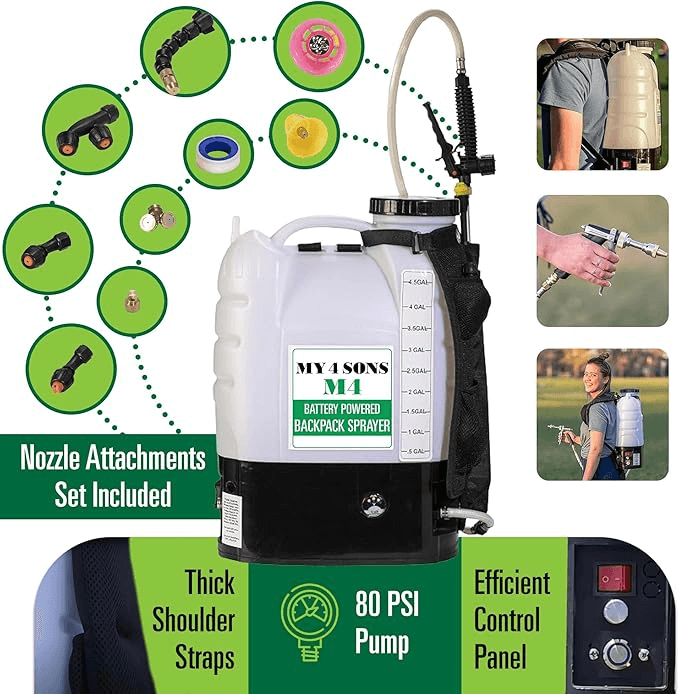
- Your kit is two products and two tools: granular prodiamine + a broadcast spreader (Rounds 2, 3, 5), and Pendulum AquaCap + a sprayer (Rounds 1, 4). That is everything.
How to Apply It
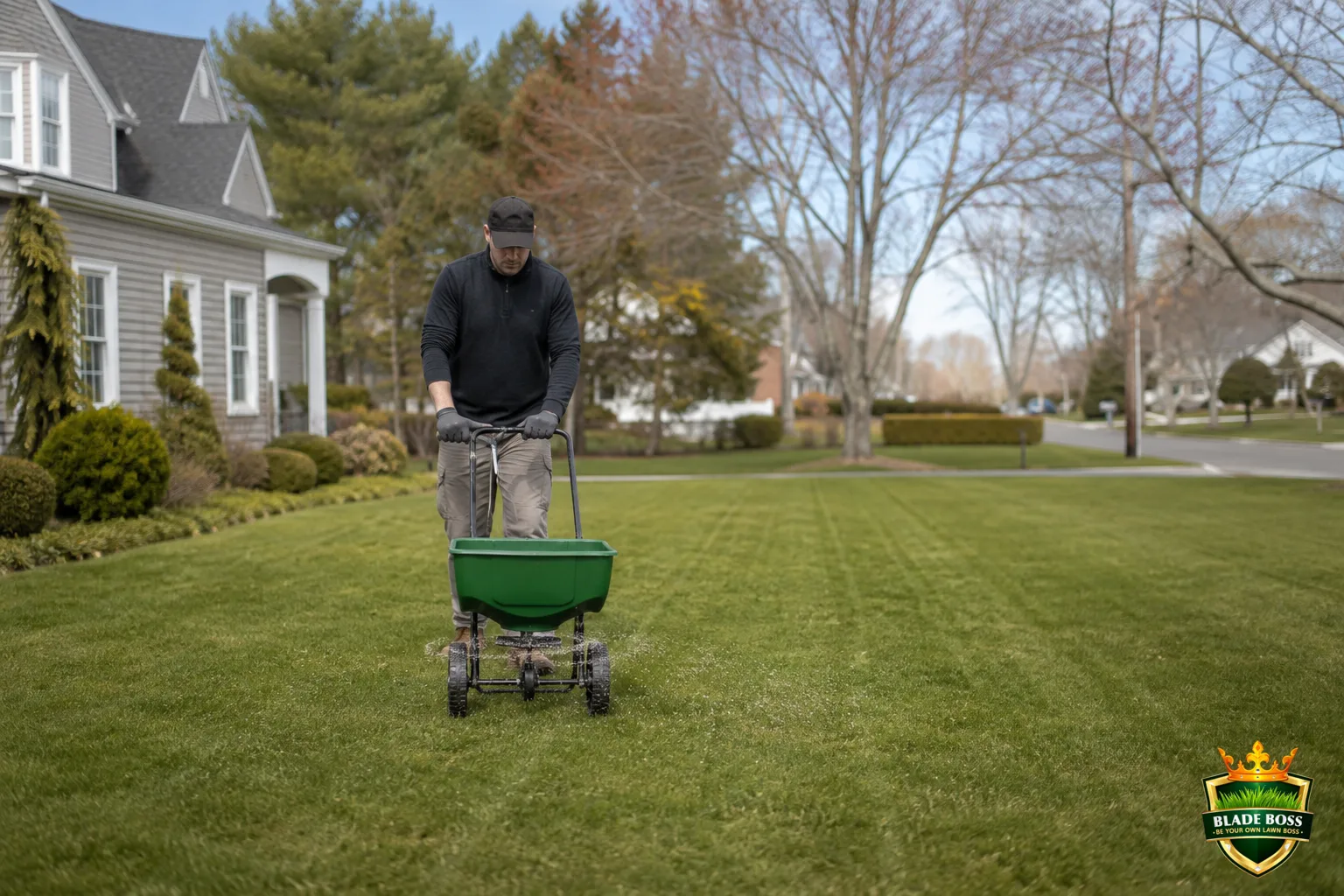
Two of your rounds you spread, two you spray, same goal either way: even coverage, then water it in. Prodiamine is granular (spreader), Pendulum AquaCap is liquid (sprayer).
- Granular rounds (prodiamine, Rounds 2, 3, 5): SPREAD in two directions. Set your broadcast spreader, then walk it north-south and again east-west so passes overlap and leave no gaps.
- Liquid rounds (Pendulum AquaCap, Rounds 1, 4): SPRAY for even coverage. Mix in your sprayer and keep the wand moving at a steady pace, overlapping passes. A backpack sprayer covers a whole lawn far easier than a small pump sprayer.
- Water it in within 14 days (both types): about half an inch of water or rain moves it into the soil and turns the barrier on. Skip this and it just breaks down on the surface.
- Skip it if the lawn is frozen, snow-covered, drought-stressed, or brand-new sod. Wait for normal conditions.
- Do any aerating or dethatching BEFORE you apply, never after, so you do not break the barrier.
The One Catch: Do Not Seed Under It
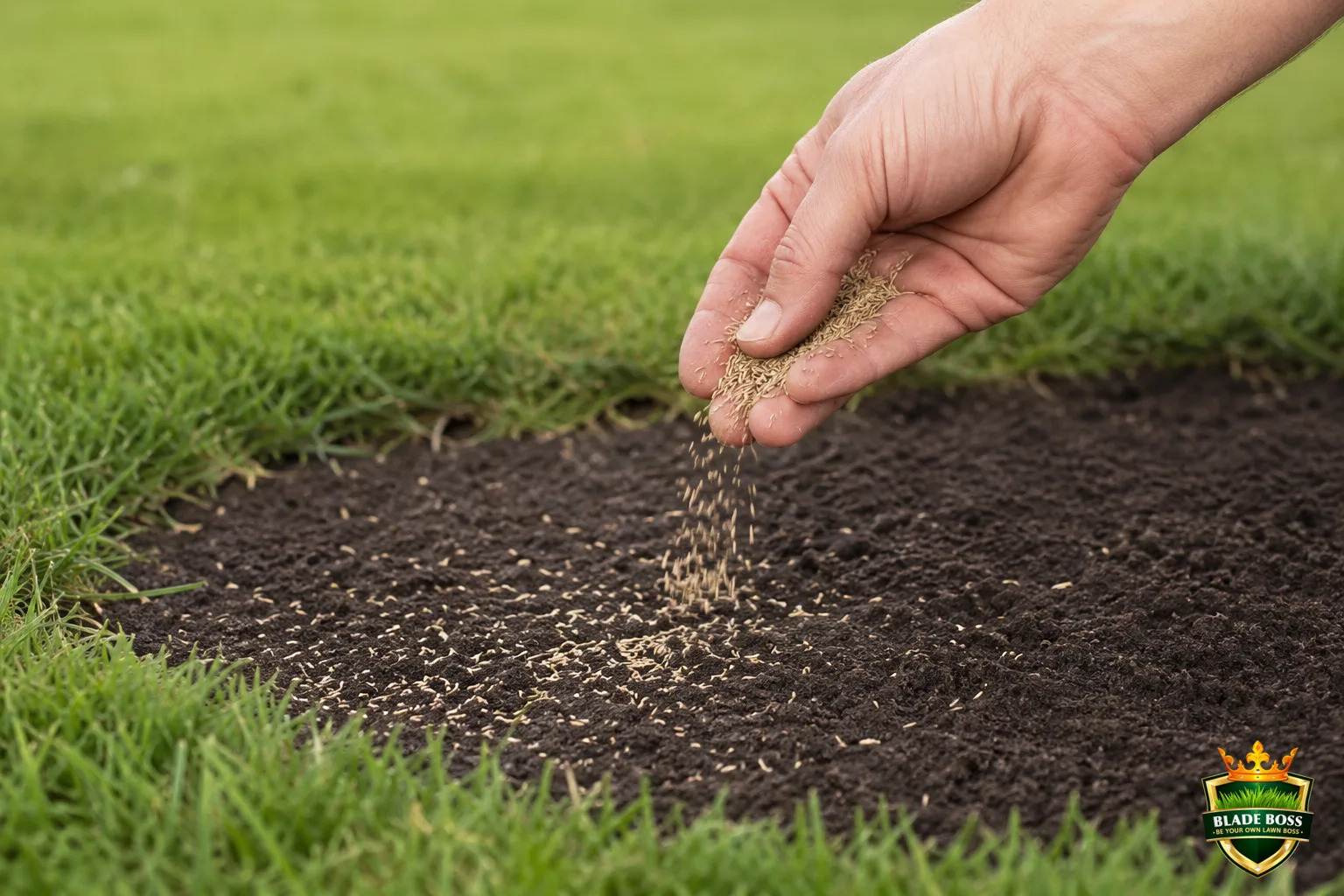
There is exactly one thing that trips people up. A pre-emergent barrier blocks ALL seeds, including the grass seed you want to grow. So you cannot run this program and overseed the same area in the same year.
- Pick one per area: prevent weeds, OR plant new grass. Not both in the same spot the same year.
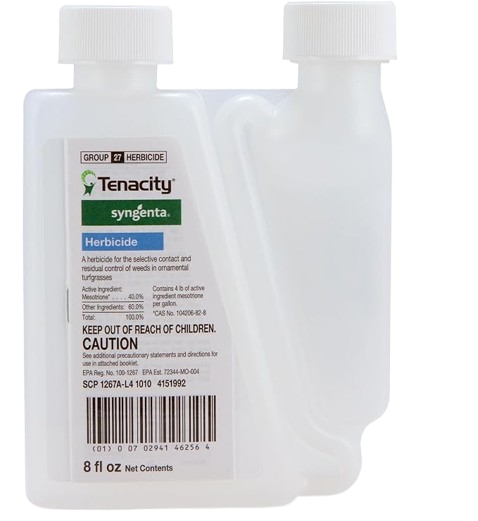
- Need to overseed this fall? Skip Round 1 on that area, use Tenacity (the one pre-emergent that is safe with new seed) when you seed, then put prodiamine down in early November after the second mow.
- Splitting your lawn works: run the full program on your good areas and reseed only the thin spots.
The Free Weapon: A Thick Lawn
The strongest weed preventer costs nothing: a thick, tall lawn. Weeds only invade thin, bare, sunny spots. Close those and most weeds never get started, barrier or not.
- Mow tall (3 to 4 inches): tall grass shades the soil, and weed seeds need warm, sunlit dirt to sprout.
- Feed and thicken the thin spots: a dense lawn leaves weeds no open ground to grab.
- Water deep and less often: it builds deep roots, while frequent light watering favors shallow weeds.
Abort Criteria - Common Mistakes
Mission Complete. Now Fly the Plan.
That is the whole thing: 5 rounds, 2 green-tier products, exact amounts, done. Follow the chart in Step 2, water each round in, and back it up with a thick, tall lawn, and weeds mostly stop being your problem. Use the Weather Hub to catch each round's timing, and if something still slips through, go straight to the fix: crabgrass or POA.
Want This as a Printable Field Manual?
Drop your email and the print-ready PDF version lands in your hands. Take it to the lawn, no phone required.
Crew Questions - FAQ
How much pre-emergent do I put down on Long Island?
Here are the exact amounts per 1,000 square feet, which work for almost every Long Island lawn (Kentucky bluegrass, ryegrass, tall fescue). The three prodiamine rounds, which you spread: Round 2 in early spring is 1.8 lbs of granular (or 0.16 oz liquid), Round 3 in late spring is 2.0 lbs granular (or 0.18 oz liquid), and Round 5 in the fall is 2.4 lbs granular (or 0.21 oz liquid). The two pendimethalin rounds, which you spray, are Round 1 in late winter and Round 4 in mid-July, both at the bag rate, about 1.6 fl oz liquid per 1,000. If you ever miss the early-spring Round 2, the reserve is Dimension at 0.37 fl oz liquid per 1,000. The one exception: a shady fine-fescue lawn is more sensitive, so drop every prodiamine round about 25 percent. Always measure your square footage first (length times width) so you apply the exact amount, since too little leaves gaps and too much can thin the grass.
When do I apply pre-emergent on Long Island?
Five times a year, and you start in late winter. Round 1 is late winter (late February to early March), a pendimethalin spray that catches early-spring weeds and the spring POA flush. Round 2 is early spring (around April 6), a prodiamine barrier down before crabgrass sprouts, this is your main crabgrass round. Round 3 is late spring (late May into June) to reinforce it through summer. Round 4 is mid-July to hold coverage into fall. And Round 5 is the fall round (Aug 25 to Sep 5), a prodiamine barrier that stops annual bluegrass (POA), the single most important round of the year, since most POA sprouts in the fall. Time each round by soil temperature and the calendar together, and use the Weather Hub to catch each window. One firm rule: there is no November round. POA sprouts in late summer, so a November application is too late, the fall round in late August is what handles it.
What pre-emergent should I buy, and is it legal on Long Island?
You only need two products, and both are green-tier, meaning any homeowner can buy and apply them: granular prodiamine (a 0-0-7 product with prodiamine is ideal, because it also skips Suffolk's winter fertilizer ban) and pendimethalin (sold as Pendulum AquaCap). Prodiamine covers the three main barrier rounds and pendimethalin covers the two bridge rounds, so those two run the entire program with no license needed. Two other products are amber-tier, legal but restricted, and completely optional: Dimension (dithiopyr), which is commercial-applicator-only in New York and only used as a backup if you miss the spring round, and prodiamine 65 WDG, a New York restricted-use product for people who want to mix a precise liquid. Finally, one thing is red-tier and banned here for everyone regardless of license: oxadiazon on lawns. Bottom line, your kit is two products and two tools: granular prodiamine with a broadcast spreader (for Rounds 2, 3, 5), and Pendulum AquaCap, a liquid, with a sprayer (for Rounds 1, 4). That covers the whole program.
Can I overseed and use pre-emergent the same year?
Not on the same area, because a pre-emergent barrier blocks every seed from sprouting and cannot tell your good grass seed from weed seed. If you barrier an area and then seed it, you kill your new grass along with the weeds. So you pick one per area each year: prevent weeds, or plant grass. If you need to overseed this fall, use the workaround: skip Round 1 on that area, use Tenacity (the one pre-emergent that is labeled safe to use with new grass seed) when you plant, then put prodiamine down in early November after you have mowed the new grass twice. A lot of people split their lawn, running the full prevention program on the established areas and reseeding only the thin spots. That way you get both, just not stacked on the same ground the same season.
Why do I need five rounds instead of one?
Because Long Island soil is sandy and drains fast, so a pre-emergent barrier only lasts about 8 weeks here before it breaks down, much shorter than the 3 to 4 months you might read about for heavier soils. One spring application wears off by early summer and leaves the rest of the year unprotected, which is exactly why people who apply once still fight crabgrass in July and POA in the fall. The 5-round program keeps a fresh barrier in the ground across every window when weeds try to sprout: late summer and late winter for annual bluegrass, and spring through mid-summer for crabgrass. It uses two products on purpose, prodiamine for three rounds and pendimethalin for two, so that each stays within its yearly legal limit while together they cover the whole calendar. It is more work than a single application, but it is the difference between mostly-weed-free and constantly playing catch-up.