

GUIDE WEED-10 · REV A
How to Kill Dandelions in Your Lawn
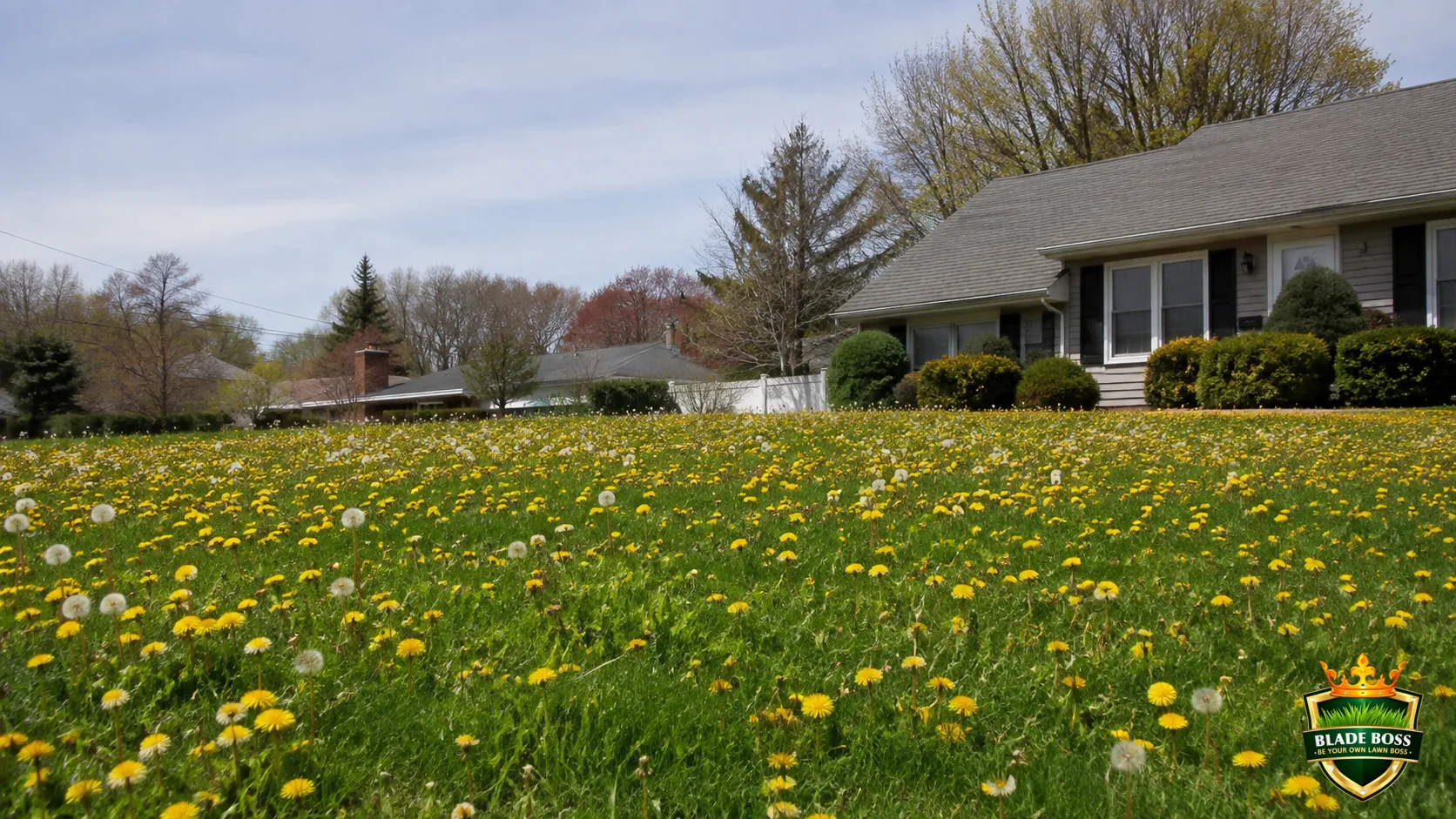
Dandelions look intimidating with those bright yellow flowers turning into puffballs everywhere, but here is the good news: they are one of the easiest lawn weeds to kill. Unlike clover, a cheap standard weed killer crushes them. The two things that trip people up are the deep taproot (which is why yanking them never works) and the puffball seed heads (which is why they keep spreading). This guide handles both: kill them to the root the easy way, and stop them from reseeding your whole yard.
Pre-Flight Checklist - What You Need
As an Amazon Associate, Blade Boss earns from qualifying purchases. It never costs you a penny more.
Rules of Engagement (ROE's)
The Flight Plan - Step by Step
Confirm It Is a Dandelion
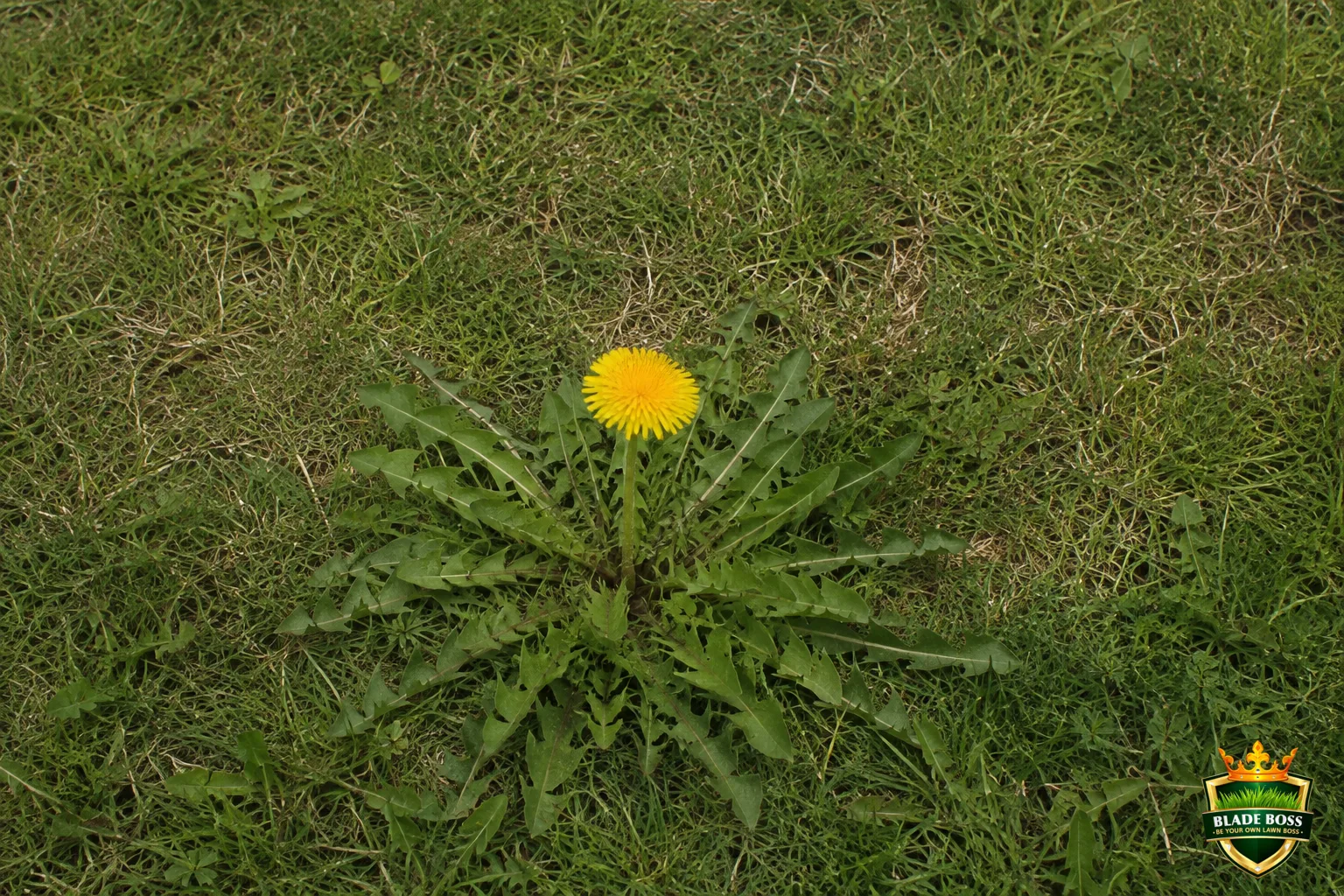
Dandelions are hard to mistake, but a couple of lawn weeds look similar, so confirm it before you spray. True dandelion is Taraxacum officinale.
- Flat rosette of jagged leaves: long leaves with deep, backward-pointing teeth, all radiating flat from a single center point at the ground.
- One bright yellow flower per hollow stem: a single flower head on a smooth, hollow stem that oozes milky sap when broken.
- The puffball: the yellow flower turns into the classic round white seed head that blows apart in the wind.
- A single deep taproot: one thick root drives straight down, this is the part that matters most (next step).
Easy to Kill, Hard to Pull (The Taproot)
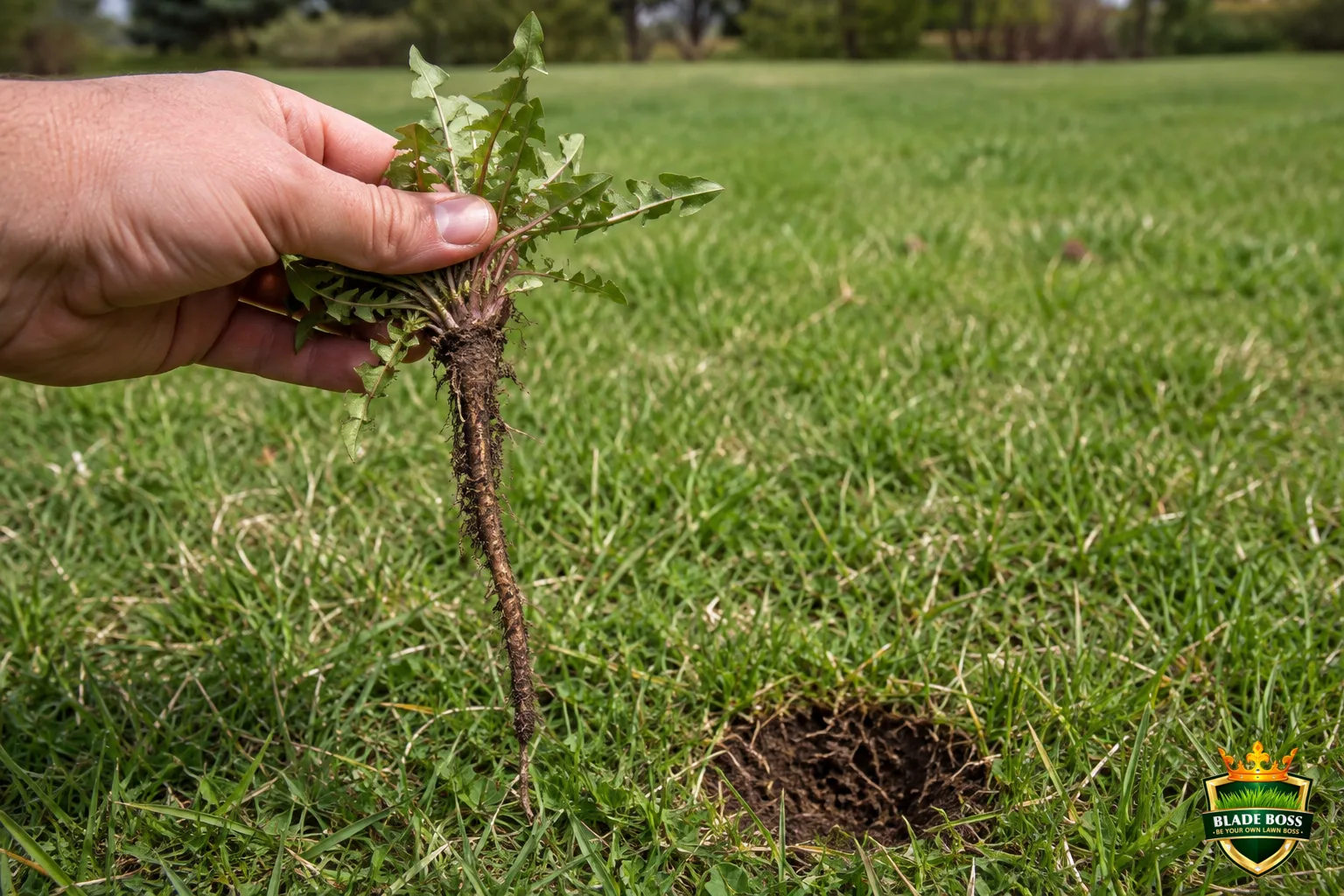
Here is the one thing that decides whether dandelions come back: the taproot. A dandelion sends a single thick root deep into the soil, and the whole plant can regrow from a piece of it. That is why the killing method matters.
- Chemically, they are easy: a standard 3-way weed killer moves through the leaves down into the taproot and kills the whole plant, root and all. This is the reliable way.
- Pulling usually fails: grab and yank, and the brittle taproot snaps off underground, leaving the bottom to regrow within days. Hand-pulling only works if you extract the entire root (Step 5).
- Fall is the best time: in fall the plant is moving energy down into the taproot for winter, so it carries the herbicide down with it, killing the root completely. Spring works too, but fall gives the cleanest kill.
- Beat the puffball: a single seed head releases a couple hundred wind-borne seeds. Kill or remove the plant before it goes to seed and you stop next year's crop from spreading across your yard.
Pick Your Product
This is the easy part. Dandelions are killed by just about any broadleaf weed killer, so you do not need a specialty product. The classic, affordable pick is a standard 3-way.
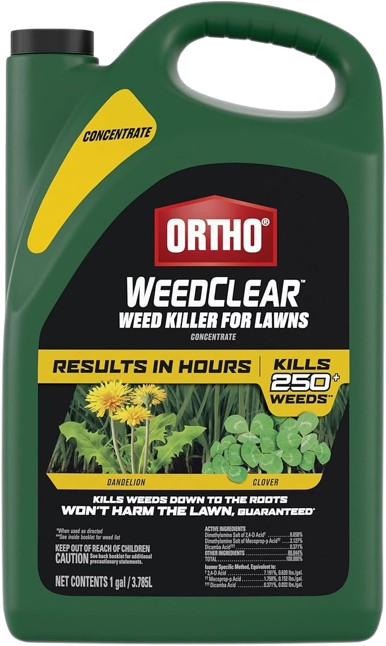
- The go-to: a standard 3-way like Ortho Weed B Gon (2,4-D, MCPA, and dicamba). Dandelions are highly susceptible to it, it is cheap, and it also clears most other broadleaf weeds in the same pass.
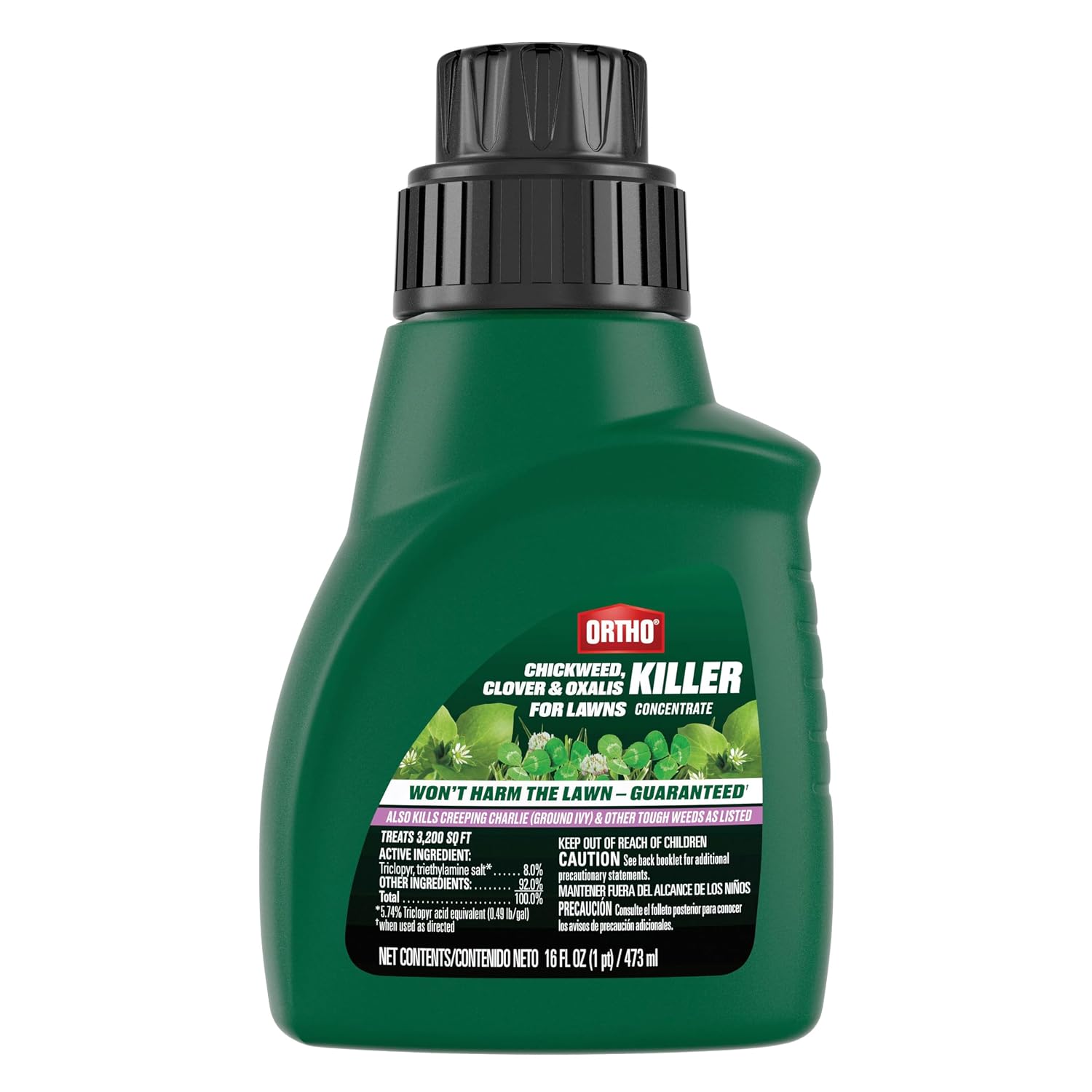
- Already have a triclopyr product? Ortho Chickweed, Clover and Oxalis or Spurge Power kill dandelions too. No need to buy them just for dandelions, but if you have them from a clover or spurge job, they work fine.
- Want to skip chemicals? For just a few dandelions, digging the whole taproot out by hand works (Step 5). For a yard full of them, spraying is far more practical.
- No surfactant needed: these consumer products already include everything they need. Just mix with water.

Mix and Spray It Right
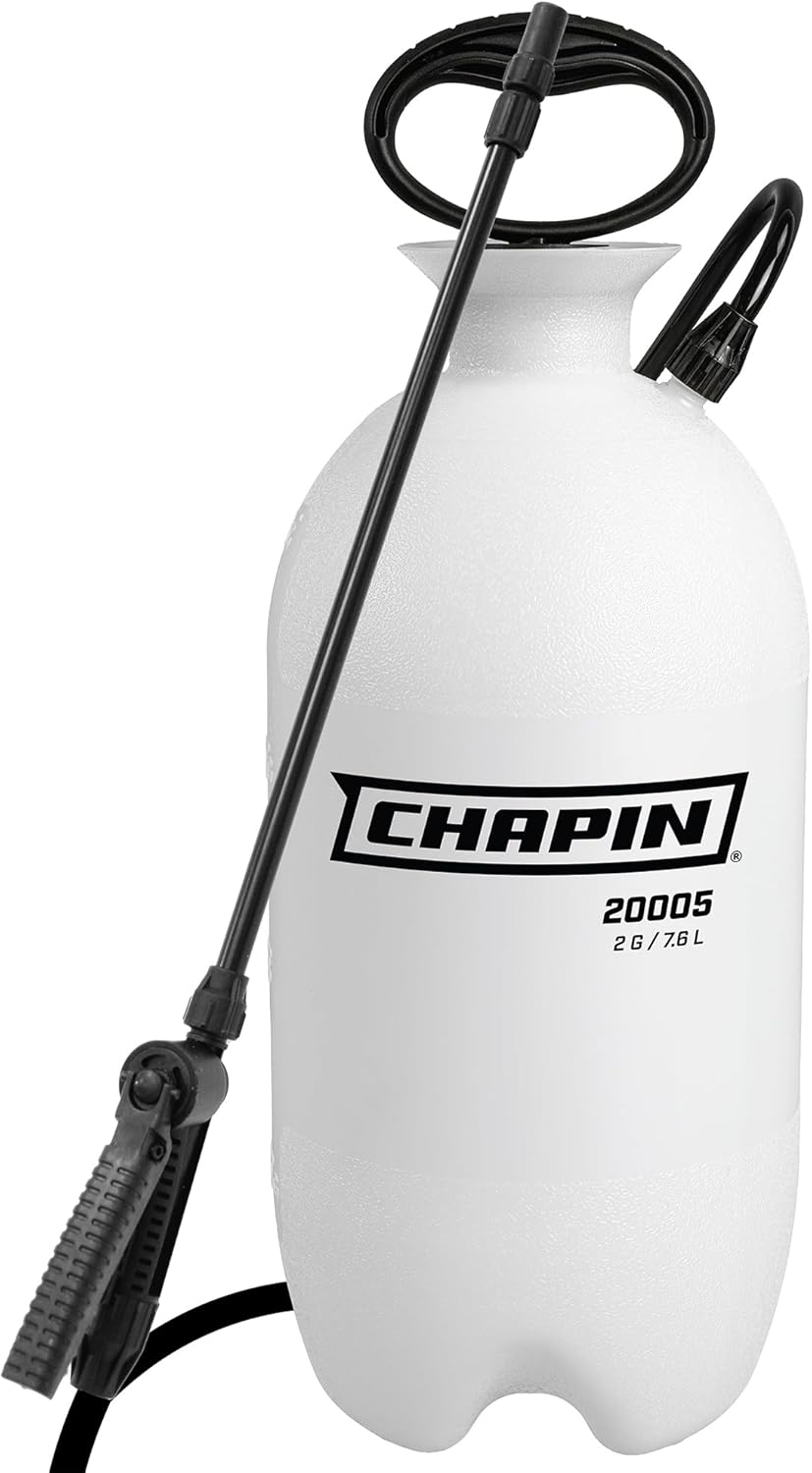
Spot-treat the dandelions directly. Do not blanket the whole lawn for a handful of weeds, spraying the individual plants is cheaper and easier on your grass.
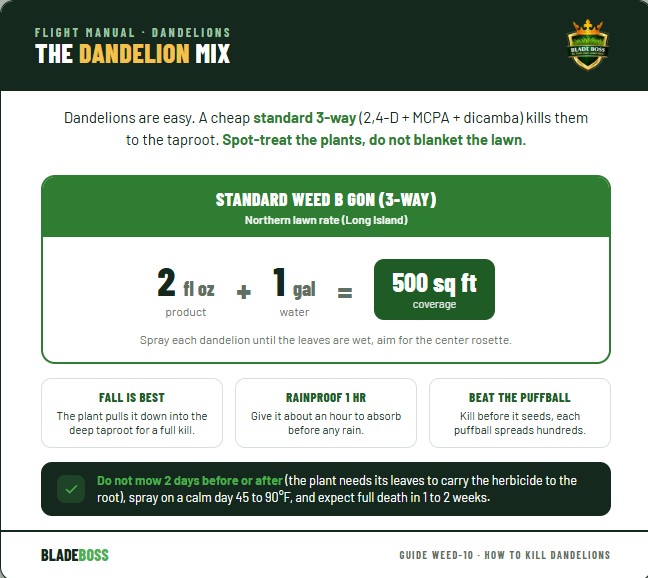
- Mix rate (standard Weed B Gon): 2 fl oz per gallon of water covers 500 sq ft on a Northern lawn like ours. Fill halfway, add the product, top off, shake.
- Spray each dandelion until the leaves are wet, not dripping. Aim for the center rosette so it runs down into the crown.
- Calm day, actively growing, 45 to 90°F: no wind to drift onto flower beds, and give it about an hour before any rain (it is rainproof in 1 hour).
- Do not mow 2 days before or after: the plant needs its leaves to absorb the herbicide and time to move it down to the root.
- Be patient: you will see curling in a day or two and full death over 1 to 2 weeks. Spot-spray any survivors after that.
Prefer to Pull? Do It Right
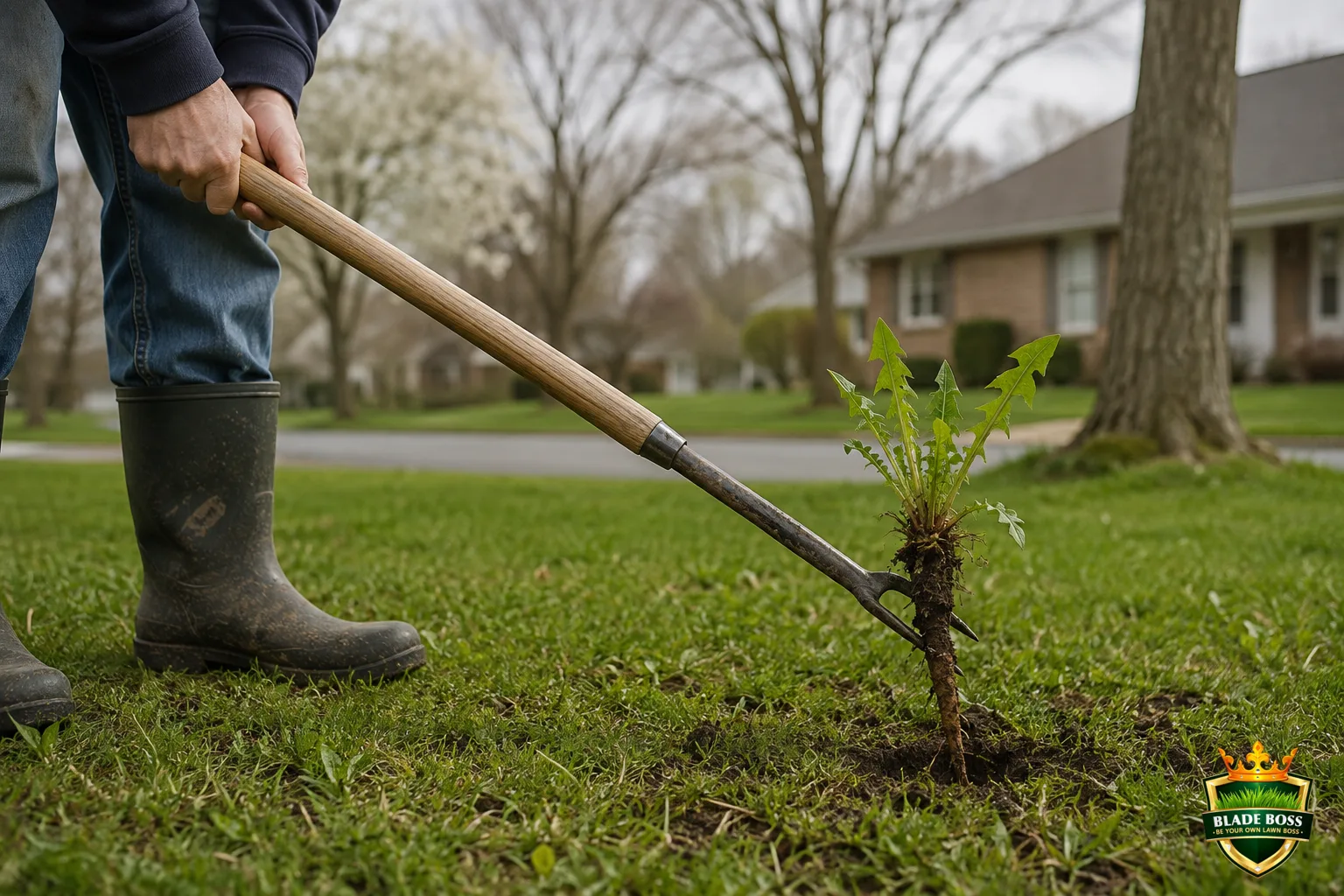
For a handful of dandelions, or if you want to go chemical-free, you can dig them out. But it only works if you get the entire taproot, so technique matters.
- Do it when the soil is moist: after rain or a watering, the whole taproot slides out far more easily than from dry, hard ground.
- Use a dandelion or fishtail weeder: the long forked tool drives down alongside the taproot and levers the whole thing out. Prying with a screwdriver or knife usually just snaps it.
- Get the full root, at least 4 to 6 inches: if you leave a chunk, it regrows. Pull slow and steady so it does not break.
- Fill and seed the hole: a bare hole is an open invitation for the next weed. Drop a little soil and grass seed in it.
- Skip pulling for a yard full: hand-digging fifty dandelions is a bad afternoon. Spray those instead.
Keep Them From Coming Back
Dandelions blow in as seed and take root wherever the lawn is thin, bare, or short. A thick, tall lawn is the best long-term defense, it simply gives the seeds nowhere to land and grow.
- Mow tall (3 to 4 inches): taller grass shades the soil so dandelion seeds cannot get the light they need to establish.
- Overseed and feed the thin spots: dense turf crowds out new dandelions before they get going.
- Kill them before they seed: every puffball you prevent is hundreds of seeds that never land in your yard (or the neighbor's).
- Stay ahead of it: a quick spot-spray of the few that show up each spring and fall keeps them from ever taking over.
Abort Criteria - Common Mistakes
Mission Complete. Now Fly the Plan.
Dandelions look worse than they are. Spot-spray a cheap standard 3-way (2 fl oz per gallon), hit them in fall for a full taproot kill, and get them before the puffball so they stop reseeding, or just dig the whole root out if there are only a few. Then keep the lawn thick and tall so new ones have nowhere to land. Time your spraying with the Weather Hub, and if you are clearing other broadleaf weeds in the same pass, see how to kill broadleaf weeds or, for the tougher cousin that resists 2,4-D, the clover guide.
Want This as a Printable Field Manual?
Drop your email and the print-ready PDF version lands in your hands. Take it to the lawn, no phone required.
Crew Questions - FAQ
What is the best way to kill dandelions?
Spot-spray them with a standard 3-way broadleaf weed killer, the kind that contains 2,4-D, MCPA (or MCPP), and dicamba, such as Ortho Weed B Gon. Dandelions are highly susceptible to these products (unlike clover, which resists 2,4-D and needs triclopyr), so you do not need anything specialized. Mix a standard Weed B Gon at 2 fluid ounces per gallon of water, which covers 500 square feet on a Northern lawn like Long Island, and spray each dandelion until the leaves are wet, aiming for the center of the rosette so it runs down into the crown. The single most important detail is that the herbicide travels down and kills the deep taproot, which is the part that lets a dandelion regrow. That is also why timing matters: fall is the best time to spray, because the plant is pulling energy down into its taproot for winter and carries the herbicide down with it for a complete kill. Spray on a calm, mild day (45 to 90 degrees), give it about an hour before any rain, and do not mow for 2 days before or after. You will see results in 1 to 2 weeks.
Why do dandelions come back after I pull them?
Because of the taproot. A dandelion grows from a single thick root that drives deep into the soil, and when you grab the plant and yank, that brittle root snaps off underground, leaving the bottom portion behind. From that leftover piece, the plant simply regrows, often within a week or two, which is why hand-pulling feels like a losing battle. To remove a dandelion by hand successfully, you have to extract the entire taproot, ideally 4 to 6 inches of it. Do it when the soil is moist (after rain or watering) so the root slides out instead of breaking, and use a dandelion or fishtail weeder, the long forked tool that drives down alongside the root and levers the whole thing out. If you would rather not dig, a standard 3-way herbicide is actually more reliable than pulling for exactly this reason: it moves down through the plant and kills the entire taproot chemically, so nothing is left to regrow. And whichever method you use, fill and seed the hole afterward so a new weed does not just take the open spot.
When should I kill dandelions, spring or fall?
Fall is the best time, even though spring is when dandelions are most visible with their yellow flowers. The reason is biology: in fall, a dandelion is moving sugars and energy down into its taproot to survive the winter, so when you spray then, the plant carries the herbicide down into the root along with those nutrients, killing the entire plant, root and all. A spring application still works and is worth doing, but spring growth is moving upward and outward into flowers and leaves, so the kill is sometimes less complete and survivors can regrow from the root. There is, however, one strong reason to treat in spring too: seeding. Dandelions flower in spring and quickly turn into puffball seed heads, and each puffball releases a couple hundred wind-borne seeds. If you kill or remove the plants while they are still yellow flowers, before the puffballs form, you prevent that whole seed dispersal and dramatically cut how many new dandelions show up next year. The ideal program is simple: knock down the spring flush before it seeds, then do your thorough, taproot-killing work in the fall.
Are dandelions hard to get rid of?
No, dandelions are actually one of the easiest lawn weeds to control, which is a nice change from stubborn weeds like clover, spurge, or nutsedge. The reason people struggle with them is almost always method, not difficulty: they yank the plant (leaving the taproot to regrow) or just mow the flowers off (which does not kill anything), and then conclude dandelions are impossible. In reality, dandelions are highly susceptible to ordinary, inexpensive 3-way broadleaf herbicides, so a simple spot-spray kills them to the root. The two things to respect are the taproot (which is why you kill or dig the whole root rather than snapping off the top) and the puffball seed heads (which is why you treat before they go to seed, so they do not spread). Handle those two things and dandelions are a quick, cheap job. For lasting control, keep your lawn thick and mowed tall, because dandelion seeds need bare, sunny soil to establish, and a dense lawn simply does not give them the opening.
Does mowing get rid of dandelions?
No. Mowing knocks the yellow flowers off and makes the lawn look better for a few days, but it does not kill the dandelion at all. The plant grows from a flat rosette of leaves right at ground level and a deep taproot, both of which sit below the mower blade and survive completely. Worse, dandelions are adaptable: under regular mowing they can flower and set seed on very short stems, right down at the height of the cut, so they may keep reproducing even as you mow. So while mowing tall is genuinely helpful for prevention (taller grass shades the soil and stops new seeds from establishing), it is not a removal method for dandelions that are already growing. To actually get rid of them, you either spray a 3-way herbicide that travels down and kills the taproot, or dig the entire taproot out by hand. Then you use tall mowing and a thick lawn to keep new ones from moving in.