

GUIDE FERT-01 · REV A
How to Apply Granular Fertilizer
Buying the right bag is the easy part. Putting it down correctly is where lawns get striped, burned, and where fertilizer ends up in the storm drain instead of the soil. This is the walk: how to set the spreader, how to pattern the lawn so you never streak, how to keep every granule out of the street, and how to stay on the right side of Long Island's fertilizer laws, which are among the strictest in the country.
Pre-Flight Checklist - What You Need
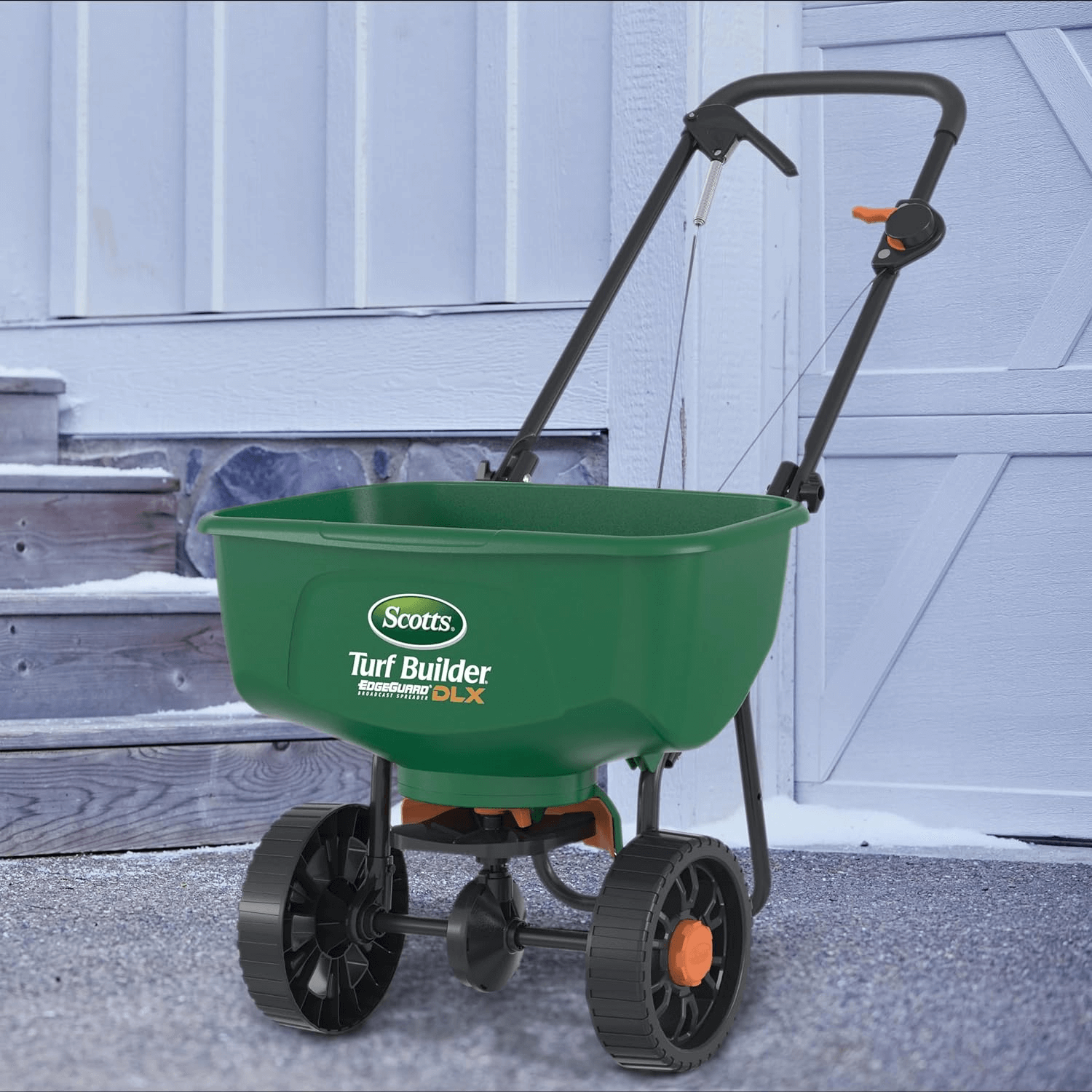
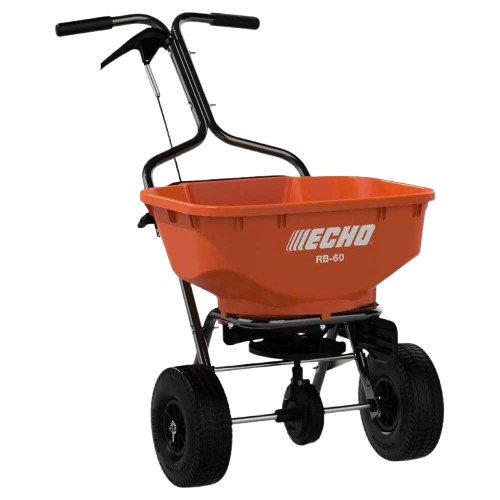
As an Amazon Associate, Blade Boss earns from qualifying purchases. It never costs you a penny more.
Rules of Engagement (ROE's)
The Flight Plan - Step by Step
Know Your Number Before You Open the Bag
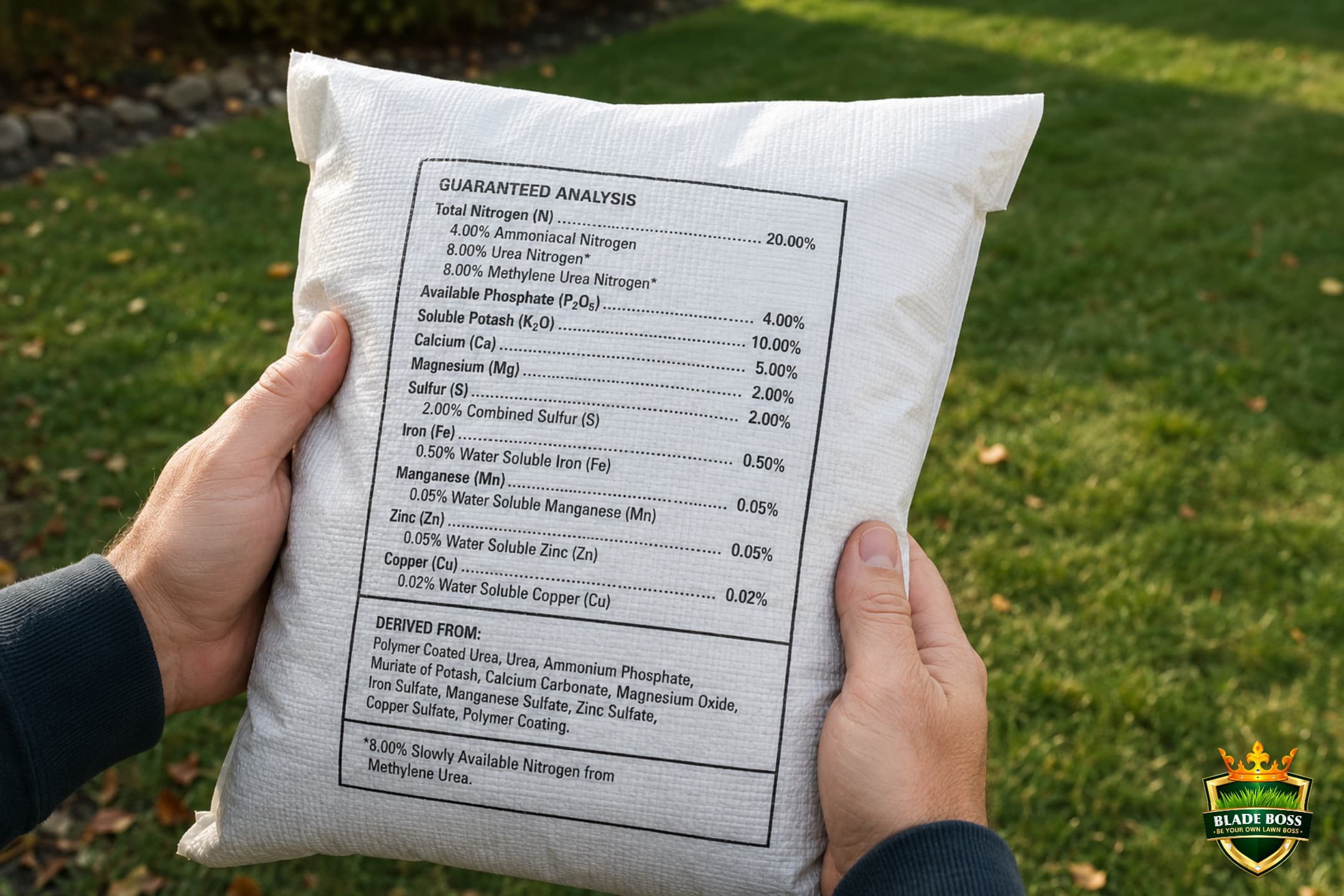
Fertilizer is dosed in pounds of nitrogen per 1,000 square feet, not pounds of product. Confusing the two is how people apply triple what they meant to. The first number on the bag is the percent nitrogen by weight: a 50 lb bag of 32-0-10 holds 16 lbs of actual nitrogen.
Know the Law Before You Spread
Long Island sits on a sole-source aquifer that supplies drinking water to roughly three million people. Our sandy soil lets nitrogen leach straight down into it. That is why the fertilizer rules here are real law with real fines, not suggestions.
1. Blackout dates. Suffolk County (Local Law 41-2007) prohibits lawn fertilization from November 1 through April 1. Nassau County (Local Law 11-2009) runs November 15 through April 1.
2. Phosphorus ban. New York State prohibits phosphorus on established lawns unless a soil test shows a deficiency. Check the middle number.
3. Water buffer. Both counties prohibit fertilizing within 20 feet of any water: bay, pond, canal, stream, or wetland.
Set the Spreader, Then Verify It
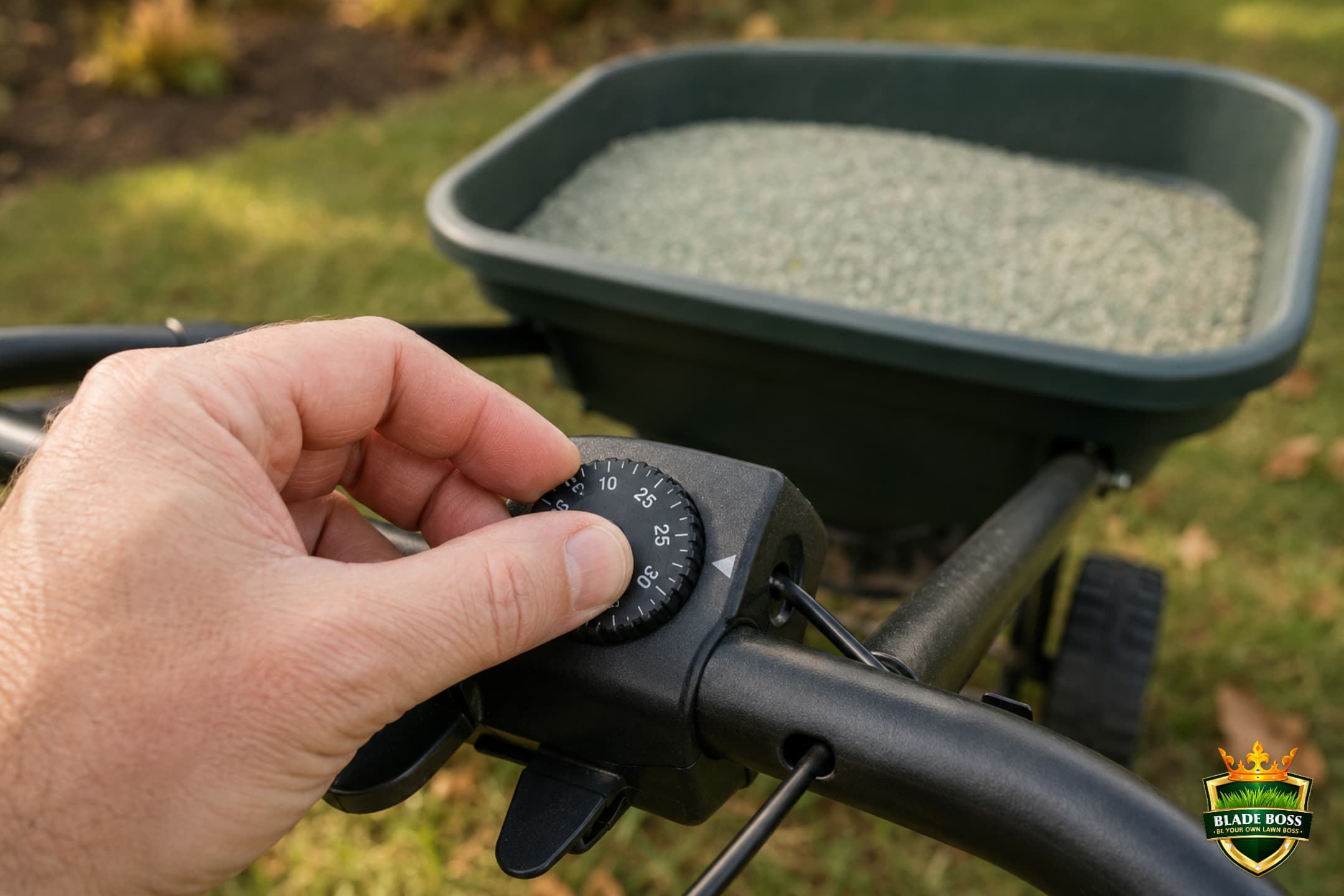
Every bag prints a settings chart with numbers for common spreaders. Use it as a starting point, not gospel. That chart assumes a factory-fresh spreader, a specific walking speed, and a specific granule size. Yours is none of those things after a season in the garage.
Set it to the recommended number, then start low. It is far easier to make a third pass and add more than it is to pull fertilizer back out of a lawn you just scorched. Check that the hopper gate actually closes fully, and that the impeller spins freely.
Dry Blades, Moist Soil, No Heat
Fertilizer burn is a chemical burn, and it comes from salt. Granules that stick to wet grass blades sit there dissolving against living tissue and scorch it. Granules that fall through dry blades to the soil are exactly where you want them.
So: apply when the grass is dry but the soil underneath is moist. Skip it during a heat wave or a drought, when the turf is already stressed. Early morning after the dew has burned off, or early evening, on a calm day. Wind will throw your pattern into the neighbor's driveway.
Walk the Perimeter First
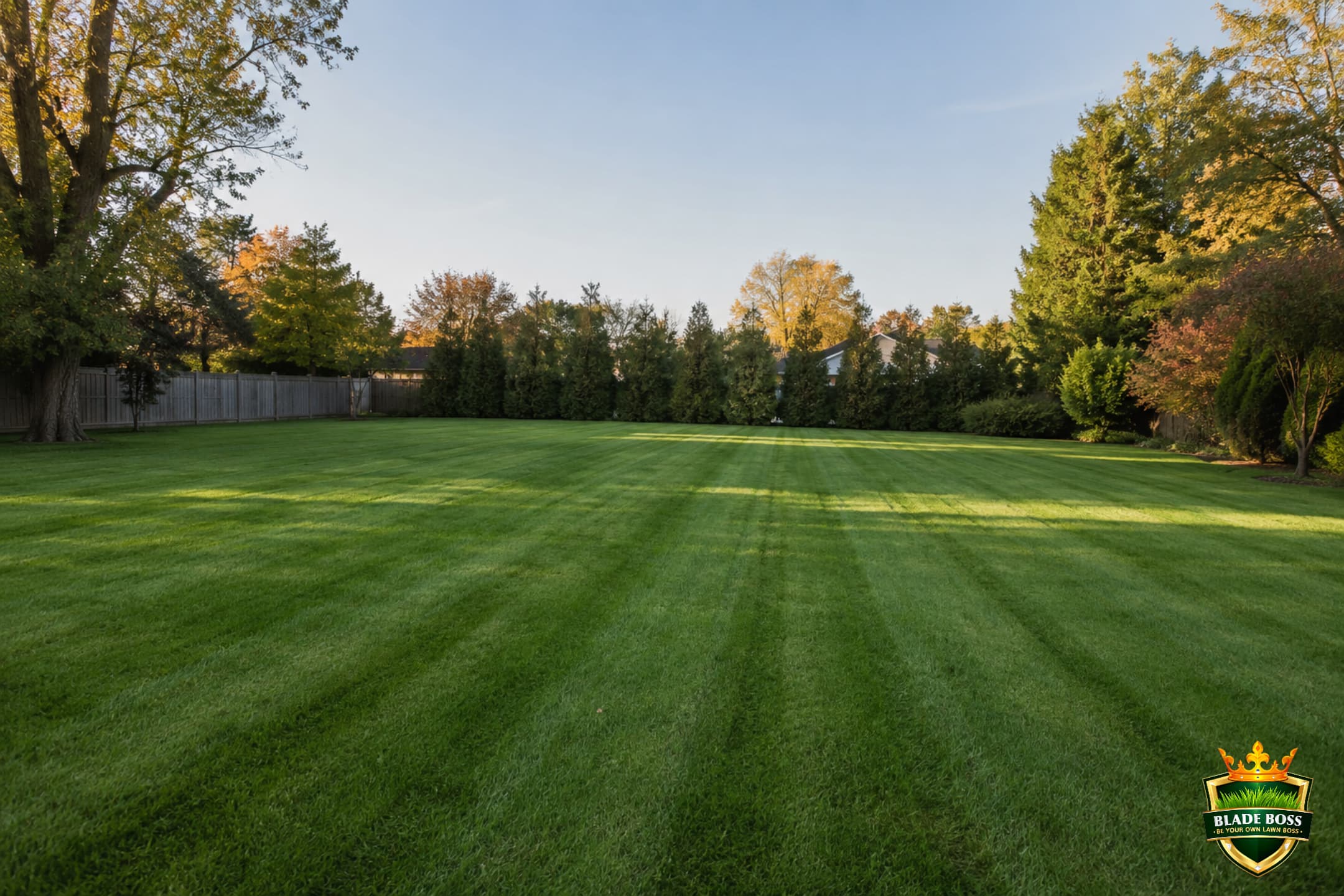
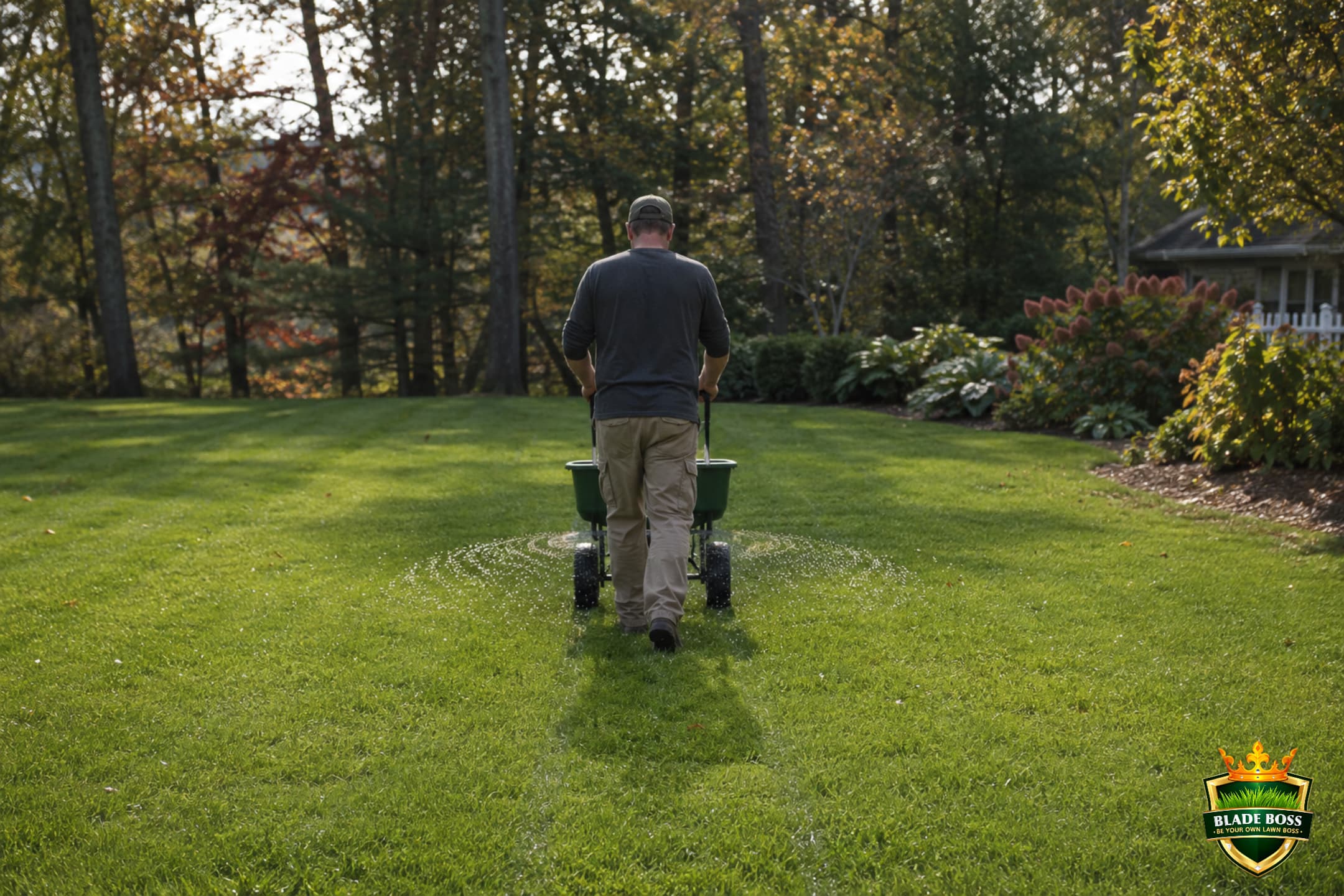
This is the step that separates people who know what they are doing from people who fling fertilizer into the road. Before you touch the middle of the lawn, walk one full pass around the entire perimeter: along the driveway, the sidewalk, the curb, the beds, and the fence line.
That perimeter lap gives you a finished border to turn around inside of. Now when you run your back-and-forth passes across the interior, you can shut the hopper before you reach the edge, turn around on already-fertilized ground, and reopen. Nothing gets thrown into the street, and nothing gets double-dosed at the turns.

Two Half-Rate Passes at Right Angles
Never dump the full rate walking in one direction. Set the spreader to half your target rate, cover the whole lawn north to south, then refill and cover it again east to west. Two half-rate passes at ninety degrees to each other overlap and cancel out each other's gaps.
One full-rate pass leaves stripes, because the spread pattern is heavier in the center and lighter at the edges of each throw. You will not see it for two weeks. Then the lawn greens up in a barcode and you get to look at it for a month.
Sweep the Hard Surfaces, Then Water It In
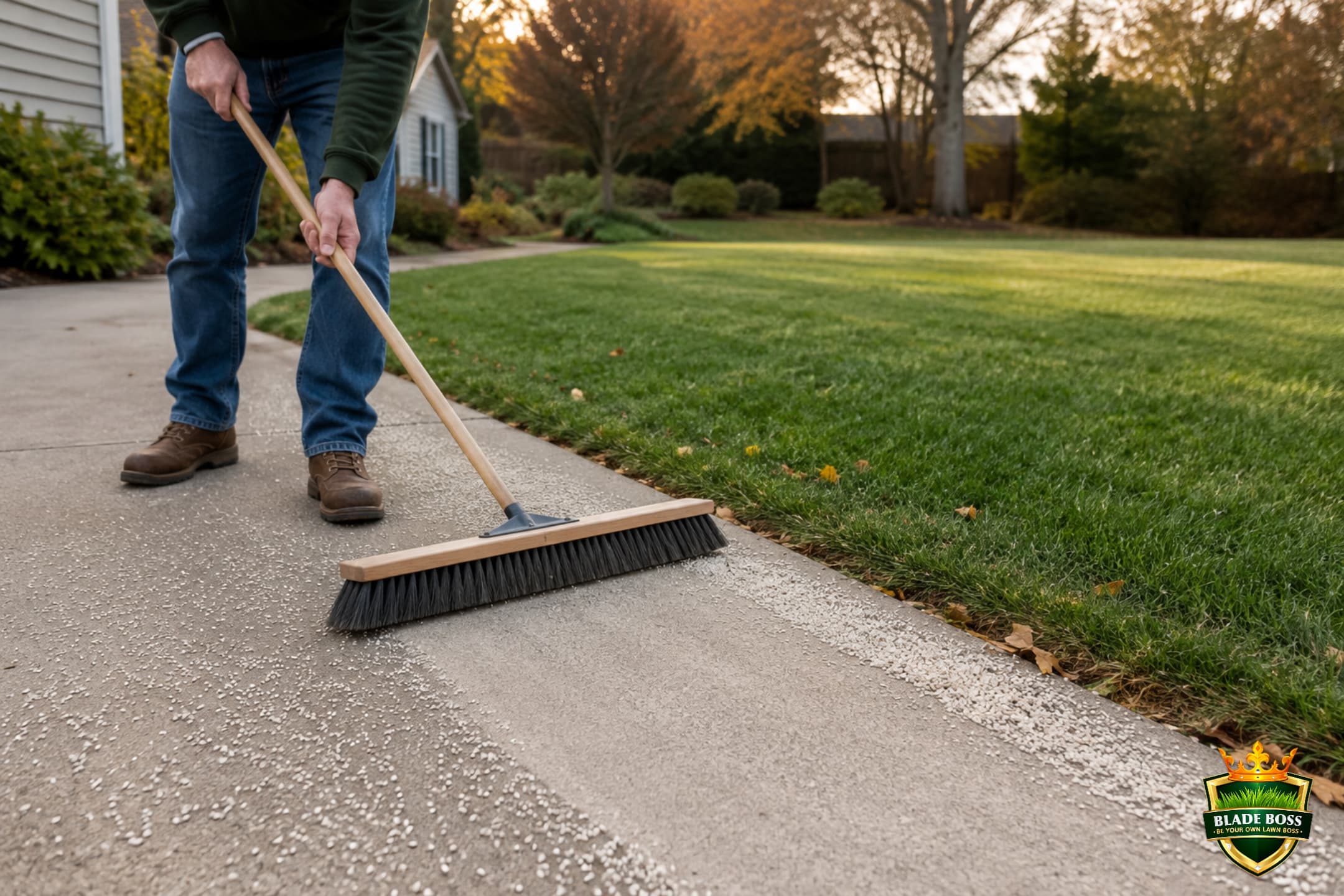
Look down at your driveway, sidewalk, and the curb. Those granules are not staying there. The next rain washes them into a storm drain, and on Long Island that water goes toward the bays and down into the aquifer we all drink from. Every granule on pavement is pollution and wasted money at the same time.
So sweep or blow every last one back onto the lawn. It takes five minutes, it is free fertilizer you already paid for, and it is the single most responsible thing in this guide. Then water it in, roughly a quarter inch, to move the granules off the blades and down into the soil where the roots can get them. Slow-release will wait for you. Quick-release will not.
Get Your Exact Rate in NitroCalc Pro
Enter your square footage and the NPK numbers off your bag. NitroCalc Pro converts it into the exact pounds of product to load, the pounds of nitrogen you are actually applying, how many bags to buy, and it flags burn risk before you spread instead of after.
Open NitroCalc Pro →Abort Criteria - Common Mistakes
Mission Complete. Now Fly the Plan.
Everything here comes down to one thing: putting the right amount down evenly, and only where it belongs. The pattern is free, the sweeping is free, and the law is not optional. What is not obvious is the math. Run your square footage and your bag's NPK through NitroCalc Pro and you will know exactly how many pounds to load, how much nitrogen you are actually applying, and whether you are about to burn your lawn, all before you open the hopper.
Want This as a Printable Field Manual?
Drop your email and the print-ready PDF version lands in your hands. Take it to the lawn, no phone required.
Crew Questions - FAQ
When can you legally fertilize a lawn on Long Island?
Outside the county blackout windows. Suffolk County (Local Law 41-2007) prohibits lawn fertilization from November 1 through April 1. Nassau County (Local Law 11-2009) runs from November 15 through April 1. Both counties also prohibit fertilizing within 20 feet of any water body or wetland, and New York State bans phosphorus on established lawns unless a soil test shows a deficiency. These carry fines.
How much nitrogen does a Long Island lawn actually need per year?
Cornell Cooperative Extension recommends 2 to 3 lbs of nitrogen per 1,000 square feet per year for Long Island lawns. By grass type, Kentucky bluegrass wants 2 to 4 lbs, tall fescue 2.0 to 3.5, and fine fescue only 1 to 2. The NEIWPCC guideline for sole-source aquifer areas is 2.0 lbs per year at 0.6 to 0.7 lbs per application. These are not statute, but they are settled turfgrass science and worth following. Using a product that is at least 60 percent slow-release lets you safely apply a bit more per round without leaching.
Why is my lawn striped after fertilizing?
You almost certainly applied the full rate in a single direction. A broadcast spreader throws heavier in the center of its pattern and lighter at the edges, so single passes leave alternating rich and lean bands that show up as stripes about two weeks later. The fix is to set the spreader to half rate and cover the lawn twice, with the second pass perpendicular to the first.
Should I fertilize before or after rain?
Before light rain is ideal, because it waters the fertilizer in for you. Avoid heavy downpours, which can wash granules off the lawn and into storm drains before they dissolve into the soil. Also make sure the grass blades themselves are dry when you spread, since granules that stick to wet blades can burn them.
How do I keep from burning my lawn with fertilizer?
Apply to dry grass blades over moist soil, stay under about 80 degrees, avoid quick-release nitrogen during summer heat, never stop walking with the hopper open, and water it in afterward. Fertilizer burn is a salt burn, and it happens when granules sit dissolving against wet living tissue or when the soil is too dry to dilute them.
What do the three numbers on a fertilizer bag mean?
They are the percentages by weight of nitrogen, phosphorus, and potassium (N-P-K). A 50 pound bag of 32-0-10 is 32 percent nitrogen, which is 16 actual pounds of nitrogen, zero phosphorus, and 10 percent potassium. Dosing is based on pounds of nitrogen per 1,000 square feet, not pounds of product, and mixing those up is how people accidentally triple their application.
Do I need to sweep fertilizer off my driveway?
Yes, and it matters more here than most places. Granules left on pavement wash into storm drains with the next rain and travel toward the bays and the sole-source aquifer that supplies Long Island's drinking water. Sweeping them back onto the lawn takes a few minutes, prevents that pollution, and recovers fertilizer you already paid for.