GUIDE FUNG-03 · REV C
How to Apply Lawn Fungicide: The Four-Group Legal Rotation
This is the complete program. Four FRAC groups in a GDD-timed rotation that holds the line through the worst Long Island disease summer, built only from products that are legal to apply here, with preventive and curative rates. Two of the four are professional products not labeled for homeowner use, so this is the tier where a licensed pro earns their keep.
Pre-Flight Checklist - What You Need
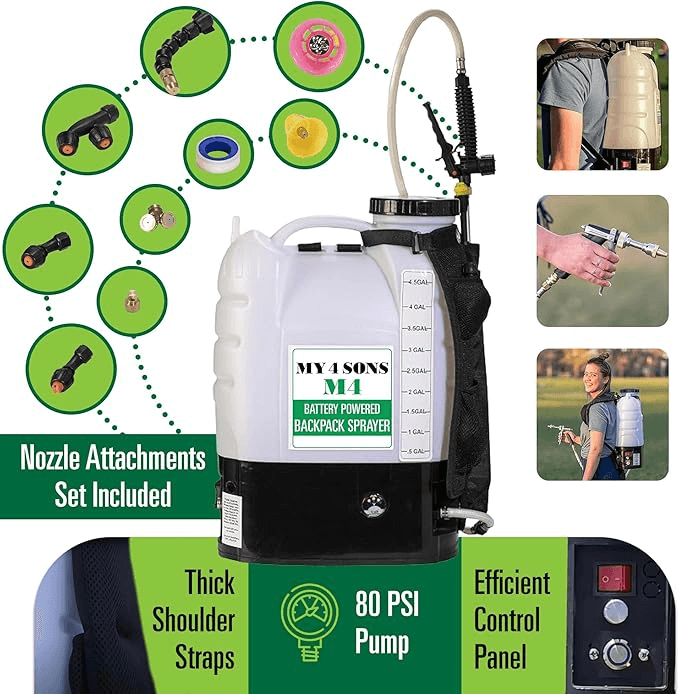
As an Amazon Associate, Blade Boss earns from qualifying purchases. It never costs you a penny more.
Why Four Groups Instead of Two
Two FRAC groups is a solid program. Four is a fortress. Every additional mode of action makes resistance dramatically harder to develop and widens your disease coverage. This four-group rotation covers brown patch, dollar spot, red thread, and summer patch, every major Long Island lawn disease except Pythium, which we address as a known gap at the end.
The advanced program also unlocks two things the two-group rotation cannot: a dedicated brown patch and Rhizoctonia specialist in polyoxin D, the strongest such tool still legal on Long Island, and two extra modes of action that make resistance far harder to build.
Your Four FRAC Groups
Four concentrates, four different modes of action. You rotate through them in order, never repeating the same group more than twice in a row. Each one has a job. The products are listed up top in the Pre-Flight Checklist.
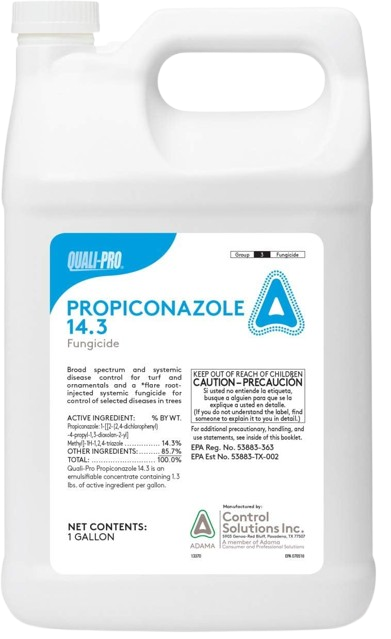
- Propiconazole 14.3, FRAC 3. App 1. Your dollar spot and red thread specialist, and a DMI that is safest applied in cool weather, which is why it leads in late May. General use.
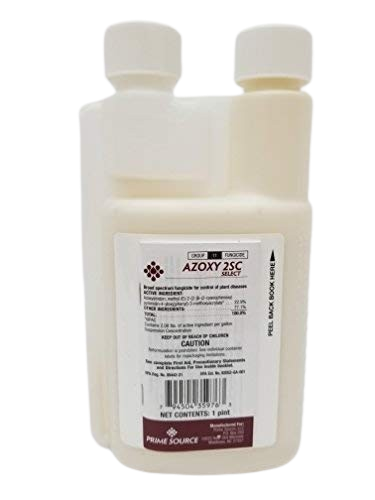
- Azoxystrobin (Azoxy 2SC), FRAC 11. App 2. Broad-spectrum workhorse, strongest on brown patch and summer patch, and root-active when you water it in. General use.
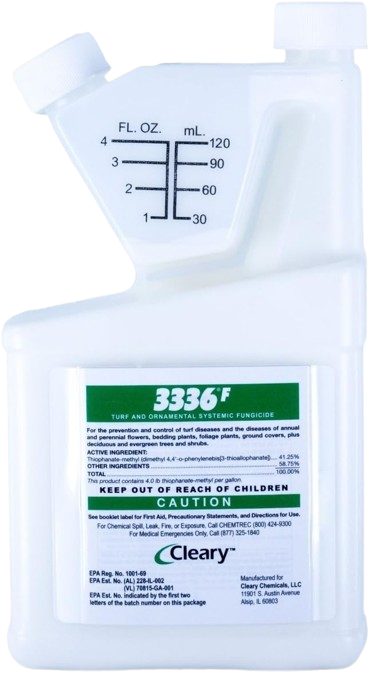
- Clearys 3336F (thiophanate-methyl), FRAC 1. App 3. Broad-spectrum systemic, excellent on summer patch. A professional product, not labeled for homeowner use, legal to apply on Long Island but sold through pro distributors, not to homeowners.
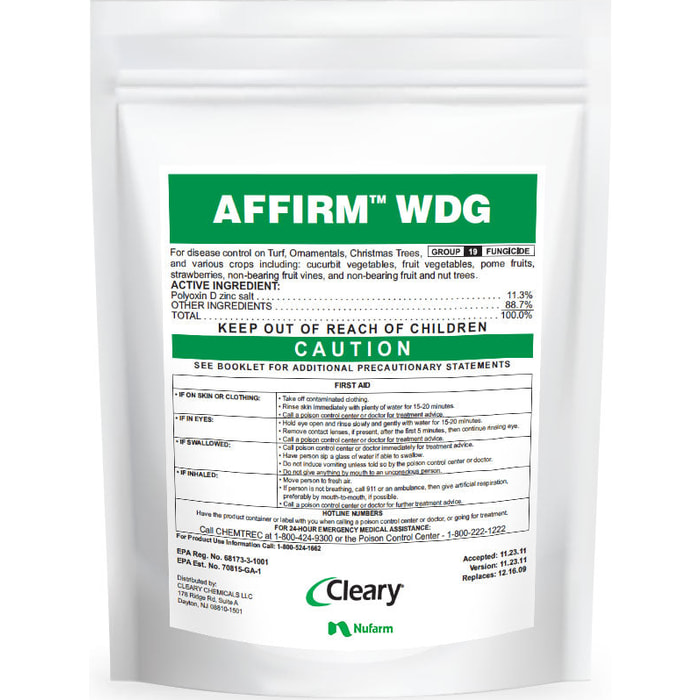
- Affirm WDG (polyoxin D), FRAC 19. App 4. The strongest brown patch and Rhizoctonia tool still legal here. A water-dispersible granule you weigh out dry, disperse in the tank, and spray. A professional product, not labeled for homeowner use.
The GDD-Timed Rotation
Timing is what separates an advanced program from a calendar guess. You start the rotation when growing degree days hit a threshold, not on a fixed date, because disease tracks heat, not the calendar. Start your first application in late May when GDD50 reaches approximately 500, which is when dollar spot and red thread infection windows open on Long Island. Then rotate every three weeks through the season.
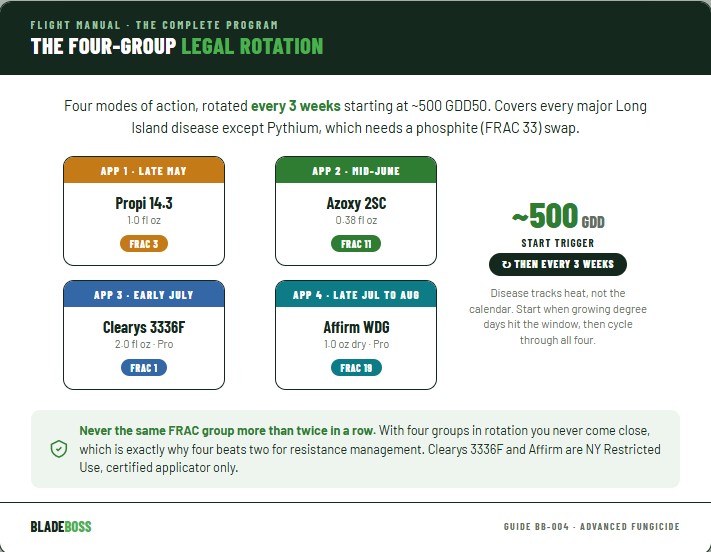
| App | Window | Product | FRAC | Rate |
|---|---|---|---|---|
| 1 | Late May (~500 GDD50) | Propi 14.3 | 3 | 1.0 fl oz (30 mL) |
| 2 | Mid-June (~3 wks) | Azoxy 2SC | 11 | 0.38 fl oz (11 mL) |
| 3 | Early July (~3 wks) | Clearys 3336F (Pro) | 1 | 2.0 fl oz (59 mL) |
| 4 | Late Jul to Aug (~3 wks) | Affirm WDG (Pro) | 19 | 1.0 oz dry weight |
| 5 (if needed) | Early September | Propi 14.3 | 3 | 1.0 fl oz (30 mL) |
| 6 (if needed) | Late September | Azoxy 2SC | 11 | 0.38 fl oz (11 mL) |
Rules of Engagement (ROE's)
The Flight Plan - Step by Step
Confirm Your Timing With GDD
Do not guess the calendar. Growing degree days tell you when disease infection windows actually open. The first application goes down at approximately 500 GDD50, which lands in late May most years on Long Island but shifts with the weather. A cool spring pushes it later, a warm one earlier.
Measure Each Product to Its Exact Rate
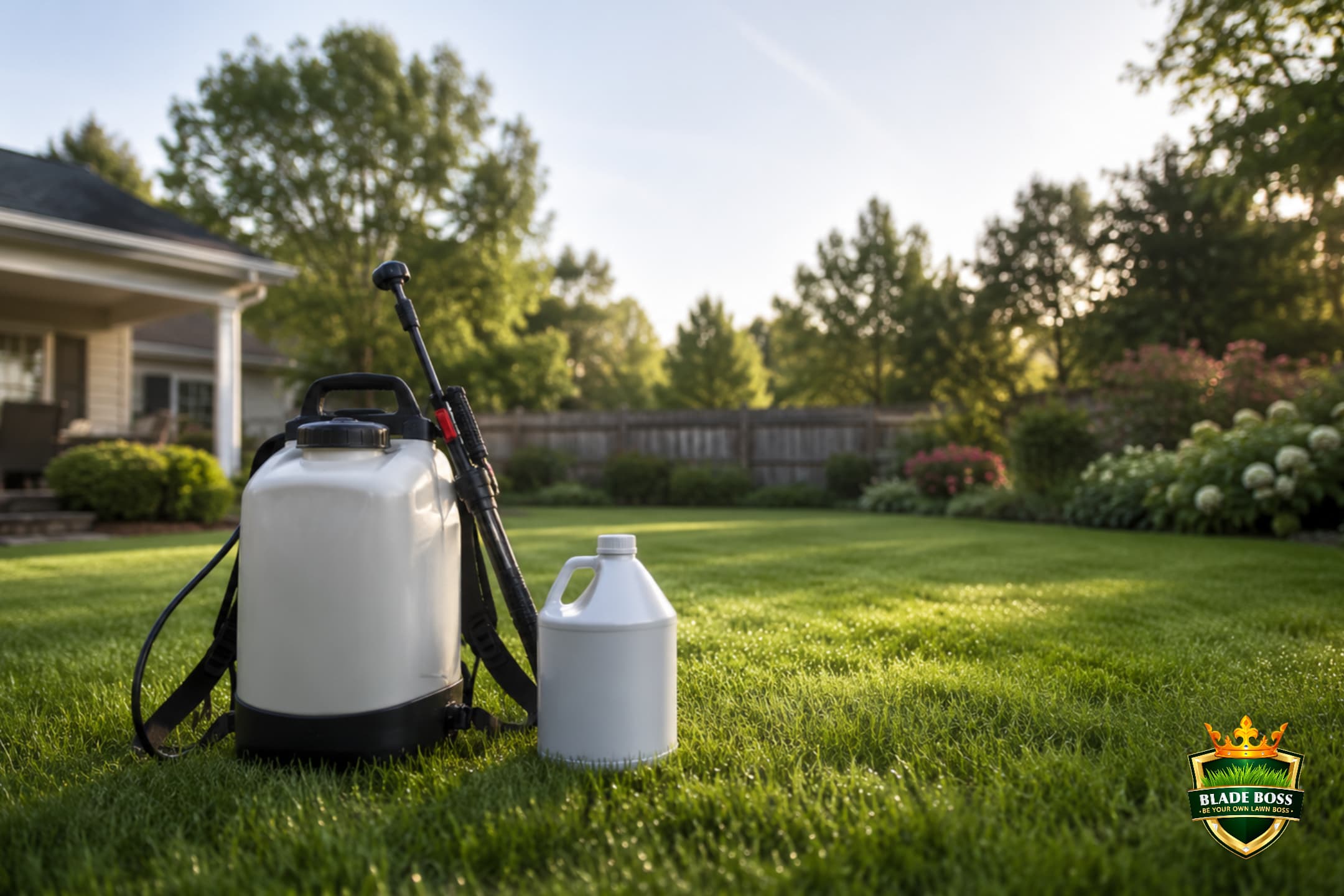
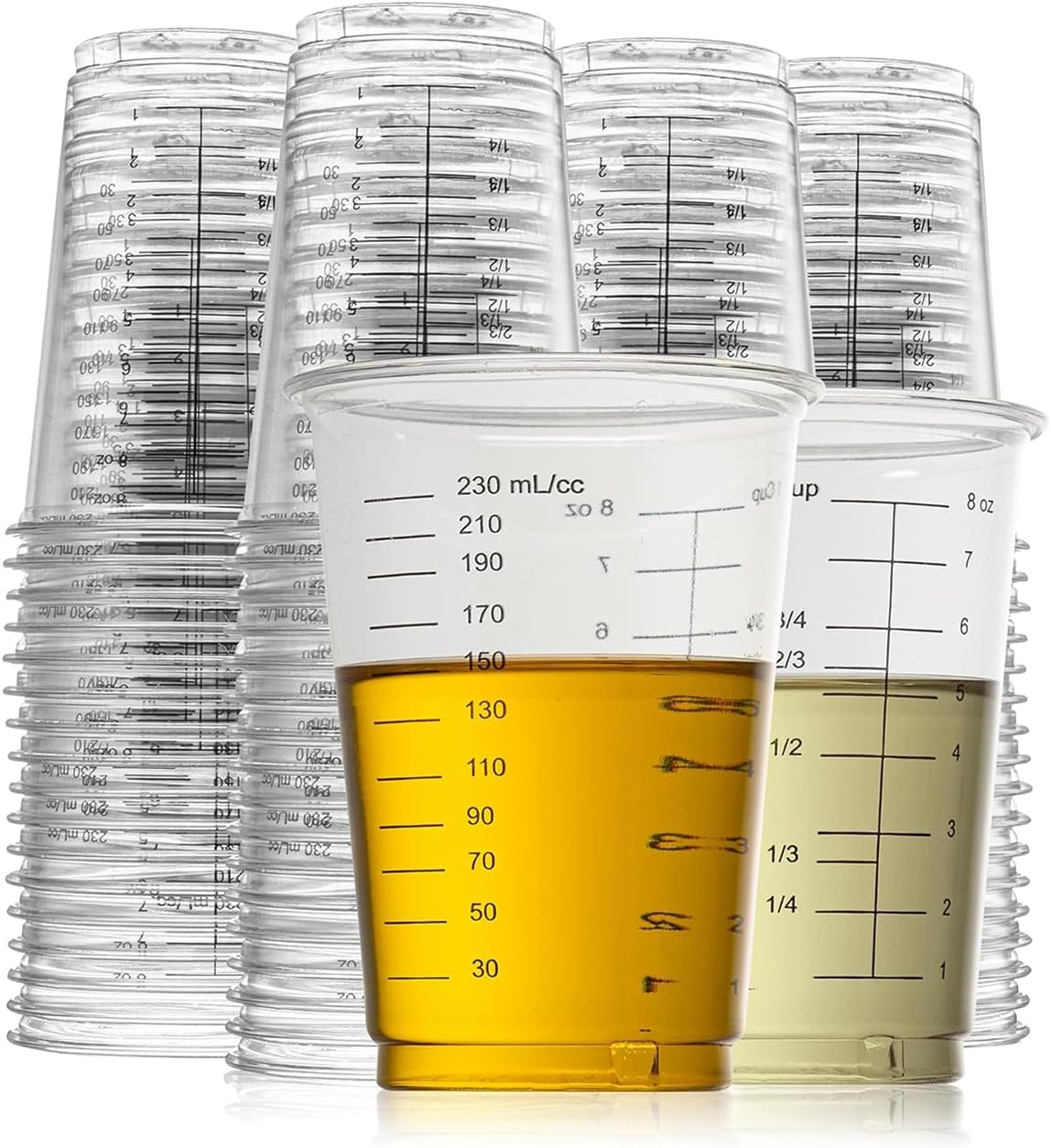
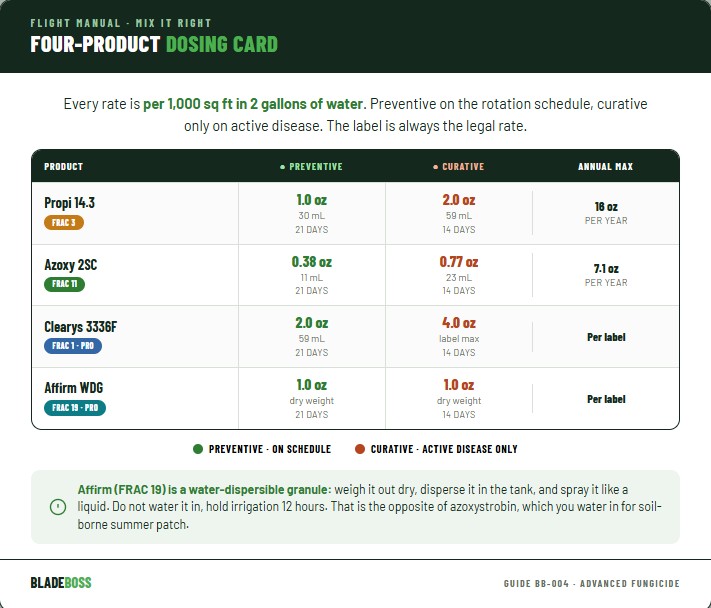
Four products means four different measurements. Three are liquids you measure in milliliters, and the fourth, Affirm, is a dry granule you weigh out (1 oz by weight per 1,000 sq ft) on a small kitchen scale, not a measuring cup. Use milliliter-marked cups for the liquids (listed up top): read the line, pour, mix, spray. Precise measurement is what keeps a season-long four-product program both effective and under every label limit.
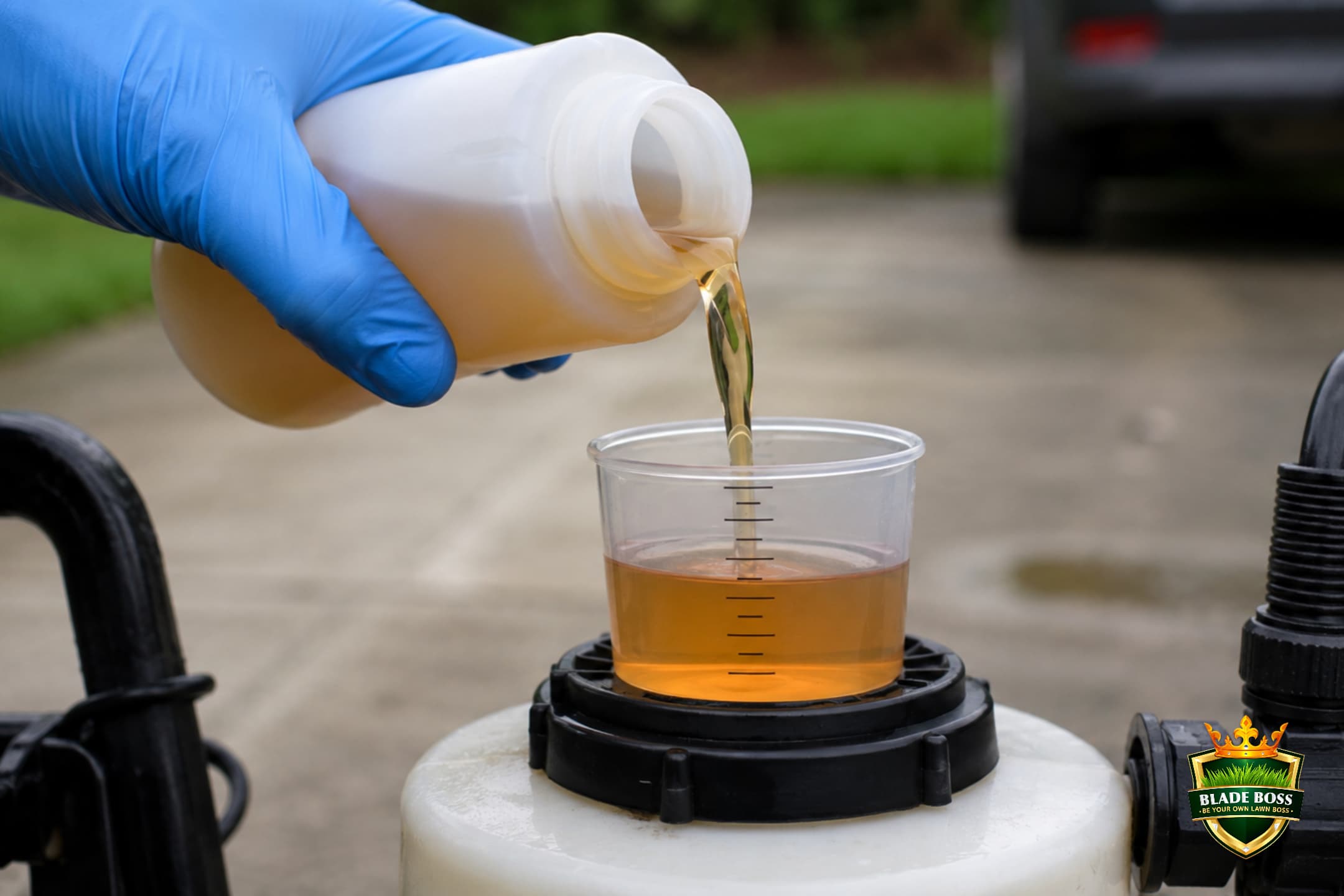
Mix in 2 Gallons and Spray Even
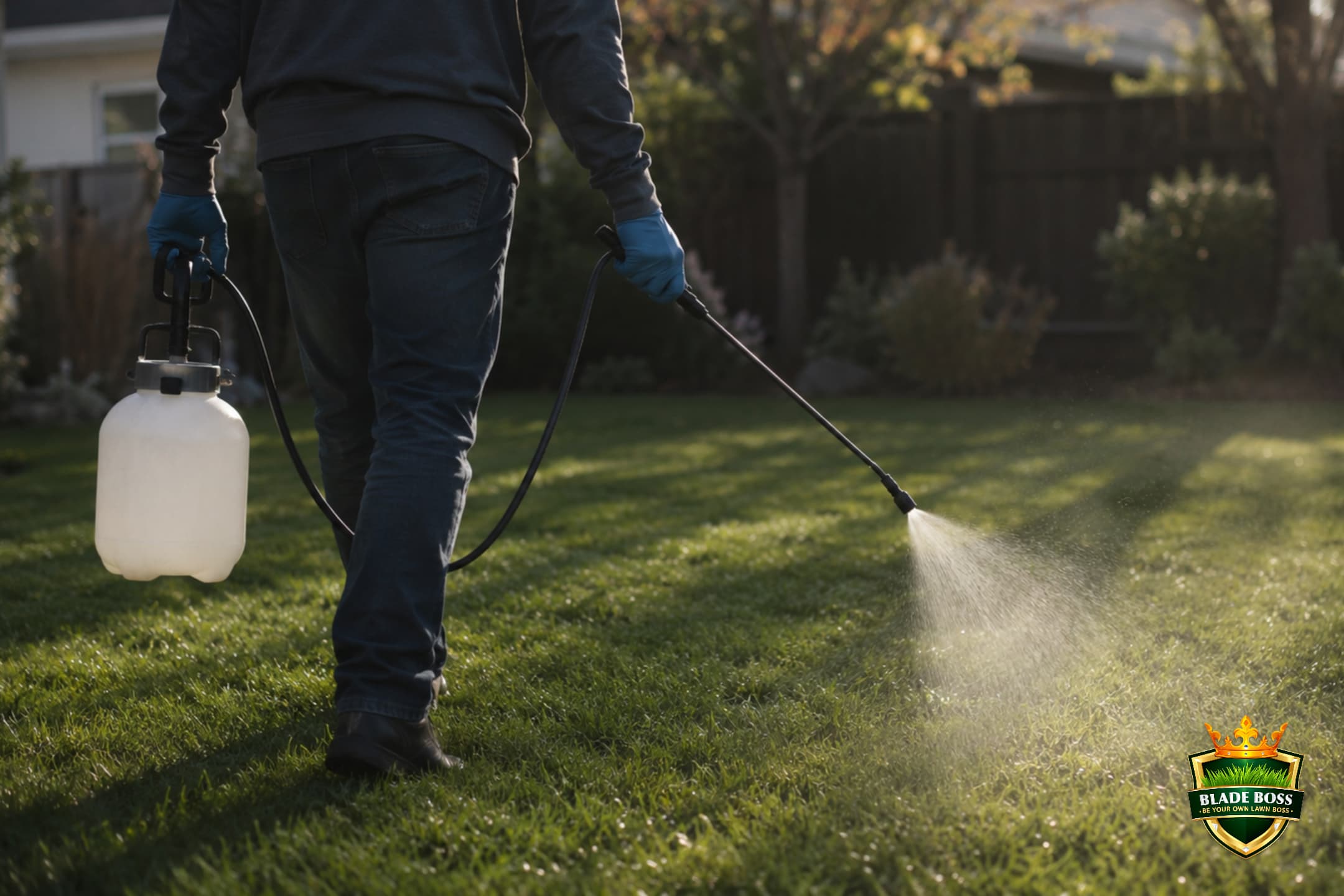
Same carrier volume as the intermediate program: each product goes into 2 gallons of water per 1,000 sq ft. For the three liquids, add the measured concentrate; for Affirm, disperse the weighed granule in the tank. Fill the tank halfway, add the product, top to 2 gallons, agitate, and spray with a fan tip in even overlapping passes. A backpack sprayer (listed up top) is the right tool for a season-long program of this size.
Rotate, Never Repeat a Group Twice in a Row
Move through the four groups in order. The cardinal rule of resistance management: never apply the same FRAC group more than twice consecutively. With four groups in rotation you never come close to that limit, which is exactly why four beats two. Log every application by date, product, and FRAC group.
Escalate to Curative Rates When Disease Is Active
If disease breaks through despite the preventive rotation, escalate. Switch the relevant product to its curative rate and tighten to a 14-day interval until the outbreak is controlled, then return to the preventive schedule. Do not run curative rates all season, it wastes product and burns through annual maximums.
The Pythium Gap
Here is the honest limit of even a four-group rotation. None of these four products reliably controls Pythium blight, a fast, aggressive disease that strikes in hot, humid, waterlogged conditions and can collapse turf overnight. It is less common on home lawns than brown patch or dollar spot, but when it hits, it hits hard and none of your rotation products will stop it.
Look for greasy, water-soaked patches that appear fast in hot humid weather, often with cottony growth in the morning. It spreads along drainage and mowing paths. This program does not use the classic Pythium products (mefenoxam, propamocarb), so for a Pythium-prone lawn swap a phosphite (FRAC 33) into the August slot, which also gives some suppression. Improve drainage and stop evening watering immediately, and for a severe outbreak call a licensed pro.
Spraying more propiconazole, azoxystrobin, Clearys, or Affirm at Pythium does nothing and wastes product while the disease spreads. Pythium is a water mold, not a true fungus, which is why standard turf fungicides miss it. Identify it correctly, then improve drainage, stop evening watering, and swap in a phosphite or call a pro.
Abort Criteria - Common Mistakes
Mission Complete. Now Fly the Plan.
A four-group rotation is only as good as its timing, and timing is where this gets hard by hand. FungusDefender Pro runs the Smith-Kerns dollar spot model, soil-temperature triggers, GDD tracking, and a 7-day risk forecast for your exact location, so you know the day each infection window opens and exactly when to escalate to a curative rate. The complete program deserves model-driven timing. Let the science call the shots.
Want This as a Printable Field Manual?
Drop your email and the print-ready PDF version lands in your hands. Take it to the lawn, no phone required.
Crew Questions - FAQ
Why rotate four FRAC groups instead of two?
Every additional mode of action makes fungicide resistance dramatically harder to develop and widens disease coverage. A four-group rotation covers brown patch, dollar spot, red thread, and summer patch, and it lets you go a long time before any single group repeats. Two groups is a solid program, four is a resistance-proof fortress for a serious disease year.
Why polyoxin D (Affirm) instead of Daconil or Xzemplar?
Both products an old guide would name here are off the table on Long Island. Xzemplar (fluxapyroxad, FRAC 7) is prohibited by its label in Nassau and Suffolk, and chlorothalonil (Daconil) is not part of this program. Polyoxin D (Affirm WDG, FRAC 19) is the strongest brown patch and Rhizoctonia tool still legal here, which is why it holds the App 4 slot. It is a professional product, not labeled for homeowner use.
When do I start the rotation?
When growing degree days reach approximately 500 GDD50, which is late May most years on Long Island but shifts with the weather. Disease infection windows open with accumulated heat, not on a calendar date, so a cool spring pushes the start later and a warm one earlier. Tools that track GDD remove the guesswork.
What is the difference between preventive and curative rates here?
Preventive rates are lower doses on a roughly 21-day rotation to stop disease before it starts. Curative rates are higher doses on a 14-day interval to knock back active disease, after which you return to preventive. For example Azoxy 2SC runs 0.38 fl oz preventive and 0.77 fl oz curative. Reserve curative rates for real outbreaks to protect your annual maximums.
Can I tank-mix fungicides for a bad outbreak?
Tank-mixing two modes of action is a real tool, but skip the propiconazole-plus-Xzemplar mix you will see recommended elsewhere, because Xzemplar (fluxapyroxad, FRAC 7) is prohibited by its label in Nassau and Suffolk. For a severe brown patch outbreak here, alternate your two strongest legal tools, azoxystrobin (FRAC 11) and polyoxin D (Affirm, FRAC 19), on a tightened 14-day curative interval instead. Always follow label rates, and remember Affirm is a contact you spray on and do not water in.
Does this rotation cover Pythium?
No, and that is the honest gap. None of the four rotation products reliably controls Pythium blight, which is a water mold rather than a true fungus, so standard turf fungicides miss it. This program does not use the classic Pythium products (mefenoxam, propamocarb), so for a Pythium-prone lawn swap a phosphite (FRAC 33) into the August slot, improve drainage, and stop evening watering. For a severe outbreak, call a licensed pro.