

GUIDE WEED-08 · REV B
How to Kill Spurge (Spotted and Prostrate Spurge)
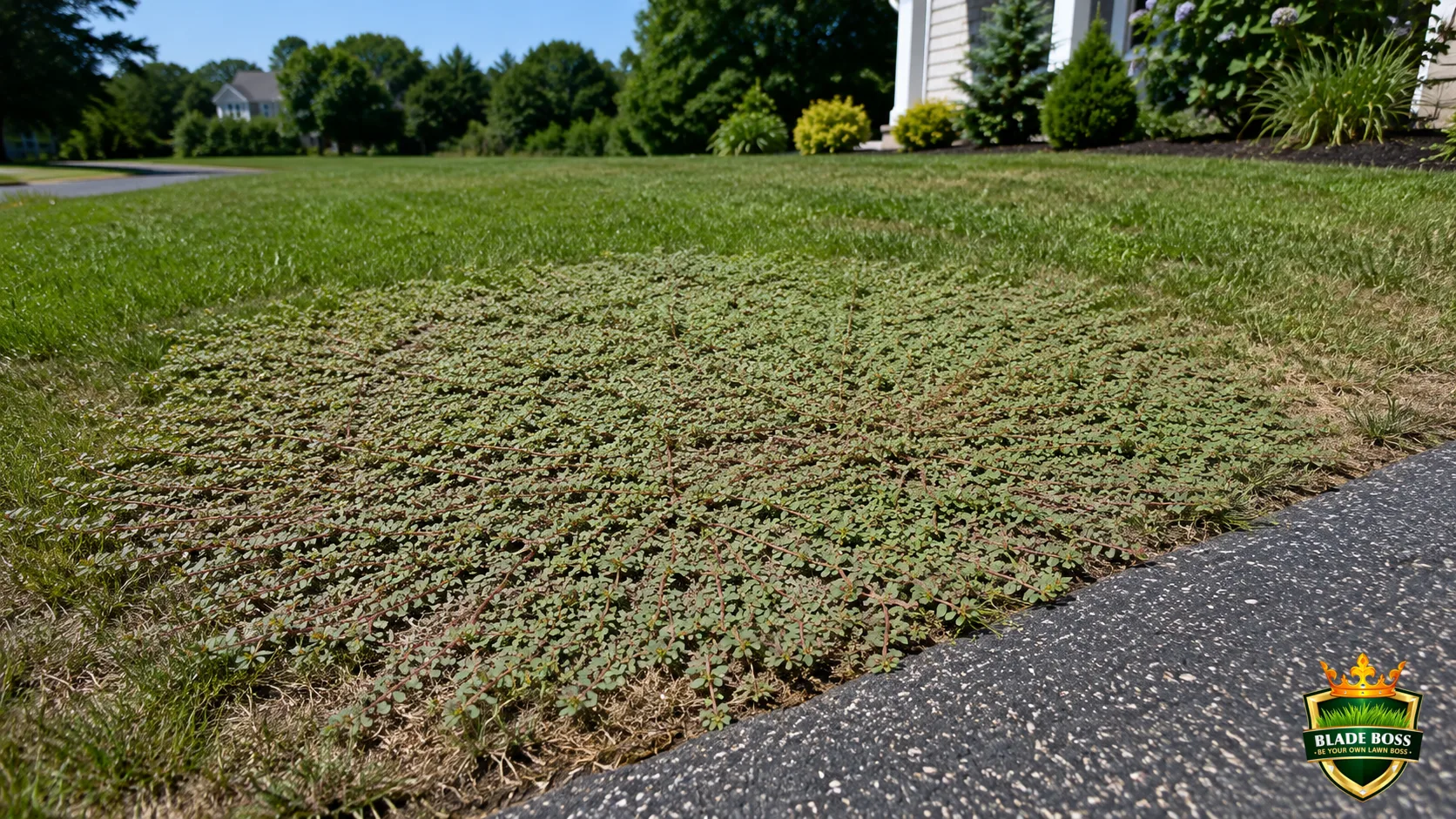
That flat, sprawling mat with tiny leaves taking over your thin spots and driveway edges is spurge, a fast-growing summer annual that bleeds milky white sap when you break it. Good news: unlike the truly stubborn perennials, spurge is beatable if you hit it right. This guide gives you the exact product, the exact mix ratio, and the timing to kill it, plus the prevention that stops it from coming back, all tuned for a Long Island lawn.
Pre-Flight Checklist - What You Need
As an Amazon Associate, Blade Boss earns from qualifying purchases. It never costs you a penny more.
Rules of Engagement (ROE's)
The Flight Plan - Step by Step
Confirm It Is Spurge
Spurge is easy to identify once you know the tells, and confirming it matters because it is often confused with purslane and knotweed, which need different handling. Spotted spurge and prostrate spurge are the two you will see on Long Island lawns.
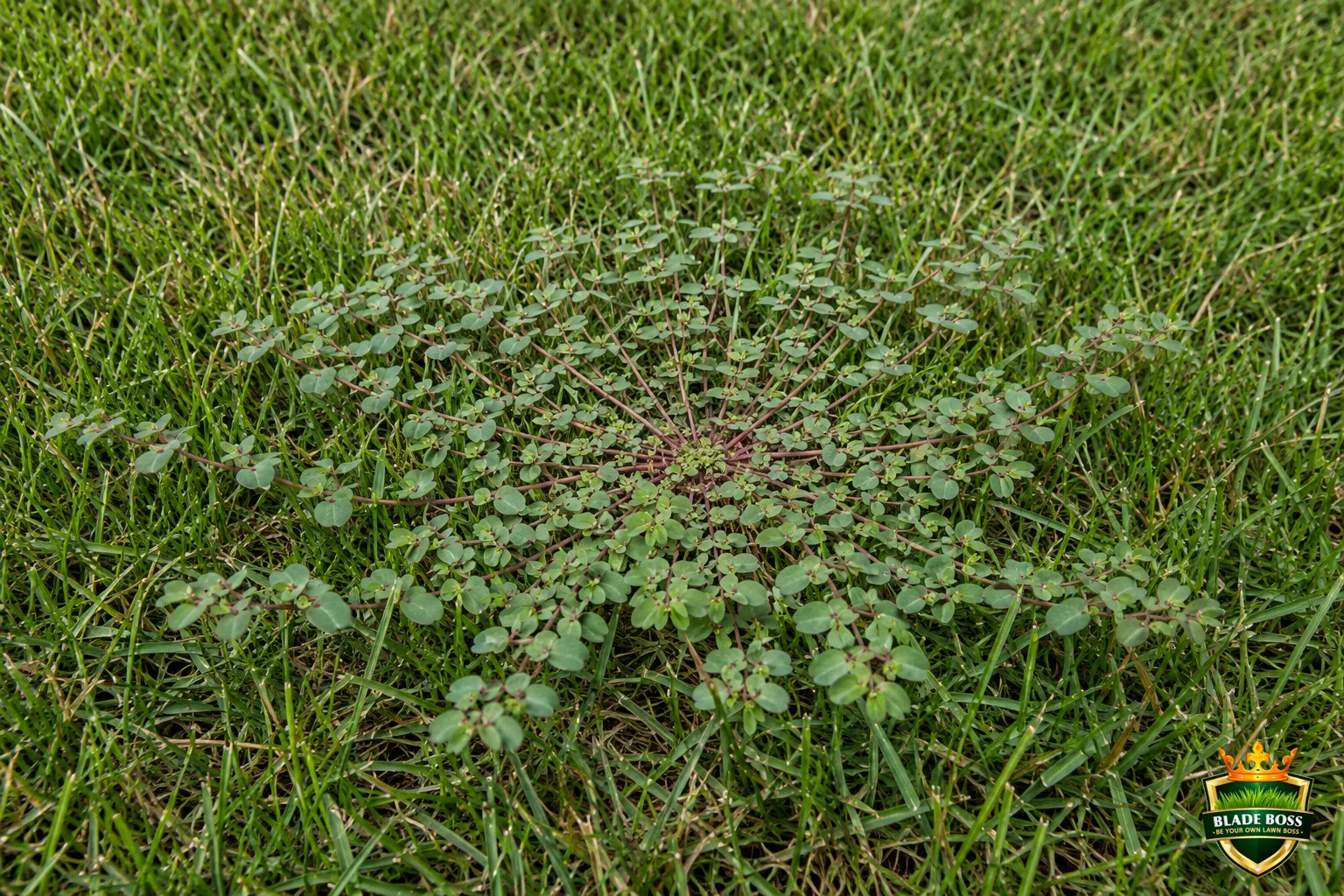
- Milky sap is the giveaway: break any stem and it bleeds a white, milky latex. Nothing it is confused with does this. That is your positive ID.
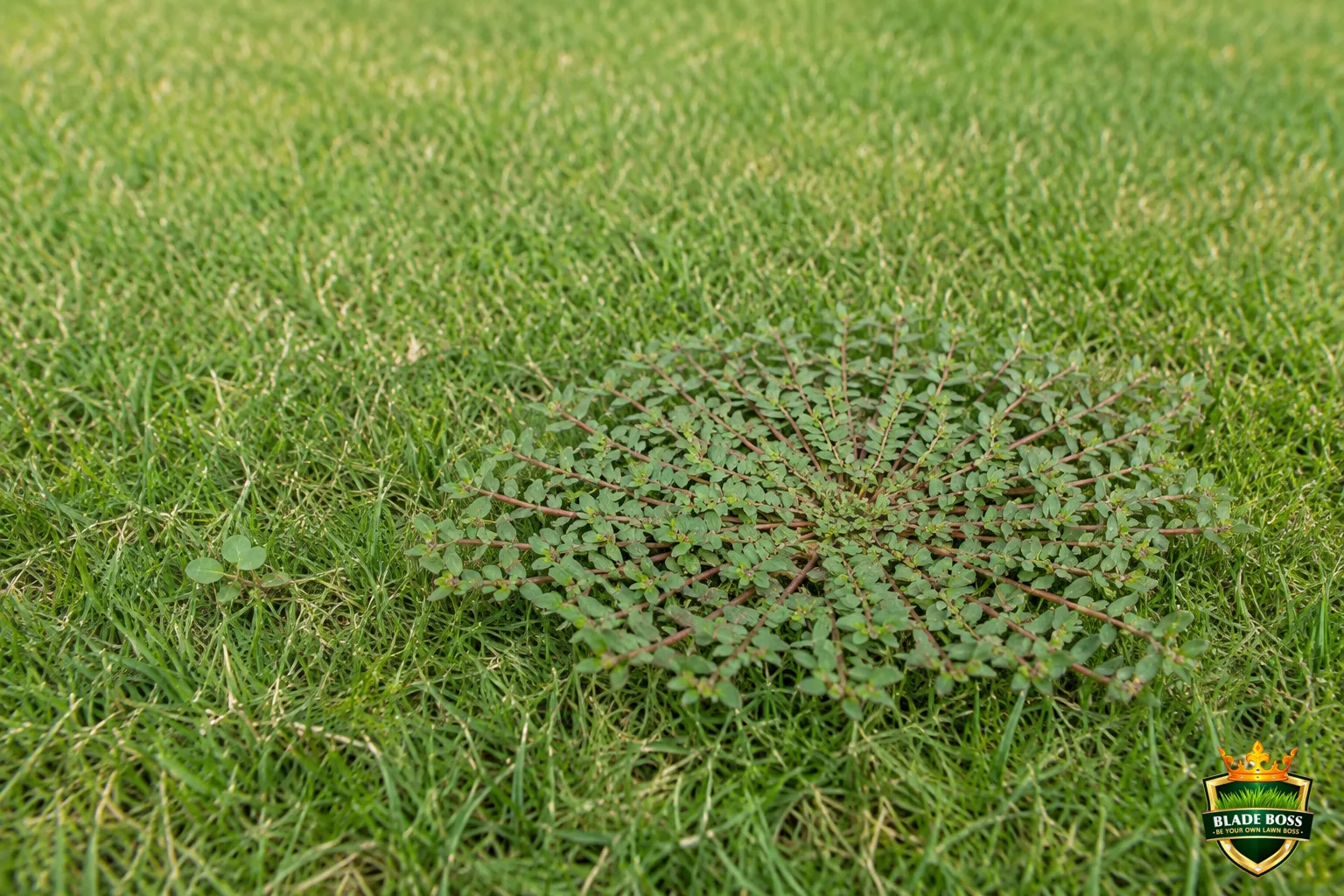
- Flat, radiating mat: it sprawls flat against the ground in a circle from a single central taproot, hugging the soil.
- Tiny opposite leaves, often with a red spot: small oval leaves in pairs, and spotted spurge has a distinct maroon-red blotch in the leaf center.
- Loves the hot, bare, thin spots: driveway and sidewalk edges, thin turf, and compacted areas where the soil bakes.
Understand Why Timing Is Everything
Spurge is beatable, but only if you catch it in the right window. It is a summer annual that germinates in warm soil (later than crabgrass), grows fast, and becomes both harder to kill and a prolific seeder as it matures. The whole game is hitting it while it is young and small.
- Young spurge dies easily: small, tender seedlings take up herbicide readily and die fast, often in one pass.
- Mature spurge resists: as it grows it develops a waxy coating that sheds spray, so a big mat needs the higher rate and usually a second pass.
- It seeds fast and often: a single plant can produce thousands of seeds and run multiple generations in one summer. Kill it before it seeds.
- Best window: late spring through summer, on young plants, on a calm day when the air temperature is below 90°F.
Pick Your Product
Triclopyr is the standout active for spurge, and the strongest products pair it with other actives for a multi-angle kill. Here is the honest landscape, from most powerful to most practical, so you can choose with eyes open.
- Strongest (pro-grade, restricted here): the 4-way products like T-Zone SE and Triad TZ Select (2,4-D + triclopyr + dicamba + sulfentrazone), and Turflon Ester (triclopyr), hit hardest on mature mats. But T-Zone is restricted in Nassau and Suffolk, and Turflon is commercial-applicator-only in New York. They work, just know the status and decide for yourself.
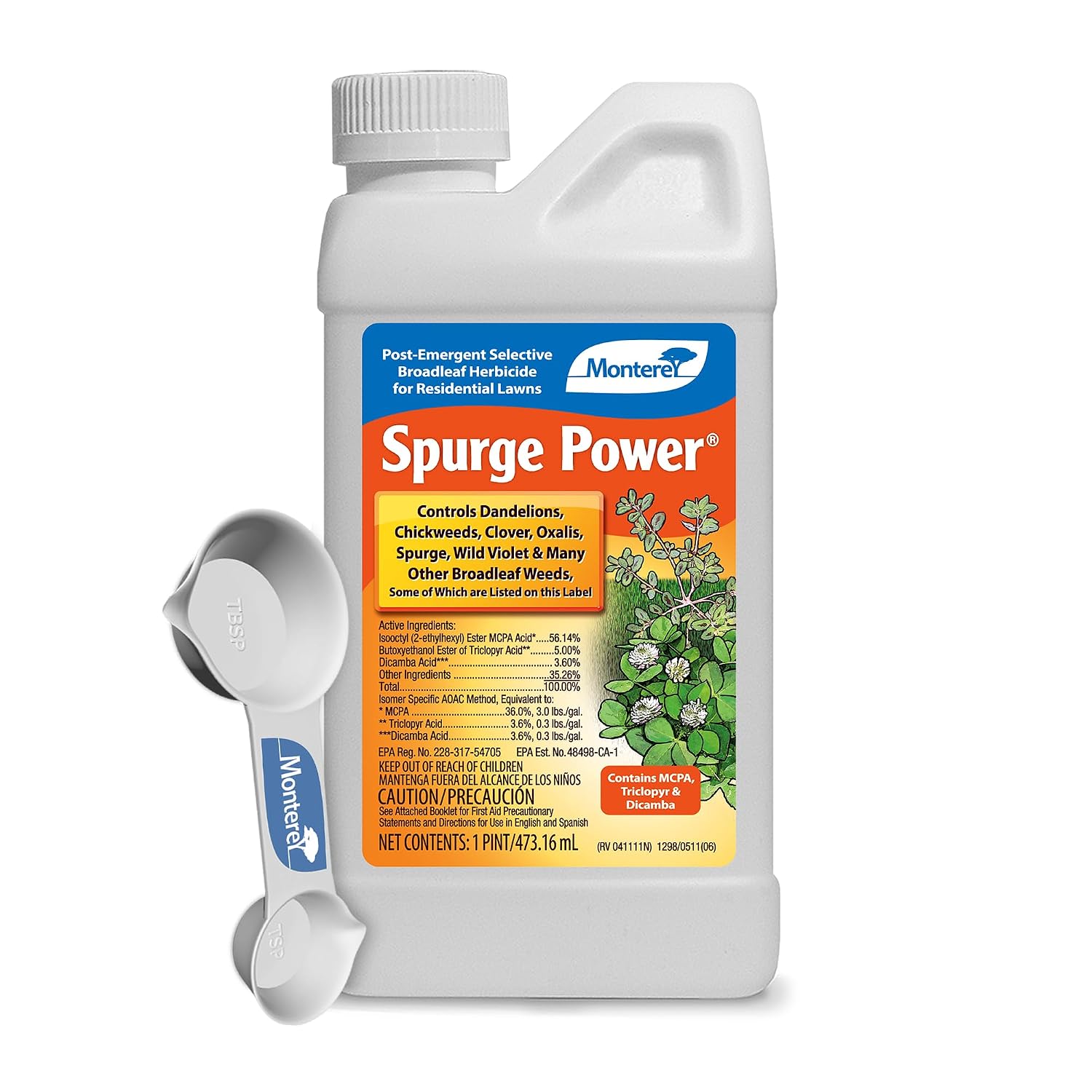
- Best consumer pick (unrestricted): Monterey Spurge Power, a three-way of MCPA + triclopyr + dicamba, literally formulated and named for spurge, safe on bluegrass, fescue, rye, and bent. This is the one for most Long Island homeowners.
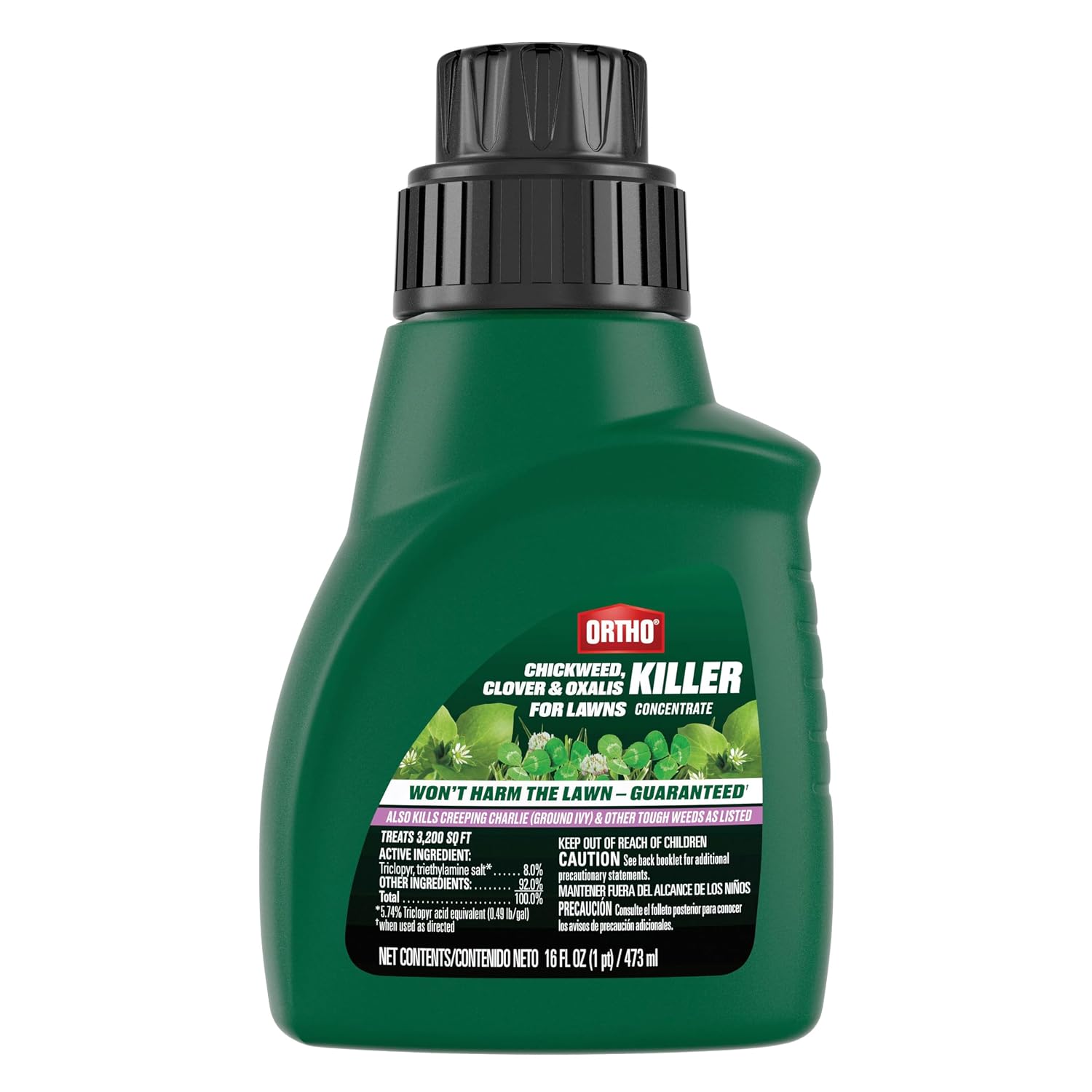
- Solid legal backup: Ortho Weed B Gon Chickweed, Clover and Oxalis (8% triclopyr), lists spotted spurge on the label and is verified sold in Suffolk County. Use it if you cannot find Spurge Power locally.
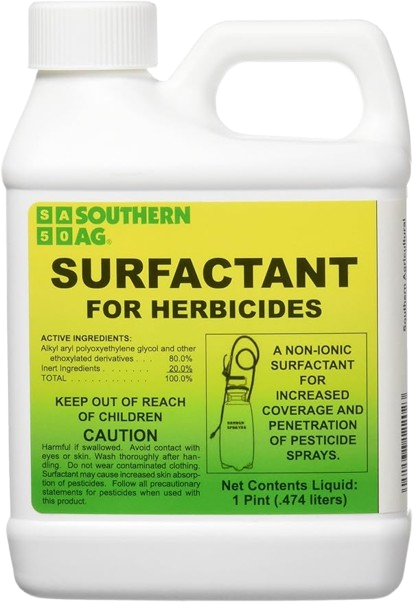
- Surfactant note: Spurge Power and Ortho already contain a surfactant, do not add one. A separate non-ionic surfactant is only needed if you go with a bare pro concentrate like Turflon Ester.
Mix It Exactly Right
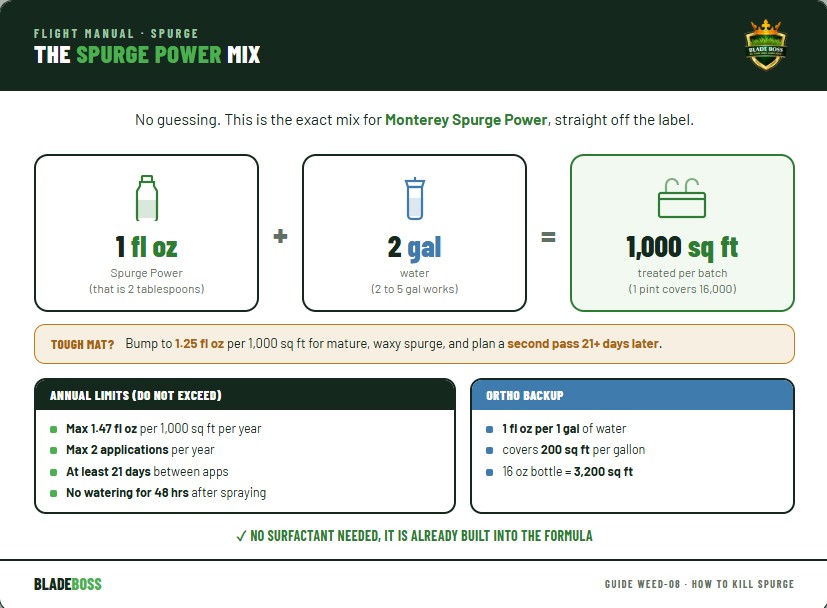
No guessing and no digging through fine print. Here are the exact mix ratios. Measure your treatment area first (length times width equals square feet), then mix to match.
- Spurge Power: 1 fl oz (2 tablespoons) into 2 gallons of water treats 1,000 sq ft. Use 1.25 fl oz for tough, mature spurge. One pint covers 16,000 sq ft.
- Ortho backup: 1 fl oz (2 tablespoons) per 1 gallon of water covers 200 sq ft (so about 5 fl oz per 1,000 sq ft). A 16 oz bottle covers 3,200 sq ft.
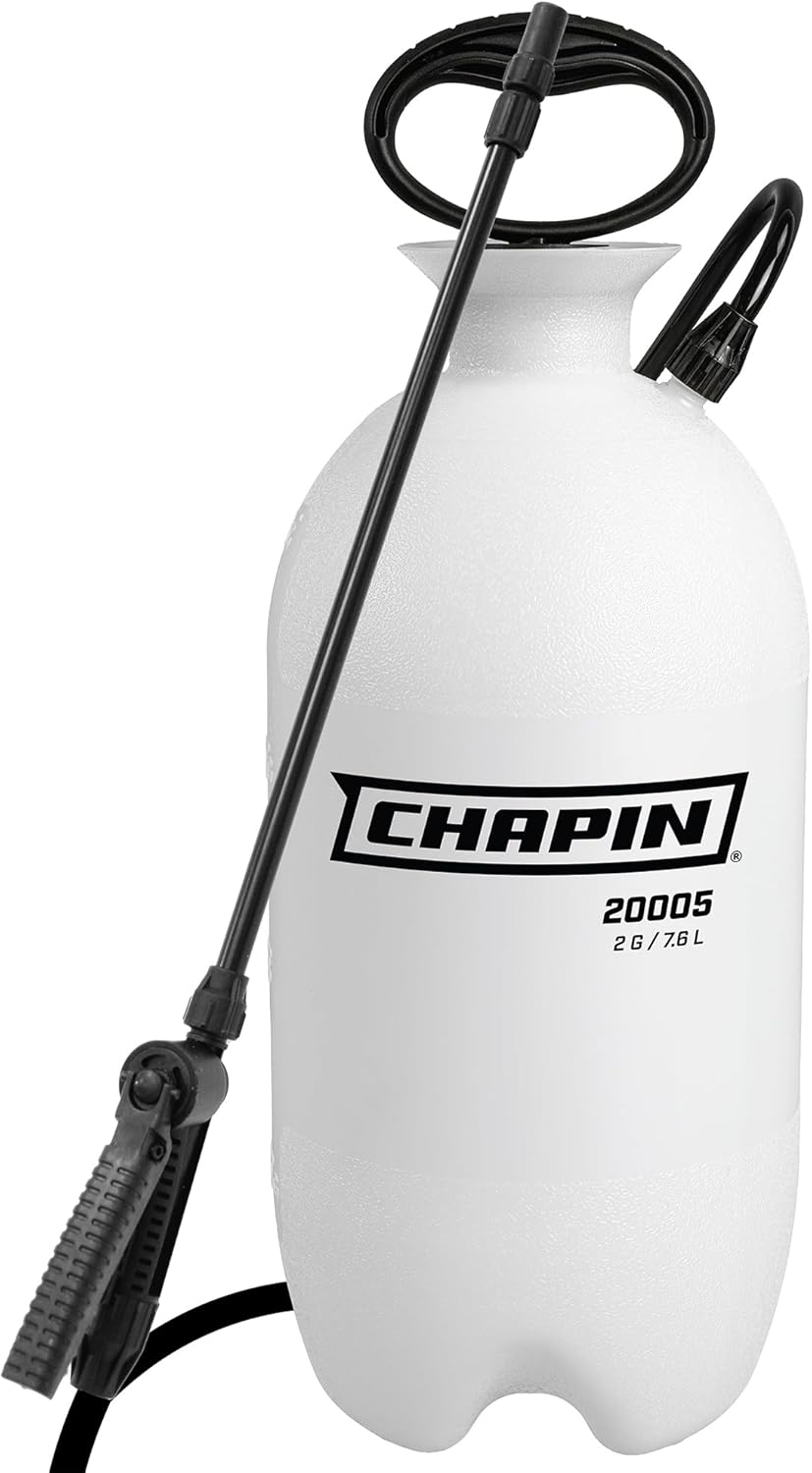
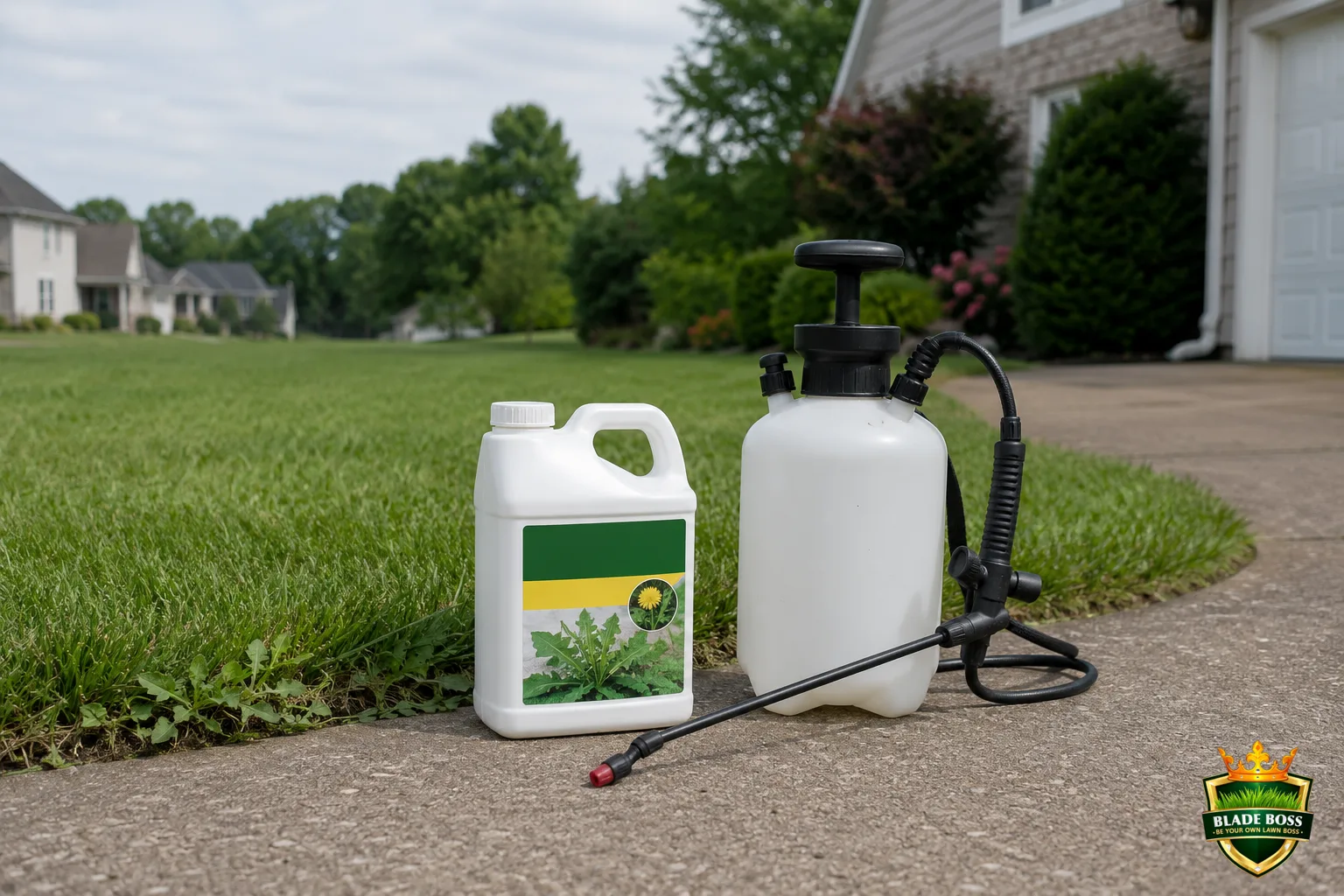
- How to load the sprayer: fill halfway with water, add the measured product, then top off with the rest of the water and shake to mix evenly.
- Do not add a surfactant to either of these, it is already built in. Only bare pro concentrates (Turflon Ester) need one added.
- Respect the annual cap: Spurge Power maxes at 1.47 fl oz per 1,000 sq ft per year, no more than 2 applications, at least 21 days apart.
Spray It the Right Way
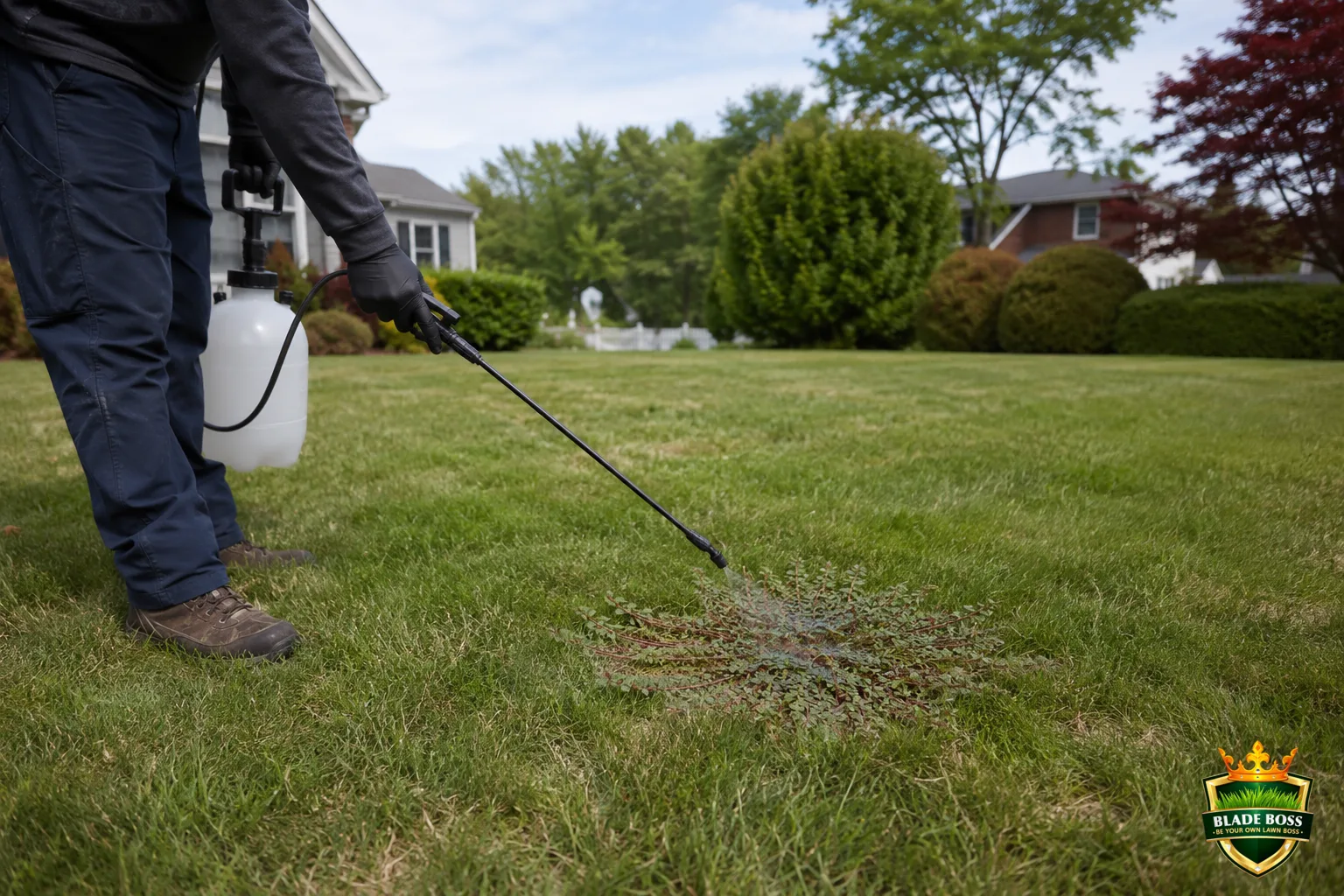
Spurge grows in patches, so you spot-treat rather than blanket the whole lawn. With the tank mixed, target the spurge directly, on a calm day, and let the herbicide do its work undisturbed.
- Spot-treat the patches: use low pressure and a coarse spray, wetting the spurge foliage until just covered, not dripping. Full coverage on the little mats.
- Calm day, under 90°F: no wind to drift onto garden beds, cooler air so the lawn is not stressed and the herbicide does not volatilize.
- Do not mow 1 to 2 days before or after: the plant needs leaf surface to absorb the herbicide and time to move it to the roots.
- Do not water for 48 hours: it is rainproof in about 6 hours, but give it 48 before irrigating so it fully translocates.
- Second pass on mature mats: big waxy spurge often needs a follow-up. Wait at least 21 days with Spurge Power (2 to 3 weeks with Ortho).
Prevent It From Coming Back
Killing the spurge you can see is only half the job. Spurge is an opportunist that colonizes thin, bare, hot, compacted ground, so if you do not close those openings, it returns from the seed bank every summer. Prevention is where you actually win.
- Lay a pre-emergent barrier: spurge is on the label of the common pre-emergents (prodiamine, pendimethalin), so a properly timed barrier stops it from germinating. See how to prevent weeds.
- Thicken the thin spots: overseed and feed the bare, weak areas where spurge takes hold. A dense lawn leaves it no open ground.
- Mow tall (3 to 4 inches): tall grass shades the soil, and spurge needs warm, sunlit bare soil to germinate.
- Fix the underlying issue: spurge along edges and compacted strips is telling you that area is stressed. Address compaction and thin turf and the spurge stops returning.
Abort Criteria - Common Mistakes
Mission Complete. Now Fly the Plan.
Spurge feels aggressive, but it is one of the more beatable weeds once you have the playbook: confirm it by the milky sap, mix your product to the exact rate, hit it young on a calm day, and then prevent next year's crop with a pre-emergent and a thicker lawn. Do that and the sprawling mats disappear for good. Time your prevention with the Weather Hub, stop spurge before it starts with how to prevent weeds, and if you are fighting other broadleaf weeds too, see how to kill broadleaf weeds.
Want This as a Printable Field Manual?
Drop your email and the print-ready PDF version lands in your hands. Take it to the lawn, no phone required.
Crew Questions - FAQ
What kills spurge in a lawn?
Triclopyr is the most effective active ingredient for spurge, and the strongest products combine it with others for a multi-angle kill. For a Long Island homeowner, the best unrestricted choice is Monterey Spurge Power, a three-way of MCPA, triclopyr, and dicamba that is literally formulated and named for spurge and is safe on cool-season lawns (bluegrass, fescue, rye, bent). Mix it at exactly 1 fluid ounce (2 tablespoons) in 2 gallons of water per 1,000 square feet, use 1.25 ounces for tough mature mats, and do not add a surfactant because it already has one. A solid legal backup is Ortho Weed B Gon Chickweed, Clover and Oxalis (8 percent triclopyr), mixed at 1 fluid ounce per gallon per 200 square feet. The strongest products of all are the professional 4-way combos like T-Zone and Triad TZ, but T-Zone is restricted in Nassau and Suffolk and Turflon Ester is commercial-applicator-only in New York, so most homeowners here use Spurge Power. Whatever you choose, spray young plants on a calm day under 90 degrees, and prevent next year's crop with a pre-emergent barrier and a thick lawn.
How much Spurge Power do I mix per gallon?
Monterey Spurge Power is mixed at 1 fluid ounce (which is 2 tablespoons) in 2 gallons of water to treat 1,000 square feet, so that works out to half a fluid ounce per gallon. For tough, mature spurge you can go up to 1.25 fluid ounces per 1,000 square feet. The water is just a carrier, whether you use 2 gallons or up to 5, the important thing is that you apply 1 to 1.25 fluid ounces of product per 1,000 square feet. To mix, fill your sprayer about halfway with water, add the measured Spurge Power, then top off with the rest of the water and shake to blend. Do not add a separate surfactant, Spurge Power already contains one and adding more can injure your grass. And respect the annual limit: no more than 1.47 fluid ounces per 1,000 square feet per year, and no more than 2 applications, spaced at least 21 days apart. Measuring your treatment area first (length times width) lets you mix the exact amount and avoid both under-dosing, which fails, and over-dosing, which wastes product and can hurt the lawn.
How do I identify spurge versus purslane or knotweed?
The single most reliable test is to break a stem: spurge bleeds a distinctive milky white sap (latex), while purslane and knotweed do not. That sap is your positive ID every time. Beyond that, spurge grows as a flat mat radiating in a circle from one central taproot, with small oval leaves arranged in opposite pairs, and spotted spurge has a small maroon-red spot in the center of many leaves. Purslane, by contrast, has thick, fleshy, succulent leaves and stems (spurge's are thin and wiry), and knotweed has a papery sheath at each leaf node and no milky sap. Getting the ID right matters because it confirms you are dealing with a summer annual that triclopyr handles well. One safety note: spurge's milky sap is a skin and eye irritant, so wear gloves and avoid touching your face while checking or handling it.
Why does spurge keep coming back every year?
Two reasons. First, spurge is an incredibly prolific seeder, a single plant can produce thousands of seeds and run through multiple generations in one summer, so if any plants mature and seed before you kill them, they reload the soil seed bank for next year. Second, and more importantly, spurge is an opportunist that specifically colonizes thin, bare, hot, and compacted ground, the driveway and sidewalk edges, the worn strips, the weak spots in your turf. If you kill the visible spurge but leave those openings, new spurge simply germinates from the seed bank into the same bare soil. Breaking the cycle requires prevention: lay a pre-emergent barrier (spurge is on the label of common pre-emergents like prodiamine and pendimethalin), overseed and thicken the thin spots so there is no open ground for it to invade, and mow tall to shade the soil. Kill plus prevent is what actually ends a recurring spurge problem.
When is the best time to kill spurge?
Kill spurge while it is young and small, which on Long Island generally means late spring through summer, as soon as you spot the little mats forming. Timing matters enormously because spurge changes fast: young, tender seedlings absorb herbicide readily and die quickly, often in a single application, while a mature plant develops a waxy coating that sheds spray and needs the higher rate plus a second pass. Just as critical, spurge seeds rapidly, so every day you wait, a maturing plant is closer to dropping thousands of seeds that become next year's infestation. Beyond the plant's age, apply on a calm day when the air temperature is below 90 degrees, since spraying above 90 stresses the lawn and volatilizes the herbicide. Do not mow for a day or two before and after treatment, and do not water for 48 hours after, so the plant has leaf surface to absorb the herbicide and time to move it down to the roots.