
BLADEBOSS
FLIGHT MANUAL · HOW-TO SERIES
GUIDE WEED-00 · REV A
Flight School for Your Lawn

Lawn Weed Identification Guide (What Is This Weed?)

See a weed in your lawn and have no idea what it is? This is your field guide. Twenty-four of the most common lawn weeds across the Northeast, with a clear top-down photo of each, the quick tell to confirm it, and a direct link to the exact guide that kills it. Find your weed, confirm it, then click through to the fix.

Updated Aug 2026
Difficulty
★★★★
Active Time
10 Minutes to ID
Best Season
Any
Cost
$0 to identify
Mission BriefingNot sure what is invading your lawn? Start here. This is a visual field guide to the most common lawn weeds on Long Island and across the Northeast, split into two groups: broadleaf weeds (wide leaves, often flowers) and grassy or grass-like weeds (narrow blades). Find your weed below, read the quick tell to confirm it, then click through to the exact guide that kills it. One rule to remember: broadleaf weeds all die to one 3-way herbicide, but grassy weeds each need a specific approach, so correct identification is the whole game.
Hold ShortHold Short: identify the weed BEFORE you buy or spray anything. The wrong product is the number one mistake in weed control: broadleaf killers do nothing to grassy weeds, grassy weeds each need a specific tool, and spraying glyphosate on a weed you could have killed selectively leaves a dead patch of lawn you now have to reseed. A few minutes matching your weed to the photos here saves you a wasted season and wasted money.

Find Your Weed Below

Broadleaf Weeds: The Most Common

The wide-leaf weeds you see most often. All four die to a single 3-way broadleaf herbicide. Find yours, then click through to the fix.
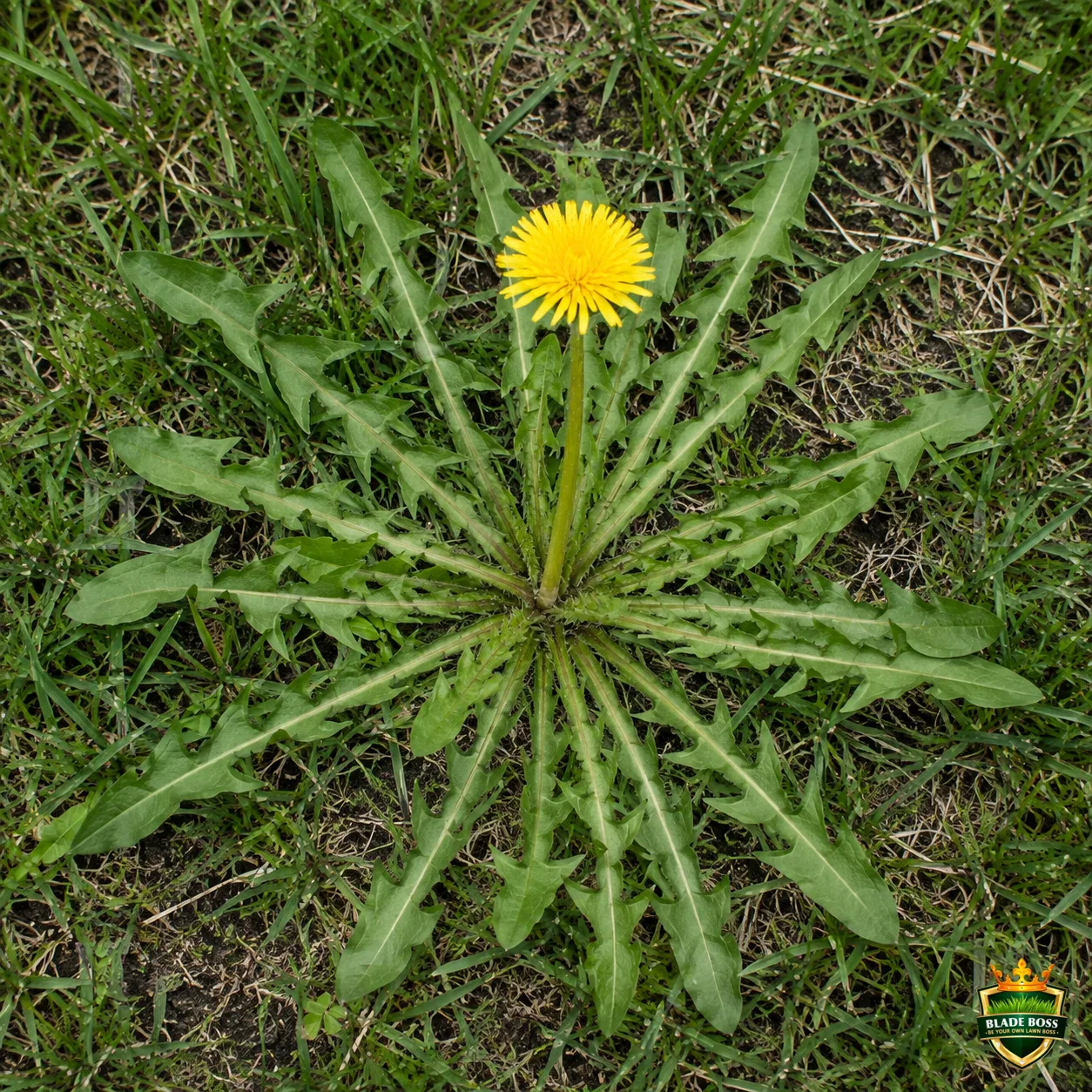
Dandelion weed identification photo, top-down view in a lawn
Dandelion Flat rosette of long, jagged, deeply toothed leaves and a bright yellow flower on a hollow stem. Fix: easy to kill, a standard 3-way gets the taproot. Dandelion guide.
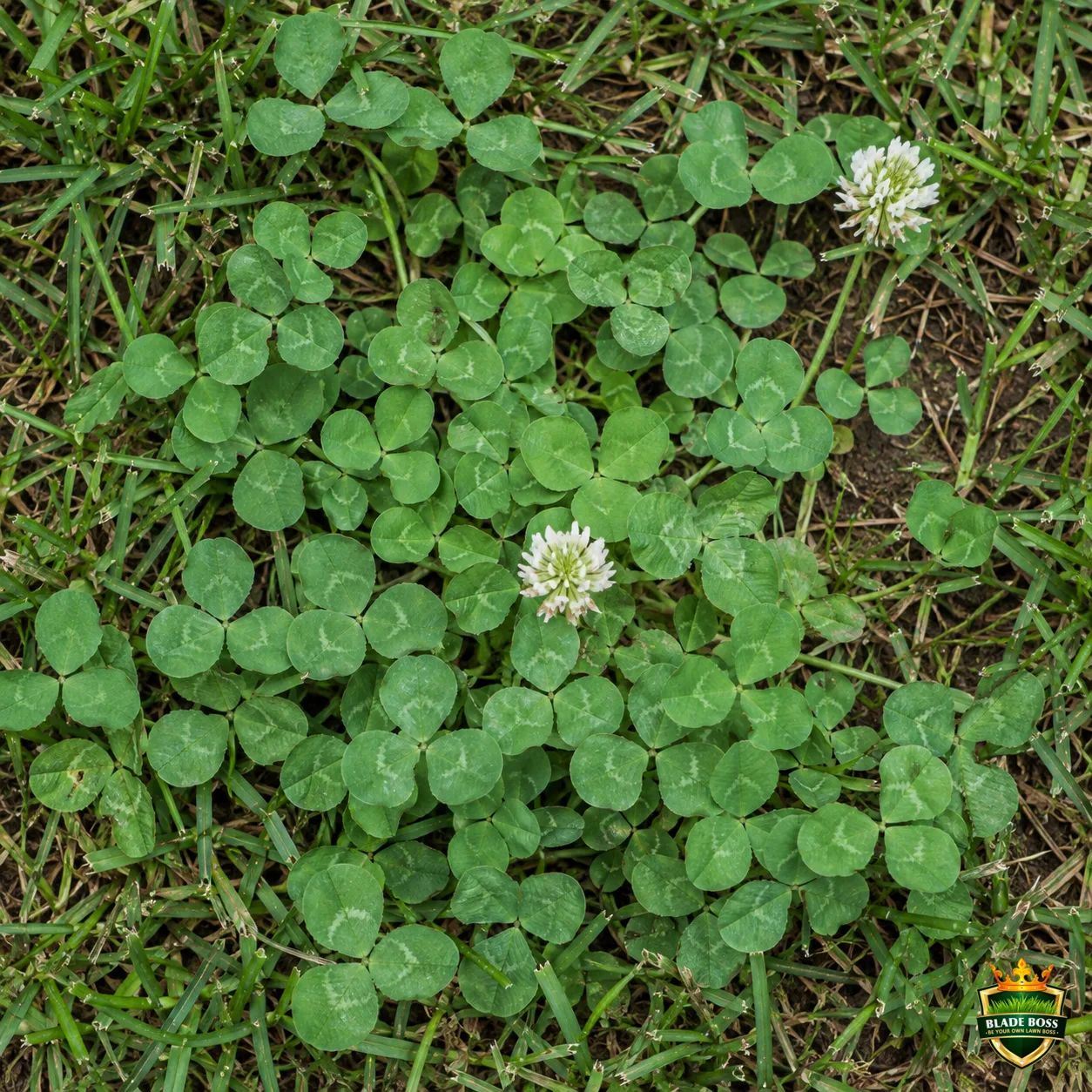
White Clover weed identification photo, top-down view in a lawn
White Clover Three rounded leaflets, each with a pale V-band, plus round white pom-pom flowers. Fix: triclopyr kills it, and feeding the lawn keeps it gone. Clover guide.
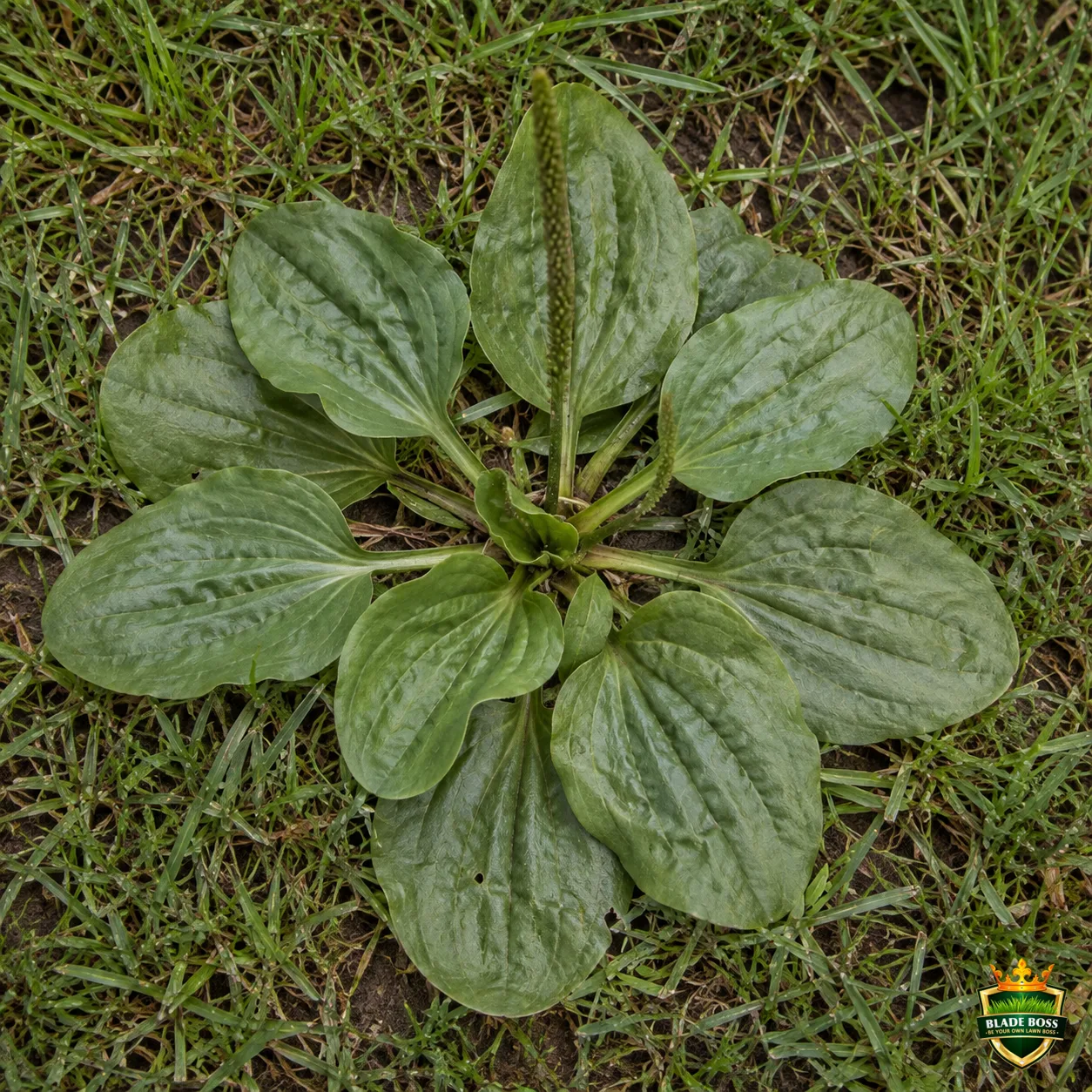
Broadleaf Plantain weed identification photo, top-down view in a lawn
Broadleaf Plantain Rosette of broad oval leaves with parallel lengthwise veins and rat-tail seed spikes. Fix: a broadleaf killer clears it. Broadleaf guide.
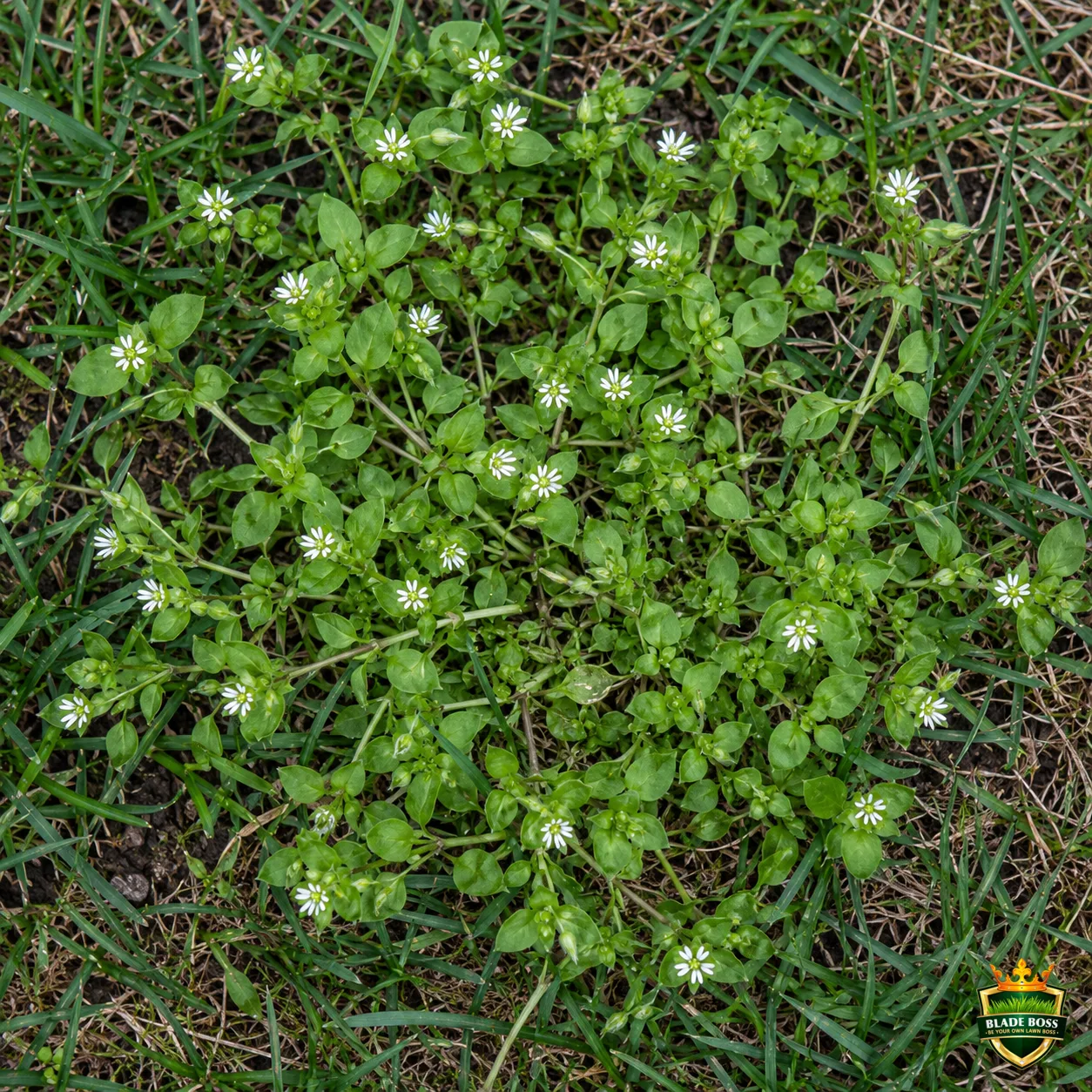
Common Chickweed weed identification photo, top-down view in a lawn
Common Chickweed Low sprawling mat of small pointed opposite leaves with tiny white star flowers. Fix: a broadleaf killer clears it. Broadleaf guide.

Broadleaf Weeds: Low and Sprawling

Ground-hugging broadleaf weeds that spread in mats. Same fix as the rest: one broadleaf spray clears them, though spurge and medic are worth catching early.
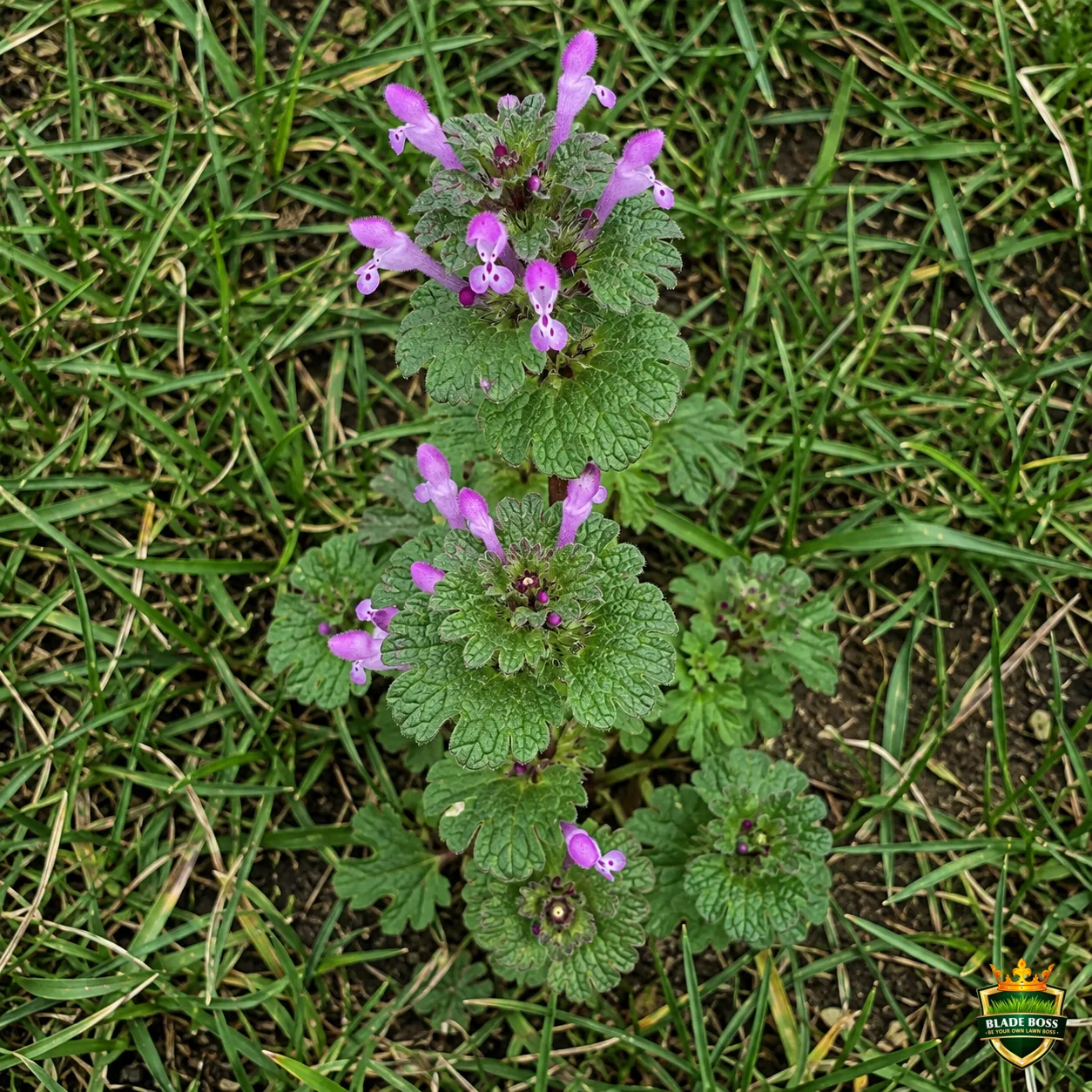
Henbit weed identification photo, top-down view in a lawn
Henbit Square stems with scalloped clasping leaves in tiers and small tubular purple flowers. Fix: a broadleaf killer clears it. Broadleaf guide.
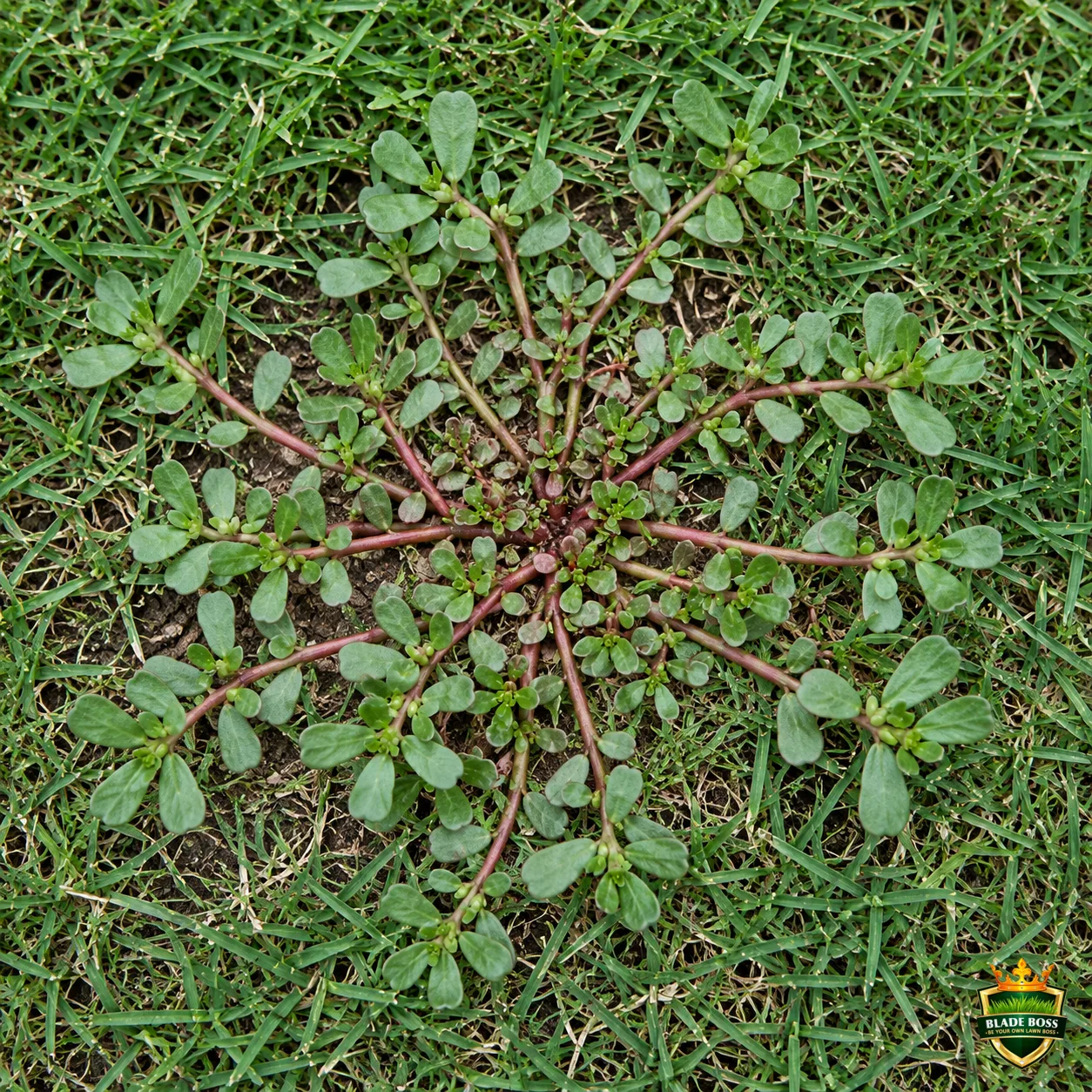
Purslane weed identification photo, top-down view in a lawn
Purslane Flat mat of thick fleshy reddish stems with smooth paddle-shaped succulent leaves. Fix: a broadleaf killer clears it. Broadleaf guide.
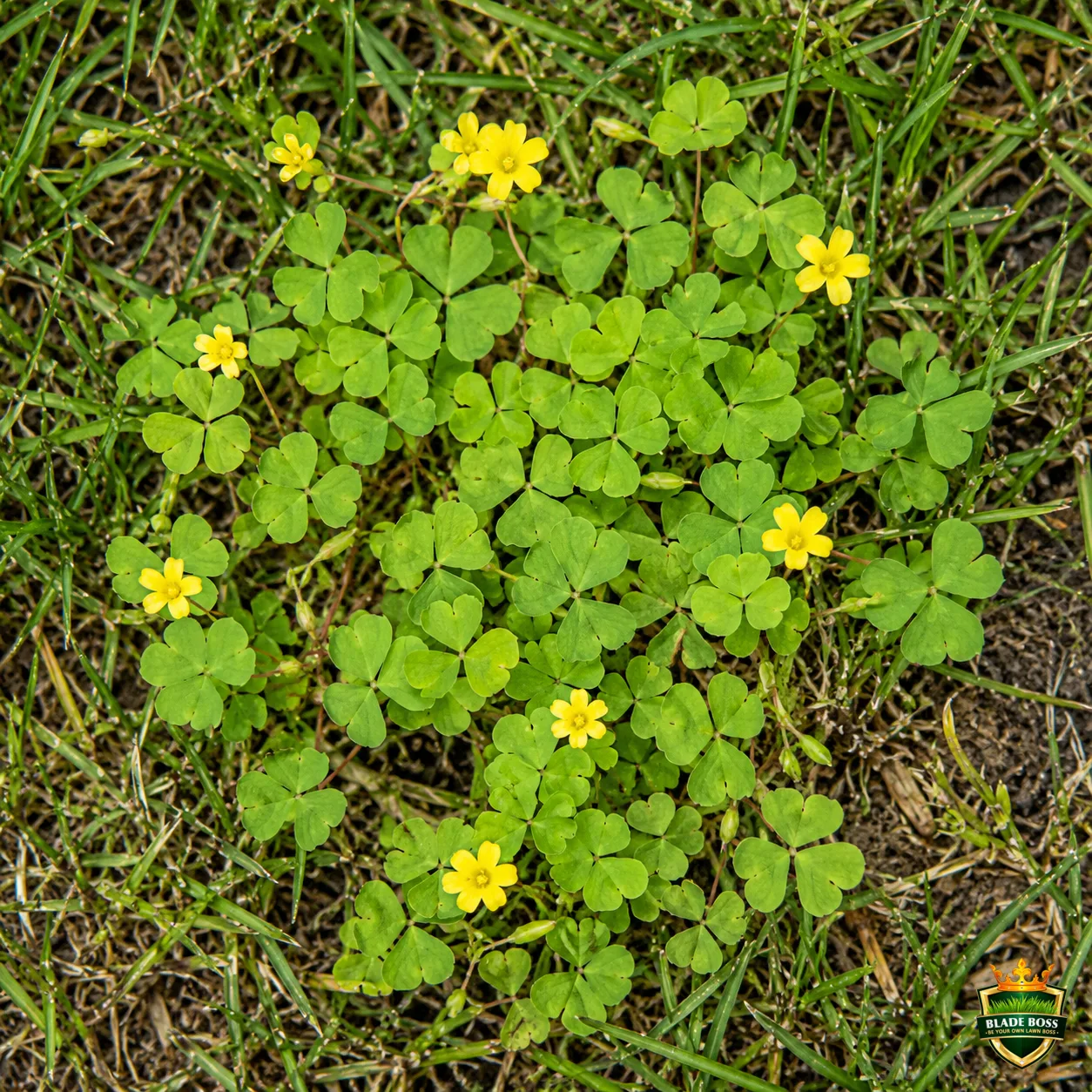
Oxalis (Yellow Woodsorrel) weed identification photo, top-down view in a lawn
Oxalis (Yellow Woodsorrel) Looks like clover but with heart-shaped leaflets and small yellow 5-petal flowers. Fix: a tough one. Broadleaf killer, often needs triclopyr. Broadleaf guide.
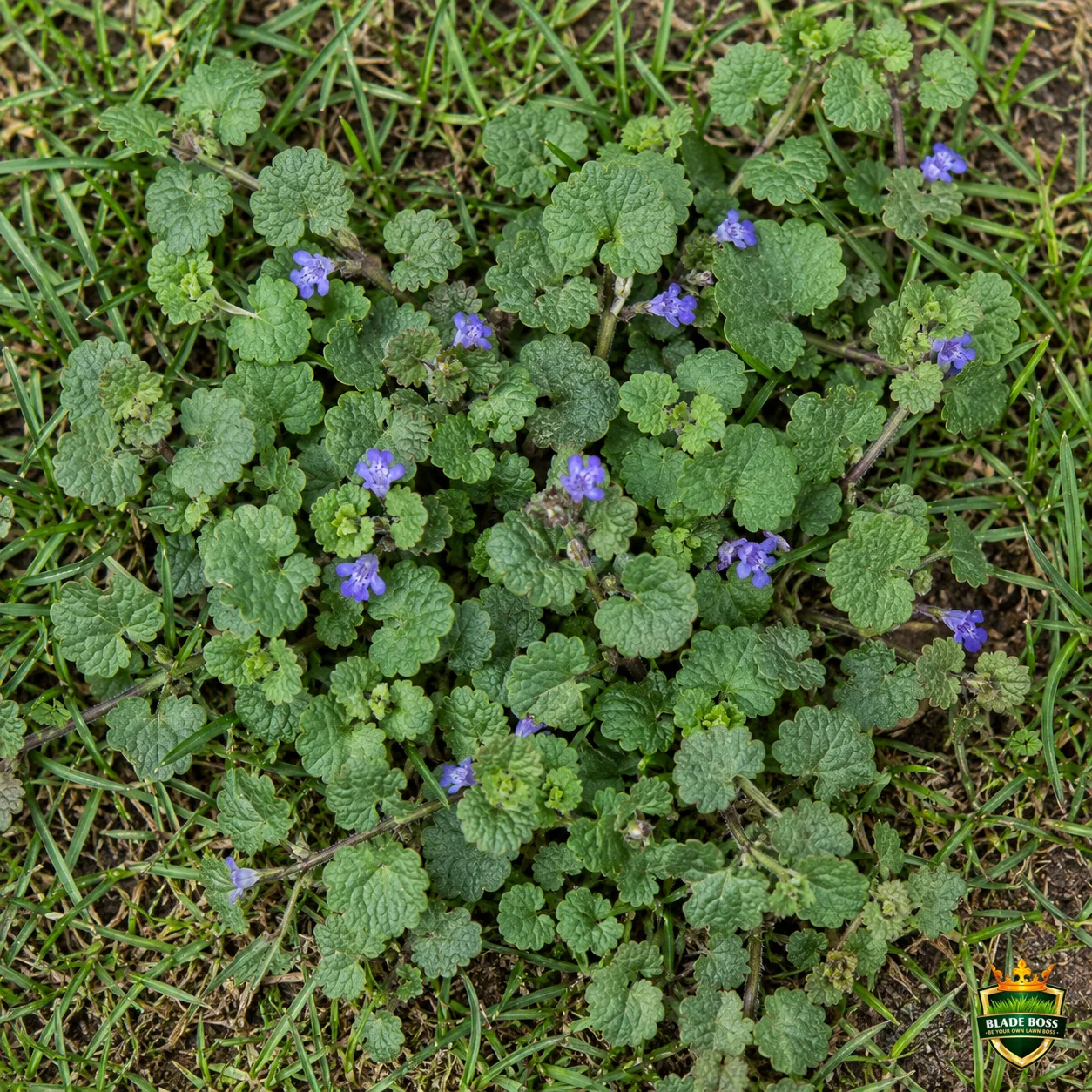
Ground Ivy (Creeping Charlie) weed identification photo, top-down view in a lawn
Ground Ivy (Creeping Charlie) Creeping mat of round scalloped leaves on square stems with small blue-purple flowers. Fix: a tough one. Broadleaf killer with triclopyr. Broadleaf guide.

Broadleaf Weeds: The Stubborn Ones

These resist a standard broadleaf spray and often need a triclopyr boost or a second pass. Thistle is here too, since it is spiny and persistent.
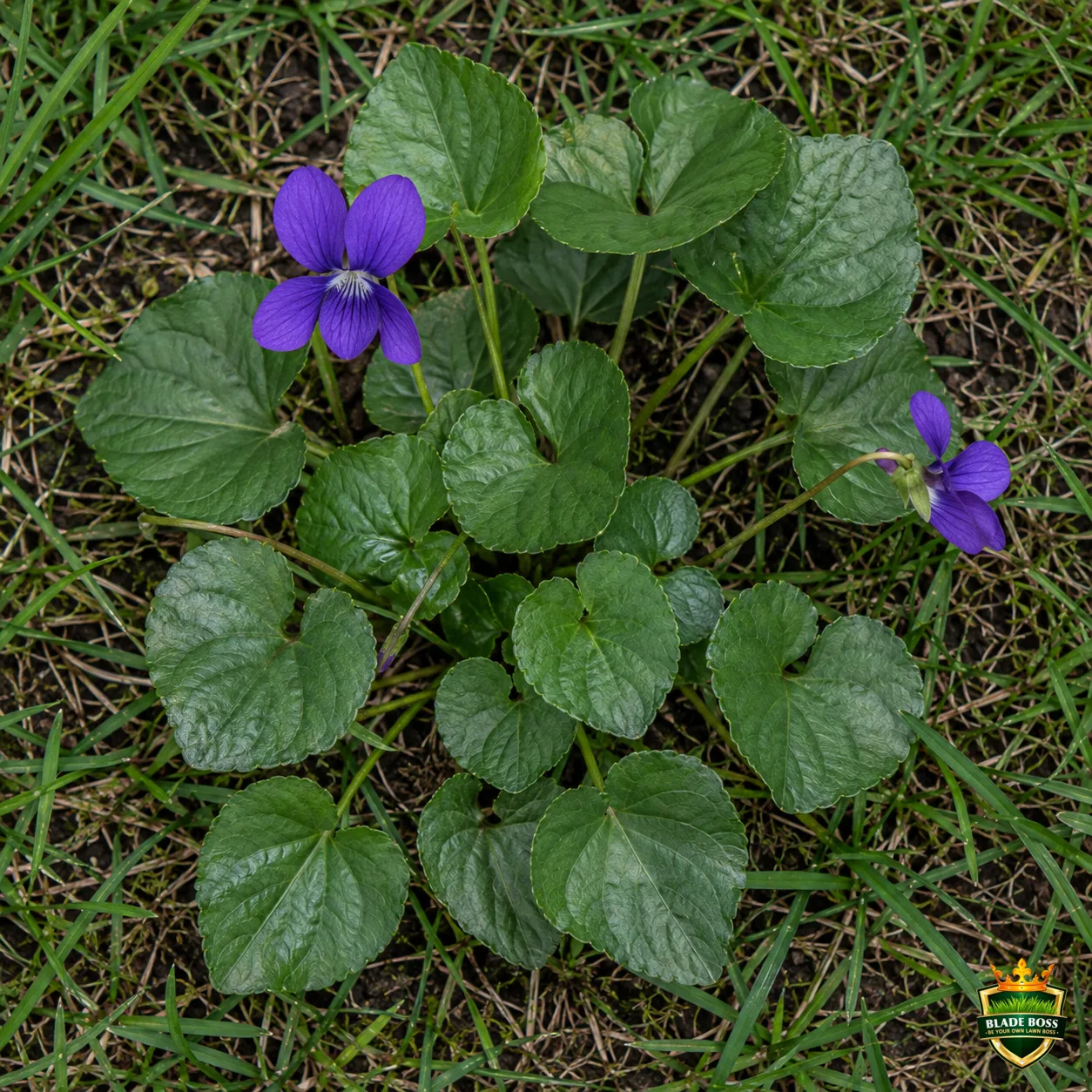
Wild Violet weed identification photo, top-down view in a lawn
Wild Violet Glossy heart-shaped scalloped leaves on long stalks with purple 5-petal flowers. Fix: a tough one. Broadleaf killer with triclopyr. Broadleaf guide.
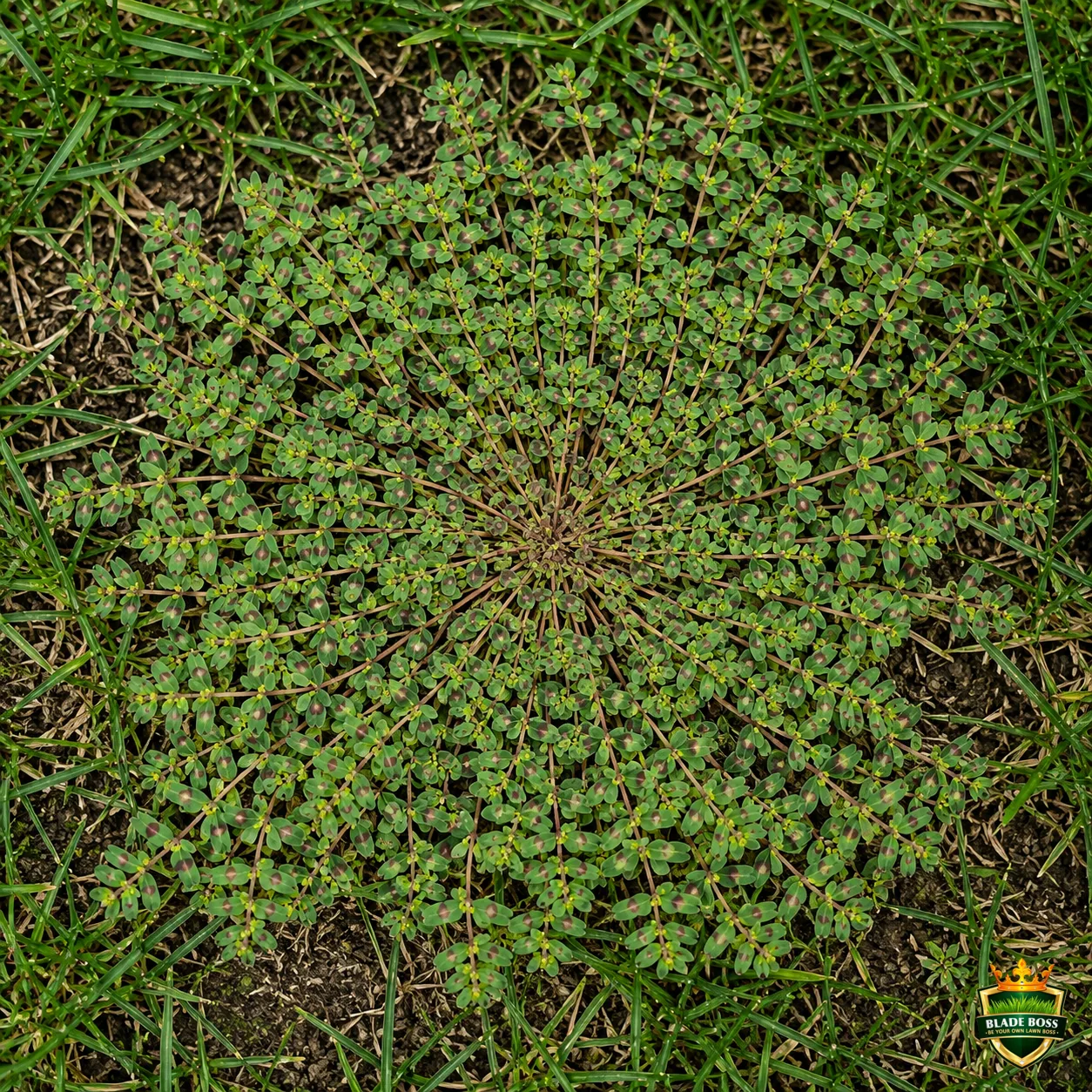
Prostrate Spurge weed identification photo, top-down view in a lawn
Prostrate Spurge Flat circular mat from a central taproot, tiny opposite leaves often with a red spot, milky sap. Fix: a broadleaf killer clears it. Broadleaf guide.
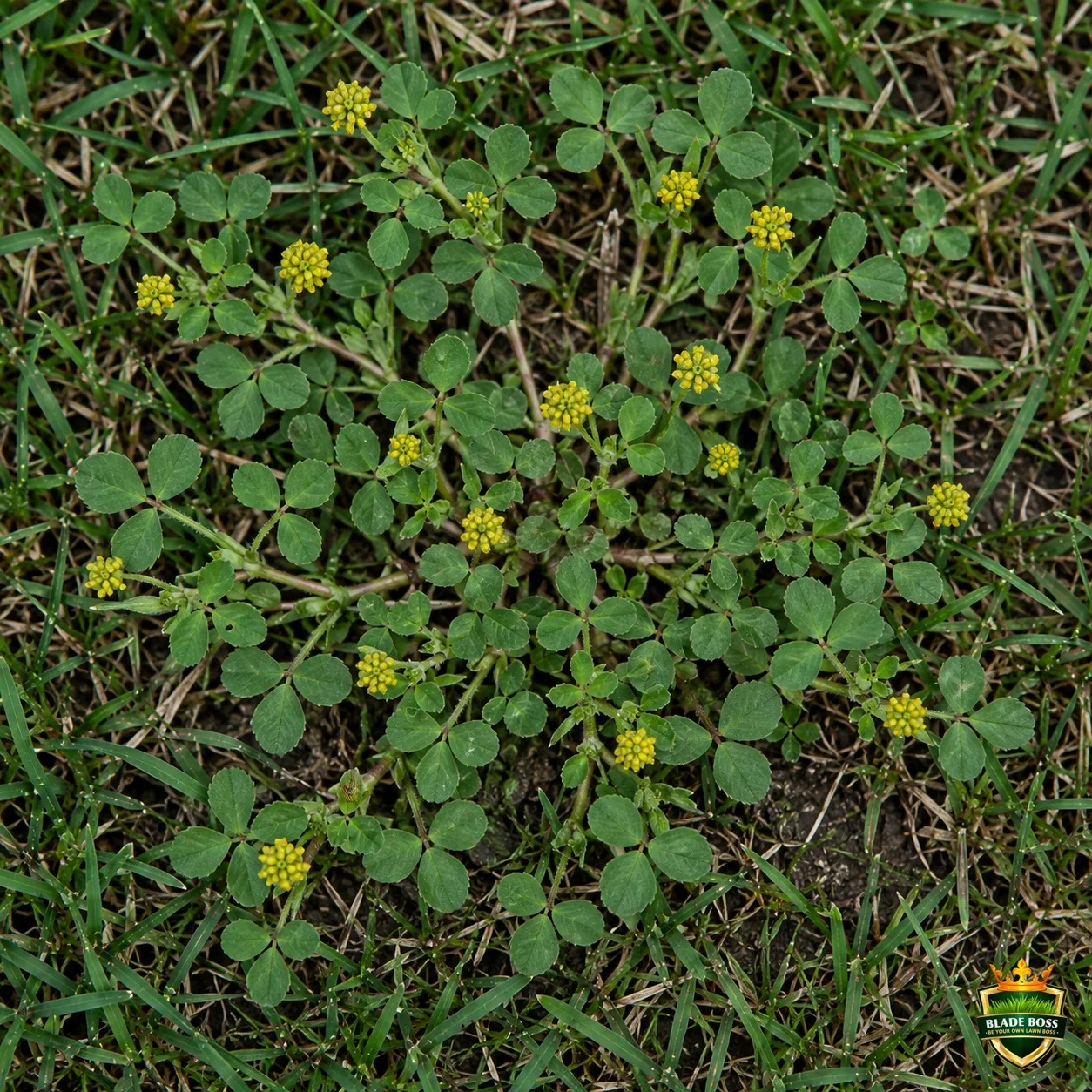
Black Medic weed identification photo, top-down view in a lawn
Black Medic Clover-like with a stalked middle leaflet and small round clusters of yellow flowers. Fix: a broadleaf killer clears it. Broadleaf guide.
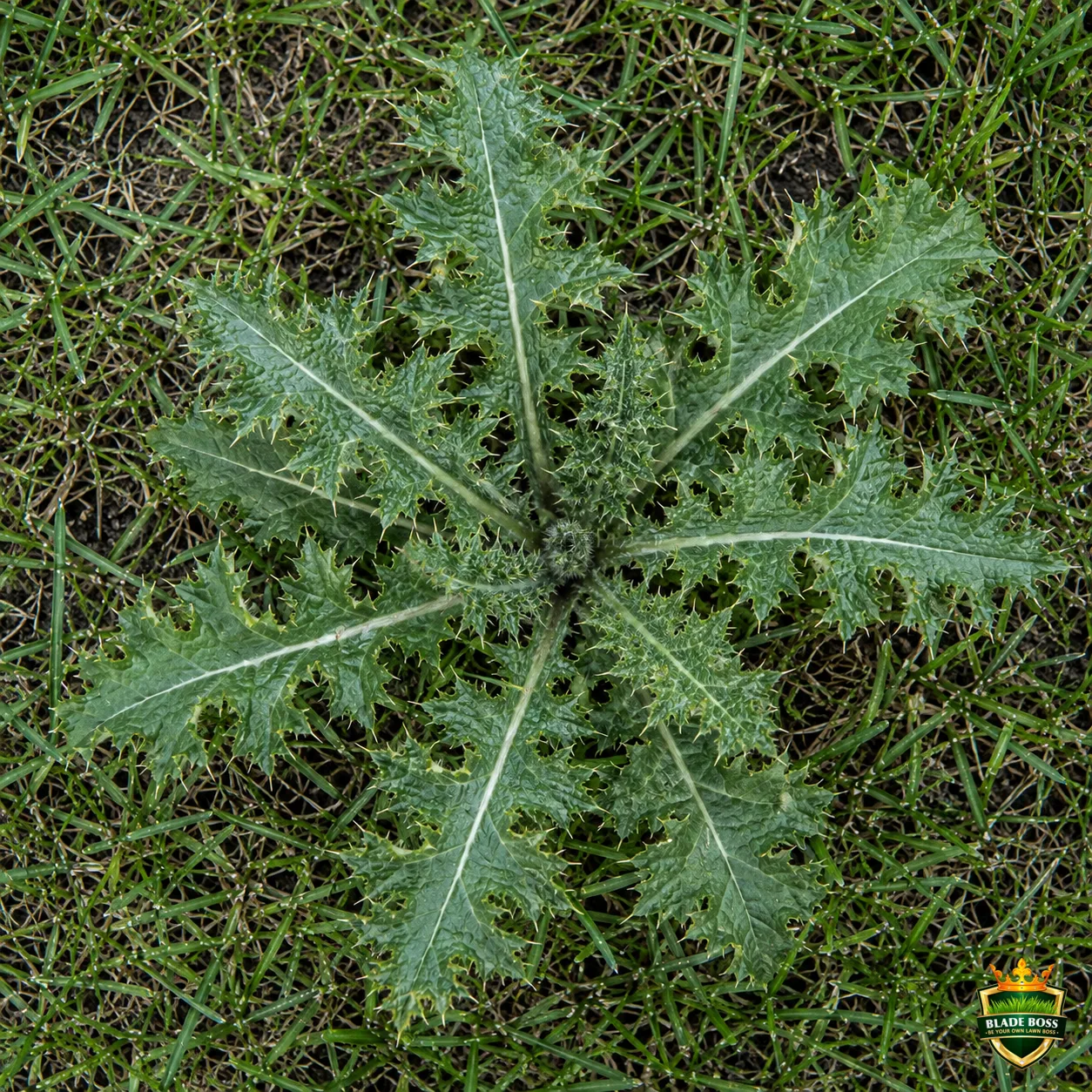
Canada Thistle weed identification photo, top-down view in a lawn
Canada Thistle Rosette of deeply lobed gray-green leaves with very spiny, prickly margins. Fix: a broadleaf killer clears it (repeat apps). Broadleaf guide.

Grassy Weeds: Common Annual Grasses

Annual grasses that sprout from seed each year. Prevent them with a pre-emergent, or spot-kill young plants. There is no single product for all of them.
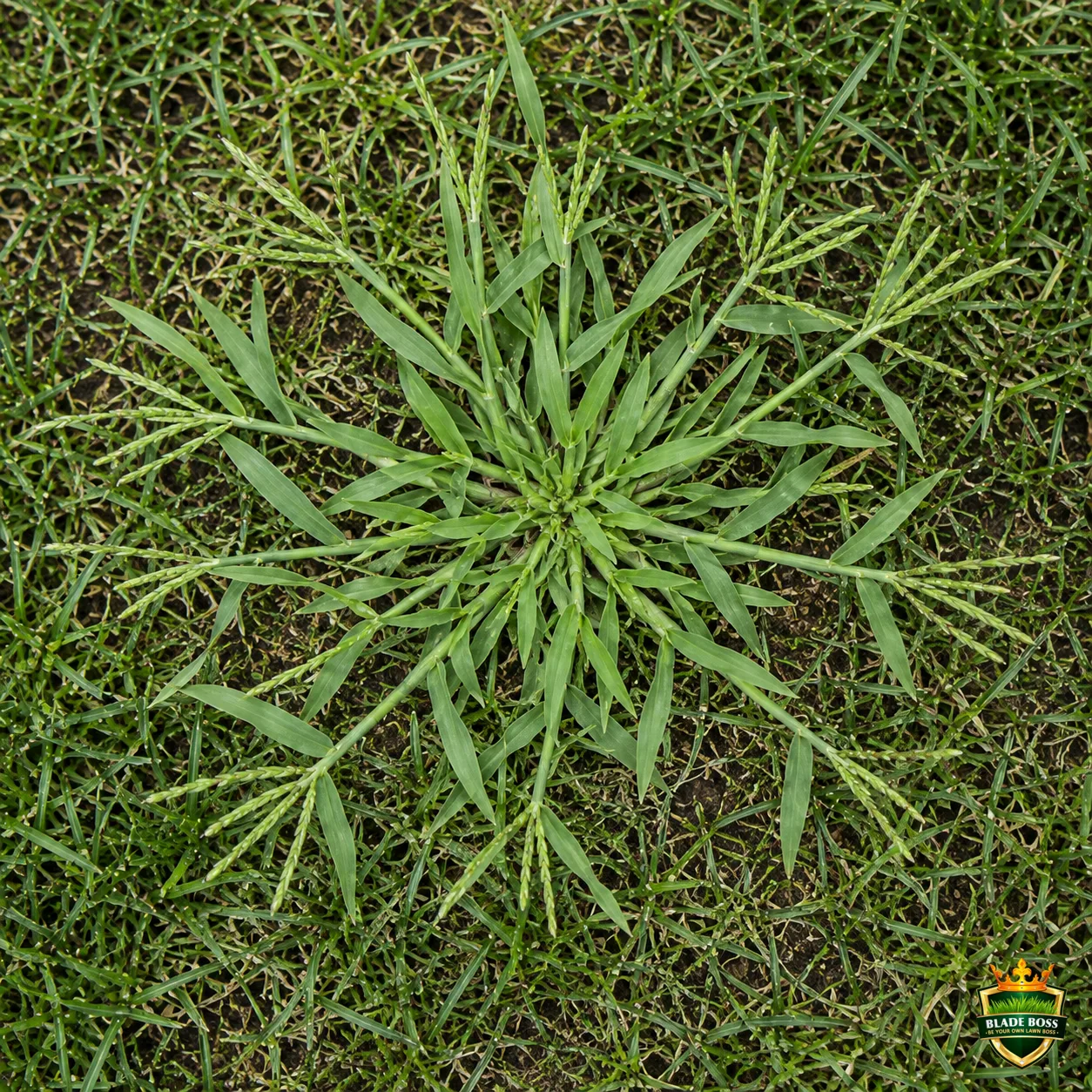
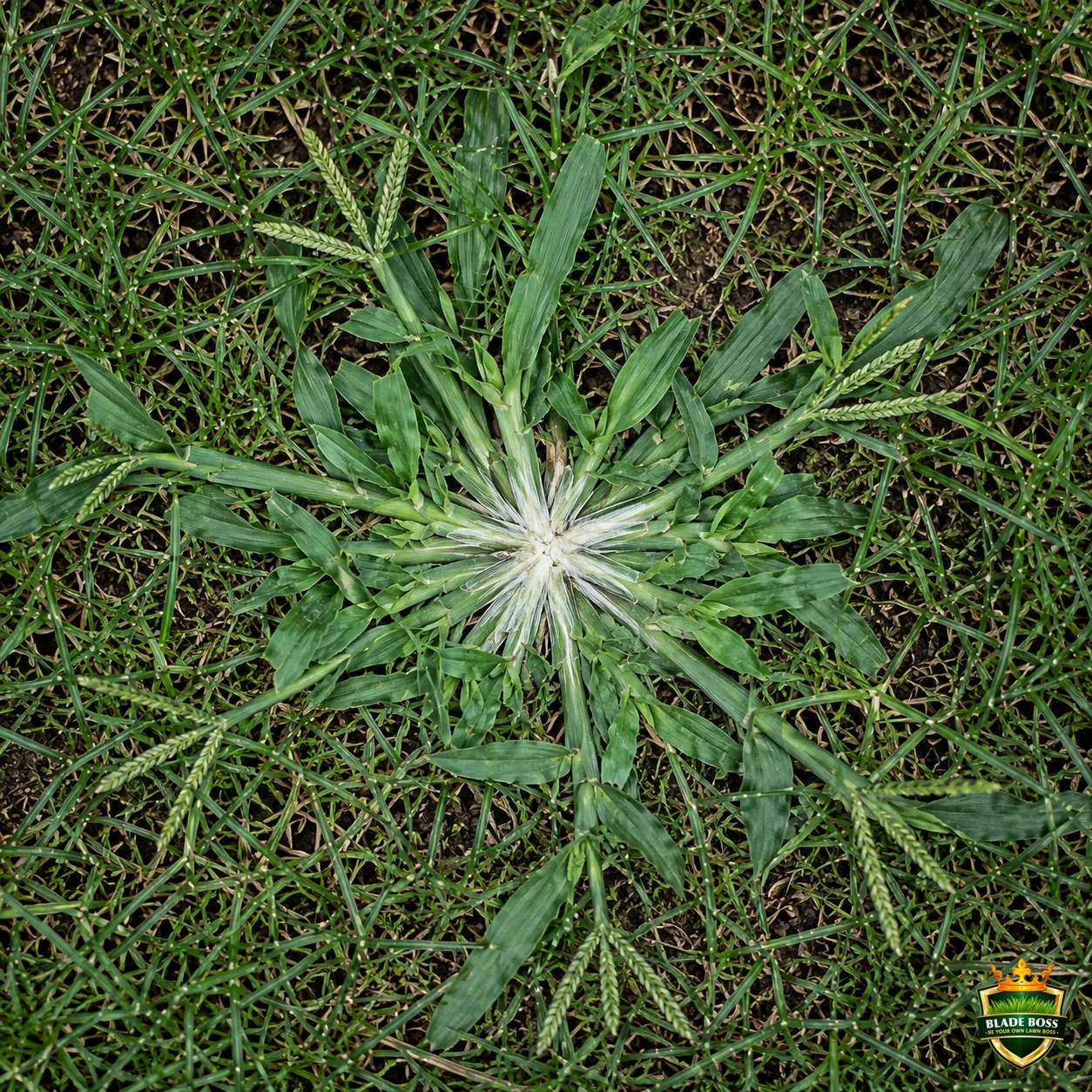
Crabgrass weed identification photo, top-down view in a lawn
Crabgrass Low clump of wide light-green blades fanning out flat in a star from a central crown. Fix: quinclorac, or prevent it. Crabgrass guide.
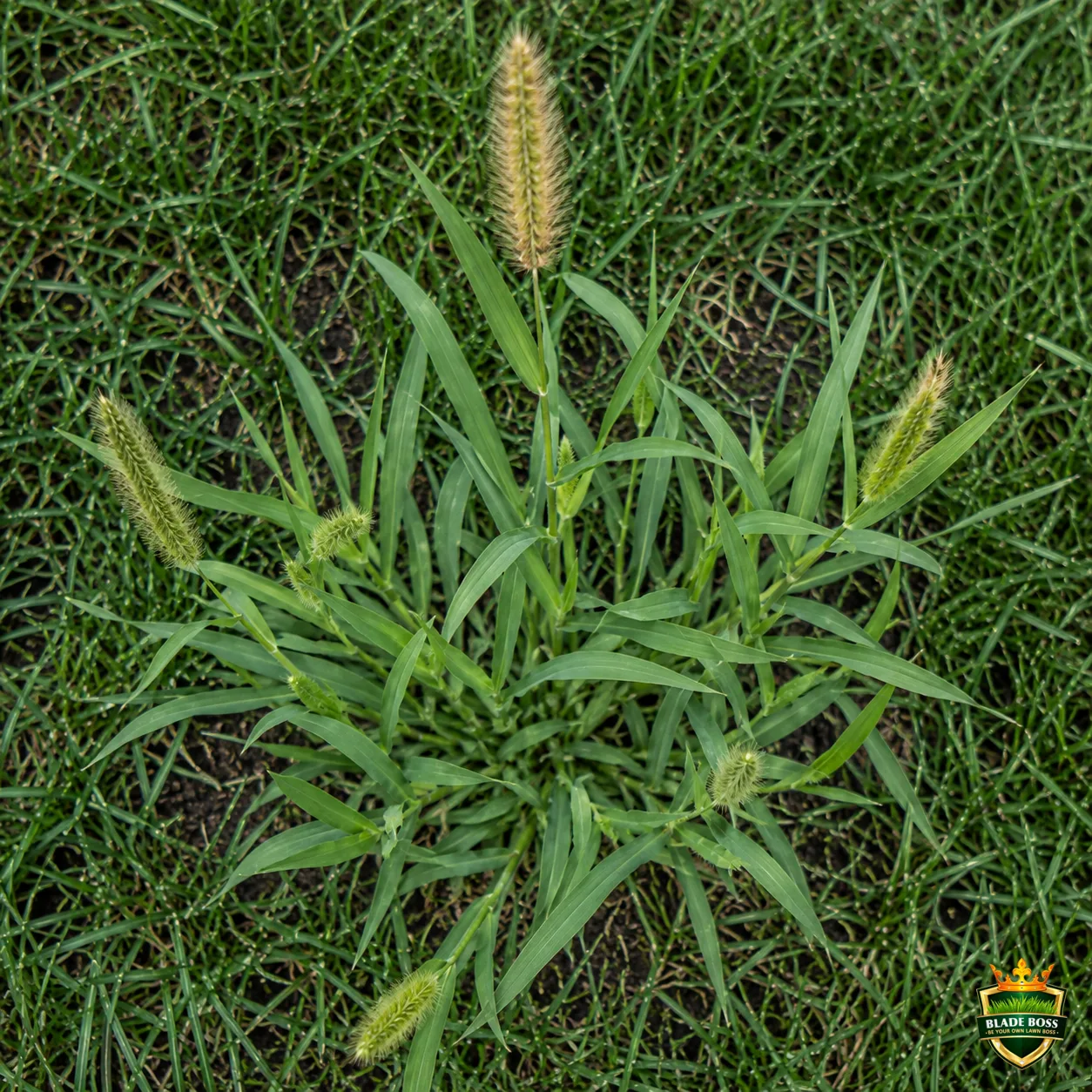
Yellow Foxtail weed identification photo, top-down view in a lawn
Yellow Foxtail Upright grass with a fuzzy, bristly, cylindrical seedhead shaped like a fox tail. Fix: quinclorac or Pylex/Tenacity. Grassy weeds guide.
Goosegrass weed identification photo, top-down view in a lawn
Goosegrass Flattened wagon-wheel rosette with a distinctive white, silvery center. Tough annual. Fix: Pylex is the standard. Grassy weeds guide.
Nimblewill weed identification photo, top-down view in a lawn
Nimblewill Thin, wiry, pale blue-green grass in circular patches; greens up late in spring. Fix: Tenacity or Pylex, ~3 apps. Grassy weeds guide.

Grassy Weeds: Perennial Invaders

Perennial grasses that come back from roots and runners. A few have a selective fix, but most force a glyphosate spot-kill and reseed.
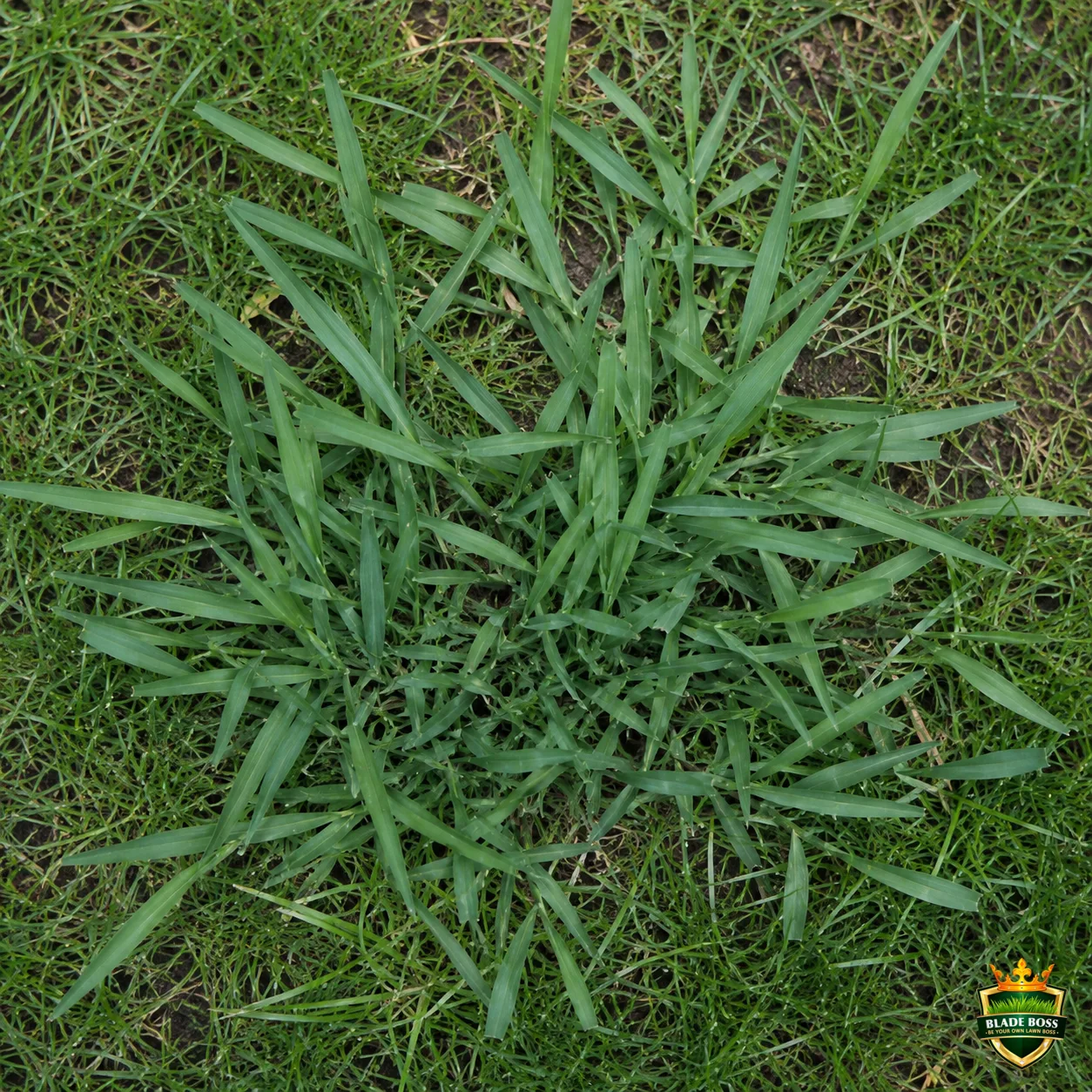
Quackgrass weed identification photo, top-down view in a lawn
Quackgrass Coarse blue-green grass with wide rough blades that spreads fast by white rhizomes. Fix: no selective. Glyphosate spot-kill + reseed. Grassy weeds guide.
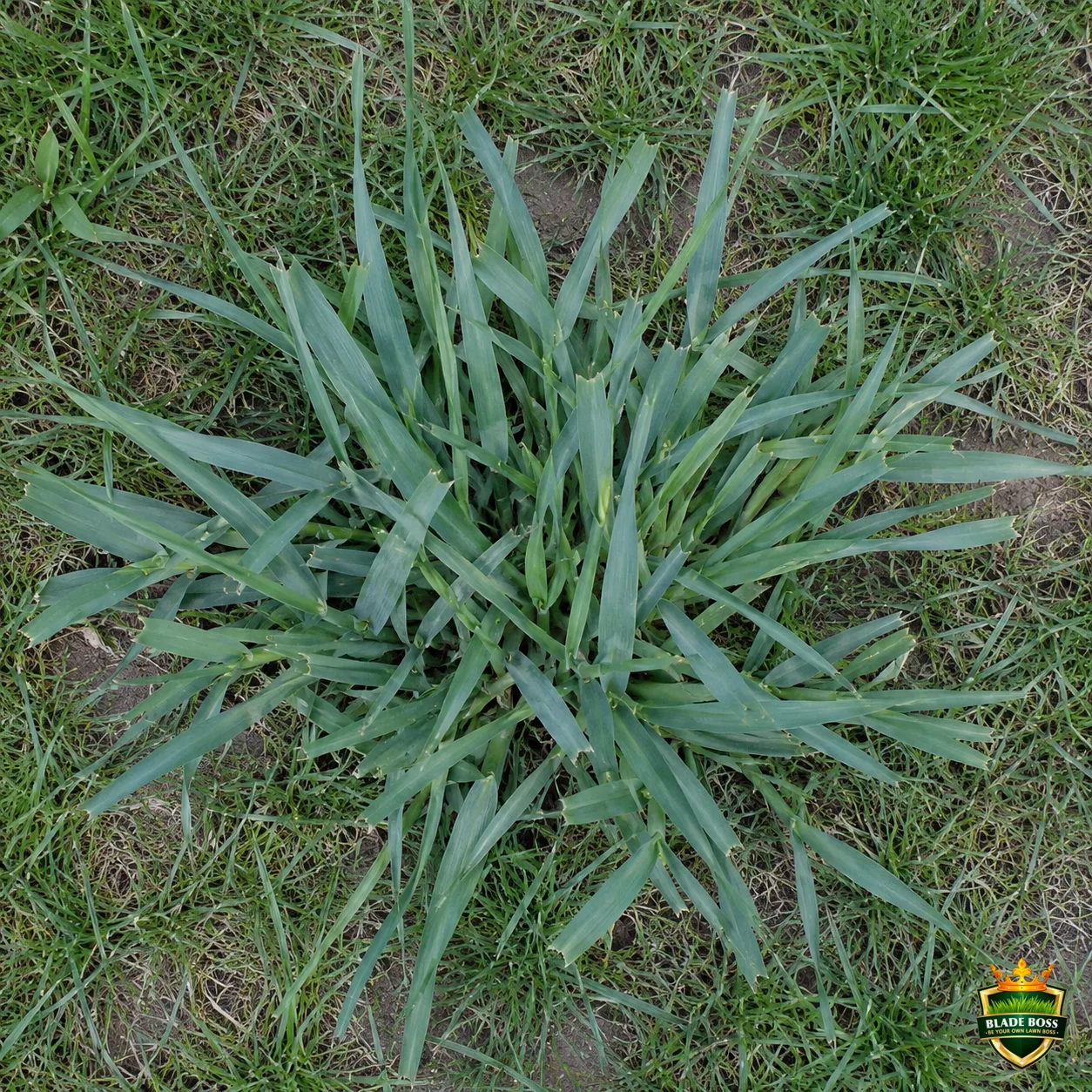
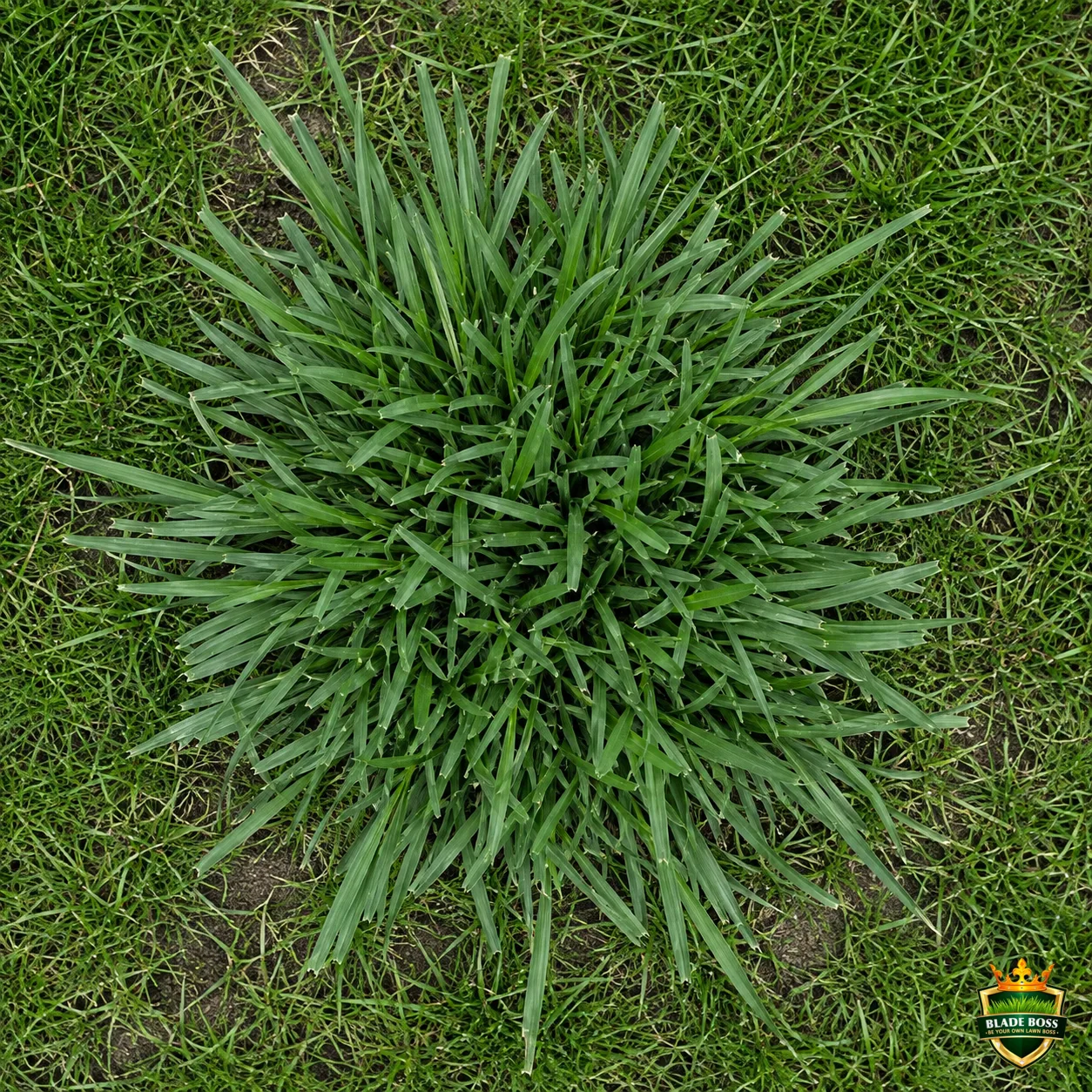
Tall Fescue Clump weed identification photo, top-down view in a lawn
Tall Fescue Clump Dense round clump of coarse, dark-green, wide blades standing out from a finer lawn. Fix: no selective. Glyphosate spot-kill + reseed. Grassy weeds guide.
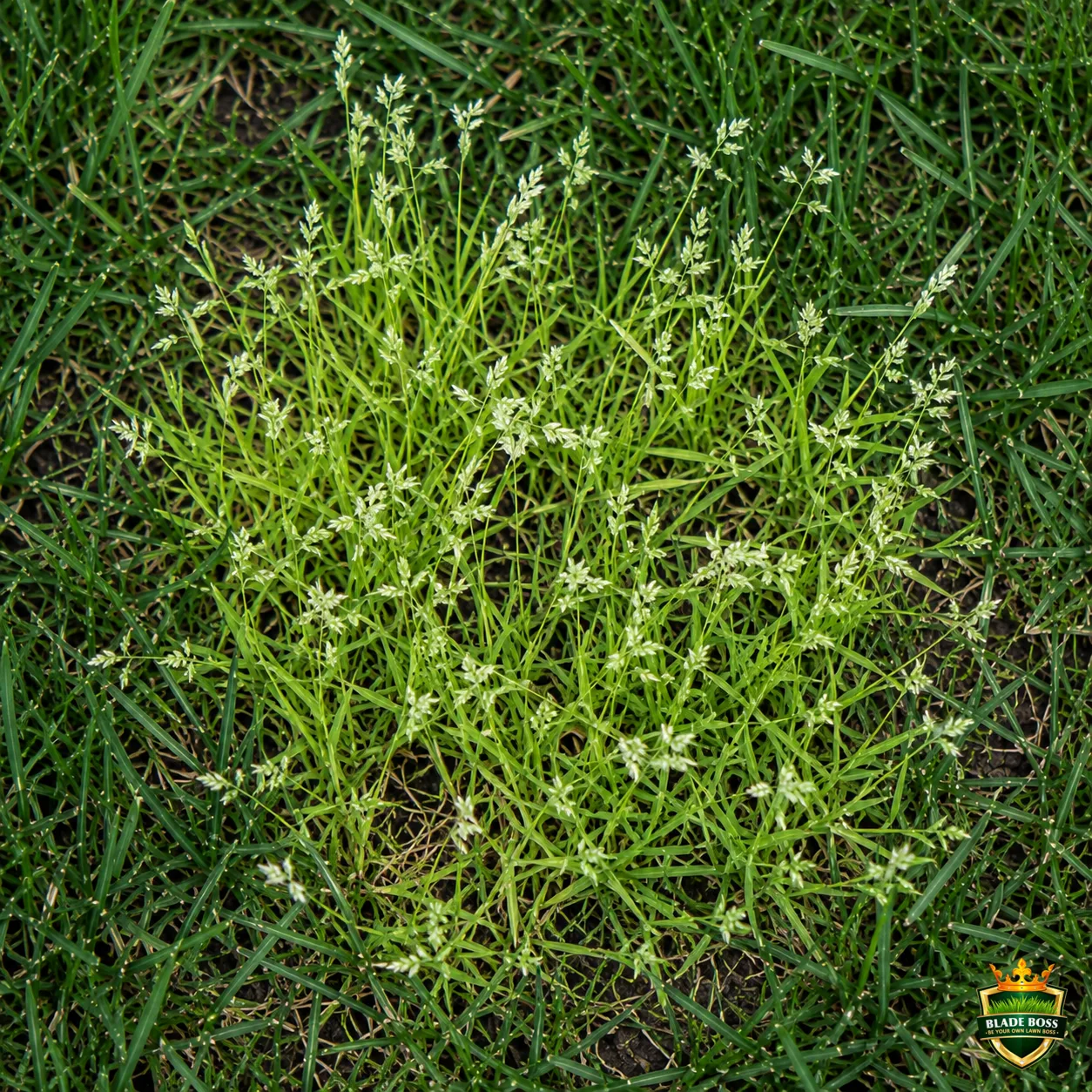
Annual Bluegrass (POA) weed identification photo, top-down view in a lawn
Annual Bluegrass (POA) Pale yellow-green patch with boat-shaped tips and a mass of small white seedheads. Fix: prevent with pre-emergent. POA guide.
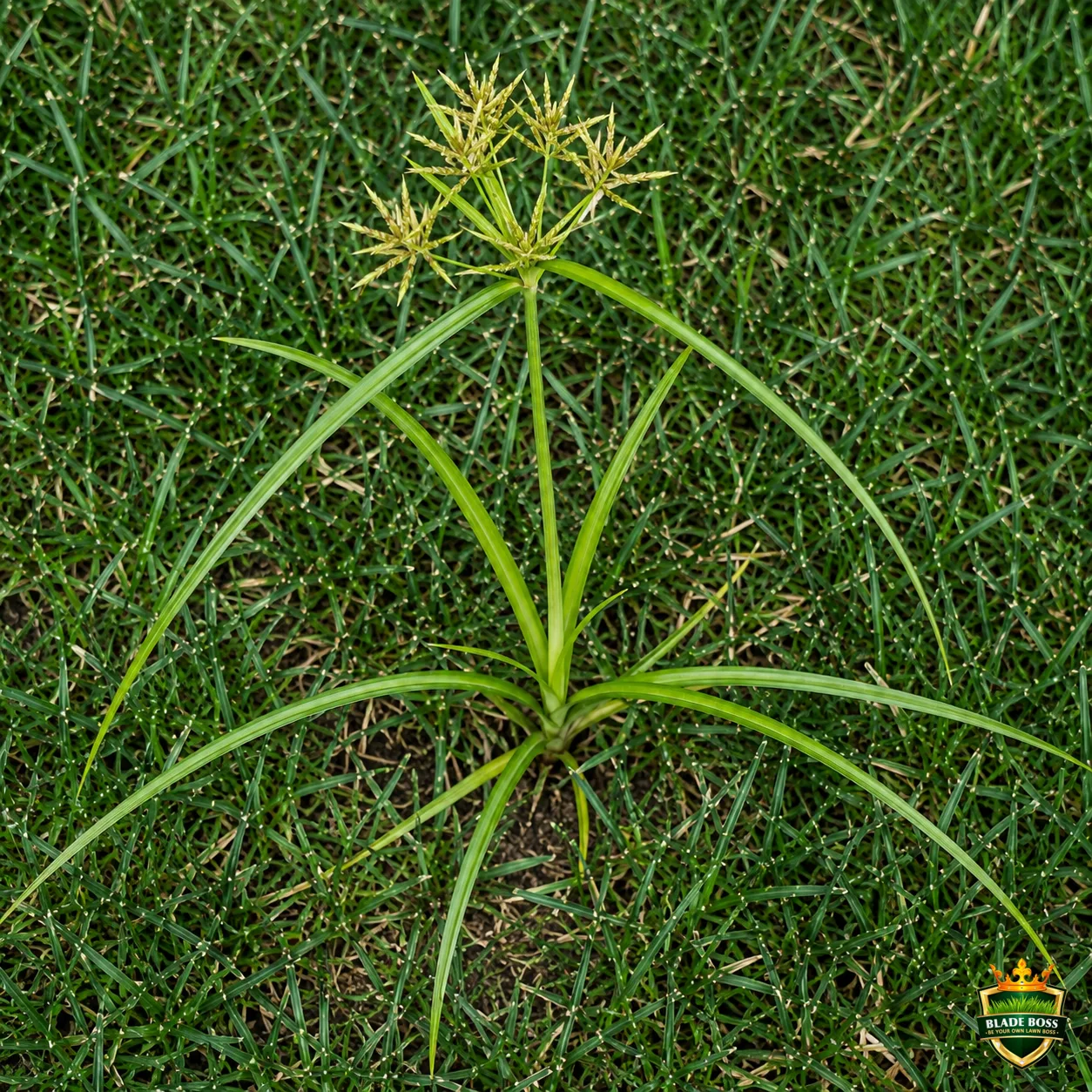
Yellow Nutsedge weed identification photo, top-down view in a lawn
Yellow Nutsedge Glossy pale-green sedge that shoots up above the lawn on a triangular stem. Fix: halosulfuron (SedgeHammer). Nutsedge guide.

Grassy and Sedge Weeds: More to Know

The rest of the common grass-like offenders, including POA and nutsedge. Each has its own dedicated guide linked in the caption.
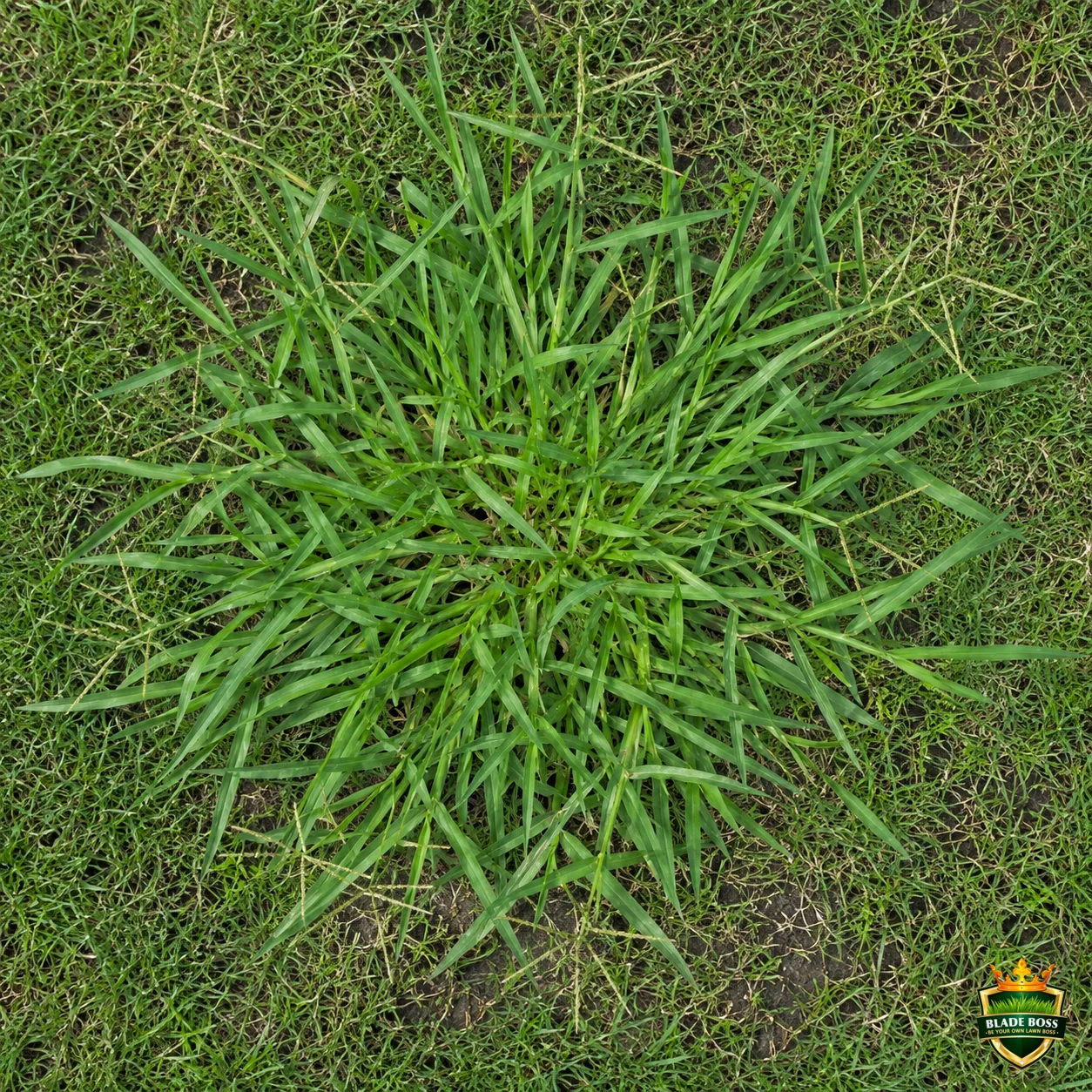
Dallisgrass weed identification photo, top-down view in a lawn
Dallisgrass Coarse light-green grass in an expanding circular clump with wide radiating blades. Fix: no good selective. Glyphosate + reseed. Grassy weeds guide.
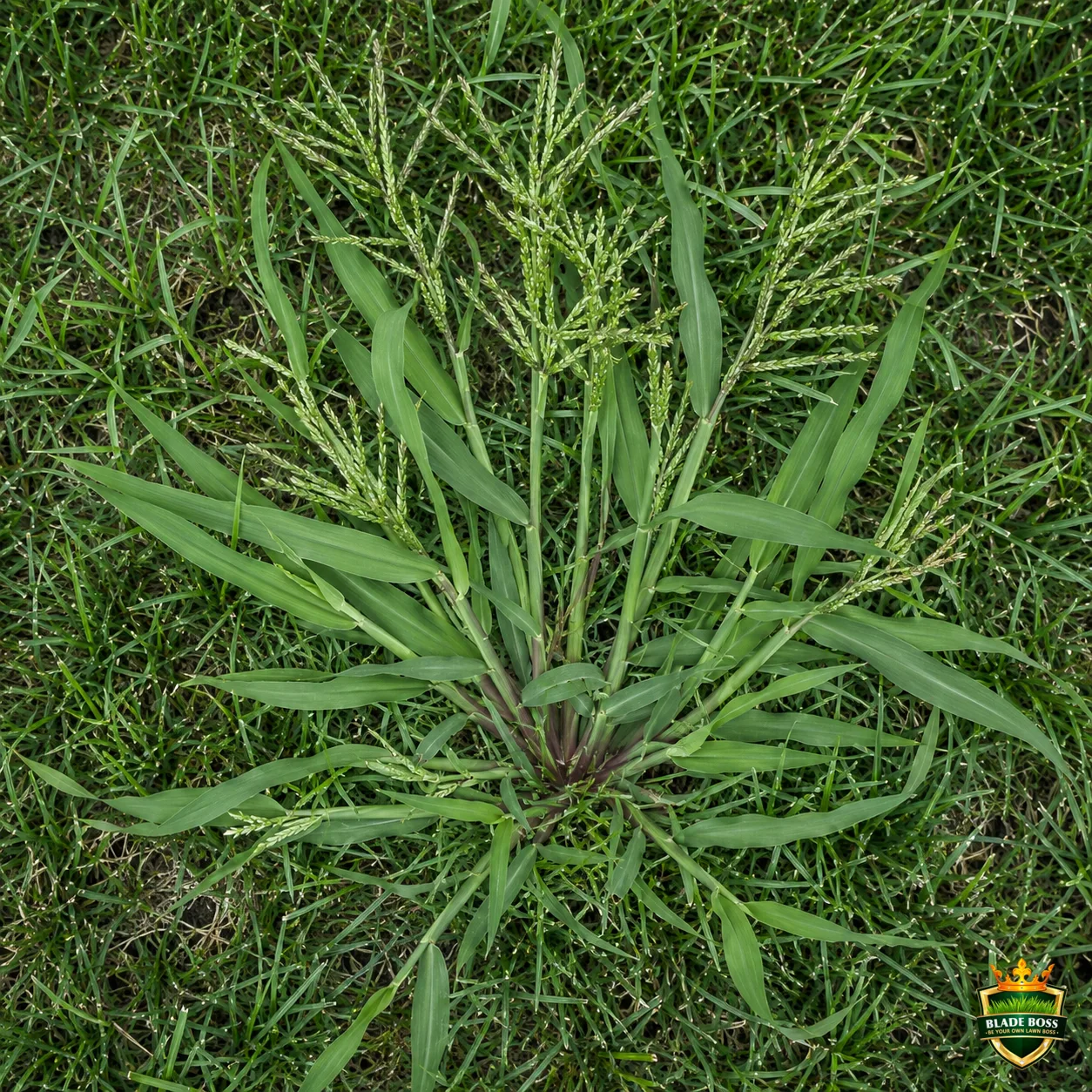
Barnyardgrass weed identification photo, top-down view in a lawn
Barnyardgrass Coarse upright grass with a smooth leaf base and a reddish-purple tint at the stem base. Fix: quinclorac / Tenacity / Pylex. Grassy weeds guide.
Orchardgrass weed identification photo, top-down view in a lawn
Orchardgrass Coarse blue-green bunchgrass growing in a distinct tuft standing above the lawn. Fix: no selective. Glyphosate + reseed. Grassy weeds guide.
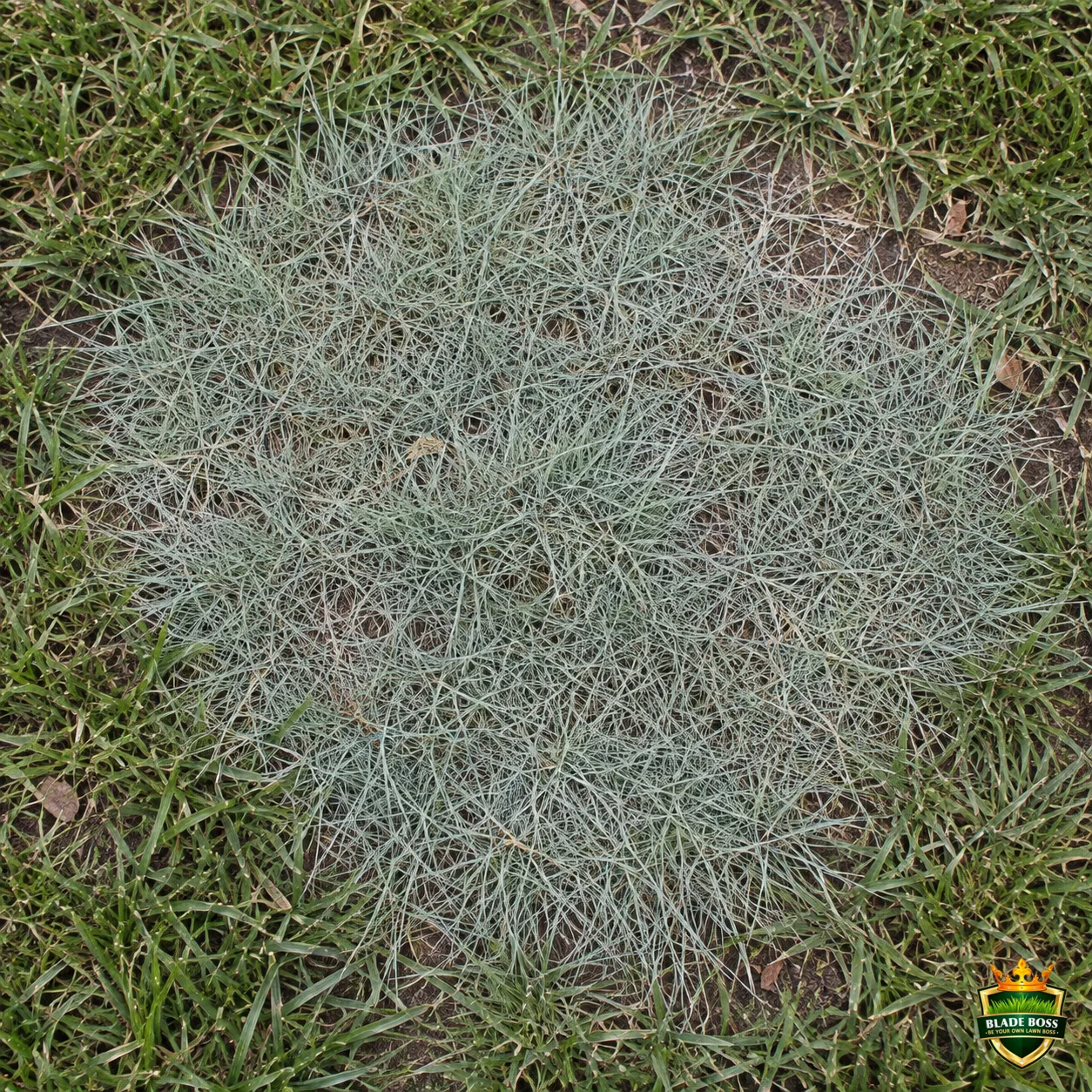
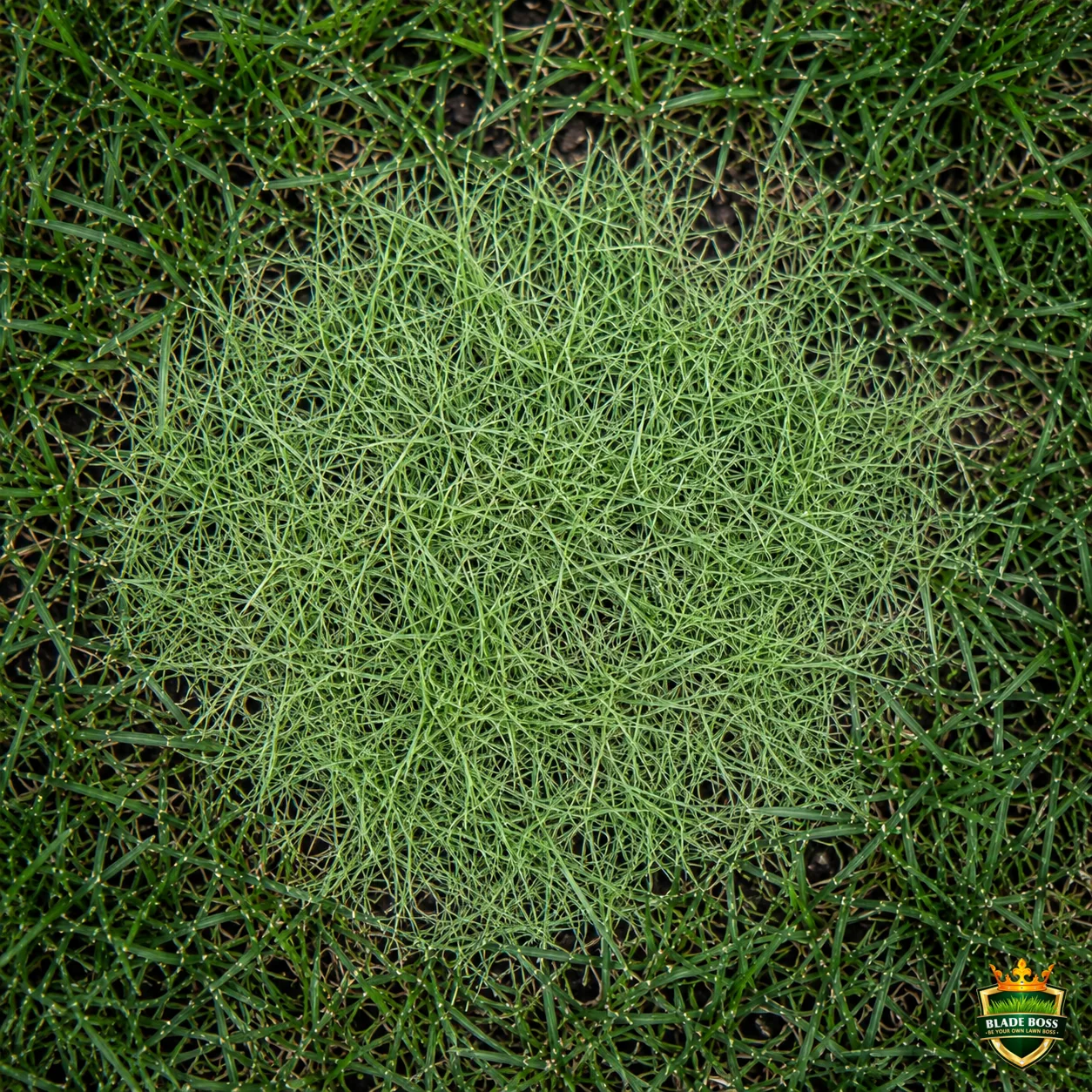
Creeping Bentgrass weed identification photo, top-down view in a lawn
Creeping Bentgrass Puffy, dense, fine-textured light gray-green patch that looks spongy and swirled. Fix: Tenacity or renovation. Bentgrass guide.

The Master Weed-to-Fix Cheat Sheet

Members get the full weed-to-tool-to-guide lookup table in one place, so you can go from spotting a weed to knowing exactly what kills it in seconds.

Unlock with Membership →

Mission Complete. Now Fly the Plan.

Now that you have identified your weed, go finish the job. For broadleaf weeds, one blanket spray handles the whole lawn: see how to kill broadleaf weeds. For grassy weeds, match the tool to the weed with how to kill grassy weeds. And for the big single-weed battles, go straight to the specialist guide: crabgrass, nutsedge, POA, or bentgrass.

Open Weather Hub →▶ VIDEO WALKTHROUGH - COMING SOON

Crew Questions - FAQ

How do I identify a weed in my lawn?

Start by deciding whether it is a broadleaf weed or a grassy weed, because that determines everything about how you kill it. Broadleaf weeds have wide, flat leaves with branching veins and usually produce flowers (think dandelion, clover, plantain). Grassy weeds have narrow, bladed leaves that look like your lawn grass (think crabgrass, foxtail, quackgrass). Once you know the category, compare your weed to the photos in this guide and read the quick tell for each to confirm the exact species. Look at the growth habit (upright, sprawling mat, or clump), leaf shape and arrangement, color, any flowers or seedheads, and when it greens up or dies. Getting the exact species right matters, especially for grassy weeds, because the correct product depends entirely on which weed you have.

What is the difference between broadleaf and grassy weeds?

Broadleaf weeds are a completely different type of plant from your lawn grass. They have wide, flat leaves with veins that branch out in a net pattern, and most produce recognizable flowers. Because they are so different from grass, a single selective herbicide (a 3-way broadleaf killer) can wipe out over 250 of them at once while leaving your lawn unharmed. Grassy weeds, on the other hand, are grasses, closely related to your lawn, with narrow blades and parallel veins. That similarity makes them much harder to control: there is no single product that kills all grassy weeds, and some cannot be selectively killed at all. This is why identifying which category, and which exact species, you are dealing with is the essential first step before buying any product.

Is nutsedge a grass or a weed?

Nutsedge is technically neither a broadleaf weed nor a true grass, it is a sedge, a distinct plant family. It is easy to mistake for a grassy weed because it grows among the grass and has narrow, blade-like leaves, but it gives itself away with a few tells: its stem is distinctly triangular (roll it between your fingers and you will feel three sides), its leaves are thick, waxy, and glossy, arranged in sets of three, and it grows noticeably faster and taller than your lawn, especially in the days after mowing. Because it is a sedge, it is not controlled by broadleaf herbicides or by most grassy weed killers, it needs a sedge-specific product like halosulfuron. We include it in this guide because people naturally look for it among the grassy weeds.

Why is it important to identify a weed before spraying?

Because using the wrong product wastes money, wastes a season, and can even damage your lawn. Broadleaf herbicides do nothing to grassy weeds, and grassy weed products each target specific species, so a random spray often does not work. Worse, some perennial grassy weeds have no selective option at all, meaning the only fix is a non-selective herbicide plus reseeding, and if you did not identify that correctly you might keep buying selective sprays that can never work. On the flip side, spraying a non-selective like glyphosate on a weed you could have killed selectively leaves a dead patch of lawn you now have to reseed. Correct identification points you straight to the one approach that actually works, which is exactly what this guide is built to do.

What are the most common lawn weeds in the Northeast?

On Long Island and across the Northeast, the broadleaf weeds you will see most are dandelion, white clover, broadleaf plantain, common chickweed, henbit, and the tougher trio of oxalis, ground ivy (creeping charlie), and wild violet. Among grassy and grass-like weeds, the big ones are crabgrass, annual bluegrass (Poa annua), yellow nutsedge, foxtail, goosegrass, nimblewill, quackgrass, and coarse tall fescue clumps invading a finer lawn. Which ones show up depends on your lawn's conditions: thin, compacted, or stressed turf invites the most invaders, while a thick, healthy, properly mowed lawn resists nearly all of them. This guide covers 24 of the most common offenders so you can identify yours and go straight to the fix.

All Guides