

GUIDE MOW-02 · REV A
How to Mow Your Lawn the Right Way
Mowing is the thing you do to your lawn more than anything else, and it is the thing most people get wrong. Cut too short, cut too often on the wrong schedule, cut wet, cut with a dull blade, and you create most of the disease, weed, and drought problems you then spend money fixing. Get mowing right and half your lawn problems never start. There are only a few rules. This is all of them.
Pre-Flight Checklist - What You Need
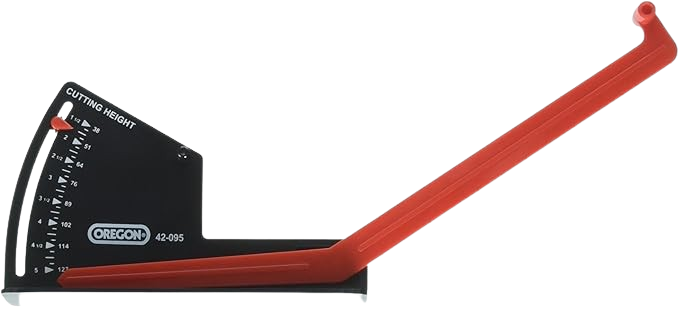
As an Amazon Associate, Blade Boss earns from qualifying purchases. It never costs you a penny more.
Rules of Engagement (ROE's)
The Flight Plan - Step by Step
Set Your Height (Taller Than You Think)
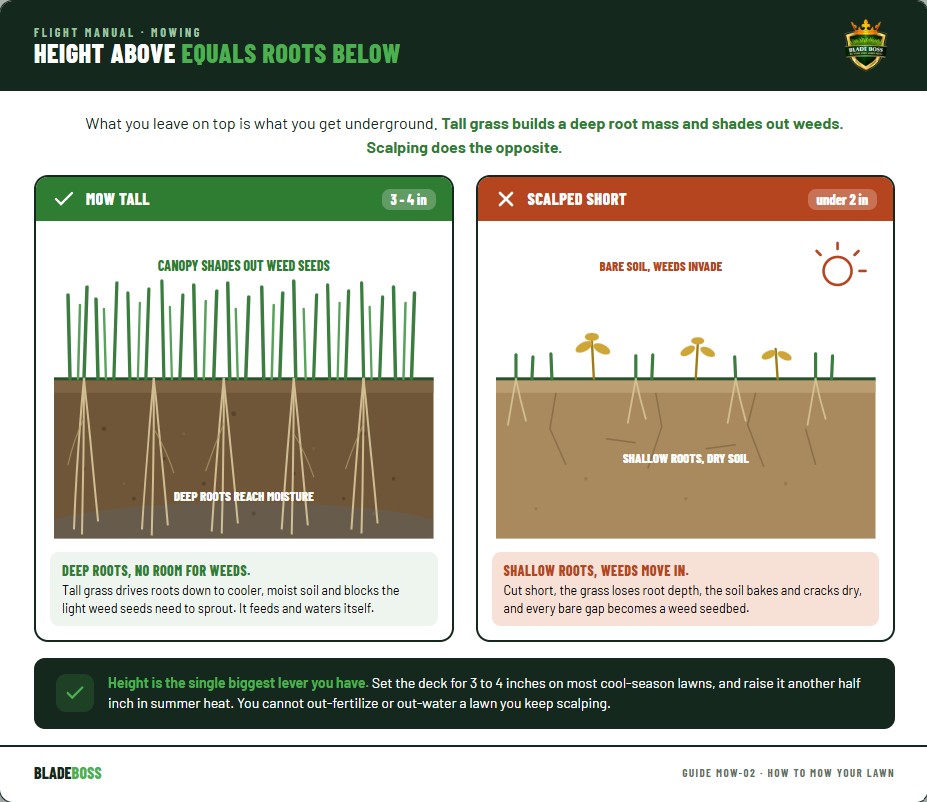
Almost everyone mows too short, chasing that golf-course look. Golf greens are a specialized grass cut daily by professionals. Your cool-season lawn is not that, and cutting it that low will kill it. Taller grass grows deeper roots, shades out weed seeds, holds moisture, and resists heat and disease. Height is your single biggest lever.
- Kentucky bluegrass: 2.5 to 3.5 inches.
- Tall fescue: 3 to 4 inches. The Long Island workhorse likes it tall.
- Fine fescue: 3 to 4 inches, especially in shade.
- Perennial ryegrass: 2.5 to 3.5 inches.
- Summer and shade: add half an inch to an inch to whatever your grass likes.
Obey the One-Third Rule
This is the rule that protects the lawn from every mow: never cut off more than one-third of the grass blade at a time. If your target height is 3 inches, you mow when the grass reaches about 4.5 inches, taking it back down to 3. Removing more than a third at once shocks the plant, starves the roots, and turns the lawn pale and stressed.
Mow Dry, With a Sharp Blade
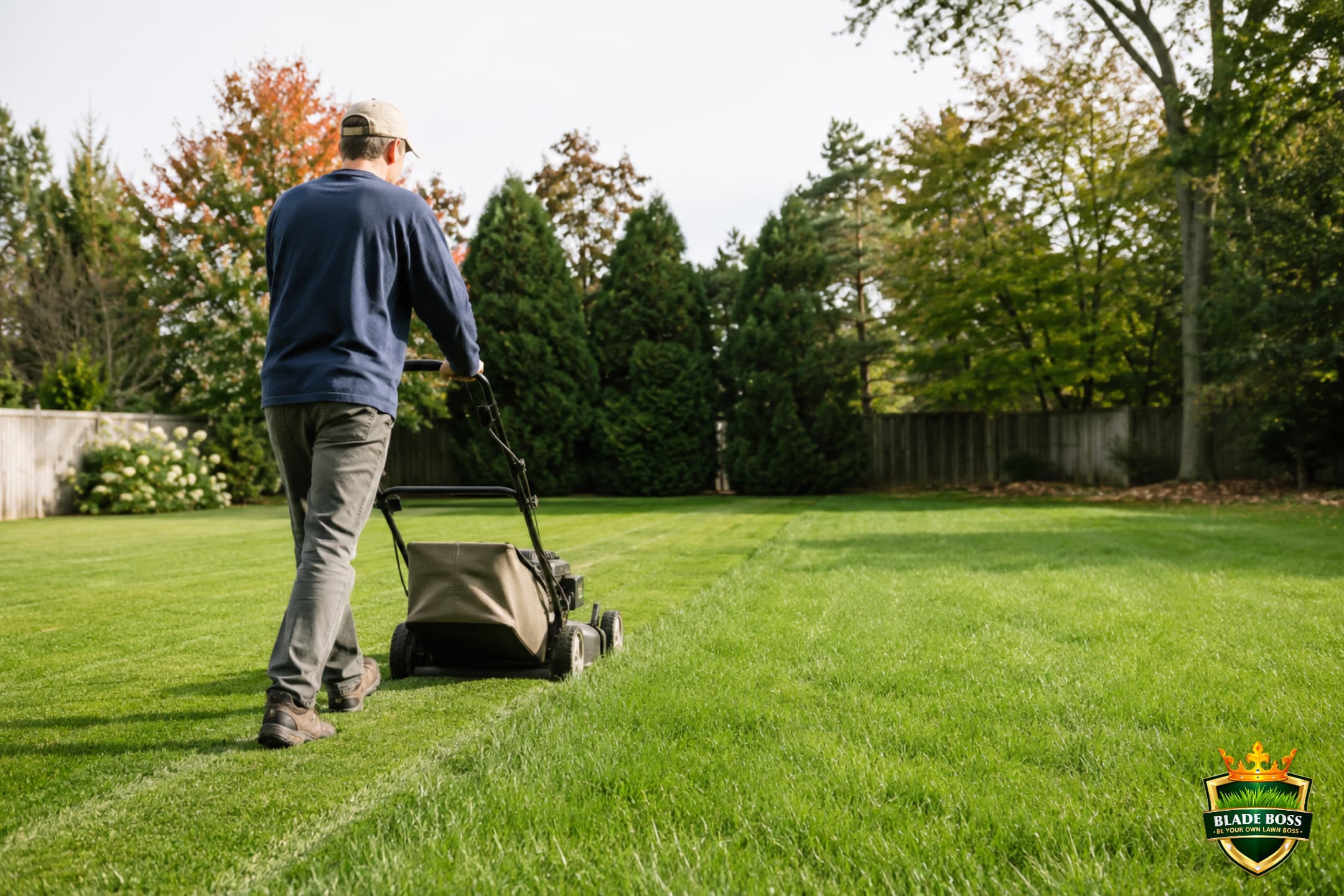
Two conditions turn a good mow into a bad one. Wet grass tears instead of cutting cleanly, clumps up and smothers the lawn beneath it, clogs the deck, spreads disease spores from blade to blade, and cuts unevenly. Wait until the lawn is dry, usually mid-morning after the dew burns off.
A dull blade is just as bad. It shreds and bruises the grass tips instead of slicing them, leaving a whitish, frayed lawn a few days after mowing and an open wound on every blade for disease to enter. If your lawn looks silvery or tan shortly after you mow, your blade is dull.
Change Your Pattern Every Time
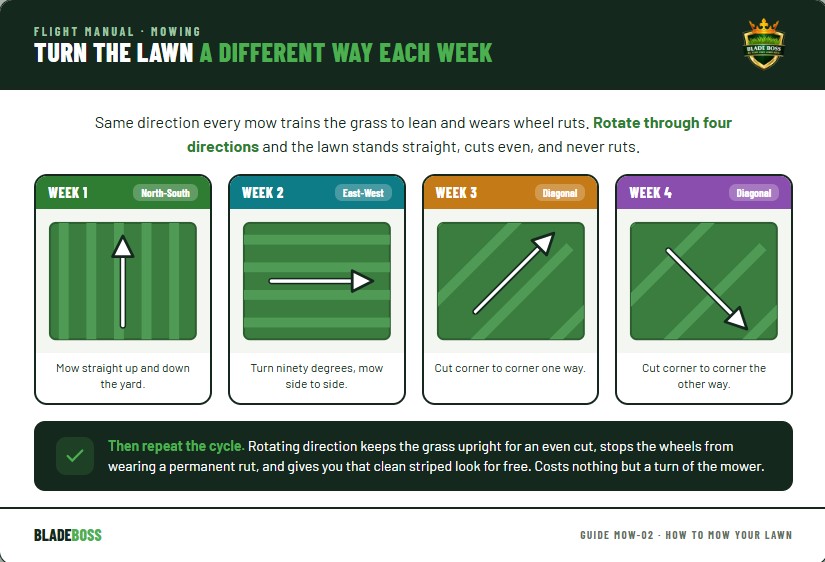
Mowing the same direction every week trains the grass to lean that way, and rolls the same wheel tracks into the same lines until they rut. Both give you an uneven cut and stripes of stressed turf. The fix is free: change your mowing direction each time.
Rotate through the pattern: north-south this week, east-west next, then the two diagonals. The grass stands up straighter, the cut is more even, the wheels never wear a permanent track, and as a bonus you get that clean striped look from the blades bending in different directions.
Leave the Clippings (Grasscycle)
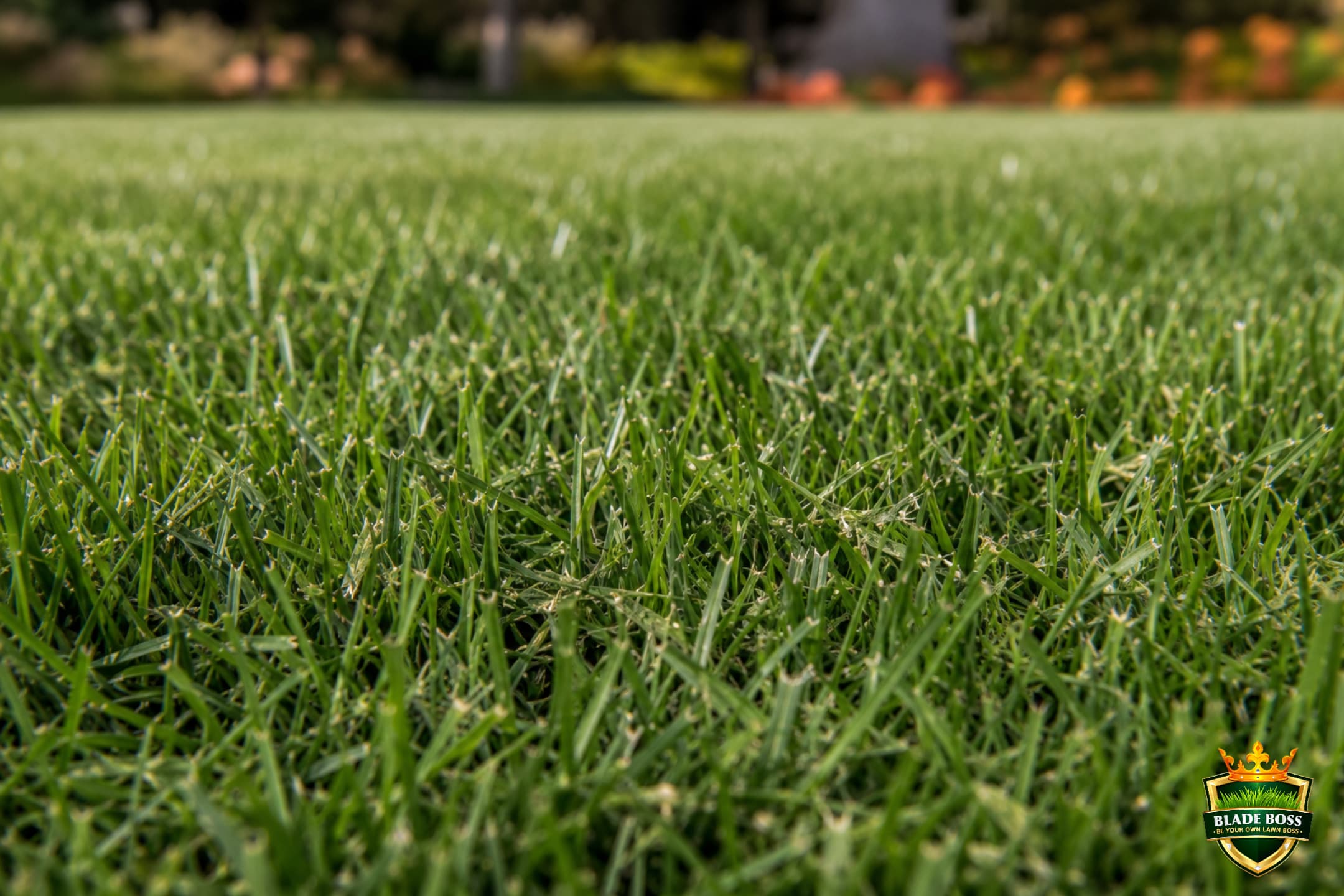
Stop bagging. This is the easiest upgrade in lawn care, and most people do the opposite out of habit. When you leave the clippings on the lawn, they break down within days and return nitrogen, potassium, and organic matter straight to the soil. Grasscycling can supply up to a quarter of your lawn's annual nitrogen, for free, and it does not cause thatch. That is a myth. Clippings are mostly water and decompose fast.
Raise the Deck in Summer
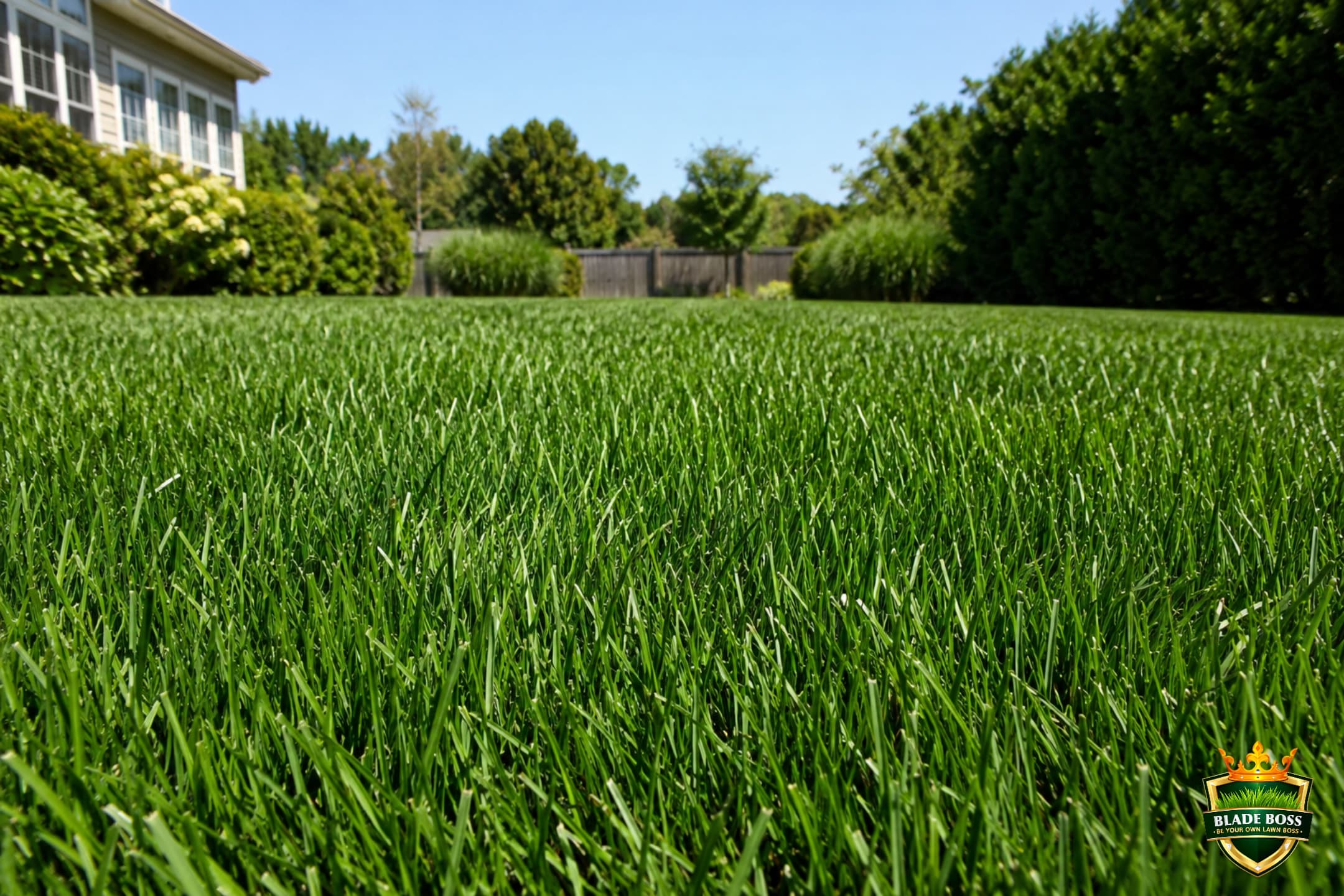
Your mowing height is not a set-and-forget number. When summer heat and drought hit, raise the deck by half an inch to an inch above your normal setting. Taller grass shades its own root zone, keeps the soil cooler, holds moisture longer, and stays green through stress that would brown out a short-cut lawn.
This is also the season to back off the frequency. Cool-season grass slows or goes semi-dormant in peak heat, so it does not need cutting as often. Mowing a heat-stressed lawn on a rigid weekly schedule just adds injury. Cut by the one-third rule based on how fast it is actually growing, not by the calendar.
Abort Criteria - Common Mistakes
Mission Complete. Now Fly the Plan.
Mowing is the highest-leverage, lowest-cost thing you do to your lawn, and doing it right prevents problems instead of creating them. Mow tall, follow the one-third rule, keep the blade sharp, and leave the clippings. If your lawn already has brown patches or dead spots, mowing is often the hidden cause, so figure out what you are actually looking at with the lawn diagnosis guide, and keep that blade sharp with the sharpening guide.
Want This as a Printable Field Manual?
Drop your email and the print-ready PDF version lands in your hands. Take it to the lawn, no phone required.
Crew Questions - FAQ
How short should I cut my grass?
For most cool-season lawns, taller than you probably think: 3 to 4 inches for tall fescue and fine fescue, and 2.5 to 3.5 inches for Kentucky bluegrass and perennial ryegrass. Raise it another half inch to an inch in summer heat and in shade. Cutting below about 2.5 inches on cool-season grass scalps it, which stresses the plant, exposes soil to weeds, and dries out the roots. Taller grass grows deeper roots and shades out weeds.
What is the one-third rule for mowing?
Never remove more than one-third of the grass blade's height in a single mow. If your target height is 3 inches, you mow when the grass reaches about 4.5 inches, cutting it back down to 3. Removing more than a third at once shocks the plant, starves the roots, and browns the lawn. If the grass got too long, step it down over two or three mows a few days apart rather than scalping it in one pass.
Should I bag my grass clippings or leave them?
Leave them, in almost every case. Grass clippings break down within days and return nitrogen, potassium, and organic matter to the soil, supplying up to a quarter of your lawn's annual nitrogen for free. They do not cause thatch, which is a common myth, because clippings are mostly water and decompose quickly. The only times to bag are when the lawn is diseased, so you do not spread spores, or when it is so overgrown that clippings leave heavy clumps.
Can I mow my lawn when it is wet?
You should not. Wet grass tears instead of cutting cleanly, clumps together and can smother the lawn beneath, clogs the mower deck, and spreads disease spores from blade to blade. Wet grass also bends over and cuts unevenly. Wait until the lawn dries, usually mid-morning after the dew has burned off, and mow with a sharp blade.
How often should I mow my lawn?
By how fast it is growing, not by a fixed calendar. In the spring growth flush that can mean every four to five days; in early summer, weekly; and in peak summer heat, when cool-season grass slows or goes semi-dormant, as little as every 10 to 14 days with the deck raised. The one-third rule sets the timing: mow whenever the grass has grown about one-third above your target height, whenever that happens to be.
Why does my lawn look white or frayed after I mow?
Your mower blade is dull. A dull blade shreds and bruises the grass tips instead of slicing them cleanly, leaving a whitish or tan cast across the whole lawn a few days after mowing, and an open wound on every blade that invites disease. Sharpen the blade a few times per season, and any time the lawn looks frayed after a cut. It is one of the cheapest forms of disease prevention there is.