Fall Lawn Care Checklist for Northeast Homeowners (Complete Guide)

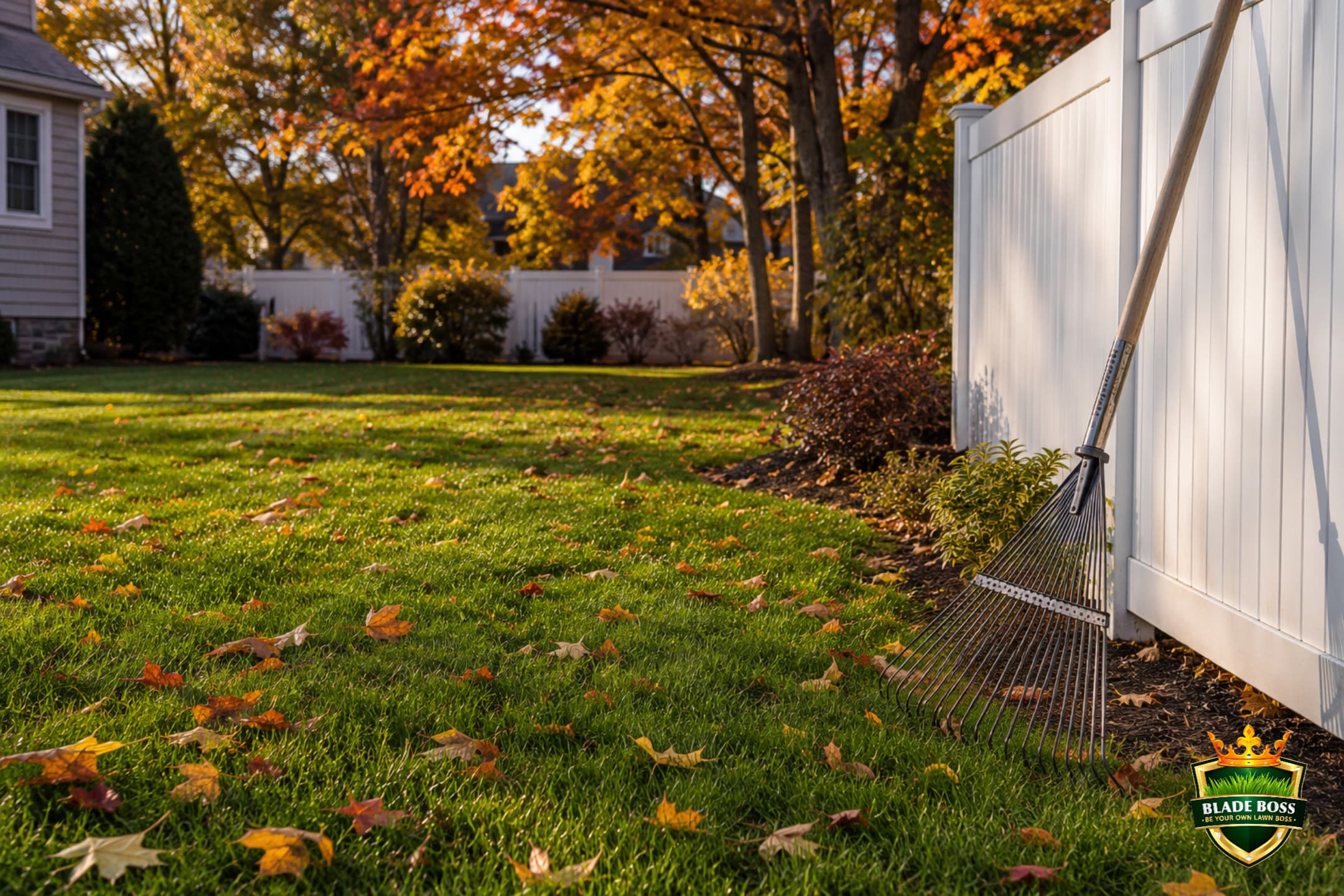
Fall is not the end of the lawn care season. It is the beginning of next year's lawn. Every task you complete between September and November builds the foundation for how your grass comes out of winter. Skip fall and your spring will be spent recovering from damage that did not have to happen. Nail fall and your lawn greens up 2 to 3 weeks ahead of your neighbor's while they are still trying to figure out what went wrong.
- September: Core aerate, overseed thin areas, apply fall fertilizer (0.75 lbs N per 1,000, the heaviest round of the year), begin lowering mowing height.
- October: Apply fall pre-emergent for Poa annua (6+ weeks after any seeding), treat broadleaf weeds, manage leaves, continue mowing.
- Late October to early November: Apply winterizer (0.50 lbs N per 1,000), final mow at 2.5 inches, clean and store equipment.
- The #1 rule: September fertilizer is the single most important application of the year. Do not skip it.
Why Fall Is the Most Important Season for Your Lawn
Cool-season grasses (KBG, tall fescue, perennial ryegrass) have two major growth periods: spring and fall. But fall is the one that matters more. Here is why: in spring, the plant directs most of its energy upward into leaf growth. In fall, it directs energy downward into root growth and carbohydrate storage. Those roots and reserves are what carry the plant through winter and fuel the explosive spring green-up that makes your neighbor wonder what you are doing differently.
September and October soil temperatures (55 to 65 degrees) are the sweet spot for cool-season root development. Air temperatures are moderate (60 to 75 degrees), disease pressure is dropping, and weed competition is declining. It is the perfect storm of growing conditions, and it only lasts about 8 weeks. Use them.
The Complete Fall Checklist
September: The Power Month
- Get a soil test if you haven't tested in the last 12 months. A MySoil kit or $5 test from Cornell Cooperative Extension tells you exactly what your lawn needs before you spend money on products. Our soil test guide walks through interpreting the results.
- Core aerate. Two passes in perpendicular directions. Leave plugs on the surface to break down naturally. Aeration breaks compaction, improves water and nutrient penetration, and creates perfect seed-to-soil contact for overseeding. Rent an aerator or hire it out. Our aeration guide covers technique, rental tips, and timing.
- Overseed thin areas. Immediately after aeration. Seeds settle into the aeration holes for ideal germination conditions. Use a quality cool-season blend (tall fescue dominant for LI). Water 2 to 3 times daily for 14 to 21 days during germination. Our overseeding guide covers the full 9-step process.
- Apply fall fertilizer. This is the big one. Apply 0.75 lbs of nitrogen per 1,000 sq ft using a product with 40%+ slow-release nitrogen. Slow-release for September because the plant uses it gradually over 6 to 8 weeks of active fall growth. (The winterizer in November uses quick-release because the plant needs to absorb it fast before the ground freezes.) This is the heaviest application of the year and it fuels root growth and carbohydrate storage through fall. Our fertilizer schedule maps all 5 rounds. Calibrate your spreader for the specific product.
- Begin lowering mowing height. Drop from summer height (4 inches) to 3.5 inches in early September. Continue dropping gradually through fall. Sharpen your blades for clean cuts on the way down.
- Continue watering. Fall evapotranspiration drops but your lawn is growing aggressively. Apply 1 inch per week if rain does not provide it. Overseeded areas need more frequent watering during germination.
- Apply lime if needed. If your soil test shows pH below 6.0, fall is the best time to lime. Lime takes 6 to 12 weeks to react, so a September application starts adjusting pH before the ground freezes and continues working through winter. Our pH guide covers exact rates for Long Island's sandy soils.
Plan Your Fall Renovation in SeedGenius Pro
Enter your lawn size, condition, and grass type. Get exact seed rates, cultivar recommendations, a germination timeline, and an aftercare checklist you can save to the Lawn Command Center.
October: Weed Control, Leaves, and the Second Fertilizer
- Apply fall pre-emergent for Poa annua. Poa annua (annual bluegrass) germinates in fall when soil temps drop below 70 degrees. Apply prodiamine at the fall rate in late September to mid-October. IMPORTANT: if you overseeded, wait at least 6 weeks after seeding AND until seedlings have been mowed at least twice before applying. Pre-emergent will kill ungerminated grass seed. Our pre-emergent comparison covers product selection.
- Treat broadleaf weeds. Fall is the best time to spray broadleaf weeds (dandelions, clover, plantain). The weeds are actively pulling nutrients into their root systems for winter, which means they also pull herbicide deep into the roots for a complete kill. Apply when air temps are between 55 and 80 degrees. Our weed killer guide covers products and timing. If you have dogs, wait 48 to 72 hours before allowing them on the treated lawn.
- Manage leaves. Mulch-mow thin leaf layers (you can see grass through them). Rake or blow heavy layers that block sunlight. Do not let a thick mat of leaves sit on the lawn into November. Trapped moisture under leaves promotes snow mold.
- Apply second fall fertilizer (optional). If your lawn is thin or recovering from summer stress, a second round at 0.50 lbs N per 1,000 in mid-October gives the roots another boost before the winterizer. This is round 4 in the 5-round schedule.
- Continue mowing. Drop to 3 inches. Your lawn is still growing, just slower. Mow as needed, typically every 10 to 14 days in October vs weekly in September.
- Check for grub damage. Late September through October is when grub damage becomes visible. Do the tug test: if grass peels up like carpet with no roots, you have grubs. Apply curative Dylox and water in immediately. Preventive applications are for next June to July.
If you overseeded in September, you CANNOT apply fall pre-emergent until seedlings are fully established (6+ weeks, mowed at least twice). Applying prodiamine to young seedlings will kill them. If you overseeded September 1, the earliest safe pre-emergent date is approximately October 15. On Long Island, that is cutting it close for Poa annua prevention. This is the one trade-off of fall overseeding. Our overseeding guide covers this conflict in detail.
November: Winterizer and End of Season
- Apply winterizer fertilizer. Late October to early November, after visible leaf growth has stopped but while the grass is still green. Use a quick-release nitrogen source at 0.50 lbs N per 1,000 sq ft. Quick-release is preferred here because the plant needs to absorb it quickly before the ground freezes. The winterizer builds carbohydrate reserves that fuel rapid spring green-up. Scotts WinterGuard 32-0-10 (see the fertilizer schedule for how this fits into round 5) is a solid choice for this round because the 10% K adds cold hardiness.
- Final mow at 2.5 inches. Lower your deck to 2.5 inches for the last 1 to 2 cuts. Shorter grass going into winter reduces snow mold risk (snow mold thrives on long, matted grass). Drop gradually over 2 mows. Do not scalp from 3.5 to 2.5 in one cut.
- Remove all leaves from the lawn. Any remaining leaf cover going into winter creates a moisture trap that promotes pink and gray snow mold. A clean lawn going into the first snowfall is the best snow mold prevention.
- Clean and store your mower. Run the engine until fuel is exhausted or add fuel stabilizer. Remove and sharpen the blade so it is ready for spring. Store in a dry space.
- Drain and blow out irrigation lines. If you have an in-ground sprinkler system, winterize it before the first hard freeze to prevent pipe damage. Schedule with your irrigation company or rent a compressor.
- Clean up your tools. Rinse your spreader, drain your backpack sprayer, and store all lawn care products in a dry, climate-controlled space. Label anything that is partially used with the date and remaining volume.
The Fall Timeline at a Glance
Prep and Soil Test
Order soil test. Plan overseeding. Reserve aerator rental. Buy seed, starter fertilizer, and fall fertilizer.
Aerate + Overseed + Fertilize
Core aerate. Overseed immediately after. Apply starter fert on seed. Apply fall fertilizer (0.75 lbs N/1K) on established areas. Begin germination watering.
Monitor + Maintain
Continue germination watering. First mow of new seedlings at 3 inches. Apply lime if pH is low. Lower established mowing height to 3.5 inches.
Weeds + Pre-Emergent
Spray broadleaf weeds. Apply fall pre-emergent for Poa annua (if 6+ weeks post-seeding). Second fall fertilizer if lawn is thin. Begin leaf management.
Winterizer
Apply winterizer (0.50 lbs N/1K, quick-release). Lower mowing height to 3 inches. Heavy leaf cleanup.
Final Tasks
Final mow at 2.5 inches. Remove all leaves. Clean and store equipment. Winterize irrigation. Your lawn is ready for winter.
The Mistakes That Ruin Fall Lawn Care
Skipping the September fertilizer
This is the single biggest fall mistake. The September application is the most impactful round of the entire year. It fuels root growth, carbohydrate storage, and recovery from summer stress all at once. If you skip it, your lawn enters winter with depleted reserves and comes out of winter slow, thin, and pale. Every dollar you spend in September shows up as results in April.
Overseeding without aerating first
Seed thrown on top of an existing lawn without aeration germinates at roughly 30 to 50% the rate of seed dropped into aeration holes. The holes provide moisture retention, seed-to-soil contact, and protection from birds. Aeration before overseeding is not optional. It is the difference between a renovation that works and one that wastes your seed money.
Waiting too long to overseed
On Long Island, the overseeding window closes by October 5 at the latest. KBG planted after mid-September may not establish enough root depth to survive the first freeze. Start early (August 15 to September 1 for KBG) so seedlings have 6 to 8 weeks of growing weather. Our overseeding guide covers exact timing by grass type.
Leaving leaves on the lawn
A thick leaf mat blocks sunlight, traps moisture, and creates the conditions for pink and gray snow mold. Mulch-mowing thin layers is fine (adds organic matter), but anything thick enough to block light needs to come off. Do not let a blanket of wet leaves sit on your lawn through November.
Stopping mowing too early
Your grass does not stop growing when YOU stop mowing. On Long Island, grass often grows into mid-to-late November. Letting it grow tall going into winter invites snow mold. The final mow at 2.5 inches is not punishment. It is protection.
Applying pre-emergent too soon after overseeding
Prodiamine and dithiopyr do not know the difference between crabgrass seed and your grass seed. Wait 6 weeks after seeding AND until new seedlings have been mowed at least twice. Applying pre-emergent to immature seedlings kills them.
One text for each fall task window: aeration, overseeding, fall fertilizer, pre-emergent, and winterizer. Timed to your zone.
No spam. One seasonal alert per application window. Unsubscribe anytime.
Why This Matters for Long Island Specifically
Long Island's sandy soils (CEC 3 to 8) mean that fall fertilizer and lime applications leach faster than they would on clay soil upstate. Two implications: use slow-release nitrogen (40%+ controlled release) for the September round so nutrients stay in the root zone, and split lime applications if your pH correction requires more than 25 lbs per 1,000 sq ft (apply half in September, half in November).
Fall is also the time to think about soil health. On sand with organic matter typically at 1 to 2% (ideal is 3 to 5%), a light topdressing of compost after aeration adds organic matter directly where it does the most good. It is not a quick fix. It takes years. But every fall that you topdress is a fall that your soil gets slightly better at holding water, nutrients, and beneficial microbes.
The complete 5-round fertilizer program for Long Island. Every round includes timing, product, rate, and the specific role it plays in annual lawn health.
See what Blade Boss members get. The Lawn Command Center tracks every fall task with GDD-based timing alerts, product recommendations, and spreader settings. No more guessing whether it's too late to overseed or time for the winterizer.
See Plans →Chris is a Combat Search and Rescue pilot turned airline pilot who built Blade Boss to bring military-grade precision to backyard lawn care. His fall protocol runs like a preflight checklist: aerate, seed, feed, protect, winterize. Every step in order, nothing skipped. That discipline is why his Ronkonkoma lawn greens up in March while the neighbors are still brown in April.
Related Reads
The overseeding guide covers the full 9-step process including the watering schedule that makes or breaks germination. The aeration guide covers rental tips and technique. The fertilizer schedule maps all 5 rounds with exact rates. The pre-emergent comparison helps you pick the right product for fall Poa annua control. And the Lesco vs Scotts comparison helps you decide which fall fertilizer to buy.
Frequently Asked Questions
When should I start fall lawn care in the Northeast?
Fall lawn care on Long Island and in the Northeast should begin in late August to early September when nighttime temperatures start dropping below 70 degrees and soil temperatures fall into the 55 to 65 degree range. This is when cool-season grasses enter their most aggressive growth period. The key tasks (aeration, overseeding, fall fertilizer) should all happen in September. Waiting until October for these tasks is too late for most of the Northeast.
What is the most important fall lawn care task?
Fertilizing in September and October is the most important fall lawn care task because it fuels the root growth and carbohydrate storage that determines winter survival and spring green-up speed. The September application (0.75 lbs N per 1,000 sq ft) is the heaviest and most impactful round of the entire year. If you do nothing else in fall, do this one fertilizer application.
When should I stop mowing in fall?
Continue mowing as long as the grass is actively growing, which on Long Island is typically through mid to late November. Gradually lower your mowing height from 3.5 to 4 inches down to 2.5 inches over your last 2 to 3 mows. The final cut should be at 2 to 2.5 inches to reduce snow mold risk. Never remove more than one-third of the blade height in a single cut, even when lowering for winter.
Should I rake leaves off my lawn in fall?
Yes. A thick layer of leaves left on the lawn blocks sunlight, traps moisture, and creates ideal conditions for snow mold and other fungal diseases. If the leaf layer is thin enough to see grass through it, you can mulch-mow the leaves into the lawn (they add organic matter as they decompose). If the leaves are thick enough to block light, rake or blow them off. The threshold is roughly 2 to 3 leaves deep. Beyond that, they need to be removed.
When should I apply winterizer fertilizer on Long Island?
Apply winterizer fertilizer in late October to early November on Long Island, after the grass has stopped producing new leaf growth but before the ground freezes. The grass should still be green but growth has visibly slowed. Use a quick-release nitrogen source at 0.50 lbs N per 1,000 sq ft. This final application builds carbohydrate reserves that fuel early spring green-up. On Long Island, the ground typically freezes in late November to mid-December.
Keep Reading
 DIY How-To
Lawn Dethatching Guide for the Northeast: Timing, Tools, and Why Fall Beats Spring
Most dethatching advice gets the timing wrong. Fall is the ideal window for Northeast lawns, not spring. Learn...
Mar 17, 2026
16 min
 Northeast Regional
Best Weed Killers for Northeast Lawns That Won’t Damage Your Grass
The right weed killer depends on the weed, not the brand. Broadleaf, grassy, and sedge weeds each need...
Mar 18, 2026
17 min
 Northeast Regional
When to Start Mowing in Spring: Northeast Timing Guide (2026)
Stop guessing when to pull out the mower. Use soil temperature, grass height, and GDD triggers to time...
Mar 1, 2026
17 min
What is your lawn actually sitting on?
Pull the soil survey, hardiness zone and current growing conditions for your exact address. Eight government sources, about a minute.
No comments yet. Be the first to share your thoughts.
Create a free account to join the conversation.