How to Sharpen Mower Blades: The Most Overlooked Lawn Tip on Long Island

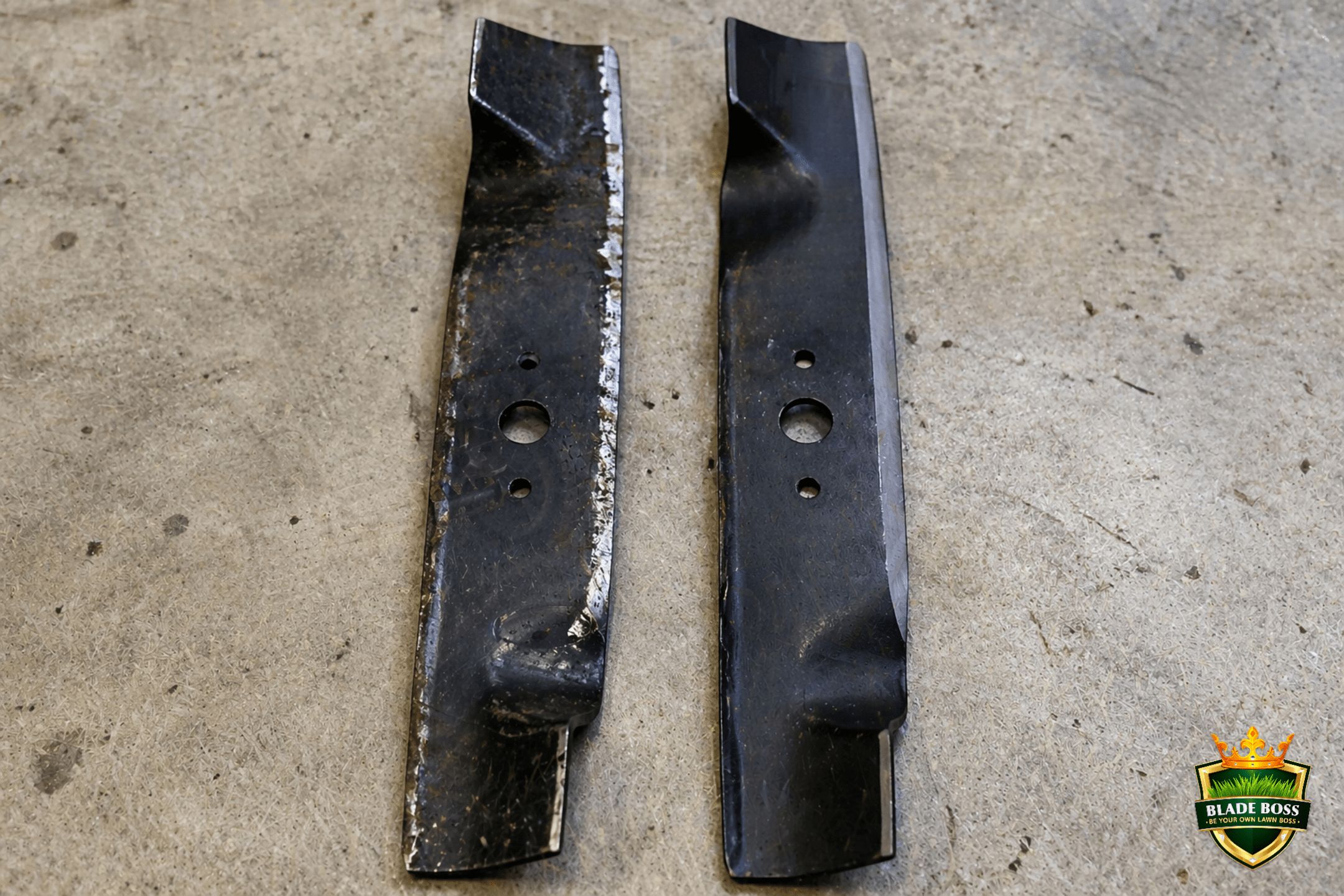
You spent $80 on fertilizer. You dialed in your spreader. You hit the right timing window. Your lawn greened up beautifully. Then you mowed it, and two days later the tips of every blade of grass turned brown. Not from disease. Not from drought. From a dull mower blade that tore the grass instead of cutting it. Every ripped tip is an open wound that loses moisture and invites fungal infection. And it happens every single week until you fix the thing nobody talks about.
Sharpen your mower blades at least twice per season (spring and mid-summer) using a 10-inch mill file, angle grinder with a flap disc, or a dedicated blade sharpener. The correct angle is 30 degrees for most residential blades. Match the factory bevel. Sharpen until you have a consistent matte gray edge, not a razor edge. Balance the blade after every sharpening using a blade balancer. The entire process takes 15 minutes and is the single highest-impact maintenance task most homeowners skip.
Why Dull Blades Are Killing Your Lawn
A sharp blade slices grass cleanly. The cut heals in hours, the tip stays green, and the plant redirects energy to root growth. A dull blade rips and tears the tissue. The torn edge turns brown or white within 48 hours, loses moisture through the damaged surface, and becomes an entry point for fungal pathogens like brown patch and leaf spot.
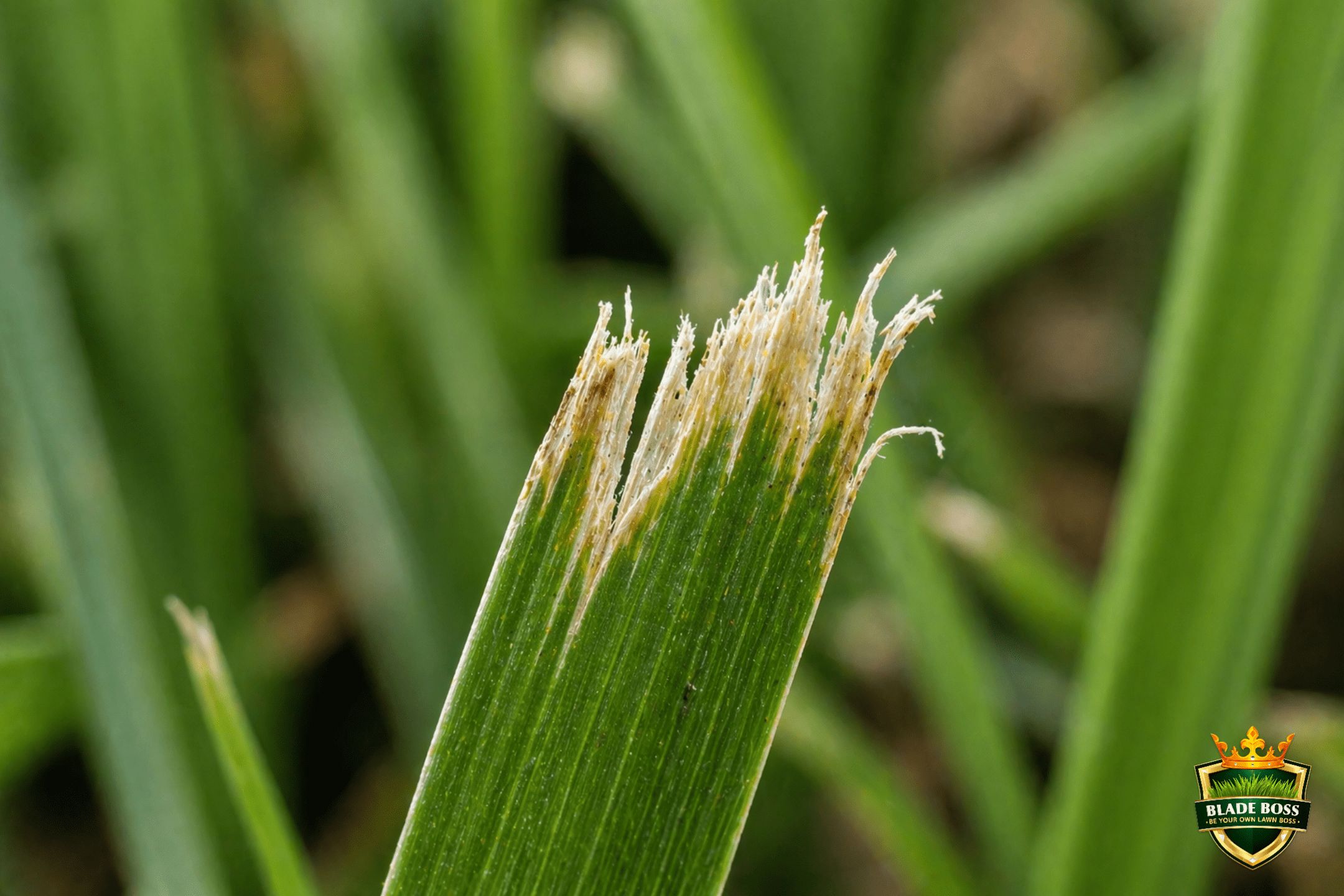 Before
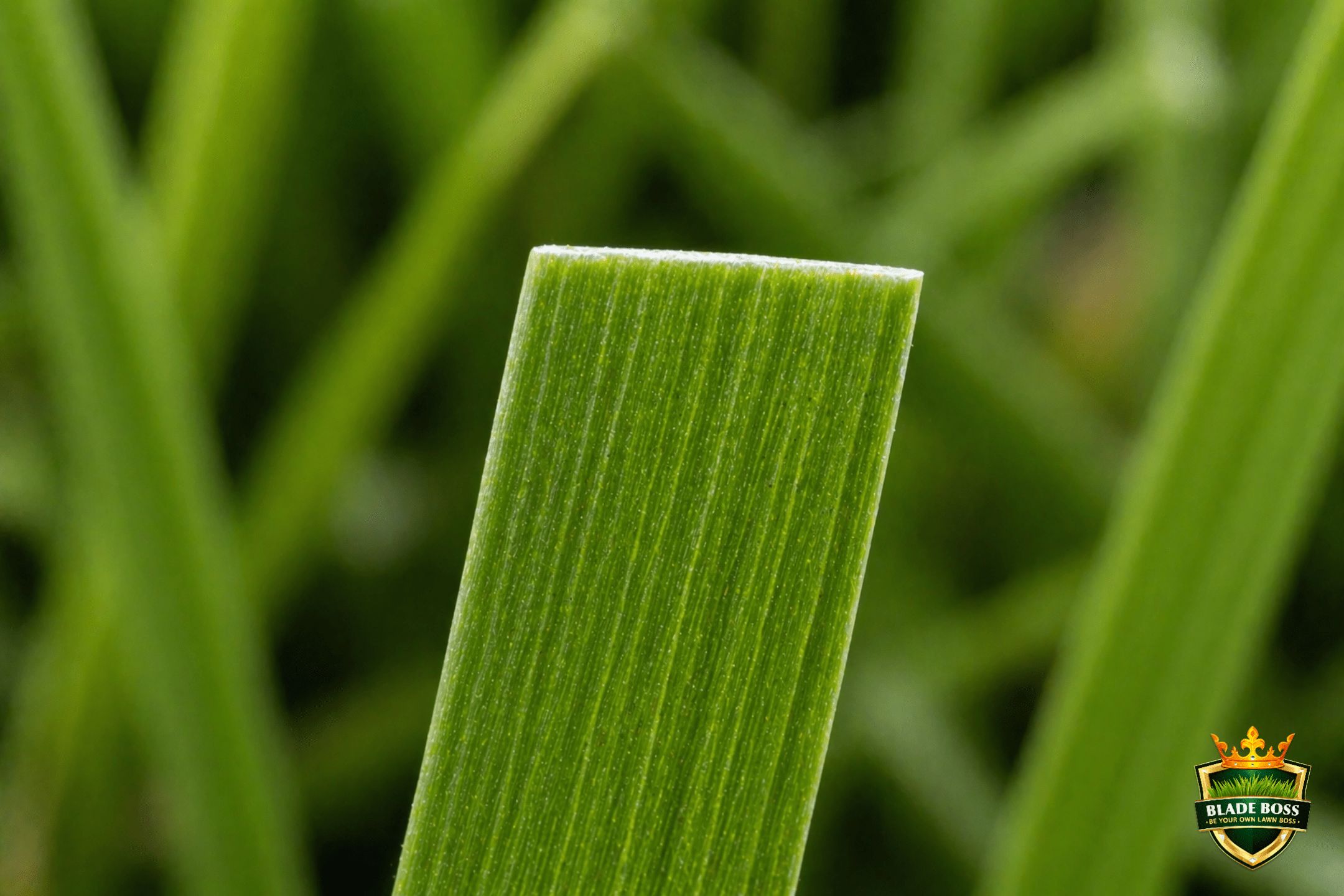 After
After
The difference is visible from 10 feet away. A lawn cut with sharp blades has a uniform green sheen. A lawn cut with dull blades has a grayish or brownish cast, especially in the first 48 hours after mowing. If your lawn always looks slightly "off" after you mow, this is almost certainly the reason.
What You Need
- Socket wrench or breaker bar to remove the blade bolt. Most residential mowers use a 15/16-inch or 5/8-inch socket. Check your owner's manual.
- A sharpening tool (pick one): 10-inch mill bastard file ($8 to $12, the simplest option), angle grinder with a 60-grit flap disc ($30 to $50, fastest), or a dedicated mower blade sharpener that attaches to a drill ($15 to $25, easiest for beginners).
- Blade balancer to check balance after sharpening. An Oregon magnetic cone balancer ($8) is the most accurate home option. A nail in the wall works in a pinch but is less precise.
- Vise or C-clamp to hold the blade steady while sharpening. Do NOT hold the blade with your hand while grinding.
- Work gloves and safety glasses. Non-negotiable. You are working with a sharp steel edge and grinding sparks.
- Torque wrench to reinstall the blade bolt to the correct spec. Over-tightening cracks the mounting flange. Under-tightening lets the blade come loose at 3,000 RPM. Google your mower model for the exact torque value (typically 35 to 50 ft-lbs for residential mowers).
DEWALT 4.5-Inch Angle Grinder (11-Amp)
The fastest way to sharpen a mower blade. Use with a 60-grit flap disc (not included). 11-amp motor handles blade steel easily. Also useful for dozens of other home projects. Pair with safety glasses and work gloves.
Check PriceHow to Sharpen Your Mower Blade (Step by Step)
Disconnect the spark plug wire (gas mowers) or remove the battery (electric/cordless) before touching the blade. This prevents accidental starting. Wear work gloves and safety glasses for the entire process.
Remove the Blade
Tip the mower on its side with the air filter and carburetor facing UP (prevents oil from flooding the filter). Use a block of wood wedged against the deck to keep the blade from spinning while you loosen the bolt. The bolt is reverse-threaded on some mowers, so if it won't loosen turning left, try turning right. Mark the bottom of the blade with a paint pen or Sharpie so you reinstall it the correct way (cutting edge down).
Inspect the Blade
Before sharpening, check for damage. Small nicks and a dull edge can be fixed with sharpening. Large chunks missing, a bent blade (set it on a flat surface and look for wobble), or a blade worn to less than half its original width means it is time for a replacement. A bent blade cannot be fixed by sharpening and will cause vibration that damages your mower.
Secure the Blade in a Vise
Clamp the blade firmly in a bench vise with the cutting edge exposed and accessible. If you do not have a bench vise, use a C-clamp to secure it to a workbench edge. Never hold the blade with your free hand while grinding.
Sharpen at 30 Degrees (Match the Factory Bevel)
The standard angle for residential mower blades is 30 degrees. Look at the existing bevel on the blade and match it. You are not creating a new edge. You are restoring the one the factory put there. Work from the inside of the blade toward the tip in smooth, even strokes. Apply moderate pressure. If using a file, 10 to 15 passes per side is usually enough. If using an angle grinder, use a 60-grit flap disc and make slow, even passes. Do not press hard. Let the tool do the work.
Do Not Overheat the Metal
If you are using a grinder, the blade edge will heat up quickly. If the metal turns blue or purple at the edge, you have overheated it and softened the steel. This is the most common grinder mistake. Use light pressure, make multiple quick passes instead of one long grind, and dip the blade in water between passes if needed. A file cannot overheat the metal, which is one reason it is the safest beginner tool.
Check for the Right Sharpness
A properly sharpened blade has a consistent matte gray edge along the entire cutting surface. It should be aggressively sharp but NOT razor sharp. Run your thumb across the edge (not along it). You should feel a definite edge but it should not cut your skin. According to Oregon Products, a razor-thin edge actually performs worse because it rolls over on impact with grass and debris, dulling faster than a slightly thicker edge.
Balance the Blade
This step is just as important as sharpening. An unbalanced blade vibrates at 3,000+ RPM, which damages spindle bearings, warps the deck, and can crack the engine crankshaft over time. Place the blade on a blade balancer (magnetic cone type is best). If one side drops, that side is heavier. Go back to the grinder and remove a small amount of metal from the heavy side. Recheck until the blade sits level.
Reinstall with the Cutting Edge Down
The cutting edge faces the ground (the same direction as the mark you made in Step 1). Use a torque wrench to tighten the bolt to your mower's exact specification. Do NOT just crank it as tight as you can. Reconnect the spark plug wire or battery. You are done.
Every mower has a specific blade bolt torque specification. Google "[your mower model] blade bolt torque" before you reinstall. Typical range is 35 to 50 ft-lbs for residential walk-behinds, but some are higher. Over-torquing can crack the blade adapter or strip the threads. Under-torquing means a blade spinning at 3,000+ RPM can come loose while you are standing behind it. This is a safety issue, not a suggestion. Use a torque wrench, not a breaker bar.
Buy a second blade for your mower (they are $15 to $25). When it is time to sharpen, swap in the fresh blade and sharpen the dull one at your leisure. You never miss a mow waiting for a blade to be sharpened, and you always have a sharp blade ready to go.
Oregon Precision Blade Balancer
Magnetic cone balancer for checking blade balance after every sharpening. Takes 30 seconds. Costs $8. Prevents hundreds of dollars in spindle and bearing damage from vibration.
Check PriceOregon Gator Mulching Blades
Available for most 21-inch and 22-inch walk-behind mowers. Gator blades mulch finer than standard blades and hold their edge longer. Search your mower model for the right fit.
Find Your BladeSharpening Method Comparison
| Method | Cost | Speed | Skill Needed | Best For |
|---|---|---|---|---|
| 10-inch mill file | $8 to $12 | 20 min | Low | Beginners. Cannot overheat. Most control. |
| Drill-powered sharpener | $15 to $25 | 10 min | Low | Beginners who want speed. Consistent angle. |
| Angle grinder + flap disc | $30 to $50 | 5 min | Medium | Experienced DIYers. Fastest. Risk of overheating. |
| Bench grinder | $50 to $80 | 5 min | High | Multiple blades. Most precise. Needs jig for angle. |
For most Long Island homeowners mowing a standard suburban lawn once a week, the drill-powered sharpener or a 10-inch mill file is all you need. An angle grinder is faster but requires more care to avoid overheating. If you sharpen more than 4 blades per season (multiple mowers or a riding mower with multiple blades), a bench grinder with a blade jig is worth the investment.
Know Your Mowing Height Before You Cut
Sharp blades matter, but so does cutting at the right height. The Blade Boss Mowing Calculator gives you the optimal height for your grass type, season, and zone.
How Often Should You Sharpen?
The honest answer depends on your yard. Sandy soil (most of Long Island) is more abrasive on blades than loam or clay. If you regularly hit sticks, pinecones, or rocks near garden beds, your blade dulls faster. Here is the general guide:
- Minimum: twice per season. Once in early spring before the first mow, once in mid-summer (July). This is the bare minimum for any homeowner.
- Better: every 20 to 25 hours of mowing time. If you mow once a week for 45 minutes, that is roughly every 6 to 7 weeks. Three to four sharpenings per season. A small engine hour meter ($14) tracks this automatically.
- Best: monthly blade check. Pull the blade once a month, inspect it, and sharpen if needed. This is what the lawn guys who win neighborhood awards do.
- Replace the blade when more than 1 inch of the original width has been ground away, the blade is visibly bent, or the cutting edge is chipped so badly that sharpening cannot restore a smooth edge.
The 3 Biggest Sharpening Mistakes
Sharpening to a razor edge
This is counterintuitive but well-documented. A razor-thin edge on a mower blade rolls over on the first contact with grass and debris. Within 15 minutes of mowing, that razor edge is dull again. A slightly thicker edge (think butter knife, not steak knife) holds up dramatically longer because there is more steel supporting the cutting surface. Oregon Products, the largest mower blade manufacturer in the world, specifically warns against razor-sharp mower blades.
Skipping the balance check
This is the one that damages your mower. A blade that weighs even slightly more on one side creates vibration at 3,000+ RPM. Over a season, that vibration destroys spindle bearings ($50 to $150 to replace), warps the deck, and can even damage the engine crankshaft. Balancing takes 30 seconds with an $8 magnetic balancer. Every single time you sharpen, you balance.
Overheating the blade on a grinder
When steel turns blue or purple at the edge, the metal has been annealed (softened). That section of the blade will dull 3 to 5 times faster than the rest because the heat changed the steel's molecular structure. Use light pressure, make multiple quick passes, and dip the blade in water between passes. A file or flap disc is less likely to overheat than a hard grinding wheel.
One text when soil temps and growth rate say it's time for your first mow. Perfect timing, zero guesswork.
No spam. One seasonal alert per application window. Unsubscribe anytime.
Why This Matters More Than You Think
Mowing is the single most frequent thing you do to your lawn. If you mow 30 times per season with a dull blade, you are creating 30 rounds of tissue damage, 30 invitations for fungal disease, and 30 weeks of stress that your grass has to recover from instead of growing. A sharp blade does not cost anything extra. It just requires 15 minutes of attention twice a year.
Combine sharp blades with the correct mowing height for the season and the right fertilizer timing, and you have a lawn that recovers from every mow in hours instead of days. That compounding effect across 30 mowing cycles per year is the difference between a lawn that looks good and a lawn that looks exceptional.
Spring startup, mid-season check, and end-of-season storage. Plus the blade sharpening quick reference with angle, torque, and balance specs.
See what Blade Boss members get and get access to the mowing calculator, fertilizer timing alerts, and zone-specific schedules that tell you exactly when and how to maintain your lawn all season.
See Plans →Chris is a Combat Search and Rescue pilot turned airline pilot who built Blade Boss to bring military-grade precision to backyard lawn care. He sharpens his Honda HRX blades every 6 weeks from his garage in Ronkonkoma, Long Island.
Related Reads
The spring mowing timing guide tells you exactly when to make your first cut based on soil temperature and grass growth. The spreader settings guide dials in your fertilizer application accuracy, and the calibration guide shows you how to verify it in 10 minutes. Together with sharp blades, these three fundamentals (sharp cuts, correct height, accurate fertilization) are the foundation of every great lawn.
Frequently Asked Questions
How often should you sharpen lawn mower blades?
For homeowners mowing once a week, sharpen your blades at least twice per season: once in spring before the first mow and once in mid-summer around July. If you mow frequently or hit debris regularly, sharpen every 20 to 25 hours of mowing time. A good rule of thumb is to check your blade every month during the mowing season and sharpen when you see nicks, dents, or your grass tips turn brown after mowing.
What angle should you sharpen a lawn mower blade?
The industry standard for residential mower blades is 30 degrees. This provides the best balance between a clean cut and edge durability. Match the angle to the factory bevel that came on the blade. Some mulching blades and commercial blades use 35 to 40 degrees for added durability in rough conditions. Never go below 25 degrees (too fragile) or above 45 degrees (too dull to cut cleanly).
How sharp should a mower blade be?
A mower blade should be aggressively sharp but not razor sharp. You should be able to run your finger along the edge without cutting yourself. A razor-thin edge sounds ideal but actually rolls over and nicks faster, meaning it goes dull quicker and needs more frequent sharpening. Think butter knife sharpness, not kitchen knife sharpness. The blade cuts grass through speed and impact, not pure edge sharpness.
Can you sharpen mower blades without removing them?
You can, but you should not. Sharpening a mounted blade is dangerous (your hand is under a mower deck near a cutting edge), inaccurate (you cannot maintain a consistent angle), and you cannot balance the blade afterward. Balancing is just as important as sharpening. An unbalanced blade causes vibration that damages spindle bearings, the deck, and the engine crankshaft. Always remove the blade first.
How do you know if your mower blade needs sharpening?
Look at your grass 24 to 48 hours after mowing. If the tips are brown or white and ragged looking, your blade is tearing instead of cutting. You can also inspect the blade directly: visible nicks, dents, rounded edges, or a shiny (not matte) cutting edge all indicate a dull blade. A new or freshly sharpened blade has a consistent matte gray edge along the entire cutting surface.
Keep Reading
 DIY How-To
Long Island Lawn Irrigation Guide: How Much Water Does Your Lawn Actually Need?
Long Island gets 46 inches of rain a year. Your lawn still needs supplemental water. Learn exactly how...
Mar 19, 2026
19 min
 DIY How-To
How to Read a Soil Test Report (And What to Do Next)
Your soil test came back. Now what? This guide walks through every number on the report, explains what...
Mar 24, 2026
16 min
 DIY How-To
Dog-Friendly Lawn Care: Safe Products for Long Island Pet Owners
Every product you put on your lawn is something your dog walks on, rolls in, and licks off...
May 13, 2026
12 min
What is your lawn actually sitting on?
Pull the soil survey, hardiness zone and current growing conditions for your exact address. Eight government sources, about a minute.
No comments yet. Be the first to share your thoughts.
Create a free account to join the conversation.