Best Weed Killers for Northeast Lawns That Won’t Damage Your Grass

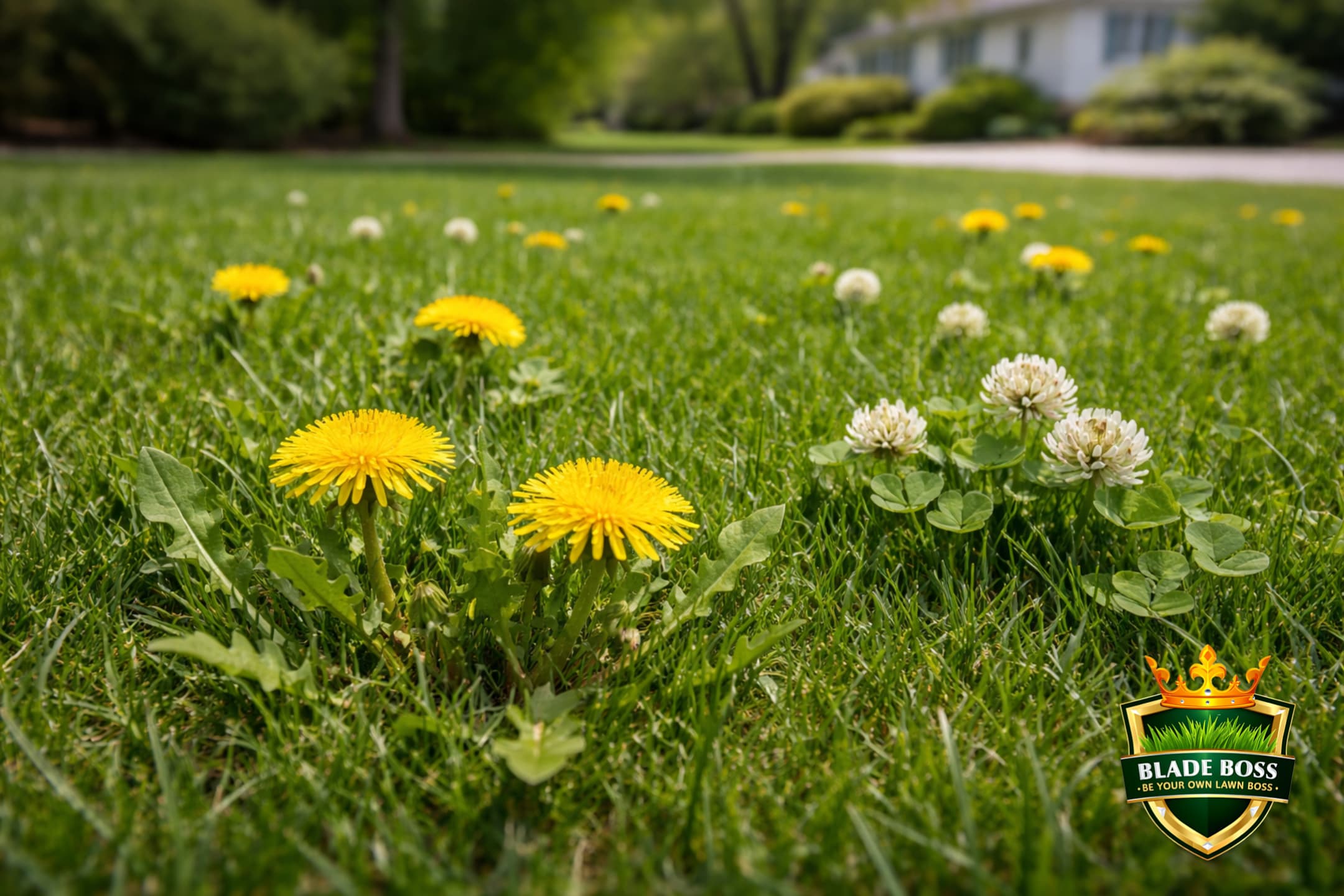
The weed killer aisle at Home Depot has 30 products and zero useful information. Every bottle says "kills weeds" and shows the same stock photo of a dandelion disappearing. What none of them tell you is the most important thing: the weed killer that kills your dandelions will not touch your crabgrass. The one that kills crabgrass will not touch your nutsedge. And the wrong product at the wrong temperature will damage your grass worse than the weeds ever did.
For Northeast lawns (USDA Zones 5A through 7B), for Northeast lawns (USDA Zones 5A through 7B),
- Broadleaf weeds (dandelions, clover, plantain): use a three-way herbicide (2,4-D + dicamba + MCPP) or triclopyr for tough species like ground ivy and wild violet.
- Grassy weeds (crabgrass, goosegrass): use quinclorac (Drive XLR8 + MSO surfactant) or fenoxaprop (Acclaim Extra).
- Sedge weeds (nutsedge): use halosulfuron (SedgeHammer) or sulfentrazone (Dismiss). Standard broadleaf and grass herbicides are useless on sedges.
- Best timing: Fall (late Sep through Oct) for broadleaf. Late May through early Jun for grassy weeds. June for nutsedge.
- Temperature rule: Never spray broadleaf herbicides above 85°F. All products are selective and safe for cool-season grasses when applied per label.
The Three Herbicide Classes (Why This Matters)
This is the concept that changes everything. There are three fundamentally different types of lawn weeds, and each one requires a completely different class of herbicide. Using the wrong class gives you zero results and wasted money. It's like putting diesel in a gasoline engine. Our Stripe Master members get the complete 15-step Lawn Playbook that covers exactly this.
| Weed Type | Examples | Herbicide Class | Why It's Different |
|---|---|---|---|
| Broadleaf weeds | Dandelion, clover, plantain, ground ivy, chickweed, henbit | Broadleaf selective (2,4-D, dicamba, MCPP, triclopyr) | Targets dicots (broad leaves) while sparing monocots (grasses) |
| Grassy weeds | Crabgrass, goosegrass, annual bluegrass (Poa annua) | Grassy weed post-emergent (quinclorac, fenoxaprop) | Targets specific grass species while sparing cool-season lawn grasses |
| Sedge weeds | Yellow nutsedge, purple nutsedge | Sedge-specific (halosulfuron, sulfentrazone) | Sedges are neither grass nor broadleaf. Standard herbicides of both classes are useless. |
Broadleaf herbicides don't kill grassy weeds. Grassy weed herbicides don't kill broadleaf weeds. Neither kills sedges. If you spray a broadleaf product on crabgrass, nothing happens. If you spray a grassy weed product on dandelions, nothing happens. Identify the weed first, then choose the class.
Broadleaf Weed Killers: The Workhorses
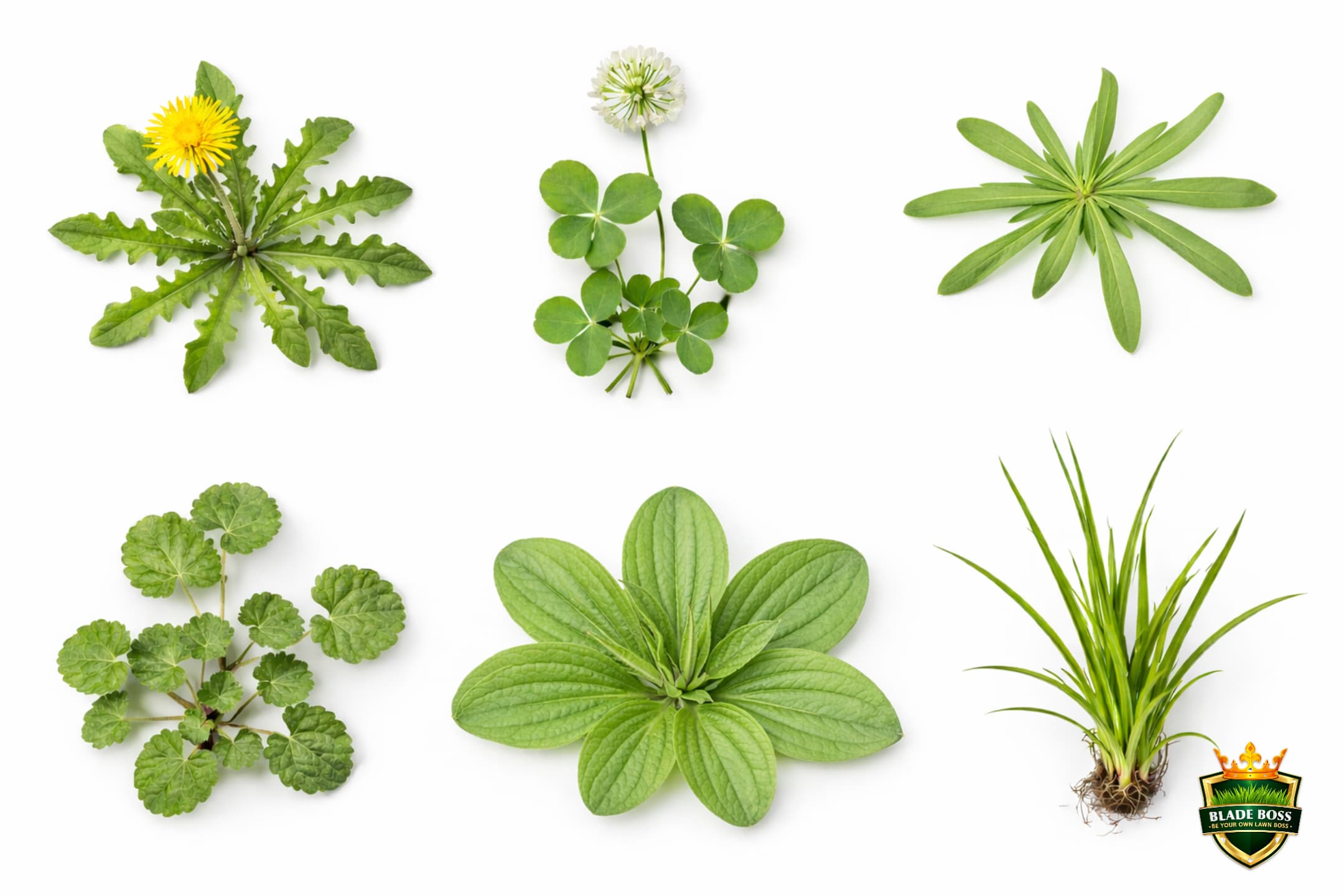
Broadleaf weeds are the most common lawn weeds in the Northeast. Dandelions, white clover, plantain, ground ivy (creeping Charlie), chickweed, henbit, and spotted spurge are all broadleaf weeds. They have wide, flat leaves with visible veins (as opposed to the narrow, parallel-veined blades of grass). Selective broadleaf herbicides exploit this biological difference to kill the weed and leave your grass completely unharmed.
The Standard Three-Way (2,4-D + Dicamba + MCPP)
The three-way herbicide blend is the most widely used broadleaf weed killer in North America. It combines three active ingredients that target different aspects of broadleaf plant biology, giving you broad-spectrum control in one product. This is what professionals spray on most residential lawns.
Products: Trimec, Weed B Gon (concentrate versions), Bayer Advanced Lawn Weed and Crabgrass Killer (the broadleaf component), and dozens of generic three-way concentrates from manufacturers like PBI-Gordon, Quali-Pro, and Southern Ag.
| Weed | Three-Way Effectiveness | Notes |
|---|---|---|
| Dandelion | Excellent | One application usually sufficient. Fall is best for deep taproot kill. |
| Common chickweed | Excellent | One of the easiest weeds to kill. Fall treatment on seedlings is ideal. |
| Henbit / Deadnettle | Excellent | Fall treatment eliminates before spring bloom. One app is usually enough. |
| Broadleaf plantain | Good | May need 2 apps on large established rosettes. Fall preferred. |
| Spotted spurge | Good | Treat while young. Summer heat stress can reduce translocation. |
| White clover | Fair (suppression only) | Three-way suppresses but often doesn't kill established clover. Upgrade to triclopyr. |
| Ground ivy | Poor | Three-way alone is NOT sufficient. Requires triclopyr. See below. |
| Wild violet | Poor | Extremely difficult. Triclopyr + repeat apps required. See below. |
Triclopyr: The Upgrade for Tough Broadleaf Weeds
When the standard three-way doesn't cut it, triclopyr is the answer. Triclopyr is a synthetic auxin herbicide that's particularly effective against woody, waxy, and hard-to-kill broadleaf weeds. Our clover control guide covers triclopyr in depth because it's the single most effective active ingredient against clover.
Products: Ortho Weed B Gon Chickweed, Clover and Oxalis Killer (triclopyr only), T-Zone SE (triclopyr + 2,4-D + dicamba + sulfentrazone), Turflon Ester (triclopyr only). T-Zone is the professional pick because the four active ingredients together cover nearly every broadleaf weed you'll encounter. Lawn Map Pro puts all this data on your satellite map with zone-by-zone tracking.
| Weed | Triclopyr Effectiveness | Notes |
|---|---|---|
| White clover | Excellent | Best single active ingredient for clover. Waxy leaf cuticle needs a surfactant for best uptake. |
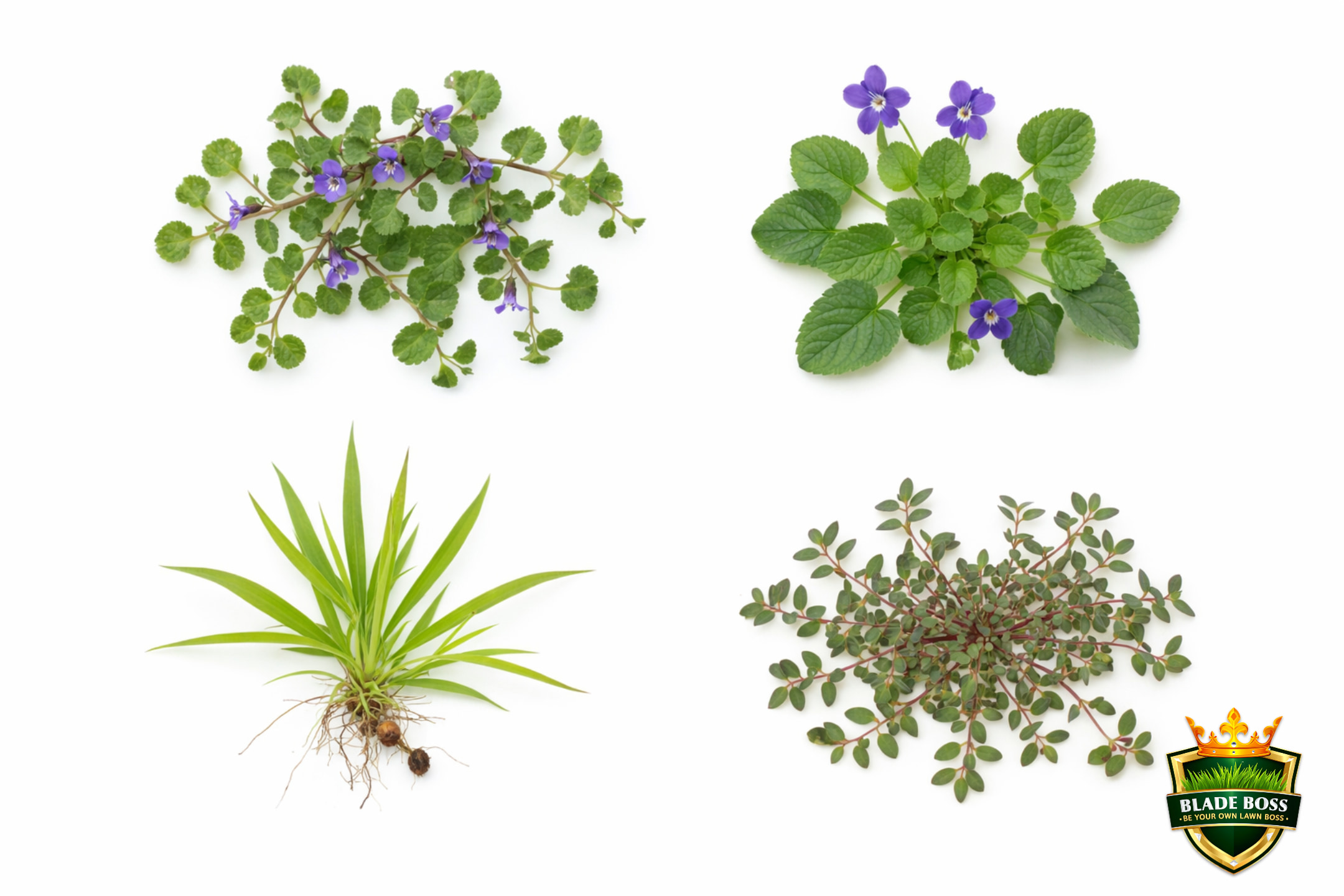
| Ground ivy (creeping Charlie) | Good to Excellent | The #1 herbicide recommendation for ground ivy per university extensions. Plan 2 apps: fall + spring. |
| Wild violet | Fair to Good | Violets are extremely persistent. Expect 2 to 3 treatments across 2 seasons. Fall timing critical. |
| Wood sorrel (Oxalis) | Excellent | One of the weeds triclopyr was designed for. Fast results. |
| Black medic | Excellent | Responds quickly to triclopyr. |
Triclopyr is a broadleaf herbicide, which means it can damage or kill broadleaf trees and shrubs. Be extremely careful spraying near ornamental plantings, flower beds, and tree root zones. Do not spray on windy days (above 10 mph). Do not spray when temps exceed 85°F because volatilization increases drift risk. If you have desirable broadleaf ground cover (pachysandra, ivy, ajuga) near your lawn, use a shield or spot-spray to avoid contact.
Map Your Weed Zones Before You Spray
Use Lawn Map Pro to draw zones around weed-heavy areas on satellite imagery. Know exactly what you're treating and how much product you need before you start.
Grassy Weed Killers: Crabgrass and Beyond
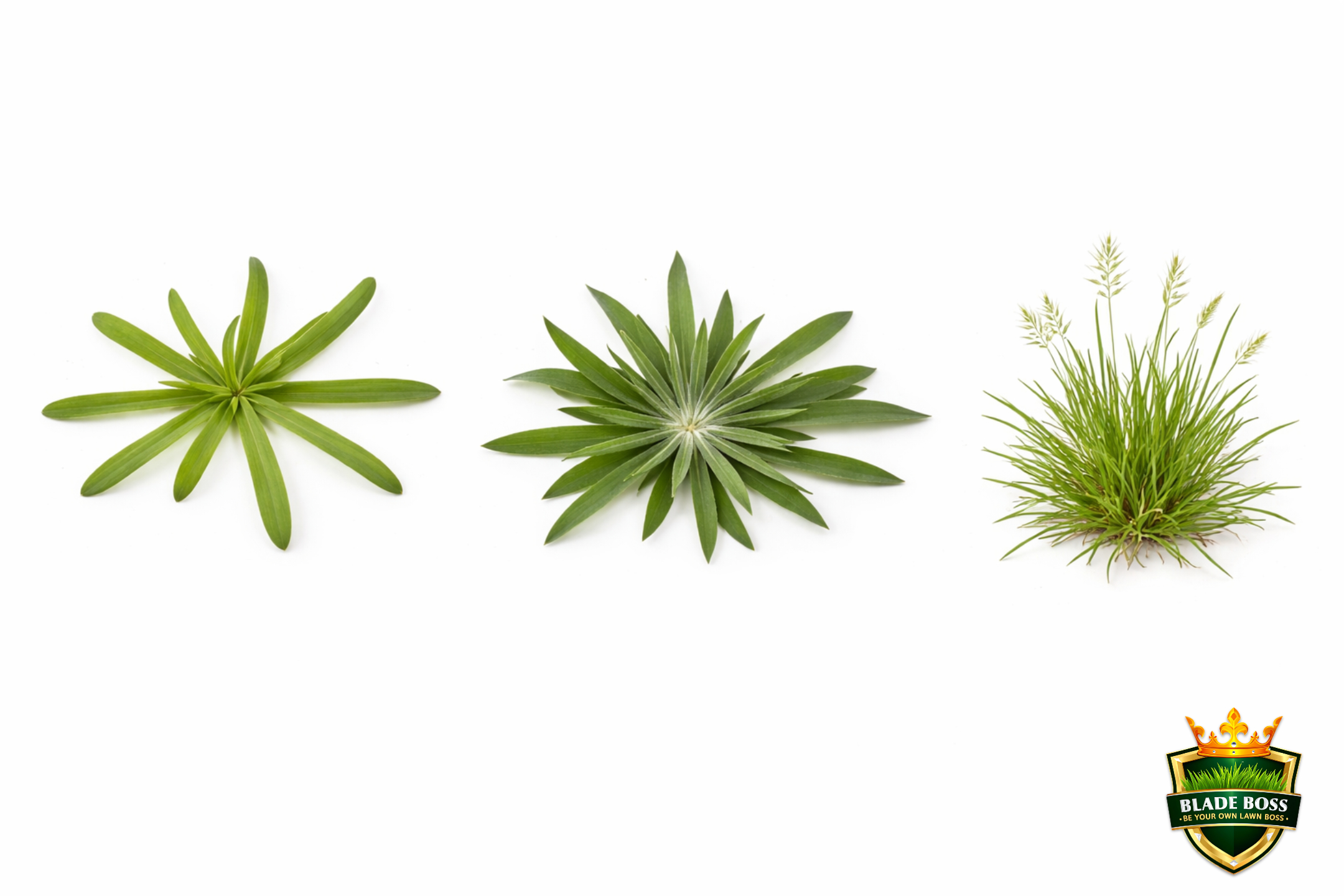
This is where most homeowners waste money. They buy a broadleaf weed killer, spray it on crabgrass, and wonder why nothing happened. Crabgrass is a grass. It looks different from your lawn grass, but biologically it's in the same plant family (Poaceae). Broadleaf herbicides pass right through it.
The good news is that selective grassy weed post-emergents exist. They target specific physiological pathways in annual grasses like crabgrass and goosegrass while leaving established cool-season lawn grasses (KBG, TTTF, PRG, Fine Fescue) unharmed. Our Dynamic Calendar tracks these windows automatically with GDD alerts.
| Active Ingredient | Product | Targets | Key Advantage | Temp Limit |
|---|---|---|---|---|
| Quinclorac | Drive XLR8 + MSO | Crabgrass (all stages), some broadleaf | Works on mature crabgrass that's already tillering. Dual broadleaf + grassy activity. | 85°F |
| Fenoxaprop | Acclaim Extra | Crabgrass, goosegrass, foxtail | Best for crabgrass in the 1 to 4 tiller stage. Does not harm most cool-season grasses. | 90°F |
| Topramezone | Pylex | Crabgrass, goosegrass, yellow and purple nutsedge | Professional-grade. Dual grass + sedge activity. Requires NIS surfactant. | 90°F |
| Mesotrione | Tenacity | Crabgrass (pre and post), some broadleaf | Can be applied at seeding. Whitens weeds before killing them. Limited post-em window. | 85°F |
Quinclorac (Drive XLR8) will not work properly without a methylated seed oil (MSO) surfactant mixed in the tank. MSO is not optional. It's what allows the herbicide to penetrate the waxy cuticle of crabgrass leaves. Without it, the spray beads up and rolls off. Buy MSO separately (Southern Ag or Hi-Yield brands, about $15 for a quart). Mix at the rate on the MSO label (typically 1 to 2 oz per gallon). This is the number one reason DIYers report that "Drive didn't work."
Post-emergent crabgrass killers are rescue products. The real defense is pre-emergent herbicide applied before crabgrass germinates (GDD50 = 100, approximately April 6 on Long Island). If your pre-emergent program is dialed in, you should only need post-emergent for occasional escapes along driveway edges and thin spots. Our crabgrass battle plan covers the full prevention strategy.
Sedge-Specific Herbicides: The Nutsedge Problem
Nutsedge (yellow and purple) is the weed that breaks people. It looks like a grass, grows faster than your lawn, and laughs at every broadleaf and grassy weed product you throw at it. That's because nutsedge is neither a grass nor a broadleaf. It's a sedge, a completely different plant family (Cyperaceae) that requires its own class of herbicide.
The quick ID: nutsedge has a triangular stem (roll it between your fingers and you'll feel three edges), grows noticeably faster and taller than the surrounding grass within days of mowing, and has a lighter yellow-green color than your lawn. If you see a weed that shoots up taller than everything around it two days after mowing, it's almost certainly nutsedge.
| Active Ingredient | Product | Effective On | Application Notes |
|---|---|---|---|
| Halosulfuron-methyl | SedgeHammer, Sedge Ender | Yellow and purple nutsedge | Homeowner standard. Systemic. Mix with surfactant. 2 to 3 apps at 3 to 4 week intervals for full control. |
| Sulfentrazone | Dismiss, Basagran T/O | Yellow and purple nutsedge, kyllinga | Faster visual results (contact + systemic). Water in 4 to 6 hours after application. Professional grade. |
| Mesotrione | Tenacity | Yellow nutsedge (partial) | Dual activity (also works on crabgrass and some broadleaf). Less effective on sedge than dedicated products. |
This is why nutsedge keeps coming back even after treatment. Each plant produces underground tubers (nutlets) that sprout new plants. Pre-emergent herbicides are completely useless because there's no seed germination to prevent. Treatment must happen in June, before the plant starts producing new tubers in July (triggered by shortening daylength). Spray early, spray again 3 to 4 weeks later, and don't let it go to seed.
When to Spray: Temperature and Timing Rules
Timing is at least half the battle with herbicides. The same product applied at the wrong time of year or the wrong temperature gives you 30% of the results you'd get with proper timing. Here are the rules based on Zone Master data and university extension research.
Join Northeast homeowners who get weed control timing, safe product recommendations, and seasonal lawn care tips every week.
Broadleaf Weed Timing
Fall (late September through October) is the #1 window for broadleaf weed control in the Northeast. During fall, perennial weeds are actively transporting carbohydrates down to their roots for winter storage. A systemic herbicide applied during this period rides that translocation flow deep into the root system, delivering a more complete kill than spring application. On Long Island, the fall broadleaf window runs October 15th through November 15th based on Zone Master data.
Spring (April 15th through May 15th) is the secondary window. Weeds are actively growing and taking up herbicide, but the translocation direction is upward (roots to shoots for spring growth), so root kill is less complete. Spring-treated perennials like dandelions and clover often regrow from surviving roots. Plan a fall follow-up.
A light frost before broadleaf herbicide application can actually improve control. University extension research suggests that light frost triggers increased carbohydrate translocation to roots, which carries the herbicide deeper. Don't wait for a hard freeze, but a night dipping into the low 30s before a 50 to 60°F spray day is ideal in late October.
Grassy Weed Timing
Post-emergent crabgrass herbicides work best when crabgrass is young, in the 3 to 5 leaf stage before it begins tillering. On Long Island, this corresponds to a window from approximately May 15th through June 4th. After tillering (multiple stems branching from the base), crabgrass becomes much harder to kill. Quinclorac (Drive XLR8 (requires MSO surfactant)) is the most forgiving because it works on mature, tillered crabgrass when other products fail.
Sedge Timing
Treat nutsedge in June, when plants are actively growing but before new tuber formation begins in July (triggered by daylength shortening below 14 hours). Earlier is better. Apply a second treatment 3 to 4 weeks after the first. Don't mow before treatment. Let the nutsedge grow tall enough to absorb the herbicide, then mow a few days after application.
| Weed Type | Primary Window | Secondary Window | Avoid |
|---|---|---|---|
| Broadleaf (perennial) | Late Sep to Oct (fall translocation) | Apr 15th to May 15th (spring growth) | Jun to Aug (heat stress, drift risk) |
| Broadleaf (winter annual) | Oct to Nov (fall seedling stage) | Mar (pre-bloom spot treatment) | Summer (plants already dead) |
| Crabgrass (post-em) | May 15th to Jun 4th (3 to 5 leaf) | Jun to Jul (tillered, harder) | Aug+ (too mature to kill) |
| Goosegrass (post-em) | Jun to Jul (after crabgrass emerges) | Aug (still treatable) | Spring (not emerged yet) |
| Yellow nutsedge | Jun (pre-tuber formation) | Jul (tubers forming, harder) | Fall (top dies, tubers persist) |
| Poa annua | Fall pre-emergent (Aug to Sep) | Spring (hand-pull before seed) | No effective selective post-em |
Track Soil Temp and GDD for Spray Timing
The Blade Boss Weather Hub tracks real-time soil temperature and growing degree days for your ZIP code so you know exactly when each spray window opens.
The Complete Weed-to-Product Matching Guide
Identify your weed, find it in this table, and buy the product in the right column. This is the table you screenshot and take to the store.
| Weed | Best Product | Active Ingredient | Timing |
|---|---|---|---|
| Dandelion | Any three-way (Trimec, Weed B Gon) | 2,4-D + dicamba + MCPP | Fall (Sep to Oct) |
| White clover | Ortho Chickweed/Clover Killer | Triclopyr | Fall (Sep to Oct) |
| Ground ivy | T-Zone SE or triclopyr product | Triclopyr (essential) | Fall + spring follow-up |
| Wild violet | T-Zone SE | Triclopyr + 2,4-D + dicamba | Fall, repeat 2 to 3 seasons |
| Plantain | Any three-way | 2,4-D + dicamba + MCPP | Fall (Sep to Oct) |
| Chickweed | Any three-way | 2,4-D + dicamba + MCPP | Oct to Nov (fall seedlings) |
| Henbit | Any three-way | 2,4-D + dicamba + MCPP | Oct to Nov (fall seedlings) |
| Spotted spurge | Any three-way + pre-em | 2,4-D + dicamba + MCPP | Summer (spot-treat young) |
| Crabgrass | Drive XLR8 + MSO | Quinclorac | May to Jun (3 to 5 leaf) |
| Goosegrass | Acclaim Extra or Drive XLR8 + MSO | Fenoxaprop or quinclorac | Jun to Jul |
| Yellow nutsedge | SedgeHammer + surfactant | Halosulfuron-methyl | Jun (pre-tuber set) |
| Purple nutsedge | SedgeHammer (expect slower results) | Halosulfuron-methyl | Jun, repeat 3 to 4 weeks |
Application Technique: How to Actually Spray
The best product with bad application technique gives you bad results. Here are the fundamentals.
Don't Mow for 2 to 3 Days Before
You need maximum leaf surface area for the herbicide to contact and absorb. Mowing reduces the target. Let the weeds grow tall enough to catch the spray.
Spray When Weeds Are Actively Growing
Stressed, wilted, or drought-dormant weeds don't take up herbicide well. Water your lawn a day before spraying if conditions are dry. Hydrated turf and weeds absorb herbicide better.
Add a Surfactant
A surfactant (spreader-sticker) helps the spray stick to waxy leaf surfaces instead of beading up and rolling off. This is critical for clover, which has notoriously waxy leaves. Many retail products include surfactant. If using a concentrate, add a non-ionic surfactant at 0.25% volume.
Spray to Wet, Not to Drip
Cover the leaf surface evenly until it glistens. If the spray is running off the leaf and dripping to the ground, you're applying too much. That excess is wasted product contaminating the soil.
Don't Mow for 2 to 3 Days After
The herbicide needs time to absorb through the leaf and translocate into the plant's vascular system. Mowing after application removes the herbicide before it finishes working.
Don't Water for 24 Hours After
Rain or irrigation within 24 hours washes the herbicide off the leaves before it's absorbed. Check the forecast before you spray. Some products (sulfentrazone) are exceptions that need to be watered in.
Spot-Spray vs. Broadcast: When to Use Which
Broadcast spraying (covering the entire lawn) makes sense when weeds are widespread across most of the property. This is common on newly purchased homes or lawns that haven't been treated in years. A hose-end sprayer or boom sprayer covers large areas efficiently.
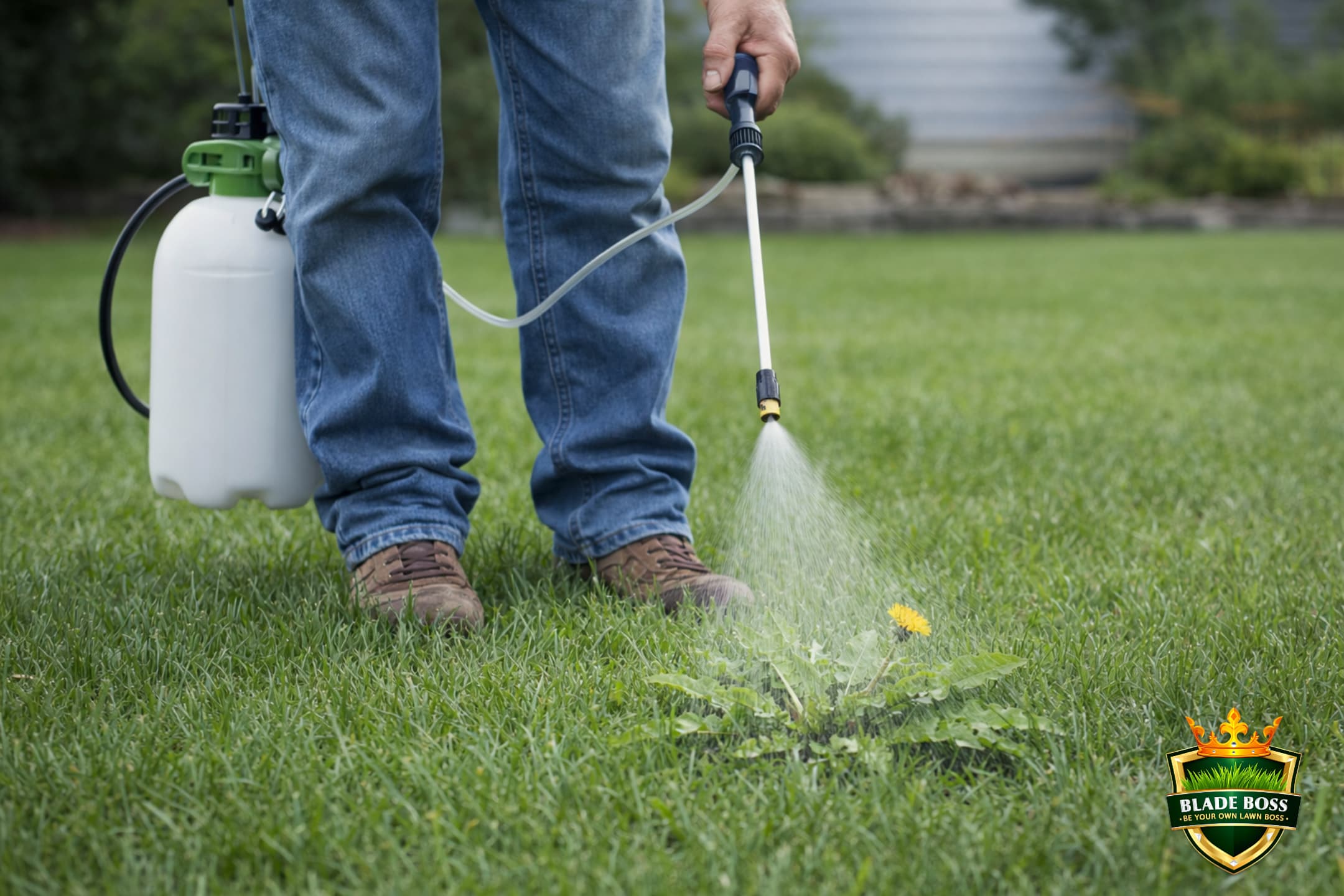
Spot-spraying (treating individual weeds or patches) is the better approach for maintained lawns with scattered weeds. A pump sprayer with an adjustable nozzle lets you target the weed directly. Less product, less chemical exposure, and no risk of over-applying to areas that don't need treatment. For most homeowners following a consistent fertilizer schedule and pre-emergent program, spot-spraying is all you need.
What NOT to Use (Products That Sound Good but Aren't)
Weed and Feed Granular Products
Weed and feed combines herbicide with fertilizer in a granular form. The problem: granules need to stick to wet weed leaves to work, but fertilizer should be watered into the soil. These two goals directly conflict. University extension research consistently shows liquid herbicide outperforms granular weed and feed. Additionally, you're spreading herbicide across your entire lawn when you may only have weeds in 10% of the area. Buy fertilizer and herbicide separately.
Non-Selective Herbicides (Glyphosate/Roundup)
Glyphosate kills everything it touches, including your lawn grass. It has no place in selective weed control. The only legitimate use is renovation: killing an entire lawn section before reseeding. If you see someone spraying Roundup on individual weeds in their lawn, they're going to have brown dead spots for weeks. Use a selective herbicide instead.
Vinegar, Salt, and Dish Soap "Natural" Recipes
These are non-selective contact killers. They burn the top growth of whatever they touch (including your grass) but do not kill roots. The weed regrows within 2 weeks. Horticultural vinegar (20% acetic acid) is also a serious eye and skin hazard, far more dangerous to handle than commercial selective herbicides. If you want to avoid synthetic chemicals, the best organic weed control is a thick, well-fed lawn that outcompetes weeds naturally.
"All-in-One" Products That Claim to Kill Everything
No single product effectively kills broadleaf weeds, grassy weeds, and sedges. The biology is too different. Products that claim to kill "all weeds" are either non-selective (will kill your grass) or are broadleaf products with marketing language that implies broader effectiveness. Read the active ingredient list, not the front label claims.
The Cultural Defense: Fewer Weeds Without Chemicals
Herbicides kill existing weeds. They don't prevent new ones. The only sustainable weed prevention is a thick, healthy lawn that physically outcompetes weeds for sunlight, water, and nutrients. Every weed in your lawn is telling you something about the underlying condition.
Mow at 3.5 to 4 Inches
Taller grass shades the soil, blocking light that weed seeds need to germinate. This single practice prevents more weeds than any herbicide. Our mowing guide covers seasonal heights.
Fix Your Soil pH
Weeds thrive in acidic soil where grass struggles. Getting soil pH to the 6.2 to 6.8 sweet spot gives your grass the competitive advantage.
Feed on Schedule
A properly fertilized lawn is dense enough to crowd out most weeds. Clover, in particular, thrives in nitrogen-deficient soil and disappears when fertility is corrected.
Overseed Thin Spots Every Fall
Every bare or thin area is an open invitation for weeds. Aerate and overseed in September to fill the gaps before weeds find them.
Common Weed Killer Mistakes on Northeast Lawns
1. Spraying a broadleaf product on crabgrass
The most common mistake by far. Products containing 2,4-D, dicamba, and MCPP do absolutely nothing to crabgrass. Crabgrass is a grass, not a broadleaf weed. You need quinclorac (Drive XLR8 (requires MSO surfactant)) or fenoxaprop (Acclaim Extra).
2. Spraying above 85°F
Broadleaf herbicides volatilize in high heat, drifting onto ornamental plants and causing damage. Your grass is also under heat stress and more susceptible to herbicide injury. Wait for temperatures between 60 and 80°F. Early morning or early evening applications avoid peak heat.
3. Expecting one application to kill clover or ground ivy
Clover has waxy leaves that resist herbicide penetration. Ground ivy has a sprawling stolon network that one treatment rarely eliminates entirely. Plan for 2 treatments minimum: one in fall, one in spring. Always add a surfactant.
4. Spraying right before rain
Rain within 24 hours of application washes the herbicide off the leaf surface before it absorbs. This is the most common reason for treatment failure after proper product selection. Check the forecast.
5. Using pre-emergent for perennial weeds
Pre-emergent herbicides prevent seed germination. Perennial weeds like dandelion, clover, ground ivy, and plantain spread primarily from existing root systems and stolons, not seeds. Pre-emergent is for annual weeds like crabgrass and Poa annua.
6. Spraying new grass seedlings
Most selective herbicides will damage or kill grass seedlings. Wait at least 6 weeks after seeding (or 3 to 4 mowings) before applying any herbicide. The exception is mesotrione (Tenacity), which is safe at seeding.
New York State and Long Island Regulations
Weed control on Long Island operates under a few specific rules. New York State law bans phosphorus in lawn fertilizers for established lawns unless a soil test shows a deficiency. This doesn't directly affect herbicides, but it impacts the fertilizer you pair with your weed control program. Suffolk County Local Law 41-2007 and Nassau County Local Law 11-2009 establish fertilizer blackout dates but do not restrict herbicide application timing. You can apply herbicide year-round, but fertilizer is restricted November 1 through April 1 in Suffolk County.
The 20-foot buffer zone near water bodies applies to both fertilizer and pesticides in Suffolk and Nassau counties. Do not apply herbicide within 20 feet of any bay, pond, canal, stream, or wetland. Long Island sits over a sole-source aquifer, and herbicide runoff is a genuine environmental concern. Use the minimum effective rate, spot-spray whenever possible, and follow label directions exactly.
Your Seasonal Weed Control Calendar
Early Spot-Treatment
On mild days above 50°F, spot-treat winter annuals (chickweed, henbit) that survived fall treatment. Small and tender now, easy to kill before they bloom and set seed.
Pre-Emergent Goes Down
Pre-emergent herbicide at GDD50 = 100 (~Apr 6 on LI). This prevents crabgrass and annual weed seeds from germinating. Do NOT apply broadleaf herbicide to newly emerging grass.
Spring Broadleaf Window Opens
Mid-April through mid-May: spray actively growing broadleaf weeds (dandelion, clover, plantain). This is the secondary window, less effective than fall for perennials.
Crabgrass Post-Em + Nutsedge Treatment
Spot-treat crabgrass escapes with quinclorac (Drive XLR8 + MSO) at the 3 to 5 leaf stage. First nutsedge treatment with halosulfuron (SedgeHammer) before tuber formation.
Minimal Activity (Heat Stress)
Avoid broadleaf herbicides above 85°F. Second nutsedge treatment 3 to 4 weeks after first. Spot-treat only. Summer survival mode.
Primary Broadleaf Window (Best Timing)
This is THE window. Broadcast or spot-spray all broadleaf weeds. Fall translocation drives herbicide deep into roots. Pair with aeration and overseeding (6 week buffer between herbicide and seed).
Final Cleanup
Spot-treat any remaining chickweed, henbit, or deadnettle seedlings that germinated in October. These fall into the Oct 15th to Nov 15th window per Zone Master data.
Get Your Complete Lawn Care Calendar
Weed control is one piece of the system. The Blade Boss Calendar integrates every task, every month, timed to Zone 7B soil temps and GDD.
Build the Lawn, Not Just the Spray Program
The homeowner who sprays the most herbicide doesn't have the best lawn. The homeowner who builds the thickest, healthiest turf has the fewest weeds to spray in the first place. Every post in our guide library connects back to this principle: fix your pH, feed properly, mow at the right height, aerate in September, and manage thatch. Herbicide handles the symptoms. Cultural practices fix the cause.
For grub damage that thins your turf and invites weeds, our grub control guide covers prevention and treatment. If winter damage left bare patches, those need overseeding before weed pressure fills them. The right grass type for your conditions makes a denser stand that weeds can't penetrate. For zone-specific guidance, Cornell Cooperative Extension Suffolk County is an excellent local resource. Cool-season turfgrass research from Rutgers NJAES applies directly to Long Island growing conditions. See also: dog-friendly lawn care.
Chris C. is a Combat Search and Rescue pilot turned airline pilot and the founder of Blade Boss. Every recommendation in this guide is sourced from university extension research (Cornell, Rutgers, Penn State Extension, Purdue) and calibrated to USDA Zone 7B conditions.
8 common weeds with photos, ID tips, the exact product to use, and a seasonal timing calendar. Print it and keep it in your garage.
See what Blade Boss members get and get instant access to preview our tools, explore Lawn Map Pro, and see what data-driven lawn care looks like.
See Plans →Frequently Asked Questions
What is the best weed killer for lawns that won't kill grass?
The best weed killer depends on the type of weed. For broadleaf weeds like dandelions, clover, and plantain, use a selective broadleaf herbicide containing 2,4-D plus dicamba plus MCPP (sold as Trimec, Weed B Gon, or generic three-way products). For stubborn broadleaf weeds like ground ivy and wild violet, use a product containing triclopyr (Ortho Weed B Gon Chickweed Clover and Oxalis Killer or T-Zone). For grassy weeds like crabgrass, use quinclorac (Drive XLR8, requires methylated seed oil surfactant) or fenoxaprop (Acclaim Extra). For nutsedge, use halosulfuron (SedgeHammer). All of these are selective herbicides that kill the target weed without harming cool-season grasses.
When is the best time to spray weed killer on a Northeast lawn?
Fall (late September through October) is the most effective window for broadleaf weed control in the Northeast. During fall, perennial weeds like dandelions, clover, and ground ivy are actively transporting carbohydrates down to their roots for winter storage. A systemic herbicide applied during this window rides that flow deep into the root system for a more complete kill. Spring (mid-April through mid-May) is the secondary window. Avoid spraying broadleaf herbicides when air temperature exceeds 85 degrees Fahrenheit or drops below 60 degrees Fahrenheit.
Why didn't my weed killer work on crabgrass?
Standard broadleaf weed killers (products containing 2,4-D, dicamba, and MCPP) do not kill crabgrass. Crabgrass is a grass, not a broadleaf weed, so it requires a completely different herbicide class. You need a grassy weed post-emergent like quinclorac (sold as Drive XLR8, requires methylated seed oil surfactant) or fenoxaprop (Acclaim Extra). These target grassy weeds while leaving cool-season lawn grasses unharmed. The other critical factor is timing: post-emergent crabgrass herbicides work best when crabgrass is young, ideally in the 3 to 5 leaf stage before it begins tillering.
Is it safe to spray weed killer in hot weather?
Most broadleaf herbicide labels specify a maximum application temperature of 85 degrees Fahrenheit. Above this temperature, herbicides containing 2,4-D and dicamba can volatilize (turn to gas) and drift onto nearby ornamental plants, gardens, and trees, causing unintended damage. Your lawn grass is also under heat stress above 85 degrees Fahrenheit and is more susceptible to herbicide injury. The ideal application window is 60 to 80 degrees Fahrenheit with no rain forecast for 24 hours. Grassy weed post-emergents like quinclorac and fenoxaprop tolerate slightly higher temperatures per their labels.
Will weed killer damage my grass seed if I just overseeded?
Yes. Most selective herbicides will damage or kill grass seedlings. Wait at least 6 weeks after applying broadleaf herbicide (2,4-D, dicamba, triclopyr) before overseeding. If you recently overseeded, wait until the new grass has been mowed at least 3 to 4 times before applying any herbicide. The exception is mesotrione (Tenacity), which can be applied at the time of seeding and provides partial weed suppression without harming new grass seedlings.
Keep Reading
 DIY How-To
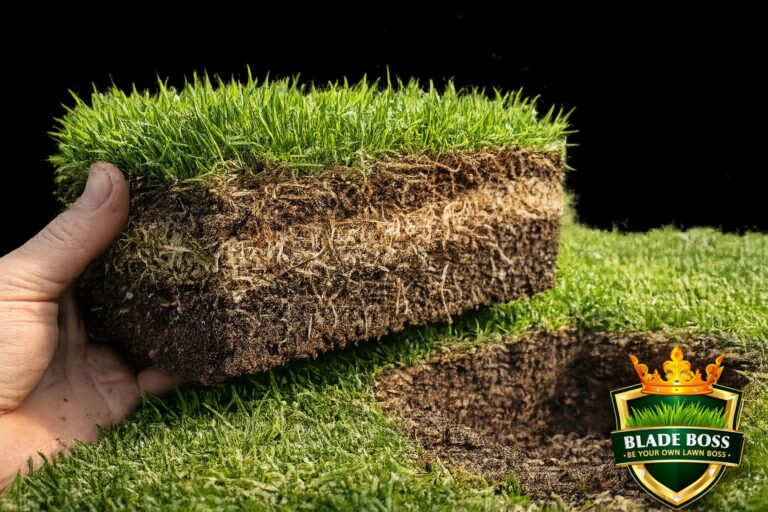
Lawn Dethatching Guide for the Northeast: Timing, Tools, and Why Fall Beats Spring
Most dethatching advice gets the timing wrong. Fall is the ideal window for Northeast lawns, not spring. Learn...
Mar 17, 2026
16 min
 Northeast Regional
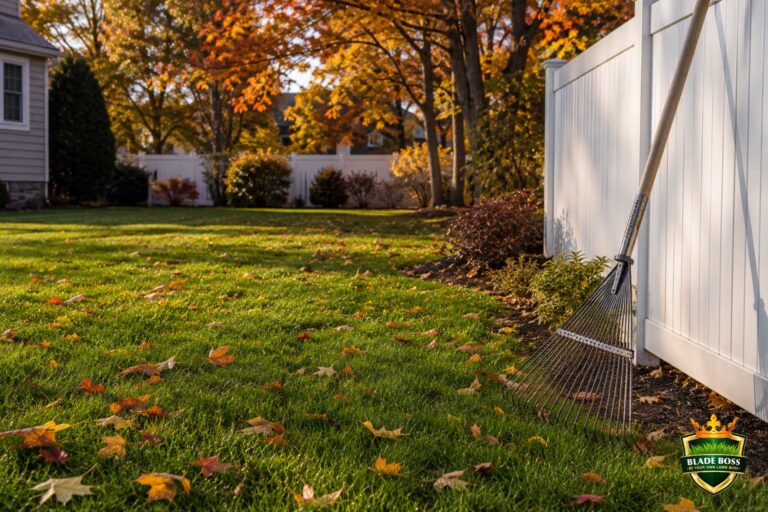
Fall Lawn Care Checklist for Northeast Homeowners (Complete Guide)
Fall is the most important season for your lawn. Everything you do from September through November determines how...
May 15, 2026
10 min
 Northeast Regional
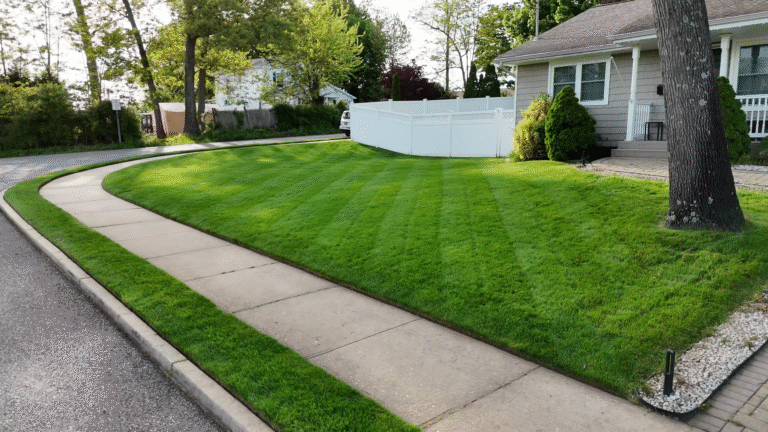
When to Start Mowing in Spring: Northeast Timing Guide (2026)
Stop guessing when to pull out the mower. Use soil temperature, grass height, and GDD triggers to time...
Mar 1, 2026
17 min
What is your lawn actually sitting on?
Pull the soil survey, hardiness zone and current growing conditions for your exact address. Eight government sources, about a minute.
No comments yet. Be the first to share your thoughts.
Create a free account to join the conversation.