Best Pre-Emergent Products for Zone 7B Lawns (6 Products Compared)

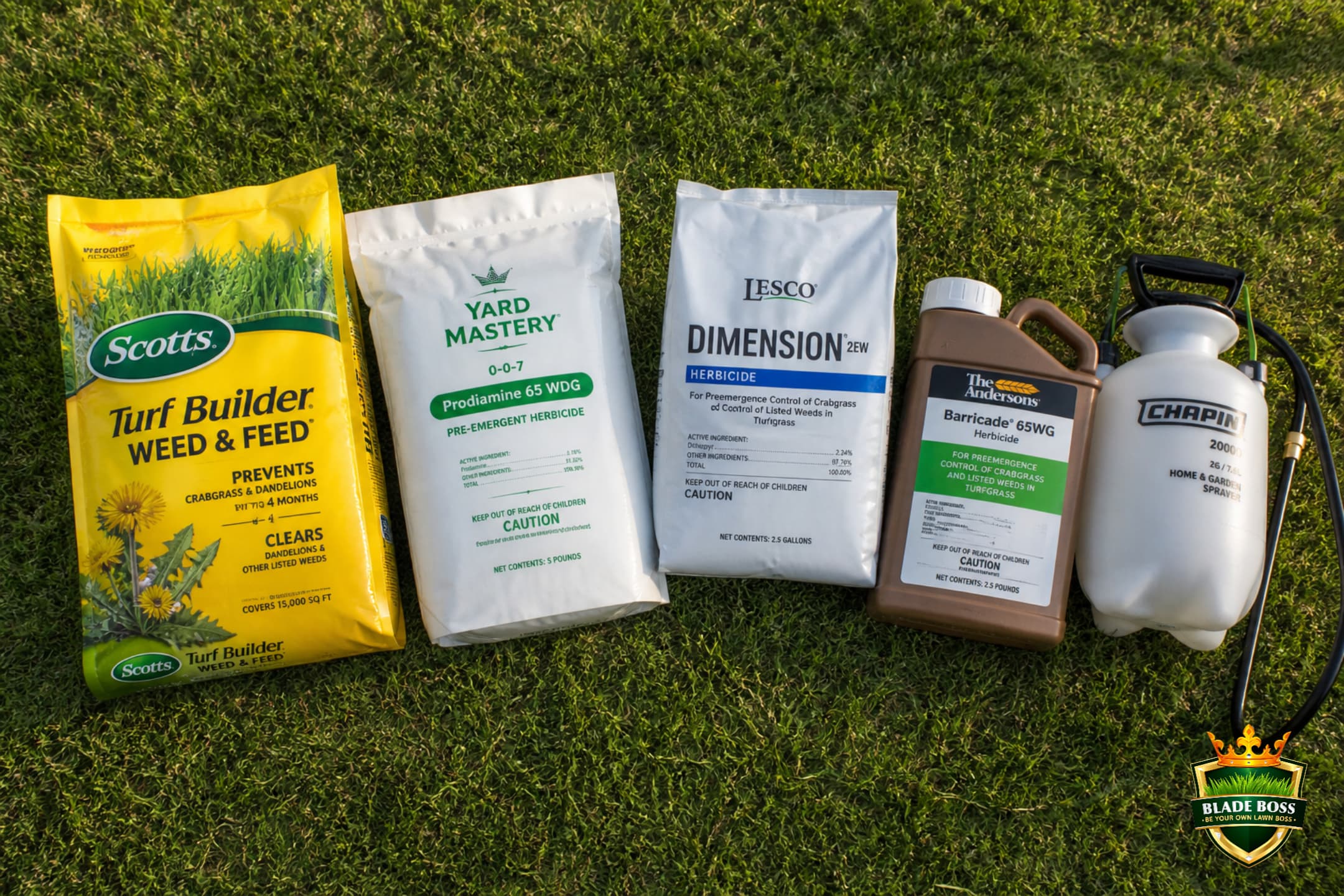
You know you need pre-emergent. You read the timing guide. You checked your soil temperature. You are standing in the aisle (or staring at Amazon) and there are six different products claiming to stop crabgrass. They all say they work. They all have different active ingredients. Nobody tells you which one is actually worth buying for YOUR soil, YOUR skill level, and YOUR lawn. And nobody tells you that two of the six carry legal restrictions in New York that change the answer entirely. Until now.
For most Long Island homeowners, the best pre-emergent is granular prodiamine on a 0-0-7 carrier, spread with a broadcast spreader. It is general use, it delivers the longest residual barrier of any common pre-emergent (up to 16 weeks), and it needs no sprayer. Prodiamine 65 WDG is the same active ingredient at a much lower cost per application, but it is a New York restricted-use product, so it is the pro-tier pick rather than the default. Dithiopyr (Dimension) is a rescue product, not a routine round: it is New York restricted use and Nassau and Suffolk cap it at roughly 0.37 fluid ounces per 1,000 square feet for the entire year. Pendimethalin (Scotts Halts) is the general-use gap-closer with its own separate annual budget. Tenacity is the only option that is safe to apply at seeding. Corn gluten meal runs about 50 to 60 percent control against 90 percent or better from the synthetics, and because it is roughly 10 percent nitrogen it counts as fertilizer under the Long Island blackout rules.
The Legal Layer Nobody Puts in a Product Review
Every other pre-emergent roundup on the internet ranks these products on residual and price. That is fine in Ohio. On Long Island you have three overlapping rulebooks stacked on top of each other: the federal label, New York State's restricted-use list, and the county fertilizer blackouts under Suffolk County Code Chapter 459 and Nassau's local law. Two of the six products below are restricted use in New York. One popular formulation is flatly prohibited in Nassau and Suffolk by its own label. And one of the most convenient products on this list legally counts as fertilizer, which means it cannot go down during the winter blackout.
A New York restricted-use pesticide is legal to apply, but only by a certified applicator or someone working under one. That is a real requirement and we state it every time. It is not the same thing as prohibited. Where a product is genuinely prohibited (by label or by county law) we say so and we do not recommend it. Where it is restricted, we tell you what the product does, what the rule is, and let you decide how to handle it.
When to Apply (The Window That Matters More Than the Product)
No product can save you if you miss the window. Pre-emergent creates a chemical barrier in the top layer of soil that kills crabgrass seedlings as they germinate. If crabgrass has already emerged and established roots, the barrier is useless. On Long Island the first application lands at 100 GDD50, which typically falls around April 6. Soil temperature reaching 55 degrees at 4-inch depth for 3 or more consecutive days is your secondary confirmation. Smooth crabgrass starts germinating between 150 and 200 GDD50, roughly April 15 to 21, and after that prodiamine is too late to help you.
Our pre-emergent timing guide covers the full GDD model, the forsythia correlation (bloom means the window is CLOSING, not opening), and the split-application strategy for Long Island's sandy soils. The crabgrass battle plan has the full multi-year program. Read those first if you haven't. Then come back here to pick your product.
The Head-to-Head Comparison
| Product | Active Ingredient | Max Residual | Post-Em Activity | Role in the Program | Nassau and Suffolk Status |
|---|---|---|---|---|---|
| Granular prodiamine on 0-0-7 | Prodiamine | Up to 16 weeks | None | Rounds 1 and 2. The backbone. | General use. Counts as fertilizer, so it is blocked during the winter blackout. |
| Prodiamine 65 WDG | Prodiamine | Up to 16 weeks | None | Same job, pro tier, lowest cost. | The 65 percent formulation is a New York restricted-use product. |
| Dimension 2EW | Dithiopyr | Up to 16 weeks | Crabgrass only, to 1-tiller | Rescue. Hold in reserve. | New York restricted use. Certified applicators only, at 0.25 lb ai per acre per year. |
| Dithiopyr granular plus fertilizer | Dithiopyr + N | Up to 16 weeks | Crabgrass only, to 1-tiller | Not used in this program. | Label prohibits use in Nassau and Suffolk Counties. |
| Scotts Halts | Pendimethalin | 6 to 12 weeks | None | February bridge and mid-July gap-closer. | General use. Separate annual budget. |
| Tenacity | Mesotrione | About 4 to 6 weeks | Yes (suppression) | The only option at seeding time. | General use. |
| Espoma Organic Weed Preventer | Corn gluten meal | 4 to 6 weeks | None | Organic-only programs. Partial control. | General use, but it is roughly 10 percent nitrogen, so the blackout applies. |
The Annual Cap Nobody Mentions
Here is the single most expensive thing homeowners get wrong about pre-emergent, and it has nothing to do with which brand you buy. Prodiamine labels do not just set a per-application rate. They set a maximum total for the whole calendar year, and that total changes depending on what grass you have. Split applications divide that same annual total across more dates. You are not applying two or three times the product, you are applying the same product on a smarter schedule.
Prodiamine labels set the annual total per calendar year by grass type: 0.42 oz of 65 WDG per 1,000 sq ft for fine fescue, 0.55 oz for Kentucky bluegrass and perennial ryegrass, 0.83 oz for tall fescue. In granular terms with a 0.38 percent product that is roughly 4.7, 6.2, and 9.3 lbs per 1,000. Because a fall round lands in the same calendar year as that spring's rounds, there is no rolling-window workaround. Exceeding the cap is not just a label violation. Prodiamine carryover in the soil will block your fall overseeding.
Granular prodiamine is sold at several different concentrations, and the bag rate is calculated for that specific percentage. A rate copied off a forum post or off a different brand's bag can be double or half what you actually need. Find the prodiamine percentage in the active ingredients panel, then work backward from the annual cap for your grass type. If the bag says 0.38 percent and you have Kentucky bluegrass, your whole-year budget is about 6.2 lbs per 1,000 sq ft, split across your rounds. Do this math once, write it on the bag with a marker, and stop guessing.
Never Miss the Pre-Emergent Window Again
The Blade Boss GDD Tracker monitors soil temperature and growing degree days in real time. It tells you exactly when to apply, not approximately.
Product #1: Granular Prodiamine on a 0-0-7 Carrier (Best Overall)
This is the pick for most Long Island homeowners, and it is a change from how these roundups usually rank. The active ingredient is prodiamine, the same molecule that university extension programs list as the primary pre-emergent for cool-season lawns. The difference is the delivery: the prodiamine is pre-coated onto a 0-0-7 potassium fertilizer granule. You spread it with a broadcast spreader just like fertilizer. No mixing, no sprayer, no jug of concentrate in the garage. Critically, the granular formulations at low prodiamine percentages are general use in New York, while the 65 percent professional formulation is not.
On Long Island's sandy soils (CEC 3 to 8), prodiamine binds to organic matter in the top inch of soil and resists leaching better than most other pre-emergents. That is why it holds a barrier for up to 16 weeks on ground where Rutgers Extension research shows other products break down faster. The 0-0-7 potassium carrier is a genuine bonus during the growing season: potassium hardens turf against heat and drought stress without pushing the nitrogen growth flush that a weed-and-feed would.
Yard Mastery 0-0-7 with Prodiamine
Pre-coated granular prodiamine on a potassium carrier. Spread with any broadcast spreader. No mixing, no sprayer, and general use in New York. The easiest legal way to get pro-grade pre-emergent on a Long Island lawn. Check the prodiamine percentage on the bag and calibrate before your first round.
Check PriceThis is the trap. A 0-0-7 product has no nitrogen and no phosphorus, so people assume it is exempt from the winter fertilizer rules. It is not. Potassium is a plant nutrient, which makes a 0-0-7 carrier a fertilizer under Suffolk County Code Chapter 459 and under state law. Suffolk's blackout runs November 1 through April 1. Nassau's runs November 15 through April 1. New York State prohibits lawn fertilizer statewide from December 1 through April 1. Lime is the exception. So a prodiamine on a 0-0-7 granule cannot be your February bridge application. It goes down on or after April 1. If you need pre-emergent in the ground before April 1, use a straight herbicide with no plant nutrient in it.
Product #2: Prodiamine 65 WDG (Best Value, Pro Tier)
Prodiamine 65 WDG (the generic of Syngenta's Barricade) is the cheapest pre-emergent per application by a wide margin, and it is what the lawn care industry runs on. Cornell Cooperative Extension, Rutgers Extension, and Penn State Extension all list prodiamine as a primary pre-emergent for cool-season turf. The 65 WDG formulation is a water-dispersible granule that you mix in a sprayer and apply as a liquid, which gives more uniform coverage and better soil contact than a granular spread over uneven sandy terrain.
Here is the part the other reviews leave out. The 65 percent formulation is a New York restricted-use product. That means it is legal to apply, but by a certified applicator or someone working under one. It also means you need a backpack sprayer, a scale accurate to a hundredth of an ounce, and the discipline to calibrate. That combination is why this is the value pick rather than the default pick. If you already hold a certification or you are running a lawn care business, this is the obvious choice and nothing else is close on cost. If you are a homeowner with no certification and no sprayer, the granular above does the same job legally and with a fraction of the setup.
Quali-Pro Prodiamine 65 WDG
The pro-grade standard and the lowest cost per 1,000 square feet of anything on this list. One jug is many seasons of supply for a typical lawn at split-app rates. Note the legal requirement: the 65 percent formulation is a New York restricted-use product, so it is applied by a certified applicator or under one. Requires a backpack sprayer and an accurate scale.
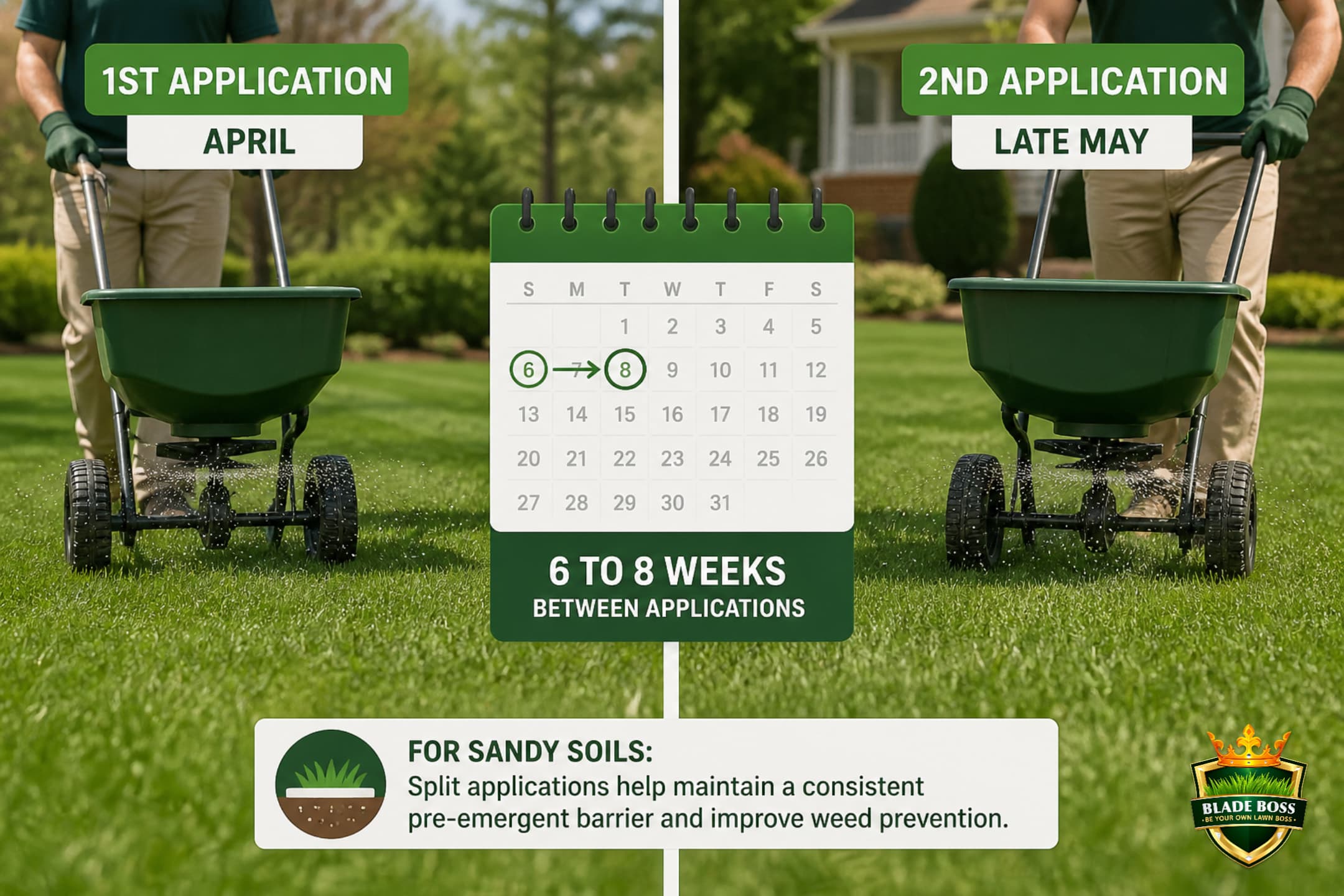
Check PriceOn Long Island sand, a single full-rate application degrades in about 10 to 12 weeks, leaving a late-summer gap when goosegrass and late crabgrass sneak through. The fix: split the annual total into two applications. Application 1 at 100 GDD50, around April 6. Application 2 in late May to early June, 6 to 8 weeks later. Application 2 has the longest duty cycle of the season, carrying you from June into late August, so it gets the larger share of what is left in your annual budget. Same total product, better protection, no gap.
Product #3: Dimension 2EW / Dithiopyr (Rescue Only)
Dithiopyr has the same 16-week residual as prodiamine and the same efficacy against crabgrass, plus one thing nothing else on this list can do: early post-emergent activity on crabgrass that has already germinated, up to the 1-tiller stage (roughly 2 to 3 leaves visible). Label directions for dithiopyr products describe that activity, and on Long Island the useful window runs approximately April 15 through May 15. After that the crabgrass is too mature and you need a dedicated post-emergent.
That single capability is exactly why dithiopyr should not be your scheduled Application 2. Nassau and Suffolk cap dithiopyr at 0.25 lb of active ingredient per acre per year, which works out to roughly 0.37 fluid ounces per 1,000 square feet for the entire year. Professional dithiopyr products are New York restricted use on top of that. Spend that budget on a calendar round and you have thrown away the one product that can rescue you when crabgrass is already up. Use prodiamine for your scheduled rounds. Hold dithiopyr in reserve.
This one is not a judgment call and it is not a county ordinance. The label on dithiopyr granular-plus-fertilizer combination products (the 0.22 percent Dimension on a fertilizer carrier that shows up in big box stores) states that use of the product in Nassau and Suffolk Counties of New York is prohibited. The label is the law. If you live in either county, that bag is not an option, no matter what the shelf tag says. Straight dithiopyr with no fertilizer is a different product with a different label, and that one is restricted use rather than prohibited.
Dimension 2EW Herbicide (Dithiopyr)
The only product here that kills crabgrass that is already up, to the 1-tiller stage. Treat it as your emergency reserve, not a scheduled round. Legal requirements to know: New York restricted use, and Nassau and Suffolk allow roughly 0.37 fl oz per 1,000 sq ft for the whole year. Liquid application via backpack sprayer.
Check PriceProduct #4: Scotts Halts Crabgrass Preventer (The Gap-Closer)
Pendimethalin (sold as Scotts Halts) is the product most homeowners grab because it is on every Home Depot and Lowe's endcap from February through May. It is general use, it is everywhere, and it works. It is also the weakest of the three synthetic options on residual, at 6 to 12 weeks against up to 16 for prodiamine and dithiopyr. On sandy soil where barriers degrade faster, plan closer to the bottom of that range.
That shorter residual is not always a flaw. Pendimethalin carries its own separate annual budget, independent of your prodiamine cap, and that makes it genuinely useful in two specific slots. First, a late-February bridge application, because straight pendimethalin herbicide has no plant nutrient in it and is therefore not blocked by the fertilizer blackout the way a 0-0-7 carrier product is. Second, a mid-July gap-closer after your prodiamine budget is spent, covering the stretch when 50 to 75 percent of total germination is still ahead of you. A short residual is exactly what a July gap-closer needs.
Two warnings. Pendimethalin stains concrete, pavers, and clothing bright yellow-orange if granules land on hard surfaces, and it has zero post-emergent activity. Also note that pendimethalin is the same HRAC Group 3 mode of action as prodiamine and dithiopyr, so rotating among these three is not a herbicide resistance rotation. It is the same chemistry in three coats of paint.
Scotts Halts Crabgrass and Grassy Weed Preventer
Pendimethalin granular. General use, available at every hardware store, and it carries an annual budget separate from your prodiamine cap. Best used as a late-February bridge or a mid-July gap-closer rather than your main round. Watch for yellow staining on concrete.
Check PriceDo not confuse Scotts Weed and Feed with Scotts Halts. They look similar on the shelf and do completely different things. Weed and Feed is a POST-emergent broadleaf killer (it kills existing dandelions and clover) combined with fertilizer. It does NOT prevent crabgrass. Halts is the PRE-emergent that stops crabgrass before it germinates. Buying the wrong one leaves you with zero crabgrass protection. And because Weed and Feed contains fertilizer, it is also blocked during the Long Island blackout, so it cannot be an early-spring application either.
Your Spreader Setting Is Probably Wrong
Bag settings assume the full label rate. This program runs reduced rates on a calendar-year budget. The Blade Boss spreader database and calibration tool give you the actual dial number for your spreader and your rate.
Product #5: Tenacity (The Seeding Exception)
Tenacity (mesotrione) is in a class by itself because it is the only pre-emergent here that is safe to apply at the time of seeding. Every other product on this list will stop your grass seed from germinating right alongside the crabgrass. Tenacity does not. That makes it the only real answer for fall renovations and spring overseeding where you need weed suppression and seed establishment at the same time.
As a standalone pre-emergent it is weaker than prodiamine or dithiopyr. Residual is about 4 to 6 weeks against up to 16, and it costs more per application. It needs a non-ionic surfactant for post-emergent activity and it can temporarily bleach some grass varieties white. The rule is simple: use Tenacity when you are seeding, use prodiamine for everything else, and never put prodiamine down on ground you plan to overseed that season.
Tenacity Herbicide (Mesotrione)
The only pre-emergent that will not kill your grass seed. Provides roughly 4 to 6 weeks of crabgrass suppression while new grass establishes, and has post-emergent activity on several broadleaf weeds. General use in New York. Follow up with prodiamine after the new grass has been mowed 2 to 3 times.
Check PriceOne text when soil temperature reaches the pre-emergent trigger for your zip code. No spam, just the window.
No spam. One seasonal alert per application window. Unsubscribe anytime.
Product #6: Espoma Organic Weed Preventer (Corn Gluten)
Corn gluten meal is the only organic pre-emergent option on this list. It works by releasing a protein that inhibits root development in germinating seeds. In university trials, corn gluten delivers roughly 50 to 60 percent crabgrass reduction after 2 to 3 years of consecutive applications. Compare that to 90 to 95 percent or better from prodiamine or dithiopyr in year one.
The practical problems stack up fast. The application rate is 20 lbs per 1,000 square feet, which is a genuinely large amount of product to move. It has to go down on dry soil and needs a dry stretch afterward, because rain within 48 hours washes out the active proteins, and timing a dry window in a Long Island April is a coin flip. And corn gluten meal runs around 10 percent nitrogen, so at that rate you are applying roughly 2 lbs of nitrogen per 1,000 square feet in a single pass. That has two consequences most organic guides never mention.
At roughly 10 percent nitrogen applied at 20 lbs per 1,000, corn gluten meal is a nitrogen fertilizer whether the bag markets it that way or not. First, that means the blackout applies: it cannot go down before April 1 in Suffolk under Suffolk County Code Chapter 459, before April 1 in Nassau, or during the statewide December 1 to April 1 window. Second, that nitrogen has to come out of your annual program, not on top of it. Two pounds of nitrogen per 1,000 in one pass is a significant share of a full season's budget, and stacking your normal spring fertilizer on top of it is how people burn a lawn while trying to go organic. Fold it into your fertilizer schedule before you buy it.
For homeowners committed to organic-only lawn care who accept that crabgrass control will be partial rather than complete, corn gluten is the only option and it is honest about its limitations. For everyone else, the synthetics deliver dramatically better results at lower cost and a fraction of the application weight.
Espoma Organic Weed Preventer
Corn gluten meal based organic pre-emergent. Roughly 50 to 60 percent crabgrass reduction against 90 percent or better from synthetics, and it takes 2 to 3 consecutive years to get there. Requires a 20 lb per 1,000 rate and dry conditions. Remember that it is roughly 10 percent nitrogen, so it counts against your fertilizer program and against the blackout dates.
Check PriceCost Per Application (The Math Nobody Shows You)
Price per bag is meaningless. What matters is cost per 1,000 square feet per application. Here is the comparison for a 5,000 sq ft lawn running a split-app program, two applications per season. The spread between the cheapest and the most expensive option is not a few dollars. It is two orders of magnitude.
| Product | Sold As | Season Cost for 5,000 Sq Ft | Cost Rank |
|---|---|---|---|
| Prodiamine 65 WDG | Concentrate jug, many seasons of supply | A couple of dollars of product | 1 (cheapest) |
| Dimension 2EW | Concentrate jug, many seasons of supply | A few dollars of product | 2 |
| Tenacity | 8 oz concentrate, multi-season supply | Under ten dollars of product | 3 |
| Yard Mastery 0-0-7 | Bagged granular, about 2 seasons per bag | Roughly a bag and a half per season | 4 |
| Scotts Halts | Bagged granular, one season per bag | About one bag per season | 5 |
| Espoma Organic | Bagged granular, 1,250 sq ft per bag | Eight bags per season at the label rate | 6 (most expensive) |
Coverage is calculated at the split-app rate (half the annual total per application) for prodiamine, dithiopyr, and mesotrione, and at the full label rate for pendimethalin and corn gluten. Product pricing moves constantly, so check current prices at the links above before you buy. The ranking holds even when prices move, because it is driven by application rate, not sticker price.
Scotts Halts looks like the budget winner at the shelf. But on Long Island sandy soil its 6 to 12 week residual means you likely need a second product mid-season to close the gap, and that second bag is the cost nobody adds up. Meanwhile a concentrate jug of prodiamine is a many-season supply for a typical lawn at split-app rates and gives you 4 to 6 extra weeks of coverage per application. The concentrate is the cheapest option per week of protection by a wide margin. The reason it is not our Best Overall pick has nothing to do with price. It is the New York restricted-use status and the sprayer.
Which Product Should YOU Use?
Here is the decision tree:
I'm a homeowner with a spreader and no certification
Granular prodiamine on a 0-0-7 carrier. General use, no sprayer, no mixing, and the same active ingredient the pros run. Load your broadcast spreader, calibrate it once against your annual budget, and walk the lawn. Just remember the 0-0-7 carrier is legally fertilizer, so it goes down on or after April 1, not in February.
I hold an applicator certification or run a lawn care business
Prodiamine 65 WDG. Lowest cost per 1,000 square feet of anything on this list and it is not close. Mix at roughly 0.183 oz per 1,000 sq ft for a split-app rate and apply in 1 to 2 gallons of water per 1,000. Two of those applications puts you at about 0.37 oz for the year, which sits under the annual cap for every common cool-season grass type.
I need pre-emergent down before April 1
Straight pendimethalin herbicide, with no fertilizer in it. This is the one job the 0-0-7 granular cannot legally do on Long Island. A late-February bridge application of a nutrient-free pendimethalin product gets a barrier in the ground during the blackout, and then your prodiamine round follows at 100 GDD50 in early April.
I already missed the window and crabgrass is up
Dithiopyr, and only this once. If seedlings are at the 1-tiller stage or younger, dithiopyr can still take them out. Nassau and Suffolk allow roughly 0.37 fl oz per 1,000 sq ft for the entire year, and professional products are certified-applicator only, so you realistically get one shot. Past 1-tiller you need a dedicated post-emergent instead. In New York, dilutable quinclorac products are restricted use and labeled for spot treatment only, never broadcast. Fix the timing next year rather than budgeting for a rescue every season.
I'm overseeding or renovating this season
Tenacity (mesotrione). The only pre-emergent that will not kill your grass seed. Apply at seeding for 4 to 6 weeks of crabgrass suppression while the new grass establishes, then follow up with prodiamine after the new stand has been mowed 2 to 3 times. Do not put prodiamine on ground you intend to seed this season, and watch your calendar-year total so spring carryover does not block a fall overseed.
I want organic only
Espoma Organic Weed Preventer (corn gluten). Accept 50 to 60 percent control at best and 2 to 3 years of consecutive applications to get there. Apply 20 lbs per 1,000 to dry soil on or after April 1, and count the roughly 2 lbs of nitrogen per 1,000 against your fertilizer program rather than on top of it. It is the only organic option and it is honest about its limits.
Application Tips for Long Island Sandy Soil
- Split your applications, do not stack them. Sandy soil (CEC 3 to 8) degrades pre-emergent barriers faster than clay or loam. A single full-rate app gives you 10 to 12 weeks on sand. Splitting the same annual total across two rounds gives you 16 or more weeks. Same product, better coverage, still inside the calendar-year cap.
- Know your calendar-year budget before your first pass. Write the number on the bag or the jug. Fine fescue, Kentucky bluegrass, perennial ryegrass, and tall fescue all have different prodiamine caps, and the fall round lands in the same calendar year as that spring's rounds.
- Water in within 24 hours. Every pre-emergent here has to be activated by water. Apply 0.25 to 0.50 inches of irrigation after application to move the product into the top layer of soil where the barrier forms. Without water-in, granules sit on the surface and degrade in UV.
- Do NOT apply before heavy rain. A one inch or larger rain event within 24 hours can flush product below the barrier zone on sandy soil. Ideal sequence: apply in the morning, water in with 0.25 inches that evening, no heavy rain for 48 hours.
- Liquid beats granular for uniformity on sand. A backpack sprayer gives more uniform coverage than granular on uneven sandy terrain. If you go granular, calibrate your spreader for that specific product and rate, because bag settings assume the full label rate and this program does not.
- Mark your calendar for Application 2. Set a reminder for 6 to 8 weeks after the first round. Application 2 has the longest duty cycle of the season and it is what separates a clean August from a crabgrass invasion.
- Keep product off hard surfaces. Both prodiamine and pendimethalin stain concrete, pavers, and driveways yellow-orange. Blow granules off sidewalks immediately after spreading, and avoid overspray onto walkways with liquid. The staining is cosmetic but it lasts.
Exact timing, products, rates, and the calendar-year budget worksheet for the spring pre-emergent program on Long Island. Print it and tape it to the garage wall next to your spreader settings.
See what Blade Boss members get. The Lawn Command Center tracks GDD, soil temperature, and application windows so you never miss the pre-emergent timing again. Plus the fertilizer calculator, the spreader settings database, and zone-specific schedules built for Long Island.
See Plans →Chris is a Combat Search and Rescue pilot turned airline pilot who built Blade Boss to bring checklist discipline to backyard lawn care. Product rankings on this site are based on label rates, published extension research, and New York regulatory status, not on who pays for placement.
Related Reads
The pre-emergent timing guide tells you exactly when to apply based on GDD and soil temperature. The crabgrass battle plan covers the full multi-year prevention and treatment strategy. The spreader settings guide has verified dial numbers for granular products, the calibration guide shows you how to verify your rate in 10 minutes, and the fertilizer schedule covers the blackout dates in detail.
Frequently Asked Questions
What is the best pre-emergent for crabgrass on Long Island?
For most Long Island homeowners the best pre-emergent is granular prodiamine on a 0-0-7 carrier. It is general use in New York, it needs only a broadcast spreader, and prodiamine delivers the longest residual barrier of any common pre-emergent at up to 16 weeks. Prodiamine 65 WDG is the same active ingredient at a much lower cost per application, but the 65 percent formulation is a New York restricted-use product, so it is applied by a certified applicator or someone working under one. On Long Island's sandy soils, split the annual total across two applications, the first at 100 GDD50 around April 6 and the second in late May to early June.
Is prodiamine restricted use in New York?
It depends on the formulation, not the active ingredient. The 65 percent professional formulations such as Prodiamine 65 WDG are New York restricted-use products, which means they are applied by a certified applicator or someone working under one. Low-percentage granular prodiamine products sold for homeowner use, such as prodiamine coated onto a 0-0-7 fertilizer carrier, are general use in New York. Always check the specific product label and the New York restricted-use status before you buy, because two bags with the same active ingredient can have different legal requirements.
How much prodiamine can I apply in a year?
Prodiamine labels set a maximum total per calendar year, and the number depends on your grass type. For Prodiamine 65 WDG the annual totals are approximately 0.42 oz per 1,000 square feet for fine fescue, 0.55 oz for Kentucky bluegrass and perennial ryegrass, and 0.83 oz for tall fescue. With a 0.38 percent granular product those work out to roughly 4.7, 6.2, and 9.3 lbs per 1,000 square feet. Because the cap is per calendar year, a fall application counts against the same budget as that spring's applications. Exceeding it is a label violation and the soil carryover will also prevent your fall overseeding from establishing.
What is the difference between prodiamine and dithiopyr?
Both provide up to 16 weeks of pre-emergent crabgrass control. The difference is that dithiopyr has early post-emergent activity on crabgrass up to the 1-tiller stage, roughly 2 to 3 leaves, while prodiamine has none. That makes dithiopyr a rescue product rather than a routine round, especially on Long Island: Nassau and Suffolk cap dithiopyr at 0.25 lb of active ingredient per acre per year, which is roughly 0.37 fluid ounces per 1,000 square feet for the entire year, and professional dithiopyr products are New York restricted use. Use prodiamine for scheduled applications and hold dithiopyr in reserve for the year you are late.
Does a 0-0-7 pre-emergent count as fertilizer under the Long Island blackout?
Yes. Potassium is a plant nutrient, so a 0-0-7 carrier product is a fertilizer under Suffolk County Code Chapter 459 and under New York State law even though it contains no nitrogen and no phosphorus. Suffolk's blackout runs November 1 through April 1, Nassau's runs November 15 through April 1, and the statewide prohibition on lawn fertilizer runs December 1 through April 1. Lime is the exception. If you need a pre-emergent barrier in the ground before April 1, use a straight herbicide that contains no plant nutrient, such as a nutrient-free pendimethalin product.
Is Scotts Halts a good pre-emergent?
Scotts Halts (pendimethalin) works and it is general use, but it has the shortest residual of the major synthetic pre-emergents at 6 to 12 weeks. On Long Island's sandy soils, where barriers degrade faster, plan closer to the bottom of that range. Its real strength is that pendimethalin carries an annual budget separate from your prodiamine cap, which makes it useful as a late-February bridge application (it contains no fertilizer, so the blackout does not block it) and as a mid-July gap-closer after your prodiamine budget is spent.
Does corn gluten meal work as a pre-emergent?
Corn gluten meal provides roughly 50 to 60 percent crabgrass reduction in university trials, and only after 2 to 3 years of consecutive applications, compared to 90 to 95 percent or better from prodiamine or dithiopyr in year one. It also requires a 20 lb per 1,000 square foot rate, must go down on dry soil followed by a dry period, and runs around 10 percent nitrogen, which means it counts as fertilizer under the Long Island blackout rules and applies roughly 2 lbs of nitrogen per 1,000 square feet that must come out of your annual fertilizer program rather than on top of it.
Keep Reading
 Northeast Regional
When to Start Mowing in Spring: Northeast Timing Guide (2026)
Stop guessing when to pull out the mower. Use soil temperature, grass height, and GDD triggers to time...
Mar 1, 2026
17 min
 Long Island Local
When to Apply Pre-Emergent on Long Island: The 2026 Schedule Backed by 30 Years of Data
Exact pre-emergent timing for Long Island lawns in 2026, backed by 30-year NOAA soil temperature data and GDD...
Feb 25, 2026
22 min
 Long Island Local
When to Aerate Your Lawn on Long Island: The Complete Timing Guide
Fall is the best time to aerate on Long Island. Learn the exact timing window, soil temperature triggers,...
Mar 8, 2026
15 min
What is your lawn actually sitting on?
Pull the soil survey, hardiness zone and current growing conditions for your exact address. Eight government sources, about a minute.
No comments yet. Be the first to share your thoughts.
Create a free account to join the conversation.