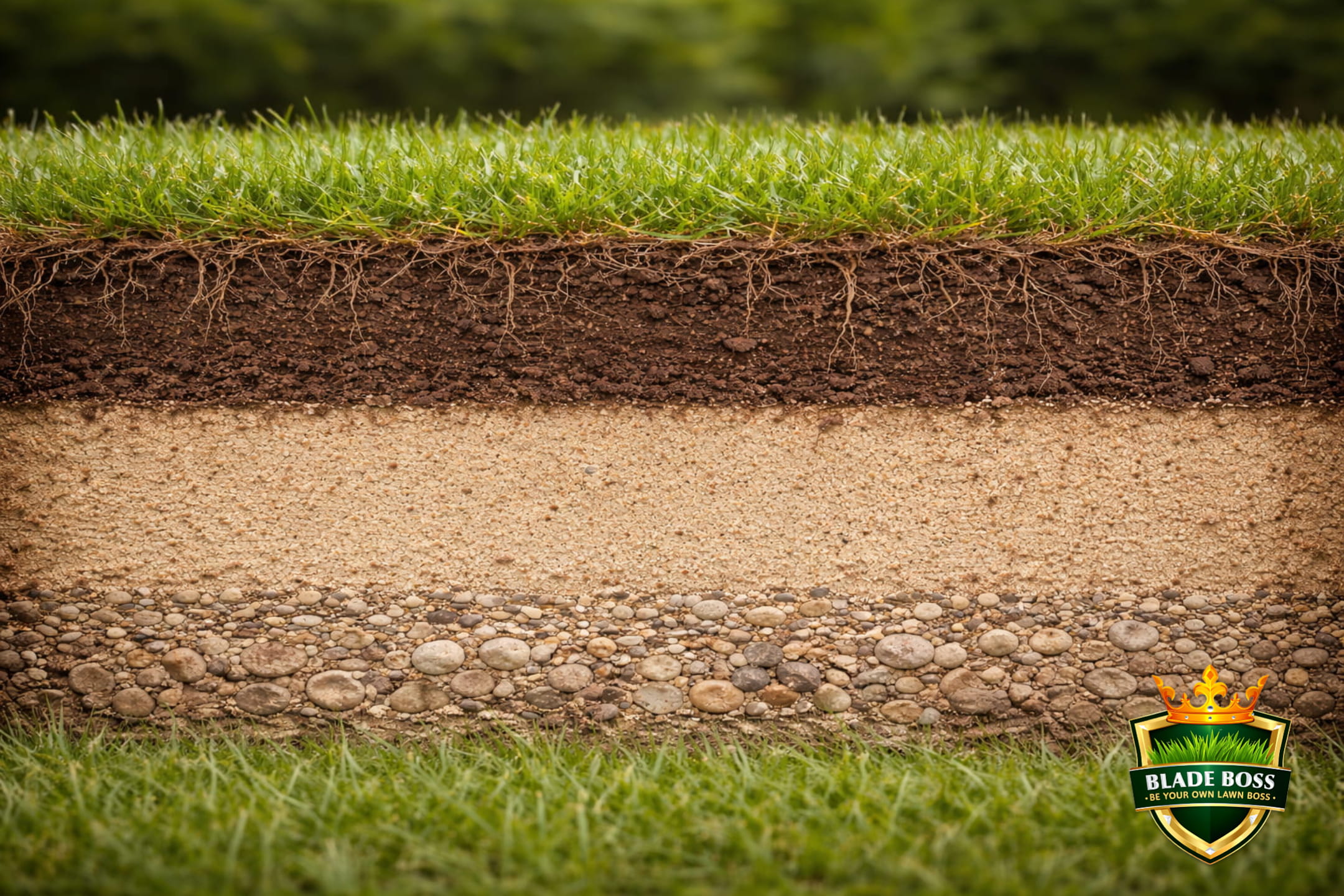
Every piece of lawn care advice on the internet was written for someone else's soil. The bag rates assume clay. The watering guides assume loam. The fertilizer schedules assume the soil holds nutrients between applications. None of that applies to Long Island. We're growing grass on a 120-mile pile of glacial sand and gravel, and until you understand what that means for every product you apply, every drop of water you put down, and every dollar you spend, your lawn will always underperform.
- What Long Island sits on: Glacial outwash sand and gravel. Carver, Plymouth, and Riverhead soil series. Excessively drained. CEC under 3 to 12 depending on organic matter.
- What that means: Water drains in hours (not days). Nutrients leach with every rain. pH drops constantly because alkaline minerals wash away. Bag rates underestimate what your lawn needs.
- How to work with it: Smaller, more frequent applications of everything. Split fertilizer. Split irrigation. Test your soil annually because it changes faster than clay. Build organic matter over time to improve retention.
- The upside nobody mentions: Sandy soil warms faster in spring, drains better in storms (no standing water), compacts less, and is easier to aerate. It's not bad soil. It's different soil.
What's Actually Under Your Lawn (The Geology)
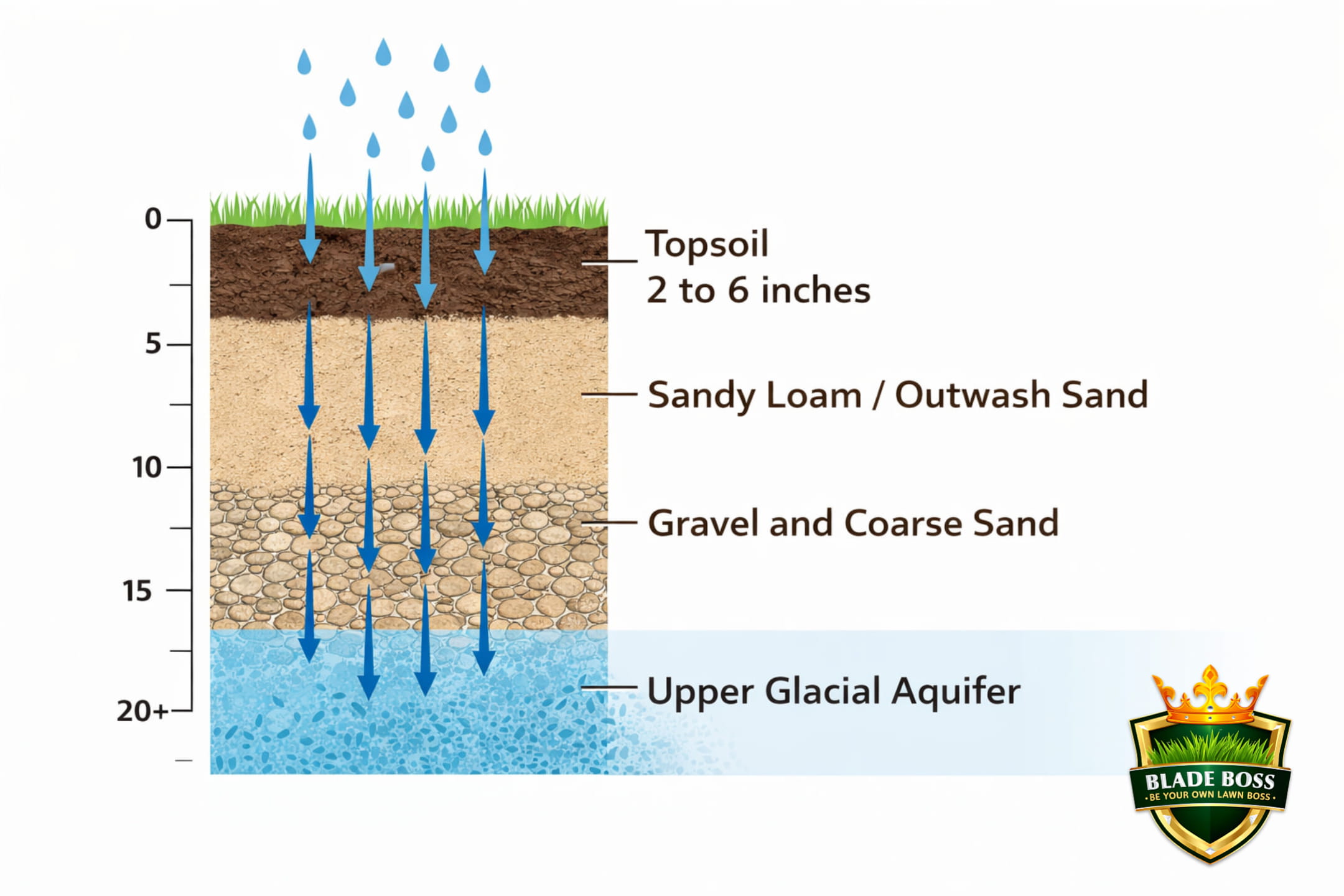
About 20,000 years ago, the Laurentide Ice Sheet parked itself across what is now Long Island and slowly melted. As it retreated, it dumped enormous quantities of sand, gravel, and rocky debris in layers called glacial outwash. The North Shore moraines (the hills from Oyster Bay to Orient Point) are the piles of rock the glacier pushed ahead of itself. Everything south of that, the flat terrain from Hempstead to Montauk, is outwash plain: sorted layers of sand and gravel deposited by meltwater rivers.
This is why your soil looks the way it does when you dig. A thin layer of dark topsoil (2 to 6 inches, depending on how long the property has been landscaped) sitting on top of tan sand, then coarser sand, then gravel. There is no clay layer. There is no hardpan. Water goes straight down through the profile and into the aquifer. That's great for Long Island's drinking water supply (the island's sole-source aquifer recharges from rainfall percolating through this sand). It's terrible for keeping nutrients in the root zone.
| Soil Series | % of Suffolk County | Texture | Drainage Class |
|---|---|---|---|
| Carver + Plymouth | 43% | Coarse sand / loamy sand over gravel | Excessively drained |
| Riverhead | 15% | Sandy loam over loamy sand over sand + gravel | Well drained |
| Haven + Riverhead | 9% | Loam over sandy loam (best LI soil for lawns) | Well drained |
| Downer | 7% | Sandy loam over sandy clay loam | Well drained |
| Galestown + Downer | 7% | Loamy sand over sand | Excessively drained |
Source: NRCS Suffolk County Soil Survey and NRCS Official Series Descriptions. If you want to know exactly what soil series your property sits on, the USDA Web Soil Survey (websoilsurvey.nrcs.usda.gov) lets you look it up by address for free.
The Four Properties That Change Everything
Sandy soil isn't just "dirt that drains fast." It has four specific properties that affect every single lawn care decision you make. Understanding these four things is the difference between fighting your soil and working with it.
1. Low CEC (Your Soil Can't Hold Onto Nutrients)
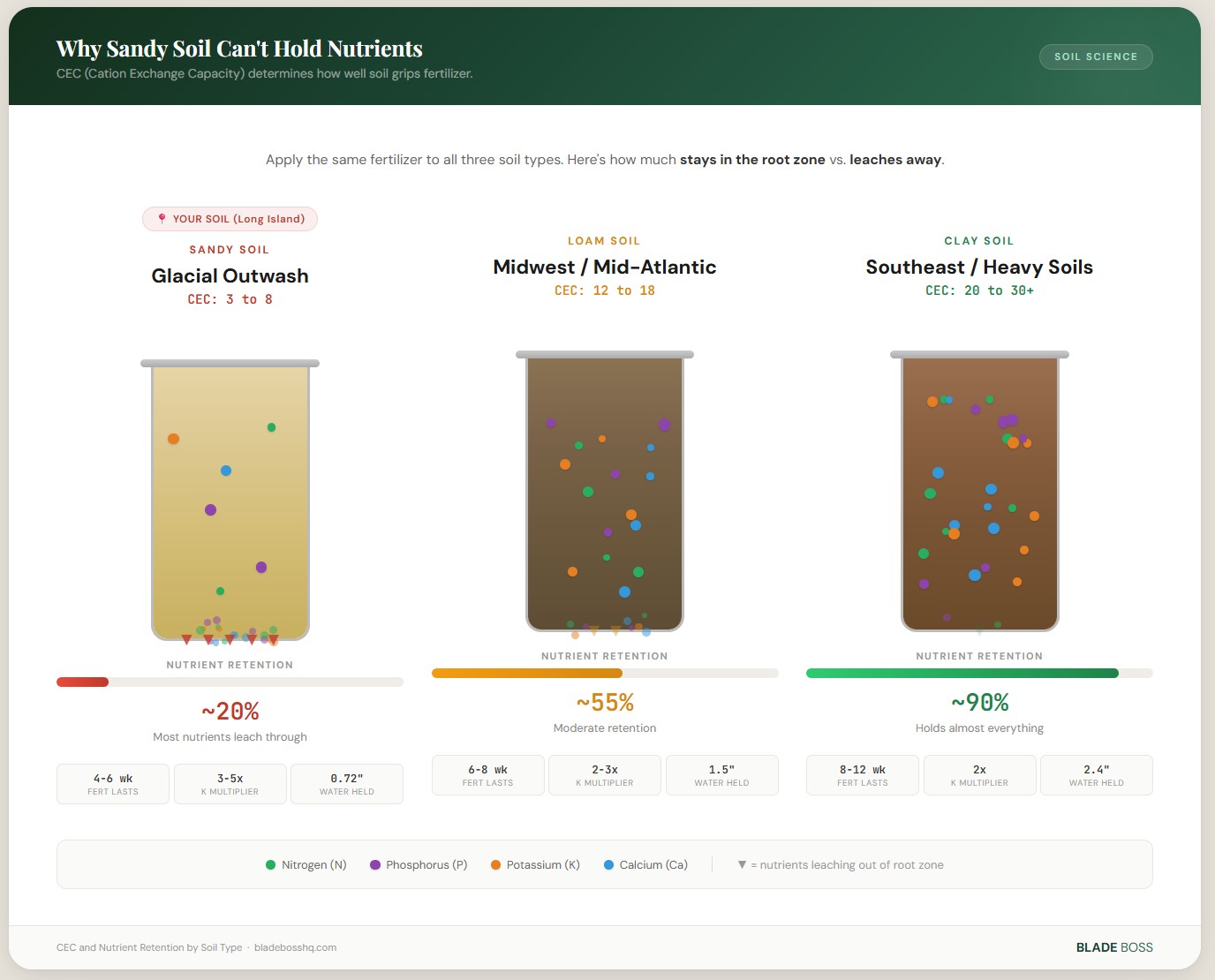
CEC stands for cation exchange capacity. Think of it as your soil's grip strength. High CEC soil (clay, loam) grabs nutrients and holds them in place for weeks. Low CEC soil (sand) lets nutrients slip right through. The "cations" are positively charged nutrients like calcium (Ca++), magnesium (Mg++), potassium (K+), and ammonium nitrogen (NH4+). They're supposed to cling to negatively charged soil particles. But sand particles are large, smooth, and have very little surface charge. There's almost nothing to cling to.
At CEC under 3, your soil is essentially a colander. At CEC 8 to 12 (what a maintained Long Island lawn with decent organic matter achieves), it's a leaky bucket. At CEC 20+ (Midwest clay), it's a sealed container. This single number explains why a bag of fertilizer lasts 6 to 8 weeks on an Ohio lawn and 3 to 4 weeks on yours.
2. Rapid Drainage (Water Moves Through, Not Across)
Long Island's sandy soil can only hold about 0.72 inches of available water in the top 6 inches (USDA NRCS sandy loam data). Available water capacity (AWC) is the water between field capacity (soil is fully saturated and done draining) and wilting point (soil is so dry the grass can't extract water). For sandy loam, that range is 21% moisture down to 9% moisture. That narrow band is all your grass has to drink from between waterings.
Pour an inch of water on clay soil and it sits there for 2 to 3 days. Pour an inch on Long Island sand and the excess is past the root zone within hours. This is why the irrigation guide recommends 2 to 3 sessions per week instead of one big soak. You can't bank water in sand. Our Stripe Master members get the complete 15-step Lawn Playbook that covers exactly this.
3. Naturally Acidic pH (And Getting Worse)
Native Long Island sandy soil tests between pH 4.5 and 5.5. That's strongly acidic. Cool-season grass wants 6.0 to 7.0. The reason Long Island soil is so acidic is the same reason it doesn't hold nutrients: the sand has almost no buffering capacity. Every time it rains, slightly acidic rainwater (pH ~5.6 from dissolved CO2) washes calcium and magnesium downward through the profile. Those alkaline minerals are what keep pH from dropping. Without them, hydrogen ions accumulate and pH falls. Your soil is literally becoming more acidic with every rainstorm. Our Dynamic Calendar tracks these windows automatically with GDD alerts.
Low CEC and low buffering capacity work both ways. It means nutrients wash out faster, but it also means pH corrections work faster and require less product. A Long Island lawn needs roughly half the lime to raise pH by one point compared to a clay lawn. The soil doesn't resist change. It responds quickly. That's an advantage if you're applying the right amendments.
4. Low Organic Matter (The Root of Most Problems)
Organic matter (OM) is the miracle worker of soil science. It holds water (increasing AWC), holds nutrients (increasing CEC), feeds soil microbes, improves soil structure, and buffers pH. Native Long Island sandy soil has 1 to 2% OM. A well-maintained lawn can build to 3 to 4% over years of proper management. Every percentage point of OM increase improves water-holding capacity by approximately 1.5 to 2.5% on sandy soil (where the effect is strongest) and nutrient retention proportionally.
Join Long Island homeowners who get sandy soil care tips, nutrient management guidance, and seasonal reminders every week.
This is the long game. You can't change sand into clay. But you can change sand with 1% OM into sand with 4% OM, and that transformed soil holds twice the water and nutrients of the original. It takes years of consistent management: leaving clippings, topdressing with compost, maintaining microbial activity through proper pH and fertility. But it compounds. Every year the soil gets a little better at holding what you give it.
Test Your Soil to Know Where You Stand
A soil test reveals your pH, CEC, organic matter, and every nutrient level. On sandy soil that changes fast, annual testing isn't optional. It's the only way to know if your corrections are holding.
How to Fertilize on Sand (The Rules Are Different)
Forget everything on the back of the fertilizer bag. Those rates and frequencies were developed for average American soil, which is loam. On Long Island sand, you need to adjust three things: the rate per application, the frequency, and the product type.
| Rule | On Clay/Loam | On LI Sandy Soil | Why |
|---|---|---|---|
| Max N per app (quick-release) | 0.75 to 1.0 lbs/1K | 0.50 lbs/1K max | Higher rates leach before uptake on sand |
| Slow-release requirement | Recommended | Required (60%+ of N when applying 0.50+) | Slow-release feeds over weeks, not all at once |
| Split application trigger | 1.25 lbs N/1K | 1.0 lbs N/1K | Lower CEC = lower leaching threshold on sand |
| K correction multiplier | 2 to 2.5x stoichiometric | 3 to 5x stoichiometric | K washes through sand. CEC under 5 = 5x multiplier. |
| Application frequency | Every 6 to 8 weeks | Every 4 to 6 weeks | Nutrients don't persist as long in low-CEC soil |
| Lime requirement | Higher total, slower response | Lower total, faster response | Low buffering = less lime needed but more frequent checks |
Potassium is the hardest nutrient to build on sandy soil. University research (Wisconsin putting green study on sand rootzones, K-State sandy soil trials) shows that sand cannot retain more than 0.5 lbs K2O per application. Anything above that leaches. If your soil test shows a large K deficit, you'll need multiple small applications (0.5 lbs K2O each) spaced 4 to 6 weeks apart across the growing season. This is why our Soil Correction Engine automatically splits K into sequential applications on low-CEC soil.
How to Water on Sand (Stop Drowning and Starving It)
The full irrigation guide covers this in depth, but here's the sandy soil summary. The problem isn't that sand needs more total water than clay. It needs the same amount (1 to 1.25 inches per week in summer). The problem is delivery.
Split Into 2 to 3 Sessions
0.35 to 0.50 inches per session, 2 to 3 times per week. Your soil can only hold 0.72 inches at once. One big soak wastes the excess.
Use Cycle and Soak
Run each zone for half the time, wait 30 to 60 minutes, then run again. Gives sand time to absorb dose one before adding dose two.
Water 4 AM to 8 AM Only
Sandy soil + evening watering = wet roots all night = disease. Morning watering lets blades dry quickly. Suffolk/Nassau restrictions enforce this.
Run Catch Cup Tests
Sandy soil's fast drainage means spray heads may overwater spots while rotors under-water other areas. CatchCup Pro calculates exact run times per zone.
How to Fix pH on Sand (Faster Results, More Monitoring)
The good news: sandy soil responds to lime faster than clay because there's less buffering capacity to overcome. The same amount of lime that moves clay pH by 0.3 points moves sand pH by 0.5 to 0.7 points. The bad news: the correction doesn't hold as long. Rain keeps washing calcium and magnesium downward, so pH slowly drifts back toward acidic between applications.
| pH Correction Factor | Sandy Soil (LI) | Clay/Loam Soil |
|---|---|---|
| Lime needed per 1.0 pH point rise | ~14 to 21 lbs/1K (calcitic, established turf) | ~39 to 76 lbs/1K (calcitic, established turf) |
| Time to see initial movement | 3 to 6 months | 6 to 12 months |
| Time to full effect | 1 to 2 years | 2 to 3 years |
| How long the correction holds | 2 to 3 years before drift | 4 to 6 years |
| Retest frequency | Annually | Every 2 to 3 years |
| Risk of overcorrection | Higher (low buffering = overshoots possible) | Lower (high buffering resists change) |
Source: lime requirement data derived from NRCS lime tables by soil texture (K-State, Cornell). The pH guide covers the complete correction process. The Soil Correction Engine uses your actual soil test buffer pH to calculate the exact lime rate for your specific soil, which is always more accurate than texture-based estimates.
Get Your Exact Lime Requirement
Enter your soil test results and the patent-pending Soil Correction Engine calculates the precise lime rate for your specific soil, accounting for CEC, buffer pH, and texture. No more guessing from bag labels designed for Midwest clay.
Pre-Emergent on Sand: Why One Application Isn't Enough
Here's something most pre-emergent guides don't cover: the herbicide barrier that's supposed to last 8 to 12 weeks on clay soil degrades in 6 to 8 weeks on Long Island sand. The same rain that leaches your fertilizer leaches your pre-emergent. This is why crabgrass prevention on Long Island requires split applications. One application in early April (at GDD50 = 100) followed by a second 6 to 8 weeks later extends the barrier through the full germination window. On clay, a single application would have been enough.
Rutgers confirms that sequential low-rate applications are especially effective on sandy soils with low organic matter. The split approach uses the same total annual herbicide but distributes it across a longer window. This is standard protocol in our pre-emergent timing guide and the Blade Boss Calendar.
Building Better Soil (The Multi-Year Plan)
You can't change sand into clay. But you can dramatically improve sandy soil over time by increasing organic matter content. Every strategy in this section adds organic material that improves water-holding capacity, CEC, microbial activity, and nutrient retention simultaneously.
Leave Grass Clippings on the Lawn (Always)
Grass clippings are 80 to 85% water and decompose within 1 to 2 weeks, returning nitrogen, potassium, and organic matter to the soil. Over a full season, clippings contribute the equivalent of one full fertilizer application's worth of nitrogen. On sandy soil, this free organic matter input is even more valuable than on clay because you're starting from a lower baseline.
Topdress with Compost After Fall Aeration
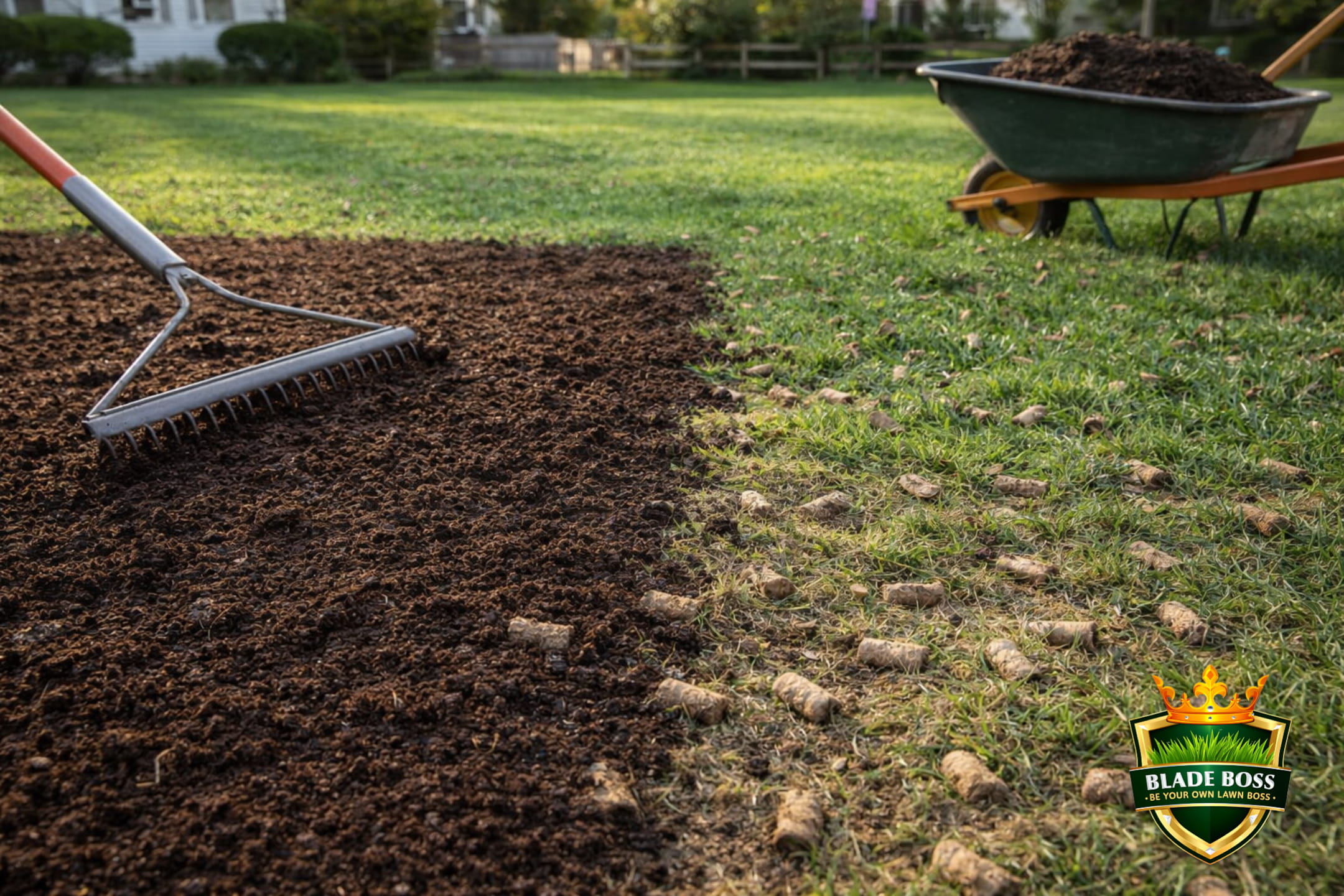
After core aeration in September, spread 0.25 to 0.50 inches of quality compost over the lawn and drag it into the aeration holes. The compost fills the cores and integrates into the top few inches of soil. Over 3 to 5 years of annual topdressing, you can raise organic matter by 1 to 2 percentage points. That translates to measurably better water retention and nutrient holding.
Maintain Proper pH for Microbial Activity
Soil microbes break down organic material into humus (stable organic matter that persists in soil). These microbes thrive at pH 6.0 to 7.0 and struggle below 5.5. Correcting pH doesn't just help your grass access nutrients. It accelerates the biological processes that build long-term soil health.
Overseed Annually to Increase Root Mass
Every grass plant contributes roots to the soil profile. When those roots die and decompose, they add organic matter at depth, right where it matters most for water and nutrient retention. Thick turf with high root density builds organic matter faster than thin turf. Overseeding every fall is a soil-building strategy, not just a cosmetic one.
Manage Thatch as a Soil Building Tool
A thin thatch layer (under 0.5 inches) actually helps sandy soil by acting as a mulch that reduces evaporation and moderates soil temperature. Don't over-dethatch. On sandy Long Island soil, a modest thatch layer is more helpful than harmful. Only dethatch when it exceeds the 0.5-inch threshold.
The Advantages Nobody Talks About
Sandy soil gets a bad reputation, but it has real advantages that clay homeowners would kill for.
Warms Faster in Spring
Sand warms 7 to 14 days earlier than clay in spring. Your grass breaks dormancy sooner, your first mow comes earlier, and your growing season is effectively longer.
No Standing Water After Storms
Heavy rain drains straight through. No puddles, no soggy spots, no drainage projects. Your lawn is walkable within hours of a downpour.
Resists Compaction
Sand particles don't pack as tightly as clay. You still need to aerate, but compaction is less severe and easier to correct.
Root Penetration Is Easy
Tall Fescue roots can push 6+ inches deep in sand. On clay, they often stop at 3 to 4 inches where the soil becomes too dense.
Amendments Work Faster
Lime, sulfur, and nutrient corrections take effect in months on sand versus years on clay. Low buffering means the soil responds quickly to inputs.
Easier to Work With
Sandy soil is workable even when wet. Try digging in wet clay. You'll make bricks. Sandy soil stays loose and manageable year-round.
The Complete Sandy Soil Lawn Care Cheat Sheet
| Task | Standard Advice (Clay/Loam) | Long Island Sandy Soil Adjustment |
|---|---|---|
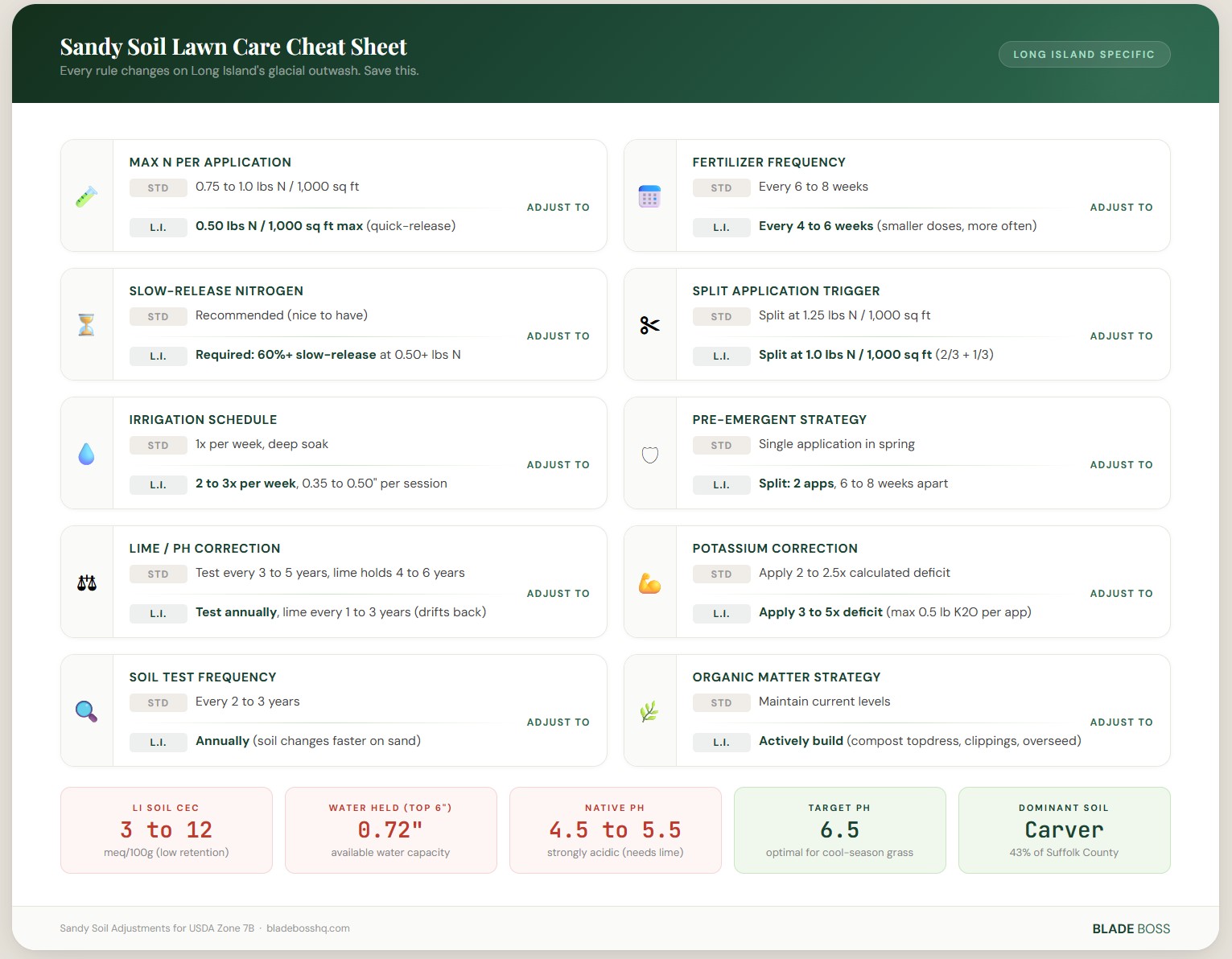
| Fertilizer rate per app | 0.75 to 1.0 lbs N/1K | 0.50 lbs N/1K max (quick-release) |
| Fertilizer frequency | Every 6 to 8 weeks | Every 4 to 6 weeks (smaller doses) |
| Slow-release N requirement | Recommended | Required: 60%+ when applying 0.50+ lbs N |
| Split app trigger | 1.25 lbs N/1K | 1.0 lbs N/1K |
| Watering frequency | 1x per week (deep soak) | 2 to 3x per week (0.35 to 0.50 in per session) |
| Pre-emergent strategy | Single application | Split: 2 apps, 6 to 8 weeks apart |
| Lime frequency | Every 3 to 5 years | Annually test, lime every 1 to 3 years |
| K correction multiplier | 2 to 2.5x deficit | 3 to 5x deficit (CEC dependent) |
| Soil test frequency | Every 2 to 3 years | Annually (soil changes faster on sand) |
| Organic matter strategy | Maintain | Actively build (compost topdress, clippings, overseed) |
Get Your Complete Lawn Plan Built for Sandy Soil
Enter your soil test results, grass type, and lawn zones. The Blade Boss system accounts for Long Island's sandy soil in every calculation: fertilizer rates, lime requirements, K correction multipliers, and irrigation schedules.
It's Not Bad Soil. It's Different Soil.
Long Island homeowners spend thousands of dollars and years of frustration because they're following advice designed for a soil type they don't have. The fertilizer schedule, the watering program, the pre-emergent timing, the application rates: every single one needs to be adjusted for sand. Once you make those adjustments, the same grass species that struggle on neglected sand thrive on managed sand.
A thick, green, healthy lawn on Long Island is absolutely achievable. You just need a program designed for the soil you actually have, not the soil the fertilizer bag assumes you have. Spring recovery, grub prevention, weed management, and targeted herbicide application all work better when you understand why your soil behaves the way it does. For zone-specific guidance, Cornell Cooperative Extension Suffolk County is an excellent local resource. Cool-season turfgrass research from Rutgers NJAES applies directly to Long Island growing conditions. Wondering whether to tackle it yourself? Read our honest comparison of DIY vs professional lawn care services on Long Island.
Chris C. is a Combat Search and Rescue pilot turned airline pilot and the founder of Blade Boss. Every tool in the platform is calibrated to Long Island's glacial outwash soils because generic lawn care advice doesn't cut it on sand.
Zone-specific watering times calibrated for Long Island's sandy soil. Includes the catch cup method, seasonal adjustments, and the deep watering protocol.
See what Blade Boss members get and see what lawn care looks like when it's built for your soil, not someone else's.
See Plans →Frequently Asked Questions
What type of soil does Long Island have?
Long Island sits on glacial outwash, a deposit of sand, gravel, and sandy loam left behind when glaciers retreated approximately 20,000 years ago. The dominant soil series are Carver and Plymouth (43% of Suffolk County), which are classified as excessively drained coarse sand and loamy sand. Riverhead series (15%) is sandy loam transitioning to sand and gravel at depth. This sandy composition gives Long Island soil very low cation exchange capacity (CEC under 3 meq/100g in undeveloped areas), rapid drainage, naturally acidic pH (4.5 to 5.5), and poor nutrient retention compared to the clay and loam soils found in most of the country.
Why does my Long Island lawn need more fertilizer than the bag says?
Sandy soil cannot hold nutrients the way clay or loam can. When you apply fertilizer to Long Island sand, a significant portion leaches past the root zone with the next rain or irrigation before the grass can absorb it. The technical term is low cation exchange capacity (CEC). Long Island's typical CEC is under 3 to 12 meq/100g depending on organic matter content, compared to 15 to 25 for loam and 25+ for clay. For potassium specifically, university research shows you may need to apply 3 to 5 times the calculated deficit on sand because most of it washes through. The solution is not to apply more at once (that causes burn and runoff) but to apply smaller amounts more frequently.
How often should I water my lawn on Long Island's sandy soil?
Two to three times per week, not once. The standard advice to water deeply once a week works on clay soil that holds water for days. Long Island's sandy soil can only hold about 0.72 inches of available water in the top 6 inches at any time. Apply more than that in a single session and the excess drains past the root zone. Split your weekly 1 to 1.25 inches of water into 2 to 3 sessions of 0.35 to 0.50 inches each. Water between 4 AM and 8 AM only. Suffolk and Nassau counties restrict watering to odd or even calendar days by house number, with no watering between 10 AM and 4 PM.
Why is my Long Island soil so acidic?
Long Island's sandy soil is naturally acidic (pH 4.5 to 5.5) for two reasons. First, the parent material (glacial outwash sand and gravel) contains very few calcium and magnesium minerals that would buffer acidity. Second, the high drainage rate means that rainfall constantly leaches alkaline cations (calcium, magnesium, potassium) downward through the soil profile, leaving acidic hydrogen ions behind. Every rainstorm on Long Island is slowly making your soil more acidic. The fix is periodic lime application based on a soil test, which replaces the lost calcium and raises pH back toward the 6.0 to 7.0 range where nutrients become available.
Can I improve sandy soil for my lawn without replacing it?
Yes. You cannot change sand into clay, but you can significantly improve sandy soil's ability to hold water and nutrients over time. The most effective strategies are: annual topdressing with quality compost (0.25 to 0.5 inches per year, applied after aeration), leaving grass clippings on the lawn (they contribute organic matter as they decompose), maintaining proper pH through liming (which improves microbial activity that builds organic matter), and keeping the lawn thick and healthy so root turnover adds organic matter at depth. Each percentage point of organic matter increase improves water-holding capacity by approximately 1.5 to 2.5% on sandy soil and nutrient retention proportionally. This is a multi-year process, not a quick fix.
Do I need to fertilize differently on sandy soil versus clay soil?
Yes, fundamentally. On clay or loam, you can apply a full dose of fertilizer every 6 to 8 weeks and the soil holds it. On Long Island sand, you need to apply smaller amounts more frequently because nutrients leach through quickly. Specifically: water-soluble nitrogen (the quick-release portion) should not exceed 0.50 lbs N per 1,000 sq ft per application on sandy soil (versus 0.75 to 1.0 on clay). Potassium needs 3 to 5 times the stoichiometric deficit because most leaches before the soil can hold it. At least 60% of nitrogen should be slow-release when applying 0.50 lbs N or more per application. And split applications (2/3 now, 1/3 in 4 to 6 weeks) should be standard for any rate at or above 1.0 lbs N per 1,000 sq ft.

Keep Reading
 Lawn Science
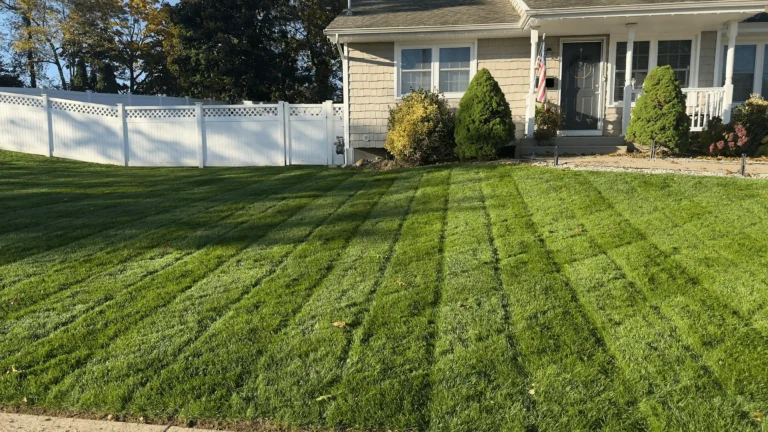
Best Cool-Season Grass Types for Long Island Lawns
Kentucky Bluegrass, Tall Fescue, Perennial Ryegrass, or Fine Fescue? Compare performance data for each grass type in USDA...
Feb 27, 2026
18 min
 Lawn Science
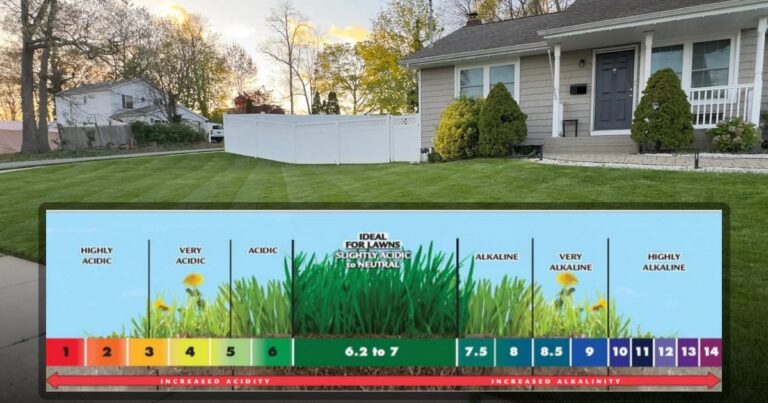
Long Island Soil pH Guide: How to Test and Fix Your Lawn’s Foundation
Most Long Island lawns test between pH 5.9 and 6.2, which is too acidic for peak nutrient uptake....
Feb 26, 2026
18 min
 Lawn Science
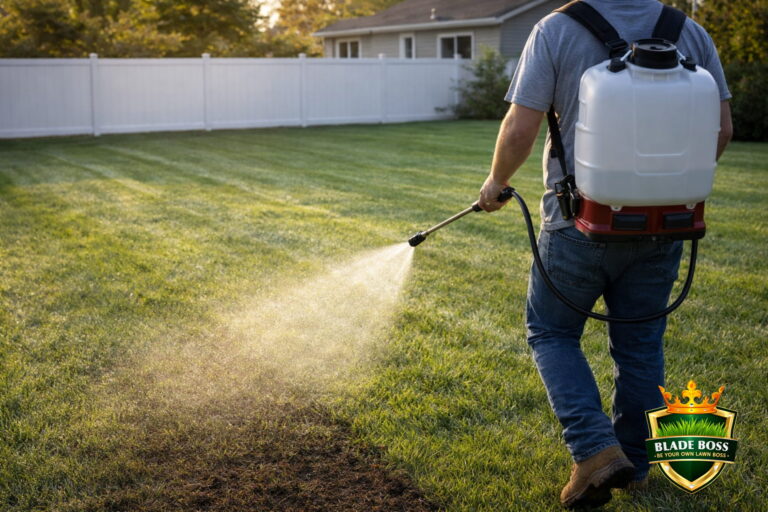
Long Island Fungicide Guide: FRAC Groups, Rotation Schedule, and What to Buy
The complete beginner's guide to lawn fungicide on Long Island. Learn FRAC groups, build a 4-product rotation schedule...
Mar 27, 2026
17 min
What is your lawn actually sitting on?
Pull the soil survey, hardiness zone and current growing conditions for your exact address. Eight government sources, about a minute.
No comments yet. Be the first to share your thoughts.
Create a free account to join the conversation.