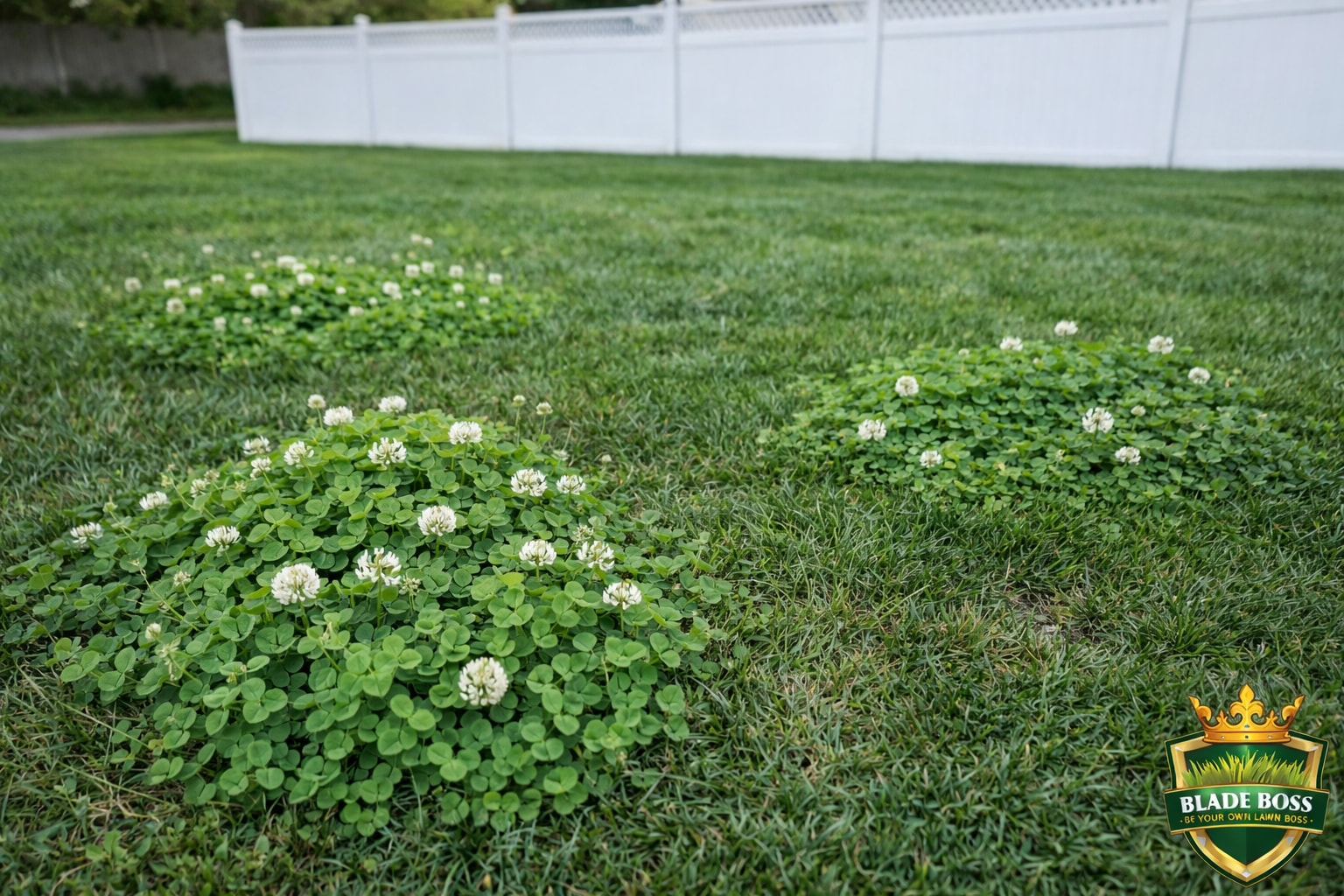
Those three-leaf patches spreading through your lawn aren't random. White clover is your lawn's check engine light. It's telling you something specific: the soil is low on nitrogen. Clover makes its own nitrogen from the air through bacteria in its root nodules, which means it thrives exactly where grass struggles. Kill the clover without fixing the nitrogen problem and it comes right back. Fix the nitrogen and the clover loses its competitive edge permanently.
On Long Island (USDA Zone 7B),
- Best herbicide: Triclopyr (found in Ortho Weed B Gon Chickweed, Clover and Oxalis Killer). Most effective single active ingredient for clover.
- Best timing: Fall (September 15th through October 31st) when clover is transporting nutrients to roots. Herbicide follows the same pathway and kills the entire plant.
- Critical addition: Always use a surfactant. Clover's waxy leaves cause spray to bead up and roll off without one.
- Root cause fix: Proper nitrogen fertilization (2.75 lbs N/year on the Moderate schedule) is the best long-term clover prevention. Heavy clover = nitrogen-starved lawn.
- Expect 2+ treatments: Clover is resilient. Plan for two applications 10 to 14 days apart, plus annual follow-up for 2 to 3 years.
This guide covers both the kill (herbicide selection, timing, and application technique) and the cure (why your lawn has clover and how to prevent it permanently). Every recommendation is sourced from Penn State Extension, UC Integrated Pest Management, Rutgers, Cornell, and our Zone Science data for Long Island (USDA Zone 7B). Our Dynamic Calendar tracks these windows automatically with GDD alerts. Lawn Map Pro puts all this data on your satellite map with zone-by-zone tracking. Our Stripe Master members get the complete 15-step Lawn Playbook that covers exactly this.
Why Clover Is in Your Lawn (It's Not Random)
White clover (Trifolium repens) is a perennial broadleaf that spreads by stolons (creeping horizontal stems that root at each node). It survives winter, resumes growth in spring when soil temps approach 50°F, blooms in May and June with white flower heads, and can colonize large areas from a single plant. Unlike most weeds, clover doesn't need seeds to spread. Those stolons are the primary invasion vector.
White clover fixes atmospheric nitrogen through symbiotic bacteria (Rhizobium) in its root nodules. This gives it a massive competitive advantage in low-nitrogen lawns. Your grass needs you to supply nitrogen through fertilizer. Clover makes its own for free. When nitrogen is low, grass thins and weakens. Clover fills the gaps. Heavy clover is a nitrogen deficiency diagnostic. Treat the cause, not just the symptom.
According to UC Integrated Pest Management, the invasion of clover into turfgrass can be reduced by maintaining nitrogen levels that promote grass growth. They recommend 1 pound of nitrogen per 1,000 square feet during each month of active growth. On Long Island, our 5-round fertilizer schedule delivers 2.75 lbs N/year with 73% concentrated in fall, which creates the dense, competitive turf that naturally suppresses clover.
How to Kill Existing Clover (Herbicide Guide)
Clover is a broadleaf weed, which means selective broadleaf herbicides kill it without harming your grass. These products target dicots (broadleaf plants) and spare monocots (grasses). The catch with clover specifically is that it's tougher than dandelions or chickweed. Its waxy leaf coating resists herbicide absorption, and its perennial stolon network means it can regrow from root fragments even after the visible plant dies. For a broader look at herbicide options beyond clover, our Northeast weed killer guide covers the full spectrum of selective herbicides that are safe for cool-season grass.
| Active Ingredient | Effectiveness | Products | Notes |
|---|---|---|---|
| Triclopyr | Excellent (best single AI) | Ortho Weed B Gon Chickweed/Clover/Oxalis Killer, Turflon Ester | The go-to for stubborn clover. Safe on all cool-season grasses. |
| Dicamba + 2,4-D + MCPP | Good (standard 3-way) | Trimec, Weed B Gon, most 'weed and feed' products | Injures clover but may not kill established patches in one application. |
| Fluroxypyr | Very good | T-Zone, Momentum FX2 | Often combined with triclopyr and 2,4-D for broad coverage. |
| Quinclorac | Good | Drive XLR8 | Bonus: also kills crabgrass. Dual-purpose product. |
| 2,4-D alone | Poor | Many generic products | UC IPM confirms: injures clover but does not control it. Don't rely on 2,4-D alone. |
| Chelated iron (FeHEDTA) | Moderate (organic option) | Fiesta, Scotts EcoSense | Kills broadleaf weeds through iron toxicity. Grass tolerates it. Multiple apps needed. |
This is the most common mistake. Many homeowners grab a cheap 2,4-D product and expect it to kill clover. UC IPM states directly: "The herbicide 2,4-D is not effective for clover control; it will injure the plant but does not control it." You need triclopyr, a 3-way combination (2,4-D + MCPP + dicamba), or a product specifically labeled for clover.
When to Spray: Fall Is King
Penn State Extension confirms that fall applications of herbicides are often the most effective means of controlling white clover. Here's why: in fall, clover (like all perennials) is actively pulling nutrients and carbohydrates down into its root system and stolons to survive winter. When you spray herbicide during this translocation period, the chemical rides the same downward flow and reaches the roots. Spring applications often just burn the leaves while the roots survive and regrow.
| Window | Timing | Effectiveness | Notes |
|---|---|---|---|
| Fall (BEST) | Sept 15th to Oct 31st | Highest | Clover actively transporting to roots. Herbicide translocates deep. Pair with fall broadleaf weed control window. |
| Spring | April 15th to May 31st | Good | Clover greening up and actively growing. May need follow-up. Penn State notes regrowth sometimes occurs after spring apps. |
| Early summer | June 1st to 15th | Moderate | Last chance before summer heat. Keep under 85°F. Surfactant essential. |
| Mid-summer | July to August | Poor | Skip. Waxy leaves + summer slump = reduced herbicide uptake. Turf also stressed. Risk of turf damage. |
| Late winter | Late February to March | Moderate | Clover greens up before grass. Spot-treat visible patches on warm days (50°F+) before grass actively growing. |
The Clover Kill Playbook (Step by Step)
Diagnose the Root Cause First
Before you spray anything, ask why clover is there. If your lawn hasn't been fertilized properly (or at all), clover will return no matter how much herbicide you apply. Get a soil test from Cornell Cooperative Extension or use a MySoil Test Kit. Check nitrogen status and pH. Fix fertility first, then spray.
Choose Your Herbicide
For targeted clover control, triclopyr is the best single active ingredient. Ortho Weed B Gon Chickweed, Clover and Oxalis Killer is widely available. For a broader broadleaf cleanup (clover + dandelions + plantain + ground ivy), use a 3-way product with triclopyr like T-Zone or a standard 3-way (2,4-D + MCPP + dicamba). Always check the label to confirm it's safe for your specific grass type.
Add a Surfactant
This step is critical for clover and most people skip it. Clover leaves have a waxy coating that causes herbicide spray to bead up and roll off instead of absorbing into the leaf tissue. A non-ionic surfactant (like Southern Ag Surfactant or Hi-Yield Spreader Sticker) breaks that surface tension and dramatically improves herbicide uptake. Mix at the rate specified on the surfactant label, typically 1 to 2 teaspoons per gallon.
Spray on the Right Day
Check three conditions: temperature between 60°F and 80°F, no rain forecast for 24 hours, and low wind. Spray in the morning after dew dries or in the late afternoon. Don't mow for 2 to 3 days before or after treatment. The clover needs full leaf surface area to absorb the herbicide.
Wait 10 to 14 Days, Then Retreat
Clover is resilient. One application rarely kills established patches completely. Plan for a second treatment 10 to 14 days after the first. You'll see the clover curling, yellowing, and wilting after the first spray. The second application finishes off survivors and catches any regrowth from stolons that the first pass missed.
Overseed Any Bare Spots in Fall
Dead clover leaves bare patches. Bare patches invite new clover (and crabgrass) next year. Aerate and overseed in September after your fall herbicide treatment to fill those gaps with thick grass. Dense turf is the best long-term clover prevention.
Fertilize on Schedule
Follow the 5-round fertilizer schedule with 73% of nitrogen concentrated in fall. This builds the dense, competitive turf that clover can't penetrate. The combination of killing existing clover (herbicide) and preventing new clover (fertility) is how you win the 2 to 3 year war.
Calculate Your Exact Fertilizer Rates
NitroCalc Pro™ inside Lawn Map Pro™ calculates precise nitrogen rates for your lawn size, grass type, and USDA zone. The 5-round schedule is built in. Fix the nitrogen deficiency that's feeding your clover.
Will Pre-Emergent Prevent Clover?
No. Pre-emergent herbicides are not effective against white clover. This catches a lot of people off guard because pre-emergent is the go-to for crabgrass and other annual weeds. But clover is a perennial that spreads primarily through stolons (runners), not seeds. Standard lawn pre-emergents like prodiamine and dithiopyr target seed germination, which isn't how established clover colonizes your lawn.
Join Long Island homeowners who get weed control timing, product recommendations, and data-driven lawn care tips every week.
New clover seedlings can technically be prevented by isoxaben-based pre-emergents, but isoxaben is rarely used on home lawns and seedling establishment is the minor invasion pathway. The stolons from existing clover plants (yours or your neighbor's) are the real problem. Post-emergent broadleaf herbicides during active growth are the correct approach.
The Long-Term Fix: Cultural Controls That Actually Work
Herbicide kills existing clover. Cultural practices prevent it from coming back. You need both. Here's the hierarchy of what actually moves the needle.
Nitrogen Fertilization (Most Important)
Heavy clover = nitrogen-starved lawn. The 5-round schedule at 2.75 lbs N/year with fall-heavy distribution gives grass the competitive edge. Clover can't fix enough nitrogen to compete with a properly fed lawn.
Dense Turf Through Overseeding
Every thin spot is a clover invitation. September aeration and overseeding fills gaps with thick grass that shades out clover stolons. Clover is a low-growing plant that needs sunlight at ground level to spread.
Mow High (3.5 to 4 Inches)
Clover thrives under close mowing because its stolons stay below the mower blade. Mowing at 3.5 to 4 inches shades the soil surface and makes it harder for clover to get the light it needs to spread.
Soil Test and pH Correction
Clover tolerates a wider pH range than grass. If your soil pH is below 6.0 (common on Long Island), grass can't efficiently use the nitrogen you apply, giving clover the advantage. Lime to 6.2 to 6.8 and your fertilizer becomes more effective.
Should You Keep Clover? (The Honest Take)
Not every homeowner wants clover gone. Before you spray, consider whether it's actually a problem for your situation.
Reasons to keep clover: It fixes nitrogen (free fertilizer), stays green during drought when grass goes brown, provides habitat for pollinators (honeybees love it), tolerates foot traffic well, and requires zero maintenance. Some homeowners intentionally seed white clover into their lawns. Old grass seed mixes (pre-1970s) routinely included clover.
Reasons to remove it: It disrupts the uniform appearance of a grass lawn (different texture, different green shade), attracts bees near play areas (sting risk for kids running barefoot), goes dormant in winter leaving brown patches, and some people simply prefer an all-grass lawn. Neither choice is wrong. This guide is for homeowners who've decided they want it gone.
Common Clover Control Mistakes
1. Using 2,4-D alone and expecting it to work
This is the number one clover control failure. UC Integrated Pest Management explicitly states that 2,4-D injures clover but does not control it. You need triclopyr, a 3-way combination, or a product specifically formulated for clover. Save yourself the frustration and buy the right product the first time.
2. Skipping the surfactant
Clover leaves are waxy. Without a surfactant, your herbicide beads up and rolls off the leaf surface before it can absorb. A $10 bottle of non-ionic surfactant (1 to 2 teaspoons per gallon of spray mix) dramatically improves kill rates. This one addition can be the difference between one treatment and four.
3. Spraying in July and August heat
Herbicide efficacy drops when temperatures exceed 85°F. Clover's waxy leaves are even more resistant in summer heat stress. And your cool-season grass is already struggling. Spray applications above 85°F risk turf injury and poor clover control. Wait for fall.
4. Treating clover without fixing nitrogen
You can kill every visible clover plant, but if your lawn is still nitrogen-deficient, new clover will fill those bare patches within months. Seeds in the soil remain viable for years. Stolons from neighboring properties will creep in. The herbicide handles the symptom. Proper fertilization handles the cause. You need both.
5. Expecting one spray to finish the job
Clover is a perennial with deep stolon networks. Penn State Extension notes that regrowth sometimes occurs following spring herbicide applications. Plan for two treatments 10 to 14 days apart, and expect to spot-treat survivors annually for 2 to 3 years until the seed bank is depleted and turf density prevents reinvasion.
6. Using non-selective herbicide (glyphosate)
Roundup and other glyphosate products kill everything, including your grass. Glyphosate is NOT selective. Use only selective broadleaf herbicides (triclopyr, 3-way combinations) that target dicots and leave monocots (grasses) unharmed. If you accidentally hit grass with glyphosate, that area needs to be reseeded.
Your Annual Clover Control Calendar
Early Spot-Treatment
Clover greens up before grass. On warm days (50°F+), spot-spray visible clover patches with triclopyr. This catches it early before it spreads. Optional but gives you a head start.
Spring Broadcast Treatment
Once grass is actively growing and temps are 60 to 80°F, apply broadleaf herbicide + surfactant across affected areas. Follow up 10 to 14 days later. Pair with your spring fertilizer (Round 1).
Last Pre-Summer Window
Final chance to treat before summer stress. Keep under 85°F. Spot-spray remaining patches only. Don't blanket-spray in warm weather.
Skip Treatment
Too hot. Clover's waxy leaves resist herbicide in heat. Grass is stressed. Focus on mowing high and proper irrigation instead.
Fall Kill Window (BEST)
THE most effective treatment window. Clover actively transporting nutrients to roots. Herbicide translocates deep. Two applications 10 to 14 days apart. Pair with fall broadleaf weed control for dandelion, ground ivy, and plantain in the same spray pass.
Assess and Plan
Evaluate results. Note any surviving patches for spring follow-up. Apply winterizer fertilizer (Round 5) before the Suffolk County November 1st blackout to strengthen turf heading into winter.
Quick Reference: Clover Decision Table
| Situation | Action | Product |
|---|---|---|
| A few small patches | Hand-pull or spot-spray | Triclopyr spot spray + surfactant |
| Large patches, scattered | Broadcast spray + surfactant | 3-way + triclopyr (T-Zone or similar) |
| Entire lawn is clover | Fix nitrogen first, then spray fall | 5-round fert schedule + fall triclopyr |
| Clover but want to overseed | Spray fall, seed 3 weeks later | Triclopyr in early Sept, seed late Sept |
| Organic preference | Chelated iron + nitrogen program | Fiesta (FeHEDTA) + organic fertilizer |
| Kids/pets play area concern | Organic option or fall-only treatment | Chelated iron, or triclopyr in fall when area is less used |
| Clover coming from neighbor | Dense turf + perimeter treatment | Overseed + mow high + spot-spray edges |
Map Your Clover Zones for Targeted Treatment
Lawn Map Pro™ lets you draw and label problem zones on satellite imagery. Mark where clover is worst, calculate the exact square footage for product mixing, and track treatment progress across the season. Stop wasting product on areas that don't need it.
The 2 to 3 Year Battle Plan
Clover control isn't a one-and-done event. It's a multi-year strategy. Here's the realistic timeline based on extension research and our zone-master data.
Year 1: Kill visible clover with fall herbicide (two treatments). Start the 5-round fertilizer schedule. Aerate and overseed bare patches in September. Expect 70 to 80% reduction.
Year 2: Spot-treat any spring regrowth. Continue the fertilizer schedule. Your turf is denser now and naturally outcompeting new clover. Fall herbicide again on remaining patches. Expect 90%+ reduction.
Year 3 and beyond: Annual spot-treatment as needed (usually just perimeter areas near seed sources). Consistent fertilization keeps the turf thick enough that clover can't establish. The seed bank diminishes over time with consistent control.
Clover control works best inside a complete lawn care program. Choose the right grass type for density, track GDD for herbicide timing, and check for grub damage that thins your turf. Our spring recovery guide patches bare spots before clover claims them. And if you're debating grass species, the TTTF vs KBG comparison shows which builds the densest turf. Cool-season turfgrass research from Rutgers NJAES applies directly to Long Island growing conditions.
Chris is a Combat Search and Rescue pilot turned airline pilot who built Blade Boss to bring military-grade precision to backyard lawn care. He has spent two seasons testing selective herbicide timing on Long Island's sandy soils and documents every result.
8 common lawn weeds with photos, identification tips, products, and timing. Clover, crabgrass, dandelions, nutsedge, and more on one printable page.
See what Blade Boss members get and get access to Lawn Map Pro™ for zone mapping, NitroCalc Pro™ for exact fertilizer rates, and our complete Long Island lawn care calendar that integrates weed control windows with every other task. Data-driven lawn care starts here.
See Plans →Frequently Asked Questions
What kills clover but not grass?
Selective broadleaf herbicides kill clover without harming grass. The most effective active ingredient for clover is triclopyr, found in products like Ortho Weed B Gon Chickweed, Clover and Oxalis Killer. Standard 3-way herbicides containing 2,4-D, MCPP, and dicamba also work but may require multiple treatments. According to Penn State Extension, products containing dicamba, fluroxypyr, and quinclorac provide very good white clover control. Always use a surfactant because clover's waxy leaves cause spray to bead up and roll off.
Why does clover keep coming back in my lawn?
Clover keeps returning for two reasons. First, white clover is a perennial that fixes its own nitrogen from the air, giving it a competitive advantage in nitrogen-deficient lawns. If your lawn isn't getting enough nitrogen fertilizer, clover will always outcompete the grass. Second, clover seeds remain viable in the soil for years and neighboring lawns, roadsides, and garden borders are constant seed sources. The long-term solution is consistent fall fertilization to give grass the competitive edge, combined with annual herbicide treatment for 2 to 3 years to deplete the seed bank.
When is the best time to spray clover on Long Island?
Fall (September 15th through October 31st) is the most effective time to spray clover on Long Island. During fall, clover is actively growing and transporting nutrients to its root system for winter storage. Herbicide applied during this window gets pulled deep into the roots, killing the entire plant rather than just the leaves. Spring (April through May) is the second-best window when clover first greens up. Avoid spraying in summer when temperatures exceed 85 degrees Fahrenheit, as herbicide efficacy drops and turf stress increases.
Does fertilizing get rid of clover?
Proper nitrogen fertilization is the single most effective long-term clover prevention strategy. According to UC Integrated Pest Management and multiple university extension programs, white clover thrives in low-nitrogen lawns because it fixes its own nitrogen while grass cannot. A well-fertilized lawn with 2.75 to 3.25 pounds of nitrogen per 1,000 square feet per year (concentrated in fall) creates dense turf that outcompetes clover for light and space. Fertilization alone won't kill existing clover, but it prevents new infestations and weakens established patches.
Is clover bad for my lawn?
Clover is not inherently harmful. It fixes nitrogen, attracts pollinators, stays green during drought, and tolerates foot traffic. Some homeowners intentionally keep clover or seed clover lawns. However, clover disrupts a uniform grass lawn because its texture, color, and growth rate differ from turfgrass. It also attracts bees, which is a concern near play areas. Whether to remove clover is a personal choice, not a horticultural necessity. The following information is intended for homeowners who want a uniform grass lawn.

Keep Reading
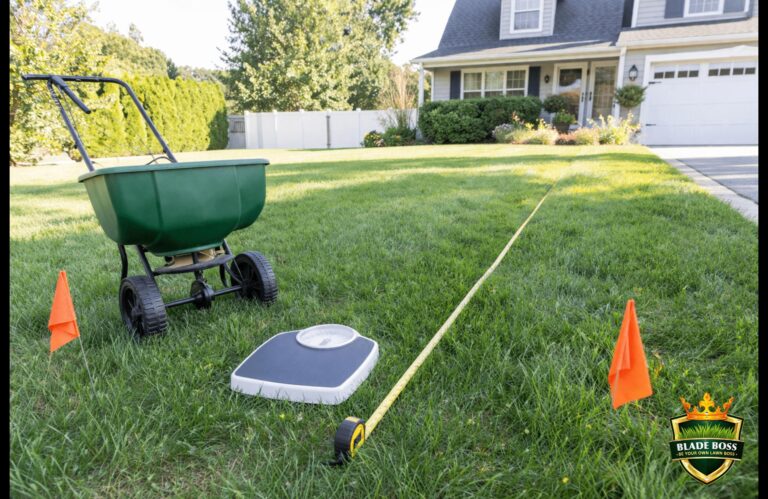 DIY How-To
How to Calibrate a Broadcast Spreader in 10 Minutes (The Method That Actually Works)
The 25-foot calibration method takes 10 minutes, a bathroom scale, and zero guesswork. Stop trusting bag settings. Start...
Apr 13, 2026
10 min
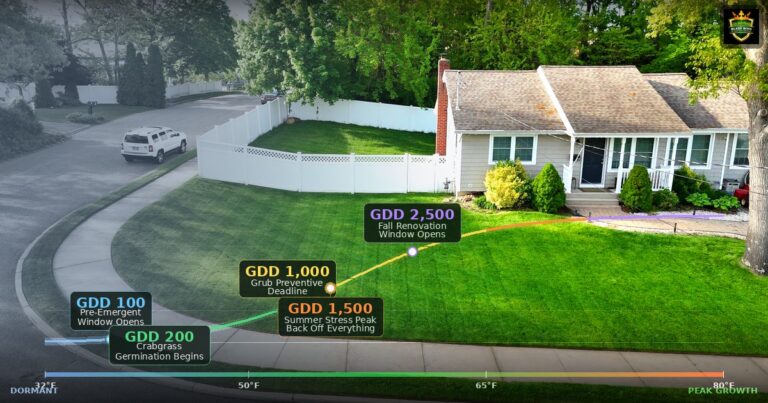 DIY How-To
GDD Explained: The Secret to Perfect Lawn Timing
Growing degree days (GDD) predict exactly when to apply pre-emergent, fertilize, and treat for pests on your lawn....
Feb 25, 2026
14 min
 DIY How-To
Long Island Lawn Irrigation Guide: How Much Water Does Your Lawn Actually Need?
Long Island gets 46 inches of rain a year. Your lawn still needs supplemental water. Learn exactly how...
Mar 19, 2026
19 min
What is your lawn actually sitting on?
Pull the soil survey, hardiness zone and current growing conditions for your exact address. Eight government sources, about a minute.
No comments yet. Be the first to share your thoughts.
Create a free account to join the conversation.