Long Island Lawn Irrigation Guide: How Much Water Does Your Lawn Actually Need?

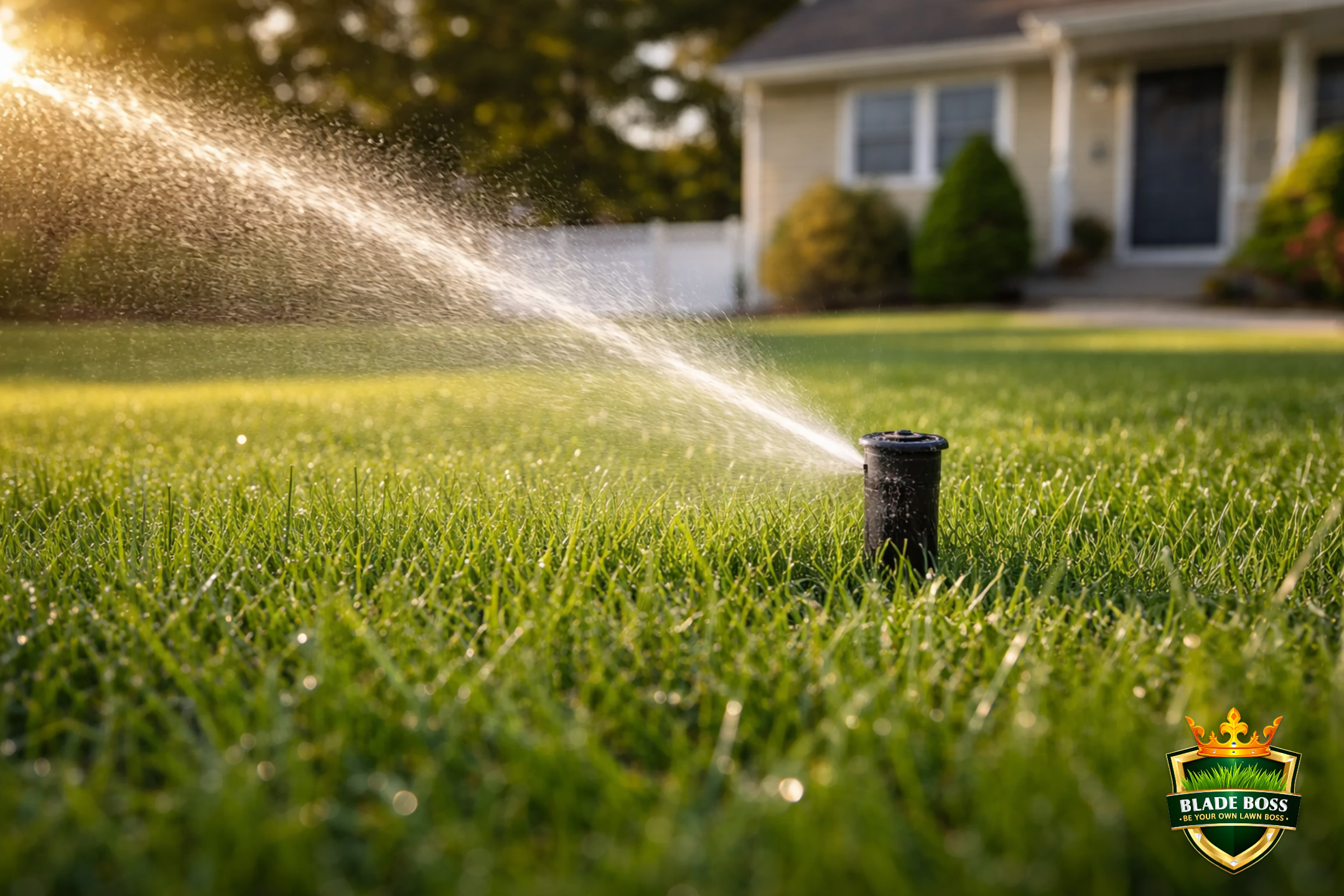
Your lawn is thirsty and you're probably either drowning it or starving it. Most Long Island homeowners fall into one of two camps: the guy who waters every single day for 10 minutes (accomplishing nothing), or the guy who never touches the irrigation system and hopes rain handles it. Both are wrong. Long Island gets about 46 inches of rain a year, which sounds like enough until you realize July only delivers 3.26 inches while your lawn needs over 5. That gap is where brown spots, fungal disease, and dead grass come from. This guide starts with the absolute basics and builds from there.
- The number: Your lawn needs about 1 inch of water per week in spring and fall, and 1.25 inches per week in the heat of summer. That includes rainfall.
- How to deliver it: Two to three watering sessions per week, not daily. On Long Island's sandy soil, one big weekly soak drains away before grass can use it.
- When to water: Between 4 AM and 8 AM. No exceptions. Evening watering causes disease. Suffolk and Nassau counties ban watering 10 AM to 4 PM.
- The one thing most people skip: Measuring how much water your sprinklers actually put out. Without that number, every run time is a guess.
The One Number You Need to Know
Forget everything else for a second. Here's the single most important thing: your lawn needs about 1 inch of water per week. In the hottest part of summer (July and August on Long Island), bump that to 1.25 inches. That's it. That's the target. Everything else in this guide is about how to actually deliver that inch. Our Stripe Master members get the complete 15-step Lawn Playbook that covers exactly this.
And here's the part most people miss: that 1 inch includes rainfall. If it rained half an inch on Tuesday, you only need to provide the other half inch from your sprinklers. A $5 rain gauge stuck in your lawn tells you exactly how much fell. Without one, you're guessing.
Your lawn loses water two ways: the sun evaporates it from the soil surface, and the grass itself pulls water up through its roots and releases it through tiny pores in its leaves (kind of like how you sweat). Scientists call this combined water loss evapotranspiration, or ET for short. Think of ET as your lawn's water bill. On a hot summer day on Long Island, your lawn "spends" about 0.15 to 0.20 inches of water. Multiply that by 7 days and you get roughly 1 to 1.4 inches per week. The 1 to 1.25 inch guideline covers most conditions without overdoing it.
When to Water (There's Only One Right Answer)
Water between 4 AM and 8 AM. That's it. There is no "second best" time of day. This isn't just preference. It's biology.
Here's why: grass blades naturally get wet from dew overnight. If you water at dawn, you're adding to blades that are already wet, and then the sun comes up and dries everything off within an hour or two. Total time the blades stay wet: maybe 4 to 6 hours. No big deal.
Now imagine you water at 7 PM instead. The sun goes down. Those wet blades sit there all night. The sun doesn't come up until 6 AM. That's 11+ hours of wet grass sitting in warm, humid Long Island air. And every single lawn disease you've ever heard of (brown patch, dollar spot, fungus) thrives on exactly that: warm, wet blades that never dry out. Evening watering is basically a fungus delivery service.
| Time of Day | How Long Grass Stays Wet | Disease Risk | Verdict |
|---|---|---|---|
| 4 AM to 6 AM | 2 to 4 hours | Minimal | BEST. Aligns with natural dew. |
| 6 AM to 8 AM | 1 to 3 hours | Low | Good. Dries quickly after sunrise. |
| 8 AM to 10 AM | 1 to 2 hours | Low | OK, but more evaporation waste. |
| 10 AM to 4 PM | Minimal | None (but illegal) | Banned on LI. Half the water evaporates. |
| 4 PM to 8 PM | 12 to 16 hours | HIGH | Bad. Blades stay wet all night. |
| 8 PM to 4 AM | 10 to 14 hours | VERY HIGH | Worst. Maximum disease window. |
Suffolk County Water Authority rules apply all year, not just during droughts:
No outdoor watering between 10 AM and 4 PM.
Odd-numbered house addresses water on odd calendar dates (1st, 3rd, 5th...).
Even-numbered addresses water on even dates (2nd, 4th, 6th...).
Nassau County follows the same rules. During drought emergencies, stricter bans may apply.
Why Long Island Lawns Are Different From Everywhere Else
Here's where generic watering advice falls apart. Most lawn guides say "water deeply once a week." That works in the Midwest where clay soil holds water like a sponge for days. Long Island soil is nothing like that.
Long Island sits on glacial outwash: layers of sand, gravel, and sandy loam left behind by glaciers. This soil drains fast. Really fast. Pour a gallon of water on clay soil in Ohio and it sits there for hours. Pour it on your Ronkonkoma lawn and it's gone in minutes. Straight down through the root zone and into the water table. Lawn Map Pro puts all this data on your satellite map with zone-by-zone tracking.
Here's a number that explains everything: the top 6 inches of typical Long Island sandy soil can only hold about 0.72 inches of water at a time. That's called the available water capacity (AWC), which is just a fancy way of saying "how much water the soil can hold in the zone where grass roots actually live." If you dump a full inch of water on the lawn in one session, roughly a quarter of it drains straight past the roots before the grass can drink it. Wasted. Sand drains fast, which is why Long Island lawns need a different watering approach. Our sandy soil guide covers the full picture, from CEC to nutrient retention.
On Long Island, split your weekly water into 2 to 3 sessions instead of one big soak. Apply about 0.4 to 0.5 inches per session, 2 to 3 times per week. This keeps water in the root zone where grass can actually reach it. Think of it like feeding a toddler: small meals they can handle, not one giant plate they can't finish.
Clay Soil (Midwest)
Holds water for days. Water once per week and the soil stores it. Not your situation on Long Island.
Sandy Soil (Long Island)
Drains in hours. Water 2 to 3 times per week in smaller amounts so it stays in the root zone.
The Simple Math
1.25" needed per week, split into 3 sessions = about 0.42" per session. Your sprinklers need to run long enough to deliver that amount (we'll measure that next).
Map Your Lawn Zones with Lawn Map Pro
Sandy soil, shade, slopes, and sun exposure all affect how much water each area needs. Draw your zones on satellite imagery so you know what you're working with before you touch the sprinkler controller.
Know Your System: Three Tests That Take 30 Minutes Total
Here's the truth: most homeowners set their sprinkler timer to "20 minutes per zone" because it felt right, or because that's what the installer left it on. They have no idea if that delivers half an inch or two inches. These three simple tests tell you exactly what your system does, and they take about 30 minutes combined. Do them once and you'll never guess at run times again. Based on NOAA 30-year precipitation normals, Long Island averages 3.5 to 4.5 inches of rain per month from May through September.
Test 1: The Bucket Test (How Much Water Your System Produces)
This tells you the total flow rate of your water supply. Think of it as checking the speedometer before you plan a road trip. You need to know what your system is working with.
Get a printable weekly watering schedule by season and grass type for Long Island.
Grab a 5-Gallon Bucket
Any standard bucket. If flow is very slow, you can time to the 1-gallon mark instead (about 3.5 inches from the bottom) and multiply the result by 5.
Turn Off All Water in the House
Close every faucet, turn off the dishwasher and washing machine. You want the full water supply going to one outlet.
Open Your Outdoor Spigot Fully and Time It
Use your phone timer. Start the moment water hits the bucket. Stop when it hits the 5-gallon mark.
Do the Math
Divide 5 by the fill time in minutes. Example: bucket filled in 45 seconds (0.75 minutes). 5 / 0.75 = 6.7 GPM (gallons per minute). Most residential irrigation systems need 8 to 12 GPM. Under 6 GPM means your system may not have enough flow to run all the heads on a zone properly.
Calculate Your Flow Rate with BucketFlow Pro
Enter your bucket fill time and BucketFlow Pro gives you GPM, estimates your available pressure, and tells you if your system has enough flow for the number of heads on each zone.
Test 2: The Pressure Test (Is Your System Getting Enough Force?)
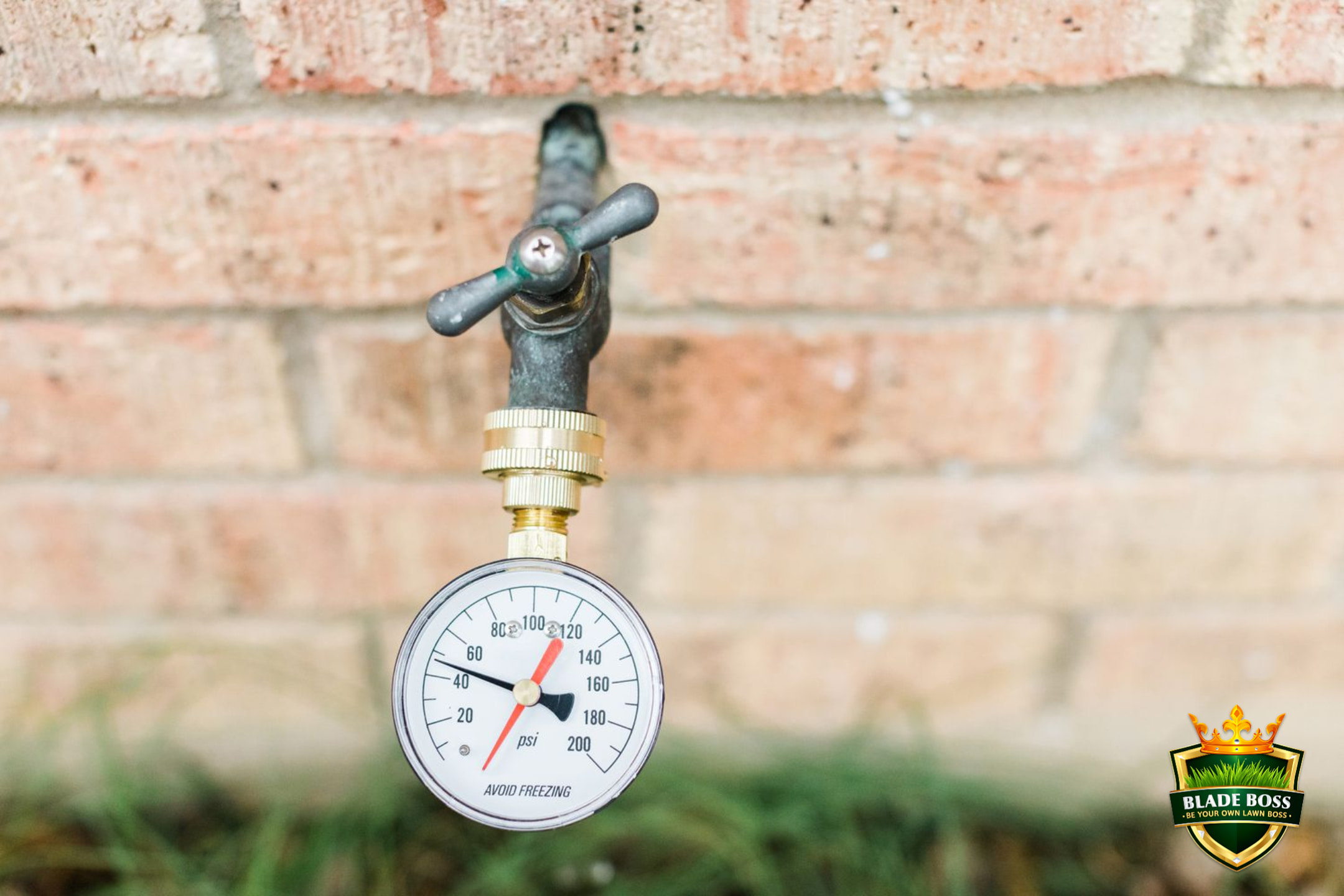
Low water pressure is the silent killer of sprinkler performance. If your system was designed for 50 PSI but only gets 35, every head under-performs: the spray doesn't reach as far, the pattern distorts, and some heads barely pop up. You can check this in 60 seconds with a $10 gauge from any hardware store.
Buy a Hose Bib Pressure Gauge
About $10 at Home Depot or Amazon. It screws right onto any outdoor spigot like a garden hose.
Screw It Onto Your Outdoor Spigot
Pick the spigot closest to where your irrigation system connects. Turn off all water inside the house.
Open the Spigot Fully and Read the Gauge
This is your static pressure (pressure with no water flowing through the irrigation system). Write it down.
Now Turn On One Irrigation Zone and Read Again
This is your dynamic pressure (pressure while the system is running). The difference tells you how much pressure your system loses under load. A drop of more than 15 PSI means you have too many heads on that zone, a leak somewhere, or an undersized supply pipe.
| Your Reading | What It Means | What to Do |
|---|---|---|
| 60+ PSI | Excellent | System should perform at full specs. Install a regulator if above 80 (can damage components). |
| 45 to 60 PSI | Good (normal range) | System should work well with proper head count per zone. |
| 30 to 45 PSI | Low | Spray heads may work. Rotors will struggle. Consider reducing heads per zone. |
| Under 30 PSI | Insufficient | System cannot perform. Check for leaks, closed valves, or undersized supply line. |
| 15+ PSI drop under load | Excessive loss | Too many heads on the zone, a leaking pipe, or undersized mainline. |
Test 3: The Catch Cup Test (How Much Water Each Zone Actually Delivers)
This is the big one. The bucket test told you how much water your system produces. The pressure test told you if the system has enough force. The catch cup test tells you the final answer: how many inches of water per hour does each sprinkler zone actually put on your lawn? Without this number, every run time is a guess.
The idea is simple: put containers on the lawn, run the sprinklers, and measure how much water collects in each one.
Get a Set of Catch Cups
Use dedicated sprinkler catch cups like the Orbit 26251 Sprinkler Catch Cups. They stake into the ground so they don't tip over, and have graduated markings so you can read the level without a ruler. You can use tuna cans in a pinch, but real catch cups are more accurate and reusable.
Place 6 to 8 Cups Across One Zone
Spread them evenly: some near sprinkler heads, some between heads, some at the edges of coverage, some in the overlap areas. You want to sample the entire spray pattern, not just the sweet spots.
Run That Zone for Exactly 15 Minutes
Use a phone timer. Exactly 15 minutes. This makes the math easy: whatever you measure, multiply by 4 to get inches per hour.
Read and Record Every Cup
Read the graduated markings on each cup. Write down every number. Don't average in your head. Write them all down.
Calculate Your Precipitation Rate
Add all measurements, divide by the number of cups. That's your average in 15 minutes. Multiply by 4 for inches per hour. Example: 6 cups collected 0.15, 0.20, 0.25, 0.18, 0.22, 0.30 inches. Average = 0.22 inches. Times 4 = 0.88 inches per hour.
Calculate Your Run Time
Divide the amount you want per session by your precipitation rate. On sandy LI soil, you want about 0.4 to 0.5 inches per session. Example: 0.45 inches needed / 0.88 inches per hour = 0.51 hours = about 31 minutes. That's your run time for that zone.
Check for Uneven Coverage
Look at the spread between your highest and lowest cup. If the highest cup collected 3 times more than the lowest, your sprinkler heads need adjusting. The lowest cup should be at least 70% of the average. If any cup is below 50% of the average, that area has a serious coverage gap that will show as brown spots even when your total run time is correct.
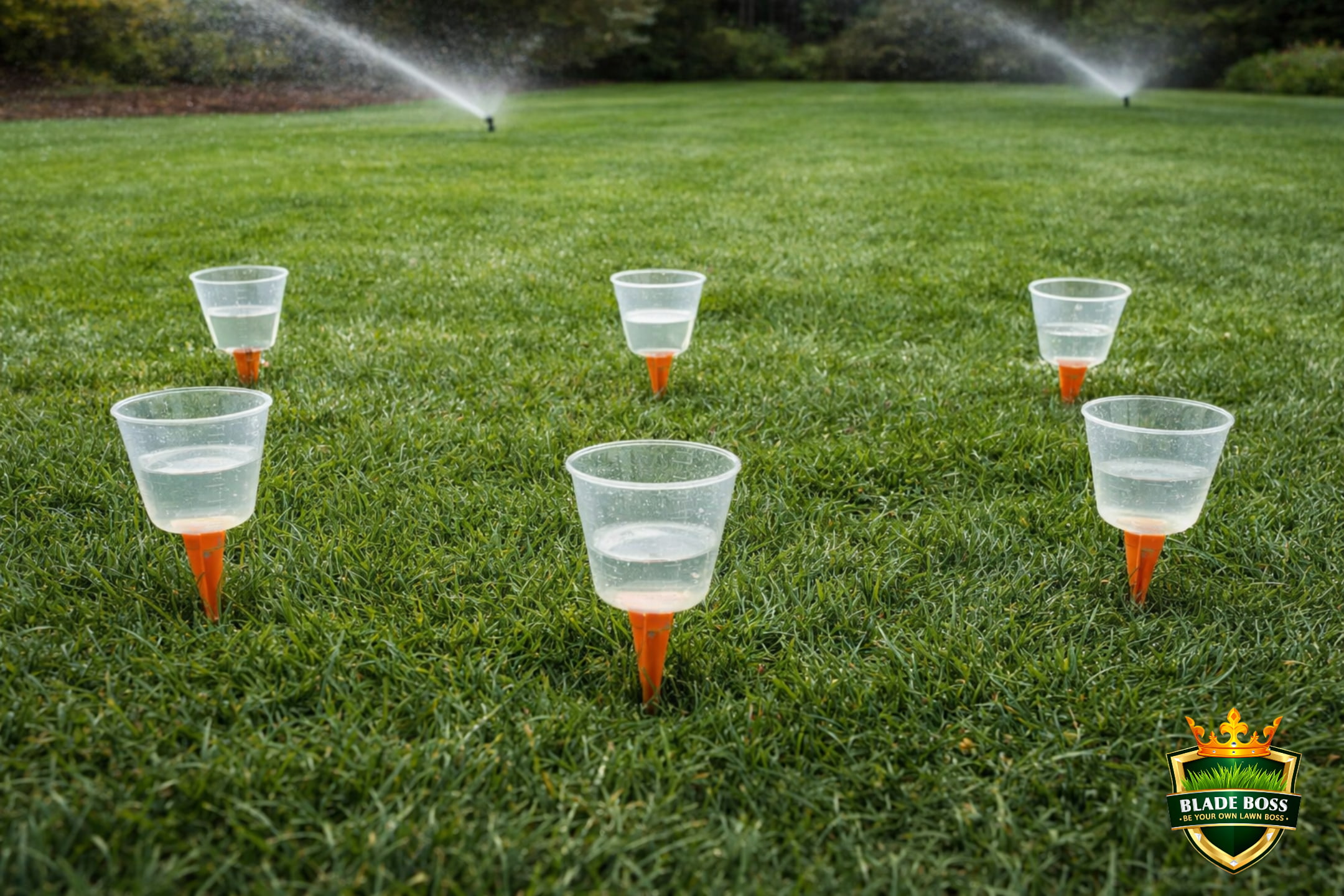
Orbit 26251 Sprinkler Catch Cups
Graduated cone design with ground stakes. Funnel top catches spray accurately. Read your precipitation rate right off the markings without a ruler. Cheap, reusable, and the only way to know your actual run times.
Check Price on AmazonCalculate Everything Automatically with CatchCup Pro
Enter your cup measurements and CatchCup Pro calculates your precipitation rate, distribution uniformity, exact run time per zone, and flags coverage problems.
Sprinkler Head Types: What You Have and Why It Matters
Different sprinkler heads put out water at different rates. This matters because the head type determines how long you need to run each zone. Here's the quick reference (these are industry-standard specifications from manufacturers like Hunter and Rain Bird):
| Head Type | Output Rate | Throw Distance | Run Time for 0.5" |
|---|---|---|---|
| Fixed spray heads | 1.2 to 2.0"/hr | 5 to 15 ft | 15 to 25 min |
| Rotary nozzles (MP Rotator) | 0.4 to 0.8"/hr | 15 to 35 ft | 38 to 75 min |
| Rotor heads (gear-driven) | 0.4 to 1.0"/hr | 25 to 50 ft | 30 to 75 min |
| Impact rotors (old chk-chk-chk style) | 0.3 to 0.6"/hr | 25 to 45 ft | 50 to 100 min |
Notice the huge range. Spray heads can put out 4 times more water per hour than rotors. This is why the catch cup test matters: the head type gives you a ballpark, but your actual output depends on water pressure, head spacing, and nozzle selection. Test, don't guess.
If you have spray heads and rotors on the same zone, the spray area gets roughly 3 times more water than the rotor area in the same run time. The spray section drowns while the rotor section stays dry. Every head on a zone must have a matched precipitation rate. If your system has mixed heads, you need to either replace the mismatched ones or split them onto separate zones.
Building Your Watering Schedule
Now you have all the pieces. You know how much water your lawn needs per week, you know when to water, you know your system's flow rate and pressure, and you know each zone's precipitation rate from the catch cup test. Here's how to put it all together. Our Dynamic Calendar tracks these windows automatically with GDD alerts.
Run a Catch Cup Test on Every Zone
Yes, every zone. A 6-zone system means 6 tests. Each zone has different heads, different spacing, and a different precipitation rate. This is the work nobody wants to do, and it's why most systems waste water.
Adjust for Shade
Shaded zones need less water. University research recommends reducing irrigation by about 20% in partial shade and 30% in full shade. If your sunny zone runs 30 minutes, the shaded zone might only need 21 to 24 minutes.
Set Watering Days Around County Rules
Suffolk and Nassau restrict you to odd or even calendar days based on your house number. That gives you roughly 3 to 4 available days per week. Pick 2 to 3 of those days for your watering sessions.
Program Start Times Early
Set your first zone to start at 4 AM to 5 AM. A 6-zone system with 30-minute zones takes 3 hours. Starting at 4 AM means everything finishes by 7 AM, well before the 10 AM ban and early enough for blades to dry.
Use Cycle and Soak for Sandy Soil
Instead of running a zone for 30 minutes straight, split it into two 15-minute runs with a 30 to 60 minute break between them. This gives sandy soil time to absorb the first dose before adding more, and prevents runoff on slopes. Most smart controllers have this feature built in.
Build Your Custom Schedule with AquaSync Pro
Enter your zone details, catch cup results, and grass type. AquaSync Pro builds a week-by-week schedule tuned to Long Island's watering restrictions and sandy soil reality.
Smart Controllers: The Best Single Upgrade
If you have a basic timer on your irrigation system (the kind with a dial or buttons where you set a start time and duration), you're leaving money on the table. A smart controller connects to weather data and adjusts automatically. It knows when it rained, when rain is coming, and how hot it's been. It skips cycles when the lawn doesn't need water and extends them during heat waves.
Join Long Island homeowners who get data-driven lawn care tips every week. Seasonal reminders, timing alerts, and the stuff your lawn service won't tell you.
Rachio 3 Smart Sprinkler Controller
The Rachio tracks real-time evapotranspiration (remember that "lawn water bill" concept from earlier?) for your ZIP code and adjusts run times daily. It enforces Suffolk/Nassau odd-even schedules, respects the 10 AM to 4 PM ban, and supports cycle and soak for sandy soil. I run one on my own system in Ronkonkoma and it cut my water usage by roughly 30% the first summer while the lawn stayed greener than manual scheduling ever got it.
Check Price on AmazonThe Summer Dormancy Decision
Every Long Island homeowner faces this choice in July: keep watering (and paying the water bill) or let the lawn go brown and sleep through summer? Both options are fine. What kills lawns is the third option: watering on and off.
When you stop watering, cool-season grass goes dormant. It turns brown, stops growing, and lives off stored energy in its roots. That's normal and healthy. It can survive like this for about 4 to 6 weeks. But if you water it back to green, then stop again, then water again, you're forcing the grass to burn through its energy reserves every time it wakes up. Two or three of those cycles in one summer can kill grass that would have survived a full dormancy just fine.
| Strategy | What It Looks Like | What It Requires |
|---|---|---|
| Full irrigation | Green all summer | 1.25"/week every week, no skipping. Higher water bill. |
| Full dormancy | Brown/tan, recovers in fall | 0.5" every 3 weeks to keep crowns alive. 4 to 6 week max. |
| On-and-off watering | Green, brown, green, brown | DO NOT DO THIS. Kills grass. Pick one and commit. |
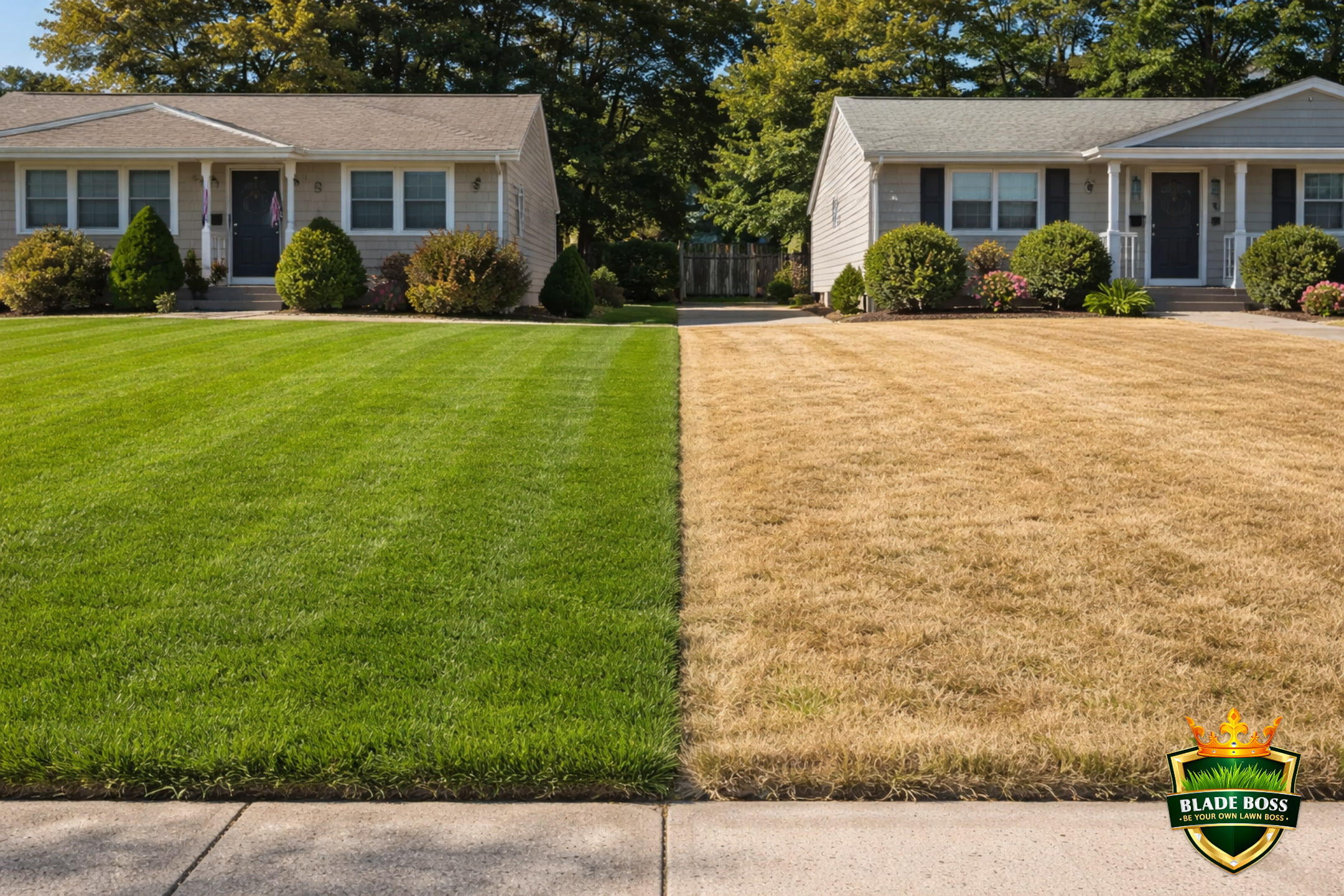
Kentucky Bluegrass typically goes dormant within 2 to 3 weeks without water. Tall Fescue holds out longer (3 to 5 weeks) thanks to its deeper root system. If you have a KBG-dominant lawn and want it green all summer, consistent irrigation is more critical.
Irrigation and Disease: The Connection Nobody Tells You
Here's something your sprinkler installer probably never mentioned: your irrigation system is likely the single biggest disease risk factor on your lawn. Not the grass type. Not the fertilizer. The sprinklers. Because most systems water at the wrong time, for the wrong duration, creating the exact conditions that lawn fungus needs to thrive.
| Disease | What Your Sprinklers Do Wrong | The Fix |
|---|---|---|
| Brown patch | Evening watering keeps blades wet 12+ hrs at 65°F+ nights | Water pre-dawn only (4 to 6 AM). |
| Dollar spot | Light, frequent watering keeps surface wet without going deep | Deeper sessions 2 to 3x/week. Let surface dry between. |
| Pythium blight | Overwatering + evening timing = 12+ hrs of free water | Reduce run time. Morning only. Never water saturated soil. |
| Leaf spot | Evening irrigation + drought/rewetting cycles | Consistent morning watering. No on-off-on cycles. |
| Summer patch | Too-frequent shallow watering keeps root zone chronically wet | Deep, infrequent. Let top inch dry between sessions. |
Water deeply. Water early. Water infrequently enough that the soil surface dries between sessions. Every single lawn disease on Long Island is either caused by or worsened by wet grass blades and soggy root zones. Fix your irrigation timing and frequency, and half your disease problems disappear without a single drop of chemical treatment.
What's in Your Water (And Why Your Soil pH Slowly Changes)
95% of Long Island homeowners water their lawns with groundwater drawn from the island's aquifer system. Whether it comes through Suffolk County Water Authority or a private well, this water has specific characteristics that affect your lawn over time. Here's the key distinction: Long Island's soil is naturally acidic (pH 4.5 to 5.5), but the water coming out of your sprinklers is slightly alkaline (pH 7.0 to 7.8). These are two completely different things, and the mismatch matters.
| What's In Your Water | Typical LI Range | What It Does to Your Lawn |
|---|---|---|
| pH | 7.0 to 7.8 (median 7.4) | Alkaline water slowly pushes acidic sandy soil toward neutral. See note below. |
| Hardness | 40 to 120 ppm | Can leave white mineral deposits on leaves. Rarely a lawn problem. |
| Nitrate | 1.0 to 8.0 ppm | Provides a tiny free dose of nitrogen with every watering. Not enough to change your fert plan. |
| Iron | Variable (well-dependent) | High iron causes orange staining on concrete. Can actually benefit lawns (free iron). |
Source: Suffolk County Water Authority 2023 Annual Water Quality Report and USGS Long Island groundwater studies.
Your irrigation water (pH ~7.4) is more alkaline than your soil (pH ~5 to 6 native). Every time you water, you're nudging soil pH upward by about 0.05 points per year. Over 5 to 10 years, that adds up to 0.25 to 0.50 pH points. If your soil is still below 6.5 (common on untreated LI sand), this alkaline drift is actually helpful because it pushes you toward the ideal 6.2 to 6.8 range for cool-season grass. But if you're already at 6.5 to 7.0, the drift can push you above optimal. This is one reason annual soil testing matters.
Seasonal Irrigation Calendar for Long Island
System Startup
Turn on after the last hard freeze (avg March 30 on LI). Run each zone manually and check every head for damage, clogs, and alignment. Don't set a regular schedule yet. Spring rain usually covers it.
Start Watching
Put a rain gauge out. If a week passes with less than 0.75" of rain and temps hit 75°F+, run one supplemental session. New seed from spring patching needs consistent moisture.
Regular Schedule On
Set your schedule: 2 to 3 sessions per week, early morning. Run catch cup tests if you haven't done them this year. Adjust each zone's run time individually.
Peak Demand
Highest need (1.25"/week). Watch for drought stress: bluish-gray color, footprints that stay visible, wilting. If going dormant, start survival watering (0.5" every 3 weeks).
Sustained Demand
Continue summer schedule. Start planning fall aeration and overseeding. Lawn should be well-hydrated going into September renovation.
Taper + Support Seed
Reduce to 1.0"/week as temps cool. New seed from overseeding needs light, frequent watering (2 to 3x daily for 10 days), then transition to deeper sessions.
Winterize
Blow out the system before the first hard freeze (avg Nov 4 on LI). Hire a pro with a commercial compressor ($100 to $150) or rent one. Water left in pipes freezes, expands, and cracks fittings.
The 8 Biggest Irrigation Mistakes on Long Island
1. Watering every day for 10 minutes
The most common mistake. Daily short cycles only wet the top half-inch and never reach roots. Roots stay shallow because they never need to grow deeper. Then the first hot day hits and your shallow-rooted grass dies. Water less often but deeper: 2 to 3 sessions per week, 0.4 to 0.5 inches per session.
2. Watering in the evening
Creates 12+ hours of continuous wet blades overnight. This is the primary driver of brown patch, dollar spot, and pythium blight on Long Island. Water between 4 AM and 8 AM. If your timer is set to evening, change it tonight.
3. Never running a catch cup test
If you don't know your precipitation rate, every run time is a guess. Most homeowners either overwater (wasting money and causing disease) or underwater (causing brown spots). The test takes 20 minutes per zone.
4. Same run time on every zone
Each zone has different heads, sun exposure, and output rates. A spray head zone and a rotor zone on the same run time means one area gets 3x more water. Set each zone individually based on its catch cup results.
5. Cycling in and out of dormancy
Either water consistently or let the lawn go fully dormant. Pushing it in and out (water one week, skip two, water again) burns through stored energy and kills grass that would have survived full dormancy.
6. Ignoring the odd/even schedule
Suffolk and Nassau restrict watering to specific calendar days based on your house number. Watering outside your assigned days risks fines. Program your controller to enforce it automatically.
7. Not winterizing the system
Water in pipes freezes, expands, and cracks PVC fittings and backflow preventers. Blow out the system before November 4 (avg first hard freeze). A $100 to $150 service call prevents $500 to $2,000 in repairs.
8. Mixing spray heads and rotors on one zone
Spray heads deliver 1.5 to 2.0 inches per hour. Rotors deliver 0.4 to 0.8. On the same zone, the spray area floods while the rotor area stays dry. Every head on a zone must have a matched output rate.
Irrigation Is Part of the System, Not Separate From It
How you water affects everything else. Your fertilizer needs to be watered in but not washed through. Your soil pH shifts with your irrigation water over time. Mowing height determines how much water your lawn retains (taller grass shades soil and slows evaporation). Fall aeration breaks up compaction so water actually penetrates instead of running off. And thatch management keeps that spongy layer from blocking water from reaching the soil.
Overwatering invites nutsedge (which loves wet soil). Underwatering thins your stand and invites crabgrass into the gaps. Grub damage that went untreated leaves bare spots that waste every drop you apply. Get the full picture with the Blade Boss Calendar, the GDD explainer, the fertilizer calculator, and our Zone 7B master guide. For zone-specific guidance, Cornell Cooperative Extension Suffolk County is an excellent local resource. Cool-season turfgrass research from Rutgers NJAES applies directly to Long Island growing conditions. See also: summer stress guide.
Chris C. is a Combat Search and Rescue pilot turned airline pilot and the founder of Blade Boss. He runs a Rachio 3 on his own Long Island irrigation system and built the Blade Boss irrigation tools (CatchCup Pro, BucketFlow Pro, AquaSync Pro) to bring the same precision to every homeowner's watering program.
See what Blade Boss members get and get instant access to preview our irrigation tools, explore Lawn Map Pro, and see what data-driven lawn care looks like.
See Plans →Frequently Asked Questions
How many inches of water does a lawn need per week on Long Island?
Cool-season lawns on Long Island need approximately 1 inch of water per week in spring and fall, and 1.25 inches per week during summer stress (late June through August). This includes rainfall. If your area received 0.5 inches of rain this week, you only need to irrigate the remaining 0.5 to 0.75 inches. On Long Island's sandy outwash soils, split the weekly total into 2 to 3 sessions rather than one heavy watering because sandy soil drains fast and cannot hold more than about 0.72 inches of available water in the top 6 inches at a time.
What time of day should I water my lawn on Long Island?
Water between 4 AM and 8 AM. Early morning is the only recommended watering window for cool-season lawns. Morning watering allows grass blades to dry quickly as the sun rises, minimizing the leaf wetness period that drives fungal diseases like brown patch, dollar spot, and pythium blight. Evening or nighttime watering keeps blades wet for 12 or more hours, dramatically increasing disease risk. Suffolk County Water Authority also prohibits outdoor watering between 10 AM and 4 PM daily, making early morning the only legal and biologically correct option.
How long should I run my sprinklers to get 1 inch of water?
It depends entirely on your sprinkler system's output rate, which varies by head type, water pressure, and spacing. The only way to know is a catch cup test: place 5 to 6 catch cups (like the Orbit 26251 Sprinkler Catch Cups) across a zone, run the sprinklers for 15 minutes, read the graduated markings on each cup, and average them. If the average is 0.25 inches in 15 minutes, you need to run that zone for 60 minutes to deliver 1 inch. Most residential spray heads deliver 1 inch in 30 to 50 minutes. Rotor heads typically need 60 to 90 minutes for 1 inch.
What are the watering restrictions on Long Island?
Suffolk County Water Authority restricts lawn irrigation to odd-numbered addresses on odd calendar dates and even-numbered addresses on even calendar dates. No outdoor watering is allowed between 10 AM and 4 PM daily, year-round. Nassau County follows the same odd/even schedule with the same 10 AM to 4 PM restriction. These rules apply year-round, not just during drought. Violations can result in fines. During declared drought emergencies, additional restrictions may apply including total outdoor watering bans.
Should I let my lawn go dormant in summer or keep watering?
Both options are valid if you commit fully to one. A healthy, established cool-season lawn can survive 4 to 6 weeks of summer dormancy on Long Island if it received adequate water and fertilizer going into summer. During dormancy, provide 0.5 inches of water every 3 weeks to keep the grass crowns alive. The worst approach is inconsistent watering: letting the lawn go dormant, then watering it back to green, then letting it go dormant again. This cycle exhausts carbohydrate reserves and can kill sections of turf. Either water consistently through summer or let it sleep.
Why does my lawn get brown patch even though I water it?
You may be watering at the wrong time. Brown patch (Rhizoctonia solani) thrives when grass blades stay wet for extended periods during warm, humid nights. If you water in the evening or at night, you are creating the exact conditions the fungus needs: 12 or more hours of continuous leaf wetness at temperatures above 65 degrees Fahrenheit. Switch to early morning watering (4 AM to 8 AM) so blades dry quickly with the morning sun. Also check that you are not overwatering. Sandy Long Island soils drain fast, but chronically soggy root zones from excessive irrigation create ideal disease environments.
Keep Reading
 DIY How-To
Lawn Dethatching Guide for the Northeast: Timing, Tools, and Why Fall Beats Spring
Most dethatching advice gets the timing wrong. Fall is the ideal window for Northeast lawns, not spring. Learn...
Mar 17, 2026
16 min
 DIY How-To
The Truth About Lawn Care Services on Long Island (DIY Comparison)
Long Island lawn services cost $1,200 to $3,000 a year and most treat your lawn identically to every...
Mar 25, 2026
15 min
 DIY How-To
How to Read a Soil Test Report (And What to Do Next)
Your soil test came back. Now what? This guide walks through every number on the report, explains what...
Mar 24, 2026
16 min
What is your lawn actually sitting on?
Pull the soil survey, hardiness zone and current growing conditions for your exact address. Eight government sources, about a minute.
No comments yet. Be the first to share your thoughts.
Create a free account to join the conversation.