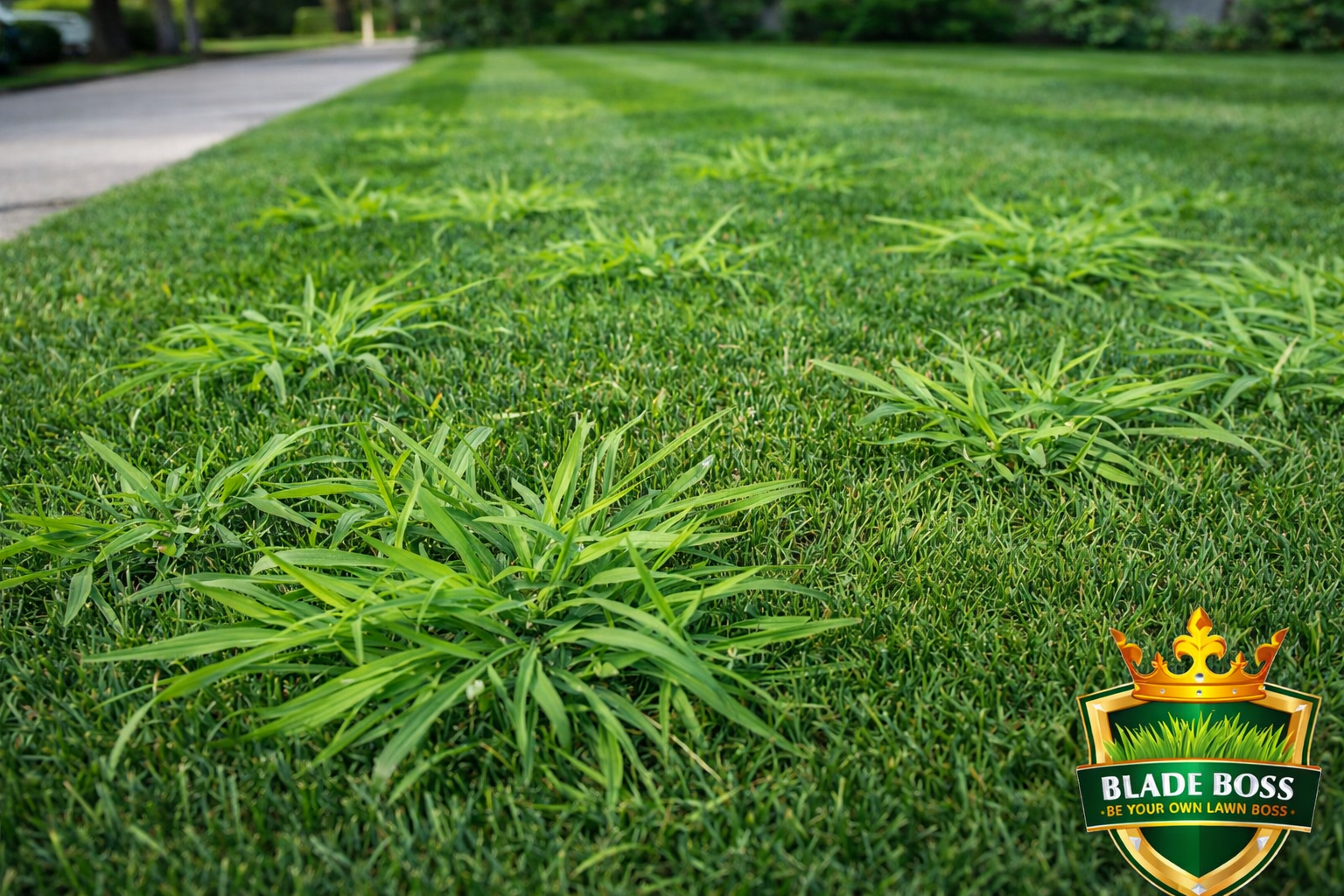
Every Long Island homeowner knows the feeling. You walk outside in mid-July, coffee in hand, and there it is. A light green patch spreading across your front yard like it owns the place. By the time you notice crabgrass, it's already winning.
And if you don't have a plan, a real one, that single patch will drop 150,000 seeds into your soil before frost kills it in November. Those seeds will sit there all winter, waiting. And next April, you'll be right back where you started. Our pre-emergent timing guide covers when to apply. This guide covers everything else: how to identify crabgrass, why Long Island lawns are especially vulnerable, how to fight it when prevention fails, and how to break the cycle for good. Our Dynamic Calendar tracks these windows automatically with GDD alerts. Our Stripe Master members get the complete 15-step Lawn Playbook that covers exactly this.
On Long Island (USDA Zone 7B), crabgrass prevention requires a multi-phase approach: split pre-emergent applications timed to GDD50 accumulation (first application at 100 GDD50, approximately April 6), a post-emergent rescue plan for escapes, and year-round cultural practices that make your turf too thick for crabgrass to establish. Soil temperature reaching 55 degrees Fahrenheit at 4-inch depth serves as secondary confirmation. Prodiamine is the backbone of the program and is capped per calendar year by grass species, so the rounds are split rather than stacked. This guide covers identification, the science of emergence timing, and a complete 3-year eradication strategy.
Know Your Enemy: What Crabgrass Actually Is
Crabgrass is not a perennial weed. It doesn't survive winter. It doesn't spread underground through rhizomes. It is a summer annual grass, which means every single plant you see in your lawn grew from a seed that germinated this spring. And every single plant will die at the first hard frost this fall. That sounds like good news until you learn the rest of the story.
One plant. 150,000 seeds. And those seeds don't all germinate at once. They stagger their germination across months as a survival strategy. That's why a single missed application leaves you fighting new seedlings from April through July. According to Rutgers NJAES research, crabgrass seeds remain viable in the soil seedbank for 3 or more years, meaning one bad summer can haunt you for multiple seasons.
Crabgrass is genetically optimized for exactly two things: germinating before you're ready and producing an absurd number of seeds before frost kills it. Your defense has to address both.
How to Identify Crabgrass (And What It's Not)
Misidentification is one of the biggest reasons people waste money on the wrong products. Crabgrass looks different from your desirable lawn grasses in several specific ways, but it's often confused with tall fescue clumps, quackgrass, or goosegrass.
| Feature | Crabgrass | Tall Fescue Clump | Quackgrass | Goosegrass |
|---|---|---|---|---|
| Growth Pattern | Prostrate, star-shaped spreading from center | Upright clump, bunch-type | Upright, spreads by rhizomes | Flat rosette, very prostrate |
| Blade Color | Light green to yellow-green | Dark green | Gray-green | Dark green, almost black center |
| Blade Width | Wide (1/4 to 1/3 inch) | Wide but coarse-textured | Narrow, clasping auricles | Wider, folded |
| Root System | Fibrous, can root at nodes | Deep fibrous bunch | Underground rhizomes | Taproot (whitish center crown) |
| Lifecycle | Summer annual (dies at frost) | Perennial (lives year-round) | Perennial (lives year-round) | Summer annual (dies at frost) |
| Peak Visibility | July to August | Year-round | Year-round | July to September |
| Seedhead | Multiple finger-like spikes | None visible in mowed lawn | Wheat-like spike | Herringbone (zipper) pattern |
Grab the suspect plant at its base and look at the growth pattern from above. Crabgrass stems radiate outward from a central point like a star or the legs of a crab. That's where the name comes from. If the plant grows upright in a tight bunch, it's probably a tall fescue clump. If it has a whitish, flattened center crown pressed flat against the soil, that's goosegrass.
The Crabgrass Lifecycle on Long Island
Understanding the lifecycle is the foundation of your battle plan. Each stage has a corresponding defensive action. Miss the stage, miss the opportunity.
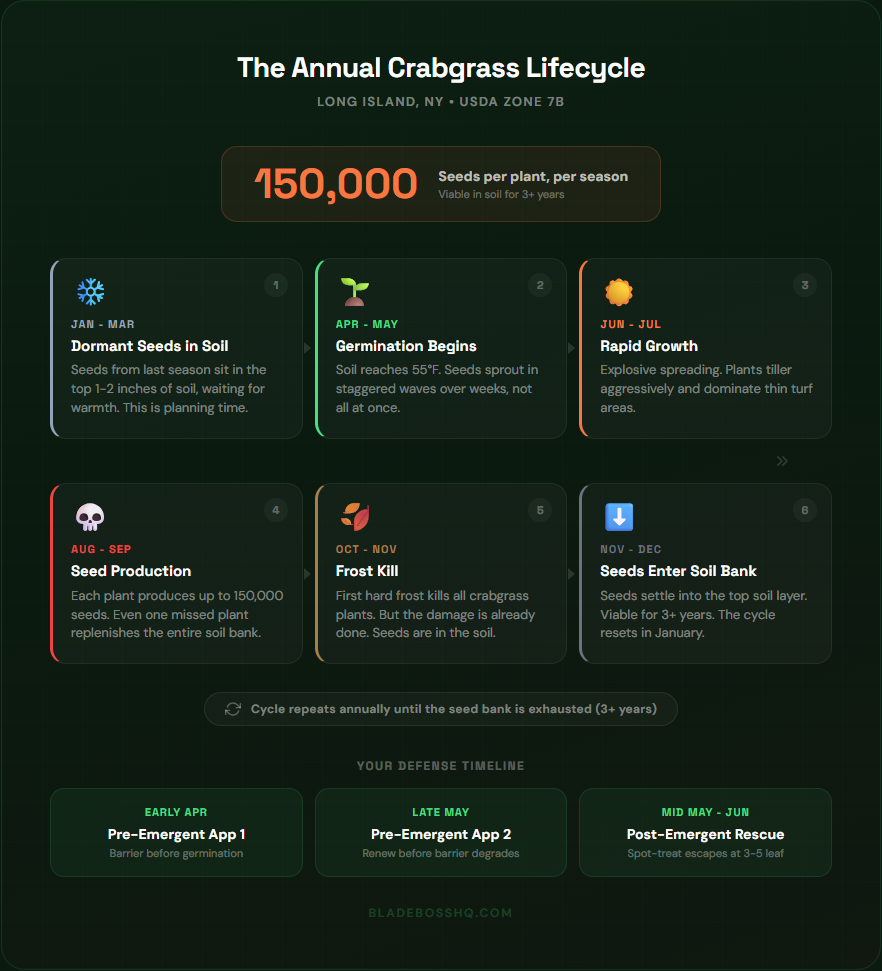
Dormant Seeds in Soil
Seeds from last season sit in the top 1 to 2 inches of soil, waiting for warmth. Your lawn is dormant too. This is planning time, not action time. Order your pre-emergent products now.
Pre-Germination Window Opens
Soil at 4-inch depth approaches 50 degrees Fahrenheit. GDD50 reaches 100. Your pre-emergent barrier must be in place NOW, before soil hits 55 degrees. Forsythia is blooming.
Germination Begins
Smooth crabgrass starts at ~150 GDD50 (~April 15 to 21). Large crabgrass follows at 300 to 350 GDD50 (~early May). Seeds germinate in flushes, not all at once. 80% germinate when soil holds at 60 to 70 degrees.
Peak Germination and Early Growth
Peak germination window. Young seedlings are vulnerable to post-emergent treatment in the 3 to 5 leaf stage (before tillering). Best post-emergent window: May 15 to June 4. After this, control gets much harder.
Explosive Growth and Seed Production
Mature plants spread aggressively, rooting at nodes where stems touch soil. One plant covers 1 to 3 square feet. Finger-like seedheads form by late July. Each plant produces up to 150,000 seeds by late August.
Seeding Continues, Growth Slows
Plants continue dropping seeds until frost. Late-germinating plants are smaller but still produce viable seed. This is NOT the time to fight crabgrass. Focus on fall overseeding to thicken turf for next year.
First Hard Frost Kills All Plants
Every crabgrass plant dies. Brown dead patches mark where they stood. But the seeds are already in the soil. The cycle resets. If you don't fill those bare spots with desirable grass, next year will be worse.
Why Long Island Lawns Are Especially Vulnerable
The standard crabgrass advice you find online is written for the entire country. It doesn't account for the specific conditions that make Long Island lawns harder to defend. There are four factors working against you here.
Sandy Loam Soils Leach Herbicide Faster
Most of Nassau and Suffolk County sits on glacial outwash (see our Zone 7B guide for the full soil profile) deposits of coarse sand and sandy loam. These soils drain fast, which is great for avoiding waterlogging but terrible for pre-emergent longevity. According to Rutgers Extension research, pre-emergent herbicides break down significantly faster in sandy soils with low organic matter. That 12-week residual on the product label was tested on midwest clay. On Long Island sand, you might get 6 to 8 weeks. This is why a single application fails here and split applications are essential.
Extended Germination Window from Coastal Heat
Long Island's position between the Atlantic Ocean and Long Island Sound creates a moderating effect that extends the growing season in both directions. Soil warms earlier in spring and stays warm later into fall compared to inland areas at the same latitude. The crabgrass germination window on Long Island stretches from mid-April through mid-July, roughly 13 weeks. On heavier inland soils, the effective window might be 8 to 10 weeks. More germination time means more chances for seeds to escape your barrier.
Hardscape Heat Islands Everywhere
Suburban Long Island is loaded with driveways, sidewalks, patios, and curbs. These surfaces absorb and radiate heat, warming the adjacent soil a full week earlier than the open lawn. The strips along your driveway and front walkway are always the first places crabgrass establishes. If you're spreading product with a broadcast spreader, granules bounce off pavement and leave coverage gaps right where you need it most.
Heavy Foot Traffic and Compaction
Smaller lot sizes and active outdoor living mean more foot traffic, which causes soil compaction. Compacted soil has less oxygen, fewer microbes, and thinner turf. Crabgrass thrives in compacted soil where desirable grasses struggle. The areas around playsets, pathways, and where the kids cut across the yard are crabgrass magnets.
One text when GDD50 hits 100 in your area. No spam, just perfect timing.
No spam. One seasonal alert per application window. Unsubscribe anytime.
Map Your Crabgrass Hot Zones with Lawn Map Pro™
Draw zones for driveway edges, high-traffic areas, and thin spots. Lawn Map Pro™ calculates exact square footage for each zone so your product amounts are precise, not guesses.
The GDD Emergence Curve: When Crabgrass Actually Germinates
Here's the emergence curve for Long Island based on Rutgers NJAES turfgrass research and Penn State turfgrass IPM research, calibrated against our NOAA climate normals KISP GDD50 accumulation data.
| GDD50 Accumulation | Approximate LI Date | What's Happening | Your Action |
|---|---|---|---|
| 100 | ~Apr 6 | Soil approaching 50 degrees at depth | Apply prodiamine App 1 NOW |
| 150 to 200 | ~Apr 15 to 21 | Smooth crabgrass seeds begin germinating | Barrier must be in place. Too late for prodiamine. Dithiopyr is your only rescue. |
| 300 to 350 | ~Early May | Large crabgrass begins germinating | Barrier holding. Monitor edges and thin spots. |
| 560 | ~Late May | 25% of total seeds have emerged | Apply prodiamine App 2. Largest share of your remaining budget. |
| 800 | ~Mid Jun | 50% of total seeds have emerged | Scout for escapes. Post-emergent window closing. |
| 1,100 | ~Early Jul | 75% of total seeds have emerged | Pendimethalin gap-closer if needed. Separate annual budget. |
| 2,500+ | ~Sep | Seed production complete, growth slowing | Plan fall overseeding. Do NOT apply pre-em to areas you'll seed. |
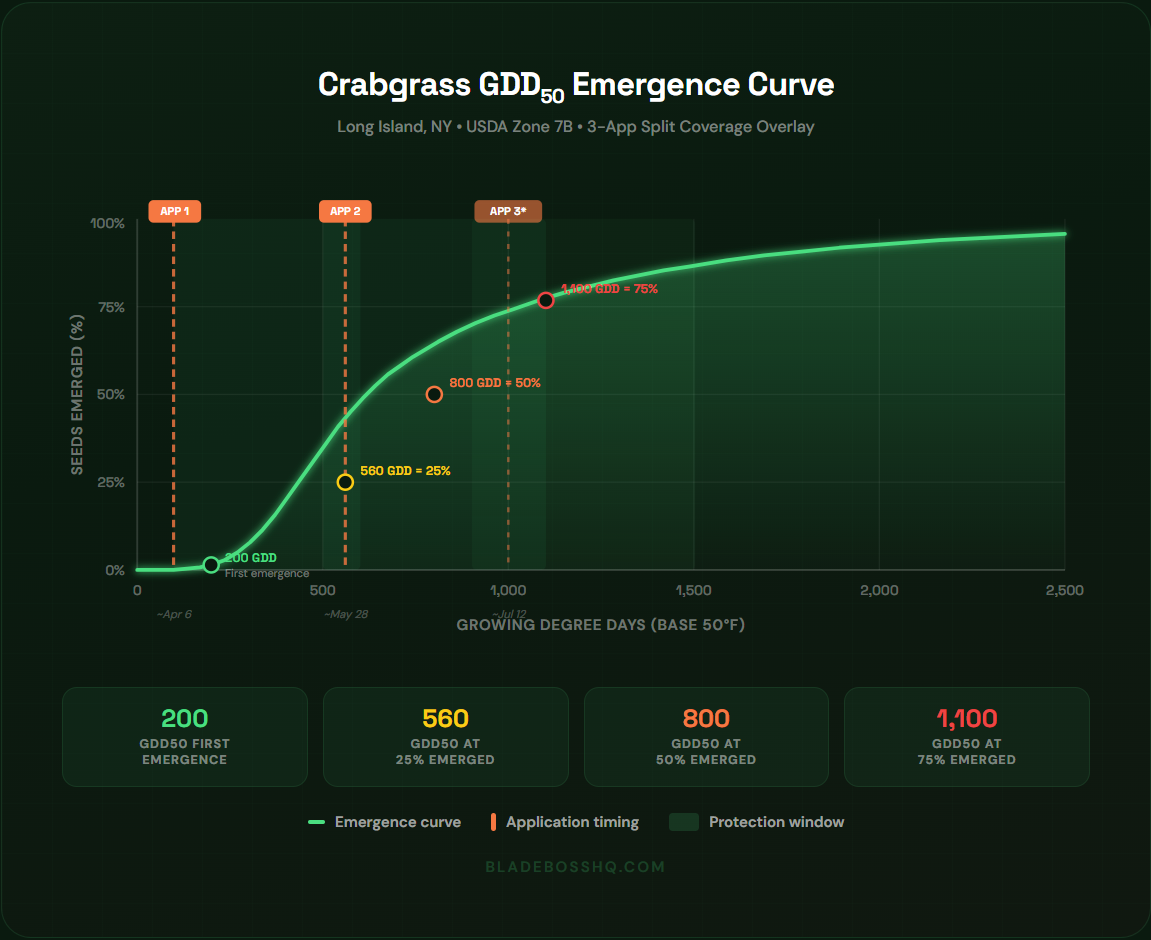
Notice that only 25% of crabgrass seeds have emerged by late May. That means 75% of potential germination is still ahead of you. If your single spring application has already degraded on sandy soil by this point (and it likely has), those remaining seeds will germinate into an unprotected lawn. This is why split applications aren't optional on Long Island.
Phase 1: Prevention (Pre-Emergent Strategy)
Pre-emergent herbicide is the cornerstone of any crabgrass program. It creates a chemical barrier in the top layer of soil that disrupts root development in germinating seeds before they can establish. Applied correctly, pre-emergents prevent 95% or more of crabgrass. We cover the complete timing protocol in our 2026 pre-emergent timing guide. Here's the summary.
The 3-Application Protocol for Long Island Sandy Soils
Application 1: Early April (GDD50 = 100)
Apply prodiamine at a reduced rate when GDD50 accumulation reaches 100, typically around April 6 on Long Island. Forsythia is blooming. Soil is approaching 50 to 55 degrees at 4-inch depth. Water in with 0.5 inches within 2 to 7 days. This establishes your initial barrier before smooth crabgrass germination begins around April 15 to 21.
Application 2: Late May to Early June
Use prodiamine again here, not Dimension. Nassau and Suffolk cap dithiopyr at roughly 0.37 fl oz per 1,000 sq ft for the entire year, so spending it on a scheduled round throws away the one thing it does that nothing else can, which is rescue you after crabgrass is already up. This round has the longest duty cycle of the season, carrying you from June into late August, so it gets the largest share of your remaining prodiamine budget.
Application 3 (Optional): Mid-July, and Switch Products
Here is the part most guides miss: this round is not prodiamine. Your prodiamine budget is spent after Application 2. Use pendimethalin instead. It carries its own separate annual budget, and its shorter residual is exactly what a July gap-closer needs. This covers the June to July stretch when 50 to 75% of total germination is still ahead. Not every lawn needs it, but if you had visible crabgrass last summer, you probably do.
Split applications divide the same annual total across more dates. You are not applying two or three times the product. Prodiamine labels set that total per calendar year by grass type: 0.42 oz per 1,000 sq ft for fine fescue, 0.55 oz for Kentucky bluegrass and perennial ryegrass, 0.83 oz for tall fescue. In granular terms with a 0.38 percent product that is 4.7, 6.2, and 9.3 lbs per 1,000. Because your fall round lands in the same calendar year as the following spring rounds, there is no rolling-window workaround. Exceeding the cap is not just a label violation. Prodiamine carryover in the soil will block your fall overseeding.
Prodiamine blocks grass seed the same way it blocks crabgrass seed. Label reseeding intervals run 4 months at the low rate and up to 7 months at the annual maximum. Long Island's overseeding window is August 25 to September 15, so a full-rate June round locks you out of seeding until October. If you overseed: skip the fall round entirely, use Tenacity at seeding instead since it is the only pre-emergent safe to apply with seed, then put your prodiamine down in early November once the new grass has been mowed twice. Keep the April round at or below the low label rate so the interval clears by late August.
Pre-Emergent Product Comparison for Long Island
| Product | Active Ingredient | Max Residual | Post-Em Activity | Role in the Program | Nassau and Suffolk Status |
|---|---|---|---|---|---|
| Barricade / granular prodiamine | Prodiamine | Up to 16 weeks | None | Rounds 1 and 2. The backbone. | Granular 0.38% general use. The 65% formulation is a New York restricted-use product. |
| Dimension 2EW | Dithiopyr | Up to 16 weeks | Crabgrass only, to 1-tiller | Rescue. Hold in reserve. | New York restricted use. Certified applicators only in Nassau and Suffolk, at 0.25 lb ai per acre per year. |
| Dithiopyr granular plus fertilizer | Dithiopyr + N | Up to 16 weeks | Crabgrass only, to 1-tiller | Not used in this program. | Label prohibits use in Nassau and Suffolk Counties. |
| Pendulum / Scotts Halts | Pendimethalin | 6 to 12 weeks | None | February bridge and mid-July gap-closer. | General use. Separate annual budget. |
| Tenacity | Mesotrione | About 4 weeks | Yes (suppression) | The only option at seeding time. | General use. |
For the detailed breakdown of each product with application rates and timing windows, see our complete pre-emergent timing guide.
The Fertilizer Blackout Conflict
Here's a wrinkle specific to Long Island that national guides never mention. Suffolk County Code Chapter 459 (Local Law 41-2007) prohibits applying fertilizer to turf from November 1 through April 1. Nassau County's blackout runs November 15 through April 1, and New York State prohibits lawn fertilizer statewide from December 1 through April 1. Many popular pre-emergent products are combination weed-and-feed or fertilizer-carrier products. If you put one of those down before April 1, you're breaking the law.
Before April 1, use a straight herbicide with no fertilizer in it. In Suffolk County, anything that contains a plant nutrient counts as fertilizer, and that includes potassium-only 0-0-7 carrier products, so a prodiamine on a 0-0-7 granule does not qualify for an early application. Lime is the exception. Save your fertilizer-carrier pre-emergent for the April round and later, and apply your first spring fertilizer after April 1.
Track Soil Temperature Live with Weather Hub
Weather Hub inside Lawn Map Pro™ shows real-time soil temperature data, GDD50 accumulation, and custom alerts when your pre-emergent window opens. Stop guessing. Start tracking.
Phase 2: Post-Emergent Rescue (When Prevention Fails)
Even the best pre-emergent program will have escapes. Seeds along driveway edges, in thin spots, or in areas where product distribution was uneven will break through. The key is catching them early. According to university extension research from Cornell, Rutgers, and Penn State, post-emergent herbicides are most effective on young crabgrass in the 3 to 5 leaf stage, BEFORE it begins tillering.
Post-Emergent Products That Work on Crabgrass
Standard broadleaf weed killers (the 2,4-D, MCPP, and dicamba three-way products) do NOT kill crabgrass. Crabgrass is a grass, not a broadleaf weed. You need grassy weed post-emergents specifically. When pre-emergent misses a spot and you need to go post-emergent, product selection matters. Our weed killer guide for Northeast lawns ranks every option by safety and effectiveness.
Join Long Island homeowners who get data-driven lawn care tips every week. Seasonal reminders, timing alerts, and the stuff your lawn service won't tell you.
Quinclorac (Drive XLR8)
The strongest homeowner-accessible option on mature crabgrass. In New York, dilutable quinclorac products like Drive XLR8 are restricted-use and labeled for spot treatment only, not broadcast application. Requires MSO (methylated seed oil) surfactant for uptake. Ready-to-use quinclorac products sized at 1.33 gallons or less are general use, and also spot treatment only.
Fenoxaprop (Acclaim Extra)
Highly selective grassy weed killer. Safe on most cool-season turf except fine fescue. Excellent on young crabgrass. Not effective once plants are mature and seeding. Check the label for its New York status before you buy.
Dithiopyr (Dimension)
Not a true post-emergent, but it catches crabgrass up to the 1-tiller stage. This is your rescue if you missed the April window. Nassau and Suffolk allow roughly 0.37 fl oz per 1,000 sq ft per year and professional products are certified-applicator only, so use it deliberately rather than as a routine round.
- Scout first, spray second. Walk your entire lawn in mid-May. Mark where you see young crabgrass. Spot-treat those areas. In New York, quinclorac products are labeled for spot treatment only anyway.
- Don't mow 2 days before or after treatment. You need maximum leaf surface for herbicide uptake. Mowing before reduces the target. Mowing after removes absorbed product.
- Apply when temps are 60 to 85 degrees. Below 60, crabgrass isn't actively growing enough for uptake. Above 85, risk of turf stress increases.
- Use MSO surfactant with quinclorac. Without it, the product sits on the waxy leaf surface and drips off. MSO breaks the surface tension.
- Don't spray drought-stressed crabgrass. Irrigate first if the lawn is dry. Drought-stressed plants have reduced uptake and you'll waste product.
- Expect to repeat in 2 to 3 weeks. Mature plants often need a second application. Young seedlings usually die with one pass.
Phase 3: Cultural Defense (The Practices That Prevent Crabgrass)
Herbicides are only half the battle. According to Virginia Tech turfgrass research, a dense turf canopy controls far more weeds than any chemical you will ever apply. Crabgrass needs sunlight to germinate. If your turf is thick enough to shade the soil surface, crabgrass seeds can't get started.
1. Mow at 3.5 to 4 Inches
This is the single most impactful cultural practice for crabgrass prevention. Taller grass shades the soil surface, reducing light and heat at the germination zone. According to the University of Illinois Extension, lawns mowed above 3 inches have significantly fewer crabgrass problems than close-mowed lawns. Crabgrass can set seed when cut as low as half an inch, so mowing lower does not control it and actually makes the problem worse.
2. Water Deep and Infrequent
Light, frequent watering keeps the top inch of soil moist, which is exactly where crabgrass seeds sit. Deep, infrequent irrigation (1 inch per week in 1 to 2 sessions) pushes moisture down to the root zone of your desirable grass while letting the surface dry between waterings. This favors established turf roots over shallow crabgrass seedlings.
3. Fix Compaction with Fall Core Aeration
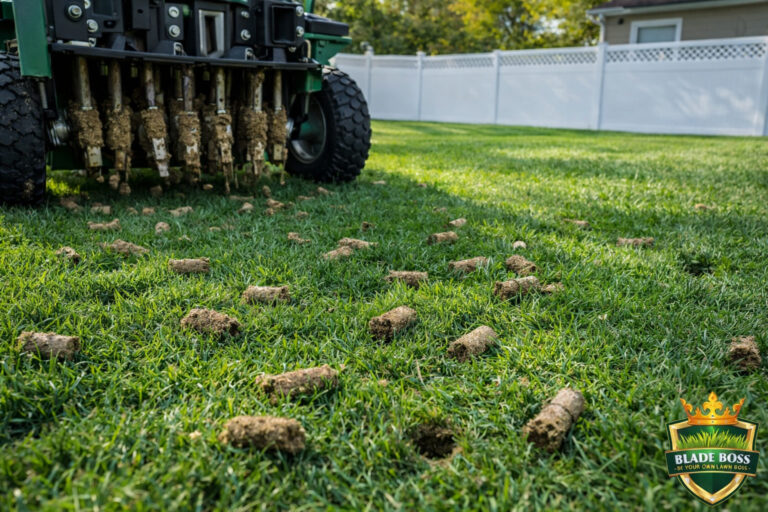
Compacted soil is crabgrass habitat. Core aerate in September to October (the ideal window on Long Island) to relieve compaction, improve drainage, and create an ideal seedbed for overseeding. Do NOT aerate in spring if you've applied pre-emergent because pulling cores breaks the herbicide barrier.
4. Overseed Thin Spots Every Fall
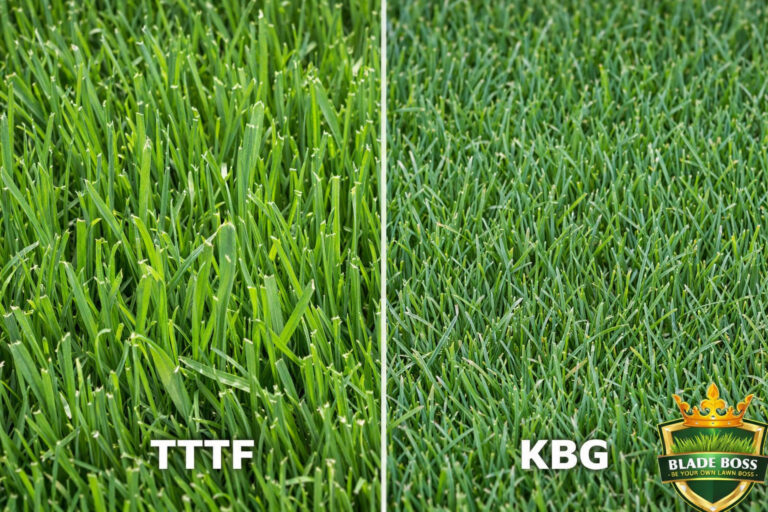
Every bare or thin spot in your lawn is an invitation for crabgrass next spring. September is the ideal overseeding window on Long Island. Fill those gaps with a quality cool-season grass blend (KBG/TTTF/PRG) now and you'll have thick turf shading those areas by the time crabgrass tries to germinate next April.
5. Maintain Proper Soil pH and Fertility
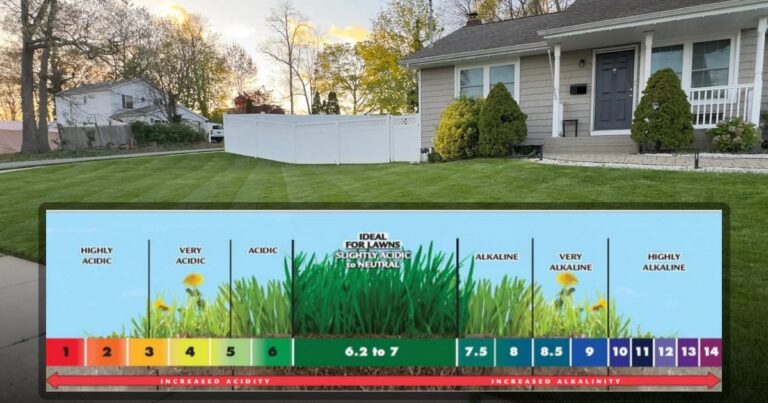
Healthy grass that's well-fed and growing in properly balanced soil (pH 6.2 to 6.8) is dense and competitive. Underfed, stressed turf thins out and opens the door to weeds. Fall fertilization is especially important because it drives root growth and tillering that carries into spring. Remember: the Suffolk County blackout ends April 1, so plan your spring fertilizer for that first legal week. See our fertilizer schedule for timing Round 1 alongside your pre-emergent.
Granular Prodiamine 0.38%
Pre-emergent on a 0-0-7 potassium carrier. Load a broadcast spreader and walk it, no mixing and no sprayer. Best choice for the split protocol on Long Island's sandy soil. Two things to know: because it contains potassium it counts as fertilizer, so in Suffolk it goes down on or after April 1 rather than during the blackout, and the spreader settings printed on the bag assume the full bag rate while this program runs reduced rates. Calibrate before your first round or you will burn a third of your annual budget in one pass.
Check Price on AmazonThe 3-Year Eradication Plan
You will not eliminate crabgrass in one season. The seed bank lasts 3 or more years. But with a consistent program, you can exhaust it. Here's the multi-year strategy based on university extension recommendations and Long Island field experience.
| Year | Spring | Summer | Fall |
|---|---|---|---|
| Year 1 (Heavy Infestation) | Full protocol. Pendimethalin bridge in late February, prodiamine at GDD50 100, prodiamine again late May. Hold dithiopyr in reserve. | Scout weekly. Spot-treat all escapes with quinclorac before tillering. Mow at 4 inches. Do NOT let any crabgrass go to seed. | Core aerate. Overseed ALL thin and bare areas. Apply fall fertilizer before the blackout. Lime if pH is below 6.2. |
| Year 2 (Moderate) | Same protocol, App 1 at GDD50 100 and App 2 late May. Most seed bank from Year 1 prevented from replenishing. | Fewer escapes. Spot-treat immediately when found. Maintain 3.5 to 4 inch mowing height. Deep irrigation. | Overseed remaining thin spots. Apply fall fertilizer. Continue annual soil testing. |
| Year 3 (Maintenance) | Same protocol at reduced rates as the seed bank depletes. If goosegrass is breaking through by now, rotate one round to bensulide. Prodiamine, pendimethalin, and dithiopyr are all HRAC Group 3, so swapping among them is not a rotation. | Minimal escapes. Spot-treat any that appear. Dense turf now doing most of the prevention work. | Maintain fall overseeding program. Your turf density is now your primary defense. |
In Year 1, your #1 priority is preventing EVERY crabgrass plant from going to seed. Even one mature plant that sets seed replenishes the soil bank with up to 150,000 seeds. Pull, spray, or dig out every plant you see before August. It's tedious, but it's the fastest way to break the cycle.
The 5 Biggest Crabgrass Mistakes on Long Island
- Treating crabgrass with broadleaf weed killer. The 2,4-D, MCPP, and dicamba products that kill dandelions and clover do absolutely nothing to crabgrass. You need grassy weed specific herbicides (quinclorac, fenoxaprop) or pre-emergent barriers (prodiamine, dithiopyr).
- One and done pre-emergent on sandy soil. A single application degrades in 6 to 8 weeks on Long Island's sandy loam. That leaves 2+ months of germination unprotected. Split applications are the answer.
- Spending your dithiopyr on a scheduled round. Nassau and Suffolk cap it at roughly 0.37 fl oz per 1,000 for the whole year. Use it as your rescue when crabgrass is already up, not as a calendar application.
- Mowing too low. Scalping the lawn to keep it neat removes the shade that suppresses crabgrass germination. Every research source agrees: 3.5 to 4 inches is the minimum mowing height for weed prevention.
- Ignoring crabgrass that appears after July. Late-season crabgrass is ugly but many homeowners think it'll die at frost anyway. True, but each plant is still producing thousands of seeds. Pull or spot-spray late-season plants to reduce next year's seed bank.
Build Your Crabgrass Battle Plan
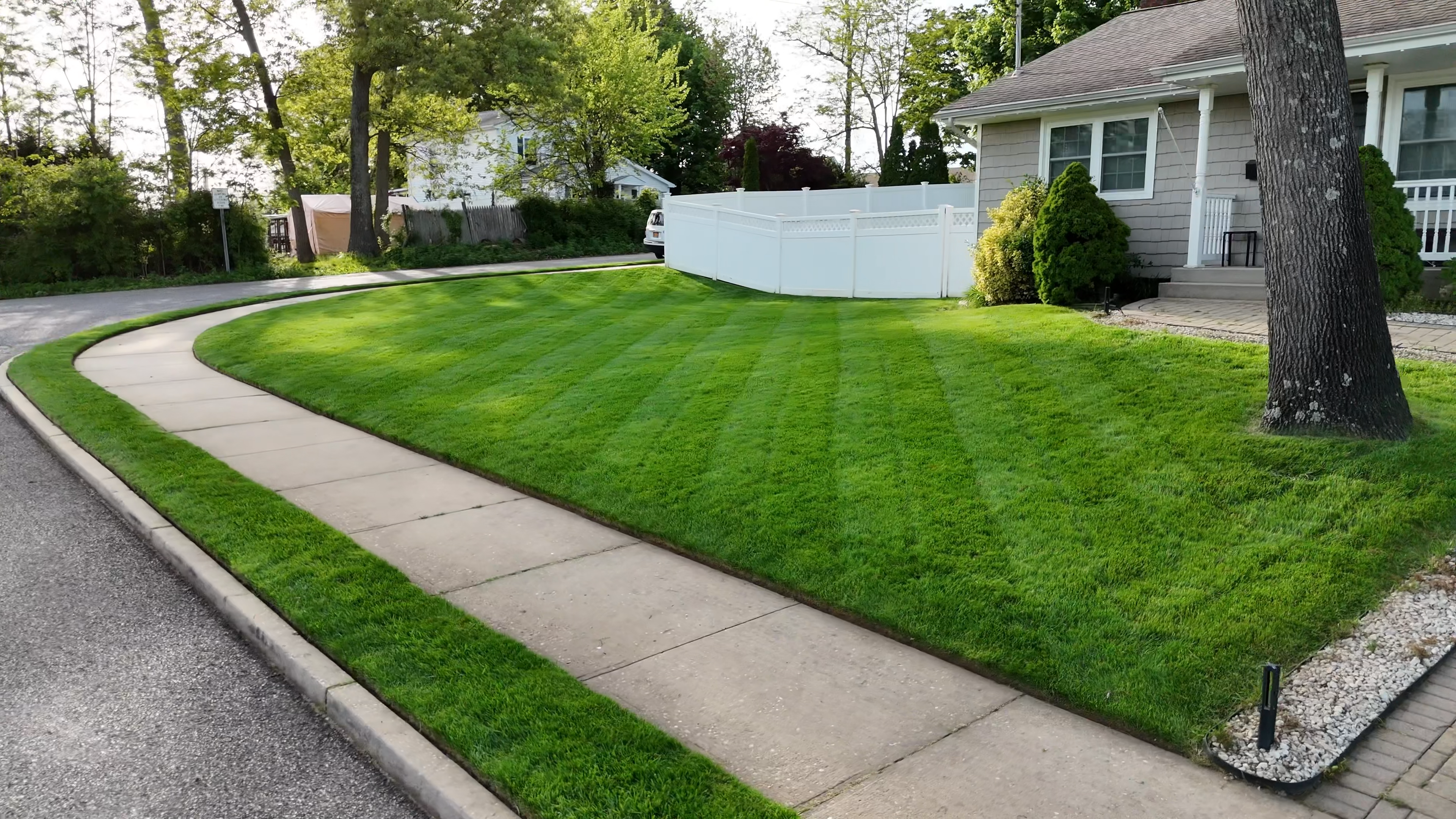
I'm a Combat Search and Rescue pilot turned airline pilot. In the cockpit, we don't fly an approach without a plan, and we don't fight weather without data. Your lawn deserves the same approach. The difference between a crabgrass-free lawn and one that's overrun by July comes down to timing, consistency, and using the right tool for each phase of the fight.
Prevention handles 95% of the problem. Post-emergent rescue handles the escapes. Cultural defense makes sure your turf is strong enough to hold the ground you've gained. And a consistent multi-year program exhausts the seed bank permanently. Don't fight crabgrass with guesswork. Fight it with data.
Crabgrass prevention is just one piece of the puzzle. Make sure your fall aeration thickens the turf that crowds crabgrass out naturally. Stay on top of grub damage that thins your lawn and opens invasion paths. Our spring recovery guide addresses bare patches before crabgrass finds them, and the TTTF vs KBG comparison helps you pick the densest turf for your conditions. If clover is also moving in, we've got you covered.
Crabgrass plus 7 other common weeds with photos, ID tips, prevent and kill products, and the seasonal timing calendar for Long Island.
Blade Boss gives you the precision tools to time every application, track soil temperatures, calculate exact product amounts for your zones, and build a season-long crabgrass prevention plan. See our membership plans or start free and see the difference data makes.
See Plans →Frequently Asked Questions
When does crabgrass start growing on Long Island?
On Long Island in USDA Zone 7B, smooth crabgrass begins germinating around mid-April when soil temperature at 2 to 4 inch depth reaches 55 degrees Fahrenheit for several consecutive days. Based on 30-year NOAA climate data, this typically occurs around April 15 to 21. Large crabgrass germinates slightly later, around early May. Peak germination runs from May through mid-June, with sporadic germination continuing into July.
How many pre-emergent applications do I need for crabgrass on Long Island?
For most Long Island lawns, one application is not enough. The sandy loam soils that dominate Nassau and Suffolk leach herbicide faster than clay or loam, and a single spring application typically degrades within 6 to 8 weeks, leaving the lawn unprotected from late May through August while crabgrass is still germinating. The legal maximum for a Kentucky bluegrass or perennial ryegrass lawn is three prodiamine rounds per calendar year at reduced rates, because prodiamine labels cap annual use at 0.55 oz per 1,000 sq ft for those species. Adding pendimethalin, which carries its own separate annual budget, allows another round without exceeding any label limit.
How much prodiamine can I legally apply per year on Long Island?
Prodiamine labels set a maximum per calendar year by turf species, not per season or per rolling 12 months. Fine fescue is capped at 0.42 oz per 1,000 sq ft, Kentucky bluegrass and perennial ryegrass at 0.55 oz, and tall fescue at 0.83 oz. Using a 0.38 percent granular product, that works out to roughly 4.7, 6.2, and 9.3 lbs per 1,000 sq ft respectively. Because a fall round lands in the same calendar year as the following spring rounds, there is no rolling-window workaround. Exceeding the cap is a label violation, and prodiamine carryover in the soil will also block your fall overseeding.
Why does crabgrass keep coming back on my Long Island lawn?
Crabgrass returns because a single plant produces up to 150,000 seeds that remain viable in soil for 3 or more years. Long Island's sandy loam soils also leach pre-emergent herbicide faster than clay or loam soils, meaning a single spring application often degrades before the full germination window closes in July. Breaking the cycle requires a consistent 2 to 3 year program combining split pre-emergent applications, prompt post-emergent spot treatment of escapes, and fall overseeding to thicken your turf canopy.
Can I kill crabgrass after it has already sprouted?
Yes, but timing matters. Post-emergent herbicides like quinclorac (Drive XLR8) and fenoxaprop (Acclaim Extra) are most effective when crabgrass is young, in the 3 to 5 leaf stage before it begins tillering. On Long Island, this window runs from about May 15 to June 4. Note that in New York, dilutable quinclorac products such as Drive XLR8 are restricted-use products and are labeled for spot treatment only, not broadcast application. After crabgrass has tillered and formed large mats, control drops significantly and may require repeat spot treatments.
Can I use Dimension on Long Island as a homeowner?
It depends on the product. Straight homeowner dithiopyr granules are general-use products in New York, capped at 0.25 lb of dithiopyr per acre per year. Professional dithiopyr products such as Dimension 2EW are New York restricted-use products, and in Nassau and Suffolk Counties only certified applicators may use them, at the reduced rate of 0.25 lb of dithiopyr per acre per year, which works out to roughly 0.37 fl oz per 1,000 sq ft for the entire year. Separately, granular dithiopyr products that include fertilizer, such as Dimension 0.22 percent Plus Fertilizer, carry a label prohibiting their use in Nassau and Suffolk Counties entirely.
Does a thick lawn really prevent crabgrass?
Yes. Dense, healthy turf is the single most effective long-term crabgrass defense. Crabgrass needs sunlight to germinate, and a thick canopy at 3.5 to 4 inches shades the soil surface enough to suppress most seedlings even without pre-emergent. Combine proper mowing height, balanced soil pH between 6.2 and 6.8, and adequate nitrogen with a pre-emergent program and you create conditions where crabgrass simply cannot compete.

Keep Reading
 Lawn Science
Long Island Soil pH Guide: How to Test and Fix Your Lawn’s Foundation
Most Long Island lawns test between pH 5.9 and 6.2, which is too acidic for peak nutrient uptake....
Feb 26, 2026
18 min
 Lawn Science
Tall Fescue vs Kentucky Bluegrass: Which Is Best for Long Island?
For Long Island's sandy soil and summer heat, tall fescue wins on drought tolerance and low maintenance. Kentucky...
Mar 12, 2026
14 min
 Long Island Local
When to Aerate Your Lawn on Long Island: The Complete Timing Guide
Fall is the best time to aerate on Long Island. Learn the exact timing window, soil temperature triggers,...
Mar 8, 2026
15 min
What is your lawn actually sitting on?
Pull the soil survey, hardiness zone and current growing conditions for your exact address. Eight government sources, about a minute.
No comments yet. Be the first to share your thoughts.
Create a free account to join the conversation.