When to Apply Pre-Emergent on Long Island: The 2026 Schedule Backed by 30 Years of Data

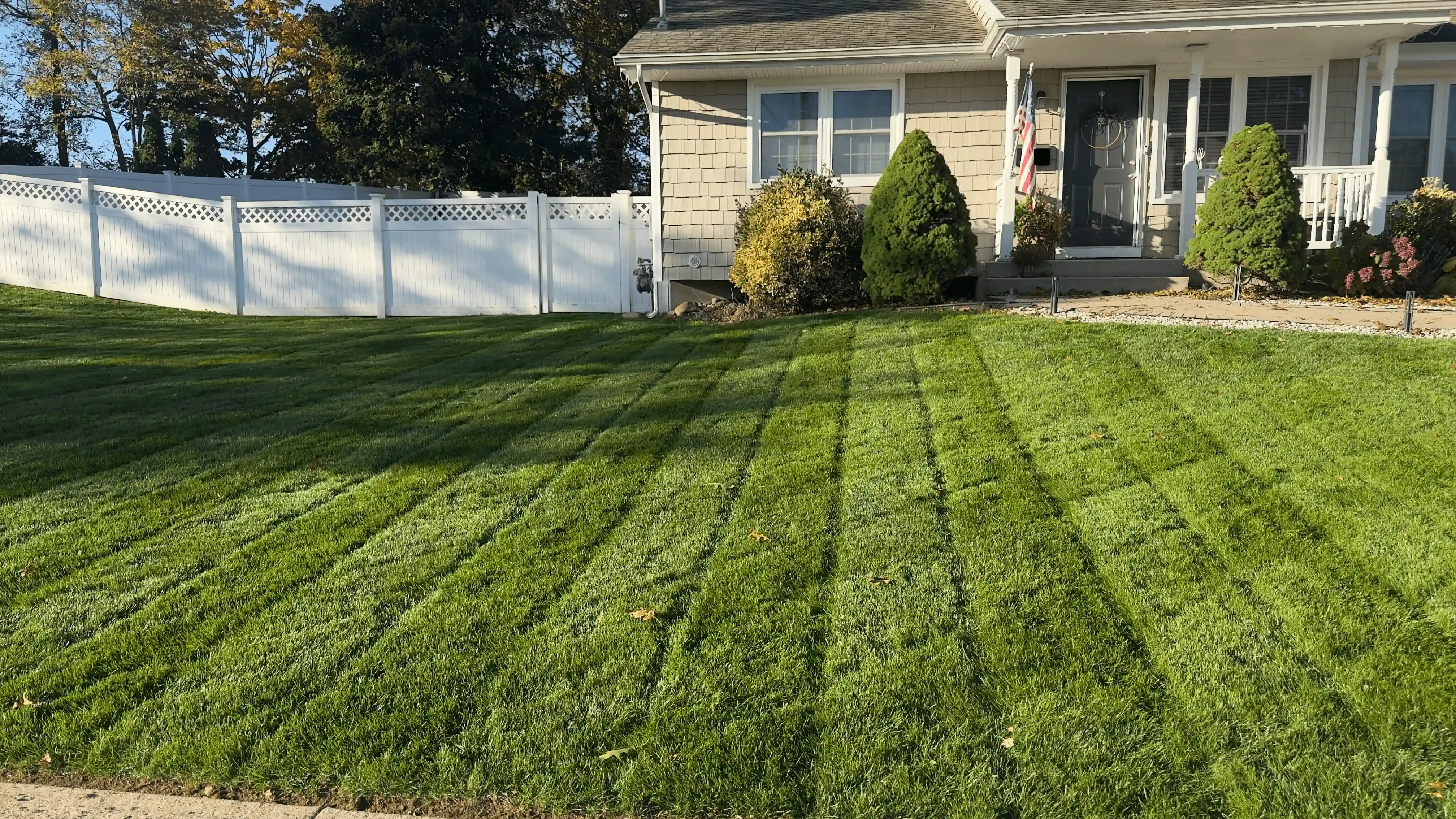
Every spring, thousands of Long Island homeowners dump pre-emergent on their lawns at the wrong time and then spend July cursing at crabgrass. They followed the bag directions. They read a blog that said "apply when soil hits 55 degrees." They did everything right. And they still lost. Here's why: generic advice doesn't account for Long Island's sandy loam soils, our coastal microclimate, or the fact that a single application was never going to cut it on this island.
I've spent two years building a zone-specific data library for USDA Zone 7B, cross-referencing 30 years of NOAA climate records from the Islip MacArthur Airport weather station (KISP) with soil temperature monitoring data from Cornell Cooperative Extension's Suffolk County research plots. The result is a pre-emergent timing strategy that's backed by actual science, not marketing copy from a fertilizer company's website. Our Dynamic Calendar tracks these windows automatically with GDD alerts. Our Stripe Master members get the complete 15-step Lawn Playbook that covers exactly this.
This guide gives you the exact dates, the exact soil temperature triggers, the exact growing degree day (GDD) thresholds, and the exact product strategy for Long Island lawns in 2026. No guessing. No "sometime in early spring." Precision.
On Long Island (USDA Zone 7B), your first pre-emergent application should go down between late March and April 5, 2026. Based on 30-year NOAA data for Suffolk County, soil temperatures at 4-inch depth reach 50 degrees Fahrenheit around April 4 and 55 degrees Fahrenheit around April 21. Your barrier must be in place before that 55-degree mark. For precision timing, apply when growing degree days (GDD base 50) reach 100, which historically falls around April 6. If you have sandy soil (most of Long Island does), plan a second application 6 to 8 weeks later in mid-May, and consider a third in mid-June for season-long protection.
Why Most Pre-Emergent Advice Fails on Long Island
Google "when to apply pre-emergent" and you'll get the same recycled advice from every lawn care site on the internet: "Apply when soil temperatures reach 55 degrees Fahrenheit." That's not wrong, exactly. It's just incomplete. And incomplete advice on Long Island is the same as wrong advice.
Long Island has three characteristics that make generic pre-emergent timing dangerous:
Sandy Loam Soils
According to the NRCS Suffolk County soil survey, 43% of the island sits on Carver and Plymouth series soils (coarse sand), with Riverhead sandy loam covering another 15%. These soils drain fast, which means pre-emergent herbicide leaches faster. A product that lasts 10 to 12 weeks on clay soil in Pennsylvania lasts 6 to 8 weeks here.
Coastal Microclimate
NOAA data shows Long Island's maritime influence delays spring warming by 1 to 2 weeks compared to inland areas at the same latitude. Our fog frequency (about 52 days per year at KISP) slows GDD accumulation in early spring. But once soil warms, it stays warm longer into fall, extending the crabgrass germination window.
Spring Rain Patterns
Long Island averages 4 to 5 inches of rain in April and May. Heavy spring rains on sandy soil accelerate herbicide breakdown. That "12-week residual" on the product label was tested on midwest clay. On Long Island sand, you might get 8 weeks if you're lucky.
This is why the standard "one-and-done" pre-emergent strategy fails here. It's not that the product doesn't work. It's that it doesn't last long enough on our soils to cover the full crabgrass germination window, which on Long Island stretches from mid-April through mid-July.
The Science: Soil Temperature and GDD Explained
Before we get into dates, you need to understand the two metrics that actually drive pre-emergent timing. Calendar dates are convenient, but they shift year to year with weather patterns. The science doesn't care what month it is. It cares about heat accumulation in the soil.
Soil Temperature at 4-Inch Depth
Crabgrass seeds germinate when soil temperature at 2 to 4 inch depth reaches 55 degrees Fahrenheit and holds there for several consecutive days. This is the trigger that matters. Air temperature is unreliable because soil lags behind air by roughly 5 to 8 degrees Fahrenheit, and it takes sustained warmth (not a random 70-degree day in March) to push soil to the germination threshold.
Based on NOAA 1991 to 2020 climate normals for the Islip station (USW00004781), calibrated against Cornell Cooperative Extension Suffolk County's Jamesport soil monitoring data, here's what Long Island's soil temperature progression looks like at 4-inch depth:
The critical dates derived from this data:
- 50 degrees Fahrenheit reached: approximately April 4 (this is your pre-emergent window opening)
- 55 degrees Fahrenheit reached: approximately April 21 (crabgrass germination begins, your barrier MUST be down)
- 60 degrees Fahrenheit reached: approximately May 9 (peak crabgrass germination, goosegrass starting)
- 65 degrees Fahrenheit reached: approximately May 25 (late germinators, spurge emerging)
Previous estimates placed the 50-degree soil threshold at April 12, a full 8 days later. Updated analysis using MacArthur Airport air temperatures (1991 to 2020) calibrated with Cornell CCE Suffolk County's Jamesport soil monitoring station shows soil hits 50 degrees Fahrenheit around April 4. That's 8 extra days of germination risk that the old data missed. If you were using April 12 as your target, you may have been late every year without knowing it.
Track It with Weather Hub
The Blade Boss Weather Hub inside Lawn Map Pro™ monitors growing degree day accumulation and soil temperature estimates for your exact location on Long Island. Set alerts and never miss your pre-emergent window.
Growing Degree Days: The Precision Metric
Growing degree days (GDD) measure cumulative heat over time. They're more reliable than a single soil temperature reading because they account for the total thermal energy the soil has absorbed across the entire spring. A freak warm week in March doesn't trigger GDD thresholds, but sustained warmth does.
For crabgrass pre-emergent timing, we use GDD base 50 (GDD50), which only counts heat above 50 degrees Fahrenheit. Research from Purdue, Michigan State, and Rutgers confirms these thresholds:
Based on NOAA Islip normals, Long Island's cumulative GDD50 hits these thresholds on these approximate dates:
- GDD50 reaches 100: approximately April 6 (APPLY your first pre-emergent by this date)
- GDD50 reaches 200: approximately April 21 (crabgrass germination imminent, this is your DEADLINE)
- GDD50 reaches 500: approximately May 17 (25% of crabgrass seeds have emerged)
- GDD50 reaches 800: approximately June 3 (50% emerged, peak spring growth)
- GDD50 reaches 1100: approximately June 15 (75% emerged, residual must still be active)
Year-to-year soil temperature variation on Long Island is plus or minus 7 to 16 days for the same threshold, based on Cornell's Jamesport monitoring data comparing 2022 and 2023. The 55-degree soil mark came 16 days apart between those two years. That's why "apply in early April" is a gamble but "apply at 100 GDD50" is precision. Blade Boss tracks GDD accumulation for your exact location so you don't have to guess.
One text when growing degree days reach the pre-emergent threshold in your area. Perfect timing, zero guesswork.
No spam. One seasonal alert per application window. Unsubscribe anytime.
The 2026 Long Island Pre-Emergent Schedule
Here's the complete schedule. These dates are based on 30-year NOAA averages, but your actual application should be guided by real-time soil temperature and GDD tracking. Weather varies year to year. Use these dates as your planning framework and adjust based on what the data is telling you in the moment.
Application 1: The Foundation (Late March to Early April)
Check Your Soil Temperature
Starting in mid-March, take soil temperature readings at 4-inch depth in a representative area of your lawn (not near pavement, not in full shade). A standard meat thermometer works. You're watching for readings consistently approaching 50 degrees Fahrenheit. On Long Island, this typically happens around April 4 based on 30-year averages.
Watch the Forsythia
Forsythia bushes are your natural backup indicator. On Long Island, forsythia typically blooms in mid-March. But here's the critical correction that most guides get wrong: according to Cornell Cooperative Extension, forsythia bloom means the window is CLOSING, not opening. When petals start dropping, soil is approaching 55 to 60 degrees Fahrenheit and crabgrass germination is imminent. Your pre-emergent should already be in the ground before forsythia reaches full bloom.
Apply Your First Pre-Emergent
Target date: GDD50 of 100, which is roughly April 6 on Long Island. Apply prodiamine at 1.8 lbs per 1,000 sq ft of a 0.38 percent granular, or 0.16 oz per 1,000 sq ft of a 65 percent liquid formulation. That is a reduced rate on purpose, because you are budgeting three prodiamine rounds against a strict calendar-year maximum. Do not reach for Dimension here. Hold it in reserve as your rescue if you miss this window. Spread evenly with a calibrated spreader for granular products or a backpack sprayer for liquid.
Water It In
Pre-emergent herbicide must be watered into the soil within 2 to 7 days of application to activate the chemical barrier. You need roughly half an inch of water. If rain is in the forecast within a few days, let nature handle it. If not, run your irrigation system. On Long Island, Suffolk County odd/even watering schedules apply year-round, so plan your irrigation day accordingly.
Suffolk County Local Law No. 41-2007 prohibits lawn fertilization from November 1 through April 1. Nassau County's blackout runs November 15 through April 1. If you're using a pre-emergent with fertilizer (combo product), you cannot apply in Suffolk County until April 1. For this reason, consider applying a standalone pre-emergent (no fertilizer) in late March, then following up with fertilizer after April 1 when it's legal. This gets your weed barrier down earlier without breaking the law. See our Long Island fertilizer schedule for how Round 1 aligns with pre-emergent timing.
Application 2: The Reinforcement (Late May to Early June)
This is the application that separates the lawns that look great in June from the ones covered in crabgrass by July. By mid-May, your first application has been in sandy Long Island soil for 6 to 7 weeks with spring rains hammering it. The barrier is significantly weakened. Meanwhile, crabgrass germination is peaking.
Target date: late May to early June. Apply prodiamine at 2.0 lbs per 1,000 sq ft granular, or 0.18 oz per 1,000 sq ft liquid. This restores the chemical barrier right when the highest volume of crabgrass seeds are germinating. Research from Rutgers NJAES confirms that split applications using reduced rates are especially effective on sandy soils with low organic matter, which describes most of Long Island's soil profile.
Long Island sandy loam soils (Carver, Plymouth, Riverhead series) leach herbicide faster than clay or loam. A single application degrades before the full crabgrass germination window closes. Two applications maintain the barrier from April through July. Rutgers and Cornell both recommend split applications for sandy Northeast soils.
Application 3: The Pendimethalin Gap-Closer (Mid-July)
This third application is optional but recommended if you have heavy crabgrass history, visible sand in your soil, or if your lawn borders pavement (driveways, sidewalks, patios create heat islands that accelerate germination along edges).
Target date: mid-July. Here is the key point most guides miss: this round is not prodiamine. Your prodiamine budget is spent after Application 2. Pendimethalin is a separate active ingredient with its own annual maximum, so this round costs you nothing against the prodiamine cap. Apply at bag rate for granular, or 1.6 fl oz per 1,000 sq ft for liquid. You're targeting late-germinating crabgrass, goosegrass (which needs soil above 60 to 65 degrees Fahrenheit and runs later than crabgrass), and spotted spurge. Pendimethalin's 6 to 8 week residual on sand carries you to mid-September, overlapping your fall round. Skip this one if your lawn is drought-stressed. Never apply pre-emergent to turf under heat stress.
Prodiamine labels set a maximum per calendar year, January through December, by turf species. Fine fescue is capped at 0.42 oz per 1,000 (4.7 lbs of 0.38 percent granular). Kentucky bluegrass and perennial rye are capped at 0.55 oz (6.2 lbs). Tall fescue gets 0.83 oz (9.3 lbs). Your fall round and the following spring rounds all fall inside the same calendar year, so there is no rolling-12-month workaround. Three prodiamine rounds at reduced rates is the legal maximum for a bluegrass or rye lawn. Running three apps at full bag rate puts you roughly 45 percent over the cap, and the penalty is not just legal. Excess prodiamine carries over in the soil and locks you out of fall overseeding.
Calculate Exact Product Amounts for Your Lawn
Enter your zone sizes from Lawn Map Pro, select your pre-emergent product, and get the exact amount you need for each application. No more over-buying or under-applying.
The Complete 2026 Timeline at a Glance
Mid-March: Start Monitoring
Begin taking soil temperature readings at 4-inch depth. Watch forsythia buds. If forsythia is blooming, your window is already open.
March 25 to April 5: Application 1
Apply prodiamine or dithiopyr when soil approaches 50 degrees Fahrenheit or GDD50 reaches 100. Water in within 2 to 7 days. This is your foundation.
April 1: Fertilizer Legal in Suffolk County
If you used a standalone pre-emergent in March, you can now apply your first spring fertilizer. Keep it light: 0.5 lbs nitrogen per 1,000 sq ft with slow-release. Your first mow of the season typically falls in this same window formula.
April 15 to 21: Crabgrass Germination Begins
If your barrier is NOT down by now, it's too late for prodiamine alone. This is when you spend your Dimension. Dithiopyr has early post-emergent activity on crabgrass up to the 1-tiller stage, and it is the only product on Long Island that still works once crabgrass is up. Note the constraints: Dimension 2EW is labeled for commercial applicators only in New York, and Nassau and Suffolk are capped at 1 pint per acre per year, which is 0.37 fl oz per 1,000. That is your entire annual allowance in one shot.
Late May to Early June: Application 2
Refresh the barrier as App 1 degrades. This round has the longest duty cycle of the season, carrying you from June into late August, so it gets the largest share of your remaining prodiamine budget. Non-negotiable for sandy soils.
June 10 to 20: Application 3 (Optional)
Final barrier refresh for high-pressure lawns. Extends protection through July when goosegrass peaks and spurge is most active. Residual should clear by late August, leaving your fall overseeding window open.
August 25 to September 5: Fall Pre-Emergent
Separate application targeting fall-germinating weeds, primarily Poa annua (annual bluegrass). Apply when soil temperatures drop below 70 degrees Fahrenheit. Conflicts with overseeding, so plan accordingly.
Which Pre-Emergent Product Should You Use?
Not all pre-emergents are created equal, and the one you choose matters more on Long Island than it does in most places. Here's the breakdown based on university extension research from Rutgers, Cornell, and Penn State:
Prodiamine (Barricade): Best Overall for Long Island
Prodiamine is the backbone of this program. It offers the longest residual of any pre-emergent legally available here, up to 16 weeks under ideal conditions, and it's built for split application programs. That extended residual matters most on sandy soil where everything else breaks down faster. The trade-off is zero post-emergent activity. If crabgrass is already up, prodiamine will not touch it. One thing you need to know before you buy: the 65 percent liquid concentrate, sold as Barricade 65WG or Quali-Pro Prodiamine 65 WDG, is classified as a restricted-use product in New York State, meaning the state expects a certified applicator. The granular versions at 0.37 to 0.43 percent are not covered by that rule and are what most Long Island homeowners should be running anyway. Worth knowing: Barricade and Quali-Pro Prodiamine 65 WDG are the same product. One is the Syngenta brand, the other is the off-patent generic.
Dithiopyr (Dimension): Best Safety Net
Dithiopyr is your rescue, not your second choice. It offers residual comparable to prodiamine plus one thing nothing else legal here can do: early post-emergent activity on crabgrass up to the 1-tiller stage, which buys you a 2 to 4 week grace period after germination starts. Two constraints decide how you use it. First, the label is explicit that it will not control emerged grasses other than crabgrass, so it does nothing to Poa annua that is already up. Anyone telling you to spray Dimension on established Poa is wrong. Second, Dimension 2EW is labeled for commercial applicators only in New York, and Nassau and Suffolk are capped at 1 pint per acre per year. That is 0.37 fl oz per 1,000 sq ft, total, for the whole year. Because you only get one shot, spending it on a scheduled round is a waste. Hold it for the year you miss your April window.
Pendimethalin (Pendulum): Solid but Shorter
Pendimethalin is the workhorse nobody talks about, and it has one property that makes the whole program work: a separate annual budget from prodiamine. Its residual is shorter at 6 to 12 weeks, and on Long Island sand you're at the low end of that. But short residual is a feature in the two slots where it belongs, the late-winter bridge and the mid-July gap-closer, because neither round needs to hold for three months. Scotts Halts is the granular option and Pendulum AquaCap is the liquid, with a residential maximum of 1.6 fl oz per 1,000 sq ft per application. Neither carries a Nassau or Suffolk restriction.
Prodiamine (Barricade)
The backbone. Longest residual, carries three of your five rounds. Zero post-emergent activity. Granular is DIY legal. The 65 percent liquid concentrate is a New York restricted-use product.
Dithiopyr (Dimension)
The rescue. Only product here that kills crabgrass already up, to 1-tiller. No activity on emerged Poa. Commercial applicators only in NY, 0.37 fl oz per 1,000 per year in Nassau and Suffolk.
Pendimethalin (Halts, Pendulum)
The gap-closer. Shorter residual but a separate annual budget, which is what lets you run five rounds legally. Fills the February bridge and the mid-July gap. No county restrictions.
A 0.38 percent granular at 3 lbs per 1,000 delivers the same prodiamine as 0.28 oz of the 65 percent liquid. Your whole calendar-year budget converts to 6.2 lbs of granular per 1,000 for a bluegrass or rye lawn, or 9.3 lbs for tall fescue. That means a tall fescue lawn can run all three rounds at full bag rate, while a bluegrass lawn has to run reduced rates. Here is the catch nobody prints: the spreader settings on the bag are calibrated for full bag rate. Use the printed setting on a reduced-rate round and you will put down 3 lbs instead of 1.8, and burn a third of your annual budget on the first pass. Calibrate your spreader before the first round.
Pre-emergent herbicides prevent ALL seed germination, including grass seed. If you need to overseed this spring, use mesotrione (sold as Tenacity) instead. It's the only pre-emergent that's safe to apply at seeding time. However, Tenacity's crabgrass prevention is shorter-lived (about 4 weeks). For most Long Island lawns, it's better to apply standard pre-emergent in spring and save your overseeding for the fall window (September 1 to October 1), which is the ideal time for cool-season grass establishment anyway.
Join Long Island homeowners who get data-driven lawn care tips every week. Seasonal timing alerts, product recs, and the stuff your neighbors won't share.
The 5 Biggest Pre-Emergent Mistakes Long Islanders Make
1. Applying Too Early
Applying in February or early March because of a warm week is a waste of money. The product starts degrading the moment it hits the soil, and crabgrass won't germinate for another 6 to 8 weeks. By the time it actually matters, your barrier is gone. NOAA data shows Long Island's average soil temperature in March is just 43 degrees Fahrenheit, which is 12 degrees below the germination trigger. Wait for the data to support the application. Most services apply pre-emergent on a calendar date, not on GDD data. That's one reason DIY homeowners with the right data often get better crabgrass prevention than their neighbors paying for a service.
2. Applying Too Late
Applying in late April because "that's when I always do it" is the mirror-image mistake. By April 21, soil is hitting 55 degrees Fahrenheit on Long Island and smooth crabgrass is beginning to germinate. If your barrier isn't in place by then, you're playing catch-up. And prodiamine can't catch anything that's already up.
3. Trusting a Single Application
This is the most common mistake on Long Island specifically. One app works on heavier soils in Pennsylvania or Connecticut. It does not work on the coarse sand and sandy loam that covers most of Nassau and Suffolk County. If you apply once in April and do nothing else, expect crabgrass by late June.
4. Not Watering It In
Pre-emergent sitting on top of the soil is doing nothing. It needs to be watered in with roughly half an inch of water within 2 to 7 days to dissolve into the top layer of soil and create the germination barrier. Check your weather forecast. If no rain is coming, irrigate. On Long Island, remember the SCWA restrictions: no watering between 10 AM and 4 PM, and follow the odd/even schedule.
5. Ignoring Hardscape Edges
Pavement, driveways, sidewalks, and patios absorb and radiate heat. The soil along these edges warms faster than the rest of your lawn, sometimes a full week earlier. These are the spots where crabgrass and spotted spurge establish first. Pay extra attention to spreading product evenly along edges. Granular products are especially prone to bouncing off pavement, leaving gaps in your coverage right where you need it most.
Bonus: Fall Pre-Emergent on Long Island
Spring pre-emergent gets all the attention, but fall is just as important if you want year-round weed control. The fall application targets a completely different set of weeds: Poa annua (annual bluegrass), common chickweed, henbit, and purple deadnettle. These germinate as soil temperatures drop below 70 degrees Fahrenheit in late summer and early fall.
Based on Cornell's Jamesport soil monitoring data, Long Island soil drops below 70 degrees Fahrenheit around September 22, later than most inland areas because our coastal waters retain summer heat longer. Your fall pre-emergent should go down around August 25 to September 5, before that drop occurs.
Here's something most guides leave out: one fall application is not enough for Poa annua. Prodiamine at reduced rates gives you roughly 3 to 4 months of barrier on sand. A late August application is degrading by late December. On a mild winter, Poa seed that's been sitting in your soil bank for years will exploit that gap, and that leaves a 3-month hole before your spring crabgrass round goes down in early April. A late winter bridge application in February or early March closes it, weather permitting, once snow is off the ground. Never apply to frozen ground. Use pendimethalin for this round, not prodiamine. The bridge only has to hold about 6 weeks, which is exactly what pendimethalin's shorter residual is good for, and it preserves your prodiamine budget for the three rounds that actually need long residual. One more constraint: before April 1, use a straight herbicide or a 0-0-7 carrier only. Suffolk's nitrogen blackout runs through March 31, and potassium-only products are exempt but nitrogen-containing combos are not.
Prodiamine blocks grass seed the same way it blocks crabgrass seed. Label reseeding intervals run 4 months at the low rate and up to 7 months at the annual maximum. Long Island's overseeding window is August 25 to September 15, so a full-rate June round locks you out of seeding until October. If you overseed: skip the fall round entirely, use Tenacity at seeding instead since it is the only pre-emergent safe to apply with seed, then put your prodiamine down in early November once the new grass has been mowed twice. Keep the April round at or below the low label rate so the interval clears by late August. Rounds 2 through 5 are unchanged.
Poa annua seeds can persist in soil for years. Even one season without fall coverage can produce a seed bank that haunts your lawn for 3 to 5 years. If you've had a Poa problem in the past, treat every fall and late winter until you've had two consecutive clean years. Sandy soils like Long Island's degrade the pre-emergent barrier faster, which makes the late winter bridge app even more important here than in heavier clay soils inland.
If you're planning to overseed this fall (and September is the best time to overseed on Long Island), you cannot apply fall pre-emergent to the same areas. Pre-emergent will kill your grass seed just like it kills weed seeds. Choose one or the other for each section of your lawn, or use mesotrione (Tenacity) which allows grass seed germination. Plan your renovation zones and your weed prevention zones before you spread anything.
But What About Seeding?
If you followed the math above, you might be thinking: wait, this is basically a year-round chemical barrier. When am I supposed to seed? That's the right question, and it's the tension every serious lawn person has to manage.
Here's the reality. Your spring apps (April through June) give you 4 to 6 months of barrier depending on product and soil type. A late April application carries protection through August or September. Your fall pre-emergent in late August picks right back up. Add the late winter bridge for Poa, and yes, you're running 12 months of coverage on established turf. That's the goal for areas of your lawn that are already thick and healthy. You're locking the door on weeds year-round.
But lawns aren't uniform. Every property has zones that need repair: thin spots from summer heat, shaded areas that lost density, sections that got torn up by grubs or foot traffic. Those zones need seed. And seed needs a gap in the barrier to germinate.
The Zone-Splitting Strategy
Walk your lawn in mid-August before the fall window opens. Divide it into two categories: zones that are thick and healthy get the full prodiamine barrier for fall weed prevention. Zones that are thin, bare, or damaged get overseeded in September with Tenacity (mesotrione) as a seed-safe pre-emergent instead.
Mesotrione (Tenacity) allows grass seed to germinate while suppressing some weeds, but it only provides about 4 weeks of protection compared to 4+ months from prodiamine or dithiopyr. You're accepting reduced weed coverage in those seeded zones. That trade-off is worth it because thick turf IS weed prevention. A dense stand of grass at 3.5 to 4 inches shades the soil surface enough to suppress most weed germination on its own.
If your entire lawn needs work, that's a full renovation year. Skip the fall pre-emergent, overseed everything in September, and accept some winter weed pressure. Get the turf established first. You can go full year-round barrier the following season.
A lawn that needs heavy overseeding every year has deeper problems that pre-emergent alone can't solve. If your soil pH is dialed in, your nitrogen program is right, and you're mowing at the correct height, the turf thickens over 2 to 3 seasons. Eventually you're running the full year-round barrier with maybe one small zone that gets a touch-up seed each September. That's the goal. Dense turf plus a year-round barrier is the endgame.
Track It Like a Pilot: Use Data, Not Guesswork
I'm a pilot. In the cockpit, we don't eyeball fuel calculations or guess at weather minimums. We use data. Precision instruments. Checklists. That same mindset is how I built Blade Boss. Lawn care should work the same way. The difference between a weed-free lawn and a crabgrass disaster on Long Island comes down to a 2 to 3 week window in late March and early April. You can't afford to guess.
The Bottom Line
Pre-emergent timing on Long Island is not a mystery. It's not a gut feeling. It's math. Soil temperature at 4-inch depth approaching 50 to 55 degrees Fahrenheit, GDD50 reaching 100, forsythia blooming: these are your triggers. The data says GDD50 of 100 for Application 1, late May to early June for Application 2, and mid-July for the pendimethalin gap-closer if you have sandy soil or heavy weed pressure.
Get the timing right and your lawn will be weed-free through summer. For the complete picture including post-emergent rescue and cultural defense, read our complete crabgrass battle plan. Get it wrong by even two weeks and you'll spend June on your hands and knees pulling crabgrass, wondering what went wrong. Don't be that guy. And if you haven't tested your soil pH yet, start there. A thick, healthy lawn is your best long-term weed defense.
Chris C. is a Combat Search and Rescue pilot turned airline pilot and the founder of Blade Boss. Every date in this guide is backed by 30-year NOAA climate normals for the Islip station, calibrated against Cornell Cooperative Extension Suffolk County soil monitoring data.
Pre-emergent is step one. Back it up with our fall aeration guide (aeration builds density that prevents breakthroughs), the grub control guide (grubs thin turf and invite crabgrass), and the spring recovery playbook. The grass type comparison shows which species resist crabgrass invasion best, and our clover control guide tackles the other major broadleaf threat.
Track daily soil temps, calculate cumulative GDD50, and know exactly when to apply pre-emergent. Printable log with built-in trigger rows at GDD 100 and 250.
Blade Boss gives you the precision tools to time every lawn care application perfectly for your specific zone and soil conditions. See our membership plans or start with our free tier and see the difference data makes.
See Plans →Does pre-emergent kill existing weeds?
No. Pre-emergent herbicides prevent seeds from germinating. They create a chemical barrier in the top layer of soil that disrupts root development in germinating seeds. If weeds are already growing and visible, you need a post-emergent herbicide to kill them. Dithiopyr (Dimension) is a partial exception: it has early post-emergent activity that can control very young crabgrass seedlings up to the 1-tiller stage.
Can I apply pre-emergent in the rain?
Light rain shortly after application is actually ideal because it waters the product into the soil. However, heavy downpours or torrential rain within hours of application can wash granular products off the lawn before they dissolve into the soil profile. Check the forecast and aim for a dry window of at least a few hours after application, with moderate rain expected within 2 to 7 days.
How do I know if my pre-emergent is still working?
You don't get a visual indicator that the barrier is intact. The best approach is to track calendar days since your last application and cross-reference with product residual ratings. On Long Island sandy soils, assume 6 to 8 weeks for most products, not the 10 to 12 weeks listed on the label. If you see new crabgrass emerging in areas that were treated, the barrier has broken down and you need your next application.
What if I already see crabgrass and I haven't applied yet?
If crabgrass is small (1 to 3 leaves, no tillers), apply dithiopyr (Dimension) immediately. It can control crabgrass up to the 1-tiller stage as a post-emergent. If crabgrass is already tillered and spreading, you've missed the pre-emergent window and need a post-emergent like quinclorac or fenoxaprop. Apply pre-emergent for your next cycle (fall or following spring) and tackle existing crabgrass with post-emergent spot treatments now.
Frequently Asked Questions
When should I apply pre-emergent on Long Island in 2026?
On Long Island in USDA Zone 7B, the first pre-emergent application should go down between late March and April 5, 2026. Based on 30-year NOAA climate data for Suffolk County, soil temperatures at 4-inch depth reach 50 degrees Fahrenheit around April 4. Your pre-emergent barrier needs to be in place before soil hits 55 degrees Fahrenheit, which historically occurs around April 21. For the most precise timing, track growing degree days (GDD base 50) and apply when accumulation reaches 100, which typically falls around April 6 on Long Island.
Is one pre-emergent application enough for Long Island lawns?
For most Long Island lawns, one application is not enough. The sandy loam soils that dominate Nassau and Suffolk leach herbicide faster than clay or loam, and a single spring application typically degrades within 6 to 8 weeks, leaving the lawn unprotected from late May through August while crabgrass is still germinating. The legal maximum for a Kentucky bluegrass or perennial rye lawn is three prodiamine rounds per calendar year at reduced rates, because prodiamine labels cap annual use at 0.55 oz per 1,000 sq ft for those species. Adding pendimethalin, which carries a separate annual budget, allows two more rounds without exceeding any label limit.
What is the best pre-emergent for Long Island crabgrass?
Prodiamine (sold as Barricade) is the top choice for Long Island lawns because it offers the longest residual activity at up to 16 weeks and is especially well-suited for split application programs on sandy soils. Dithiopyr (sold as Dimension) is the best second-choice because it has a unique early post-emergent window that can catch small crabgrass seedlings up to the 1-tiller stage. Pendimethalin (sold as Pendulum) is effective but has a shorter 8 to 12 week residual, making it less ideal for Long Island's extended germination season.
Can I apply pre-emergent and fertilizer at the same time on Long Island?
You can apply pre-emergent herbicide with fertilizer, and many combination products exist for this purpose. However, Suffolk County Local Law No. 41-2007 prohibits lawn fertilization from November 1 through April 1, and Nassau County's blackout runs November 15 through April 1. This means your first spring fertilizer cannot go down until April 1 at the earliest in Suffolk County, but your pre-emergent should ideally be applied by late March to early April. For this reason, many Long Island homeowners apply pre-emergent alone in late March, then follow with a fertilizer application after April 1.
What is the forsythia trick for pre-emergent timing?
Forsythia bushes bloom when soil temperatures approach crabgrass germination thresholds, making them a natural timing indicator. On Long Island, forsythia typically blooms in mid-March. However, the common advice that forsythia bloom means 'time to apply' is misleading. According to Cornell Cooperative Extension, forsythia bloom signals that the pre-emergent window is closing, not opening. By the time forsythia petals are dropping, soil temperatures are nearing 55 to 60 degrees Fahrenheit and crabgrass germination is imminent. Your pre-emergent should already be down before forsythia reaches full bloom.
Is April too late for pre-emergent on Long Island?
Early April is not too late for Long Island. Based on 30-year NOAA data for the Islip weather station, soil temperatures at 4-inch depth average 52.6 degrees Fahrenheit in April, with the 55-degree threshold typically reached around April 21. However, mid-to-late April is pushing it. After April 15, crabgrass germination has likely begun in warm microclimates like south-facing slopes, areas near pavement, and thin or bare patches. If you are applying after April 15, consider using dithiopyr (Dimension) instead of prodiamine because dithiopyr has early post-emergent activity that can control small crabgrass seedlings up to the 1-tiller stage.
Can I overseed my lawn if I use pre-emergent year-round?
Yes, but you need a zone-based approach. Pre-emergent herbicides prevent all seeds from germinating, including grass seed. In late August, divide your lawn into zones: thick, healthy areas get full prodiamine for fall weed prevention, while thin or damaged areas get overseeded in September using Tenacity (mesotrione) as a seed-safe alternative. Tenacity only provides about 4 weeks of weed suppression compared to 4 or more months from prodiamine, but the trade-off is worth it because dense turf at 3.5 to 4 inches suppresses weeds on its own. Over 2 to 3 seasons of proper pH, nitrogen, and mowing management, your lawn thickens enough that fewer zones need seeding each year.
How much prodiamine can I legally apply per year on Long Island?
Prodiamine labels set a maximum per calendar year by turf species, not per season or per rolling 12 months. Fine fescue is capped at 0.42 oz per 1,000 sq ft, Kentucky bluegrass and perennial ryegrass at 0.55 oz, and tall fescue at 0.83 oz. In granular terms using a 0.38 percent product, that is 4.7, 6.2, and 9.3 lbs per 1,000 sq ft respectively. Because a fall application and the following spring applications all fall within the same calendar year, there is no rolling-window workaround. Exceeding the cap also causes soil carryover that prevents fall overseeding.
Can I use Dimension on Long Island as a homeowner?
Dimension 2EW is labeled for use by commercial applicators only in New York State, and applications in Nassau and Suffolk Counties are capped at 1 pint per acre per year, which works out to 0.37 fl oz per 1,000 sq ft. That county limit applies to licensed applicators as well, so no certification increases it. Dimension also has no post-emergent activity on annual bluegrass. Its only unique value is controlling crabgrass that has already germinated, up to the 1-tiller stage, which makes it most useful held in reserve as a rescue rather than scheduled as a routine round.
Keep Reading
 Lawn Science
Nassau County Lawn Care: Neighborhood-Specific Tips
Nassau County is 20 miles of post-war suburbs sitting on 4 distinct soil zones. Your lawn in Levittown...
Apr 1, 2026
13 min
 Long Island Local
Best Fertilizer Schedule for Long Island Lawns: Zone 7B Month-by-Month Guide
The complete month-by-month fertilizer schedule for Long Island lawns in USDA Zone 7B. Real rates, county blackout dates,...
Mar 6, 2026
24 min
 Long Island Local
How to Fix Brown Patches in Your Lawn (Diagnosis Guide)
Brown patches could be disease, drought, grubs, dog damage, or chemical burn. Each one looks different and needs...
Apr 24, 2026
11 min
What is your lawn actually sitting on?
Pull the soil survey, hardiness zone and current growing conditions for your exact address. Eight government sources, about a minute.
No comments yet. Be the first to share your thoughts.
Create a free account to join the conversation.