Summer Lawn Stress: How to Keep Your Grass Alive in July and August

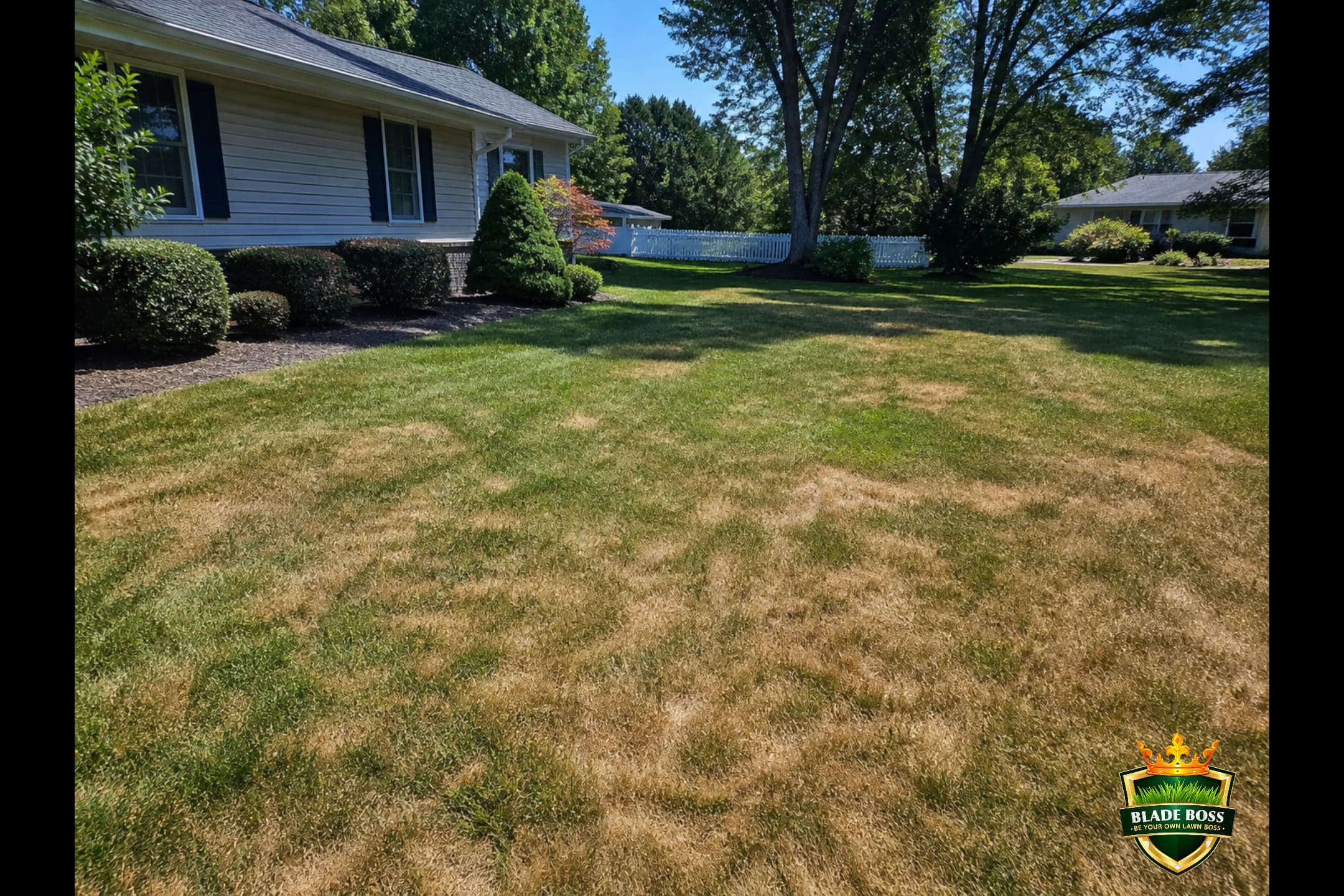
Every year it happens. Late June, your lawn looks incredible. Deep green, thick, freshly striped. Then July hits. Air temps push into the high 80s and 90s. Within two weeks, the color fades, growth slows to a crawl, and brown patches start showing up in the full-sun areas. Your instinct is to fix it. More water. More fertilizer. Lower mowing height to make it look cleaner. Every one of those instincts is wrong, and each one will make the problem worse.
- Cool-season grass (KBG, tall fescue, perennial ryegrass) slows dramatically above 80 degrees and effectively shuts down above 85 to 90 degrees.
- Mow high: 4 inches, no exceptions, from June through August.
- Water deeply and early: 1.25 to 1.5 inches per week, between 4 and 8 AM only.
- Stop all nitrogen fertilizer. No N from late June through August.
- Do not scalp, dethatch, aerate, or apply herbicides during heat stress. All of these wait for September.
- Your lawn is not dying. It is conserving energy. Your job is to not interfere with that process.
What Actually Happens to Your Grass in Heat
Cool-season grasses evolved in regions with moderate summers. They are biologically programmed for two major growth periods: spring (March through May) and fall (September through November). Summer is not a growth period. It is an endurance test.
When air temperature exceeds 80 degrees consistently, the plant shifts resources from growth to survival. Photosynthesis becomes less efficient. Respiration (the plant burning its own stored energy just to stay alive) increases. Root growth slows at soil temperatures above 75 degrees and stops above 85. The plant is spending more energy than it is producing, and it begins drawing down the carbohydrate reserves it built during spring.
This is why September lawns always look better than July lawns on Long Island. By September, temperatures drop, roots reactivate, and the plant rebuilds everything it spent during summer. Everything you do in July and August should be designed to protect those carbohydrate reserves so the lawn has maximum energy for the fall recovery.
The 5 Mistakes That Kill Lawns in Summer
Mistake #1: Mowing Too Short
Scalping the lawn in summer is the single most damaging thing homeowners do. When you cut grass below 3 inches in heat, you expose the soil surface to direct sunlight. Soil temperature can spike 10 to 15 degrees higher than it would under a taller canopy. You also remove leaf surface area that the plant needs for whatever reduced photosynthesis it can manage, and you sever shallow roots that are already struggling.
Set your mower to 4 inches (the highest setting on most walk-behinds) and leave it there from June through August. Taller grass shades the soil, reduces evaporation, keeps roots cooler, and outcompetes weeds that need sunlight to germinate. Never remove more than one-third of the blade height in a single mow. If the grass got away from you, raise the deck even higher and work back down over multiple mowings.
And while you are mowing: make sure your blades are sharp. A dull blade tears grass, and torn tissue loses moisture 2 to 3 times faster than a clean cut. In summer, that moisture loss is the difference between stressed and dead.
Mistake #2: Fertilizing with Nitrogen
This is the mistake that confuses people the most because it seems like the obvious fix. The lawn is pale, thin, and struggling. Clearly it needs food, right? Wrong. Nitrogen forces leaf growth. Leaf growth requires energy. The plant does not have energy to spare. You are forcing it to spend carbohydrate reserves on new leaves that will immediately be stressed by the heat.
Worse: excess nitrogen is the primary trigger for brown patch disease (Rhizoctonia). Brown patch thrives when nighttime temps stay above 65 degrees, humidity is high, and nitrogen is abundant. July on Long Island checks all three boxes. Adding nitrogen in July is like pouring fuel on a fire that has not ignited yet.
A light potassium application (0-0-7 or 0-0-25) in early June, before the heat hits, strengthens cell walls and improves drought tolerance without pushing growth. Think of it as armor, not food. Our nutrient guide explains why potassium is the immune system and stress shield. The fertilizer schedule shows exactly when this application fits in the annual plan.
Mistake #3: Watering Wrong
Watering wrong takes three forms, and all of them are common on Long Island:
- Too little, too often. Running sprinklers for 10 minutes every day wets the top half inch of soil and trains roots to stay at the surface. When the heat really cranks, those shallow roots cook. Deep, infrequent watering (0.5 inches every 2 to 3 days) pushes water to 4 to 6 inches and forces roots to follow it down where the soil stays cooler.
- Evening watering. Watering after 6 PM leaves grass blades wet through the night. That extended leaf wetness is the primary infection window for brown patch and pythium. Water between 4 AM and 8 AM. The grass dries by mid-morning and stays dry through the disease-critical overnight hours.
- Inconsistent watering during dormancy. This is the one that actually kills lawns. If you decide to let your lawn go dormant (brown) to save water, commit fully. Do NOT water for two weeks, let it brown out, then water heavily, then stop again. Each time you water a dormant lawn, you force it to break dormancy, which burns stored energy. Repeated cycles of dormancy-to-active-to-dormancy can exhaust the crown and kill the plant. Pick a strategy and stick with it.
XLUX Long Probe Moisture Meter
Check soil moisture at root depth (4 to 6 inches) before you decide to water. If the probe reads moist at depth, skip the cycle. $15 saves you from both over-watering (disease) and under-watering (stress).
Check PriceMistake #4: Applying Herbicides in Heat
Broadleaf herbicides (2,4-D, dicamba, triclopyr) become volatile above 85 degrees. The product evaporates off the target weed and drifts onto surrounding grass as a gas. This vapor drift causes widespread curling, cupping, and browning that looks nothing like the original weed problem. It can damage turf across your entire lawn from a single spot application.
Even if the product does not volatilize, herbicide-stressed turf on top of heat stress is a recipe for dead grass. The plant does not have the energy reserves to metabolize the herbicide and fight heat at the same time. If you have weeds in July, mark them and treat in September when the grass is strong enough to handle the chemistry. Our weed killer guide covers temperature restrictions for every major herbicide.
Mistake #5: Dethatching, Aerating, or Seeding
Core aeration is great for compacted soil. In September. Dethatching promotes new growth. In September. Overseeding fills in thin areas. In September. All three of these activities are beneficial but they are aggressive. They tear up turf, expose soil, and require active growth to recover. Doing any of them in July is like performing surgery on a patient who is already in the ICU. Wait until fall when the grass is growing vigorously and can heal the damage in 2 to 3 weeks.
Know Exactly When to Do What
The Blade Boss timeline tracks soil temperature, GDD, and air temp to tell you the right window for every task. No more guessing whether it's too hot to treat.
The Summer Survival Playbook
Here is everything you should actually be doing between late June and mid-August:
- Mow at 4 inches. No lower. No exceptions. Sharp blades only.
- Water 1.25 to 1.5 inches per week if you are keeping the lawn green. Use a catch cup set to verify your sprinkler output.
- Water between 4 and 8 AM only. Never in the evening.
- Stop all nitrogen fertilizer. The last N application should have been by early June at the latest.
- No herbicides above 85 degrees. Mark the weeds, treat in September.
- No aeration, dethatching, or seeding. All of these wait until September.
- Continue mowing weekly. Even if growth slows, regular mowing at 4 inches keeps the canopy even and prevents shading-out of lower blades.
- Check for disease weekly. Walk the lawn at dawn. Look for smoke rings, cobwebs, or circular brown patches in the dew. Early detection prevents a small spot from becoming a lawn-wide problem.
- If you see brown patch: apply curative fungicide immediately. Do NOT wait. Our fungicide rotation guide covers the protocol.
- Sharpen your mower blade in mid-July. You sharpened it in spring. It has been cutting for 10 to 12 weeks. It is dull. Torn grass in summer = accelerated moisture loss.
Dormancy vs Active Growth: Pick One and Commit
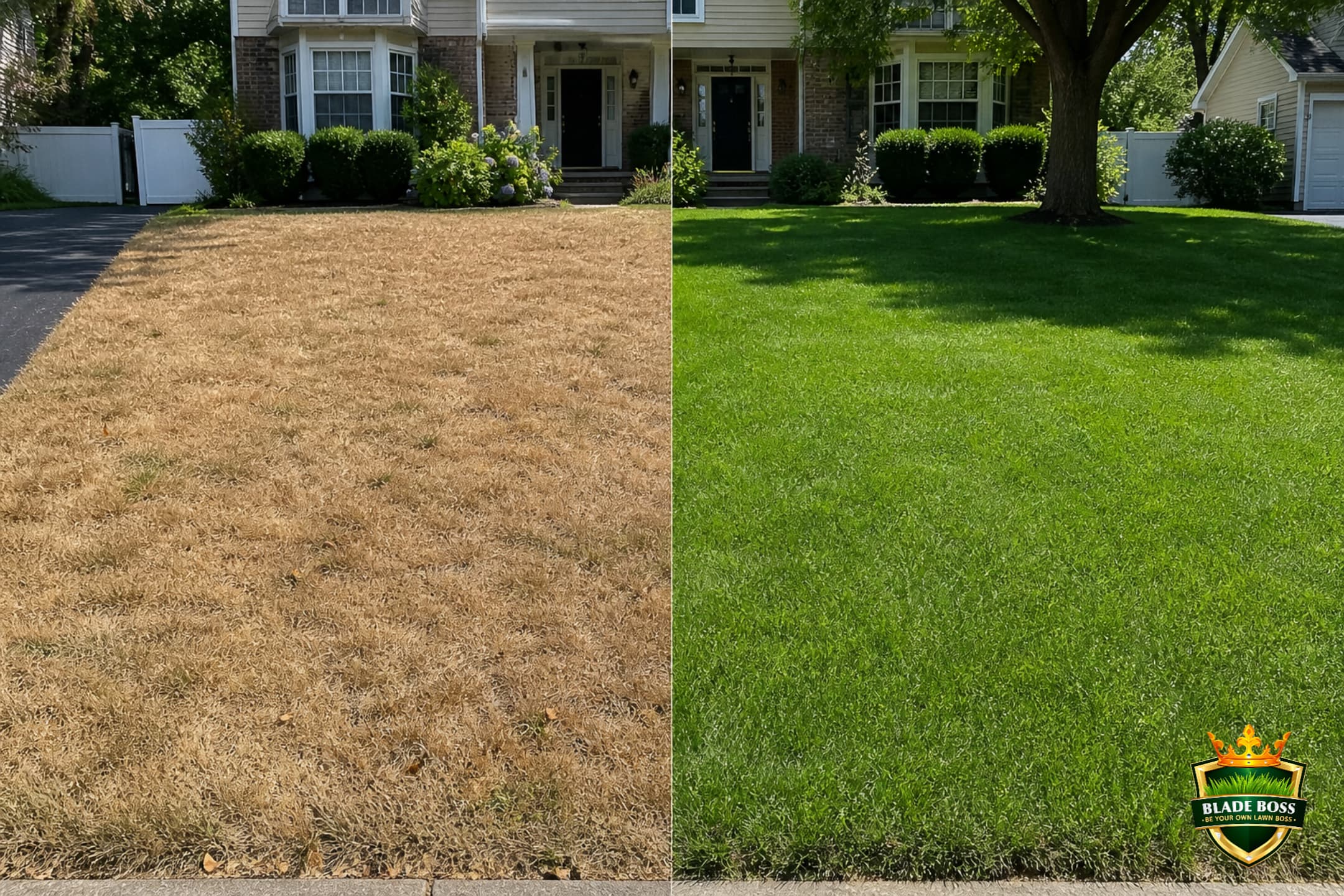
You have two legitimate strategies for summer. Both work. The wrong strategy is mixing them.
| Strategy | What You Do | Cost | Recovery |
|---|---|---|---|
| Stay Green | Water 1.25 to 1.5 in/week, mow at 4 in, monitor for disease | Higher water bill, disease risk from humidity | Lawn stays green all summer. No fall recovery needed. |
| Allow Dormancy | Stop watering. Grass browns out. Continue mowing at 4 in. | No water cost. Lawn looks brown for 6 to 8 weeks. | Lawn greens up within 2 to 3 weeks of fall rain/cooler temps. |
| The Killer (DO NOT DO) | Water some weeks, skip others. Inconsistent. | Energy reserves depleted. Crown damage. Possible death. | May not recover. Bare spots require overseeding in September. |
Even if you choose dormancy, the crowns need to stay alive. Apply 0.25 inches of water every 2 to 3 weeks during extended drought with no rainfall. This is not enough to break dormancy, but it keeps the crown hydrated enough to survive. Without this, a 6-week drought with zero moisture can kill the crown, turning temporary dormancy into permanent death.
One text when sustained temps signal it's time to switch to summer survival mode. No spam, just timing.
No spam. One seasonal alert per application window. Unsubscribe anytime.
What About Hydretain?
Hydretain is a hygroscopic humectant that attracts and holds moisture in the root zone. It does not replace watering, but it extends the interval between waterings by pulling humidity from the air and soil pore spaces and condensing it into plant-available water at the root level. Think of it as a moisture sponge that lives in your root zone.
For Long Island's sandy soils (CEC 3 to 8), where water drains through the root zone in 2 to 3 days, Hydretain can meaningfully reduce drought stress. University turfgrass research has shown it can extend watering intervals by 25 to 50%. It is not a miracle product, but on sand, it addresses the exact problem: water moves too fast through the root zone for roots to use it all.
Hydretain Root Zone Moisture Manager
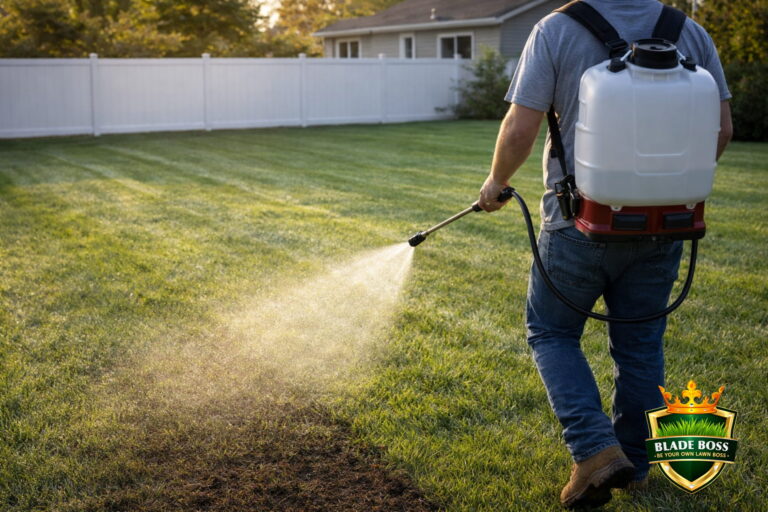
Hygroscopic humectant that holds moisture in the root zone and extends watering intervals by 25 to 50%. Apply as a liquid through a backpack sprayer. One application lasts about 90 days. Especially effective on Long Island's sandy soils.
Check PriceThe Long Island Summer Timeline
Prep for Heat
Last nitrogen application (if you haven't already). Apply potassium (0-0-7) for stress hardening. Raise mowing height to 3.5 to 4 inches. Start preventive fungicide program if not already running.
Transition to Survival Mode
Growth slowing visibly. Commit to your watering strategy (green or dormant). Stop all herbicide applications. Sharp blade check.
Peak Stress
Mow at 4 inches only. Water early morning. Monitor for disease at dawn. No fertilizer, no herbicides, no mechanical treatments. This is hands-off month. ET peaks at 4.59 inches (NOAA 30-year average for Islip).
Hold the Line
Continue July protocol. Sharpen blades again if needed. Start planning fall renovation (seed order, soil test if you haven't done one this year). Watch for grub damage in late August (the tug test).
Recovery Begins
Temps drop below 80. Roots reactivate. THIS is when you fertilize (0.75 lbs N per 1,000, the heaviest round of the year). Core aerate if needed. Overseed thin areas. Apply fall pre-emergent for Poa annua. The lawn comes back to life.
Why Long Island Summers Are Uniquely Hard
Long Island's combination of sandy soil, maritime humidity, and 85+ degree heat in July creates a perfect storm for cool-season turf stress. The sandy soil (CEC 3 to 8) drains fast, so water and nutrients flush through the root zone quickly. The humidity drives disease pressure (brown patch thrives above 65 degrees at night with high humidity). And the heat shuts down root growth and photosynthesis simultaneously.
A lawn in Westchester (clay soil, CEC 15+) holds water for a week between waterings. Your lawn in Suffolk County might need water every 2 to 3 days because the sand cannot retain it. That is not a deficiency in your lawn care. That is the physics of your soil. Understanding this is the first step to stopping the cycle of over-treating during summer and making things worse.
Our sandy soil guide covers the full long-term strategy, and the irrigation guide shows you how to calculate exact watering times for your sprinkler system and soil type.
Zone-specific watering times, the catch cup method, and seasonal adjustments for Long Island soils. Print it and post it by your irrigation controller.
See what Blade Boss members get. The Lawn Command Center tracks heat stress windows, disease risk, watering schedules, and fertilizer timing so you never have to guess whether it's safe to treat.
See Plans →Chris is a Combat Search and Rescue pilot turned airline pilot who built Blade Boss to bring military-grade precision to backyard lawn care. His lawn in Ronkonkoma sits on Suffolk County sand with a CEC of 6, and every lesson in this guide was learned by watching it brown out in July 2024 and rebuilding it that September.
Related Reads
The brown patch diagnosis guide helps you tell the difference between heat stress and disease. The fungicide rotation guide covers the preventive program that should be running through summer. The mower blade guide ensures your mid-season sharpening is done right. And the fertilizer schedule shows why September, not July, is the power month for feeding your lawn.
Frequently Asked Questions
What temperature does cool-season grass stop growing?
Cool-season grasses (Kentucky bluegrass, tall fescue, perennial ryegrass) slow growth significantly when air temperatures consistently exceed 80 degrees Fahrenheit and effectively stop growing above 85 to 90 degrees. Root growth slows even earlier, around 75 degrees soil temperature. On Long Island, this means grass growth slows dramatically in late June and may completely stall from mid-July through mid-August in hot years.
Should I let my lawn go dormant in summer?
Allowing dormancy is a legitimate strategy for cool-season lawns during extreme heat. Dormant grass turns brown but the crown and roots remain alive. The lawn will recover when temperatures drop and rain returns in September. The critical rule is consistency: either water enough to keep the lawn green (about 1 to 1.25 inches per week on Long Island) or let it go fully dormant. Do not alternate between watering and not watering because this forces the plant to repeatedly break dormancy, which depletes energy reserves and can actually kill the grass.
How high should I mow in summer?
During summer heat stress, mow cool-season grass at 4 inches (the highest setting on most residential mowers). Taller grass shades the soil, reduces surface temperature by up to 10 degrees, retains more moisture, and develops deeper roots. Never remove more than one-third of the blade height in a single mow. If the grass gets to 6 inches while you were away, mow to 4 inches, wait 3 days, then mow to your target.
Should I fertilize my lawn in summer?
No. Do not apply nitrogen fertilizer to cool-season grass during summer heat stress (July and August on Long Island). Nitrogen forces leaf growth that the plant cannot sustain when roots are not actively absorbing nutrients. This depletes stored carbohydrates, weakens the plant, and dramatically increases susceptibility to brown patch and pythium diseases. The exception is a light potassium application (0-0-7) which strengthens cell walls and improves heat tolerance without pushing growth.
How much water does a lawn need in summer on Long Island?
On Long Island, summer evapotranspiration rates peak at about 4.59 inches per month in July (based on 30-year NOAA/Cornell data). To keep grass actively growing, you need approximately 1.25 to 1.5 inches per week from irrigation plus rainfall combined. On sandy soils (CEC 3 to 8), water deeply but less frequently (0.5 inches every 2 to 3 days) to encourage deep root growth. Water between 4 AM and 8 AM to minimize evaporation and disease risk.
Keep Reading
 Long Island Local
Best Lawn Mowers for Long Island Lawns (2026 Guide)
After deep research across Consumer Reports, TechGearLab, Bob Vila, and real owner reviews: the Toro Super Recycler is...
May 29, 2026
12 min
 Lawn Science
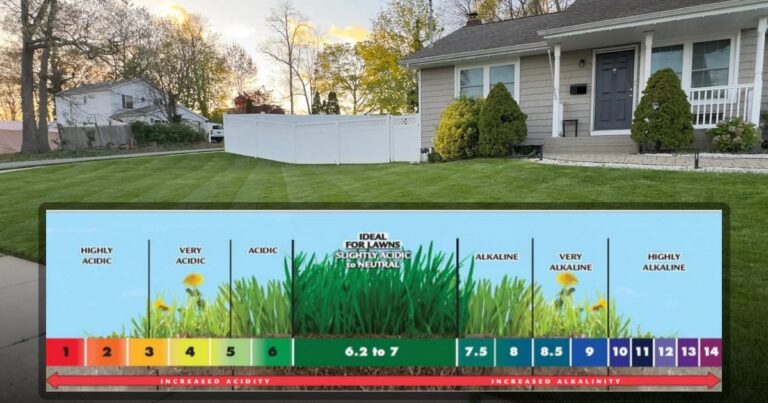
Long Island Soil pH Guide: How to Test and Fix Your Lawn’s Foundation
Most Long Island lawns test between pH 5.9 and 6.2, which is too acidic for peak nutrient uptake....
Feb 26, 2026
18 min
 Lawn Science
Long Island Fungicide Guide: FRAC Groups, Rotation Schedule, and What to Buy
The complete beginner's guide to lawn fungicide on Long Island. Learn FRAC groups, build a 4-product rotation schedule...
Mar 27, 2026
17 min
What is your lawn actually sitting on?
Pull the soil survey, hardiness zone and current growing conditions for your exact address. Eight government sources, about a minute.
No comments yet. Be the first to share your thoughts.
Create a free account to join the conversation.