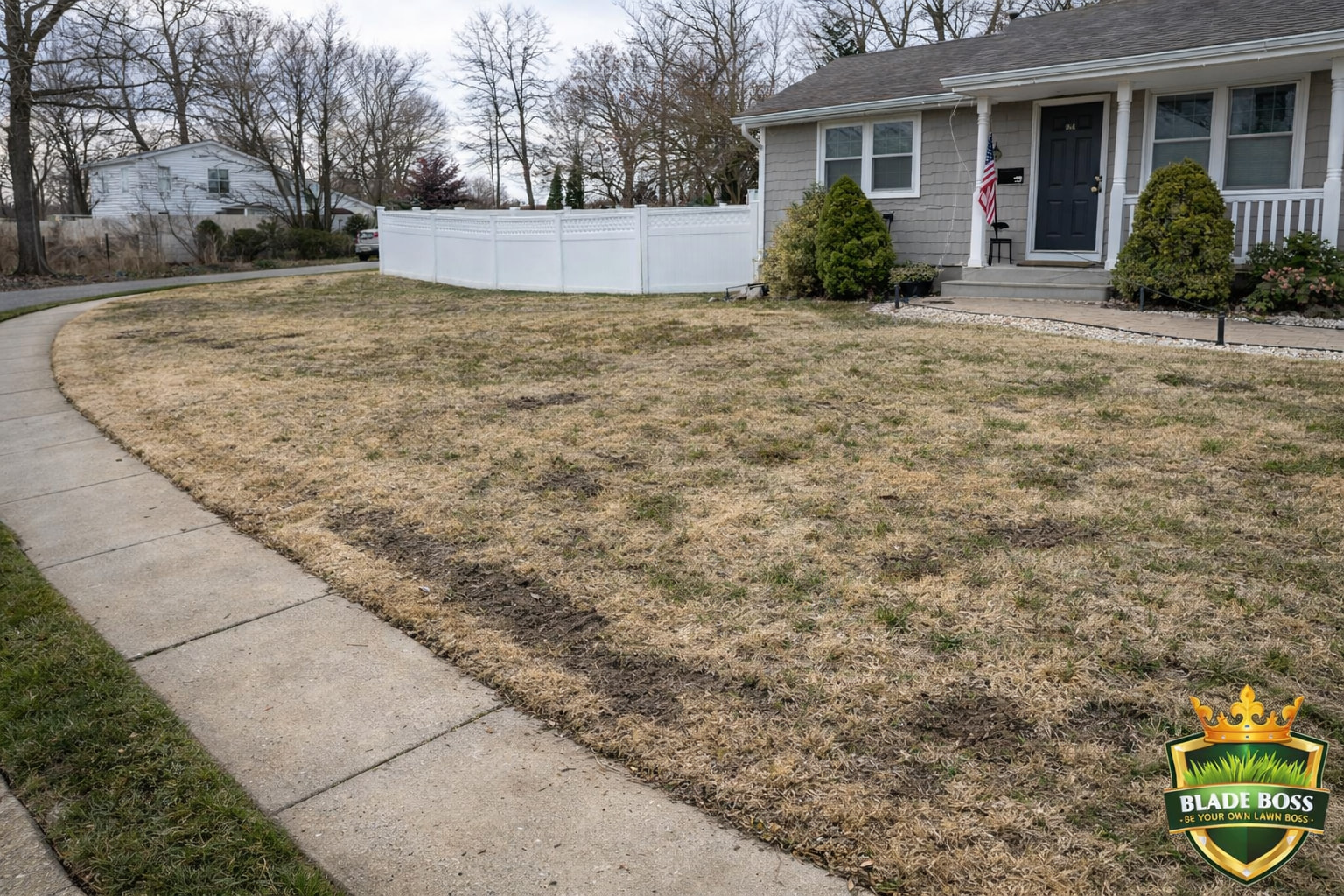
The snow melts, and there it is. Your lawn looks like it went through a war. Brown patches, matted grass, weird tracks running across the yard, dead strips along the driveway. Every March on Long Island, the same panic sets in: is my lawn dead? The short answer for most of you is no. Cool-season grass is tougher than it looks. But knowing what you're looking at and what to actually do about it (versus what the internet tells you to do) makes the difference between a lawn that bounces back by May and one that limps into summer.
Spring lawn recovery on Long Island starts with patience.
- Don't panic. Most brown, dormant grass is alive. It will green up on its own once soil temperatures reach 50 to 55°F (mid-April on Long Island).
- Identify the damage type first. Vole tracks, salt burn, desiccation, and compaction each require different fixes. Misdiagnosing leads to wasted time and money.
- Wait for the right conditions. Don't walk on frozen or saturated turf. Don't fertilize before the blackout lifts (April 1st). Don't overseed until soil hits 50°F and you've had your last frost (April 9th average).
- Most recovery is patience. Cool-season grass on Long Island has a spring growth surge from April 15th through May 31st that fixes 80% of winter cosmetic damage on its own.
This guide is calibrated to Long Island's Zone 7B conditions using 30-year NOAA climate normals from the Islip weather station and Cornell Cooperative Extension Suffolk County guidance. The timing, soil temps, and recommendations are specific to our sandy glacial outwash soils, maritime climate, and county-level fertilizer regulations. Our Dynamic Calendar tracks these windows automatically with GDD alerts. Lawn Map Pro puts all this data on your satellite map with zone-by-zone tracking. Our Stripe Master members get the complete 15-step Lawn Playbook that covers exactly this.
Step 1: Walk the Lawn and Identify What You're Dealing With
Before you touch a rake, do a damage assessment. Walk the entire lawn in mid-March once the ground is thawed and dry enough that you're not leaving footprints. You're looking for five specific types of winter damage, each with a different fix.
Vole Damage (The Winding Highway Tracks)
The most common winter lawn damage on Long Island. Voles are small rodents that tunnel under snow cover, creating serpentine tracks of matted and chewed grass 1 to 2 inches wide. According to University of Minnesota Extension, vole damage is most visible in early spring right after snow melts. The good news: voles typically don't feed on grass roots or crowns. The tracks look worse than they are.
Mild damage (tracks only, roots intact): Rake vigorously to lift matted grass. The lawn recovers on its own in 3 to 4 weeks once spring growth starts.
Severe damage (crowns destroyed, bare soil visible): Rake out dead material, add a thin layer of topsoil or compost, and overseed in mid-April with a KBG/TTTF blend. Keep moist until germination.
Active control: Standard snap-style mouse traps placed along active vole runways are the most effective control method. Bait with peanut butter and cover with a bucket or box to protect pets and kids. Place traps perpendicular to the runway so the trigger sits in the path.
Prevention for next winter: Mow your last cut of fall at 2.5 to 3 inches (not tall). Tall grass gives voles cover. Remove debris piles and woodpiles near the lawn's edge. Keep bird feeder areas clean. Hawks, owls, foxes, and cats are natural vole predators.
Salt Damage (Driveways, Sidewalks, Roads)
De-icing salt spray and runoff burn grass along driveways, sidewalks, and road edges, leaving brown or orange-tinted dead strips. Long Island towns apply sodium chloride heavily on main roads, and homeowners add it to walkways. The salt concentrates in the top few inches of soil and inhibits water uptake by roots. According to NYSDOT and Rutgers Extension research, road salt impact extends 15 to 30 feet from salted pavement edges, with elevated chloride levels reaching 200 to 300 feet in extreme cases. Step one of any spring recovery is a soil test. If you're not sure what the results mean, our soil test report guide breaks down every number and tells you exactly what to do.
Flush the soil. Once the ground thaws and drains well (late March), water the affected strips with 4 to 6 inches of water over several days. This leaches salt out of the root zone on Long Island's fast-draining sandy soil.
Wait and assess. Some grass in salt-damaged areas will recover once the salt is flushed. Give it until mid-April before deciding what's dead.
Repair bare spots. Rake in topsoil and overseed dead areas in mid to late April.
Prevent next year: Switch to calcium magnesium acetate (CMA) or sand for traction on surfaces you control. It's more expensive but won't kill your grass.
Desiccation (Brown Patches in Exposed Areas)
Winter desiccation happens when cold, dry wind pulls moisture from grass crowns faster than frozen roots can replace it. On Long Island, this shows up as brown patches in exposed, windward areas of the lawn, especially south and west facing slopes with no wind protection. The grass looks dead but the crowns may be alive below the surface.
Fix: Wait. Seriously. Once soil warms above 50°F and spring rains arrive, most desiccated grass greens up on its own. If patches remain brown by late April when the rest of the lawn is green, those crowns are dead and you'll need to overseed.
Snow Mold (Gray or Pink Matted Patches)
Here's something most generic guides won't tell you: true snow mold is rare on Long Island. Gray snow mold (Typhula Blight) requires 60 or more days of continuous snow cover to develop. According to 30-year NOAA climate normals from the Islip weather station, Long Island averages only 23 days of intermittent snow cover per winter. Our maritime climate means snow rarely stays on the ground long enough for Typhula to establish.
Pink snow mold (Microdochium nivale) can occur without prolonged snow cover, but it needs extended periods of cold, wet conditions. If you do see circular matted patches with a grayish or pinkish tinge, gently rake them to improve airflow and let the sun dry them out. The fungus dies on its own as temperatures warm. No fungicide needed for recovery. If you had snow mold this year, apply a preventive fungicide in late November before the first permanent snow cover next fall.
Compaction and Foot Traffic Damage
Walking on frozen or saturated turf crushes brittle grass crowns and compresses soil. On Long Island's sandy soil, compaction risk is lower than clay regions, but it still happens in high-traffic areas: paths to the mailbox, around the shed, dog runs, and anywhere kids play. The damage shows up as thin, weak growth or bare patches in spring.
Join Long Island homeowners who get spring recovery tips, seasonal timing alerts, and data-driven lawn care guidance every week.
Fix: These areas respond well to core aeration in September (not spring, unless you're skipping pre-emergent). For now, avoid further traffic on wet spring soil, and let the grass recover naturally through the spring growth surge.
The Long Island Spring Recovery Timeline
Timing matters more than effort. Doing the right thing at the wrong time wastes product and can actually slow recovery. Here's the data-driven timeline based on 30-year NOAA soil temperature normals for Zone 7B.
Assessment Only
Walk the lawn once soil isn't frozen. Identify damage types. Do NOT rake, fertilize, or mow yet. Soil is 43°F. Grass is dormant.
Light Raking
Once the ground is dry enough to walk on without leaving prints, do a gentle raking to lift matted grass, clear debris, and expose soil to sunlight. Use a flexible leaf rake, not a power dethatcher. The grass is fragile.
Flush Salt Damage
Soil is thawing. Water salt-affected areas along driveways and walkways with 4 to 6 inches over several days to leach sodium from the root zone.
Blackout Lifts (Suffolk)
Suffolk and Nassau fertilizer blackouts end. You CAN fertilize after this date, but wait until the grass is actively growing (mid-April) for best results. Pre-emergent window opens at 100 GDD50 (approximately April 6th). Crabgrass germination deadline is 200 GDD50 (approximately April 21st). GDD is the trigger, not a single soil temp reading.
Average Last Frost
Don't overseed before this date. Frost kills young seedlings. Soil is around 50°F. Grass is beginning to green up. For best results, plan major overseeding for September instead of spring. Fall seeding gives new grass 6 to 8 weeks of ideal growing conditions versus spring seeding, which faces summer heat within weeks.
Active Recovery Phase
Soil hits 53 to 55°F. Spring growth surge begins. This is when you can overseed bare patches, apply your Round 1 spring fertilizer (0.50 lbs N), and start your regular mowing schedule. Most cosmetic winter damage is visibly recovering by now.
Full Growth
Soil reaches 61°F. The lawn is in peak spring growth. Any patches that haven't recovered by mid-May are dead and need overseeding. This is your last realistic spring seeding window before summer heat.
The Spring Recovery Playbook (Step by Step)
Assess Before You Act
Walk the lawn in early to mid-March. Take photos. Note which areas are brown (dormant but alive), which have vole tracks, which have salt damage, and which have matted or moldy patches. Don't assume everything that's brown is dead. Cool-season grass on Long Island greens up when soil hits 50°F, typically mid-April.
Gentle Raking (Not Power Dethatching)
Once the ground is dry enough to walk on without sinking, use a flexible leaf rake to lift matted grass, clear dead leaves and debris, and break up any light snow mold patches. This exposes the soil to sunlight and air, which speeds green-up. Do NOT use a power dethatcher in early spring because the grass is too fragile to recover from aggressive mechanical dethatching. Save that for September.
Flush Salt-Damaged Areas
For brown strips along driveways and roads, apply 4 to 6 inches of water over several days once the soil drains freely (late March). Long Island's sandy soil drains fast, which is actually an advantage here because the salt flushes through relatively quickly compared to clay.
Wait for Green-Up Before Major Repairs
This is the hardest step. Your lawn looks terrible in March and early April, and every fiber of your being wants to throw seed and fertilizer at it. Don't. Wait until you can clearly see which areas are greening up and which are genuinely dead. On Long Island, this distinction becomes clear by mid-April. Repairing before green-up means guessing, and guessing means wasting seed on areas that would have recovered on their own.
Spot-Repair Bare Patches in Mid-April
For areas confirmed dead (no green growth by April 15th while surrounding grass is green), rake out dead material, rough up the soil surface, add a thin layer of topsoil if needed, and overseed with a quality KBG/TTTF/PRG blend. Keep the seeded areas moist (light watering 2 to 3 times daily) until germination. Note: if you're applying pre-emergent for crabgrass prevention, you cannot seed those areas because pre-emergent prevents ALL seed germination. You have to choose: patch bare spots OR prevent crabgrass in that specific area. You can't do both.
Apply Spring Fertilizer (Light Touch Only)
After the blackout lifts (April 1st) and once grass is actively growing (mid to late April), apply your Round 1 spring fertilizer: 0.50 lbs of nitrogen per 1,000 sq ft with 60%+ slow-release. This is a light feeding. Do NOT blast the lawn with heavy nitrogen trying to force green-up. Heavy spring nitrogen forces lush top growth at the expense of root development and depletes the carbohydrate reserves your grass needs to survive summer.
First Mow When Grass Reaches 3.5 Inches
Don't mow based on a calendar date. Mow when the grass needs it. Your first mow should happen when grass reaches about 3.5 inches, typically late March to mid-April on Long Island. Set the mower to 3 inches for the first cut. Bag clippings for the first 2 to 3 mowings if you suspect any fungal disease (snow mold, leaf spot) to avoid spreading spores.
Soil Test If You Haven't in 2+ Years
Spring is a great time to send a soil sample to Cornell Cooperative Extension. Results take 1 to 2 weeks and tell you exactly what your soil pH, phosphorus, potassium, and organic matter levels are. This prevents guessing on amendments all season long. If you want the easiest option, the MySoil Test Kit lets you scoop soil, mail it in a prepaid envelope, and get professional lab results on your phone in about a week. A $20 test saves hundreds in wasted product.
What NOT to Do in Spring (The Mistakes That Make It Worse)
1. Don't rush out on frozen or muddy soil
Walking and working on frozen turf crushes dormant grass crowns. Working on saturated soil compacts it, undoing months of natural freeze-thaw loosening. Wait until the ground is firm and dry enough that your footprints don't sink in.
2. Don't power-dethatch in early spring
A power dethatcher (vertical mower) is aggressive machinery that rips through the thatch layer. In March and early April, your grass is just waking up and can't recover from that kind of trauma. Light raking is fine. Power dethatching should wait until September when the grass is in peak fall growth and can heal quickly.
3. Don't dump heavy nitrogen to force green-up
This is the number one spring mistake. Heavy nitrogen in March or April forces explosive top growth that depletes root carbohydrate reserves, increases mowing frequency, and makes the lawn more susceptible to summer stress and disease. A light 0.50 lbs N application in mid to late April is all you need. Save the heavy feeding for September and October.
4. Don't overseed and apply pre-emergent to the same area
Pre-emergent herbicide creates a chemical barrier that prevents ALL seed germination, including your grass seed. If you need to prevent crabgrass and repair bare spots, you have to choose one or the other for each specific area. Some homeowners skip pre-emergent on damaged patches and accept a little crabgrass there while treating the rest of the lawn.
5. Don't mow too low on the first cut
Scalping a recovering lawn removes the leaf area the grass needs to photosynthesize and rebuild energy reserves. First mow at 3 inches, then gradually raise to 3.5 to 4 inches for the rest of the season. Taller grass shades the soil, retains moisture, and crowds out weeds.
6. Skipping the soil test
If your soil pH is below 6.0 (common on Long Island's naturally acidic sandy soil), your grass can only access about 50% of the nutrients you apply. Fix pH first with pelletized lime per your soil test results, then fertilize. Throwing fertilizer at acidic soil is like pouring gas into a car with a clogged fuel line.
The Spring Damage Decision Table
| Damage Type | What It Looks Like | How to Fix It | When |
|---|---|---|---|
| Vole tunnels | Winding 1-2" wide tracks of matted/dead grass | Rake vigorously to lift; overseed severe areas | Mid-March (rake) / Mid-April (seed) |
| Salt burn | Brown/orange strips along driveways, roads | Flush with 4-6" of water over several days | Late March once soil drains |
| Desiccation | Brown patches on exposed, windy areas | Wait for spring green-up; overseed if still dead by late April | April 15th to 30 |
| Snow mold | Circular gray/pink matted patches | Rake gently to improve airflow; fungus dies as soil warms | Mid-March |
| Compaction damage | Thin/weak growth in high-traffic areas | Core aerate in September (not spring) | Sept 1st to 15 |
| General dormancy | Entire lawn is brown but uniform | Nothing. This is normal. It greens up by mid-April. | Wait until April 15th |
Get Your Complete Spring Action Plan
Our month-by-month Long Island lawn care calendar covers every spring task from pre-emergent timing to first mow to fertilizer rounds. Pair it with Lawn Map Pro™ to calculate exact product amounts for your specific yard.
The Honest Truth About Spring Lawn Recovery
Here's what nobody in the lawn care industry wants to tell you: most spring recovery is just waiting. Cool-season grass on Long Island has a built-in spring growth surge from April 15th through May 31st that fixes the majority of winter cosmetic damage without any intervention. The brown lawn that made you panic in March will be green and growing by late April.
The real work happens in fall, not spring. The September aeration, overseeding, and fertilizer trifecta is what builds the dense, deep-rooted turf that survives winter in the first place. A lawn that went into winter strong will come out of winter strong. A lawn that went into winter weak will come out of winter looking like a battlefield, no matter what you do in March.
So yes, fix the immediate damage. Flush the salt. Rake the vole tracks. Patch the bare spots. But don't kid yourself that spring is when lawns are made. Spring is triage. Fall is where you build the foundation. Plan for September aeration and your fall fertilizer rounds now and your lawn will look better every year.
Spring recovery sets the stage for the entire year. Use our Zone 7B guide for the big picture, the fertilizer calculator for recovery rates, and the grub control guide if pests caused the damage. Our clover control guide addresses the opportunistic weeds that move into weakened turf, and the grass type comparison helps if you're replanting damaged sections. If weeds moved in during winter, selective herbicides can clear them without harming your grass. Our Northeast weed killer guide covers what to use and when.
Chris is a Combat Search and Rescue pilot turned airline pilot who built Blade Boss to bring military-grade precision to backyard lawn care. His spring recovery protocol starts with a soil thermometer and a soil test, not a bag of fertilizer.
The complete 5-round fertilizer program for Long Island. Exact timing, rates, and products for every round from spring through winterizer.
See what Blade Boss members get and get access to Lawn Map Pro™, our complete Long Island lawn care calendar, and data-driven tools that take the guesswork out of every decision from spring recovery through fall renovation.
See Plans →Frequently Asked Questions
When should I start spring lawn recovery on Long Island?
Wait until the soil is no longer frozen and the ground is dry enough that you don't leave footprints when you walk on it. On Long Island, this typically means mid to late March. The last average frost date is April 9th, so avoid any major work like overseeding before then. Start with raking and assessment first, then move to repairs once the grass shows active green growth, usually by mid-April when soil reaches 50 to 55 degrees Fahrenheit.
Why does my Long Island lawn look dead after winter?
Cool-season grass goes dormant in winter and turns brown. That brown lawn is usually alive, just sleeping. The most common causes of actual damage on Long Island are vole tunneling (serpentine tracks of matted dead grass), road salt burn along driveways and sidewalks, desiccation from dry winter wind, and compaction from foot traffic on frozen ground. True snow mold is rare on Long Island because it requires 60 or more days of continuous snow cover, and Long Island averages only 23 days of intermittent snow cover per winter (based on 30-year NOAA climate normals from the Islip weather station).
How do I fix vole damage on my Long Island lawn?
Vole damage looks like winding 1 to 2 inch wide tracks of matted or dead grass crisscrossing the lawn. The roots are usually still alive. Rake the affected areas vigorously to lift the matted grass and expose the soil to sunlight. Most vole damage on Long Island recovers on its own within 3 to 4 weeks once spring growth starts. For severe tracks where the grass crown is destroyed, lightly rake in some topsoil and overseed with a matching grass blend in mid-April.
Should I fertilize my Long Island lawn in early spring for recovery?
Not right away. Suffolk County's fertilizer blackout runs until April 1st, and Nassau County's until April 1st as well. Even after the blackout lifts, resist the urge to dump nitrogen on a struggling lawn. A light application of 0.50 pounds of nitrogen per 1,000 square feet with slow-release product in mid to late April is plenty for spring. Heavy spring nitrogen forces lush top growth at the expense of root recovery, making the lawn more vulnerable to summer stress. Fall is when your lawn builds its real strength.
How do I fix salt damage on my lawn along the driveway?
Salt damage appears as brown or orange-tinted grass strips along driveways, sidewalks, and roads. Once the ground thaws and drains well (usually late March on Long Island), flush the affected areas with 4 to 6 inches of water over several days to leach salt from the root zone. After flushing, wait for the grass to show whether it recovers on its own. If bare spots remain by mid-April, rake in topsoil and overseed. For driveways you control, switch to calcium magnesium acetate or sand for traction instead of rock salt.

Keep Reading
 Long Island Local
When to Apply Winterizer Fertilizer on Long Island
The winterizer is the last fertilizer application of the year and the one that fuels your spring green-up....
May 28, 2026
8 min
 Long Island Local
Best Fertilizer Schedule for Long Island Lawns: Zone 7B Month-by-Month Guide
The complete month-by-month fertilizer schedule for Long Island lawns in USDA Zone 7B. Real rates, county blackout dates,...
Mar 6, 2026
24 min
 Blade Boss Updates
Why DIY Lawn Care Saves You Money (With Real Numbers)
Long Island lawn care services charge $2,000 to $4,000 a year. Data-driven DIY with Blade Boss costs $900...
May 26, 2026
7 min
What is your lawn actually sitting on?
Pull the soil survey, hardiness zone and current growing conditions for your exact address. Eight government sources, about a minute.
No comments yet. Be the first to share your thoughts.
Create a free account to join the conversation.