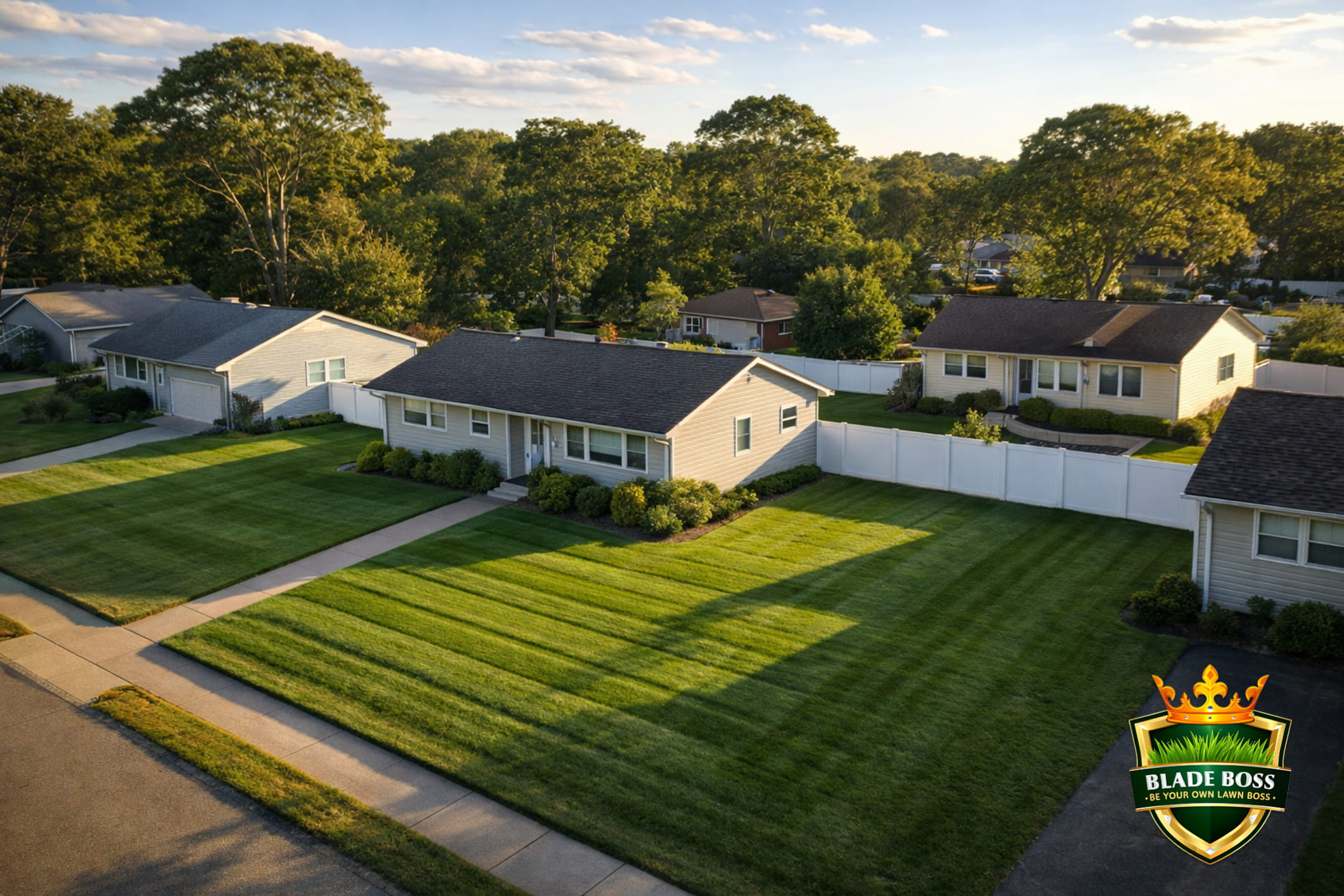
I live in Ronkonkoma. My soil is classic Suffolk County sandy loam. I can pour a gallon of water on my lawn and watch it disappear in under a minute. A buddy in Cold Spring Harbor on the North Shore has clay so dense he can practically throw pots with it. Another friend in Southampton deals with deer eating his new seed like it's a salad bar. We all live in Suffolk County. We all have completely different lawns. And that's the problem with every "Long Island lawn care guide" on the internet. They treat 86 miles of wildly different geology like it's one uniform surface.
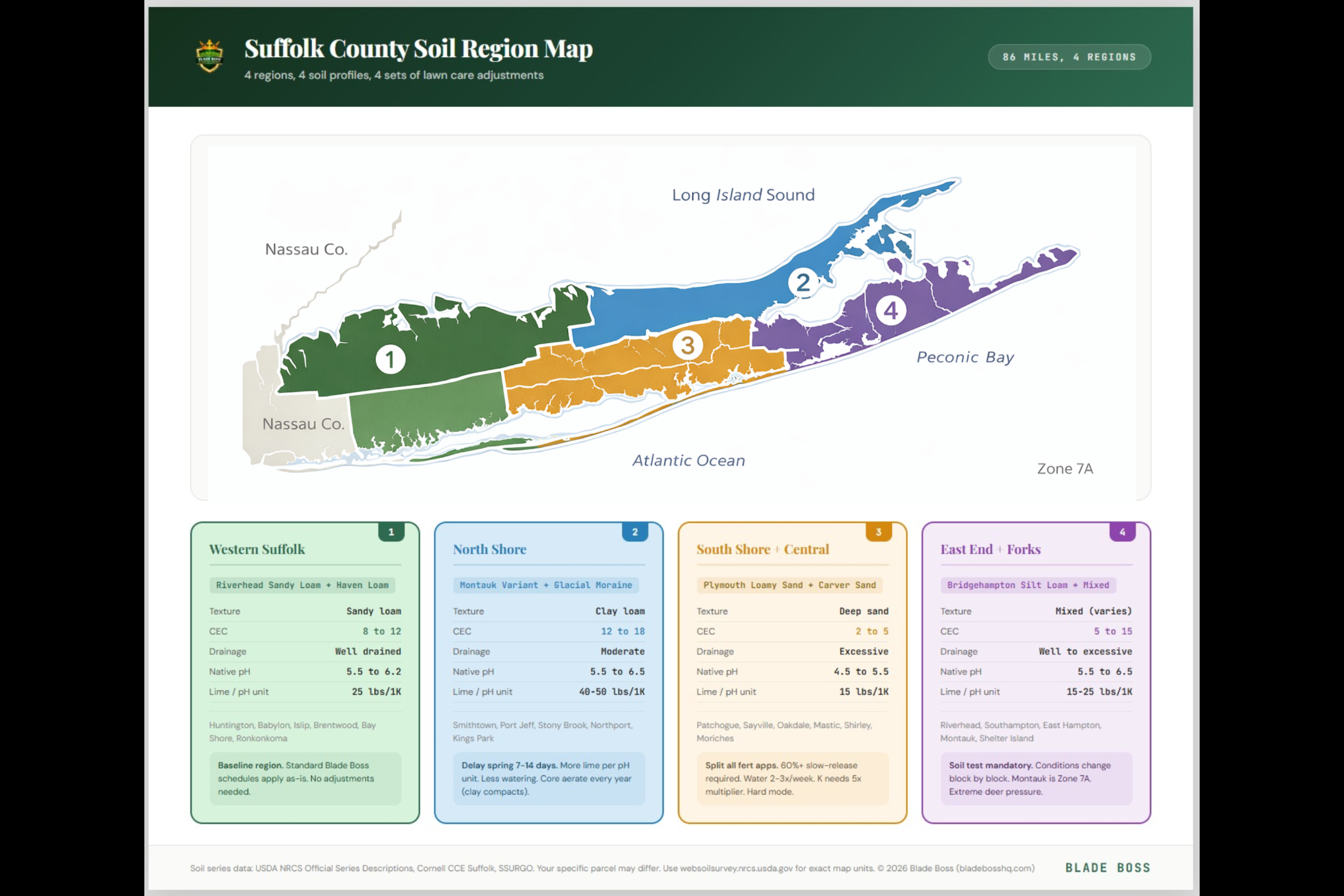
- 4 distinct soil regions with different textures, drainage rates, and nutrient-holding capacities.
- Western Suffolk (Huntington to Islip): Riverhead sandy loam with moderate CEC (8 to 12). The baseline.
- North Shore (Smithtown to Port Jeff): Heavier glacial moraine clay. Higher CEC, slower drainage, warms 7 to 14 days later in spring.
- South Shore (Patchogue to Mastic): Deep outwash sand with very low CEC (2 to 5). Nutrients leach fast. Hard mode.
- East End (Riverhead to Montauk): Ranges from premium Bridgehampton silt loam to deep coastal sand. Varies block by block.
- Your rates change by region: Fertilizer splits, lime amounts, watering frequency, and even pre-emergent timing all depend on which sub-region your property sits on.
This guide breaks Suffolk County into 4 lawn care sub-regions and tells you exactly how each one affects your program. If you've been following a generic schedule and wondering why your results don't match your neighbor's two towns over, this is why. The Long Island Lawn Care Calendar gives you the timing. This guide tells you how to adjust it for your specific dirt.
Why Suffolk County is Not One-Size-Fits-All
Suffolk County spans from the Nassau border at Huntington all the way to Montauk Point. That's 86 miles. The western half sits on glacial outwash plains with sandy loam soils from the Haven, Riverhead, and Plymouth soil associations. The North Shore sits on the Harbor Hill glacial moraine with heavier clay-based soils left behind when the ice sheet stopped advancing. The South Shore is the outwash plain at its sandiest. And the East End is a geological patchwork where wine country silt loam sits a few miles from beach sand.
Add in the microclimate differences (the North Shore is 7 to 14 days behind the South Shore in spring soil warming because clay holds cold longer than sand) and the wildlife differences (eastern Suffolk has one of the highest white-tailed deer densities in New York State) and you have a county that needs at least four different sets of lawn care guidance. Not one.
The 4 Suffolk County Lawn Care Regions
These aren't arbitrary lines on a map. They follow the actual glacial geology, which dictates your soil type, which dictates everything else. Find your town below, and that's your region.
Region 1: Western Suffolk (Huntington, Babylon, Islip, Brentwood, Bay Shore)
Dominant soil: Riverhead sandy loam and Haven loam
Texture: Sandy loam (18 to 36 inches of loamy topsoil over stratified sand and gravel)
CEC: 8 to 12 (moderate nutrient-holding capacity)
Drainage: Well drained, moderate to rapid
pH tendency: 5.5 to 6.2 (acidic, needs lime)
This is the "standard" Suffolk County lawn. It's what most of the fertilizer schedule and pH guide are calibrated for. The Haven and Riverhead series have enough silt and loam in the upper profile to hold nutrients reasonably well, but the substratum is still sand and gravel. You get the best of both worlds: decent nutrient retention up top, good drainage below. If you live here and follow the standard Blade Boss schedules as written, you're dialed in.
No major adjustments needed from baseline schedules. Standard 2.75 lbs N/year, standard lime rates (25 lbs calcitic per 1.0 pH unit on sandy loam), standard 1 inch/week watering. This is the reference region. Everyone else adjusts from here.
Region 2: North Shore (Smithtown, Port Jefferson, Stony Brook, Northport, Kings Park)
Dominant soil: Montauk sandy variant and glacial moraine deposits
Texture: Clay loam to silty clay loam
CEC: 12 to 18 (high nutrient-holding capacity)
Drainage: Moderate (slower than south shore)
pH tendency: 5.5 to 6.5 (acidic but better buffered)
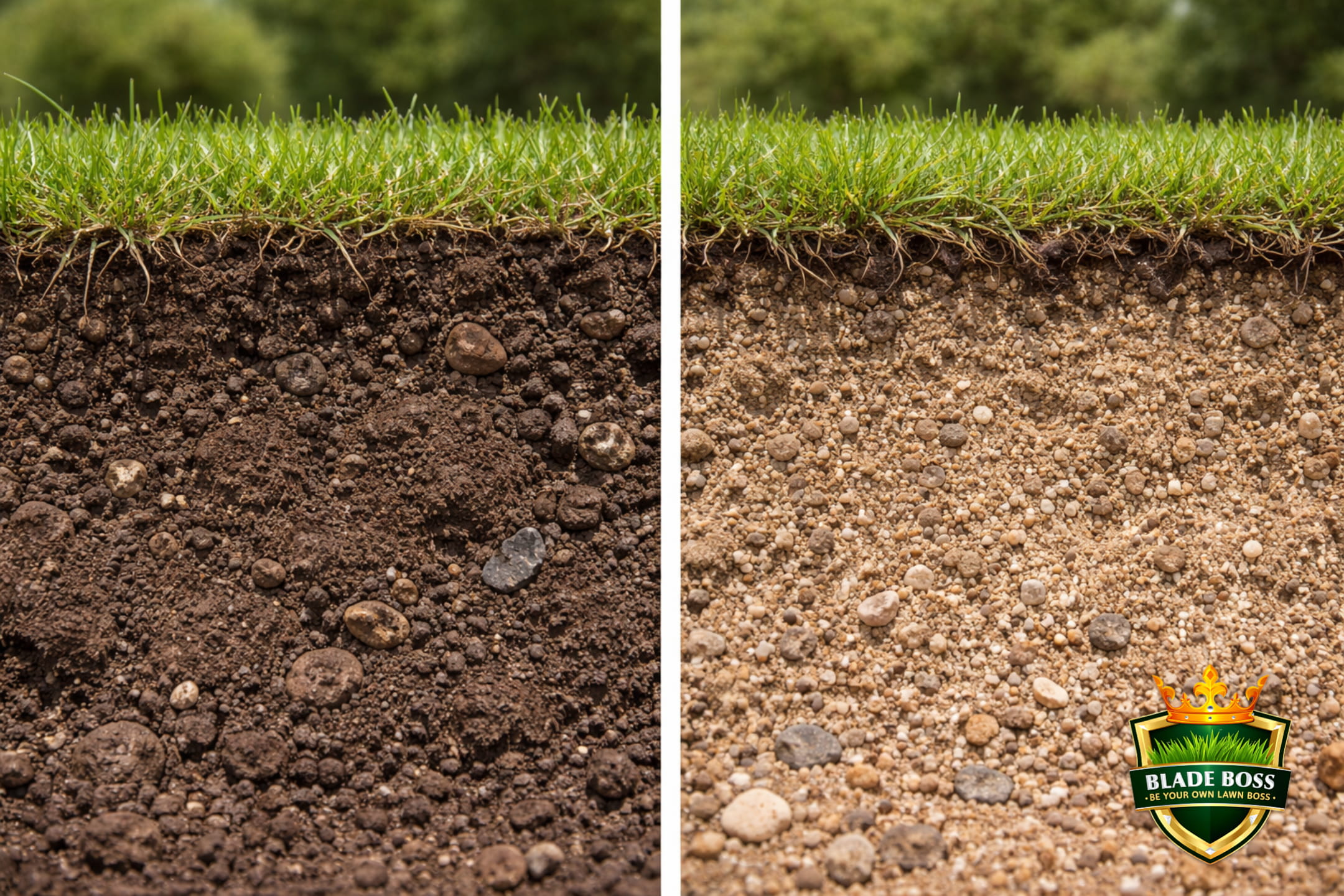
The North Shore is a different world. The Harbor Hill moraine left behind heavier, denser soils with more clay content. This changes everything. Clay holds water longer, which means your lawn stays wet after rain for an extra day or two compared to the South Shore. Clay holds nutrients longer, which means your fertilizer sticks around instead of leaching through. But clay also compacts more easily, warms slower in spring, and requires more lime per pH unit because higher CEC means higher buffering capacity.
Spring timing: Your soil warms 7 to 14 days later than the South Shore. Delay your pre-emergent by about a week compared to Islip-based GDD data. Measure your own soil temp at 4-inch depth.
Lime rates: Increase by 50 to 75% compared to sandy soil rates. Clay buffers more. Where sandy loam needs 25 lbs per 1.0 pH unit, clay loam may need 40 to 50 lbs.
Watering: You may only need to water once a week instead of twice. Clay retains moisture. Overwatering on clay is a bigger risk than underwatering.
Aeration: Non-negotiable. Core aerate every September. Clay compacts faster than sand. If you skip aeration on the North Shore, you're inviting drainage problems, shallow roots, and disease.
Not Sure How Your Region Changes Your Rates?
The Blade Boss Soil Correction Engine takes your actual soil test results, factors in your soil texture and CEC, and calculates exact lime, potassium, and fertilizer rates for your specific property. No more guessing which region adjustment applies to you.
Region 3: South Shore and Central Corridor (Patchogue, Sayville, Oakdale, Mastic, Shirley)
Dominant soil: Plymouth loamy sand, Carver coarse sand
Texture: Deep sand to loamy sand (sand all the way down)
CEC: 2 to 5 (very low nutrient-holding capacity)
Drainage: Excessively well drained (water disappears in minutes)
pH tendency: 4.5 to 5.5 (strongly acidic)
If you've ever poured fertilizer on your lawn and watched it do nothing, you might be on Plymouth or Carver sand. These are the droughtiest, most nutrient-leaching soils on Long Island. CEC under 5 means your soil has almost no ability to hold onto nutrients between rain events. Nitrogen leaches through to the aquifer, potassium washes away, and your pH drops faster because there's nothing buffering it. This is the lawn care hard mode of Suffolk County.
Fertilizer: Split EVERY application. The 2/3 + 1/3 technique is mandatory here, not optional. Max 0.50 lbs quick-release N per application. Require 60%+ slow-release products at any rate above 0.25 lbs N.
Lime: Less lime per pH unit (sand buffers less), but you'll need to re-lime more frequently because acidification happens faster. Sandy loam needs 25 lbs per pH unit. Deep sand may only need 15 lbs per pH unit, but you'll reapply every 1 to 2 years instead of every 2 to 3.
Watering: 2 to 3 times per week minimum in summer. Sandy soil holds about 0.72 inches of available water in the top 6 inches. That's 3 to 4 days of supply. You can't do the once-a-week deep soak that works on clay.
Potassium: K correction on deep sand needs the 5x multiplier (CEC-based). Where a CEC 10 soil needs X lbs of potash, a CEC 3 soil needs 3 to 5 times that amount split across multiple applications at 0.50 lbs K2O max each.
Region 4: East End (Riverhead, Southampton, East Hampton, Montauk, Shelter Island)
Dominant soil: Mixed. Bridgehampton silt loam (wine country), Haven loam (mid-fork), Plymouth sand (coastal)
Texture: Varies dramatically by location (silt loam to deep sand within a few miles)
CEC: 5 to 15 (depends entirely on which soil series you're on)
Drainage: Well drained to excessively drained
pH tendency: 5.5 to 6.5 (variable)
The East End is where it gets complicated. The North Fork wine country (Cutchogue, Southold, Mattituck) sits on some of the best agricultural soil on Long Island: Bridgehampton silt loam with good structure, decent organic matter, and moderate CEC. If you're growing a lawn on that soil, you've hit the geological lottery. Meanwhile, coastal properties in Montauk, Westhampton, and the barrier beaches are on deep sand with salt spray influence and wind exposure that dries out turf fast.
Zone check: Montauk Point is USDA Zone 7A, not 7B. Your growing season is 1 to 2 weeks shorter on both ends. Adjust spring start and fall end accordingly.
Deer: Eastern Suffolk has extreme deer pressure. Protect new seed with temporary netting for 4 to 6 weeks after overseeding. Deer will graze tender seedlings to the ground overnight. Consider deer-resistant grass blends (tall fescue is less palatable than KBG).
Salt spray: Within 0.5 miles of the ocean, salt spray affects turf. Tall fescue and perennial ryegrass handle salt better than KBG. Rinse ornamentals after storms.
Soil test is critical: More than any other region, you MUST soil test on the East End because conditions change block by block. Your neighbor's silt loam lawn and your sandy lot may need completely different programs.
Town-by-Town Soil Quick Reference
Find your town. Know your region. Then adjust accordingly.
| Town/Area | Region | Primary Soil | CEC Range | Key Adjustment |
|---|---|---|---|---|
| Huntington | Western | Riverhead sandy loam | 8-12 | Standard baseline. No major adjustments. |
| Babylon | Western | Haven loam | 8-12 | Standard baseline. Good all-around soil. |
| Islip / Ronkonkoma | Western | Riverhead sandy loam | 8-12 | Standard baseline. NOAA Islip station is here. |
| Brentwood / Central Islip | Western | Haven / Riverhead mix | 8-12 | Standard baseline. |
| Smithtown | North Shore | Montauk sandy variant | 12-18 | Delay spring 7-10 days. More lime. Less water. |
| Port Jefferson | North Shore | Glacial moraine clay | 12-18 | Heavier soil. Core aerate annually. Watch drainage. |
| Stony Brook / Setauket | North Shore | Moraine mix | 10-15 | Transition zone. Test to confirm texture. |
| Kings Park / Northport | North Shore | Montauk + moraine | 12-18 | Wind exposure from LI Sound. Higher ET. |
| Patchogue / Sayville | South Shore | Plymouth loamy sand | 3-6 | Split all apps. 60%+ slow-release. Water 2-3x/wk. |
| Mastic / Shirley | South Shore | Carver coarse sand | 2-4 | Hardest soil on LI. Max split everything. |
| Bay Shore / Oakdale | South Shore | Plymouth / Haven mix | 5-8 | Transition. Slightly better than deep sand. |
| Riverhead | East End | Riverhead sandy loam | 8-12 | Wine country adjacent. Decent soil. |
| Southampton / Bridgehampton | East End | Bridgehampton silt loam | 10-15 | Best lawn soil on LI. Geological lottery. |
| East Hampton / Amagansett | East End | Mixed sand + silt | 5-12 | Varies by lot. Soil test mandatory. |
| Montauk | East End | Sand + moraine | 5-10 | Zone 7A (not 7B). Shorter season. Wind + salt. |
| Shelter Island | East End | Mixed moraine | 8-12 | Limited data. Soil test required. |
Plug your address into the USDA Web Soil Survey for free. It shows the exact soil map unit for your specific parcel. Or grab a MySoil test kit and send a sample to your local lab. A $5 Cornell CCE test tells you more than any guide ever could.
How Soil Type Changes Your Program
The standard fertilizer schedule, pH correction guide, and irrigation schedule are calibrated for the typical western Suffolk sandy loam (Region 1). If you're in a different region, here's what to adjust.
| Factor | Western Suffolk (Baseline) | North Shore (Clay) | South Shore (Deep Sand) | East End (Mixed) |
|---|---|---|---|---|
| Fertilizer rate | 2.75 lbs N/year | Same (2.75) | Same, but split all apps | Soil test dependent |
| Max quick-release N/app | 0.50 lbs/1K | 0.50 lbs/1K | 0.50 lbs/1K (strict) | Test dependent |
| Slow-release required? | Recommended | Optional | Required (60%+) | Sand: required. Silt: optional |
| Lime per 1.0 pH unit | 25 lbs/1K | 40-50 lbs/1K | 15 lbs/1K | 15-25 depending on texture |
| Re-lime frequency | Every 2-3 years | Every 3-4 years | Every 1-2 years | Test annually |
| Watering frequency | 2x/week summer | 1x/week may suffice | 2-3x/week minimum | Varies by soil |
| Core aeration | Recommended annually | Non-negotiable annually | Optional (sand doesn't compact) | Clay areas: yes. Sand: optional |
| K correction multiplier | 3x (CEC based) | 2x | 5x | Test dependent |
| Pre-emergent split? | Recommended | Single may hold | Essential (leaches fast) | Sand: essential. Silt: optional |
| Spring start delay | Baseline (GDD50=100) | +7 to 14 days | Same or slightly earlier | Montauk: +7-14 days |
Suffolk County Regulations (The Law, Not Guidelines)
These apply to every lawn in Suffolk County regardless of which sub-region you're in.
| Rule | Details | Penalty |
|---|---|---|
| Fertilizer blackout | November 1 through April 1. Zero fertilizer. | $1,000 fine (Local Law 41-2007) |
| Phosphorus ban | No P in lawn fertilizer unless soil test shows deficiency. | NYS ECL 17-2103 |
| Water body setback | No fertilizer within 20 feet of any water body. | Per county code |
| Watering restrictions | Odd addresses on odd days. Even on even days. No watering 10 AM to 4 PM. | SCWA enforceable |
| Pre-emergent during blackout? | YES. Standalone pre-emergent (no fertilizer) is legal year-round. | Not a fertilizer under law |
| Lime during blackout? | YES. Lime is explicitly excluded from the fertilizer definition. | Exempt per statute |
| Chlorantraniliprole (GrubEx) | NYSDEC prohibits sale, distribution, and use in Suffolk County. | State pesticide violation |
All of Suffolk County sits over a sole-source aquifer. There is no backup water supply. Every drop of nitrogen, every ounce of pesticide that leaches through your sandy soil enters the same water your family drinks. This isn't environmentalist scare tactics. It's geology. The NEIWPCC sensitive-area guidelines (max 2.0 lbs N/year) aren't law, but they exist because Long Island's aquifer system is uniquely vulnerable. Slow-release products, split applications, and soil testing aren't just good lawn care practices on Long Island. They're water quality measures.
The Deer Problem (East End and North Fork)
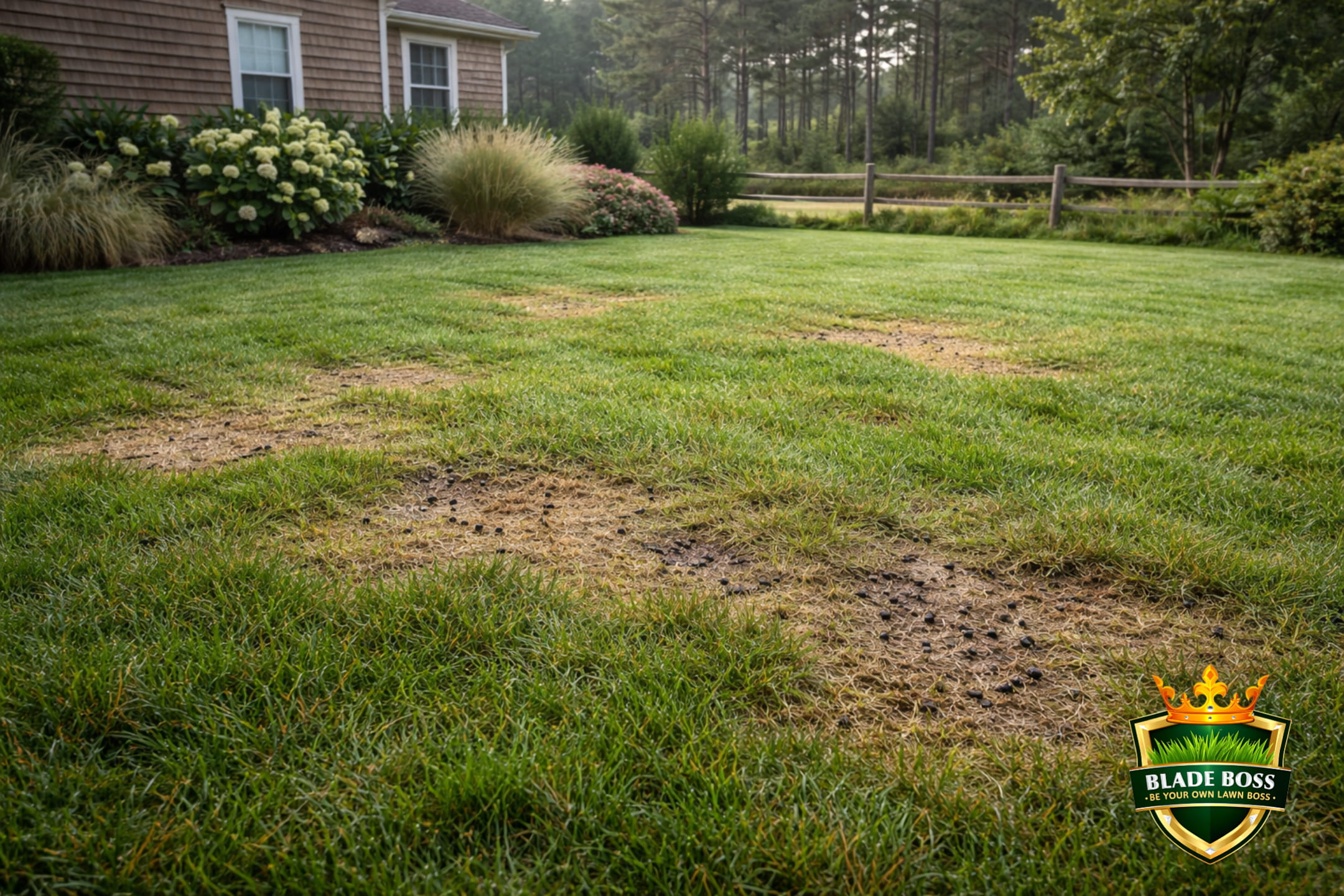
If you're east of Riverhead, deer are a lawn care variable that western Suffolk homeowners don't think about. Eastern Suffolk has one of the highest deer densities in New York State, and they will eat your new grass seed, graze tender spring growth down to the crown, and trample wet lawns into a compacted mess. This is especially brutal if you're overseeding in September.
- Protect new seed with temporary deer netting. Cover overseeded areas with plastic mesh netting staked at the edges for 4 to 6 weeks after germination. Remove once grass reaches 3 inches.
- Choose less palatable grass species. Tall fescue is significantly less palatable to deer than Kentucky Bluegrass. If deer pressure is severe, switch to a TTTF-dominant blend.
- Avoid fertilizing near dusk in spring. Fresh fertilizer odor attracts deer. Apply in the morning when they're bedded down.
- Accept some damage in spring. Deer graze most aggressively March through May when natural browse is limited. Established lawns recover. Focus protection on new seed areas.
- Perimeter deterrents. Motion-activated sprinklers, deer-repellent sprays (Liquid Fence), and physical barriers work better than hoping deer will skip your yard.
What to Do First (Regardless of Region)
No matter which Suffolk County sub-region you're in, step one is the same: get a soil test. Your specific lot may not match the dominant soil series for your town. Construction fill, grading, topsoil imports, and decades of amendments can change your soil profile completely. A soil test through Cornell Cooperative Extension (about $5 per sample) tells you your actual pH, phosphorus, potassium, CEC, and organic matter. Everything in this guide (and every other guide on this site) works better when you know your starting point.
Send your sample to Cornell Cooperative Extension or your local county soil testing lab. Results take 2 to 3 weeks. Test in early spring (March) so you have results before the fertilizer window opens April 1. Upload your results to the Blade Boss Dashboard and the Soil Correction Engine will calculate exact lime, potassium, and nitrogen rates for your specific soil.
Map Your Lawn's Zones
Lawn Map Pro lets you draw individual zones on your property using satellite imagery. Each zone can have different soil conditions, sun exposure, and grass types. The system calculates independent fertilizer rates, watering schedules, and amendment recommendations for each zone.
Answer 2 quick questions and get region-specific adjustments for your program.
We monitor the NOAA Islip station daily in spring. When soil hits 55°F at 4-inch depth for 3 consecutive days, you get a text. That's your signal to start mowing and assess spring conditions. Pre-emergent timing is GDD-based (GDD50 = 100, around April 6).
No spam. One seasonal alert per application window. Unsubscribe anytime.
Get the region map, soil types by town, and rate adjustment table as a printable 2-page PDF.
See what Blade Boss members get and get instant access to preview our tools, explore Lawn Map Pro, and see what data-driven lawn care looks like. Your Suffolk County lawn deserves better than a generic schedule.
See Plans →Chris C. is a Combat Search and Rescue pilot turned airline pilot and the founder of Blade Boss. He built the platform from his garage in Ronkonkoma (Region 1, Riverhead sandy loam, CEC 10) after spending two years learning the hard way that generic lawn care advice doesn't work on Long Island sand.
Related Reads
The matching Nassau County guide covers the western half of the island with the same zone-by-zone approach. Now that you know your sub-region, dial in the details: the fertilizer schedule gives you the 5-round nitrogen plan (adjust rates per the table above), the pH correction guide shows lime rates by soil texture, the sandy soil guide is essential reading for South Shore and deep sand properties, and the irrigation guide covers watering frequency adjustments for sand vs clay. The month-by-month calendar is your master timeline. For grass type selection, the TTTF vs KBG comparison explains why East End properties may want to shift toward tall fescue.
Frequently Asked Questions
What type of soil does Suffolk County have?
Suffolk County has 4 distinct soil regions. Western Suffolk (Huntington, Babylon, Islip) is predominantly Riverhead sandy loam and Haven loam with a CEC of 8 to 12. The North Shore (Smithtown, Port Jefferson) has heavier glacial moraine clay loam. The South Shore and central corridor (Patchogue, Sayville) has deep Plymouth and Carver sand with CEC under 5. The East End (Riverhead to Montauk) is mixed, with Bridgehampton silt loam in the wine country areas and deep sand near the coast. Your soil type determines your fertilizer rates, lime requirements, watering frequency, and how fast nutrients leach.
Is all of Suffolk County USDA Zone 7B?
Almost all of Suffolk County is USDA Zone 7B per the 2023 USDA Plant Hardiness Zone Map. The exception is the far eastern tip at Montauk, which is classified as Zone 7A. This means Montauk has slightly colder winter minimums and a shorter growing season. For practical lawn care purposes, the difference is roughly 1 to 2 weeks later spring start and 1 to 2 weeks earlier fall end. Everywhere west of Montauk, including the Hamptons, Riverhead, and all of western Suffolk, is solidly Zone 7B.
When can I fertilize in Suffolk County?
Suffolk County Local Law No. 41-2007 prohibits lawn fertilization from November 1 through April 1. Violation carries a $1,000 fine. Your fertilizer window is April 1 through October 31. New York State also bans phosphorus in lawn fertilizer unless a soil test confirms a deficiency. Pre-emergent herbicides (prodiamine, dithiopyr) are NOT fertilizer and can be applied during the blackout period as long as they contain zero nitrogen, phosphorus, or potassium.
Why is lawn care different on the North Shore vs South Shore of Suffolk County?
The North Shore sits on glacial moraine with heavier clay loam to silty clay soils. These soils hold water longer, warm 7 to 14 days later in spring, and require more lime per pH unit change than sandy soils. The South Shore sits on the glacial outwash plain with deep sand and loamy sand. These soils drain fast, warm fast, and leach nutrients rapidly. A South Shore lawn needs more frequent watering and split fertilizer applications to prevent nutrient loss. A North Shore lawn holds moisture and nutrients longer but compacts more easily and needs core aeration.
Do I need to worry about deer damage to my lawn in Suffolk County?
Deer damage to lawns is primarily an East End and North Fork issue. Eastern Suffolk has one of the highest deer densities in New York State. Deer graze on grass (especially new seedlings and tender spring growth), trample wet lawns, and browse ornamental plantings. If you are overseeding on the East End, consider temporary deer netting over seeded areas for the first 4 to 6 weeks. In western Suffolk (Huntington, Babylon, Islip), deer pressure on lawns is minimal.

Keep Reading
 Lawn Science
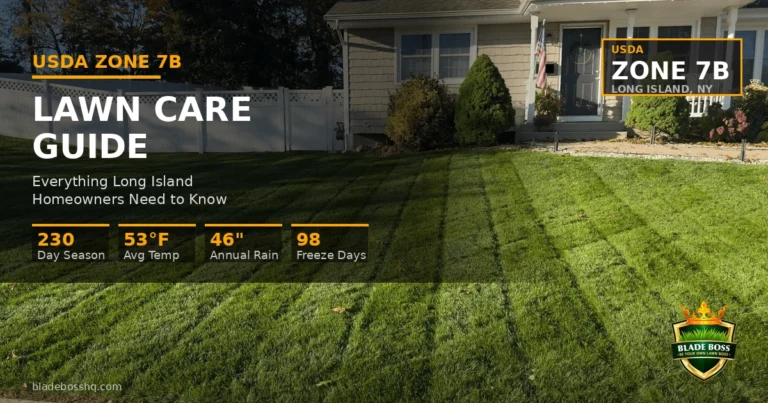
USDA Zone 7B Lawn Care Guide: Everything Long Island Homeowners Need to Know
The definitive Zone 7B lawn care guide for Long Island. 30-year NOAA data, Cornell research, and real soil...
Mar 3, 2026
21 min
 Lawn Science
Long Island Fungicide Guide: FRAC Groups, Rotation Schedule, and What to Buy
The complete beginner's guide to lawn fungicide on Long Island. Learn FRAC groups, build a 4-product rotation schedule...
Mar 27, 2026
17 min
 DIY How-To
GDD Explained: The Secret to Perfect Lawn Timing
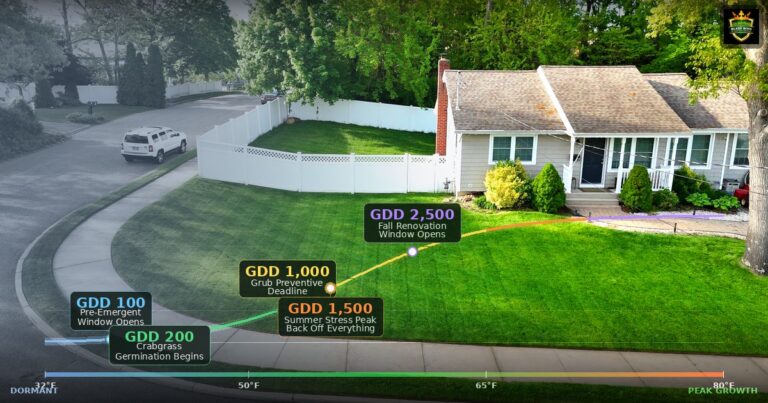
Growing degree days (GDD) predict exactly when to apply pre-emergent, fertilize, and treat for pests on your lawn....
Feb 25, 2026
14 min
What is your lawn actually sitting on?
Pull the soil survey, hardiness zone and current growing conditions for your exact address. Eight government sources, about a minute.
No comments yet. Be the first to share your thoughts.
Create a free account to join the conversation.