Long Island Fungicide Guide: FRAC Groups, Rotation Schedule, and What to Buy
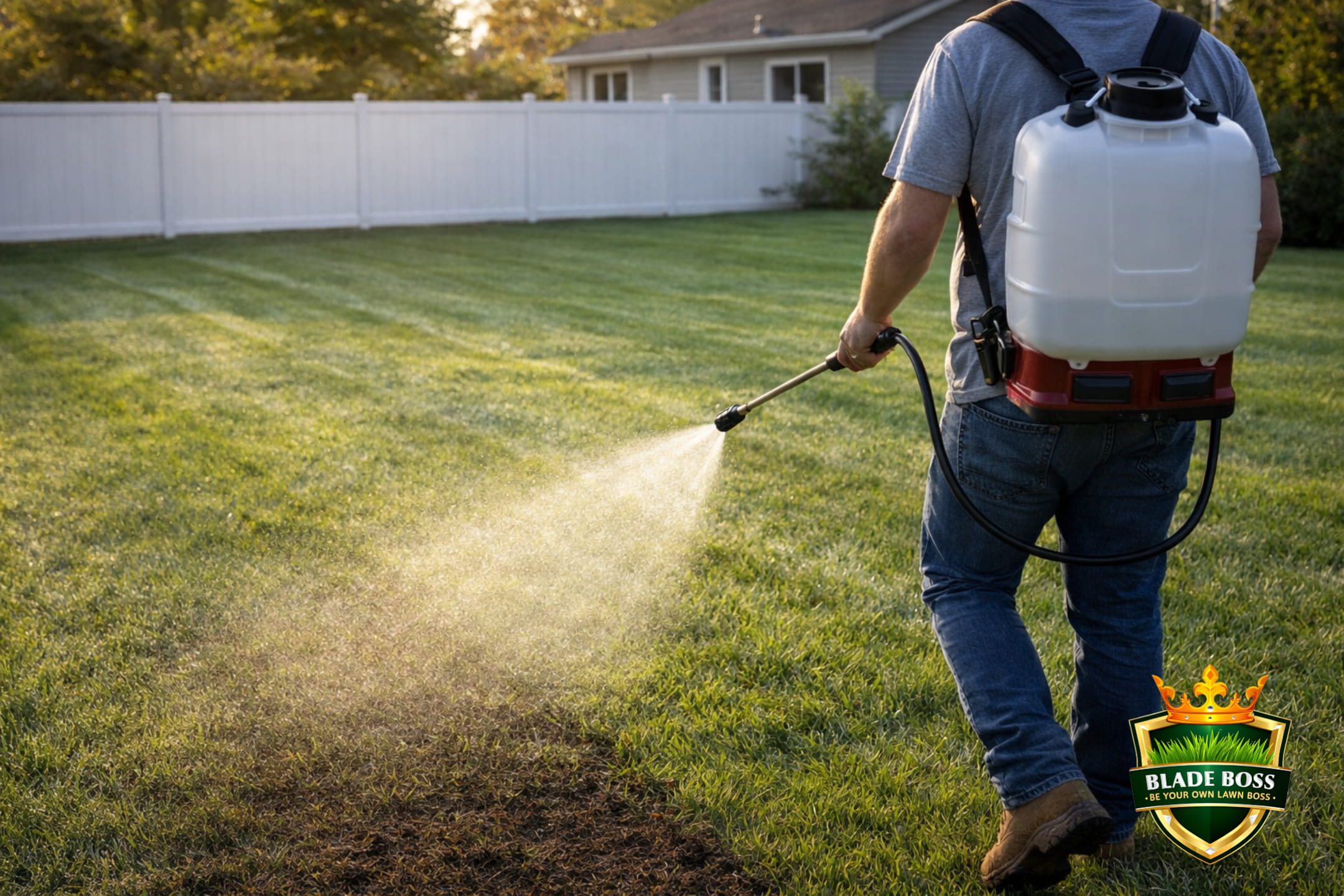
I spent my first two summers on Long Island watching brown patch eat circles through my lawn every July. I threw down granular DiseaseEx, crossed my fingers, and watched it happen again. The problem wasn't the product. It was the strategy. I was using one FRAC group, applying it reactively instead of preventively, and spraying with a hose-end sprayer that put down roughly the same amount of chemical as spitting into the wind. This guide is everything I wish someone had handed me before I wasted two seasons and a few hundred dollars learning the hard way.
The Long Island Legal Rotation at a Glance
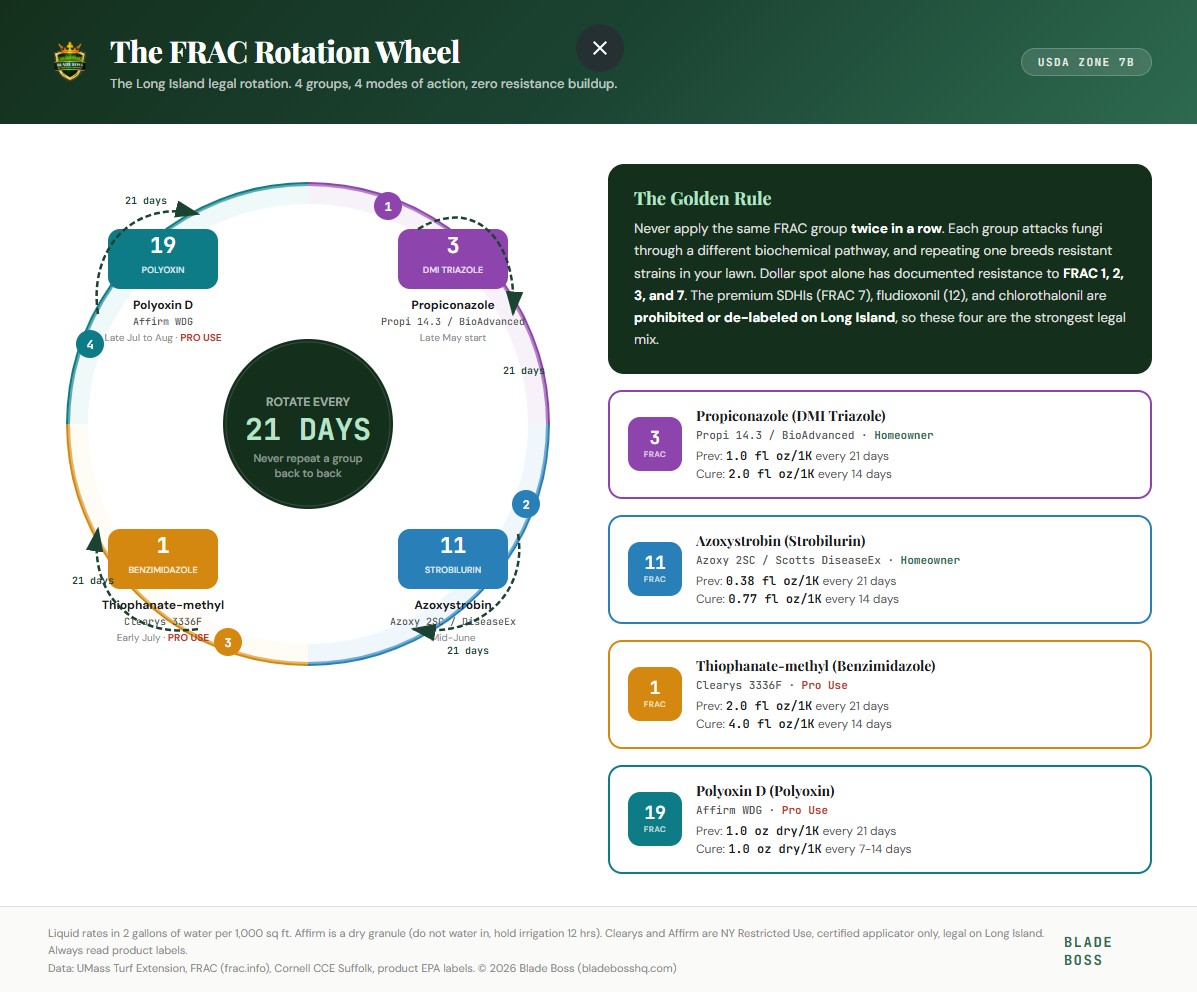
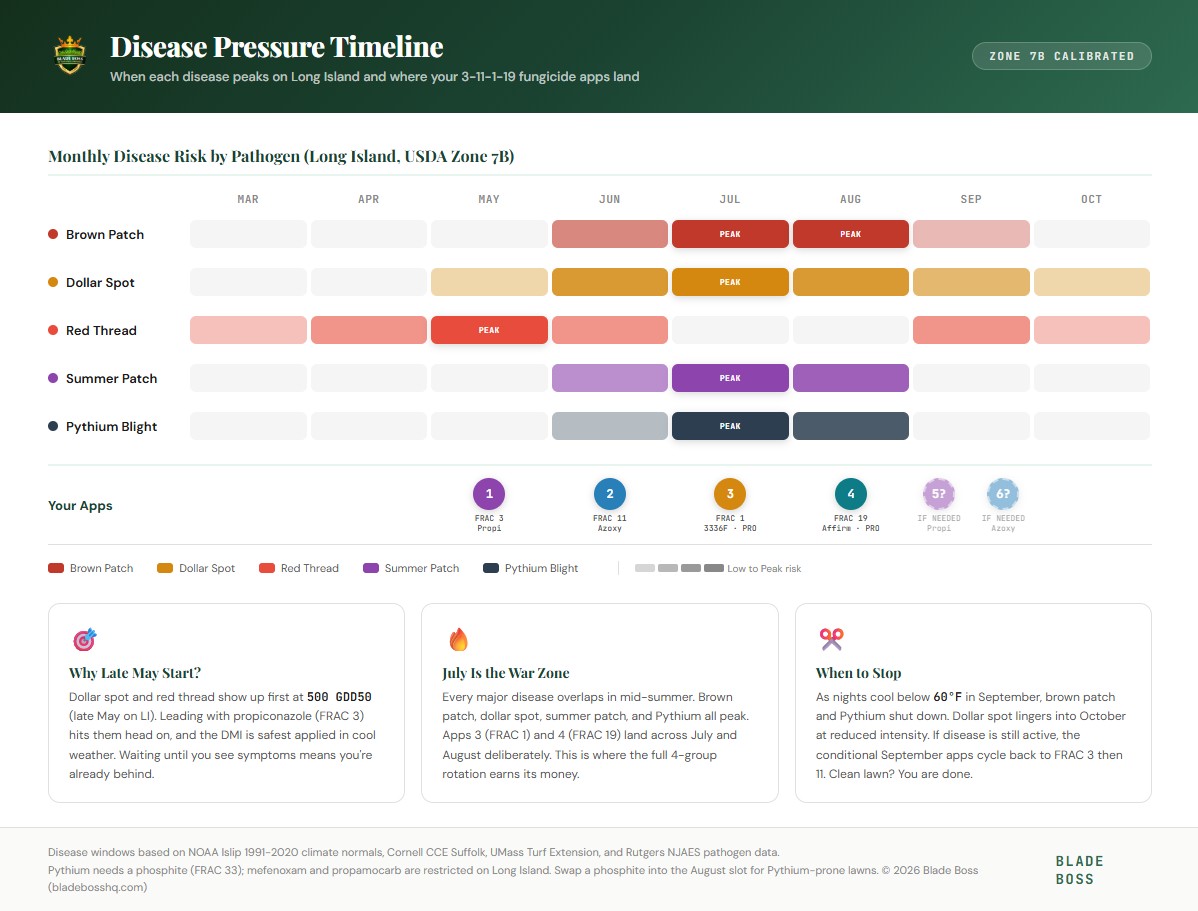
- The rotation, in order: Propiconazole 14.3 (FRAC 3), then Azoxystrobin 2SC (FRAC 11), then Thiophanate-methyl (FRAC 1), then Polyoxin D / Affirm (FRAC 19).
- The schedule: Every 21 days from late May through August. Never repeat the same FRAC group back to back.
- Preventive vs. curative: Preventive rates are roughly half the curative rates. Lower doses hold a barrier, higher doses fight an active infection.
- How to apply: Spray the liquids with a backpack sprayer and a fan tip nozzle for even coverage on the leaf blade where disease lives.
- Season cost (5,000 sq ft): $50 to $60 for the homeowner 2-product core (propiconazole plus azoxystrobin), $120 to $160 for the full four-product program.
This is not a disease identification guide. If you need help figuring out what's killing your grass, that's a different conversation. This guide assumes you want to prevent lawn disease from ever getting a foothold, and if it does show up, you want to know exactly what to spray, how much, and how often. Think of it as the fertilizer schedule equivalent for fungicide. A complete program with exact products, exact rates, and exact timing.
Why Liquid Fungicide (Not Granular)
Fungicides are one of the few lawn care categories where I strongly recommend liquid over granular. Here's why. Most turf diseases (brown patch, dollar spot, red thread) are foliar diseases. The pathogen lives on the leaf blade. To kill it or prevent it, the fungicide needs to coat the leaf surface. Granular fungicide sits on top of the grass as a pellet and has to dissolve, then redistribute onto the leaf blade through dew or irrigation. That's wildly inconsistent.
Liquid fungicide sprayed from a backpack sprayer coats every leaf blade evenly. You control the rate (fl oz per 1,000 sq ft), the water volume (2 gallons per 1,000 sq ft is the standard), and the pattern (overlapping passes for full coverage). You can also tank mix two products in the same application when needed, which you can't do with granular.
Use a battery-powered backpack sprayer or pump sprayer with a fan tip nozzle. Do NOT use a hose-end sprayer for fungicide. Hose-end sprayers don't deliver enough precision for the rates we're working with (fractions of an ounce per 1,000 sq ft). Calibrate your sprayer so you know exactly how many gallons it puts out per 1,000 sq ft at your walking speed.
FRAC Groups Explained (No PhD Required)
FRAC stands for Fungicide Resistance Action Committee. They assign every fungicide active ingredient a group number based on how it kills fungi. Think of it like radio frequencies. Two radios tuned to the same frequency are doing the same thing. Two fungicides in the same FRAC group attack the fungus the same way, through the same biochemical pathway.
Here's why that matters: if you spray the same FRAC group over and over, the fungus population mutates to survive that specific mode of attack. You've just created a resistant strain in your own lawn. Dollar spot, the most common lawn disease on Long Island, has documented resistance to FRAC groups 1, 2, 3, and 7. That's four different chemical classes that dollar spot has learned to shrug off because people kept spraying the same product.
Never apply the same FRAC group more than twice consecutively. Rotate to a different FRAC group after every 1 to 2 applications. This is the single most important thing in this entire guide. Get the rotation right and the specific products almost don't matter.
The 4 FRAC Groups You Need
FRAC Group 11: Azoxystrobin (Strobilurin)
Product: Azoxy 2SC Select ($48.50)
How it works: Blocks cellular energy production inside the fungus. Systemic, meaning it gets absorbed into the plant and protects from the inside out. Provides up to 28 days of protection per application.
Best against: Brown patch, summer patch, leaf spot, Pythium (at high rates), red thread.
Weakness: Not effective against dollar spot. If dollar spot is your primary problem, use FRAC 3 instead.
FRAC Group 3: Propiconazole (DMI Triazole)
Product: Propiconazole 14.3 ($69.14)
How it works: Disrupts fungal cell membrane construction. Without intact membranes, the fungus can't grow or spread. Systemic, absorbed into the plant tissue.
Best against: Dollar spot (the #1 product for this disease), brown patch, red thread, summer patch, snow mold, powdery mildew.
Note: Eagle 20EW (myclobutanil, $49.24) is another FRAC 3 option that's sometimes easier to find at box stores. Same FRAC group, so don't use both back to back.
FRAC Group 1: Thiophanate-methyl (Benzimidazole)
Product: Clearys 3336F ($71.40)
How it works: Disrupts cell division in the fungus, stopping it from reproducing. Systemic. Higher application volume than azoxy or propi (2 to 4 fl oz per 1K) so a quart doesn't last as many applications.
Best against: Brown patch, summer patch, anthracnose, leaf spot, snow mold.
Resistance warning: Dollar spot has documented resistance to FRAC 1 in some regions. This is why you rotate, never rely on one group alone.
Professional product, not labeled for homeowner use. It is legal to use on Long Island but is sold through professional distributors, not to homeowners.
FRAC Group 19: Polyoxin D (Affirm)
Product: Affirm WDG ($280.69)
How it works: A polyoxin (FRAC 19) that blocks chitin synthesis, so the fungus cannot build its cell wall. This is a completely different biochemical target from FRAC 11 (QoI respiration), FRAC 3 (DMI cell membrane), and FRAC 1 (MBC cell division), which makes it a genuine fourth mode of action for resistance rotation.
Rate: 1.0 oz by weight per 1,000 sq ft. It is a water-dispersible granule, so weigh it dry, mix it into the spray tank, and apply it like the liquids. Do not water it in, and hold irrigation for 12 hours after applying.
Best against: Brown patch and the whole Rhizoctonia complex, where it is the strongest tool still legal on Long Island. It also aids in control of leaf spot, red thread, anthracnose, and snow mold. It is not labeled for dollar spot, so propiconazole carries that load.
Professional product, not labeled for homeowner use. It is legal to use on Long Island but is sold through professional distributors, not to homeowners.
| FRAC Group | Active Ingredient | Product | Key Strength |
|---|---|---|---|
| 3 (DMI Triazole) | Propiconazole | Propi 14.3 / BioAdvanced | Best for dollar spot, red thread, rust |
| 11 (Strobilurin) | Azoxystrobin | Azoxy 2SC / Scotts DiseaseEx | Broadest spectrum, brown patch, summer patch |
| 1 (Benzimidazole) | Thiophanate-methyl | Clearys 3336F (Pro Use) | Strong systemic, summer patch, brown patch |
| 19 (Polyoxins) | Polyoxin D | Affirm WDG (Pro Use) | Strongest legal brown patch / Rhizoctonia tool |
Answer 3 quick questions for a personalized recommendation.
Each of the four groups attacks the fungus a different way:
- FRAC 3 (DMI): disrupts cell membrane construction.
- FRAC 11 (QoI): blocks respiration.
- FRAC 1 (MBC): stops cell division.
- FRAC 19 (polyoxin): blocks chitin cell-wall synthesis.
Long Island has the strictest pesticide rules in the country because Nassau and Suffolk sit on a sole-source drinking-water aquifer. That wipes out the strongest turf fungicides:
- SDHIs (FRAC 7, including Xzemplar): prohibited for use here.
- Fludioxonil (FRAC 12): prohibited.
- Chlorothalonil (Daconil): de-labeled for all residential lawns nationwide.
Where each product stands as of 2026:
- Chlorothalonil (Daconil): de-labeled for residential turf.
- SDHIs (FRAC 7) and fludioxonil (FRAC 12): prohibited for use in Nassau and Suffolk Counties.
- Propiconazole (FRAC 3) and azoxystrobin (FRAC 11): general-use, a homeowner can buy them.
- Thiophanate-methyl (Clearys 3336F, FRAC 1) and polyoxin D (Affirm, FRAC 19): professional products, not labeled for homeowner use.
The 4 Diseases That Hit Long Island Hardest
Long Island's combination of summer humidity, sandy soil, and cool-season grass creates a perfect environment for a handful of specific diseases. You don't need to memorize every turf pathogen. You need to know these four.
Brown Patch (Rhizoctonia solani)
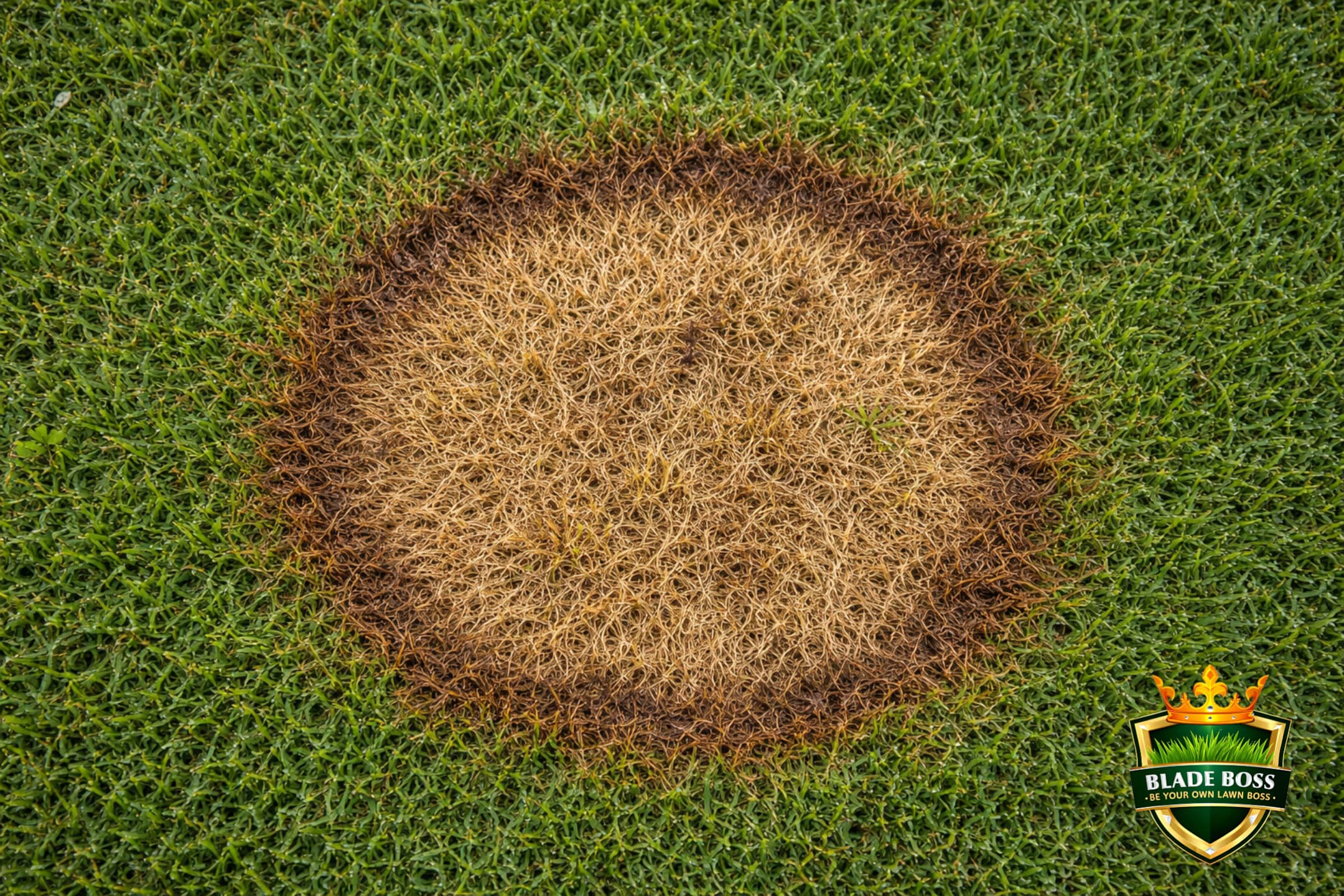
The #1 summer disease on LI. Circular patches 6 to 24 inches wide with a darker "smoke ring" border. Activates when nighttime temps stay above 60°F with humidity. Peak: late June through August. Thrives when you water in the evening.
Dollar Spot (Clarireedia)
Small straw-colored spots 2 to 6 inches wide, often with white cobwebby mycelium visible in morning dew. Peaks May through October. Thrives on nitrogen-starved turf. A well-fed lawn resists dollar spot naturally.
Red Thread (Laetisaria fuciformis)
Pink to red thread-like strands extending from leaf tips. Cool, humid weather (60 to 75°F). Common in spring and fall on LI. Almost always caused by low nitrogen. Often resolves with fertilizer alone, no fungicide needed.
Summer Patch (Magnaporthe poae)
Irregular rings or crescents of dead grass, often with a green center (frog-eye pattern). Soil-borne pathogen that attacks roots when soil exceeds 65°F. KBG and fine fescue are most susceptible. Preventive fungicide must be applied BEFORE symptoms appear.
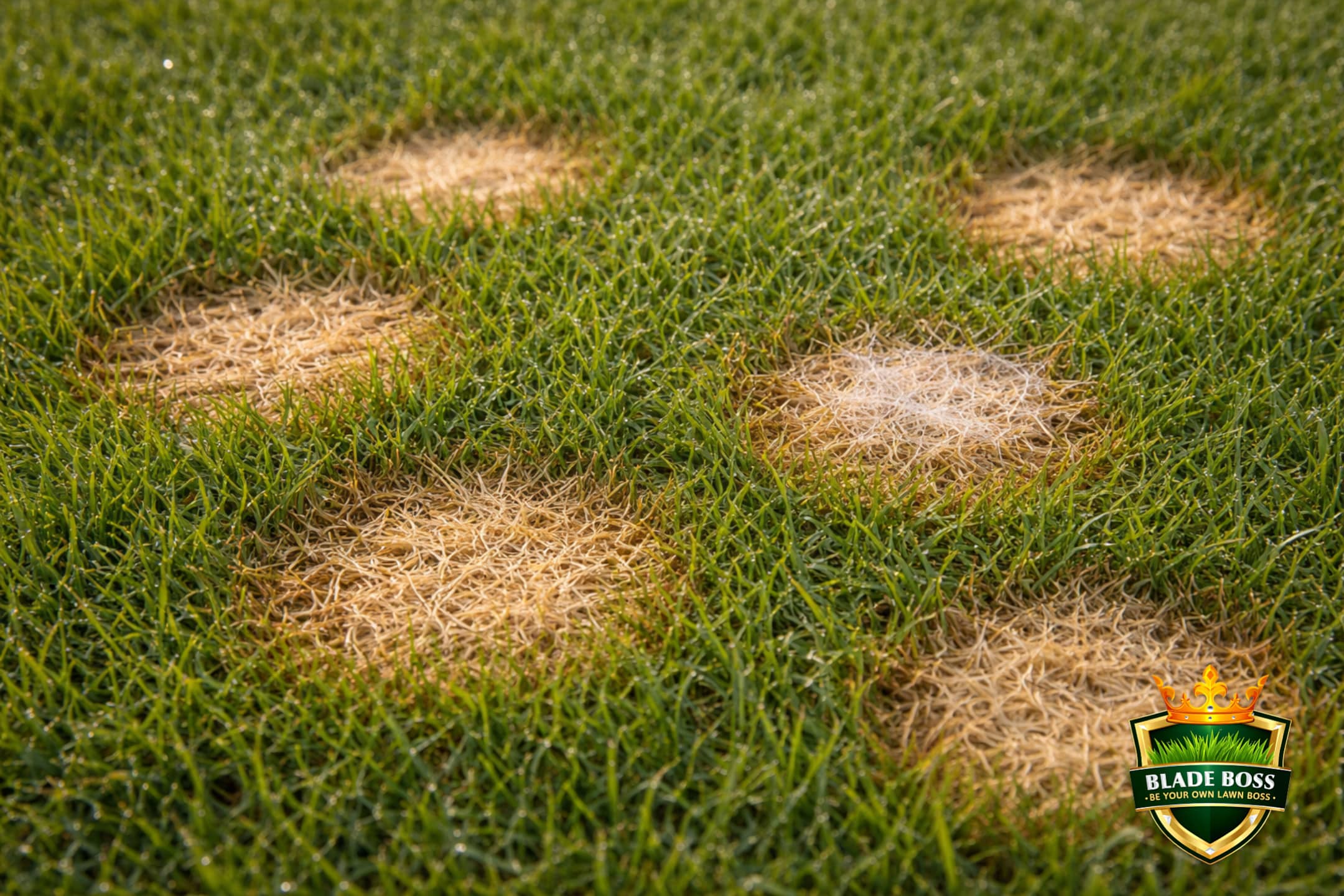
Pythium blight is an oomycete, not a true fungus, so standard turf fungicides have limited or no activity against it.
- Not an option on Long Island: the classic Pythium products, mefenoxam (FRAC 4) and propamocarb (FRAC 28), are restricted and not permitted for use in Nassau and Suffolk Counties.
- The accessible move: a phosphite (FRAC 33) product. The azoxystrobin already in your rotation gives partial suppression.
- If you have a history: swap a phosphite into the August slot, which is when Pythium peaks.
- If it hits hard: greasy grass that collapses overnight in hot, humid weather means it is time to call a pro.
The Complete Preventive Rotation Schedule
This is the schedule. Print it, tape it to your garage wall, set calendar reminders. Every application is a specific FRAC group at a specific rate, timed to Long Island's disease pressure windows. All rates assume liquid application in 2 gallons of water per 1,000 sq ft.
| App | Timing | FRAC | Product | Rate per 1,000 sq ft | What You're Preventing |
|---|---|---|---|---|---|
| 1 | Late May (GDD50 ~500) | 3 | Propi 14.3 / BioAdvanced | 1.0 fl oz | Dollar spot and red thread onset (DMI safest applied in cool weather) |
| 2 | Mid-June (~3 wks later) | 11 | Azoxy 2SC / DiseaseEx | 0.38 fl oz | Summer patch (soil-borne, water in), brown patch onset |
| 3 | Early July (~3 wks later) | 1 | Clearys 3336F (Pro Use) | 2.0 fl oz | Brown patch and dollar spot peak |
| 4 | Late July to Aug (~3 wks later) | 19 | Affirm WDG (Pro Use) | 1.0 oz (dry) | Peak brown patch and Rhizoctonia. Do not water in; hold irrigation 12 hrs. |
| 5 (if needed) | Early Sept | 3 | Propi 14.3 / BioAdvanced | 1.0 fl oz | Only if disease persists. Cycle back to the front of the rotation. |
| 6 (if needed) | Late Sept | 11 | Azoxy 2SC / DiseaseEx | 0.38 fl oz | Only if disease persists. Stop once nights cool and the lawn is clean. |
Apps 1 through 4 are the core program, late May through August, every 21 days. Apps 5 and 6 are conditional: if brown patch or dollar spot is still active in September, keep rotating by cycling back to the front of the list (FRAC 3, then 11), never repeating a group back to back. Stop once nights cool and the lawn stays clean, usually late September into October. If you have a history of snow mold, one optional late-fall application of propiconazole (3) or polyoxin D (19) before lasting snow cover closes out the season.
We'll text you when GDD50 hits 500 in your area and it's time to start your fungicide rotation. One text, once a year, exactly when you need it. No spam.
No spam. One seasonal alert per application window. Unsubscribe anytime.
Track GDD for Precise Fungicide Timing
The Blade Boss Weather Hub inside Lawn Map Pro monitors GDD50 accumulation in real time for your ZIP code. Set an alert at 500 GDD50 and you'll know exactly when to start your fungicide rotation. No guessing.
Exact Rates: Preventive vs. Curative
Preventive rates are lower because you're maintaining a chemical barrier before the pathogen establishes. Curative rates are higher because you're fighting an active infection. Using curative rates preventively wastes product and burns through your annual maximum faster. Using preventive rates curatively means you're under-dosing an active infection.
| Product | FRAC | Rate | Interval | Annual Max |
|---|---|---|---|---|
| Propi 14.3 (14.3%) Homeowner | 3 | 1.0 fl oz | Every 21 days | 16 fl oz/1K/year |
| Azoxy 2SC (22.9%) Homeowner | 11 | 0.38 fl oz | Every 21 days | 7.1 fl oz/1K/year |
| Clearys 3336F (41.25%) Pro Use | 1 | 2.0 fl oz | Every 21 days | Per label |
| Affirm WDG polyoxin D, Pro Use | 19 | 1.0 oz (dry) | Every 21 days | Per label |
| Product | FRAC | Rate | Interval | Key Notes |
|---|---|---|---|---|
| Propi 14.3 (14.3%) Homeowner | 3 | 2.0 fl oz | Every 14 days | Best curative for dollar spot. Tank mix a different FRAC group for severe brown patch. |
| Azoxy 2SC (22.9%) Homeowner | 11 | 0.77 fl oz | Every 14 days | Max 2 consecutive apps before rotating to a different FRAC. |
| Clearys 3336F (41.25%) Pro Use | 1 | 4.0 fl oz | Every 14 days | Monitor for resistance on dollar spot. Strong on summer patch. |
| Affirm WDG polyoxin D, Pro Use | 19 | 1.0 oz (dry) | Every 7 to 14 days | Best curative for brown patch / Rhizoctonia. Do not irrigate 12 hrs after. |
You're working with rates like 0.38 fl oz per 1,000 sq ft. That's about 11 ml. Buy a set of graduated cylinders or syringes (available on Amazon for a few dollars). Measure in milliliters for precision. For reference: 1 fl oz = 29.6 ml. So 0.38 fl oz = 11.2 ml, 0.77 fl oz = 22.8 ml, 1.0 fl oz = 29.6 ml, and 2.0 fl oz = 59.1 ml.
The Curative Protocol (Disease Already Active)
Prevention failed, or you skipped it, or Mother Nature just decided your lawn was going to get brown patch this year. Here's what to spray and how much.
| Disease | Primary Product | Rate per 1K | Interval | Key Notes |
|---|---|---|---|---|
| Brown Patch | Propi 14.3 (FRAC 3) or Affirm (FRAC 19) | 2.0 fl oz / 1.0 oz | 14 days | Affirm (polyoxin D) is the strongest legal option. Let spray dry before irrigating. |
| Dollar Spot | Propi 14.3 (FRAC 3) | 2.0 fl oz | 14 days | NOT azoxystrobin (poor on dollar spot). Increase your nitrogen rate slightly. |
| Red Thread | Propi 14.3 (FRAC 3) | 1.0 fl oz | 14 days | Try fertilizer first. Red thread almost always resolves with a nitrogen bump. |
| Summer Patch | Azoxy 2SC (FRAC 11) | 0.77 fl oz | 14 days | Water in after application (soil-borne). Start preventive in June when soil hits 65 degrees. |
| Leaf Spot / Melting Out | Clearys 3336F (FRAC 1) | 4.0 fl oz | 14 days | Reduce nitrogen. Raise mowing height. Improve air circulation. |
| Pythium Blight | Phosphite (FRAC 33) | Per label | 7 to 14 days | Mefenoxam and propamocarb are restricted on Long Island. Use a phosphite or call a pro. |
A curative fungicide application stops the disease from spreading. It does not bring back dead grass. Once turf tissue is killed by brown patch or dollar spot, that grass is gone. It will either grow back from the crowns (if the crowns survived) or need to be overseeded in September. This is why prevention is always cheaper than cure.
Check Your Disease Risk Right Now
FungusDefender Pro uses real-time weather data (temperature, humidity, precipitation) to calculate your current disease risk for brown patch, dollar spot, Pythium, and more. It tells you whether you need to spray today or wait. Stop guessing, start measuring.
What to Buy: The Shopping List
Budget Rotation (2 Products, ~$120 Upfront)
If you're just getting started and don't want to buy four products at once, start with the two that cover the most ground. Azoxystrobin and propiconazole together hit every major LI disease except Pythium, and they represent two different FRAC groups (11 and 3). Alternate between them every 3 to 4 weeks from late May through August. This is the "bulletproof" rotation that most lawn care communities recommend as a minimum.
Azoxy 2SC Select (Azoxystrobin 22.9%)
Your broad-spectrum workhorse. Covers brown patch, summer patch, leaf spot, red thread, and more. One pint covers approximately 20,000 to 42,000 sq ft depending on rate. Systemic, so it gets absorbed into the plant. NOT effective against dollar spot.
Check Price ($48.50)Propiconazole 14.3 (Quali-Pro)
Your dollar spot and brown patch specialist. Systemic triazole that stops fungal cell growth. One quart covers approximately 16,000 sq ft at the preventive rate. The best single product for dollar spot, which azoxystrobin can't touch. Also excellent for brown patch and red thread.
Check Price ($69.14)Full Rotation (4 Products)
For maximum resistance prevention and the broadest disease coverage, add FRAC 1 (thiophanate-methyl) and FRAC 19 (polyoxin D) to your arsenal. This gives you four different modes of action and the ability to go the full season without repeating a FRAC group back to back. Both are professional products, not labeled for homeowner use.
Azoxy 2SC Select (Azoxystrobin 22.9%)
Your broad-spectrum workhorse. Covers brown patch, summer patch, leaf spot, red thread, and more. One pint covers approximately 20,000 to 42,000 sq ft depending on rate. Systemic, so it gets absorbed into the plant. NOT effective against dollar spot.
Check Price ($48.50)Propiconazole 14.3 (Quali-Pro)
Your dollar spot and brown patch specialist. Systemic triazole that stops fungal cell growth. One quart covers approximately 16,000 sq ft at the preventive rate. The best single product for dollar spot, which azoxystrobin can't touch. Also excellent for brown patch and red thread.
Check Price ($69.14)Clearys 3336F (Thiophanate-methyl 41.25%)
Systemic benzimidazole. Strong against brown patch, summer patch, anthracnose, and snow mold. It is labeled for dollar spot, but widespread FRAC 1 resistance makes it unreliable there. Higher application volume than azoxy or propi (2 to 4 fl oz per 1K) so a quart doesn't last as many applications. Great as your third FRAC group in the rotation.
Check Price ($71.40)Affirm WDG (Polyoxin D)
Your fourth mode of action and the strongest brown patch and Rhizoctonia tool still legal on Long Island. A polyoxin (FRAC 19) that blocks chitin synthesis, applied as a water-dispersible granule (weigh 1 oz, mix it into the spray) from a 2.4 lb bag. Do not water it in; hold irrigation 12 hours after. A professional product, not labeled for homeowner use, but legal to use here. Source it through a professional distributor like Veseris.
Check Price ($280.69)The Sprayer
MY4SONS Battery Powered 4-Gal Backpack Sprayer
This is what I use for every liquid application. Battery powered, consistent pressure, adjustable nozzle, 4-gallon tank covers 2,000 sq ft per fill at the standard 2 gal/1K rate. Worth the investment if you're doing fungicide, herbicide, and foliar sprays.
Check Price ($269.99)Alternative: FRAC 3 Box Store Option
Eagle 20EW (Myclobutanil, FRAC 3)
Another DMI triazole like propiconazole (same FRAC 3 group). Sometimes easier to find at local retailers. Use at 1.0 to 2.0 fl oz per 1,000 sq ft. Treat it as your FRAC 3 slot in the rotation (don't use it AND propiconazole back to back since they're the same FRAC group).
Check Price ($49.24)Cultural Practices That Reduce Disease Pressure
Fungicide is one leg of the stool. If your cultural practices are inviting disease, no chemical program will save you. These are free and they make your fungicide program work harder.
- Water before 10 AM, never in the evening. Wet leaf blades overnight are the #1 contributor to brown patch and dollar spot. Morning watering lets blades dry by afternoon.
- Mow at 3.5 to 4 inches in summer. Taller grass has better airflow at the canopy and shades the soil surface, reducing the warm, humid microclimate fungi need.
- Sharpen your mower blades. Dull blades tear grass tissue instead of cutting it, creating open wounds where pathogens enter. Sharpen every 20 to 25 hours of mowing.
- Don't over-fertilize in spring. Excess nitrogen, especially quick-release N in May and June, produces lush, soft growth that's highly susceptible to brown patch. Keep spring N to 0.50 lbs per 1,000 sq ft max.
- Don't under-fertilize either. Dollar spot thrives on nitrogen-starved turf. A lawn getting zero N is as vulnerable as one getting too much. Follow the 2.75 lbs N/year schedule.
- Improve air circulation. Prune low-hanging branches and dense shrubs that block airflow across the lawn. Stagnant, humid air is a disease factory.
- Core aerate in September. Compacted soil holds moisture against the crown, creating disease-friendly conditions. Annual aeration improves drainage and airflow in the root zone.
- Bag clippings during active infection. If you have active brown patch or dollar spot, bag your clippings for those mows. Mulching during an outbreak spreads fungal spores across the lawn.
When to Skip Fungicide Entirely
Not every lawn needs a preventive fungicide program. If you had zero disease issues last year, your cultural practices are solid (morning watering, proper mowing height, balanced fertilizer), and your grass type has good disease resistance (modern TTTF cultivars, for example), you may not need to spray at all. Fungicide is an insurance policy. Some lawns don't need the policy.
Start a fungicide program if: you had brown patch or dollar spot last year, you have a KBG-dominant lawn (more disease-prone than TTTF), your property has poor air circulation (fenced, shaded, or low-lying), or you water in the evening and can't change that habit. If none of those apply, skip the program and spend the money on a soil test instead.
All 4 products, preventive and curative rates, the complete FRAC rotation schedule, disease-specific treatments, and a fl oz to mL conversion table. Two pages. Print it and tape it inside your garage cabinet.
See what Blade Boss members get and get access to preview our tools, explore Lawn Map Pro, and see what data-driven lawn care looks like. The Weather Hub tracks GDD50 so you know exactly when to start your fungicide program.
See Plans →Chris is a Combat Search and Rescue pilot turned airline pilot who built Blade Boss to bring military-grade precision to backyard lawn care. He runs a 4-product FRAC rotation on his Ronkonkoma lawn every summer and has not lost a square foot to brown patch since starting the protocol.
Related Reads
If you're building out a complete lawn care program alongside your fungicide rotation, these guides cover the other critical pieces: the fertilizer schedule explains the 5-round nitrogen plan that keeps your lawn fed without creating disease-friendly conditions, the grub control guide covers the preventive insecticide program (separate from fungicide), the irrigation guide explains why morning watering is non-negotiable for disease prevention, and the month-by-month calendar shows where fungicide fits into the full annual program. For soil chemistry, the pH guide and soil test decoder are your starting points.
Frequently Asked Questions
What FRAC groups should I rotate for lawn fungicide?
For cool-season lawns on Long Island, rotate FRAC Group 3 (propiconazole), FRAC Group 11 (azoxystrobin), FRAC Group 1 (thiophanate-methyl), and FRAC Group 19 (polyoxin D), in that order. Never apply the same FRAC group twice in a row. This 3-11-1-19 rotation is the strongest mix of modes of action still legal on Long Island, covering brown patch, dollar spot, red thread, summer patch, and most common turf diseases while preventing resistance. The premium SDHI fungicides like Xzemplar are prohibited for use in Nassau and Suffolk Counties.
When should I start applying fungicide on Long Island?
Start your preventive program in late May when growing degree days reach about 500 GDD50, which is when dollar spot and red thread first appear on Long Island. This typically falls in the last week of May. Your first application is propiconazole (FRAC 3) at 1.0 fl oz per 1,000 sq ft in 2 gallons of water, the best early-season tool for dollar spot. Continue rotating every 21 days through August.
Is liquid fungicide better than granular for lawns?
Yes. Liquid fungicide applied with a backpack or pump sprayer delivers significantly more even coverage than granular products. You control the exact rate per 1,000 sq ft, the water volume, and the spray pattern. Granular fungicide relies on dissolving off the granule and reaching the leaf blade, which is inconsistent. For foliar diseases like brown patch and dollar spot, the fungicide needs to coat the leaf surface, and liquid application does this far more effectively than granular.
What fungicide works best for brown patch on Long Island?
For preventive brown patch control on Long Island, apply propiconazole 14.3 (FRAC Group 3) at 1.0 fl oz per 1,000 sq ft, or azoxystrobin (FRAC 11), starting when nighttime temperatures consistently exceed 60 degrees Fahrenheit (typically mid-June). For curative treatment of active brown patch, increase propiconazole to 2.0 fl oz per 1,000 sq ft every 14 days, or use polyoxin D (Affirm, FRAC 19), the strongest brown patch tool legal on Long Island. For severe outbreaks, tank mix two different FRAC groups for dual mode of action coverage.
How much does a homeowner fungicide program cost per year?
A budget 2-product rotation using propiconazole 14.3 and azoxystrobin 2SC costs approximately 50 to 60 dollars and covers a 5,000 sq ft lawn for the entire season with 4 preventive applications. The full 4-product rotation adding thiophanate-methyl (Clearys 3336F) and polyoxin D (Affirm) runs approximately 120 to 160 dollars per season; note that both of those are restricted-use products for certified applicators. Compare this to a single curative treatment by a lawn care service, which typically costs 75 to 150 dollars per application.
Keep Reading
 Lawn Science
Why Your Lawn Won’t Respond to Fertilizer (5 Hidden Reasons)
You fertilized. You waited. Nothing happened. Here are the 5 reasons your lawn ignores what you put down...
Apr 17, 2026
9 min
 Lawn Science
Lesco vs Scotts Fertilizer: Which Is Better for Northeast Lawns?
Scotts is everywhere. Lesco is what the pros use. Here's the real difference: granule size, nitrogen quality, cost...
May 11, 2026
11 min
 DIY How-To
Lawn Renovation vs Overseeding: When to Choose Which
If more than 50% of your lawn is weeds, bare dirt, or the wrong grass type, overseeding will...
May 27, 2026
9 min
What is your lawn actually sitting on?
Pull the soil survey, hardiness zone and current growing conditions for your exact address. Eight government sources, about a minute.
No comments yet. Be the first to share your thoughts.
Create a free account to join the conversation.