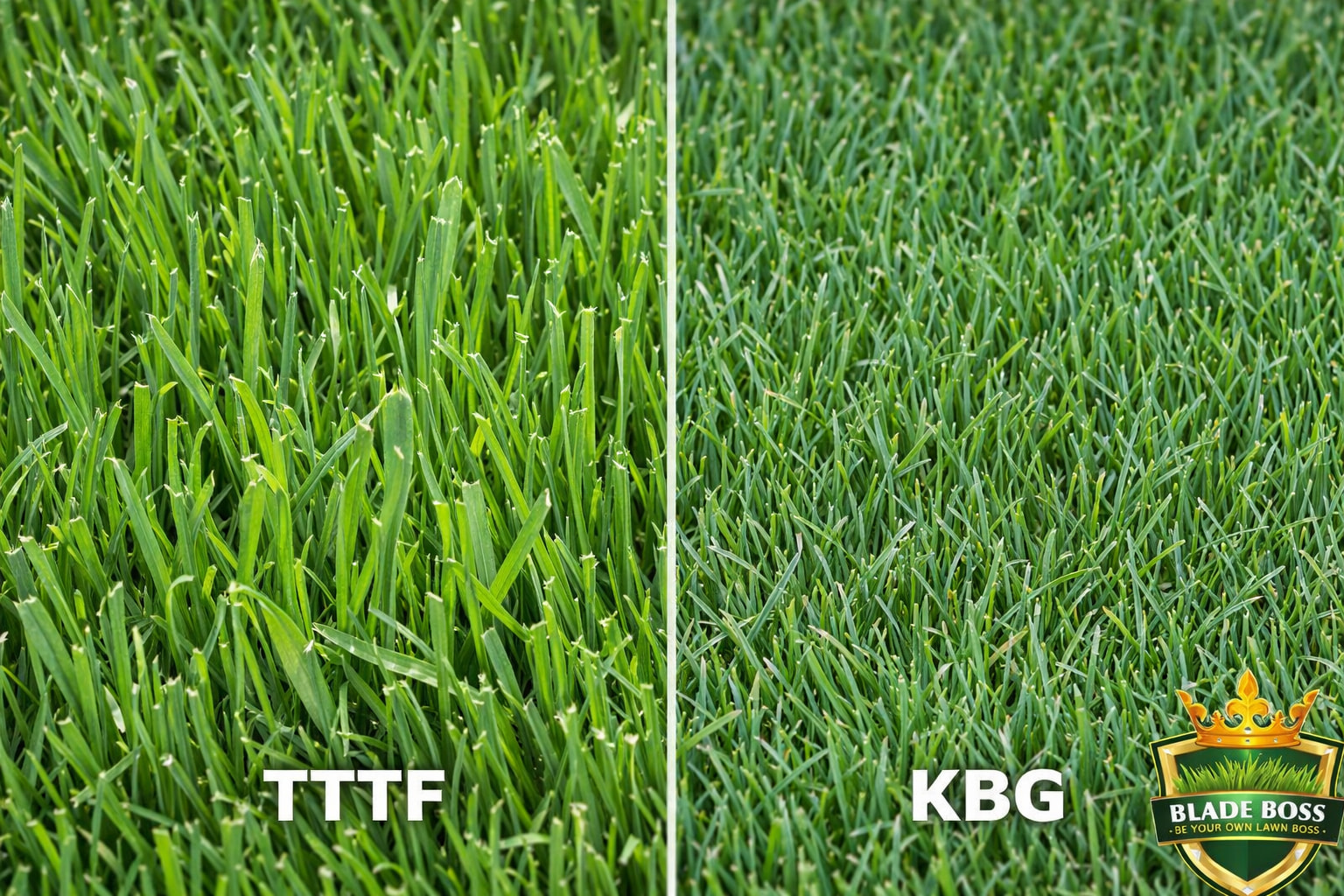
Every September on Long Island, the same debate plays out at every garden center, hardware store, and lawn care forum: tall fescue or Kentucky bluegrass? Grab a bag of KBG and your neighbor swears by fescue. Go with fescue and the guy down the street says his bluegrass looks better. Here's what nobody tells you: for Long Island specifically, the answer is almost always both. But the ratio matters, and it depends on your yard, your water bill, and how much time you want to spend on your lawn.
- Best for most Long Island lawns: A turf-type tall fescue (TTTF) dominant blend: 60 to 70% TTTF, 15 to 20% Kentucky bluegrass, 10 to 15% perennial ryegrass.
- Why TTTF dominates: Deep roots (4 to 6 inches in LI sandy soil, up to 2 to 3 feet in ideal conditions) handle LI's sandy soil and 75 to 90 day summer stress window. Only 15 to 25% of TTTF shows summer dormancy vs 60 to 80% for un-irrigated KBG.
- Why KBG is still in the mix: Self-repairs through rhizomes. Fills gaps between fescue clumps that TTTF can't fix on its own. Superior cold hardiness.
- The exception: Full-sun, irrigated lawns where maximum aesthetics matter can go KBG-dominant (65% KBG, 15% PRG, 20% fine fescue). Requires more water, more fertilizer, and more disease management.
This guide breaks down the real-world performance differences between tall fescue and Kentucky bluegrass on Long Island, backed by Cornell Cooperative Extension of Nassau County recommendations, Rutgers NJAES turf research, and our Zone Science climate data for USDA Zone 7B. If you're planning a fall renovation or choosing grass seed, this is the comparison you need. Our Dynamic Calendar tracks these windows automatically with GDD alerts. Lawn Map Pro puts all this data on your satellite map with zone-by-zone tracking. Our Stripe Master members get the complete 15-step Lawn Playbook that covers exactly this.
The Head-to-Head Comparison
| Category | Turf-Type Tall Fescue (TTTF) | Kentucky Bluegrass (KBG) | Winner for LI |
|---|---|---|---|
| Drought tolerance | Excellent. Roots reach 2 to 3 feet deep. | Poor to moderate. Shallow roots. | TTTF |
| Summer dormancy (no irrigation) | 15 to 25% of stand goes dormant | 60 to 80% goes dormant (brown lawn) | TTTF |
| Heat tolerance | Dormant above 90°F but handles LI summers well | Dormant above 80°F, struggles July to Aug | TTTF |
| Shade tolerance | Good (moderate shade) | Poor (needs 6+ hours full sun) | TTTF |
| Salt tolerance | Most tolerant cool-season grass | Least tolerant cool-season grass | TTTF |
| Sandy soil performance | Excellent. Deep roots access subsurface moisture. | Moderate. Shallow roots dry out faster. | TTTF |
| Self-repair ability | None. Bunch-type, no rhizomes. | Excellent. Rhizomes fill bare spots. | KBG |
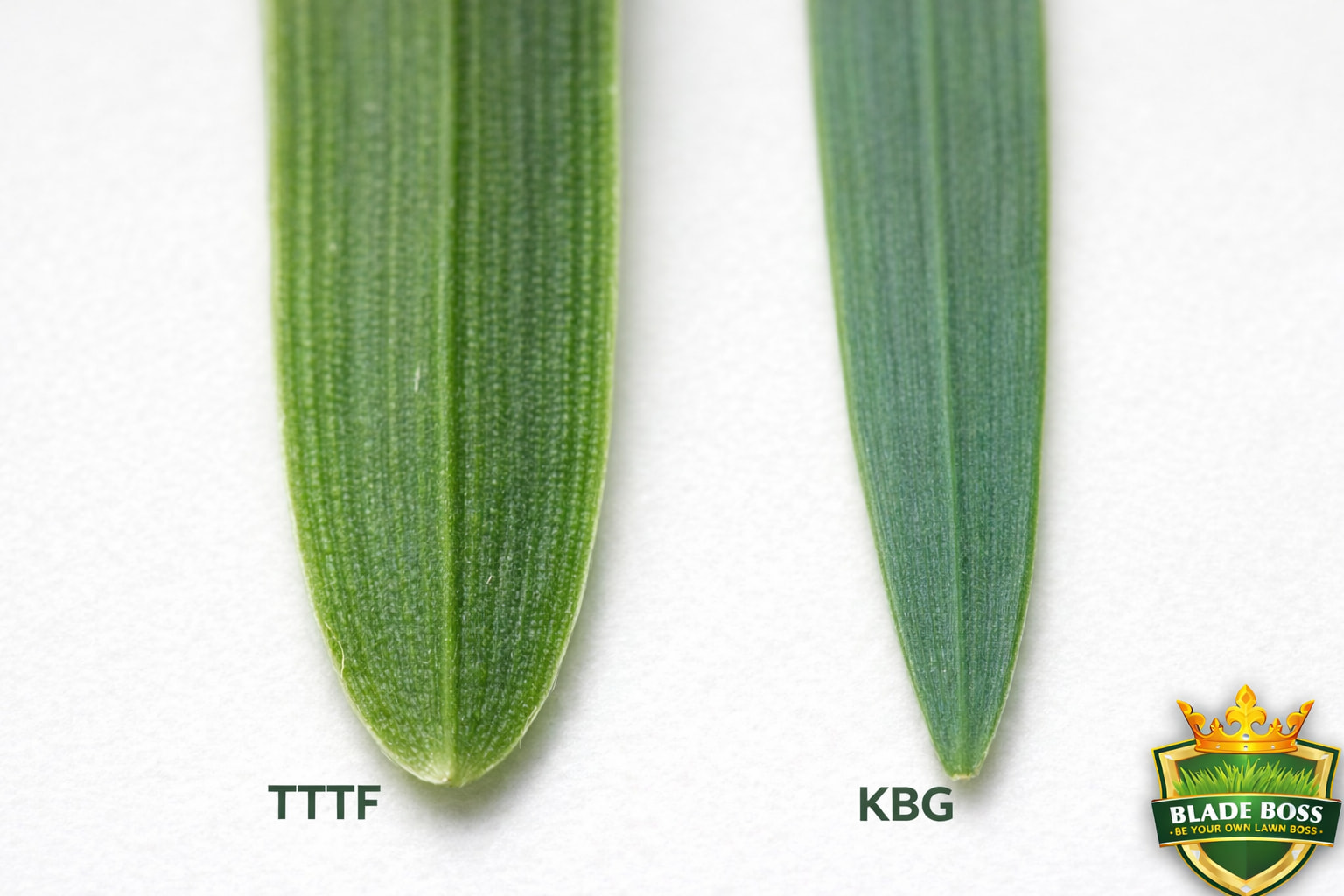
| Aesthetics (color/texture) | Good. Dark green, wider blades. | Excellent. Blue-green, soft, fine blades. | KBG |
| Cold hardiness | Good | Excellent. Superior winter survival. | KBG |
| Spring green-up speed | Moderate | Fast (greens up earlier) | KBG |
| Germination speed | 7 to 14 days | 14 to 21 days (slow) | TTTF |
| Nitrogen requirement | 2 to 3 lbs N/year | 2 to 4 lbs N/year (more demanding) | TTTF |
| Water requirement | 1 inch/week | 1.25 to 1.5 inches/week | TTTF |
| Disease resistance | Good overall. Less leaf spot susceptible. | Moderate. Susceptible to leaf spot, dollar spot, brown patch. | TTTF |
| Mowing height | 3.5 to 4.5 inches | 2.5 to 3.5 inches | Tie |
| Thatch production | Low | High (heaviest thatch producer on LI) | TTTF |
| Wear/traffic tolerance | Excellent (roots + blade toughness) | Good (rhizome repair, but softer) | TTTF |
| Overseeding frequency | Every 2 to 3 years | Rarely (self-repairs) | KBG |
On paper, tall fescue dominates. It wins 12 of 17 head-to-head categories for Long Island conditions. But KBG's four wins (self-repair, aesthetics, cold hardiness, spring green-up) are categories that matter a lot to homeowners who care about how their lawn looks. That's why the best Long Island lawn isn't a monoculture of either. It's a strategic blend.
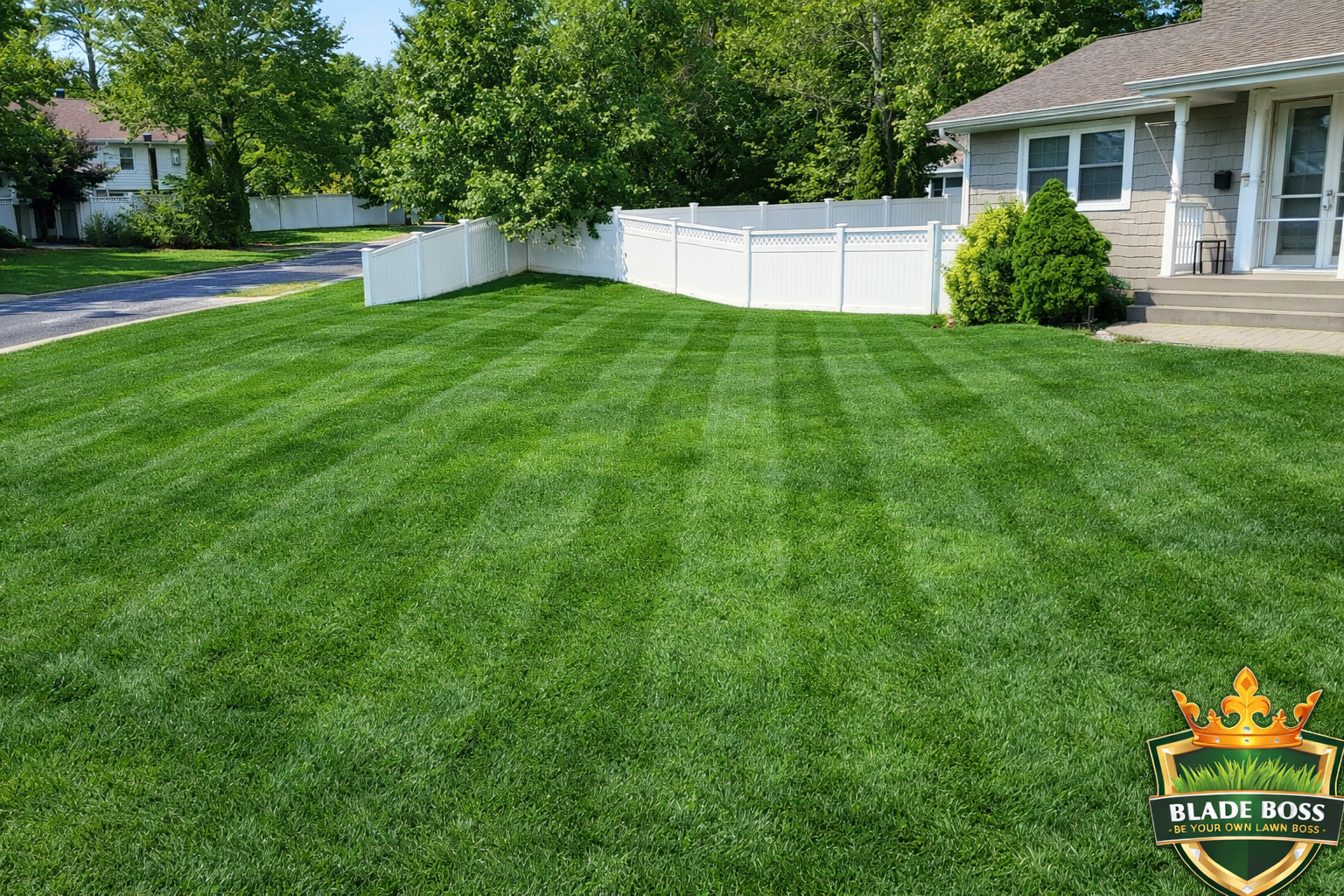
Why Tall Fescue Dominates on Long Island
Long Island's Sandy Soil Is TTTF Territory
Long Island's soil is predominantly sandy loam to loamy sand, especially in Suffolk County. Sandy soil drains fast, which means moisture doesn't stick around near the surface where Kentucky bluegrass's shallow roots live. TTTF's root system reaches 2 to 3 feet deep, accessing subsurface moisture that KBG simply can't reach. During Long Island's typical July and August dry spells, this root depth advantage is the difference between a green lawn and a brown one.
The 75 to 90 Day Summer Stress Window
Our Zone Science data shows Long Island experiences a 75 to 90 day summer stress window from mid-June through early September. During this period, un-irrigated KBG goes 60 to 80% dormant. The lawn turns brown and stays brown for 6 to 8 weeks. It survives via crown tissue and recovers in fall, but that's a long time to look at a dead-looking lawn. TTTF under the same conditions? Only 15 to 25% dormancy. It stays visibly greener throughout summer with zero supplemental irrigation.
Shade from Long Island's Mature Trees
Many Long Island neighborhoods have mature oaks, maples, and other hardwoods that create significant shade. KBG needs 6+ hours of direct sun to maintain density. Under moderate shade, it thins out, gets leggy, and becomes susceptible to disease. TTTF handles partial shade (4+ hours of sun) without significant thinning. For yards with mature tree canopy, a TTTF-dominant blend is almost mandatory.
Salt Tolerance for Coastal and Roadside Properties
Long Island has 1,180 miles of coastline and extensive road salt application in winter. Our Zone Science data ranks salt tolerance: tall fescue (most tolerant) > perennial ryegrass > Kentucky bluegrass (least tolerant). If you're within a half mile of the shore or along a heavily salted road, TTTF-dominant blends perform significantly better. Spring salt damage recovery is easier with salt-tolerant turf.
Find the Right Seed Mix for Your Lawn
SeedGenius Pro™ inside Lawn Map Pro™ recommends seed blends based on your USDA zone, sun exposure, soil type, and maintenance level. Draw your lawn zones on satellite imagery and get a customized seed prescription for each area.
Why Kentucky Bluegrass Still Belongs in Your Mix
After reading the comparison above, you might be tempted to go 100% tall fescue. Don't. KBG brings something to a Long Island lawn that TTTF physically cannot: self-repair.
Join Long Island homeowners who get grass care tips, overseeding reminders, and seasonal guidance every week.
Kentucky bluegrass spreads through underground rhizomes that creep outward from existing plants and establish new growth. When a patch of lawn gets damaged (from foot traffic, dog spots, grub feeding, or winter stress), KBG rhizomes grow into the bare area and fill it in without you lifting a finger. Tall fescue is a bunch-type grass with no rhizomes. If TTTF gets damaged, the bare spot stays bare until you overseed. Having 15 to 20% KBG in your mix means the bluegrass acts as a living repair system, slowly filling gaps between fescue clumps.
KBG also provides superior cold hardiness (important for Long Island's occasional harsh winters), faster spring green-up (your lawn looks alive sooner), and that classic blue-green color and soft texture that makes a lawn feel premium underfoot. For front yards where curb appeal matters most, keeping KBG in the blend makes a visible difference.
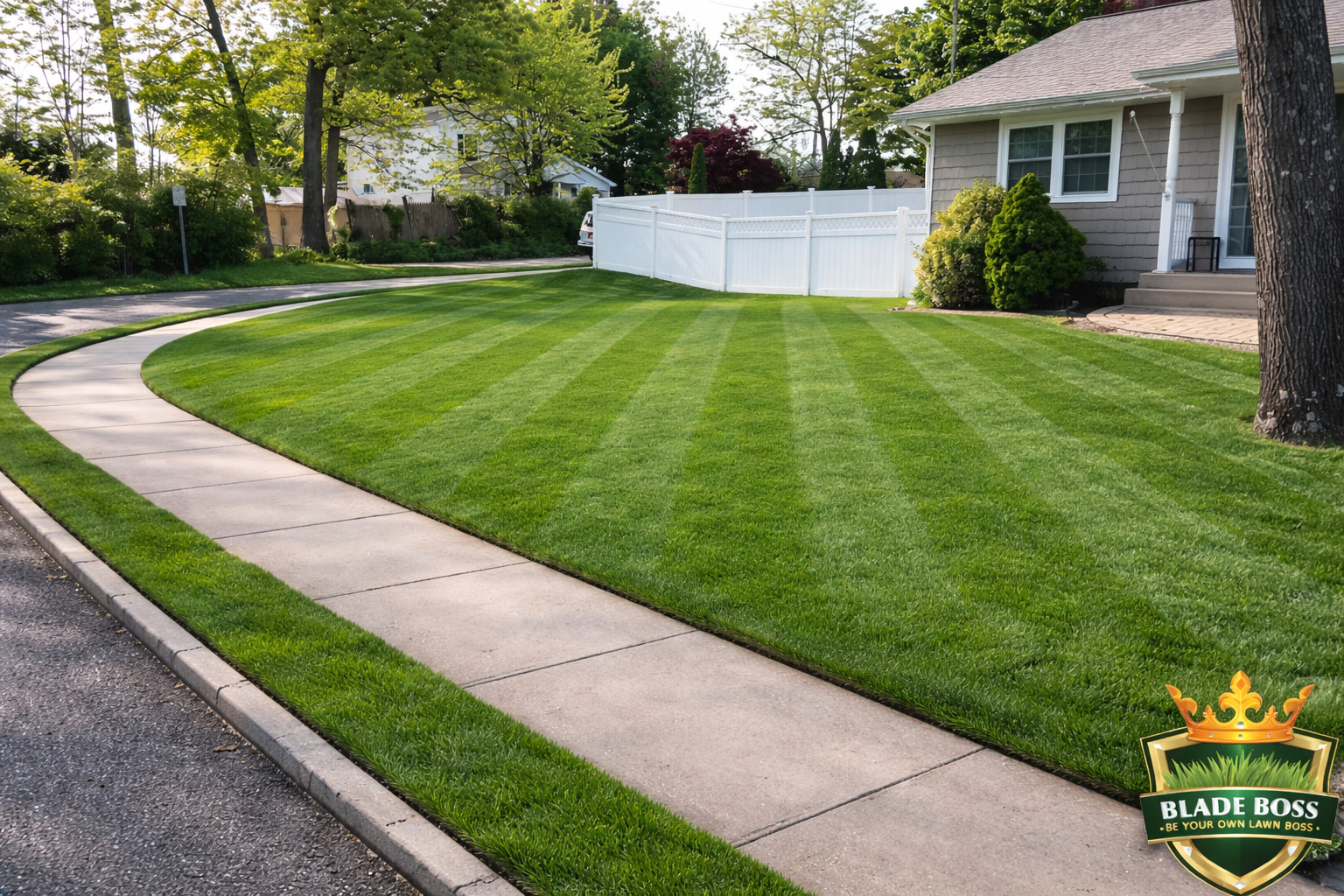
The Long Island Blend Strategy
The right seed blend depends on your specific property conditions. Here are the three proven formulas for Long Island, based on Cornell CCE Nassau County recommendations and turf science research.
| Blend | Composition | Best For | Maintenance Level |
|---|---|---|---|
| TTTF-Dominant (Recommended) | 60 to 70% TTTF (2 to 3 cultivars) + 15 to 20% KBG + 10 to 15% PRG | Most LI lawns. Partial shade, sandy soil, no irrigation. | Low to moderate. 2 to 3 lbs N/year. |
| KBG-Dominant (Premium) | 65% KBG blend (3+ cultivars) + 15% PRG + 20% fine fescue | Full sun, irrigated lawns. Maximum curb appeal priority. | High. 3 to 4 lbs N/year. Irrigation required. |
| Shade Blend | 40% fine fescue + 30% TTTF + 20% KBG (shade-tolerant cultivar like Mazama) + 10% PRG | Under mature trees, north-facing yards, 3 to 4 hours sun. | Low. 1.5 to 2 lbs N/year. |
Notice every blend uses 2 to 3 cultivars of the dominant species (not just one). Different cultivars have different disease resistance genes, drought tolerance thresholds, and growth habits. A blend of three TTTF cultivars means if brown patch hits one cultivar hard, the other two may resist it. Monocultures (one cultivar only) are a single point of failure. Your seed choice should always include cultivar diversity.
Match Your Grass to Your Yard (Zone by Zone)
Most Long Island properties have multiple microclimates. The front yard gets full sun, the backyard is shaded by a neighbor's oak, and the side yard gets hammered by road salt. You don't need one grass for the whole property. You need the right grass for each zone.
Full Sun Zones (6+ Hours)
Either blend works. If you irrigate, KBG-dominant gives premium aesthetics. If you don't irrigate, TTTF-dominant stays greener through summer. Full sun is the only scenario where KBG can outperform TTTF on Long Island.
Partial Shade (4 to 6 Hours)
TTTF-dominant blend is the clear choice. Add a shade-tolerant KBG cultivar (Mazama, Everest) at 15 to 20% for self-repair. KBG-dominant blends will thin and struggle under partial shade.
Heavy Shade (Under 4 Hours)
Switch to a fine fescue dominant shade blend. Neither TTTF nor KBG will maintain acceptable density under heavy shade. Fine fescue (creeping red, chewings) tolerates the least sun. Consider alternative ground covers for deep shade.
Salt-Exposed Zones
TTTF-dominant, no question. Within 200 feet of heavily salted roads or near the coast, KBG's low salt tolerance becomes a liability. TTTF handles salt spray and soil salt accumulation better than any other cool-season grass.
High-Traffic Zones (Kids/Pets)
TTTF-dominant with 20% KBG. TTTF's blade toughness and deep roots handle wear. KBG's rhizomes repair traffic damage over time. The combination is more resilient than either alone.
Front Yard (Curb Appeal Priority)
KBG-dominant if irrigated and full sun. The aesthetic difference is real. If you're the homeowner who wants the best-looking lawn on the block and you're willing to water, fertilize, and manage disease, KBG delivers the look.
Maintenance Reality Check
The grass you choose determines your workload for the next decade. Here's what each species actually requires on Long Island.
| Task | TTTF-Dominant Lawn | KBG-Dominant Lawn |
|---|---|---|
| Nitrogen fertilizer | 2.75 lbs N/year (5-round schedule) | 3 to 4 lbs N/year (more rounds or higher rates) |
| Irrigation | Optional (stays green without it) | Required (1.25 to 1.5 in/week or goes dormant) |
| Mowing frequency | Weekly at 3.5 to 4 inches | Weekly or biweekly at 2.5 to 3.5 inches |
| Overseeding | Every 2 to 3 years in September | Rarely (rhizomes self-repair) |
| Dethatching | Rarely (low thatch producer) | Every 2 to 3 years (heavy thatch) |
| Disease management | Low (fewer disease issues) | Moderate (leaf spot, dollar spot, brown patch) |
| Annual cost estimate | Lower (less water, less fertilizer, less disease) | Higher (irrigation + extra inputs) |
On Long Island, irrigating a 5,000 sq ft KBG lawn at 1.25 inches per week from June through August adds approximately 30,000 to 40,000 gallons to your seasonal water usage. At Long Island's average water rates, that's $150 to $250 in extra water costs per summer. A TTTF-dominant lawn either skips irrigation entirely or uses 30 to 40% less supplemental water. Over 10 years, the cumulative difference in water alone can exceed $2,000.
Overseeding: The TTTF Lawn's One Maintenance Trade-Off
The biggest knock on tall fescue is that it doesn't spread. Bare spots stay bare until you fix them. This is real, and it means TTTF lawns need periodic overseeding to maintain density. But it's not as bad as the internet makes it sound.
How often do TTTF lawns actually need overseeding?
Every 2 to 3 years for most Long Island lawns. If your TTTF lawn is well-fertilized, mowed at the right height, and doesn't have major pest or disease issues, it stays thick for years without overseeding. The exception is high-traffic areas (dog runs, play areas) which may need annual touch-up seeding. Adding 15 to 20% KBG to your mix helps because the bluegrass slowly fills small gaps between fescue clumps.
When is the best time to overseed on Long Island?
September 1st through October 15th. This is the universal overseeding window for Long Island. Soil temps are warm enough for germination (60 to 70°F), air temps are cooling down (less stress on seedlings), and fall moisture is returning. Core aerate first for best seed-to-soil contact. TTTF germinates in 7 to 14 days vs 14 to 21 for KBG, so fescue overseeding projects establish faster.
Can you mix tall fescue and KBG seed?
Yes, and you should. The two species coexist well. TTTF forms the bulk of the stand with its deep roots and drought tolerance. KBG fills the spaces between fescue clumps via rhizomes. Over time, the KBG percentage may decrease in shaded or dry areas (where it can't compete) and increase in sunny, irrigated areas (where it thrives). The lawn naturally self-sorts to the best species for each microclimate.
I already have a KBG lawn. Should I switch to TTTF?
Not necessarily. If your KBG lawn is irrigated, well-maintained, and in full sun, keep it. KBG is a great grass when it gets what it needs. But if you're tired of the water bill, struggling with summer dormancy, or have increasing shade from maturing trees, gradually transitioning by overseeding with a TTTF-dominant mix each fall is a practical strategy. Within 2 to 3 years of fall TTTF overseeding, the blend shifts toward fescue dominance in the areas that favor it.
Quick Reference: Which Grass Is Right for You?
| Your Situation | Recommendation |
|---|---|
| No irrigation system, sandy soil | TTTF-dominant (60 to 70% TTTF + 20% KBG + 10% PRG) |
| Irrigation system, full sun, want best aesthetics | KBG-dominant (65% KBG + 15% PRG + 20% fine fescue) |
| Partial shade from mature trees | TTTF-dominant with shade-tolerant KBG cultivar |
| Heavy shade (under 4 hours sun) | Fine fescue dominant shade blend |
| Coastal property or near salted roads | TTTF-dominant (salt tolerance critical) |
| Kids and dogs using the lawn daily | TTTF-dominant + 20% KBG (toughness + repair) |
| New construction, bare soil, need fast cover | TTTF-dominant (faster germination: 7 to 14 days) |
| Existing KBG lawn you want to keep | Continue KBG program; overseed thin spots with same |
| Want lowest possible maintenance | TTTF-dominant (less water, less fertilizer, less disease) |
| Front yard showpiece, willing to do the work | KBG-dominant (the premium look is worth the effort) |
Calculate Your Exact Seed Rate
SeedGenius Pro™ calculates the precise pounds of seed per 1,000 sq ft for your chosen blend, adjusted for new seeding vs overseeding, and your specific grass type mix. Draw zones in Lawn Map Pro™ and get a complete seed shopping list.
Common Grass Selection Mistakes on Long Island
1. Planting 100% KBG without an irrigation system
This is the most common and expensive mistake. Without supplemental irrigation, your KBG lawn will go dormant and turn brown for 6 to 8 weeks every summer on Long Island. It will survive (KBG is winter-hardy), but you'll hate looking at it. And you'll be tempted to break dormancy with inconsistent watering, which is actually worse than letting it stay dormant. If you don't irrigate, go TTTF-dominant.
2. Using old-style K-31 fescue instead of turf-type
K-31 (Kentucky-31) is the original pasture fescue. Coarse, clumpy, light green, and ugly in a lawn setting. When people say "fescue looks bad," this is what they're picturing. Modern turf-type tall fescue (TTTF) cultivars are a completely different grass: finer blades, darker color, denser growth. Always buy TTTF-labeled seed (cultivar names like Rebel, Titanium, Rhizomatous Tall Fescue). Never buy K-31 for a home lawn.
3. Overseeding KBG into a fescue lawn (or vice versa)
Technically you can mix them, and we recommend it in blends. But if you have an established 100% TTTF lawn and you overseed with 100% KBG, the KBG seedlings will struggle to compete with established fescue and you'll waste money. Overseed like with like. If you want to shift the blend, use a 70/30 TTTF/KBG mix so the dominant species matches what's already there.
4. Choosing grass based on your neighbor's lawn
Your neighbor's sunny, irrigated, flat front yard is a different ecosystem than your shaded, sloped, dry backyard. Grass selection should be based on YOUR property conditions: sun hours, soil type, irrigation availability, and maintenance commitment. Use the decision matrix above to match grass to conditions, zone by zone across your property.
5. Ignoring cultivar selection
Not all KBG or TTTF is created equal. A premium KBG blend with modern cultivars (like Midnight, Mazama, Award) will outperform cheap generic KBG by a wide margin. Same for TTTF (Rebel IV, Titanium, Falcon IV vs generic). Check the National Turfgrass Evaluation Program (NTEP) for cultivar performance ratings in the Northeast.
The Verdict for Long Island
For 80% of Long Island homeowners, a TTTF-dominant blend is the smarter choice. It requires less water, less fertilizer, handles LI's sandy soil and summer heat better, tolerates shade and salt, and modern cultivars look great. Adding 15 to 20% KBG to the mix gives you self-repair capability and that bluegrass quality in the sunny zones where it can compete.
The remaining 20% of homeowners who have full sun, irrigation systems, and the time and budget for higher maintenance will get a legitimately better-looking lawn with a KBG-dominant blend. There's no shame in choosing the premium option if you're willing to put in the work. Just go in with eyes open about the water bill and disease management requirements.
Either way, the worst choice is no choice. A random bag of generic seed from the hardware store, planted without considering your property's specific conditions, is how you end up with a thin, patchy lawn that underperforms for years. Match the grass to the zone. Aerate and overseed in September. Fertilize on schedule. The grass type is the foundation. Everything else builds on that decision.
Whichever grass you choose, the supporting system matters. Our crabgrass prevention guide protects new seedlings, the fertilizer calculator dials in species-specific rates, and the clover control guide addresses the broadleaf competitor both grasses face. Our spring mowing guide covers height-specific cutting for each species, and our founder story shows how this all started. For zone-specific guidance, Cornell Cooperative Extension Suffolk County is an excellent local resource. Penn State Extension offers additional cool-season grass management resources for the Northeast.
Chris is a Combat Search and Rescue pilot turned airline pilot who built Blade Boss to bring military-grade precision to backyard lawn care. His Ronkonkoma lawn is a KBG-dominant blend with tall fescue in the sun zones and fine fescue under the oaks.
Side-by-side species ratings for drought, shade, disease, traffic, and self-repair. Plus seeding rates and the overseeding window for Long Island.
See what Blade Boss members get and get access to SeedGenius Pro™ for customized seed blend recommendations, NitroCalc Pro™ for fertilizer rates matched to your grass type, and the complete Long Island lawn care calendar. Build your lawn on data, not guesswork.
See Plans →Frequently Asked Questions
Is tall fescue or Kentucky bluegrass better for Long Island?
For most Long Island lawns, a turf-type tall fescue dominant blend (60 to 70% TTTF) with 15 to 20% Kentucky bluegrass and 10 to 15% perennial ryegrass is the best choice. Tall fescue handles Long Island's sandy soil, summer heat stress, and partial shade better than pure KBG. Kentucky bluegrass adds self-repair capability through rhizomes that fill in gaps tall fescue can't fix on its own. Cornell Cooperative Extension of Nassau County recommends a similar blend approach for Long Island's growing conditions.
Can Kentucky bluegrass survive Long Island summers without irrigation?
Kentucky bluegrass will go dormant (turn brown) during Long Island summers without supplemental irrigation. Zone-master climate data shows that 60 to 80% of un-irrigated KBG on Long Island shows visible summer dormancy during the 75 to 90 day heat stress window (mid-June through early September). KBG survives dormancy via its crown tissue and recovers when fall moisture returns, but the lawn looks dead for 6 to 8 weeks. Tall fescue, with its deeper root system, only shows 15 to 25% visible dormancy under the same conditions and stays greener significantly longer.
How often do you need to overseed tall fescue on Long Island?
Tall fescue is a bunch-type grass that does not spread by rhizomes, so it cannot fill in bare spots on its own. On Long Island, plan to overseed TTTF lawns every 2 to 3 years in September to maintain density. High-traffic areas or lawns with grub damage may need annual overseeding. Adding 15 to 20% Kentucky bluegrass to your seed mix helps because KBG's rhizomes slowly fill gaps between fescue clumps, reducing the frequency of full overseeding.
What is the best grass seed mix for Long Island lawns?
Cornell Cooperative Extension of Nassau County recommends a sunny, medium to high maintenance Long Island lawn mix of 65% Kentucky bluegrass blend (several cultivars), 15% perennial ryegrass, and 20% fine fescue. For a lower maintenance or partial shade lawn, a TTTF-dominant mix works better: 60 to 70% turf-type tall fescue (2 to 3 cultivars), 15 to 20% Kentucky bluegrass, and 10 to 15% perennial ryegrass. The TTTF blend requires less water, less fertilizer, and tolerates more shade.
Does tall fescue look as good as Kentucky bluegrass?
Modern turf-type tall fescue (TTTF) cultivars look significantly better than the old pasture-type K-31 fescue that gave tall fescue a bad reputation. TTTF has finer blades, darker green color, and denser growth than older varieties. However, Kentucky bluegrass still has a softer feel underfoot, finer blade texture, and that distinctive blue-green color that many homeowners consider the gold standard. If maximum aesthetic quality is your priority and you're willing to irrigate and fertilize more, a KBG-dominant blend is the right call. For most Long Island homeowners who want a good-looking lawn with less work, TTTF-dominant wins.
Keep Reading
 Lawn Science
Long Island Soil pH Guide: How to Test and Fix Your Lawn’s Foundation
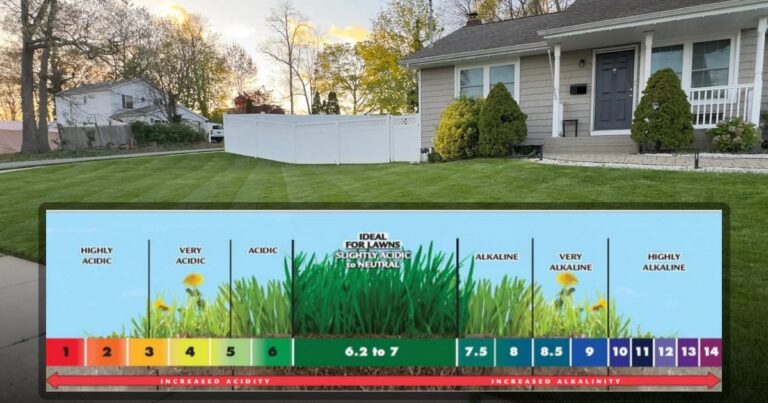
Most Long Island lawns test between pH 5.9 and 6.2, which is too acidic for peak nutrient uptake....
Feb 26, 2026
18 min
 Lawn Science
Long Island Fungicide Guide: FRAC Groups, Rotation Schedule, and What to Buy
The complete beginner's guide to lawn fungicide on Long Island. Learn FRAC groups, build a 4-product rotation schedule...
Mar 27, 2026
17 min
 Lawn Science
Nassau County Lawn Care: Neighborhood-Specific Tips
Nassau County is 20 miles of post-war suburbs sitting on 4 distinct soil zones. Your lawn in Levittown...
Apr 1, 2026
13 min
What is your lawn actually sitting on?
Pull the soil survey, hardiness zone and current growing conditions for your exact address. Eight government sources, about a minute.
No comments yet. Be the first to share your thoughts.
Create a free account to join the conversation.