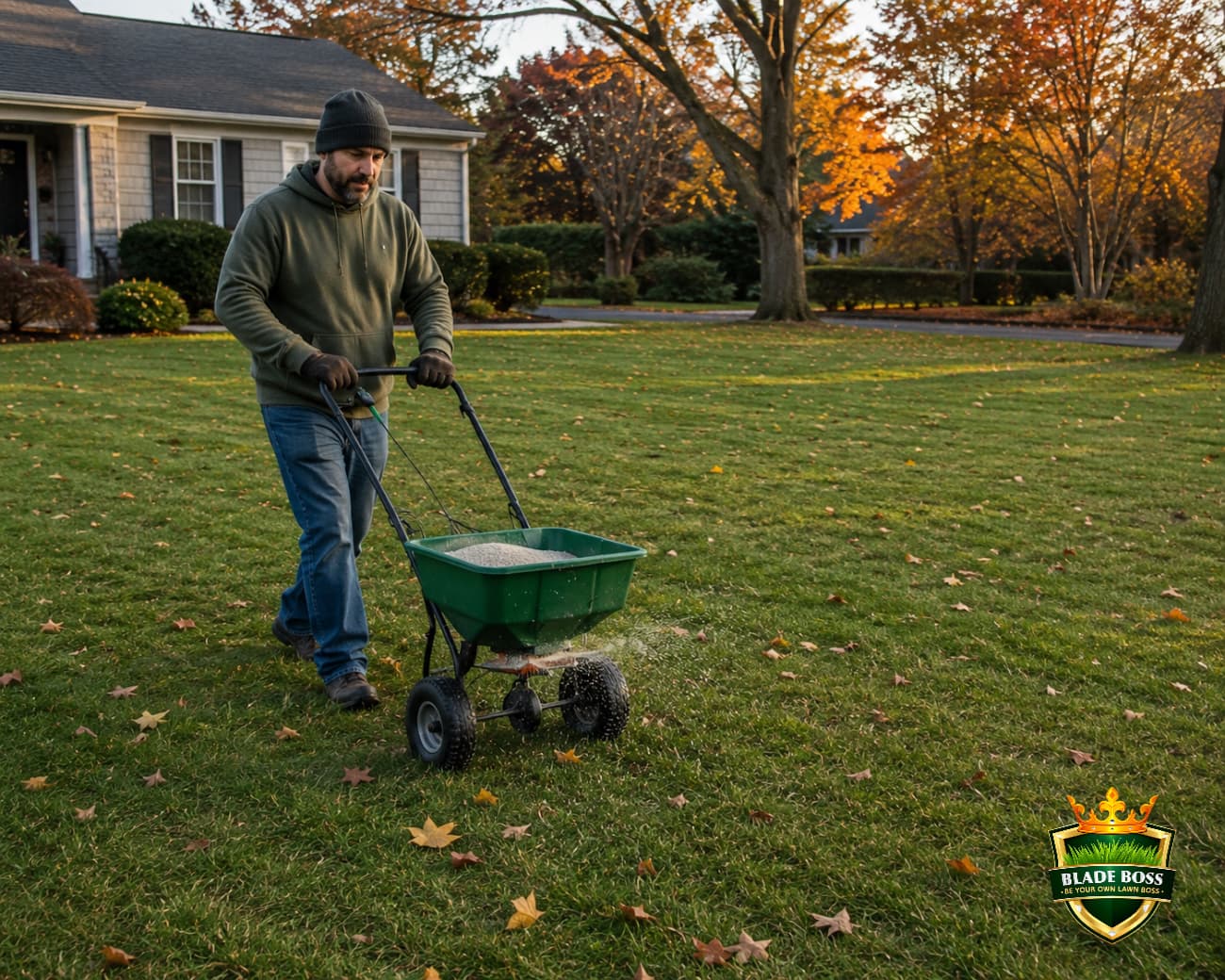
The winterizer is the last thing you do before winter shuts everything down. It is also the reason your neighbor's lawn greens up in mid-March while yours is still brown in April. That 2 to 3 week head start in spring is not genetics. It is not luck. It is one application of quick-release nitrogen in late October that got stored as carbohydrates and is now fueling the earliest possible green-up. Here is exactly when to apply it, what to use, and why the timing on Long Island is tighter than anywhere else.
- Window: October 15 to October 31 on Long Island. Grass green, growth stopped, soil at 45 to 50 degrees.
- Rate: 0.50 lbs nitrogen per 1,000 sq ft. Lower than the September round because late-season leaching risk is higher on sandy soil.
- Product: Quick-release nitrogen (Scotts WinterGuard 32-0-10, urea 46-0-0, or ammonium sulfate 21-0-0). NOT slow-release.
- Suffolk County deadline: All fertilizer application is prohibited after November 1. This is law, not a suggestion.
Why the Winterizer Matters
In late October, your grass has stopped producing new leaf tissue. It looks like nothing is happening above ground. But below the surface, the roots are still active in the 45 to 50 degree soil temperature range. The plant is shifting from growth mode to storage mode, pulling nutrients down into the root system and converting them into carbohydrate reserves.
The winterizer application gives the plant a final shot of nitrogen right at this transition point. The roots absorb it, convert it to carbohydrates, and store it in the crown and root tissue. When soil temperatures climb back above 50 degrees in March, those stored carbohydrates fuel the first burst of spring growth before you have even thought about your first fertilizer application.
The Long Island Timing Problem
Most national winterizer guides say "apply after the last mowing but before the ground freezes." On Long Island, that advice misses a critical legal constraint: Suffolk County prohibits all fertilizer application after November 1. Nassau County does not have the same county-level restriction as of 2026, but New York State nutrient management guidelines still apply. Best practice is to finish by October 31 regardless of which county you are in.
This means your winterizer window on Long Island is approximately 2 weeks: October 15 to October 31. Earlier than October 15 and the grass is still actively growing (soil temps are above 55 degrees), which means the nitrogen goes to leaf growth instead of carbohydrate storage. Later than October 31 and you are either breaking Suffolk County law or applying nitrogen that the plant cannot absorb because soil microbial activity has dropped too low.
Suffolk County Local Law No. 41-2007 prohibits the application of nitrogen or phosphorus fertilizer to turf between November 1 and April 1. Violations can result in fines. This law exists because Long Island sits on the sole-source aquifer that provides drinking water for 3 million people. Excess nitrogen that leaches through the sandy soil contaminates groundwater. The law is not optional. Plan your winterizer for the third or fourth week of October.
Why Quick-Release Nitrogen for Winterizer
This is the ONE time of year when quick-release nitrogen is the right choice. Every other fertilizer round, we recommend 40%+ slow-release nitrogen because Long Island's sandy soil (CEC 3 to 8) leaches quick-release N in days. But the winterizer is different.
Slow-release nitrogen requires soil microbes to break the polymer coating or methylene urea chains before the plant can absorb it. In late October, soil microbial activity is declining as temperatures drop. A slow-release granule applied October 20 may not fully break down until December, when the ground is frozen and the nitrogen just sits there (or leaches with winter rain). Quick-release nitrogen dissolves on contact with water, reaches the roots within hours, and gets absorbed and stored immediately. The late-October leaching window is also narrower than summer: cool soil temperatures slow the downward movement of dissolved nitrogen, October rainfall on Long Island is typically lower than summer, and the light watering step (0.10 to 0.15 inches) is specifically calibrated to move nitrogen into the root zone without driving it past the roots. It is in the plant before the ground freezes.
Our fertilizer comparison explains slow-release vs quick-release in detail. For the winterizer, quick-release is the intentional, science-backed choice.
How to Apply the Winterizer
Check Soil Temperature
Push your soil thermometer to 4-inch depth in 3 different spots across the lawn. Average the readings. You want 45 to 50 degrees. If the soil is still above 55, wait another week. The grass is still growing and the nitrogen will go to leaves, not storage.
Confirm the Grass Has Stopped Growing
If you have not needed to mow in 10 to 14 days, growth has stopped. The grass should still be green (not brown or dormant), but blade elongation has visibly slowed or stopped. This is the visual confirmation that the plant is in storage mode.
Calculate Your Rate
Target: 0.50 lbs nitrogen per 1,000 sq ft. For Scotts WinterGuard (32-0-10), that is about 1.56 lbs of product per 1,000 sq ft. For urea (46-0-0), about 1.09 lbs per 1,000. For ammonium sulfate (21-0-0), about 2.38 lbs per 1,000. Use the fertilizer calculator to get the exact amount for your lawn size.
Calibrate Your Spreader
Calibrate your spreader for the specific product. Winterizer products have different granule sizes than your spring and summer fertilizers. A setting that works for Andersons PGF will over-apply Scotts WinterGuard. Verify before you spread.
Apply in the Purdue Cross-Pattern
Apply half the product walking north to south and the other half walking east to west. This ensures uniform distribution and prevents striping. Apply to dry grass (no dew, no rain) so granules do not clump on the blades.
Water In Lightly
Apply 0.10 to 0.15 inches of water to dissolve the granules into the soil. This is a light watering, not a deep soak. The goal is to move the nitrogen off the grass blades and into the root zone. On sandy soil, anything more than 0.25 inches risks pushing the nitrogen below root depth.
Which Product to Use
Scotts Turf Builder WinterGuard (32-0-10)
32% nitrogen (quick-release) plus 10% potassium for cold hardiness. Available at every Home Depot and Lowe's. The potassium is a genuine benefit for winter survival on Long Island. Covers 15,000 sq ft per bag.
Check PriceScotts WinterGuard 32-0-10 (Best for most homeowners)
Easy to find, settings printed on the bag for Scotts spreaders, and the 10% K adds winter hardiness. The quick-release N is exactly what you want for winterizer. Apply at the verified spreader setting for your model. About $70 per bag, covers 15,000 sq ft.
Urea 46-0-0 (Budget option, pure nitrogen)
The cheapest way to put quick-release N on your lawn. 46% nitrogen, no other nutrients. Apply at 1.09 lbs per 1,000 sq ft for 0.50 lbs N. No potassium component, so you miss the cold-hardiness benefit. Available at SiteOne and farm supply stores.
Ammonium Sulfate 21-0-0 (Quick N + sulfur)
21% nitrogen plus 24% sulfur. The sulfur is a mild acidifier, which is useful if your soil pH is above 7.0 (uncommon on LI but possible on North Shore clay). Higher application rate (2.38 lbs per 1,000) means more trips across the lawn.
Jonathan Green Winter Survival (10-0-20)
Low nitrogen (10%), very high potassium (20%). More of a winter-hardening product than a traditional winterizer. Good if your soil test shows low K but adequate N reserves from the September round. Not enough N on its own to drive spring green-up.
Where Winterizer Fits in the Annual Program
The winterizer is Round 5 of the Blade Boss 5-round fertilizer schedule. Here is how it fits:
Early Spring (April)
0.25 lbs N per 1,000. Light bridge. Slow-release.
Late Spring (May)
0.50 lbs N per 1,000. Growth fuel. Slow-release.
Early Summer (June)
0.50 lbs N per 1,000. Last N before heat. Slow-release.
Fall Power Round (September)
0.75 lbs N per 1,000. The MOST important round. Slow-release. Fuels root growth and recovery.
Winterizer (Oct 15 to 31)
0.50 lbs N per 1,000. QUICK-RELEASE. Carbohydrate storage. Fuels spring green-up. YOU ARE HERE.
The September fall fertilizer (Round 4 at 0.75 lbs N) is actually more important than the winterizer for overall lawn health. If you skipped September, the winterizer alone will not fully compensate. Apply the winterizer at 0.50 lbs N as normal and plan to hit the September round next year. The September round fuels root growth and carbohydrate storage. The winterizer tops off the tank.
Common Winterizer Mistakes
Applying too early (soil still above 55 degrees)
If the grass is still actively growing, the nitrogen goes to leaf production instead of carbohydrate storage. You get one more week of green-up that you do not need instead of stored reserves for spring. Wait until growth stops.
Applying after November 1 in Suffolk County
It is against the law. The aquifer protection law is clear: no nitrogen or phosphorus fertilizer between November 1 and April 1. Even if the weather is warm and the grass looks like it could use it, the answer is no. Plan ahead.
Using slow-release nitrogen
Slow-release depends on soil microbes to break it down. By late October, microbial activity is declining. The nitrogen may not become plant-available before the ground freezes. Quick-release dissolves immediately and gets absorbed in hours, not weeks.
Applying too much nitrogen
More than 0.50 lbs N per 1,000 in late October is wasteful on Long Island's sandy soil. The grass is slowing nitrogen uptake and excess leaches directly through the root zone into the aquifer. This is exactly why Suffolk County passed the law.
Skipping winterizer entirely
Your lawn will survive. But it will green up 2 to 3 weeks later in spring. If your neighbor winterized and you did not, you will notice the difference in March. It is the cheapest, fastest application of the year. Do not skip it.
One text when soil temps drop to the 45 to 50 degree range and it is time for your final application. No spam, just timing.
No spam. One seasonal alert per application window. Unsubscribe anytime.
The complete 5-round fertilizer program for Long Island. Every round, every rate, every product. Print it and plan your entire season.
See what Blade Boss members get. The Lawn Command Center tracks soil temperature and tells you the exact day your winterizer window opens. No guessing, no calendar math, no missed deadlines.
See Plans →Chris is a Combat Search and Rescue pilot turned airline pilot who built Blade Boss to bring military-grade precision to backyard lawn care. He applies his winterizer on the third weekend of October, every year, when his soil thermometer reads 47 degrees at 4 inches. His Ronkonkoma lawn greens up in the first week of March while his neighbors are still waiting.
Related Reads
The 5-round fertilizer schedule shows where winterizer fits in the annual program. The Lesco vs Scotts comparison helps you pick the right winterizer product. The fall checklist covers everything else you should do in October and November. And the fertilizer calculator gives you the exact amount for your lawn size and chosen product.
Frequently Asked Questions
When should I apply winterizer fertilizer on Long Island?
Apply winterizer fertilizer on Long Island between October 15 and October 31. The grass should still be green but visible leaf growth has stopped. Soil temperature should be 45 to 50 degrees at 4-inch depth, meaning roots are still active but shoots have slowed. In Suffolk County, all fertilizer application is prohibited after November 1, making late October the absolute deadline.
What rate should I apply winterizer?
Apply winterizer at 0.50 lbs of nitrogen per 1,000 square feet. This is lower than the September fall fertilizer round (0.75 lbs N) because the grass is absorbing nitrogen more slowly in late October and excess nitrogen on Long Island's sandy soil (CEC 3 to 8) leaches quickly when microbial activity is declining. Use a quick-release nitrogen source so the grass can absorb it before the ground freezes.
Why use quick-release nitrogen for winterizer instead of slow-release?
Quick-release nitrogen (urea, ammonium sulfate) dissolves immediately and is available to roots within hours. In late October, soil microbial activity is slowing, which means slow-release nitrogen (which depends on microbes to break it down) may not be fully processed before the ground freezes. Quick-release gives the plant a direct shot of nitrogen that gets absorbed and stored as carbohydrates for winter. Those carbohydrates fuel rapid green-up in spring.
What is the best winterizer fertilizer product?
Scotts Turf Builder WinterGuard (32-0-10) is a solid choice for Long Island winterizer because it combines 32% nitrogen with 10% potassium. The potassium adds cold hardiness heading into winter. For homeowners using professional products, urea (46-0-0) at a calculated rate or ammonium sulfate (21-0-0) works well. Avoid winterizer products with high phosphorus unless your soil test shows a phosphorus deficiency.
What happens if I miss the winterizer application?
If you miss the winterizer window, your lawn will still survive winter. But it will green up 2 to 3 weeks later in spring compared to a lawn that received winterizer. The fall fertilizer round in September is actually more important than the winterizer for overall lawn health. If you had to skip one, skip the winterizer before skipping the September round. Never apply fertilizer after November 1 in Suffolk County regardless of weather conditions.

Keep Reading
 Lawn Science
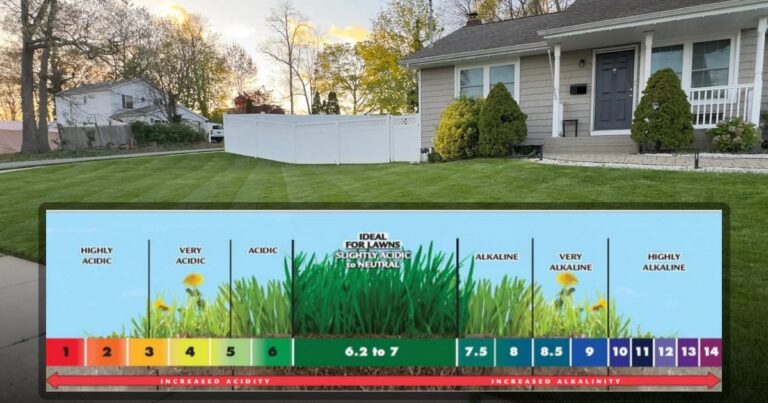
Long Island Soil pH Guide: How to Test and Fix Your Lawn’s Foundation
Most Long Island lawns test between pH 5.9 and 6.2, which is too acidic for peak nutrient uptake....
Feb 26, 2026
18 min
 Long Island Local
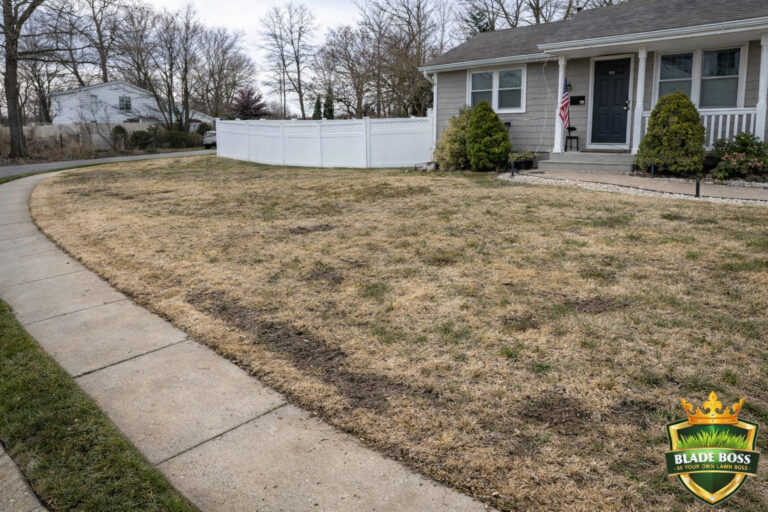
Spring Lawn Recovery on Long Island: How to Fix Winter Damage
Your Long Island lawn looks rough after winter. Here's how to identify vole damage, salt burn, freeze-thaw stress,...
Mar 8, 2026
13 min
 Long Island Local
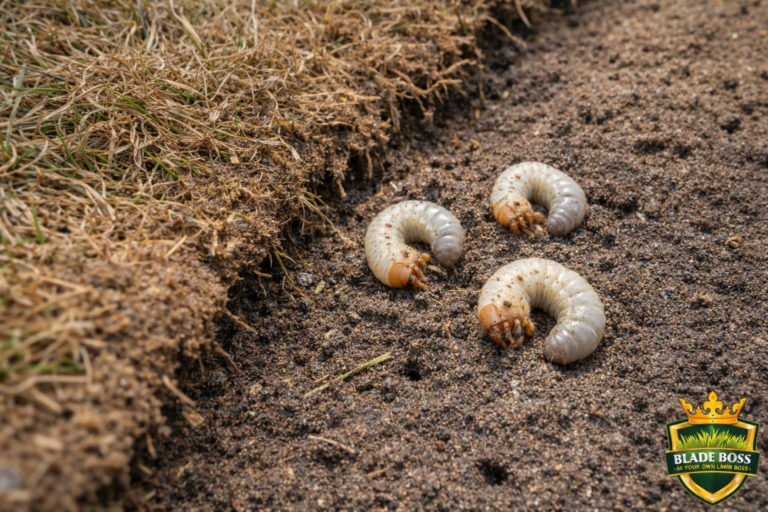
Long Island Grub Control: When to Treat and What to Use
Oriental beetles, not Japanese beetles, are the #1 grub on Long Island. Learn the exact treatment windows, damage...
Mar 11, 2026
14 min
What is your lawn actually sitting on?
Pull the soil survey, hardiness zone and current growing conditions for your exact address. Eight government sources, about a minute.
No comments yet. Be the first to share your thoughts.
Create a free account to join the conversation.