

GUIDE WEED-07 · REV A
How to Kill Grassy Weeds (the Ones Weed B Gon Misses)
Broadleaf weed killer wiped out your dandelions and clover, but those clumps of coarse, off-color grass are still there. Those are grassy weeds, and here is the hard truth: there is no single product that kills them all the way one 3-way handles broadleaf weeds. Grassy weeds look like your lawn because they basically are grass, so you have to identify the specific weed and match it to the specific tool. This guide shows you how: which grassy weeds have a selective fix, which ones only die to glyphosate and a reseed, and how to tell them apart.
Pre-Flight Checklist - What You Need
As an Amazon Associate, Blade Boss earns from qualifying purchases. It never costs you a penny more.
Rules of Engagement (ROE's)
The Flight Plan - Step by Step
Understand Why Grassy Weeds Are Different
The reason grassy weeds are so much harder than broadleaf weeds comes down to biology. Broadleaf weeds (dandelion, clover) are a completely different kind of plant from your lawn grass, so a selective herbicide can target them and leave your grass alone. Grassy weeds ARE grasses, close cousins of your lawn, so almost anything that kills them risks killing your good grass too.
- No broad-spectrum selective: unlike broadleaf, there is no single product that kills all grassy weeds. Each one needs a specific approach.
- Some cannot be killed selectively at all: a few perennial grassy weeds have no safe selective herbicide, your only option is a non-selective (glyphosate) and a reseed.
- Identification is everything: the exact species determines whether you prevent it, spray a specific selective, or nuke and reseed.
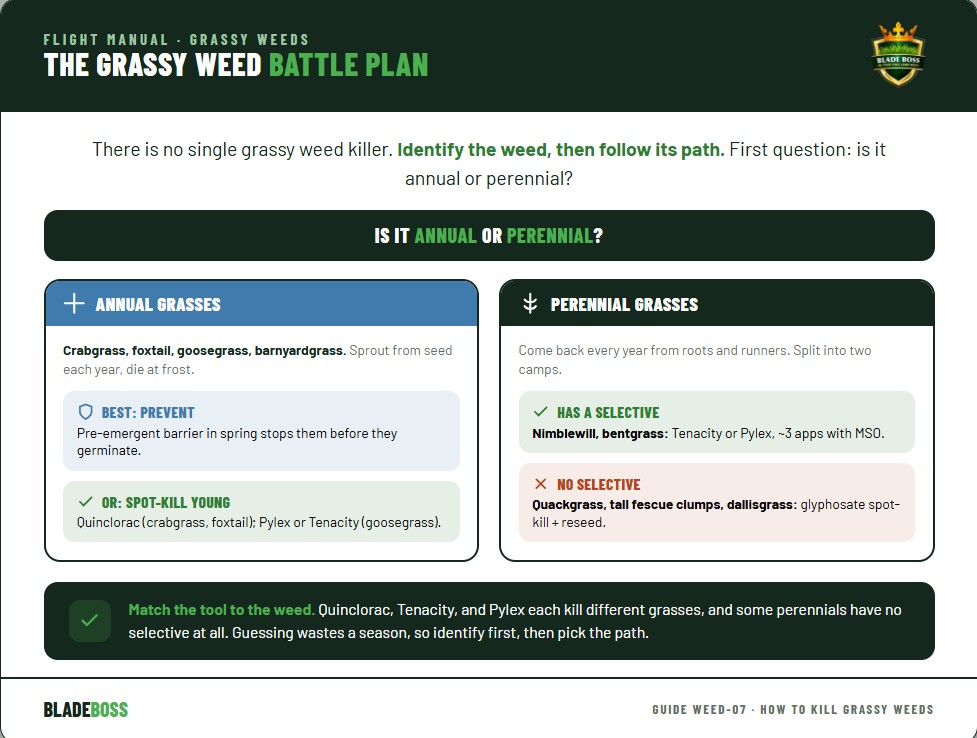
- Annual vs perennial matters most: annual grassy weeds are best prevented, perennials must be killed, and how you kill them depends on the species.
Identify Your Grassy Weed
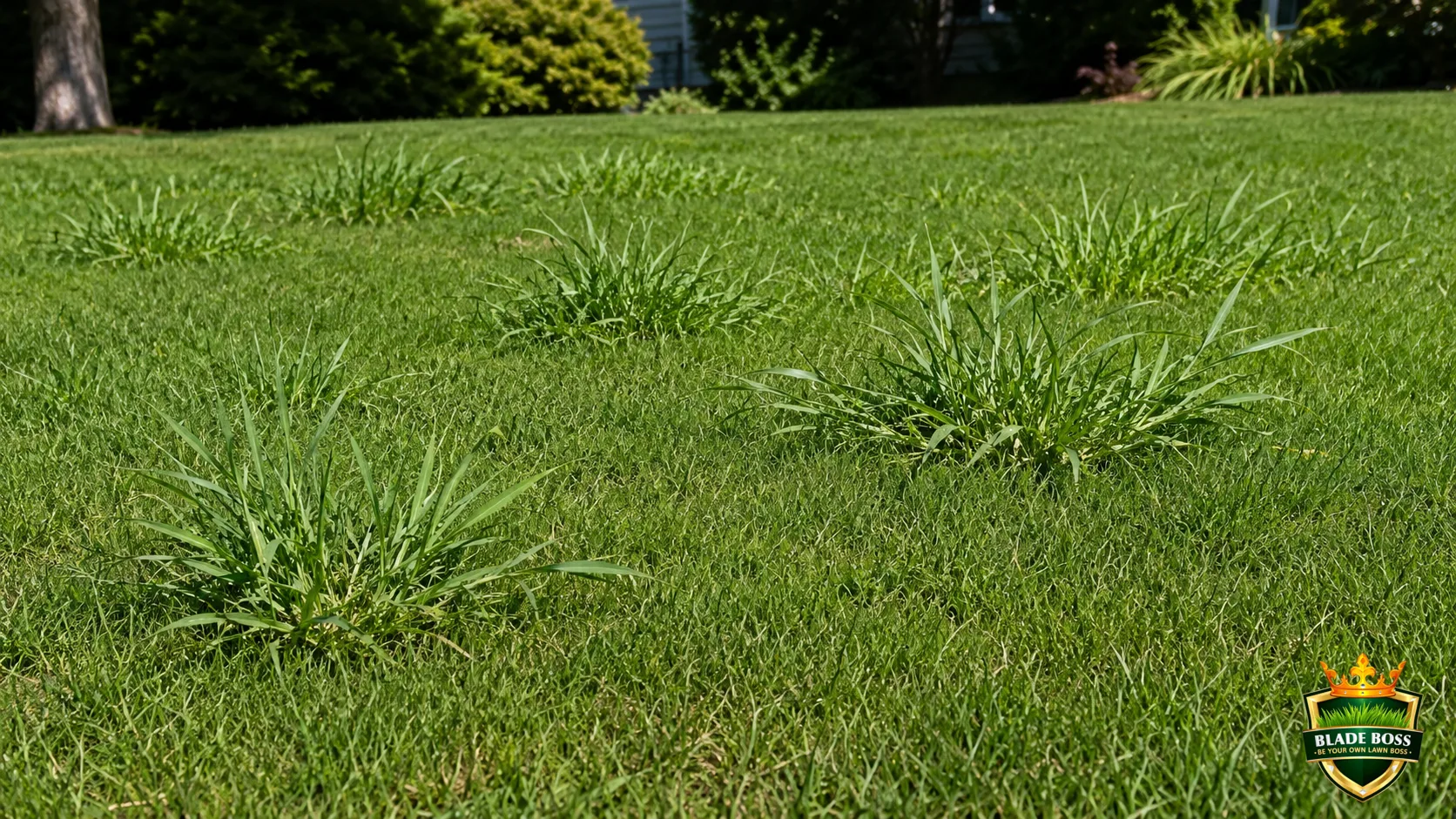
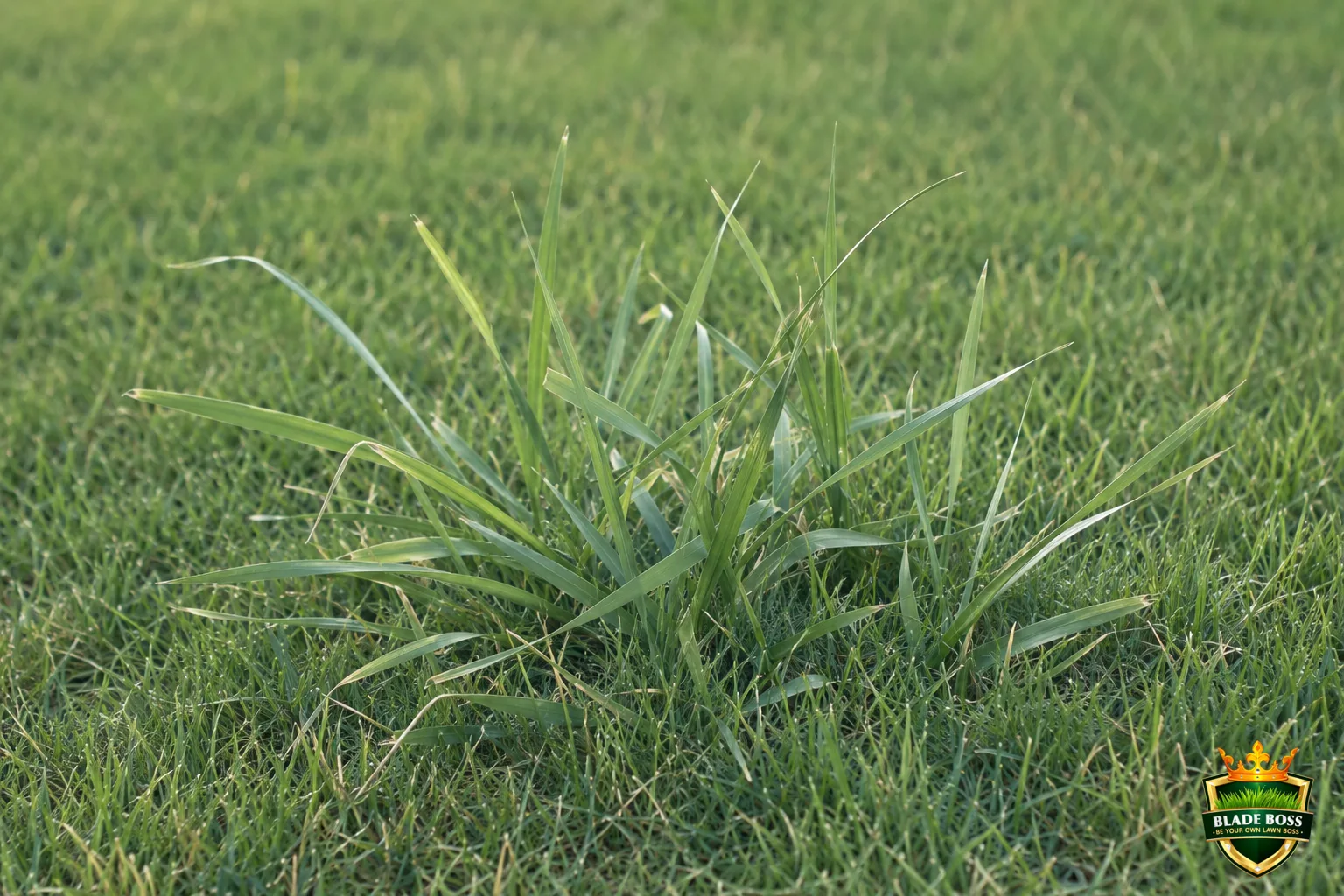
Since the whole plan hinges on the species, spend real time here. Look at the growth habit, blade texture, color, and when it greens up or dies. Here are the common grassy weeds on Long Island and their tells.
- Crabgrass: low clumps of wide, light-green blades fanning from a central crown, sprawling flat. Summer annual, dies at frost. (See the dedicated crabgrass guide.)
- Foxtail: upright grass with a distinctive fuzzy, bristly seedhead like a fox tail. Summer annual.
- Goosegrass: a flattened rosette with a white or silverish center, blades radiating like a wagon wheel. Tough summer annual, germinates later than crabgrass.
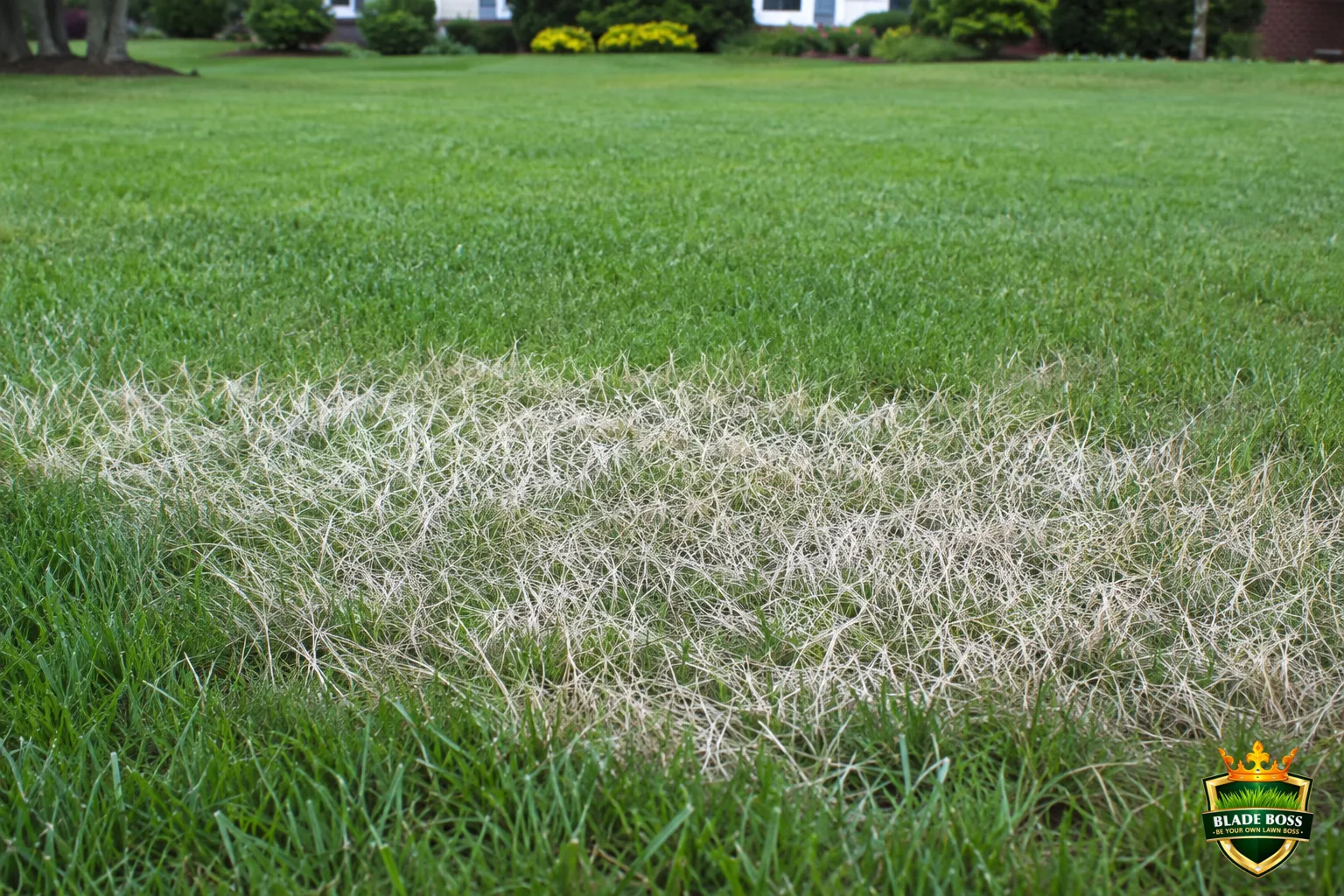
- Nimblewill: thin, wiry, pale blue-green grass that spreads in circular patches and greens up LATE in spring (looks like dead patches while your lawn is green). Perennial.
- Quackgrass: coarse, fast-growing blue-green grass with clasping leaf bases (auricles) that spreads aggressively by white underground rhizomes. Perennial.
- Tall fescue clumps: coarse, dark-green, wide-bladed clumps that stand out as rougher than a fine KBG or rye lawn. Perennial bunch grass.
Annual Grassy Weeds: Prevent or Spot-Kill
Annual grassy weeds (crabgrass, foxtail, goosegrass, barnyardgrass) sprout from seed each year and die at frost. The smartest move is to stop them before they start with a pre-emergent barrier, but if they are already up, you have selective post-emergent options while they are young.
- Best: prevent them. A pre-emergent (prodiamine or dithiopyr) in spring stops crabgrass, foxtail, and goosegrass before they germinate. Goosegrass germinates later, so time its barrier a bit later.
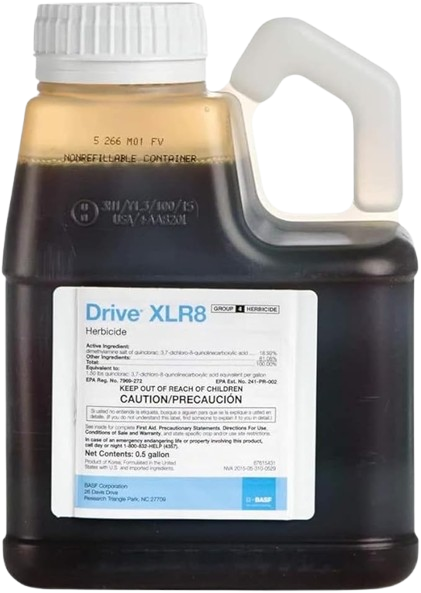
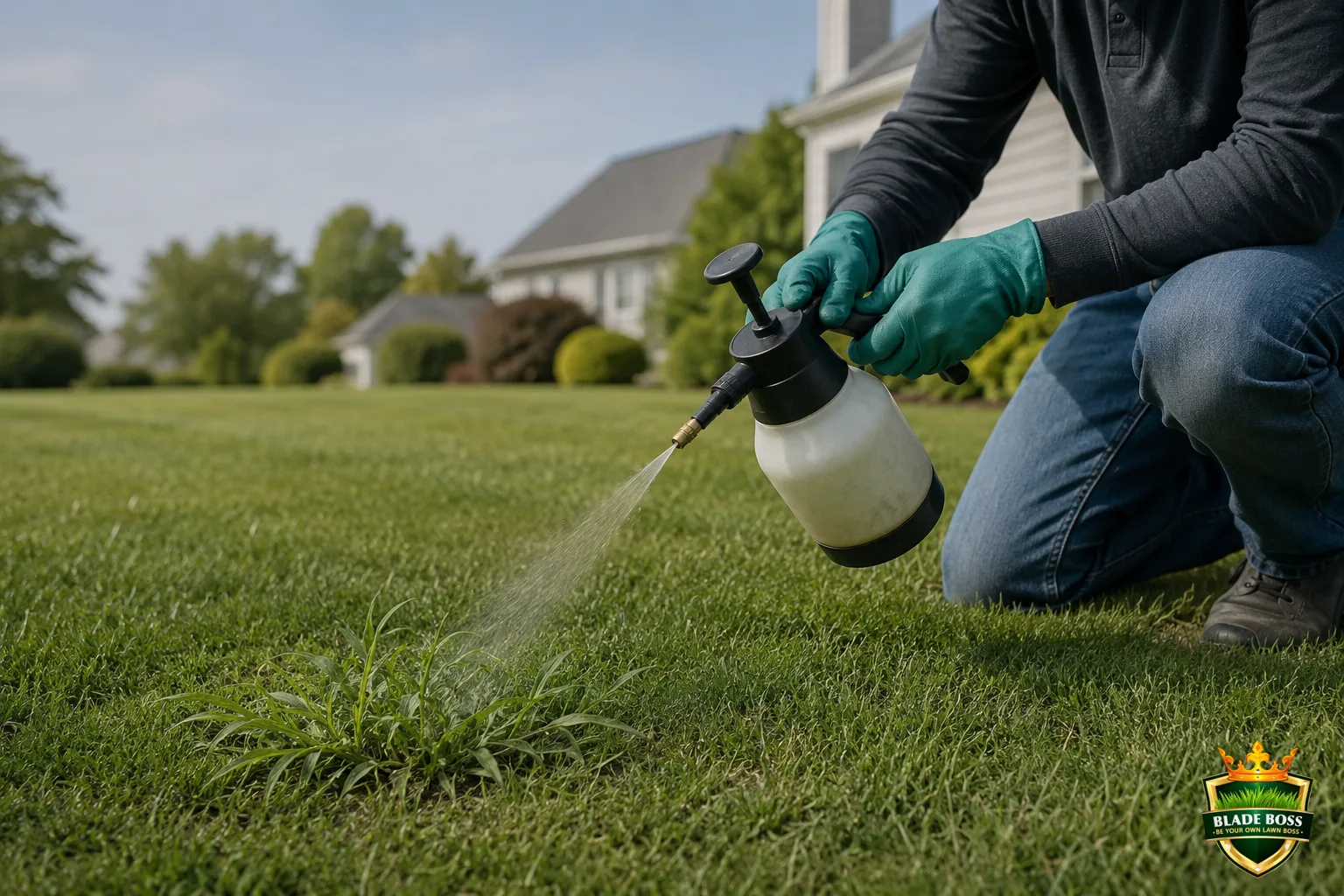
- Crabgrass and foxtail (already up): spot-spray with quinclorac (Drive XLR8) plus MSO while the weeds are young. See the crabgrass guide for exact rates.
- Goosegrass (already up): the tough one. Pylex (topramezone) is the standard for goosegrass in cool-season turf, with Tenacity as a secondary option.
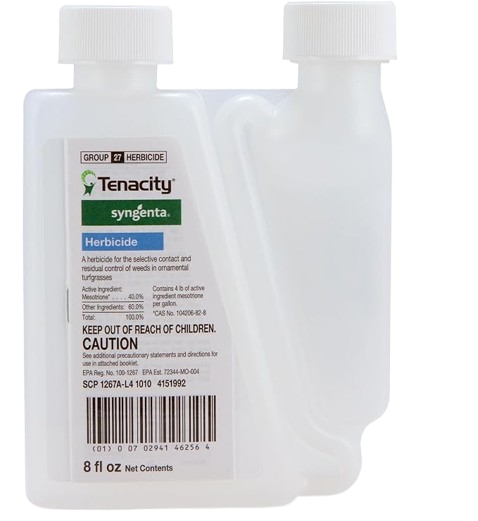
- Tenacity as a multi-tasker: mesotrione controls crabgrass, goosegrass, barnyardgrass, and yellow foxtail, and is safe to use at seeding.
- Do not blanket the whole lawn, spot-treat the infested areas to limit stress and cost.
Perennial Grassy Weeds: Selective or Nuclear
Perennial grassy weeds come back every year from roots, rhizomes, or stolons, so you cannot wait them out. They split into two camps: the lucky few you can kill with a selective herbicide, and the ones with no selective option that force a glyphosate spot-kill and reseed.
- Nimblewill (has a selective): Tenacity or Pylex, applied about 3 times at 2 to 3 week intervals with MSO or crop oil. It bleaches white, then dies. Both are safe on KBG, fescue, and ryegrass.
- Bentgrass (has a selective): Tenacity is the selective route. See the dedicated bentgrass guide.
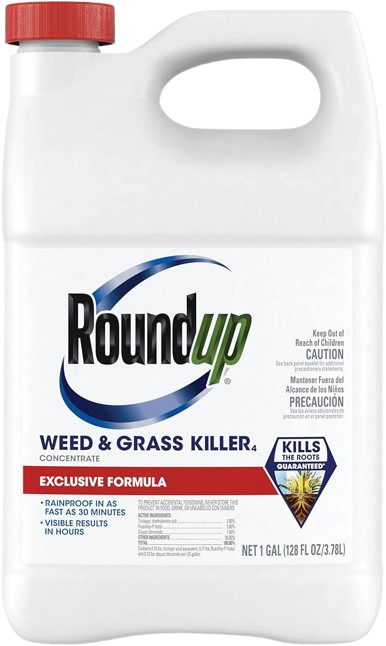
- Quackgrass (NO selective): there is no safe selective herbicide for quackgrass in a cool-season lawn. Spot-treat with glyphosate and reseed. It spreads by rhizomes, so treat the whole patch.
- Tall fescue clumps (NO selective): coarse fescue in a fine lawn cannot be sprayed out selectively (it is a grass too). Spot-kill with glyphosate and reseed the spot.
- Dallisgrass (NO good selective): realistically a glyphosate spot-kill and reseed for homeowners.
- Bermudagrass (very tough): Pylex (repeated, often with triclopyr) is the selective standard, or a full glyphosate renovation.
Spot-Kill and Reseed the Untouchables
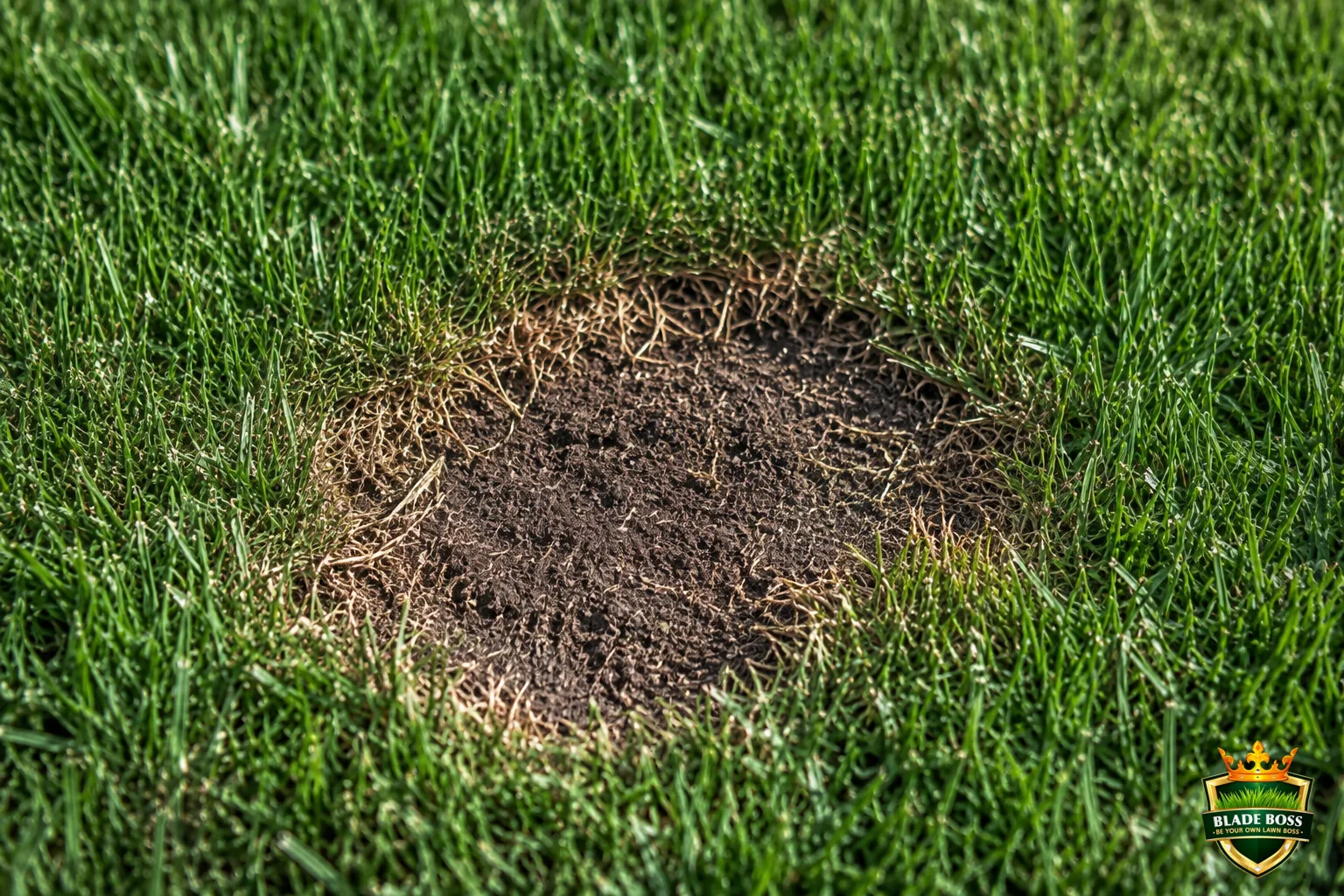
For the perennial grassy weeds with no selective option (quackgrass, tall fescue clumps, dallisgrass), the honest fix is to kill the patch and replace it. Glyphosate is the tool because it translocates fully and, importantly, does not leave residue that blocks reseeding.
- Spray glyphosate on the patch, covering the whole clump plus a little past the edge (rhizomes and stolons spread further than you see).
- Wait 7 to 10 days for a complete kill, a second spray on survivors is common with rhizome grasses like quackgrass.
- Rake out the dead material, then loosen the soil surface for good seed-to-soil contact.
- Reseed in the fall window (Aug 15 to Sept 15 on Long Island) with a quality cool-season blend. Glyphosate does not block new seed.
- Keep new seed moist and baby it until it establishes, then mow and maintain normally to crowd out re-invaders.
Abort Criteria - Common Mistakes
Mission Complete. Now Fly the Plan.
Grassy weeds are the final boss of weed control because there is no easy button: you cannot spray your whole lawn and walk away like you can with broadleaf. But the system is simple once you accept it. Identify the exact weed, decide annual or perennial, and match it to the plan: prevent the annuals with a pre-emergent, hit nimblewill and bentgrass with Tenacity or Pylex, and spot-kill the untouchable perennials with glyphosate before reseeding. Match the tool to the weed and you win. Pair this with how to kill crabgrass and how to get rid of POA, and for the broadleaf half of the battle see how to kill broadleaf weeds.
Want This as a Printable Field Manual?
Drop your email and the print-ready PDF version lands in your hands. Take it to the lawn, no phone required.
Crew Questions - FAQ
How do I kill grassy weeds in my lawn?
First, accept that there is no single product that kills all grassy weeds the way one 3-way herbicide handles broadleaf weeds. Grassy weeds are grasses, chemically close to your lawn, so the approach is to identify the exact species and match it to the right tool. For annual grassy weeds (crabgrass, foxtail, goosegrass) the best move is prevention with a pre-emergent barrier, or spot-treating young plants with quinclorac (crabgrass, foxtail) or Pylex/Tenacity (goosegrass). For perennial grassy weeds that have a selective option, like nimblewill, use Tenacity or Pylex over about three applications. And for perennial grassy weeds with no selective option, like quackgrass, tall fescue clumps, and dallisgrass, the only real fix is to spot-kill the patch with glyphosate and reseed. Identification is the whole game.
Why doesn't Weed B Gon kill grassy weeds?
Because Weed B Gon and similar products are broadleaf-selective herbicides, designed to kill wide-leaf weeds (dandelion, clover, plantain) while leaving grasses unharmed. They work by targeting the biology of broadleaf plants specifically. Grassy weeds, like crabgrass, foxtail, and quackgrass, are grasses, so a broadleaf herbicide simply does not affect them, the same way it does not hurt your lawn. To kill grassy weeds you need grassy-weed-specific herbicides such as quinclorac, mesotrione (Tenacity), or topramezone (Pylex), each of which targets certain grassy species, or a non-selective like glyphosate for the ones that cannot be controlled selectively. This is exactly why grassy weeds are harder: the easy broad-spectrum solution that exists for broadleaf weeds simply does not exist for grasses.
What grassy weeds cannot be killed selectively?
Several perennial grassy weeds have no safe selective herbicide in a cool-season home lawn, meaning there is no product that kills them without also killing your good grass. The main ones are quackgrass, tall fescue clumps (coarse K-31 type fescue growing in a fine lawn), and dallisgrass. Because these are grasses very similar to desirable turf, the only reliable option is to spot-treat the patch with a non-selective herbicide like glyphosate, wait for a complete kill, then rake out the dead material and reseed the spot. Glyphosate is ideal for this because it translocates through the whole plant (important for rhizome-spreading weeds like quackgrass) and leaves no soil residue that would block your new grass seed. Treat slightly past the visible edge, since these weeds spread underground further than they appear, and expect a possible second application on regrowth.
What is the best herbicide for grassy weeds?
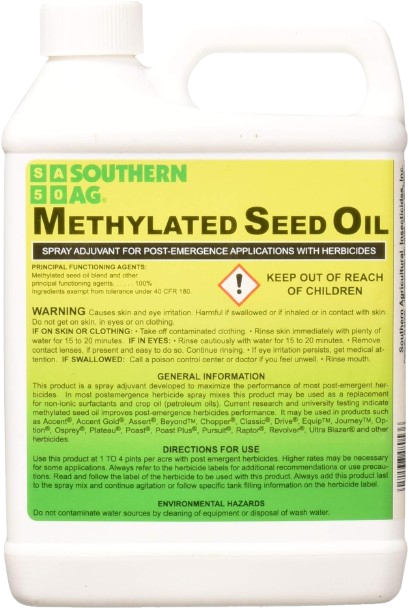
There is no single best one, because different grassy weeds need different chemistry, but here are the workhorses. Quinclorac (Drive XLR8) is the go-to for crabgrass and foxtail and should be mixed with methylated seed oil (MSO). Mesotrione (Tenacity) is a versatile selective that controls crabgrass, goosegrass, foxtail, nimblewill, and bentgrass, is safe on cool-season grasses, and can even be used at seeding. Topramezone (Pylex) is the standard for the toughest grassy weeds, goosegrass, bermudagrass, and nimblewill, and is safe on Kentucky bluegrass, tall fescue, fine fescue, and ryegrass. For grassy weeds with no selective option, glyphosate (a non-selective) is used to spot-kill and reseed. Pylex and Tenacity should be applied with a crop oil concentrate or methylated seed oil, and every one of these has annual limits worth respecting. Match the product to the specific weed rather than reaching for one bottle.
How do I get rid of clumps of coarse grass in my lawn?
Those coarse clumps are usually tall fescue (often the old K-31 pasture type) growing in a finer lawn of Kentucky bluegrass or ryegrass, and unfortunately they cannot be selectively sprayed out, because tall fescue is a grass just like your lawn. There is no herbicide that kills the coarse fescue clump while sparing the fine grass around it. The realistic fix is to spot-kill each clump with glyphosate, wait 7 to 10 days for a complete kill, dig or rake out the dead clump, loosen the soil, and reseed the bare spot with a grass that matches your lawn, ideally during the fall seeding window (mid-August to mid-September on Long Island). Keeping the surrounding lawn thick and healthy helps the new grass fill in and reduces the chance of new clumps establishing. It is tedious, but for coarse fescue there is no shortcut.
Can I kill grassy weeds without killing my grass?
Sometimes, depending entirely on which grassy weed it is. For some species there are selective herbicides that kill the weed while sparing cool-season lawn grasses: quinclorac for crabgrass and foxtail, and mesotrione (Tenacity) or topramezone (Pylex) for goosegrass, nimblewill, and a few others. These are true selective options that leave Kentucky bluegrass, fescue, and ryegrass unharmed when used correctly. However, for a significant group of perennial grassy weeds, quackgrass, dallisgrass, and coarse tall fescue clumps, there is no selective option, because they are too similar to your desirable grass. For those, killing the weed means killing a small area of lawn along with it (via glyphosate spot-treatment) and reseeding. So the honest answer is: for some grassy weeds yes, for others no, which is why correct identification is the essential first step.