

GUIDE FERT-03 · REV A
How to Winterize Your Lawn (Winterizer and Final Mow)
Winterizing is the last and most overlooked job of the season, and it is the one that decides how your lawn looks next April. A late-fall feeding of potassium and a properly staged final mow send the grass into winter with stored energy and hardened cells, so it survives the cold and greens up weeks earlier than an unfed lawn. There is a narrow window to get it right, roughly two to three weeks before your first frost, and once the ground freezes you cannot make it up. This is how to nail it.
Pre-Flight Checklist - What You Need
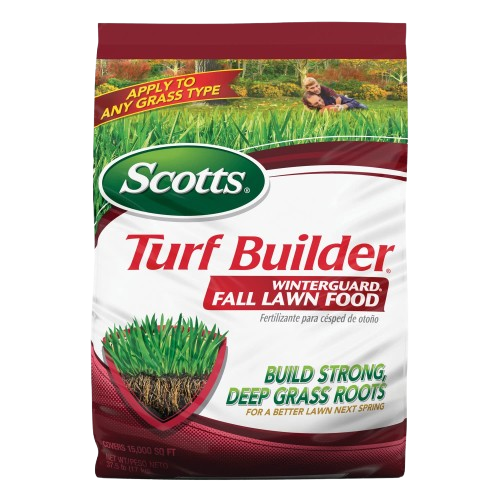
As an Amazon Associate, Blade Boss earns from qualifying purchases. It never costs you a penny more.
Rules of Engagement (ROE's)
The Flight Plan - Step by Step
Watch the Soil Temperature, Not the Calendar
The whole job hinges on timing, and the right trigger is soil temperature, not a date. You want to feed after top growth has slowed but while the roots are still active, so the grass stores the nutrients instead of burning them on a growth flush.
Start watching when daytime air temps stay below 50 degrees. The target is soil around 40 to 50 degrees for a few days. On Long Island (Zone 7B) that is roughly late September through October, about two to three weeks before the early-November first frost. Eastern Long Island (7A) runs a touch later into November.
Clear Every Last Leaf First
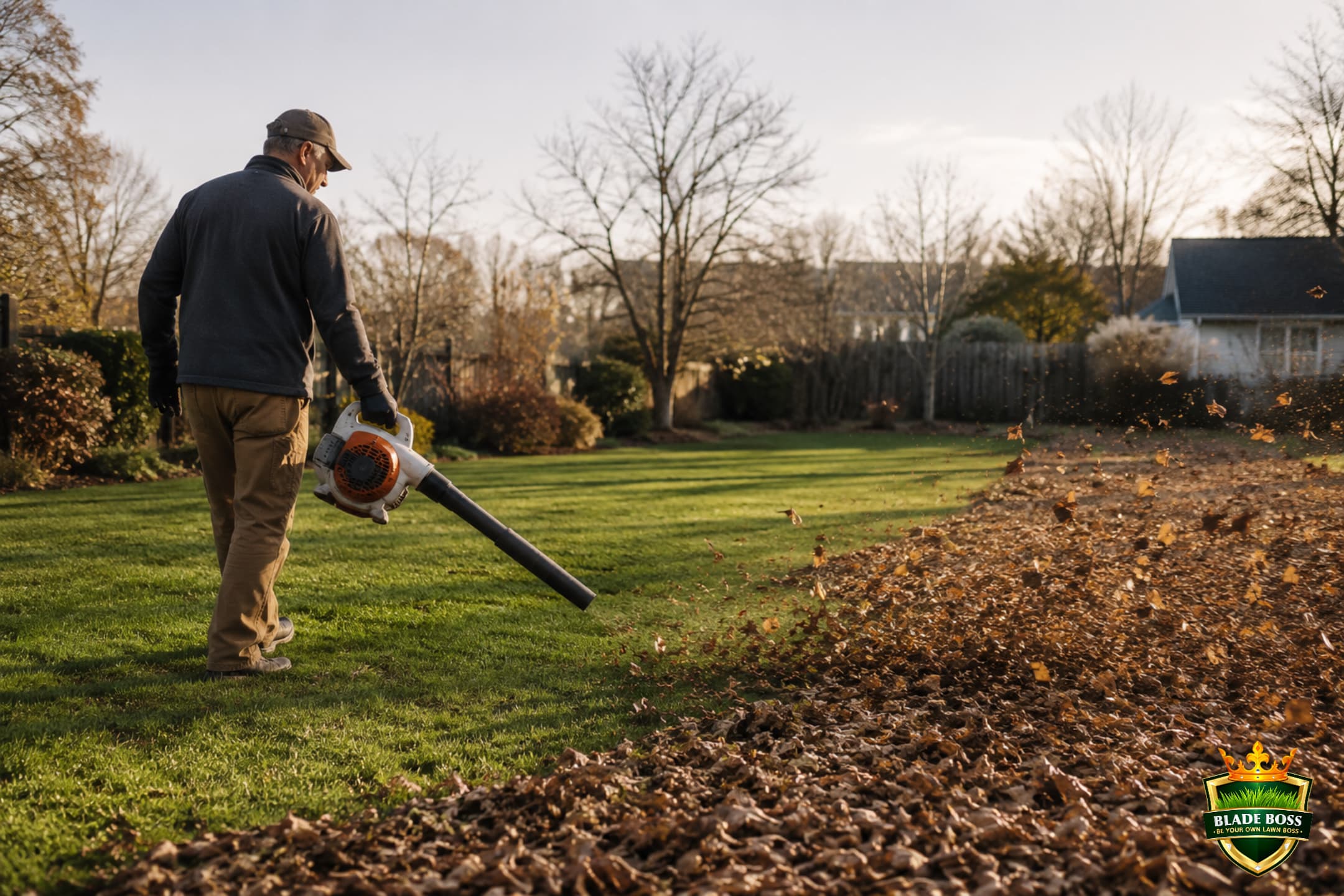
Before any product goes down, the lawn has to be clean. A winterizer application can only work if it actually reaches the soil, and a blanket of leaves blocks it. Worse, leaves left to mat down under snow trap moisture against the turf all winter and create a perfect nursery for snow mold.
Clear it all: rake or blow out every leaf, twig, and pile of debris, right down to clean turf. Do not talk yourself into leaving a thin layer as natural mulch on the lawn itself. On beds, sure, but on the grass a matted leaf layer plus snow is a fungal party you will pay for in spring.
Apply the Winterizer (Potassium, Not a Green Flush)
A true winterizer is about potassium, not nitrogen. Potassium is what thickens cell walls and drives cold hardiness, and studies put the improvement in winter survival well above an unfed lawn. Late-fall nitrogen has a role too, since the roots store it and turn it into fast spring green-up, but only in a small dose.
- Spread evenly with a calibrated broadcast spreader at the product's label rate, about 4 to 5 pounds of product per 1,000 sq ft for a typical winterizer.
- Cap the nitrogen at 1 pound of actual N per 1,000 sq ft or less. More than that in late fall feeds snow mold instead of the lawn.
- Keep it off hard surfaces, sweep any granules off the driveway and walks back onto the grass so they do not wash into storm drains.
- Water it in with about a quarter inch if no rain is coming, so it moves down to the roots.
Stage the Final Mow (Never Scalp It)
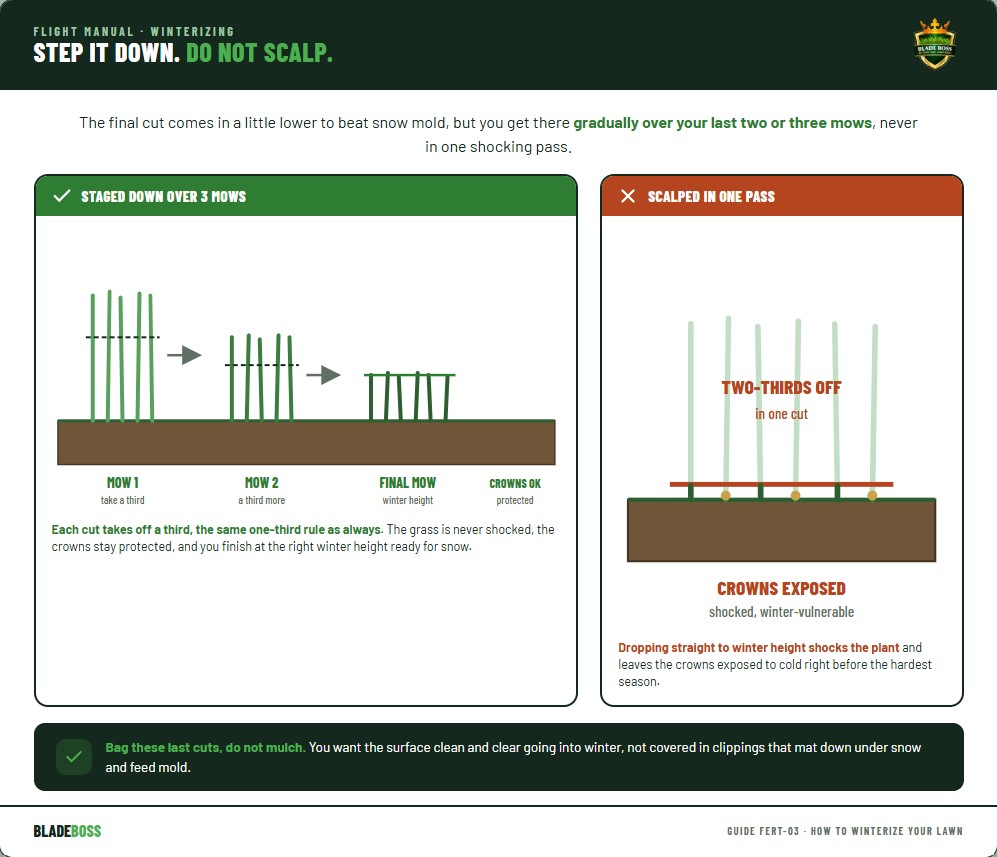
The last mow of the year comes in a little lower than your normal height, because tall grass matted under snow is a snow mold haven, but you get there gradually, never in one scalping pass. Dropping straight from your summer height to the low final height in a single cut shocks the plant and exposes the crowns right before the hardest season.
Step it down over your last two or three mows, taking no more than a third each time (the same one-third rule from every other mow), until you land at the final height. Bag these last cuts rather than mulching, since you want the surface clean and clear going into winter, not covered in clippings that mat down.
Blow Out the Sprinklers and Put It to Bed
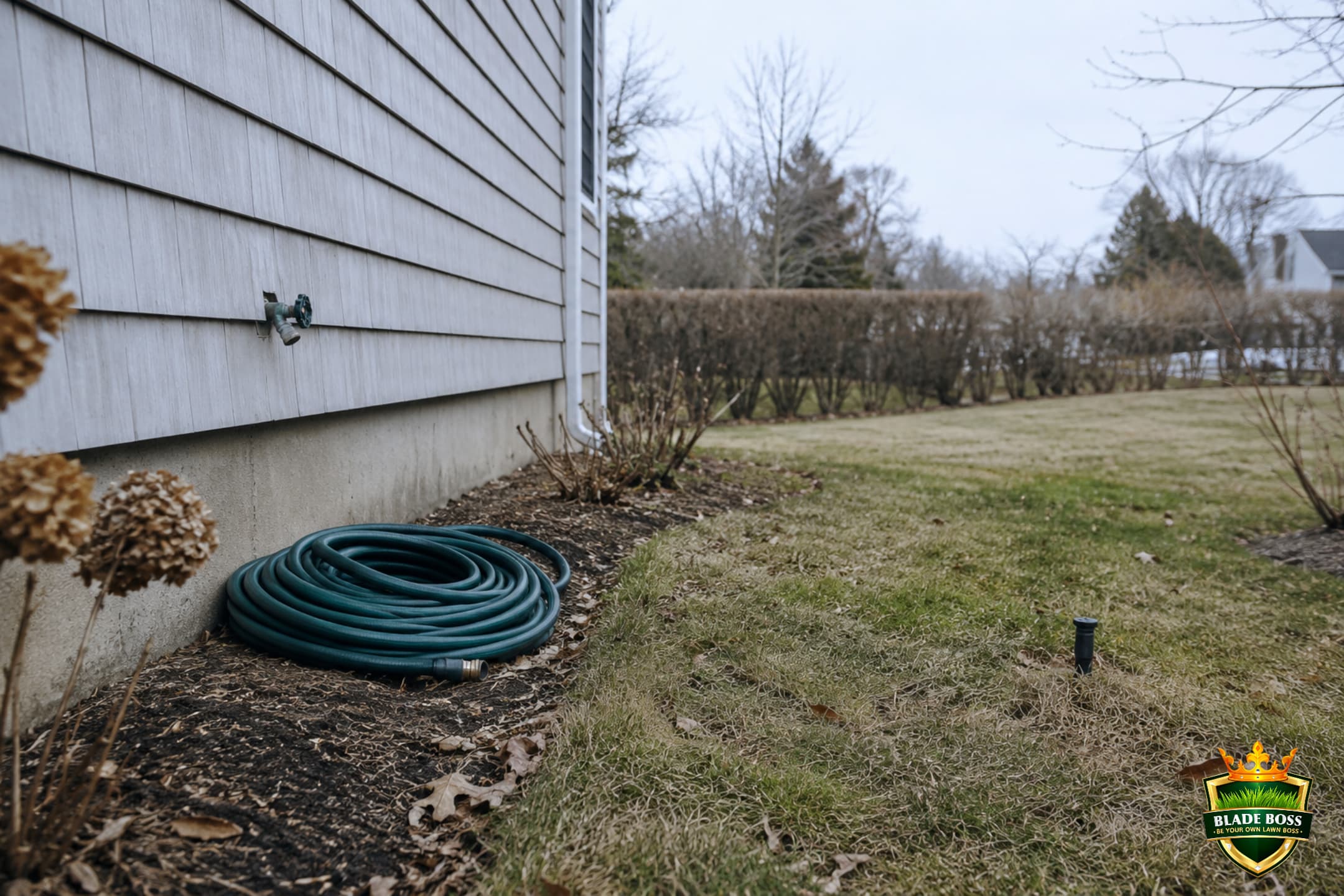
The last job protects your plumbing, and the order matters: blow out the irrigation only after the winterizer is applied and watered in. You need that final drink to move the feed to the roots, and then you shut the water system down for good.
Blow out the sprinkler lines with compressed air, drain and disconnect hoses, and pull any timers or backflow devices that the manufacturer says to bring inside. One line left full of water and one hard freeze is a cracked pipe and a several-hundred-dollar spring repair. With the lawn fed, mown, cleared, and the water shut down, it is officially put to bed.
Get Your Exact Winterizer Rate in NitroCalc Pro
Winterizing is the one feeding where the numbers really matter, because the nitrogen ceiling is the difference between a lawn that stores energy and one that grows snow mold. Enter your square footage and your winterizer's analysis, and NitroCalc Pro tells you exactly how much product to spread to hit your potassium target while staying under 1 pound of actual nitrogen per 1,000 square feet. Feed for hardiness, not a flush, with the math done for you.
Open NitroCalc Pro →Abort Criteria - Common Mistakes
Mission Complete. Now Fly the Plan.
Winterizing is the quiet job that makes next spring easy: feed potassium for hardiness under a 1 pound nitrogen cap, stage the final mow down without scalping, clear every leaf, and shut the water down. Time it by soil temperature, not the calendar, and let NitroCalc Pro set your exact rate so you feed for winter survival instead of snow mold. Do it right this fall and your lawn greens up weeks ahead of the block. Then when spring comes, pick the season back up with the right first mows.
Want This as a Printable Field Manual?
Drop your email and the print-ready PDF version lands in your hands. Take it to the lawn, no phone required.
Crew Questions - FAQ
When should I apply winterizer to my lawn?
Time it by soil temperature rather than a calendar date. Apply when top growth has slowed but the roots are still active, with the soil holding around 40 to 50 degrees, which is roughly two to three weeks before your average first frost. On Long Island (Zone 7B) that window is generally late September through October, ahead of an early-November first frost; eastern Long Island (7A) runs a little later into November. Applying too early forces tender growth, and applying after the ground freezes wastes the product.
What is the best winterizer fertilizer?
A true winterizer is built around potassium, which thickens cell walls and drives cold hardiness, with only a modest amount of nitrogen. The key rule is to keep late-fall nitrogen at or below 1 pound of actual N per 1,000 square feet, because excess nitrogen forces tender growth that winter kills and feeds snow mold under the snow. Look for a high-potassium fall product and run the numbers so you hit your potassium target while staying under the nitrogen ceiling.
How short should I cut my grass for winter?
The final cut comes in a bit lower than your normal mowing height, because tall grass matted under snow invites snow mold, but you get there gradually. Step the height down over your last two or three mows, removing no more than one-third of the blade each time, rather than scalping straight to the low height in one pass. A single scalping cut shocks the grass and exposes the crowns right before the hardest part of the year.
Do I need to fertilize my lawn in the fall?
Late-fall winterizing is arguably the highest-value feeding of the entire year for cool-season grass. The potassium hardens the plant against cold, and the small amount of nitrogen gets stored in the roots and released as fast green-up in spring, so winterized lawns green up noticeably earlier than unfed ones. The catch is the timing window and the nitrogen cap: done right it is a huge payoff, done wrong (too much nitrogen, too late) it does more harm than good.
Should I water in winterizer?
Yes. If rain is not in the forecast within a day or so, water the winterizer in with about a quarter inch of water to move the nutrients down to the root zone where the grass can take them up before the soil cools further. Then, and only then, blow out and shut down your irrigation for the season. That order matters: you want the final watering to carry the feed to the roots before the water system goes offline.
Why do I need to blow out my sprinklers?
Any water left sitting in irrigation lines or a hose will expand when it freezes and can crack the pipe, the valves, or the backflow device, which turns into a several-hundred-dollar repair and a dead zone in spring. After the winterizer is applied and watered in, blow out the sprinkler lines with compressed air, drain and disconnect all hoses, and bring timers and backflow devices inside if the manufacturer recommends it. It is the last step of putting the lawn to bed.