

GUIDE FUNG-01 · REV B
How to Apply Lawn Fungicide: The Beginner's Box-Store Rotation
Your lawn browned out last summer and you want to stop it this year without buying pro gear. This is the simplest honest way to start: two bottles from the store, a real two-group rotation, and a clear-eyed look at exactly where this approach helps and where it runs out of runway.
Pre-Flight Checklist - What You Need
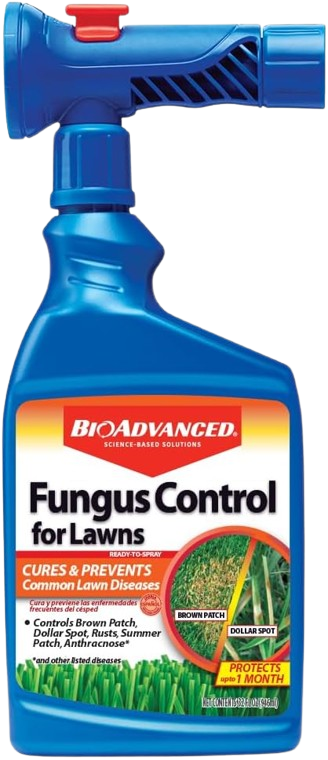
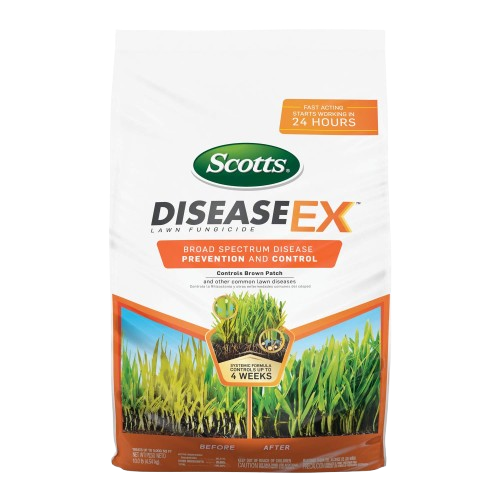
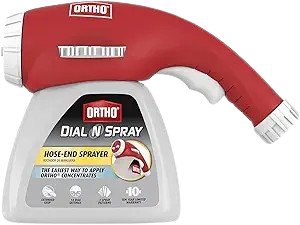
As an Amazon Associate, Blade Boss earns from qualifying purchases. It never costs you a penny more.
Do You Even Need This?
Fungicide is not fertilizer. You do not spray it just because. You spray it because your lawn has a history of summer disease or you live somewhere it is almost guaranteed. On Long Island, hot humid nights from late June through August are a brown patch factory. If your lawn turned into circular brown rings or straw-colored spots last summer, this guide is for you.
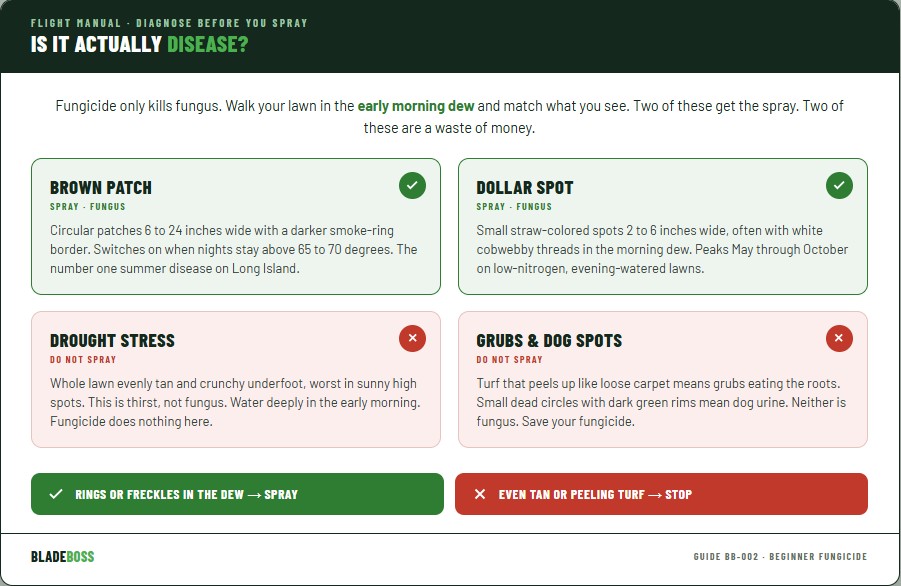
Here is the quick field test. Walk your lawn in the early morning while the dew is still down. That is when fungal disease shows itself.
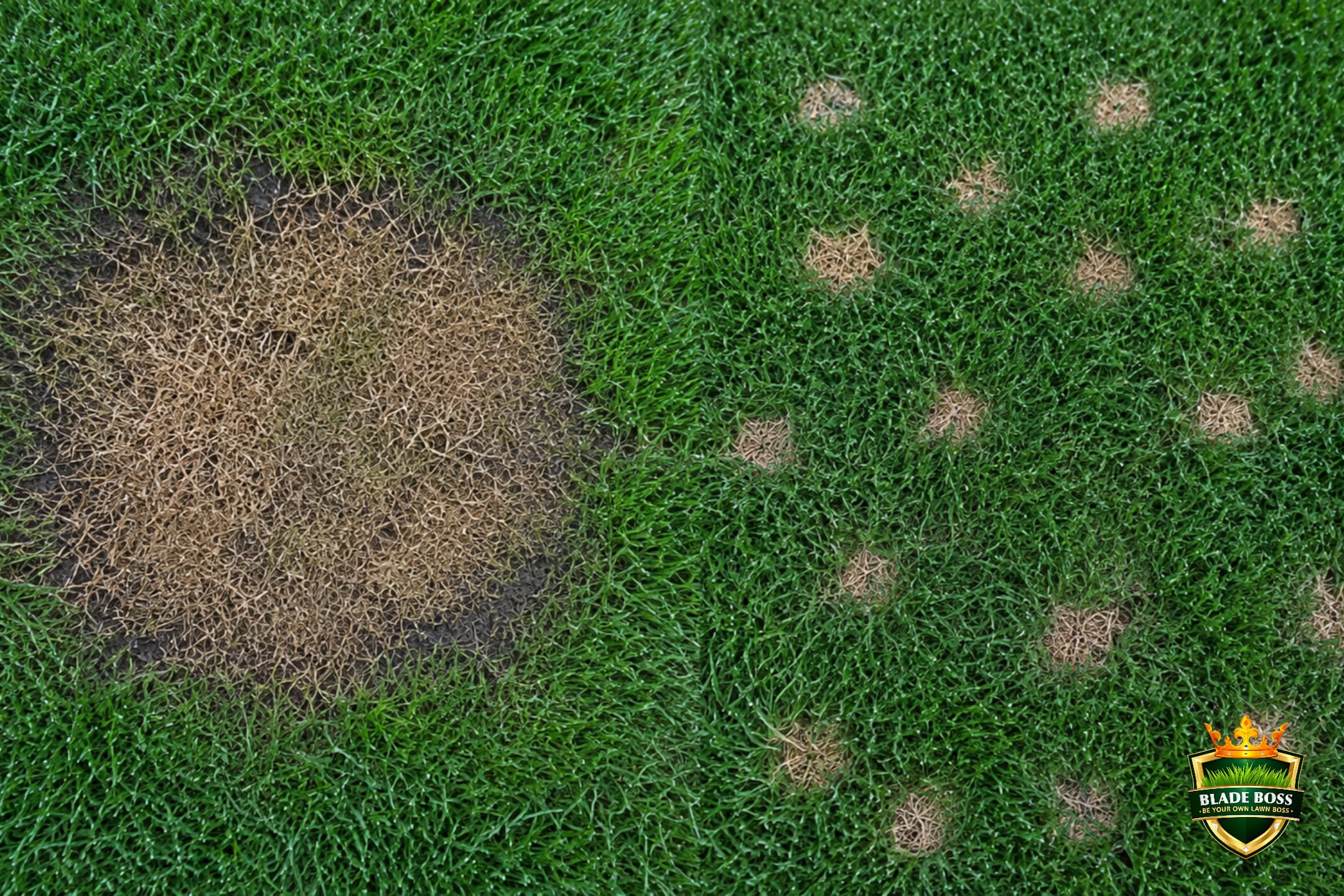
Circular brown patches 6 to 24 inches wide last summer, straw-colored silver-dollar spots, or cobwebby threads in the morning dew. A lawn that browned out in July when it got hot and humid. These come back every year unless you get ahead of them.
Drought stress (whole lawn evenly tan, crunchy underfoot), dog spots (small dark-green-rimmed dead circles), or grub damage (turf pulls up like carpet). Fungicide does nothing for these and you would be wasting money. When in doubt, diagnose before you spray.
Know Your Enemy - The Big Two
Ninety percent of beginner disease panic on Long Island is one of these two. You do not need to be a plant pathologist. You just need to recognize them so you know your spray is aimed at a real target.
The One Concept That Makes This Work
If you remember nothing else, remember this. Fungus develops resistance to a fungicide if you use the same one over and over. It is exactly like antibiotics. Spray the same product all summer and you are training a superbug on your own lawn. The fix is simple: rotate between two products that kill the fungus in two different ways.
Chemists group fungicides by their mode of action using a number called a FRAC group. Two different FRAC numbers means two different mechanisms. That is the whole trick. You do not need to memorize the chemistry. You just need two bottles with two different FRAC numbers and the discipline to alternate them.
Your Two Bottles
Here is the beauty of starting cheap: two common box-store fungicides happen to be two different FRAC groups. Buy both, alternate them, and you have a legitimate resistance-smart rotation for about forty bucks. The products are listed up top in the Pre-Flight Checklist.
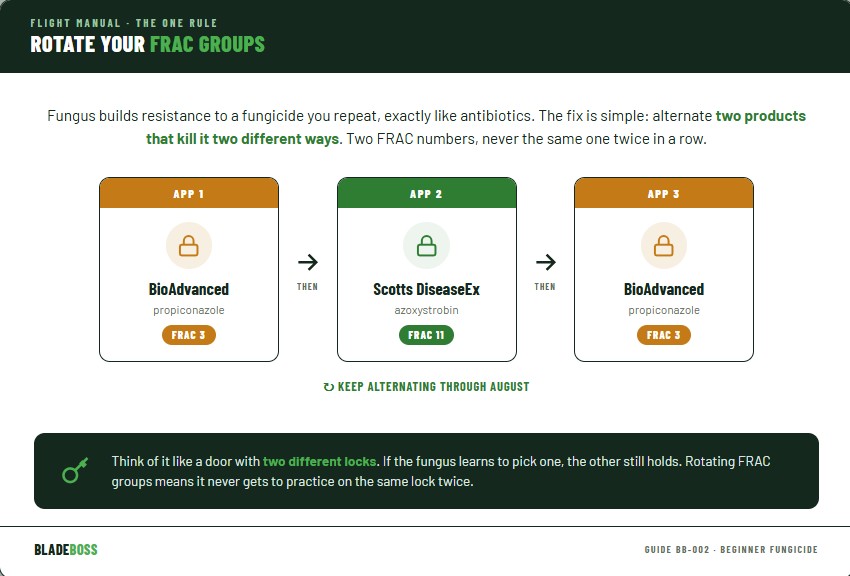
- BioAdvanced Fungus Control is propiconazole based. That is FRAC group 3. This is your first application, because the Long Island season opens with dollar spot and red thread in late May and propiconazole is the better tool for both.
- Scotts DiseaseEx is azoxystrobin based. That is FRAC group 11. This is your second application, landing in mid June right as brown patch wakes up, which is the disease it handles best.
- Alternate them. App 1 is the 3, app 2 is the 11, app 3 back to the 3, and so on. Never two of the same FRAC group in a row.
Rules of Engagement (ROE's)
The Flight Plan - Step by Step
Time Your Start
Start in late May. Disease pressure on Long Island ramps up as the soil warms and the nights get sticky, and fungicide works far better as a shield than as a rescue. You want product on the leaf before the fungus shows up, not after.
Gear Up and Gear Down the Risk
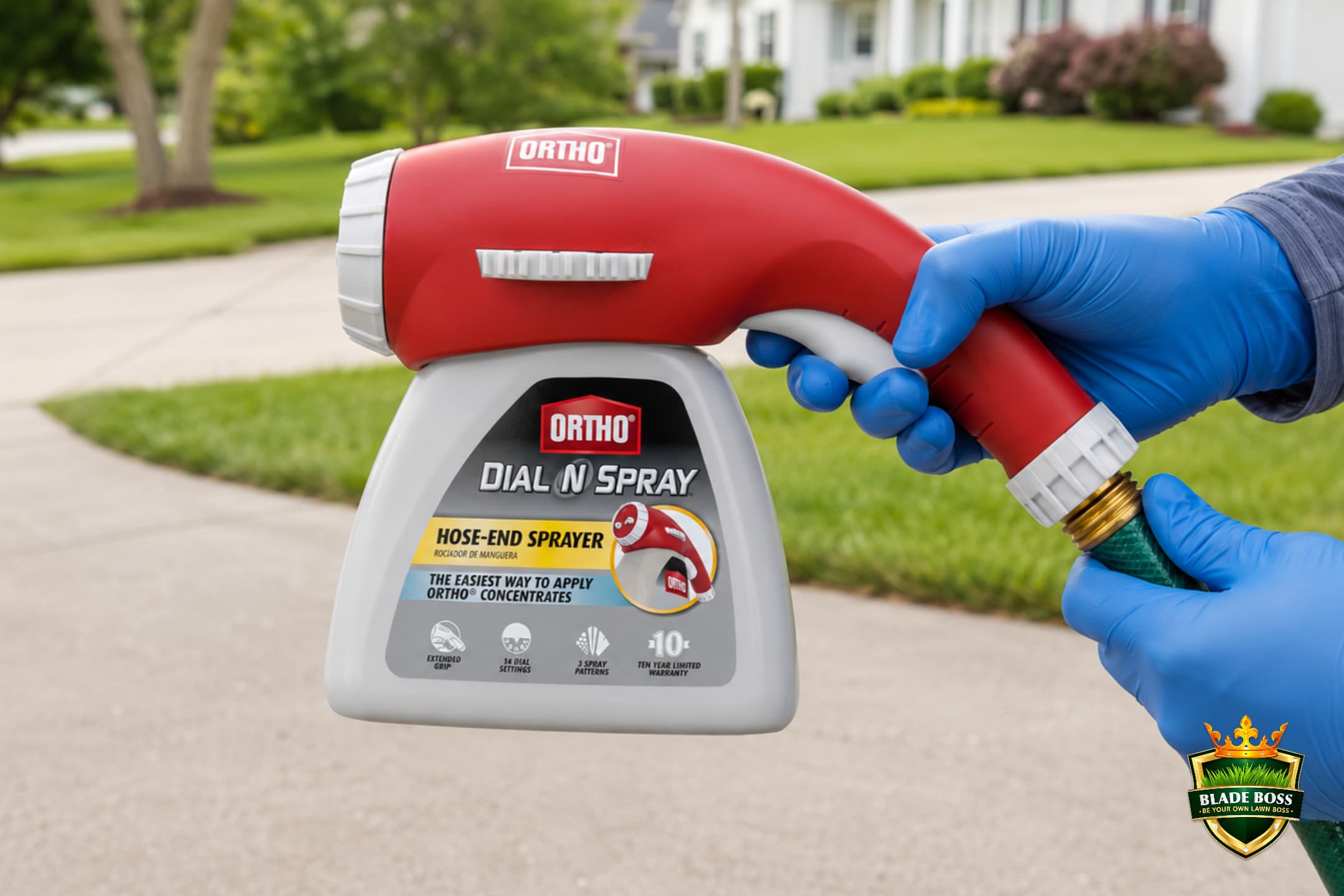
A hose-end sprayer (listed up top) is the entry-level tool. It clips onto your garden hose and meters the concentrate as water flows through. It is not precise, and we will be honest about that in a minute, but it is what gets a first-timer spraying this weekend instead of never.
- Wear chemical-resistant gloves and closed shoes. Long sleeves and pants. This is a pesticide, treat it like one.
- Spray on a calm day. Wind blows product off target and onto you. Spraying into a breeze is like spitting into the wind.
- Early morning or evening is best, out of direct midday sun and heat.
Apply It - Even and Complete
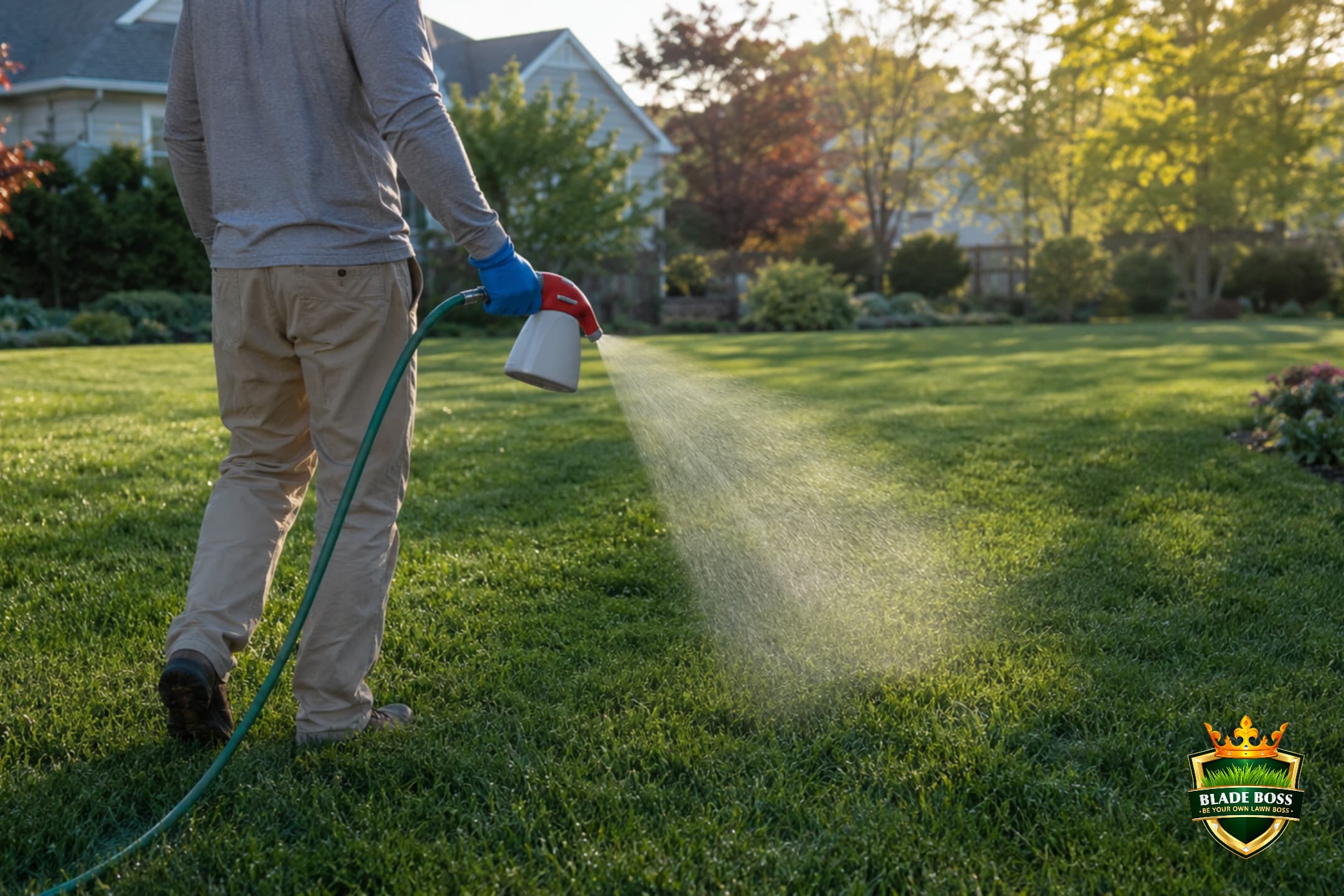
Set the hose-end dial to the rate printed on your bottle for the square footage you are covering. Walk at a steady pace and overlap your passes slightly so you do not leave gaps. The goal is even, complete coverage of the leaf blades, because that is where these diseases live and feed.
- Walk in straight lanes, then walk again perpendicular for even coverage.
- Coat the grass blades until they glisten, but not to the point of runoff puddling.
- Keep kids and pets off until it is fully dry.
Let It Dry Before You Water
This is the step beginners blow. These fungicides need to dry on the leaf and absorb before any irrigation or rain. Spray, then leave the sprinklers off for the rest of the day. Watering it in right away washes your money down the storm drain. Check the label, but as a rule let it dry for several hours minimum before any water touches the lawn.
Rotate on Schedule Through Summer
Reapply on the interval your labels specify, alternating the two bottles each time. A typical box-store rhythm runs about every two to three weeks through the hot months. App 1 BioAdvanced, app 2 DiseaseEx, app 3 BioAdvanced, and so on, all the way through August. Mark each spray on a calendar so you never lose track of which bottle is next.
The Honest Ceiling - Read This
We promised you straight talk, so here it is. The box-store path is a real start, but it has two built-in limits, and in a bad disease year you will feel both.
Gets you two FRAC groups in rotation for around forty dollars. Beats spraying nothing. Beats spraying one product into resistance. Genuinely helps in a mild to moderate year, and teaches you the rhythm of a real program.
Hose-end sprayers cannot hit an exact rate per thousand square feet, so your coverage is approximate at best. And in a brutal hot-humid stretch, two products on a loose interval may not hold the line. When that is your reality, you have outgrown this guide. That is not a failure. That is graduation.
Abort Criteria - Common Mistakes
Mission Complete. Now Fly the Plan.
Spraying on a guessed calendar is the beginner tax. FungusDefender Pro watches the actual disease models for your exact location (brown patch, dollar spot, pythium, and a dozen more) and tells you the days disease risk is climbing, so you spray right before it hits instead of hoping you timed it. Stop guessing the calendar. Let the models call it.
Want This as a Printable Field Manual?
Drop your email and the print-ready PDF version lands in your hands. Take it to the lawn, no phone required.
Crew Questions - FAQ
Do I really need to rotate two different fungicides?
Yes, if you are spraying more than once or twice a season. Fungus develops resistance to a single mode of action the same way bacteria develop antibiotic resistance. Alternating two FRAC groups, like the azoxystrobin in DiseaseEx and the propiconazole in BioAdvanced, keeps either one from losing its punch.
When should I start spraying fungicide on Long Island?
Late May. Disease pressure ramps up as the soil warms and nights get humid, and fungicide works far better as a preventive shield than as a rescue. Get product on the leaf before brown patch and dollar spot show up, then rotate through August.
Is a hose-end sprayer good enough for fungicide?
It is the entry level, and it is better than not spraying at all, but be honest about its limits. Hose-end sprayers cannot meter an exact rate per thousand square feet, so coverage is approximate. It will help in a mild year. For tight rate control and a program that holds up in a bad year, a battery backpack sprayer with a fan tip is the upgrade, and that is what the intermediate guide covers.
How long after spraying can I water the lawn?
Let the spray dry on the leaf for several hours at minimum, and check your specific label. Watering it in too soon, or rain within a few hours, rinses the product off before it can absorb and protect. Spray on a dry-forecast day and keep the sprinklers off the rest of that day.
How do I know if it is disease and not something else?
Walk the lawn in the early morning while the dew is down. Disease shows up as circular brown patches with a darker ring (brown patch) or small straw-colored spots with cobwebby threads (dollar spot). Evenly tan crunchy turf is drought, small dark-rimmed circles are dog spots, and turf that peels up like carpet is grubs. Fungicide only helps with actual fungus.
How much does the beginner setup cost?
Roughly fifty to sixty dollars all in: about twenty for Scotts DiseaseEx, about twenty for BioAdvanced, and about sixteen for a hose-end sprayer. That gets you a real two-group rotation. Stepping up to liquid concentrates and a backpack sprayer costs more up front but covers far more lawn per dollar over a season.