

GUIDE WEED-03 · REV A
How to Kill Nutsedge in Your Lawn
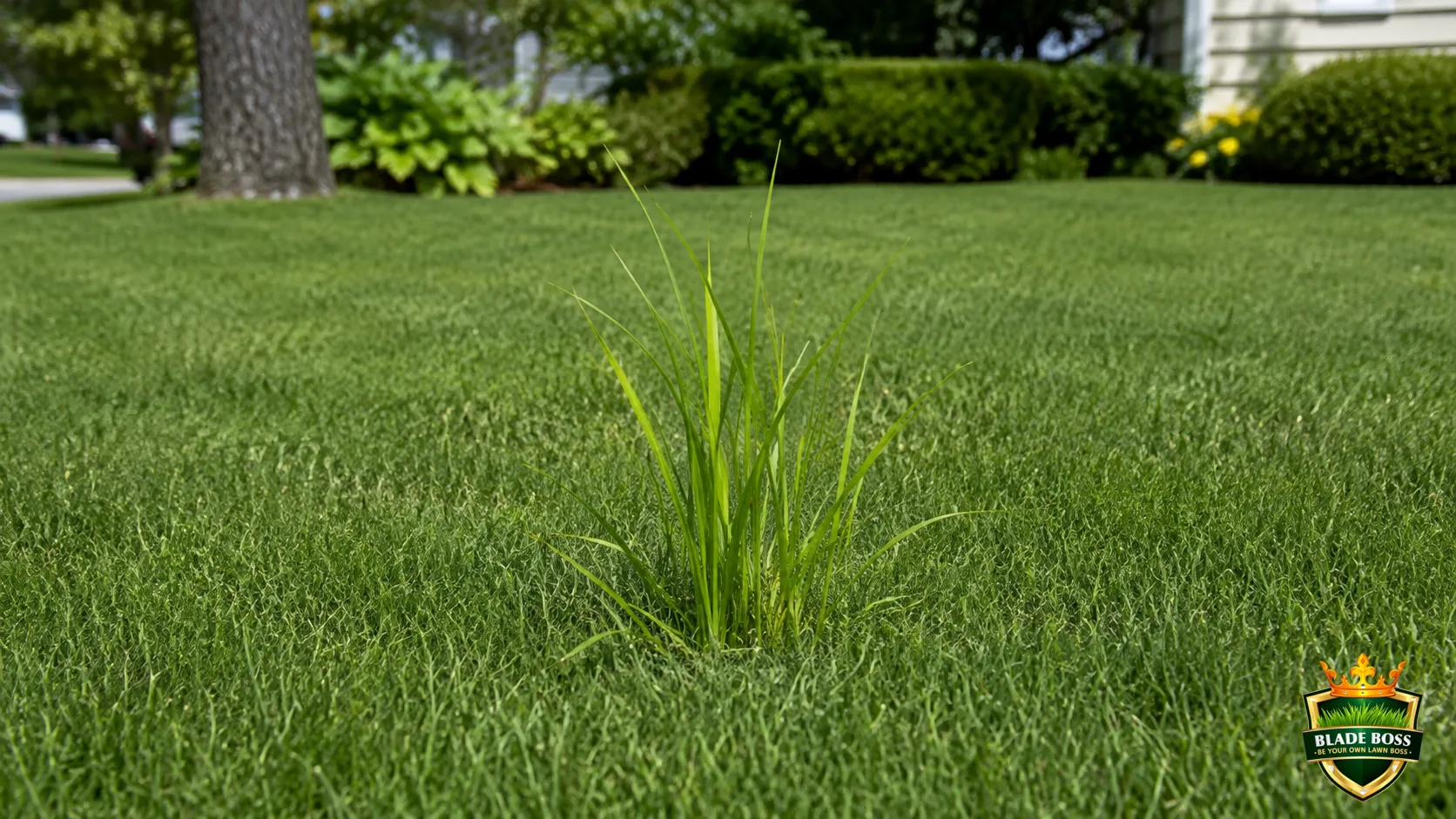
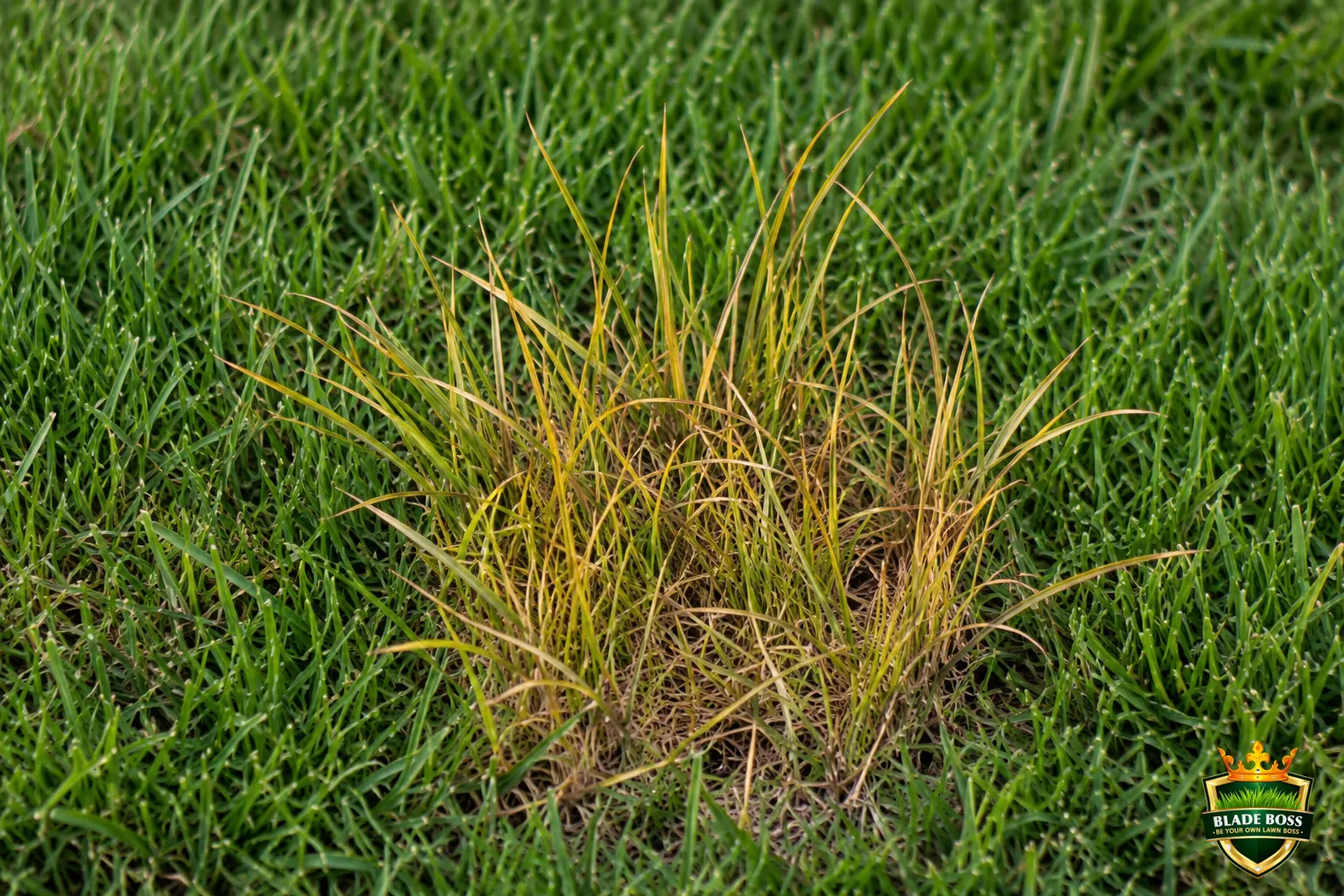
Nutsedge is that fast-growing, glossy, pale-green, grassy-looking weed that shoots up above your lawn a few days after you mow, always taller than everything else. It looks like grass but it is not, and here is the trap: the worst thing you can do is pull it. Nutsedge grows from underground nutlets, and yanking the plant just triggers them to sprout more. The real fix is a selective herbicide called halosulfuron (SedgeHammer) that travels down and kills the whole plant, nutlets included. This guide walks you through doing it right.
Pre-Flight Checklist - What You Need

As an Amazon Associate, Blade Boss earns from qualifying purchases. It never costs you a penny more.
Rules of Engagement (ROE's)
The Flight Plan - Step by Step
Confirm It Is Nutsedge (and Do Not Pull It)
First, make sure it is actually nutsedge, because the fix is specific to it. Nutsedge looks like grass but gives itself away fast: it is a brighter, glossier, lighter green than your lawn, it grows noticeably faster and taller (you see it standing above the lawn a few days after mowing), and its stems are triangular, you can feel the three edges if you roll one between your fingers. Grass stems are round.
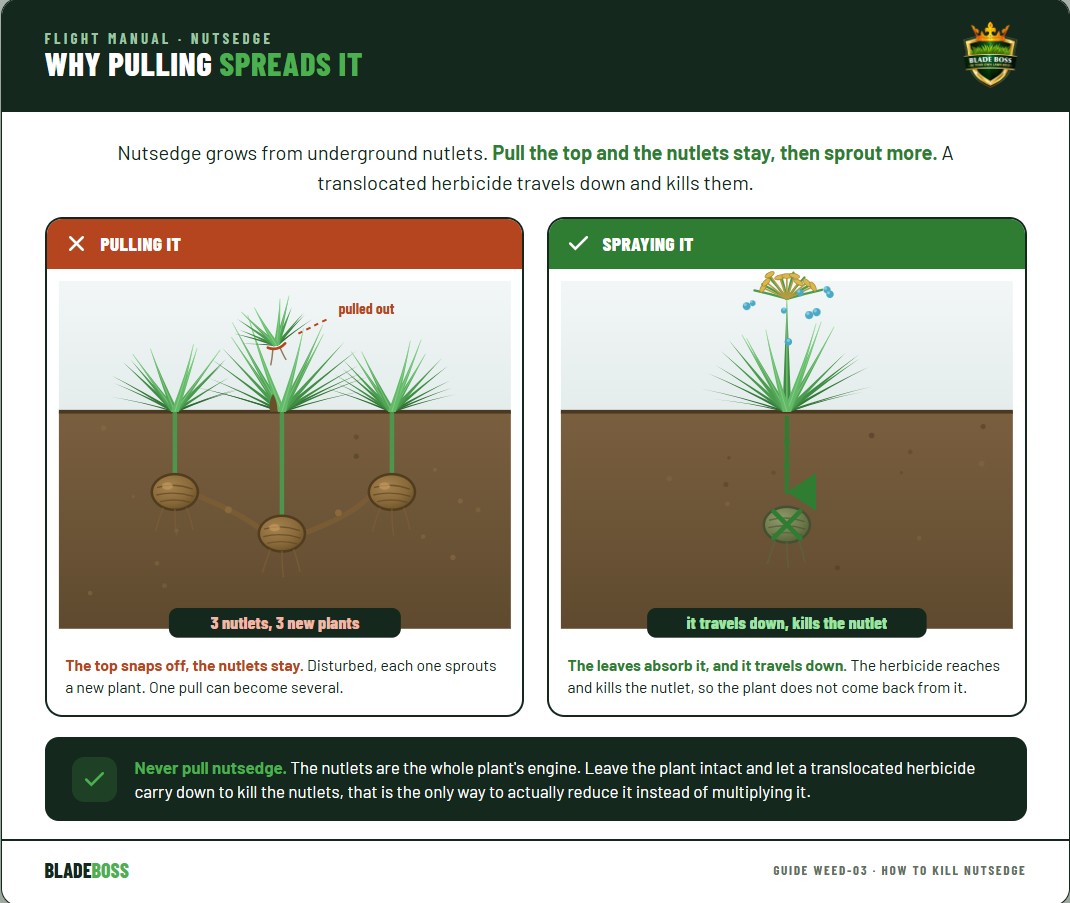
The most important thing to know before you do anything: do not pull it. Nutsedge grows from underground nutlets, and pulling the visible plant leaves those nutlets behind, and worse, signals them to sprout multiple new plants. People who fight nutsedge by pulling it every week are the reason it spreads across their whole yard.
Get the Right Product and Gear
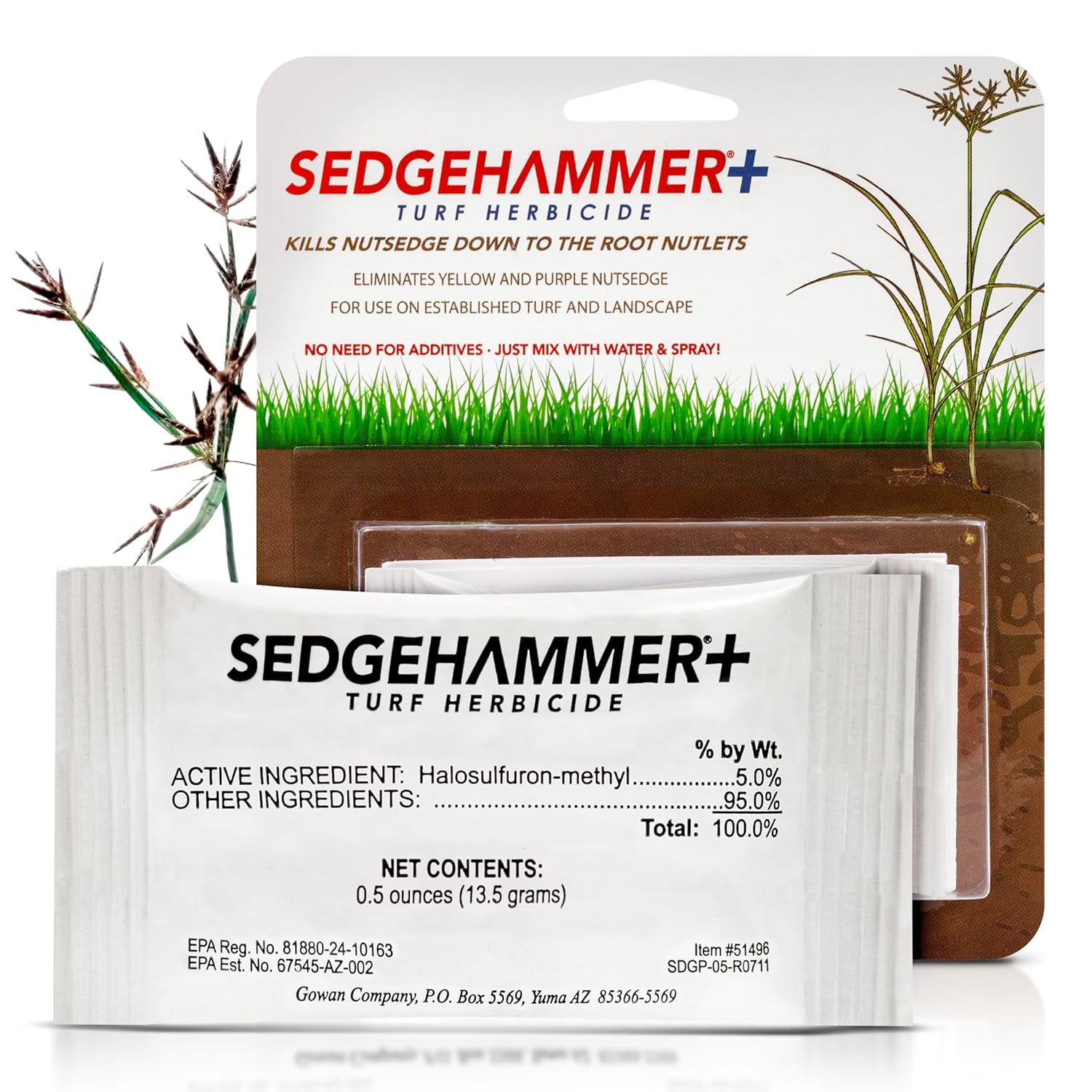
Nutsedge is not a true grass or a typical broadleaf, so normal weed killers miss it. You want halosulfuron, sold as SedgeHammer, a selective herbicide that kills sedge while being safe on most established lawn grasses. There are two versions, and the difference matters for how you mix it.
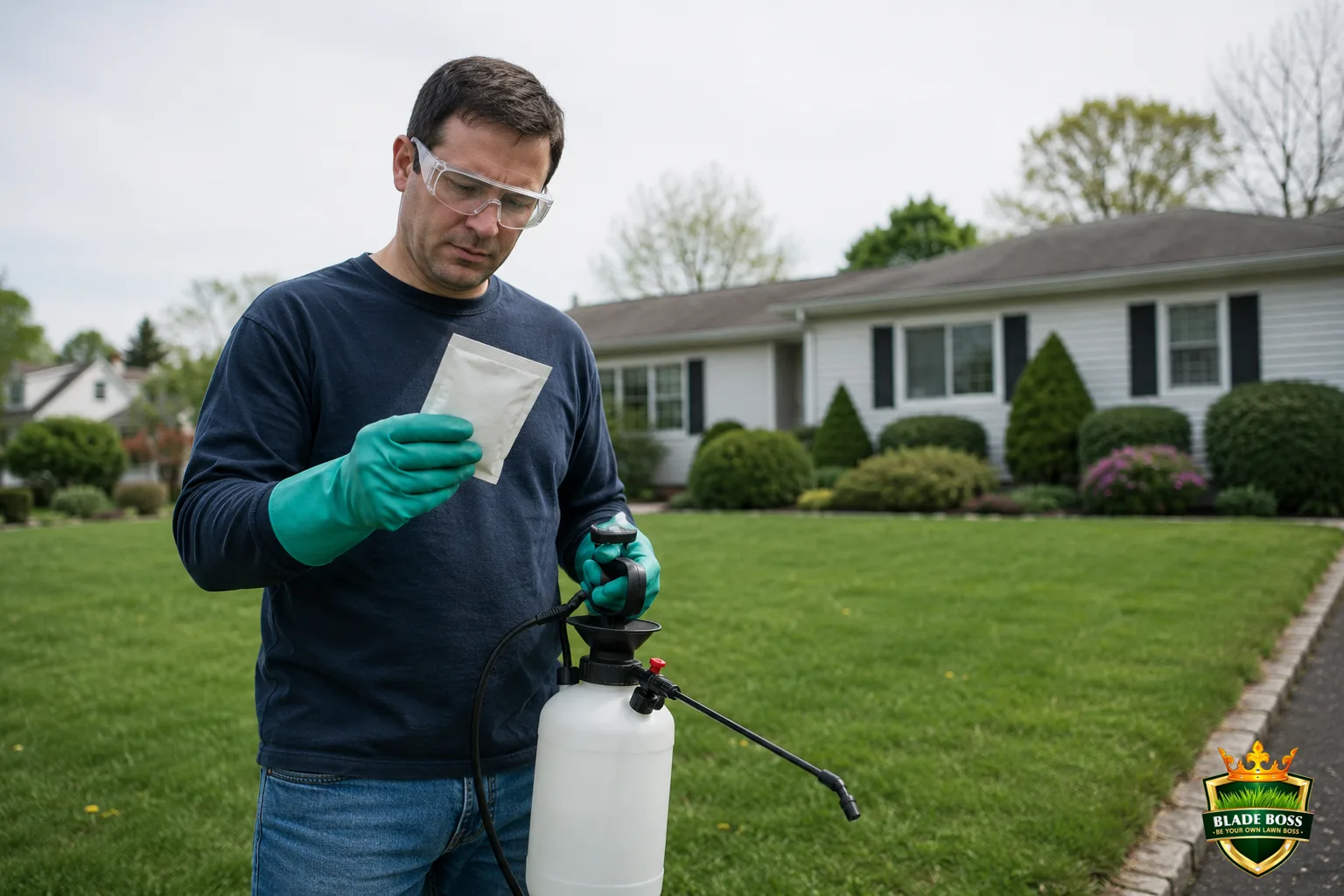
- SedgeHammer Plus (pouches with surfactant built in): the easy beginner choice. The surfactant is already in it, so you just add the pouch to water. Add nothing else.
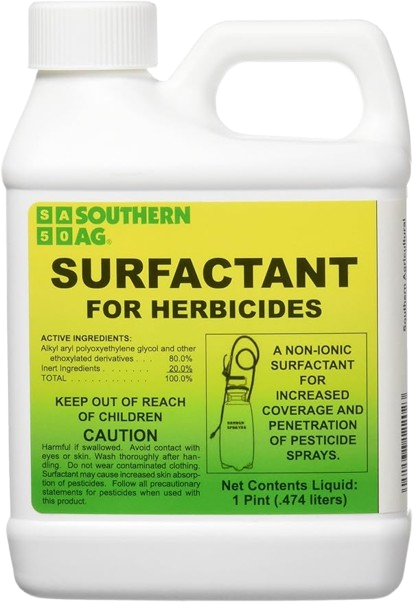
- Plain SedgeHammer (bottle with a measuring scoop): cheaper per use, but you MUST add your own non-ionic surfactant, or it will not penetrate the waxy nutsedge leaf.
- Gear up: chemical-resistant gloves, eye protection, long sleeves, pants, closed shoes.
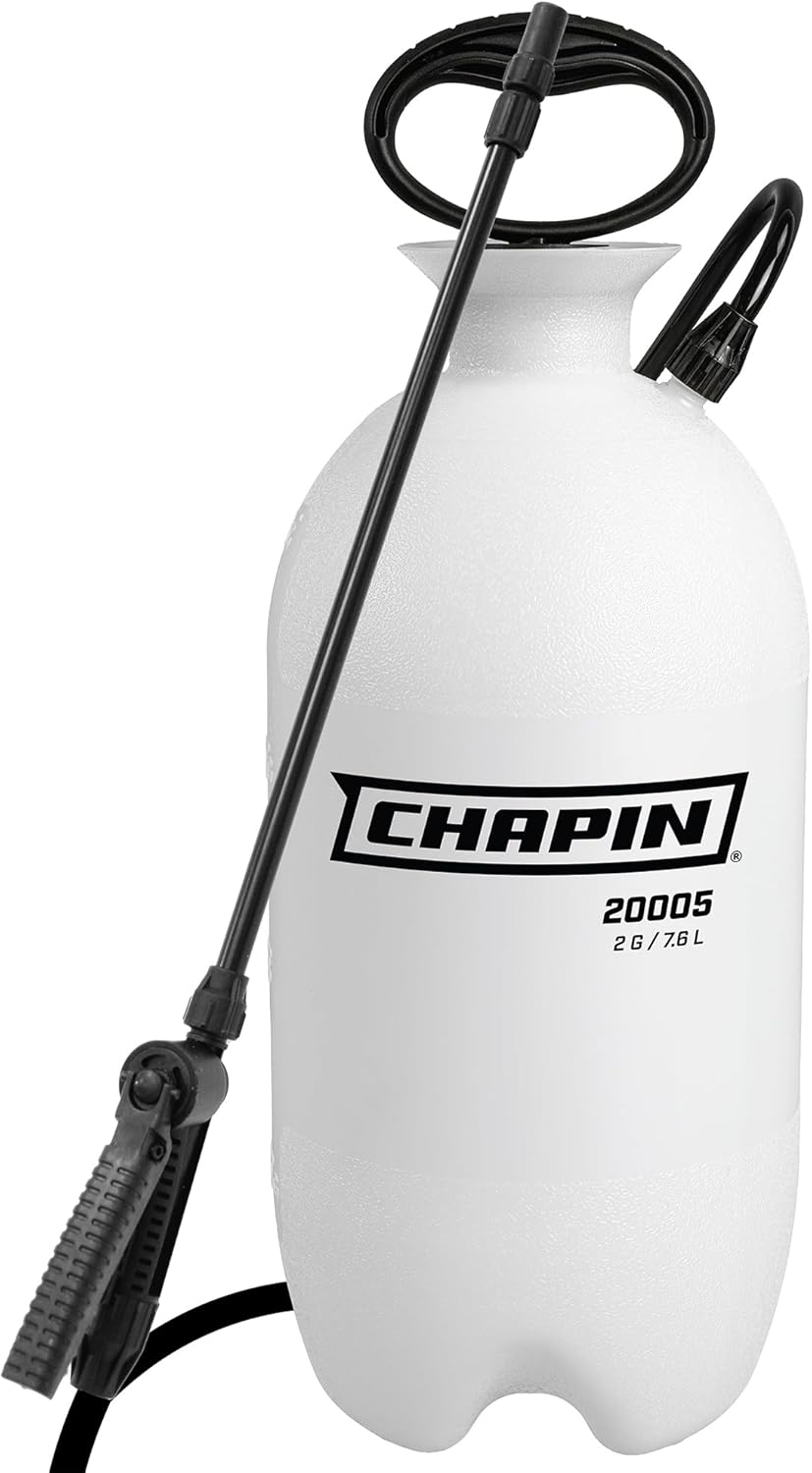
- Grab a clean pump sprayer (1 to 2 gallon) that has not held another weed killer.
Mix It at the Right Rate
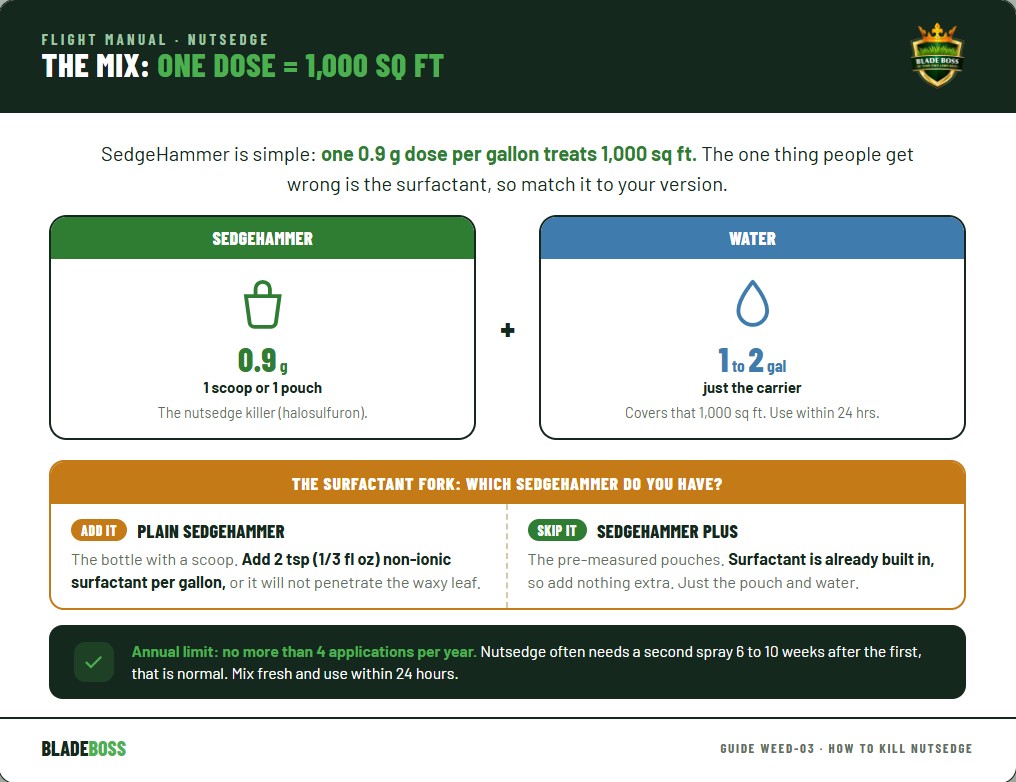
SedgeHammer is refreshingly simple to mix, one dose treats 1,000 square feet, and the water is just the carrier. The key numbers below come straight from the label, and the one detail people get wrong is the surfactant, so match it to your version.
- Rate: one 0.9 gram dose (one scoop or one pouch) per gallon of water treats about 1,000 square feet.
- Surfactant (plain SedgeHammer only): add 2 teaspoons (about 1/3 fl oz) of non-ionic surfactant per gallon. Skip this only if you are using SedgeHammer Plus, which already contains it.
- Water is flexible: you can mix the dose in 1 to 2 gallons of water, it is just the carrier for that 1,000 sq ft. Use enough to cover your patches evenly.
- Mix fresh and use within 24 hours: swirl or shake to dissolve, and do not save leftover mix for another day.
- Annual limit: the label allows no more than 4 applications per year. Do not exceed it.
Spray the Nutsedge
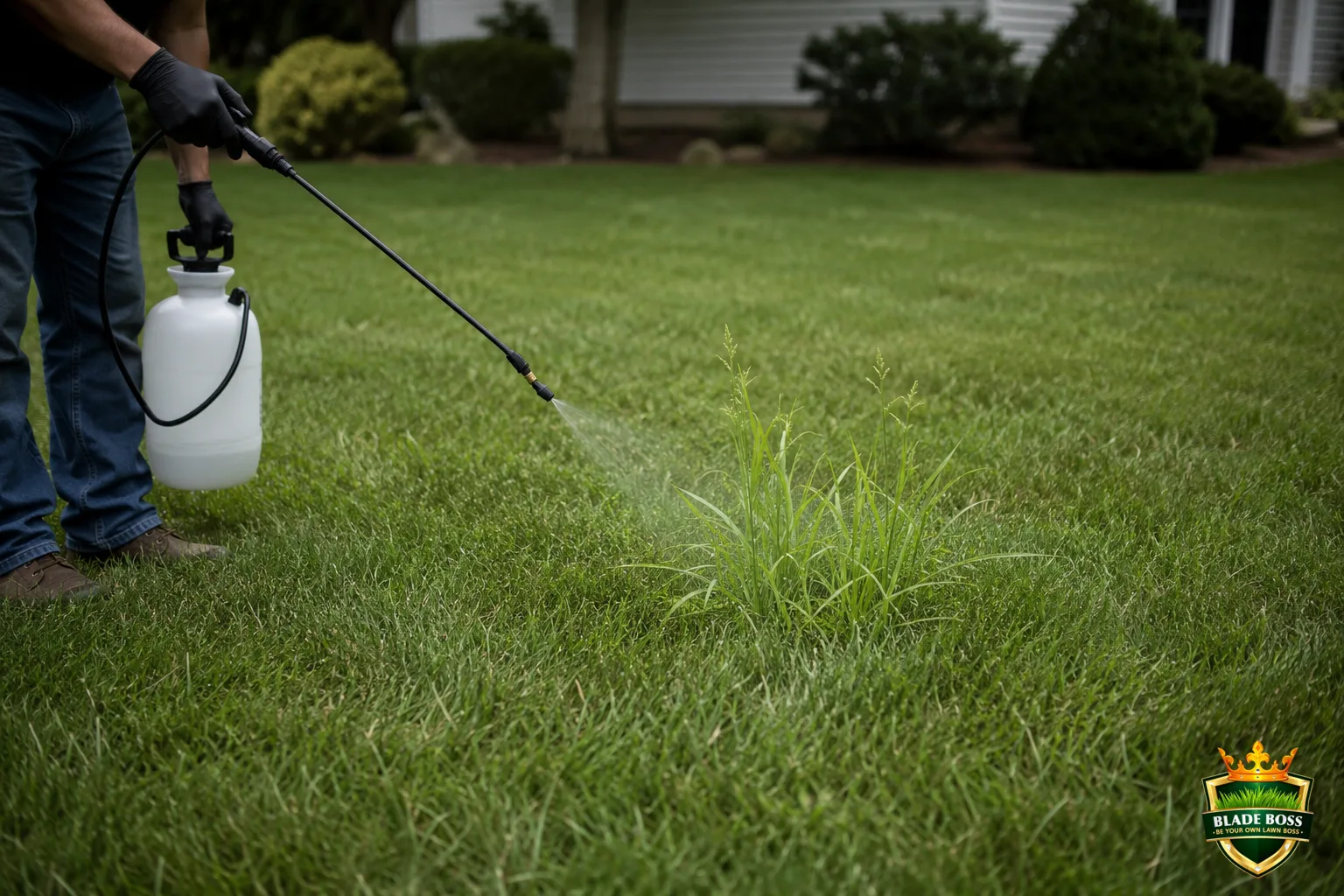
Spray the nutsedge when it is actively growing, on a mild day (not in a heat wave), and coat the plants without drenching to runoff. Spot-treat the sedge and the areas right around it, you do not need to blanket the whole lawn.
- Spray to wet the nutsedge leaves thoroughly but not to heavy runoff, you want it on the plant, absorbing.
- Use a coarse spray and keep the wand low to minimize drift onto plants you care about.
- Time it well: actively growing sedge, moderate temperatures, low wind, and not right before rain.
- Do not mow for a few days before or after, the plant needs its leaves to absorb and move the herbicide down to the nutlets.
Be Patient, Then Spray Again
Here is where people go wrong at the end: they expect nutsedge to die fast, panic when it does not, and either re-spray too soon or give up. Halosulfuron works slowly, it stops the plant from growing quickly, but full yellowing and death take one to three weeks as it travels down to the nutlets. And because those nutlets are stubborn, a single spray often does not finish the job.
- Watch over 1 to 3 weeks: the nutsedge stops growing, then yellows, then browns and dies back.
- Do not re-spray too soon: give it time to work before deciding you need another application.
- Plan a second treatment 6 to 10 weeks later if nutsedge regrows from surviving nutlets, this is normal and expected.
- Think longer term: nutsedge loves wet, poorly drained spots, so improving drainage and keeping your lawn thick and healthy makes it much less likely to return.
Abort Criteria - Common Mistakes
Mission Complete. Now Fly the Plan.
Nutsedge beats most people because they fight it wrong: they pull it (which spreads it) or spray a weed killer that does not touch it. Do it right instead: never pull it, use halosulfuron (SedgeHammer) on actively growing sedge with the correct surfactant for your version, spray safely with your protection on, then be patient and follow up. Kill the nutlets and fix the wet spots that feed it, and it stops coming back. For the broader rules on spraying any weed safely, see how to spray weeds without killing your lawn, and if your weed turns out to be a grassy one instead, check how to kill crabgrass.
Want This as a Printable Field Manual?
Drop your email and the print-ready PDF version lands in your hands. Take it to the lawn, no phone required.
Crew Questions - FAQ
What kills nutsedge permanently?
The most reliable way to kill nutsedge is a selective sedge herbicide called halosulfuron, sold as SedgeHammer, applied to actively growing plants. What makes it work where other approaches fail is that it moves down into the plant and kills the underground nutlets (tubers) that nutsedge grows from, not just the visible leaves. That said, permanent is a strong word: nutlets are stubborn, so it commonly takes an initial spray plus a follow-up 6 to 10 weeks later, and staying nutsedge-free long term also means fixing the wet, poorly drained conditions it loves and keeping your lawn thick and healthy so it has no opening to return.
Why should I not pull nutsedge?
Because pulling it actually makes it worse. Nutsedge grows from underground structures called nutlets or tubers, and when you pull the visible plant, the stem snaps off and leaves those nutlets in the soil, where the disturbance signals them to sprout multiple new plants. So the person diligently pulling nutsedge every week is often the reason it spreads across their whole yard. Instead of pulling, you kill nutsedge with a translocated herbicide like halosulfuron that travels down through the plant and kills the nutlets, which is the only way to actually reduce the population rather than multiply it.
Do I need a surfactant with SedgeHammer?
It depends on which version you have, and this trips a lot of people up. Plain SedgeHammer (the bottle with a measuring scoop, or the 0.9 gram packets) does NOT contain a surfactant, and the label directs you to add a non-ionic surfactant, about 2 teaspoons or one third of a fluid ounce per gallon, so the herbicide can penetrate the waxy nutsedge leaf. SedgeHammer Plus (the larger pre-measured pouches) already has the surfactant built in, so you add nothing extra. Skipping the surfactant with plain SedgeHammer is a common reason applications underperform, so always confirm which version you are using and follow its label.
How long does SedgeHammer take to kill nutsedge?
It works slowly. You will typically see the nutsedge stop growing within a few days, but full yellowing and death take about 1 to 3 weeks as the herbicide translocates down to the nutlets. This slow action fools people into thinking it failed, so it is important not to panic or re-spray too soon. Because the underground nutlets are hard to fully kill in one pass, nutsedge also frequently regrows, and a second application 6 to 10 weeks after the first is normal and often necessary. Patience and a planned follow-up are part of doing it right.
Will regular weed killer kill nutsedge?
Generally, no. Nutsedge is a sedge, not a true grass or a typical broadleaf weed, so most standard lawn weed killers have little effect on it and you will waste time and product trying. You need a herbicide specifically effective on sedges, most commonly halosulfuron (SedgeHammer), which is selective enough to kill nutsedge while being safe on most established lawn grasses. Products designed for crabgrass or general broadleaf weeds are the wrong tool here, which is part of why nutsedge frustrates so many homeowners: they keep hitting it with sprays that were never going to work on it.
Why does nutsedge keep coming back in my lawn?
Two reasons. First, the underground nutlets: a single nutsedge plant can produce many tubers, and unless the herbicide reaches and kills them, or you follow up on the survivors, new plants keep emerging, which is why a second treatment is often needed. Second, the conditions: nutsedge thrives in wet, poorly drained, or overwatered soil, so if it keeps returning to the same spot, that area almost certainly has a moisture or drainage problem feeding it. The complete fix is to kill the existing nutsedge and its nutlets with halosulfuron, plan a follow-up spray, and correct the wet conditions, while keeping your lawn dense and healthy so nutsedge has no easy opening.