

GUIDE PREP-04 · REV A
How to Do a Spring Lawn Cleanup
Spring cleanup is the first job of the season and the one that sets up everything after it. All winter your lawn collected matted leaves, fallen twigs, and dead debris that now sit on the crowns blocking the light and air the grass needs to wake up. Clearing it off, gently and at the right time, is what lets your lawn green up evenly instead of in patches. It is simple work, but the timing and a light touch matter more than people think. This is how to open the season right.
Pre-Flight Checklist - What You Need


As an Amazon Associate, Blade Boss earns from qualifying purchases. It never costs you a penny more.
Rules of Engagement (ROE's)
The Flight Plan - Step by Step
Wait for the Lawn to Be Ready
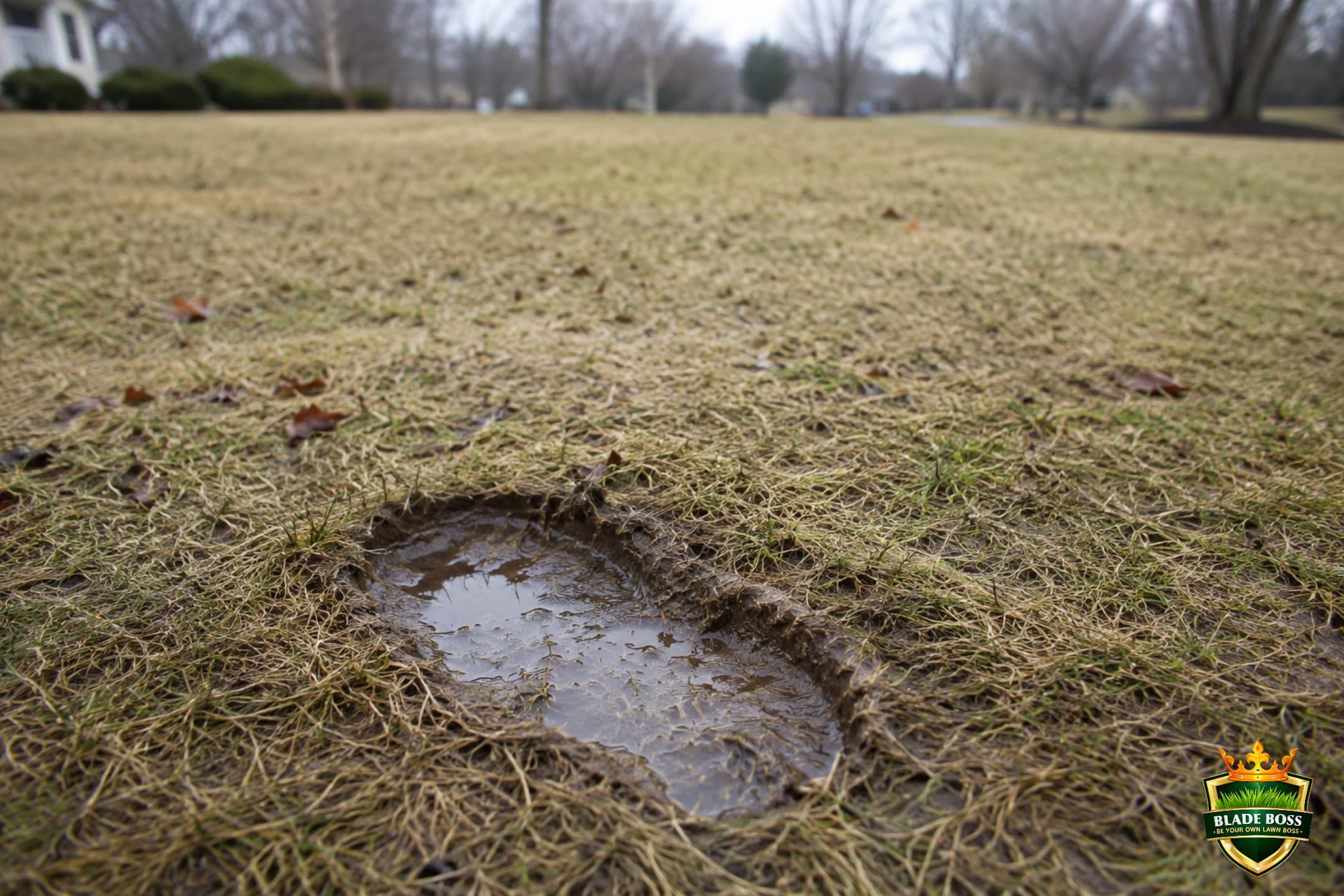
The most common spring mistake is starting too early, while the ground is still soft and the grass is barely awake. Raking a soggy, dormant lawn compacts the soil and tears at crowns that cannot heal yet, so the first move is patience.
Wait until the soil has firmed up (no footprints sinking in), the surface is no longer frozen or waterlogged, and the grass has started to green and grow. On Long Island that is usually well into spring, not the first warm weekend in March. The Weather Hub takes the guesswork out of when to start.
Blow and Rake Out Every Bit of Debris
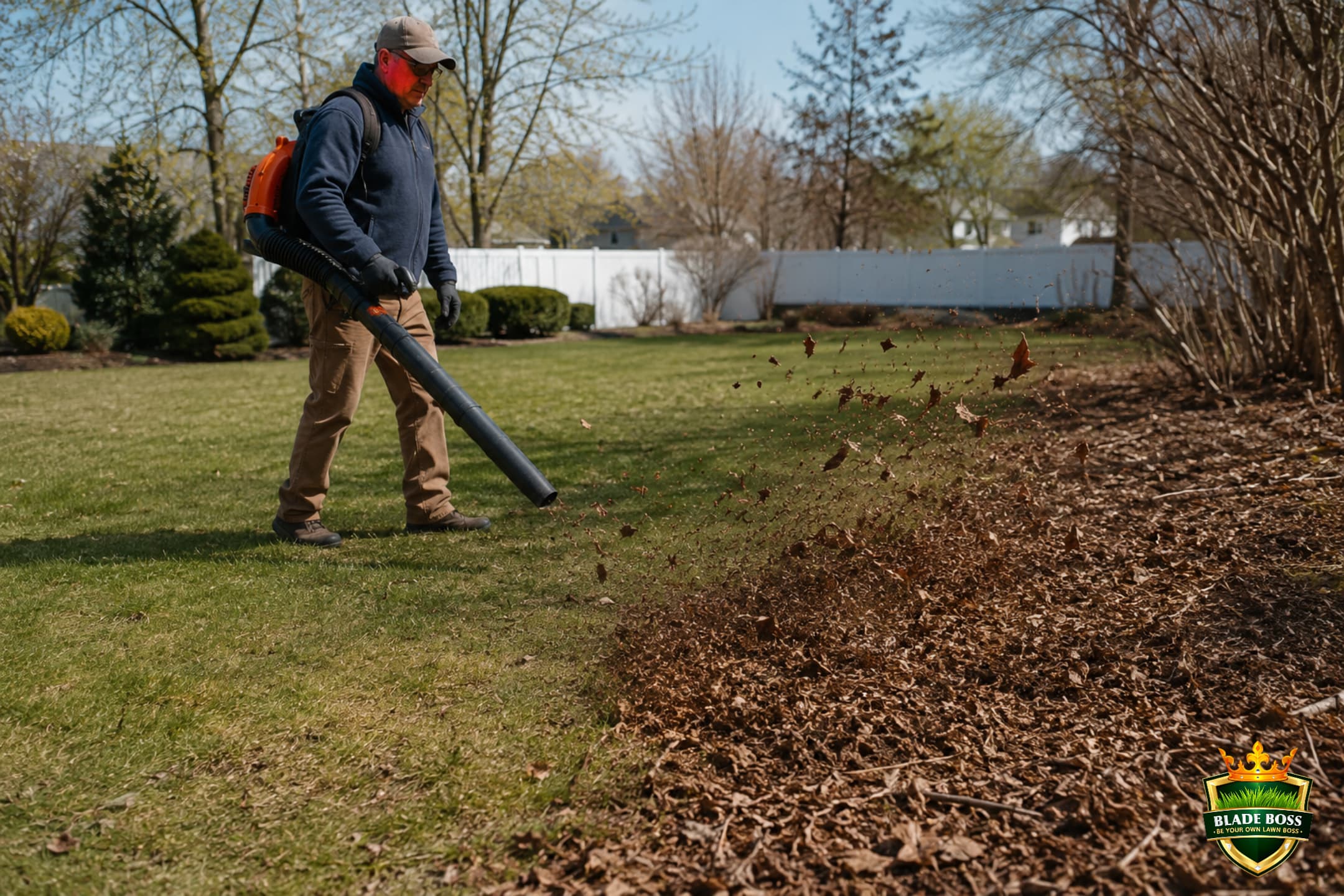
Now the main event: clear the whole lawn down to clean turf. Everything winter dropped, matted leaves, fallen twigs, acorns, snapped branches, and any leftover debris, comes off so the grass gets full light and airflow. A blower makes fast work of it, and a light leaf rake handles what the blower cannot lift.
- Blow the open areas first, pushing leaves and light debris into windrows you can collect.
- Rake the matted spots gently by hand, especially where wet leaves stuck together over winter.
- Clear the edges and beds, fence lines, under shrubs, and along the house where debris piles up.
- Do not leave a thin layer on the grass. What looks like harmless mulch on the lawn just smothers the crowns.
Check for Snow Mold and Matting
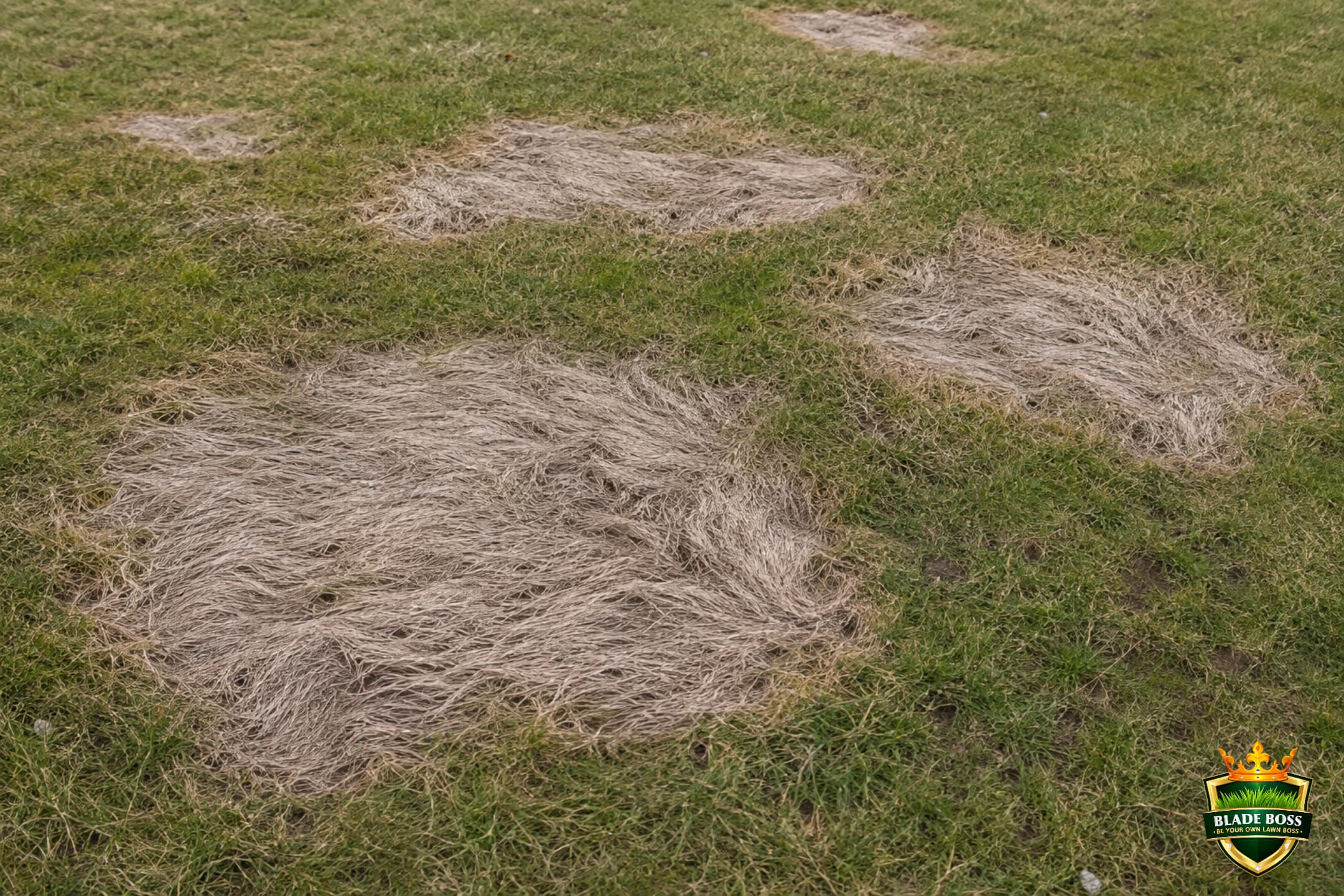
As you clear, watch for spots where the grass is matted down in gray or pinkish circular patches. That is snow mold, a fungus that develops under snow and matted debris over winter. In most cases it is cosmetic and the lawn grows out of it once it gets air and light, which is exactly what your cleanup provides.
Gently rake these matted patches to fluff the grass up and break the matting so air can circulate and the crowns can dry out and recover. Do not dig at them or tear the area up, just loosen the mat. Clearing and fluffing is usually all snow mold needs to fade as the lawn greens up.
Scout for Damage While You Are Down There
Cleanup is your first close look at the lawn all year, so use it. As you clear, take note of what the winter left behind, because this quick scouting sets your whole spring to-do list before you spend a dollar on product.
- Bare or thin spots that need overseeding once the soil warms.
- Dead patches worth diagnosing, plow damage, salt damage near the driveway, or dog spots.
- Low or rutted areas that could use leveling.
- Compacted, hard zones and heavy traffic paths that may need aeration later.

Abort Criteria - Common Mistakes
Mission Complete. Now Fly the Plan.
A good spring cleanup is simple: wait for the lawn to be ready, then gently clear every bit of debris off the crowns so it can green up even and strong. Fluff any snow mold, scout for damage, and you have both a clean lawn and your whole spring plan in one afternoon. Check your local conditions in the Weather Hub so you start at the right time, not the first warm day. From here the season opens up: get the first mows right, and diagnose any dead patches the winter left behind.
Want This as a Printable Field Manual?
Drop your email and the print-ready PDF version lands in your hands. Take it to the lawn, no phone required.
Crew Questions - FAQ
When should I do my spring lawn cleanup?
Go by the lawn's readiness, not a calendar date. Wait until the ground has firmed up so your footprints no longer sink into soft soil, the surface is no longer frozen or waterlogged, and the grass has started to green and actively grow. On Long Island that is usually well into spring rather than the first warm weekend in March. Starting too early, while the ground is soft and the grass is dormant, compacts the soil and damages the crowns, so patience genuinely pays off.
Is spring cleanup the same as dethatching?
No, and confusing them can damage your lawn. Spring cleanup is a gentle surface clearing of winter debris, matted leaves, twigs, and litter, using a blower and a light rake. Dethatching is a much more aggressive job that pulls up the thatch layer at the soil surface and should only be done when the grass is actively growing, never when it is dormant or just waking in early spring. During spring cleanup you clear the surface gently; if the lawn truly needs dethatching, save that for later in the season.
Should I rake my lawn in early spring?
A light raking to clear matted leaves and debris is good and helps the lawn green up, but keep it gentle. Aggressive raking of early-spring grass, especially while it is still dormant or waterlogged, tears at crowns that cannot yet recover and can thin the lawn. Use a blower for the open areas and a light hand rake for matted spots, and stop short of the deep, tearing raking you would use for dethatching. The goal is to lift debris off the surface, not to rip into the turf.
What are the gray or pink matted patches in my lawn after winter?
Those are almost certainly snow mold, a fungus that develops under snow and matted debris over the winter and shows up as circular gray or pinkish matted patches as the snow melts. In most cases it is cosmetic and the lawn grows out of it once the grass gets air and light. During cleanup, gently rake and fluff the matted patches to break up the mat and let the crowns dry and breathe. Clearing and fluffing is usually all it takes for snow mold to fade as the lawn greens up.
Do I need to bag up the debris or can I leave it?
Bag it and remove it from the lawn entirely. Leaving debris on the grass, even a thin layer you think will break down, smothers the crowns and holds moisture that breeds disease. And do not just pile the bagged debris or loose material at the edge of the lawn, since piles re-mat the grass beneath them and drop weed seeds into your turf. Collect everything, bag it, and haul it off so the whole lawn surface is clean.
What should I do after the spring cleanup is done?
Use what you found while cleaning to set your spring plan. Cleanup is your first close look at the lawn all year, so you should come away knowing where the bare and thin spots are for overseeding, which dead patches need diagnosing, and where the lawn is rutted or compacted. From there the season opens up in order: get your first mows right as the grass starts growing, address any winter damage, and move into the season's feeding, seeding, and repair once the lawn is actively growing.