

GUIDE MAP-01 · REV A
How to Measure Your Lawn
Every product you will ever buy for your lawn is dosed per 1,000 square feet. Seed, fertilizer, lime, grub control, fungicide, all of it. Which means if your square footage is wrong, every single application after it is wrong too, in the same direction, forever. This is the first number you need and almost nobody has it right. Here is how to get it, three different ways.
Pre-Flight Checklist - What You Need
As an Amazon Associate, Blade Boss earns from qualifying purchases. It never costs you a penny more.
Rules of Engagement (ROE's)
The Flight Plan - Step by Step
Never, Ever Use Your Lot Size
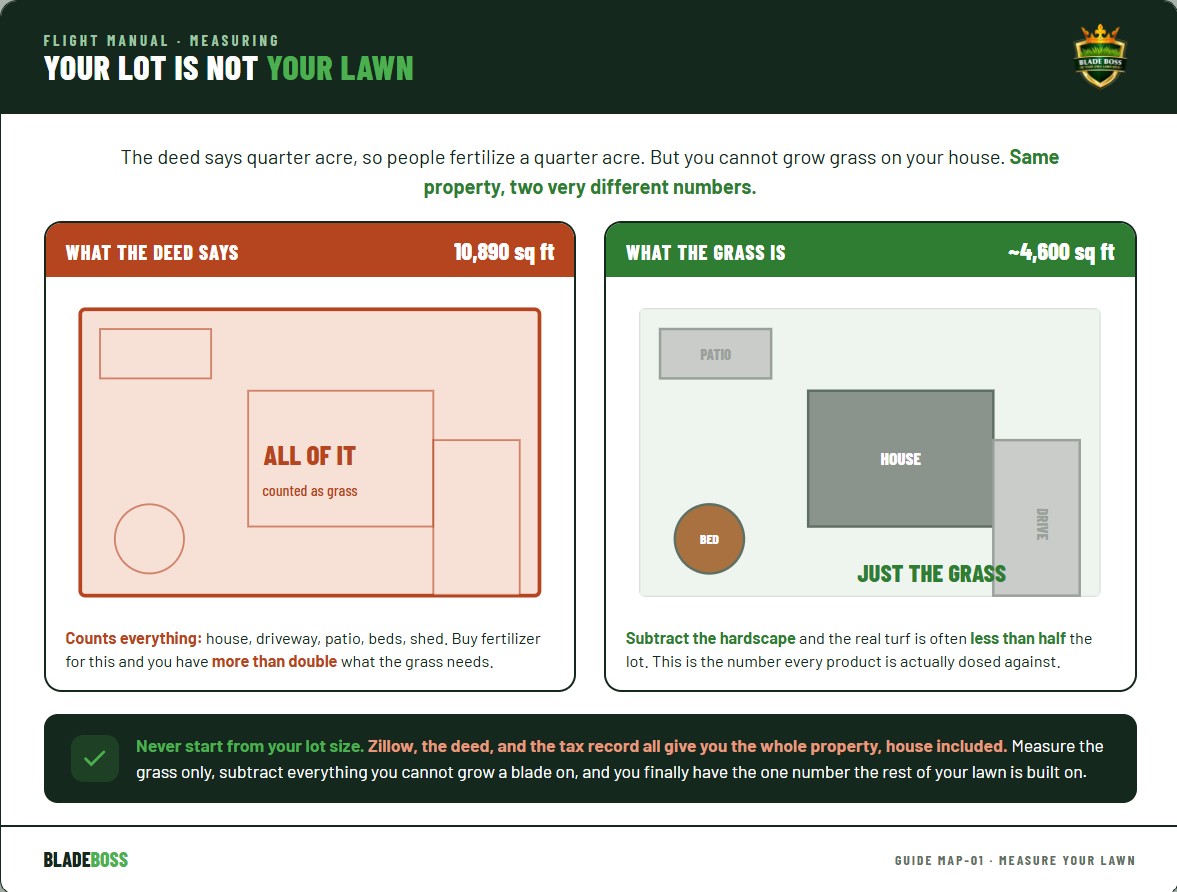
This is the mistake that ruins lawns, and it is almost universal. Your deed says a quarter acre. A quarter acre is 10,890 square feet. So you buy fertilizer for 10,890 square feet.
But your lot includes the house, the driveway, the walkway, the patio, the beds, the shed, and the deck. On a typical Long Island quarter-acre property, the actual turf is often closer to 4,000 to 5,000 square feet. You just bought more than double the product you need, and if you spread all of it, you will burn the lawn to the ground and wonder what happened.
Break the Lawn Into Simple Shapes
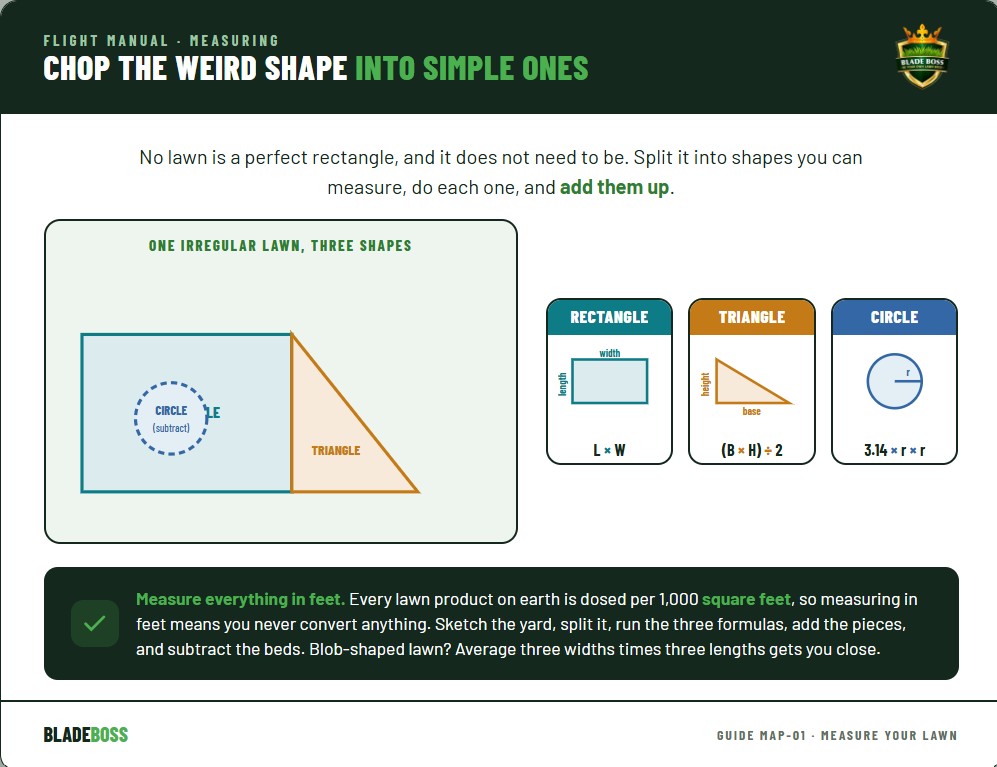
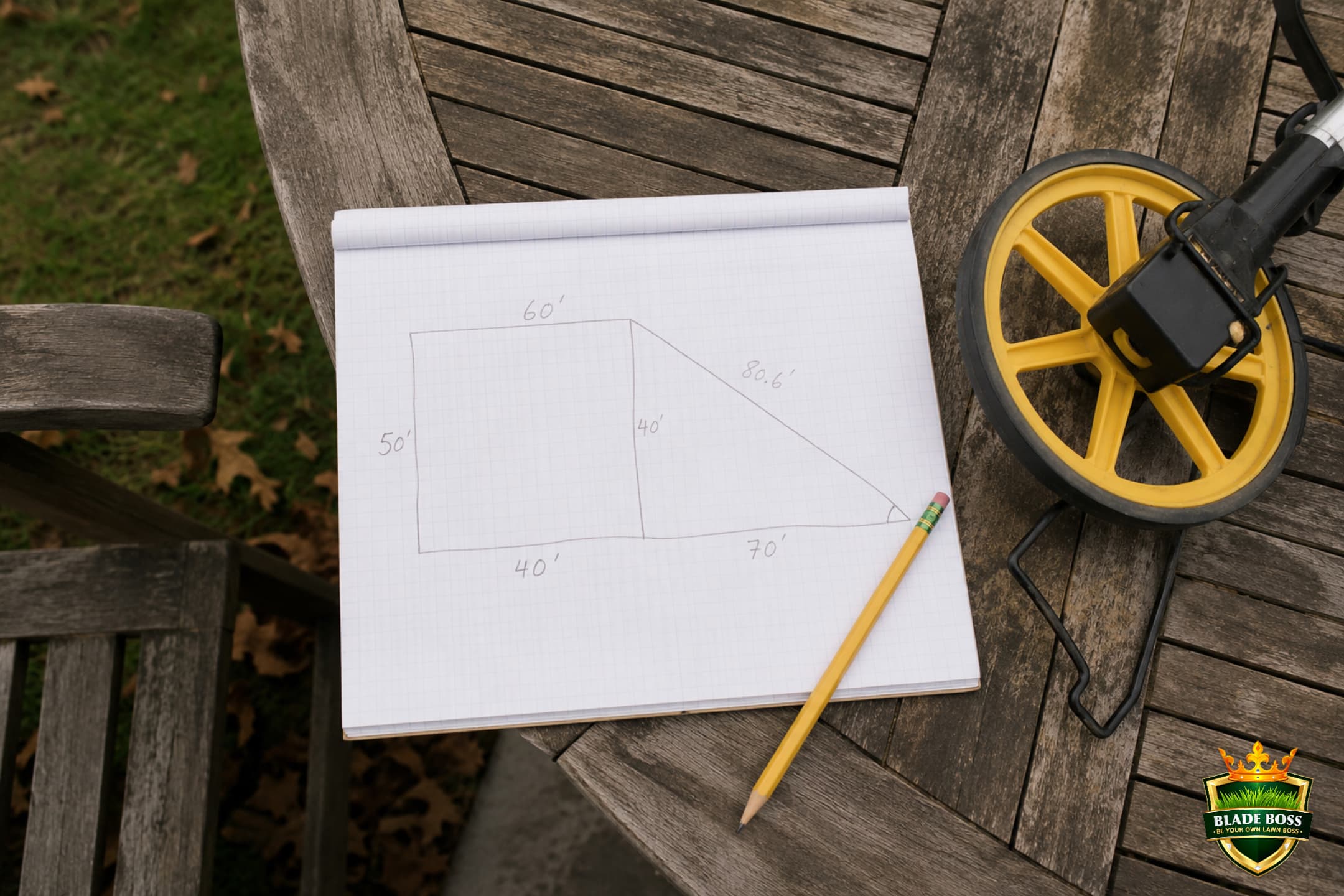
Nobody's lawn is a perfect rectangle, and you do not need it to be. The trick is to stop trying to measure the weird shape and instead chop it into shapes you can measure: rectangles, triangles, and circles. Measure each one, then add them together.
Walk the property and sketch it roughly on paper. Draw a line splitting the front yard into a big rectangle and a triangle where it tapers at the corner. Treat the round bed cutout as a circle you will subtract later. It does not have to be pretty. It has to be close, and close beats a guess by a mile.
Do the Math (It Is Three Formulas)
That is it. Three formulas cover every lawn on Long Island:
Rectangle or square: length x width
Triangle: base x height, divided by 2
Circle: 3.14 x radius x radius (radius is half the width)
Run each shape, write the number next to it on your sketch, and add them all up. If your lawn is genuinely blob-shaped, a decent shortcut is to measure the average length times the average width: take three widths at different points, average them, and do the same for length. Not perfect, but far closer than guessing.
Subtract Everything That Is Not Grass
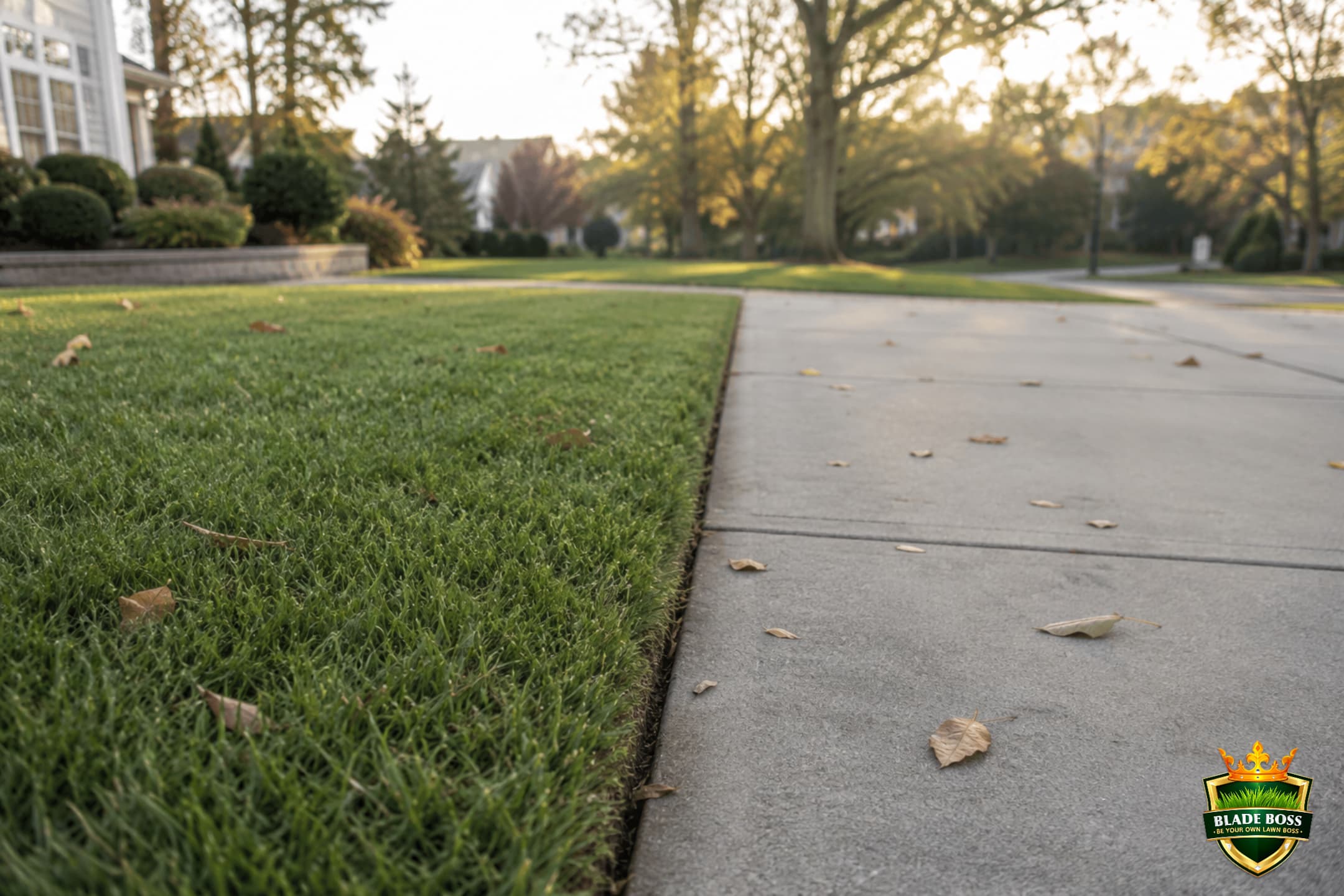
You are measuring turf, not real estate. So go back through your sketch and cut out every square foot that no grass grows on: the house footprint, the driveway, the walkway, the patio, the deck, the shed, the pool, and every planting bed.
Walk It With a Wheel (The Fast Manual Way)
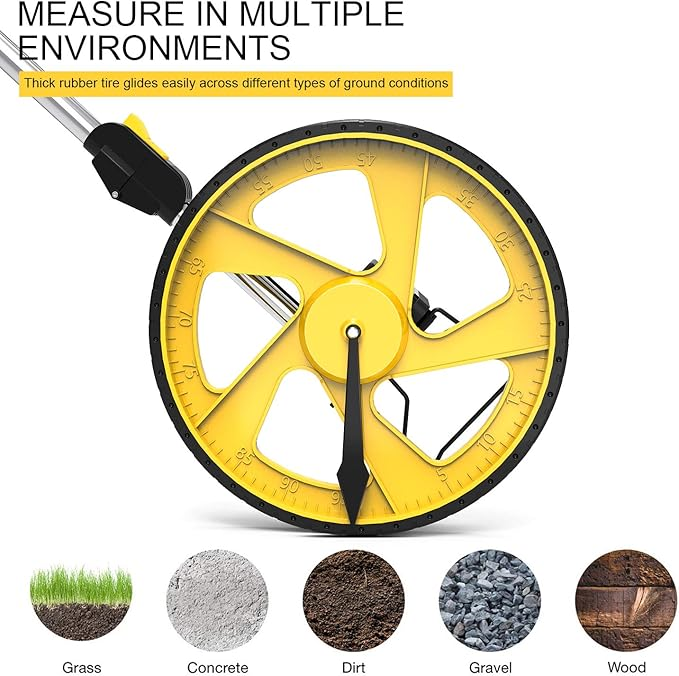
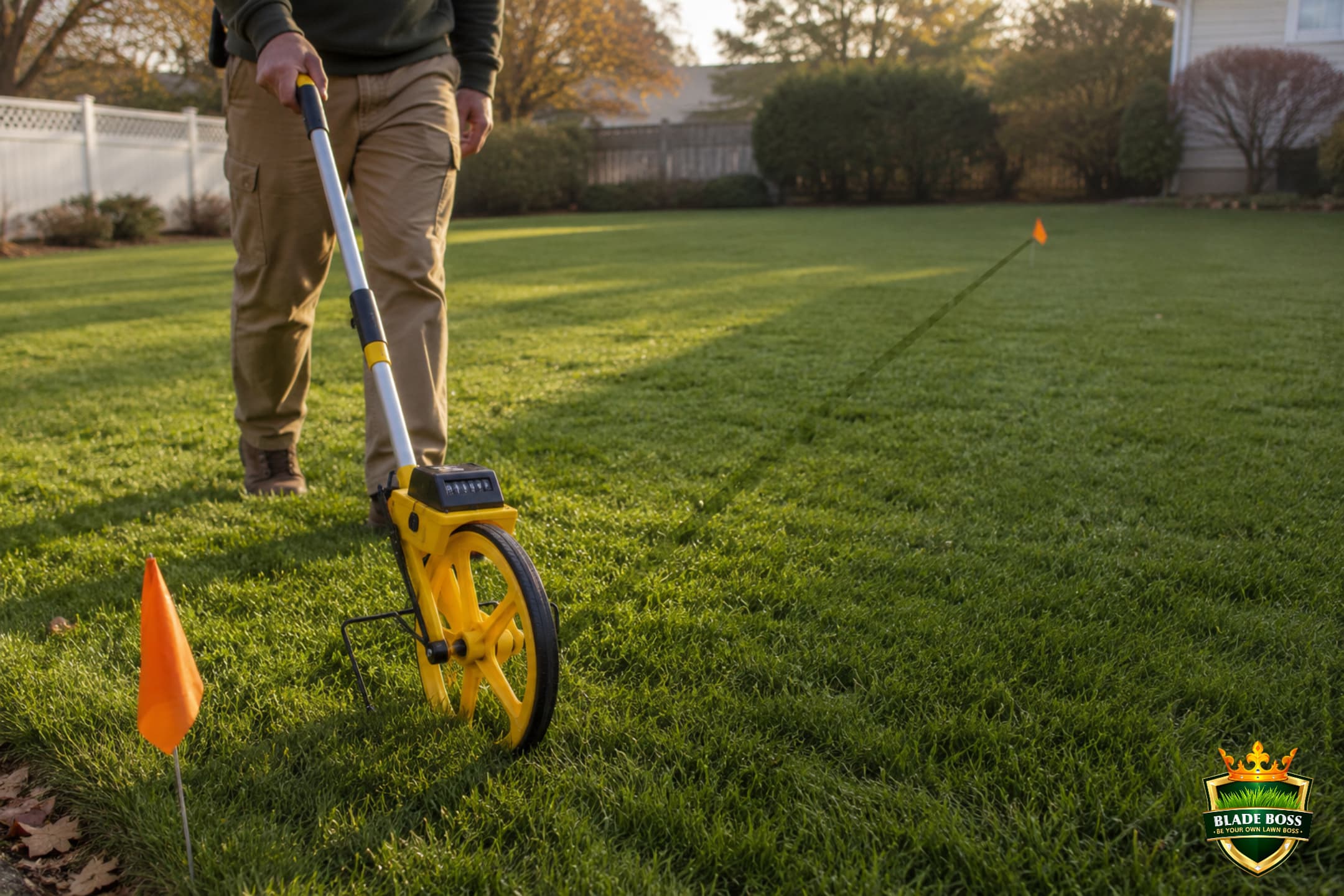
For anything bigger than a postage stamp, a measuring wheel beats a tape measure by a mile. You just walk your lines and read the number. No helper holding the other end, no tape sagging across the grass, no doing it three times because it drifted.
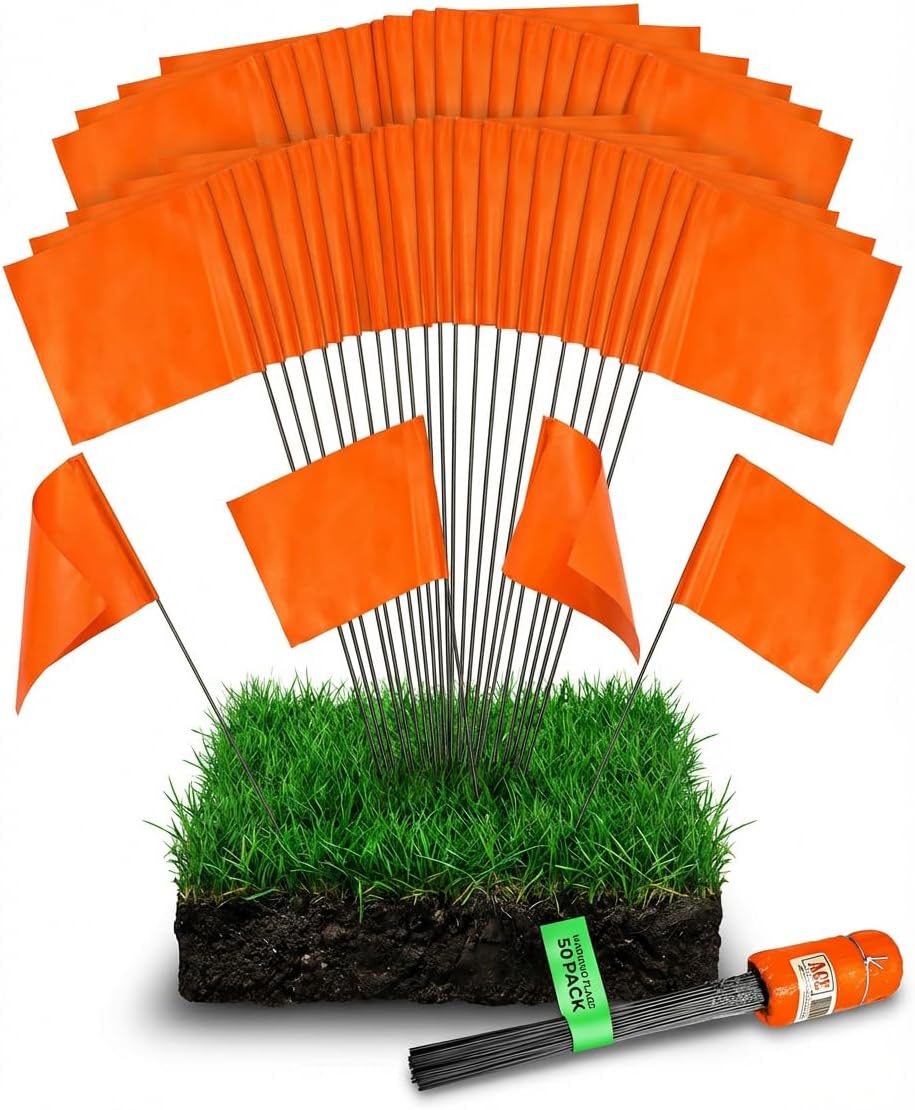
Drop a marking flag at each corner of the shape you are measuring, then walk wheel-straight from flag to flag. Write each length down as you go. Do the whole property in one lap and you will have every number your sketch needs.
Or Trace It on Satellite in Two Minutes
Everything above works, and it is worth understanding because it teaches you what the number means. But you do not have to walk your yard with a wheel and a notepad to get it, and honestly you should not have to.
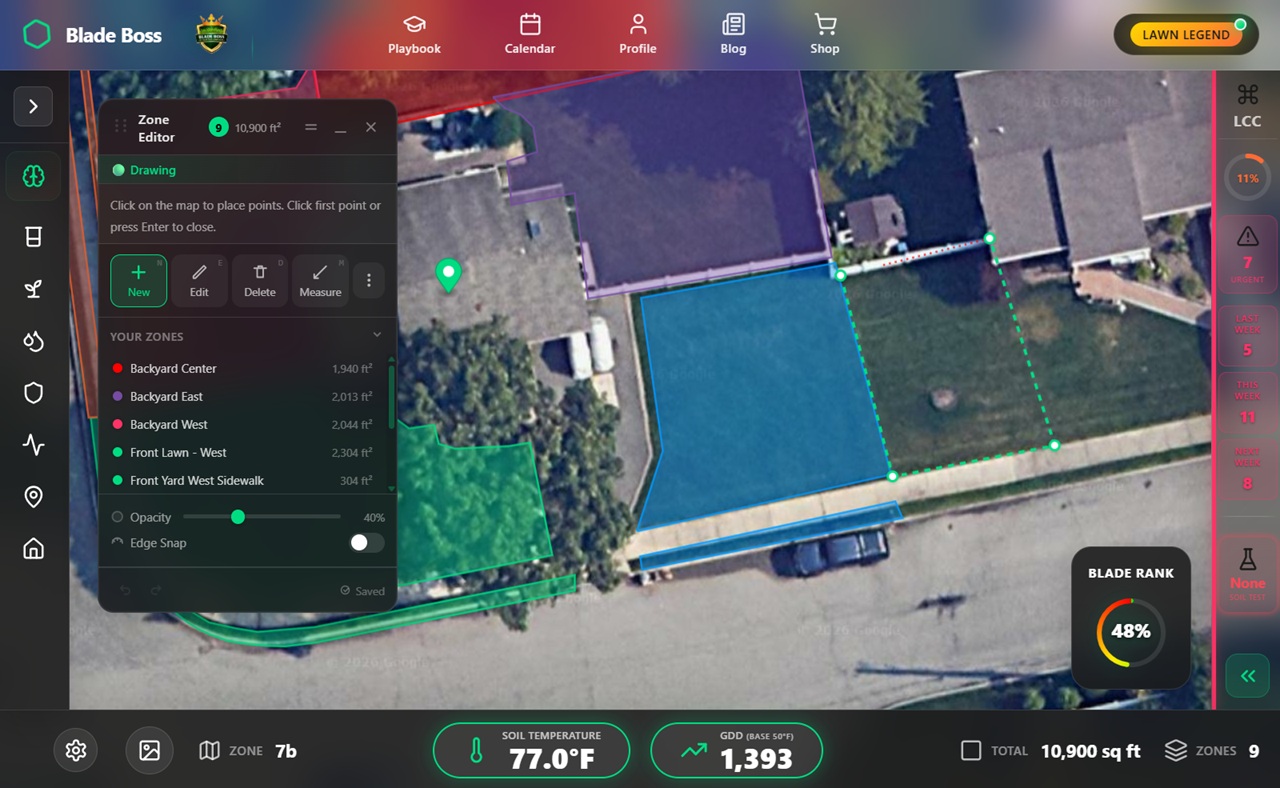
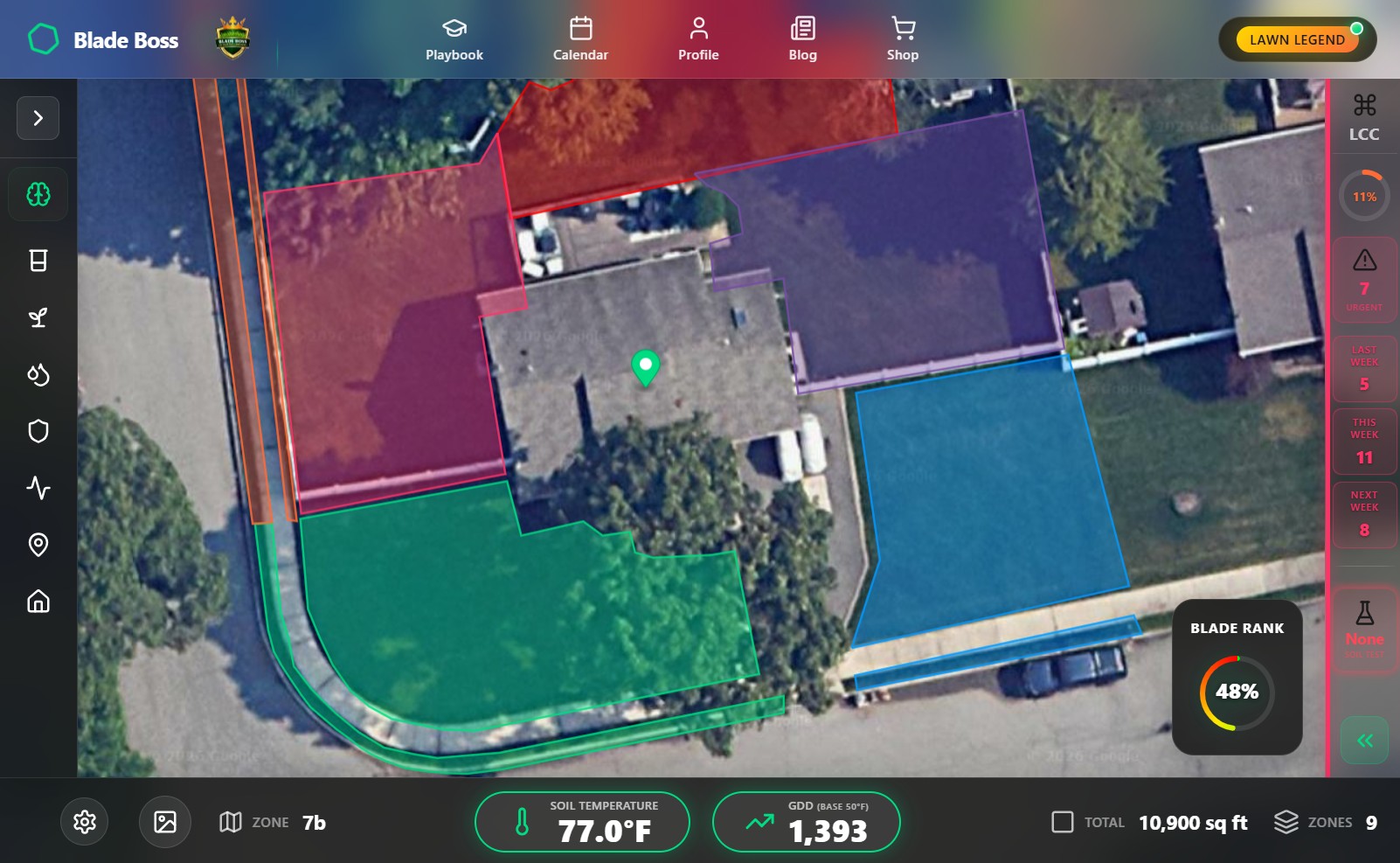
Lawn Map Pro pulls a live satellite image of your exact address and lets you trace your lawn with your finger. The square footage totals as you draw, so you watch the number climb in real time. There is no formula, no subtracting, no conversion: you simply do not trace the driveway, the house, or the beds, so they are never counted. A curved bed cutout that would take three measurements and a circle formula by hand takes about ten seconds to draw around.
Zone It, Do Not Just Total It
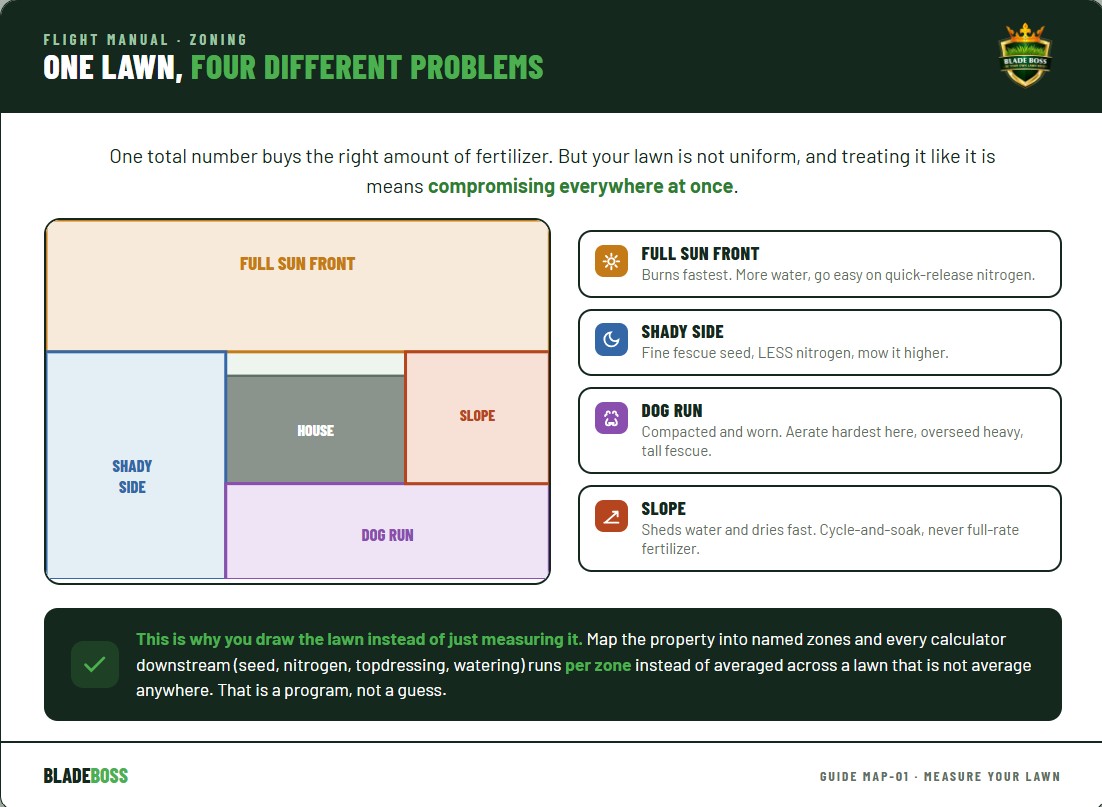
Here is what separates people who have a lawn from people who have a program. One total number is enough to buy the right amount of fertilizer. But your lawn is not one uniform thing, and treating it like it is means you compromise everywhere at once.
The shady side yard needs different seed and less nitrogen than the blazing front. The strip along the driveway bakes and dries first. The back where the dog runs is compacted and needs aeration most. The slope sheds water and burns fastest. Trace each of these as its own zone and Lawn Map Pro gives you the square footage of every one, so you can treat each area for exactly what it is.
Draw Your Lawn in Lawn Map Pro
Pull up a live satellite image of your exact property, trace your lawn with your finger, and watch the square footage total as you draw. No wheel, no sketch, no formulas, no converting anything. Then split it into named zones (sun, shade, slope, dog run) and every calculator on the platform runs against the zone you are actually standing in. Lawn Map Pro unlocks at the Turf Rookie tier.
Open Lawn Map Pro →Abort Criteria - Common Mistakes
Mission Complete. Now Fly the Plan.
This is the number everything else on your lawn is built on. Get it right once and every guide, every calculator, and every bag you buy from here forward is finally working with the truth. Lawn Map Pro pulls satellite imagery of your actual property, so you can trace your lawn, get the exact square footage in two minutes, and split it into the zones you will actually treat differently. Then go use that number: overseed, fertilize, and calibrate your spreader against it.
Want This as a Printable Field Manual?
Drop your email and the print-ready PDF version lands in your hands. Take it to the lawn, no phone required.
Crew Questions - FAQ
How do I measure my lawn's square footage?
Break the lawn into simple shapes and add them up. Rectangles are length times width, triangles are base times height divided by two, and circles are 3.14 times the radius squared. Measure each area in feet, add them together, then subtract everything that is not grass: the house, driveway, walkway, patio, deck, shed, and any planting beds. Alternatively, trace your lawn on a satellite image and let the software calculate it.
Can I just use my lot size to calculate fertilizer?
No, and this is the single most damaging measuring mistake people make. Your lot size includes the house, driveway, patio, beds, and every other structure. A quarter acre lot is 10,890 square feet total, but the actual turf on it is frequently 4,000 to 5,000. Fertilizing for the lot instead of the lawn means applying more than double what the grass needs, which burns it.
How many square feet are in an acre?
An acre is 43,560 square feet. A quarter acre lot, which is common on Long Island, is 10,890 square feet total, but that figure includes your house, driveway, and every hardscape feature. The grass itself is usually well under half of it.
Do I need to measure my lawn in feet?
Yes, use feet. Every lawn product sold, from fertilizer to grass seed to grub control, is dosed in pounds per 1,000 square feet. If you measure in feet, no conversion is ever required. If you measured in square yards, multiply by 9 to get square feet. If you measured in square meters, multiply by 10.76.
How do I measure an irregularly shaped lawn?
Divide it into simple shapes you can measure individually: rectangles, triangles, and circles. Sketch the property on paper, split it along logical lines, measure each piece, and add the results. For lawns with a lot of curves, tracing the outline on a satellite image is far faster and considerably more accurate than trying to measure the curves by hand.
Should I measure my lawn as one area or in zones?
One total is enough to buy the right amount of product, but zones are what let you actually treat the lawn correctly. A shady side yard needs different seed and less nitrogen than a sunny front. A dog run needs more aeration. A slope sheds water. Mapping the property into named zones lets you calculate seed, fertilizer, and watering per area instead of averaging across a lawn that is not average anywhere.