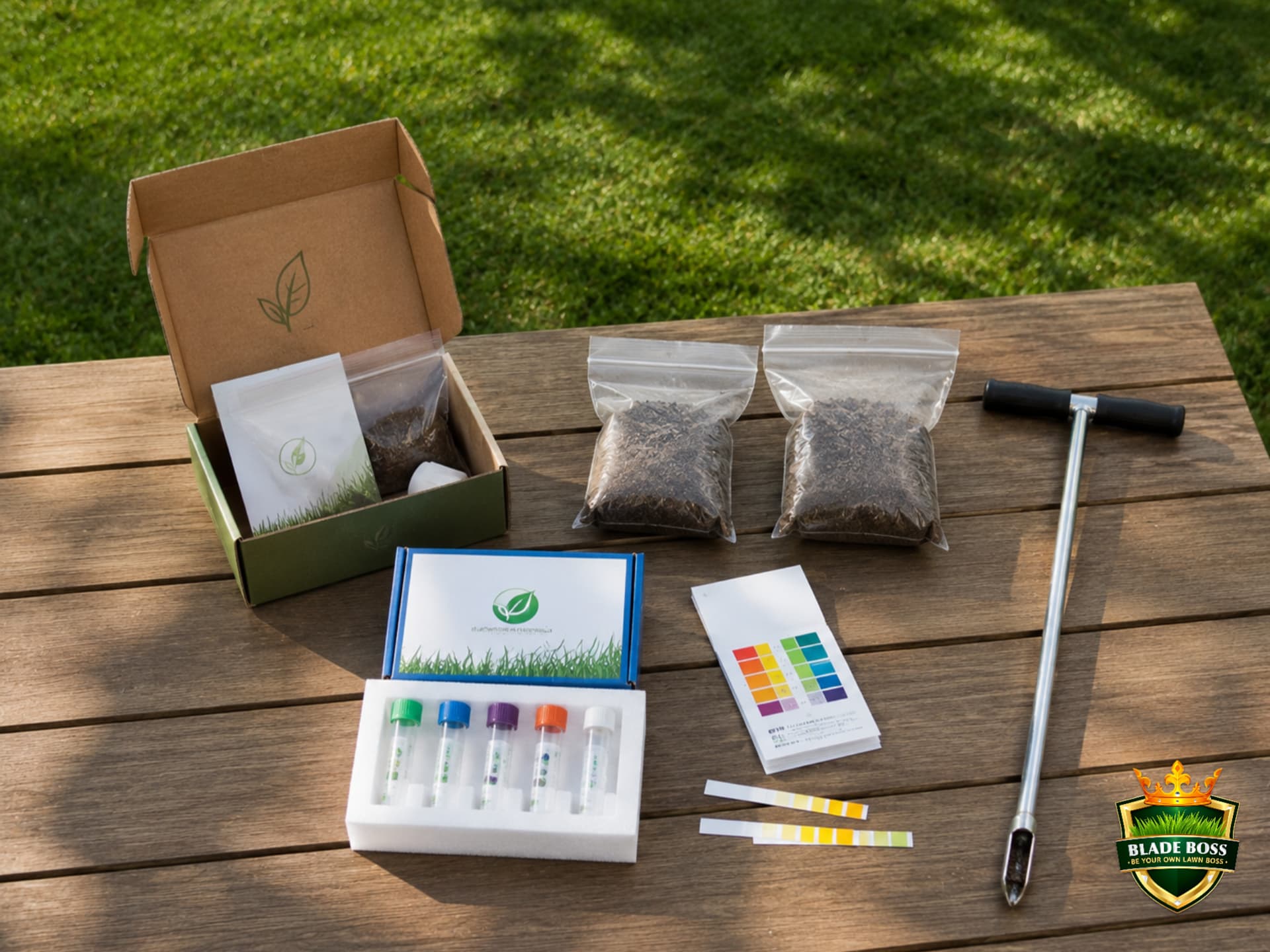
A potassium reading of 45 ppm on a MySoil report and a potassium reading of 45 ppm on a Waypoint Analytical report are not the same number. They are not even close. One says your potassium is fine. The other says it is low. Same soil, same garden, completely different conclusions. The reason is that these two tests use fundamentally different extraction chemistry, and the numbers they produce cannot be compared to each other. It is like comparing miles per hour to kilometers per hour without converting. And there is no conversion equation.
- #1 MySoil ($30): Best overall for most homeowners. Full panel (pH + 12 nutrients). Ion-exchange resin. Mail-in, results in 6 to 8 days. Does not report CEC.
- #2 Yard Mastery ($30): Same lab, same resin method as MySoil. Choose either one based on brand preference. Results are directly comparable between the two.
- #3 Waypoint Analytical (Mehlich-3) ($20 to $25 + shipping): The precision upgrade. Full panel + CEC + buffer pH. The university gold standard. Results in 3 to 5 days. The test serious DIY homeowners eventually upgrade to.
- #4 Cornell Cooperative Extension ($5 for pH, $35 for full panel): Local Long Island drop-off (Riverhead or East Meadow). Modified Morgan method. University-backed but uses a different extraction system than Mehlich-3.
- #5 pH Strips or Meter (free to $15): Quick, cheap sanity check. Measures pH only. Not a real soil test. Not enough to build a plan on.
Why the Testing Method Matters More Than the Kit
This is the thing nobody tells you when they recommend a soil test kit: different tests use different chemistry to extract nutrients from your soil, and they produce completely different numbers. There are three major methods you will encounter as a homeowner, and understanding the difference is the single most important thing in this article.
Mehlich-3: The University Gold Standard
Mehlich-3 is a strong-acid extraction that pulls the extractable pool of plant-available nutrients in a single pass. This is what university extension programs across the eastern US use (Rutgers, Penn State, Cornell, UMass, University of Kentucky). When you see sufficiency charts on a university extension website saying "potassium is deficient below 40 ppm," those charts were built for Mehlich-3 values. M3 reports include CEC, buffer pH, organic matter, and base saturation, which unlocks precision lime rate calculations and exact nutrient deficit math. The numbers are the HIGHEST of the three methods because the strong acid extracts more.
Ion-Exchange Resin: The Popular Consumer Method
A resin capsule sits in a water-soil slurry and absorbs nutrients over several days, mimicking the way grass roots pull nutrients electrochemically. This measures what is plant-available RIGHT NOW, a 2 to 4 week snapshot rather than the season-long soil reserve. Resin ppm values run 3 to 5 times LOWER than Mehlich-3 for the same soil because they measure what is immediately available, not what is chemically extractable. There are no published conversion equations between resin and Mehlich-3. You cannot look up a resin number on a Mehlich-3 chart. They need entirely separate sufficiency ranges. This is what MySoil and Yard Mastery use.
Modified Morgan: The Northeast Extension Method
A weak-acid extraction used historically by Northeast university extension programs, including Cornell Cooperative Extension. Produces ppm values closer in magnitude to resin than to Mehlich-3, but it is a different system with its own interpretation framework. Cornell's soil test results include buffer pH and organic matter, which gives you more correction data than resin kits.
This is where most forum advice falls apart. Someone posts their MySoil results (resin method), and a well-meaning commenter says "your potassium is fine, it is above 40 ppm." But that 40 ppm threshold came from a Mehlich-3 sufficiency chart. In resin terms, 45 ppm potassium might actually be LOW because resin optimal ranges are a completely different scale. This is not a minor academic detail. It is the difference between correctly diagnosing a deficiency and missing it entirely.
#1 Best Overall: MySoil Test Kit
MySoil Soil Test Kit
The most popular home soil test kit in the US. Measures pH plus 12 nutrients (N, P, K, S, Ca, Mg, Na, Fe, Mn, Zn, Cu, B) using ion-exchange resin for macros and DTPA extraction for micronutrients. Mail the capsule back in the prepaid envelope and get results online in 6 to 8 days. Dead simple. The data is legitimate. The built-in fertilizer recommendations are the weak point (see below).
Check Price on Amazon (~$30)| Spec | Details |
|---|---|
| Method | Ion-exchange resin (macros) + DTPA (micros) |
| Measures | pH, N, P, K, S, Ca, Mg, Na, Fe, Mn, Zn, Cu, B (pH + 12 nutrients) |
| Reports CEC? | No |
| Reports buffer pH? | No |
| Turnaround | 6 to 8 days from mailing |
| Price | ~$30 single kit |
| Best for | First-time testers, annual monitoring, quick baseline |
Independent comparisons have shown that MySoil's nutrient ratings (high, optimal, low) agree with university-grade lab results. A Bob Vila testing team sent identical soil samples to MySoil and Kansas State University's agriculture lab and found the results were close. A separate comparison against an NAPT-participating lab found that 9 out of 9 nutrient ratings matched, and Ca:Mg ratios were nearly identical. The data is real.
You will see this claim in lawn care Facebook groups. The results are not fake. The method is simply different from what university extension charts use. Resin ppm values are 3 to 5 times lower than Mehlich-3 values for the same soil. Someone who takes a resin number and looks it up on a Mehlich-3 chart will get the wrong conclusion. That is not a flaw in the test. That is a flaw in the interpretation. The real weakness of MySoil is the built-in fertilizer recommendations, which are generic and sometimes do not correlate with the test's own findings. The test data is good. The interpretation layer is where consumer kits fall short.
#2 Yard Mastery Soil Test Kit
Yard Mastery's soil test kit uses the same ion-exchange resin technology and the same underlying lab (Predictive Nutrient Solutions) as MySoil. The results are directly comparable between the two kits. Same panel, same method, same turnaround, same price range (~$30). The choice between MySoil and Yard Mastery is brand preference, not a methodological difference.
If you already use Yard Mastery products (their fertilizers, bio-stimulants, or app), their kit integrates with their ecosystem. If you do not have a preference, MySoil edges ahead slightly on market presence and community familiarity. Either way, the interpretation rules are identical. Both produce resin-method values that cannot be compared to Mehlich-3 charts.
Yard Mastery Soil Test Kit
Same ion-exchange resin lab as MySoil (Predictive Nutrient Solutions). Same panel, same method, same turnaround. If you are already in the Yard Mastery ecosystem (their fertilizers, app, or community), this is the natural choice. Results are directly comparable to MySoil.
Check Price on Amazon (~$30)#3 The Precision Upgrade: Waypoint Analytical (Mehlich-3)
Waypoint Analytical S3M Lab Test (Mehlich-3)
This is the test for the homeowner who wants the real numbers. Waypoint uses Mehlich-3 extraction, the same method used by every major eastern US university extension program. The S3M package includes pH, buffer pH, organic matter, CEC, base saturation, and a full macro and micro panel. Results come via email in 3 to 5 business days. The report maps directly to university sufficiency charts. If you want precision lime math, exact nutrient deficit calculations, and CEC-aware potassium management, this is the only consumer-accessible option that delivers.
Visit Waypoint ($20 to $25 + shipping)| Spec | Details |
|---|---|
| Method | Mehlich-3 (macros) + DTPA (micros) |
| Measures | pH, buffer pH, OM, CEC, P, K, Ca, Mg, S, Fe, Mn, Zn, Cu, B, base sat. |
| Reports CEC? | Yes |
| Reports buffer pH? | Yes |
| Turnaround | 3 to 5 business days from receipt |
| Price | ~$20 to $25 per test (S3M package) + ~$7 shipping |
| Best for | Serious DIYers who want precision lime and nutrient math |
Long Island's sandy soil has CEC of 3 to 8. CEC is the soil's ability to hold onto nutrients, especially potassium, calcium, and magnesium. Low CEC means a leaky bucket: nutrients wash through fast. This changes how you apply potassium (smaller, split applications instead of one large dose), how you calculate lime (low-CEC soil needs less lime but the effect does not last as long), and how often you need to re-test. Most consumer kits do not report CEC. A Mehlich-3 lab does. On the exact soil type where CEC matters MOST, the most popular kits leave it out.
#4 Local Option: Cornell Cooperative Extension
Cornell Cooperative Extension offers soil testing through their Suffolk County office in Riverhead and Nassau County office in East Meadow. You can drop off samples in person, no shipping required. They offer a basic pH-only test for $5 and a full nutrient panel (Modified Morgan extraction, processed by Dairy One/Agro-One in Ithaca) for approximately $35. Results in 10 to 14 days.
| Spec | Details |
|---|---|
| Method | Modified Morgan extraction |
| Measures | pH, buffer pH, organic matter, nutrient panel (varies by package) |
| Reports CEC? | No (but reports buffer pH, which enables lime math) |
| Turnaround | 10 to 14 days |
| Price | ~$5 pH-only, ~$35 full panel |
| Drop-off | Riverhead (Suffolk) or East Meadow (Nassau) |
| Best for | Local convenience, university-backed, budget pH check |
The Cornell test is legitimate and university-backed. The Modified Morgan values it produces are a different system from both Mehlich-3 and resin. They cannot be looked up on Mehlich-3 sufficiency charts. Cornell provides its own recommendations based on Modified Morgan ranges. For Long Island homeowners who want a quick, local, inexpensive pH check, Cornell at $5 is unbeatable. For a full panel, the $35 price is comparable to consumer kits but with a longer turnaround.
#5 Budget Sanity Check: pH Strips or Meter
A $10 pack of pH test strips or a $15 soil pH meter gives you one number: pH. That is it. No nitrogen, no phosphorus, no potassium, no micronutrients, no CEC, no organic matter. It is a sanity check that tells you whether your soil is wildly acidic or alkaline. Hicks Nurseries in Westbury (Long Island) has historically offered free pH checks at their Garden Care desk.
This is NOT a soil test. It is a single data point. You cannot build a fertilizer plan, a lime correction plan, or a nutrient management strategy from pH alone. It is useful as a free or near-free gut check ("is my soil at 5.0 or 6.5?") but it should never be the only test you run on a lawn you are serious about. Our pH guide explains what pH means and our soil test interpretation guide covers what to do with the full panel results.
The Comparison Table
| Feature | MySoil | Yard Mastery | Waypoint M3 | Cornell CCE |
|---|---|---|---|---|
| Price | ~$30 | ~$30 | ~$20 to $25 + ship | $5 to $35 |
| Method | Resin | Resin | Mehlich-3 | Mod. Morgan |
| Full nutrient panel | Yes (pH + 12) | Yes (pH + 12) | Yes (15+) | Yes (varies) |
| Reports CEC | No | No | Yes | No |
| Reports buffer pH | No | No | Yes | Yes |
| Turnaround | 6 to 8 days | 6 to 8 days | 3 to 5 days | 10 to 14 days |
| M3-compatible | No | No | Yes (it IS M3) | No |
| Best for | Most homeowners | YM ecosystem | Precision DIY | Local LI drop-off |
pH strips and meters are excluded from this table because they measure a single data point and cannot be meaningfully compared to a full soil test panel.
Which One Should You Buy?
First-Timer or Annual Monitor: MySoil ($30)
If this is your first soil test or you want a simple annual check on your lawn's nutrient levels, MySoil is the right pick. Simple process, fast results, full panel. Understand that the numbers are resin-method and cannot be compared to Mehlich-3 charts on university websites.
Serious DIYer Who Wants Precision: Waypoint Analytical ($25 + ship)
If you want CEC, buffer pH, and numbers that map directly to university sufficiency charts, mail a sample to Waypoint Analytical. This is the test that unlocks exact deficit math, precision lime rates, and CEC-aware potassium management. It is the test professionals use.
Quick Local pH Check: Cornell CCE ($5)
If you just want to know whether your soil is acidic before you buy lime, drop off a sample at the Cornell Cooperative Extension office in Riverhead or East Meadow. Five dollars, no shipping, university-backed.
Whatever You Pick: Upload It to Blade Boss
The test is step one. Interpretation is where lawns are won or lost. The Blade Boss Soil Test Command Center auto-detects which kit or lab you used, applies the correct interpretation framework for that specific extraction method, and generates a correction plan calibrated to your test method, your sandy Long Island soil, and your grass type. Resin data never gets Mehlich-3 thresholds. Mehlich-3 data gets precision deficit math. Even kits that do not report CEC get CEC-aware corrections because the platform backfills CEC from USDA NRCS soil survey data for your exact property address.
HiHydro 12-Inch Stainless Steel Soil Probe
A proper soil probe makes sampling easier and more consistent than a garden trowel. Push it 6 inches deep, pull a clean core, and drop it in your sample bag. Stainless steel will not contaminate the sample. Comes with 2 sample bags. Works with MySoil, Yard Mastery, Waypoint, or any mail-in test.
Check Price on AmazonUpload Your Soil Test to the Soil Test Command Center
MySoil, Yard Mastery, Waypoint, Cornell, or any major lab. The engine auto-detects the method and applies the right interpretation framework. No more forum charts. No more guessing.
What every number on your soil test means, what to do when each one is high or low, and the exact products to apply. One printable page.
The test tells you what is wrong. Blade Boss tells you how to fix it. Upload any soil test report and get a correction plan calibrated to your extraction method, your soil type, and your grass. See the plans.
See Plans →Chris is a Combat Search and Rescue pilot turned airline pilot who built Blade Boss to bring military-grade precision to backyard lawn care. He started with a $30 MySoil test and thought he understood his soil. Then he sent a fresh sample from the same lawn to a Mehlich-3 lab and got completely different numbers. The correction plan changed. The lawn changed. That was the moment he decided to build a soil test engine that handles every method correctly so nobody else has to learn this the hard way.
Related Reads
The soil test interpretation guide walks through reading your results step by step. The pH guide explains acidity correction and lime math. The nutrient deficiency guide covers what happens when each nutrient is high or low. And the sandy soil guide explains why CEC matters more on Long Island than almost anywhere else.
Frequently Asked Questions
What is the best soil test kit for a lawn?
The MySoil kit ($30) is the best overall soil test for most homeowners. It measures pH plus 12 nutrients using an ion-exchange resin method that captures what is currently plant-available in your soil. For homeowners who want the most precise, university-grade data including CEC and buffer pH, a Mehlich-3 mail-in lab like Waypoint Analytical ($20 to $25) is the upgrade pick. Both are legitimate. The critical thing is that you cannot compare numbers between the two methods because resin and Mehlich-3 use different extraction chemistry and produce different ppm scales.
Is MySoil accurate or are the results fake?
MySoil results are not fake. Independent comparisons have shown that MySoil's nutrient ratings (high, optimal, low) agree with university-grade lab results when identical soil samples are tested. A Bob Vila testing team sent identical samples to MySoil and Kansas State University's agriculture lab and found the results were very close. However, MySoil uses ion-exchange resin extraction, which produces ppm values 3 to 5 times lower than Mehlich-3 labs for the same soil. The numbers look different because the method is different, not because they are wrong. The real weakness of MySoil (and all consumer kits) is the built-in fertilizer recommendations, which are generic and sometimes inaccurate.
What is the difference between Mehlich-3 and ion-exchange resin soil tests?
Mehlich-3 uses a strong acid cocktail to extract the total pool of plant-available nutrients from the soil. Ion-exchange resin uses a capsule that sits in a water-soil slurry and absorbs nutrients over several days, mimicking how grass roots pull nutrients. Mehlich-3 produces higher ppm values (it pulls more out), while resin values are 3 to 5 times lower for the same soil. There is no published conversion equation between the two methods. They require entirely separate sufficiency ranges for interpretation. This is why you cannot take a MySoil report and look up the numbers on a Mehlich-3 chart from a university extension website.
Does a Long Island lawn need CEC on a soil test?
Yes, CEC (Cation Exchange Capacity) is especially important on Long Island because the sandy soil has naturally low CEC, typically 3 to 8. CEC measures the soil's ability to hold onto nutrients like potassium, calcium, and magnesium. Low CEC means nutrients leach quickly. Knowing your CEC changes how much potassium you apply (smaller, split applications on low-CEC soil instead of one large dose) and how you calculate lime rates. Most consumer kits like MySoil do not report CEC. Professional Mehlich-3 labs like Waypoint Analytical do. This is the main reason serious DIY homeowners eventually upgrade to a professional lab.
How much does a soil test cost?
Soil test prices range from free to about $35 depending on the method. A pH-only test at Cornell Cooperative Extension costs $5. Some local nurseries like Hicks Nurseries in Westbury offer free pH checks. A full-panel consumer kit like MySoil or Yard Mastery costs about $30. A professional Mehlich-3 lab test from Waypoint Analytical costs $20 to $25 plus about $7 shipping. Cornell Cooperative Extension's full Modified Morgan panel costs about $35. For the amount of information you get, a professional Mehlich-3 lab is actually the best value per data point.

Keep Reading
 Lawn Science
Why Your Lawn Won’t Respond to Fertilizer (5 Hidden Reasons)
You fertilized. You waited. Nothing happened. Here are the 5 reasons your lawn ignores what you put down...
Apr 17, 2026
9 min
 Lawn Science
Best Cool-Season Grass Types for Long Island Lawns
Kentucky Bluegrass, Tall Fescue, Perennial Ryegrass, or Fine Fescue? Compare performance data for each grass type in USDA...
Feb 27, 2026
18 min
 Lawn Science
Tall Fescue vs Kentucky Bluegrass: Which Is Best for Long Island?
For Long Island's sandy soil and summer heat, tall fescue wins on drought tolerance and low maintenance. Kentucky...
Mar 12, 2026
14 min
What is your lawn actually sitting on?
Pull the soil survey, hardiness zone and current growing conditions for your exact address. Eight government sources, about a minute.
No comments yet. Be the first to share your thoughts.
Create a free account to join the conversation.