
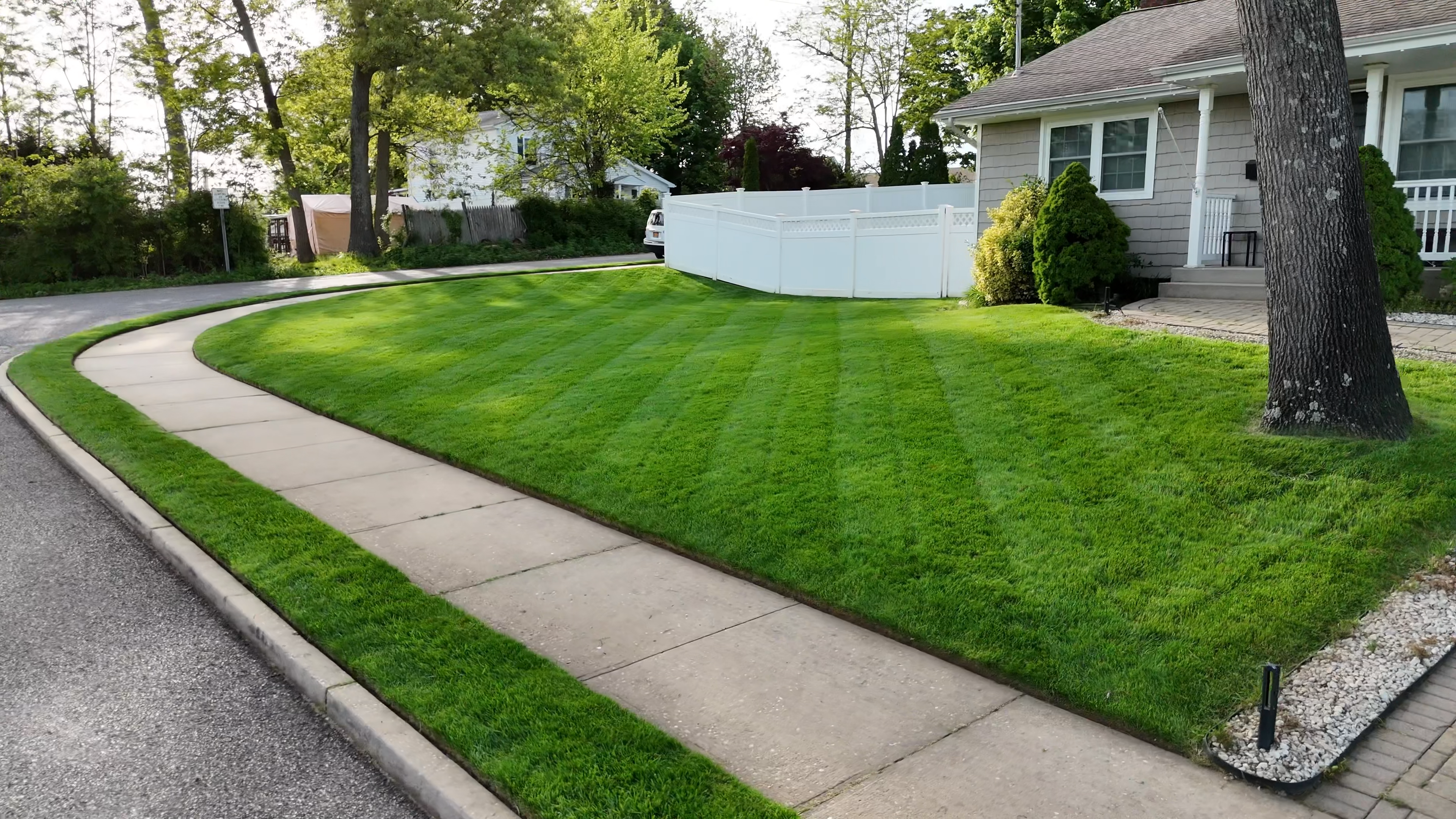
Every pilot knows the first takeoff of the day gets extra attention. You don't rush the checklist. You don't skip the walk-around. Your lawn's first mow of spring deserves the same discipline.
But most homeowners butcher it. The first warm Saturday hits 60 degrees, the neighbor fires up his mower, and suddenly everyone on the block is cutting grass that isn't ready. They scalp dormant turf, rut up soggy soil, and set their lawn back weeks before the growing season even starts.
The question isn't really "when to start mowing in spring." The question is: how do you know your grass is actually ready? And the answer isn't a calendar date. It's three measurable triggers that tell you exactly when to make that first cut, what height to set, and how to adjust through the entire growing season.
When to start mowing in the Northeast: Begin your first spring mow when all three conditions are met: (1) grass height reaches 3.5 to 4 inches, (2) soil temperature at 4-inch depth exceeds 55°F for 3+ consecutive days, and (3) daytime highs consistently reach 65°F.
On Long Island (Zone 7B): This typically falls between April 20 and April 30, around GDD50 of 200. Set your first mow at 3 inches for KBG, 3.5 inches for Tall Fescue.
Zone adjustment: Zones 6A and 6B start 7 to 14 days later (early May). Zones 5A and 5B start 14 to 21 days later (mid May).
The Three Triggers That Tell You It's Time
Forget the calendar. Forget what your neighbor is doing. Cool-season grass doesn't care that it's April 15. It cares about soil temperature, air temperature, and whether it's built enough leaf tissue to handle a haircut. Based on research from Rutgers NJAES, Penn State Extension, and Cornell Cooperative Extension, here are the three triggers that actually matter.
Trigger 1: Soil Temperature Above 55°F
Soil temperature is the master switch for cool-season grass. Roots start growing when soil warms above 40°F, but active shoot growth (the part you mow) doesn't kick in until soil crosses 50 to 55°F at 4-inch depth. On Long Island, according to 30-year NOAA climate normals for Islip, soil typically crosses this threshold between April 10 and April 20.
You need a soil thermometer. They cost about $10 at any garden center. Push it 4 inches into the soil in a sunny area of your lawn and check it in the morning for three consecutive days. When you get three readings above 55°F, the grass is actively growing. A single warm day doesn't count because soil temperature lags behind air temperature by 1 to 2 weeks. Or skip the manual readings entirely: the Blade Boss Weather Hub tracks real-time soil temperature for your exact location and alerts you when conditions are met.
Trigger 2: Grass Height Reaches 3.5 to 4 Inches
This is the trigger most people get wrong. They see green grass and fire up the mower immediately. But the grass needs enough leaf surface area to photosynthesize and recover from being cut. When soil crosses 55°F and air temperatures hold in the 60 to 70°F range, cool-season grass grows rapidly. Give it 7 to 10 days of active growth until it reaches 3.5 to 4 inches. That's your first mow signal.
Why 3.5 to 4 inches and not shorter? Because the one-third rule dictates that you never remove more than one-third of the blade height in a single cut. If your target spring mowing height is 3 inches (for Kentucky Bluegrass), cutting at 4 inches removes exactly 25%, safely within the one-third limit. Even at 3.5 inches, you're only removing 14%. Both are safe. The absolute maximum before you MUST cut is 4.5 inches (that's where you'd hit the one-third ceiling). So the 3.5 to 4 inch window is your ideal first-mow zone: the grass has enough leaf tissue to recover and you're well within the safe removal range.
Trigger 3: GDD50 Hits 200
Growing degree days (GDD) are the most precise timing tool in turf management. GDD50 measures cumulative heat units above a 50°F base temperature. At GDD50 of 200, cool-season grass has been growing actively for 2 to 3 weeks, forsythia petals are falling, and flowering dogwood is in bloom. On Long Island, GDD50 typically hits 200 around April 21. By this point, your pre-emergent herbicide barrier should already be 2 to 3 weeks old (that goes down at GDD50 of 100, around April 6). First mow and pre-emergent are connected but not the same trigger.
Don't have a soil thermometer or GDD tracker? Watch the forsythia. When forsythia petals are falling off and dogwood starts blooming, your grass is ready for its first cut. These plants respond to the same soil temperature signals as your lawn. Forsythia in full bloom (petals fading) plus dogwood budding equals mowing time.
Your First Mow: Getting It Right
The first mow of the season sets the trajectory for your entire year. A botched first cut means weeks of recovery instead of weeks of growth. Here's how to do it right.
Prep Your Mower (Before You Need It)
Sharpen your blades or install fresh ones. A dull blade tears grass instead of cutting it, leaving ragged brown tips that invite disease. Change the oil, check the air filter, and fill up with fresh fuel. Do this in March while you're still waiting on soil temps. Pro tip from Iowa State's Dr. Adam Thoms: use an older blade for the first mow because you'll hit rocks, sand, and debris from winter. Switch to your freshly sharpened blade for mow #2.
Clear the Debris
Walk the entire lawn and pick up sticks, pinecones, rocks, and any debris that accumulated over winter. Lightly rake areas where leaves matted down over the grass. This isn't a full dethatching. Just clear the surface so your mower can make clean contact with the turf.
Set Your Height to Spring Level
Set your mower to 3 inches for KBG or Mixed Blends, 3.5 inches for Tall Fescue, or 2.5 inches for Perennial Ryegrass. These are the starting heights confirmed by Rutgers and Cornell Extension for spring in Zones 5A through 7B. Do NOT drop lower than these for a "spring scalp." Scalping exposes the soil surface, triggers weed germination, and damages grass crowns.
Wait for Dry Conditions
Never mow wet grass. Wet clippings clump, clog the mower deck, tear instead of cutting, and can spread disease. Wait until mid-morning (after 9 AM) when dew has evaporated. If the soil is still soft or soggy from snowmelt or spring rain, stay off it. Mowing on saturated soil compacts the ground and creates ruts that take months to fix.
Mow and Mulch
Make your first pass. Mulch the clippings unless you have heavy debris or matted leaves on the lawn. Mulched clippings return nitrogen to the soil. Research from Rutgers and Cornell shows mulched clippings contribute up to 1 lb of nitrogen per 1,000 square feet per year. That's essentially a free fertilizer application. Alternate your mowing direction each time you cut to prevent the grass from developing a lean.
Get Your Exact Mowing Height
MowMaster Pro calculates your ideal mowing height based on grass type, season, shade exposure, and current weather conditions. It adjusts recommendations for drought stress, heat stress, and lawn condition automatically.
Mowing Heights by Grass Type and Season
Here's what the generic articles won't tell you: mowing height isn't one number. It changes by grass type AND by season. Your lawn needs different heights in spring, summer, and fall because the grass is under different levels of stress. These heights are verified against Rutgers NJAES FS102, University of Maryland Extension, and Cornell Cooperative Extension recommendations.
| Grass Type | Spring | Summer | Fall | Final Cut |
|---|---|---|---|---|
| Kentucky Bluegrass | 3.0 | 3.5 to 4.0 | 3.0 | 2.5 |
| Turf-Type Tall Fescue | 3.5 | 4.0 to 4.5 | 3.5 | 3.0 |
| Perennial Ryegrass | 2.5 | 3.0 to 3.5 | 2.5 | 2.0 |
| Fine Fescue | 3.0 | 3.5 to 4.0 | 3.0 | 2.5 |
| Mixed Cool-Season Blend | 3.0 | 3.5 to 4.0 | 3.0 | 2.5 |
The single most impactful thing you can do for your lawn from June through August is raise your mowing height. Taller grass shades the soil, reduces moisture loss, develops deeper roots, and outcompetes weeds. When daytime highs start exceeding 75°F in late May, raise your mower by 0.5 to 1 inch and keep it there until temperatures cool in September.
The One-Third Rule: The Most Violated Law in Lawn Care
Every university extension in the country teaches this rule, and almost nobody follows it: never remove more than one-third of the grass blade length in a single mowing. This isn't a suggestion. It's plant biology.
When you cut grass, you're removing leaf tissue that the plant uses for photosynthesis. Remove too much and the plant can't produce enough energy to sustain itself. It goes into shock, pulls reserves from the roots, and weakens the entire system. The crown (where new growth originates) can get exposed to direct sunlight, UV damage, and heat stress. And bare soil between stressed grass plants is an open invitation for crabgrass and broadleaf weeds.
Here's the math. If your mowing height is 3 inches, multiply by 1.5 to get your maximum grass height before cutting: 4.5 inches. That's your trigger. When any part of your lawn hits 4.5 inches, it's time to mow. For a Tall Fescue lawn at 3.5 inches, your trigger is 5.25 inches.
| Target Height | Max Before Mowing (1/3 Rule) | Max You Can Remove |
|---|---|---|
| 2.5 inches (PRG spring) | 3.75 inches | 1.25 inches |
| 3.0 inches (KBG spring) | 4.50 inches | 1.50 inches |
| 3.5 inches (TTTF spring) | 5.25 inches | 1.75 inches |
| 4.0 inches (KBG summer) | 6.00 inches | 2.00 inches |
If you missed a mowing and your grass shot up to 6 or 7 inches, do NOT scalp it back to 3 in one pass. Reduce height gradually over 2 to 3 mowings, each time removing no more than one-third. MowMaster Pro has a built-in Reduction Protocol that calculates exactly how many sessions you need and what height to set for each one.
The Full Season Mowing Schedule (March Through November)
Most mowing guides give you a calendar date and call it done. But mowing frequency and height change throughout the season as your grass moves through dormancy, active growth, peak growth, summer stress, fall recovery, and winter prep. Here's the complete mowing timeline for Zone 7B (Long Island), calibrated against 30-year NOAA climate data and growth stage research from Cornell, Rutgers, and Penn State. Adjust dates 1 to 3 weeks later for Zones 6A, 6B, 5B, and 5A respectively.
Dormancy Breaking (No Mowing)
Grass breaks dormancy when soil warms above 40°F (around March 15 on Long Island). You'll see green-up starting, but the grass isn't growing fast enough to mow. Use this time to prep equipment, sharpen blades, and clear winter debris. Do NOT mow dormant or semi-dormant grass.
First Mow Window (April 20th to 30th on LI)
Soil crosses 55°F, GDD50 hits 200, grass reaches 3.5 to 4 inches. Set mower to spring height (3 inches for KBG). Mow every 7 to 10 days as growth ramps up. Your pre-emergent barrier should already be down from early April, and both Nassau and Suffolk County fertilizer blackouts lifted on April 1.
Peak Spring Growth (Mow Every 4 to 5 Days)
This is the fastest growth period of the year. Air temps in the 60 to 75°F range, soil at 60 to 65°F, GDD50 between 200 and 300. You may need to mow twice a week to stay within the one-third rule. Maintain spring height. Raise to 3.5 inches by late May as temperatures climb. Grass may produce seedheads, which is normal.
Transition to Summer (Weekly Mowing)
Growth rate slows as air temps exceed 75°F and soil passes 65°F. Raise mowing height by 0.5 to 1 inch for summer. Mow once per week. Switch to evening mowing if possible to reduce heat stress on freshly cut grass. The full calendar covers all June tasks beyond mowing.
Summer Stress (Every 7 to 14 Days)
Soil peaks at 76°F in July. Mow at maximum summer height (4 inches for KBG, 4.5 for TTTF). Mow only when the grass is actively growing. If your lawn goes dormant during drought, stop mowing entirely. Mowing dormant grass damages the crown. If irrigating, mow in the evening and never on wet turf.
Fall Growth Surge (Weekly Mowing Returns)
Cool nights and warm days trigger the second peak growth period. Lower mowing height back to spring levels (3 inches for KBG). Resume weekly mowing. This is the best time to overseed, so coordinate mowing height with any seeding. Mow existing grass slightly shorter (2.5 inches) right before overseeding for better seed-to-soil contact.
Growth Slowing (Every 7 to 10 Days)
Growth noticeably slows as soil cools below 55°F. Continue mowing at fall height. Begin gradually lowering by 0.5 inches per mow toward your final cut height. This gradual step-down prevents shocking the plant.
Final Cut (Around Nov 10 to 20 on LI)
Make your last mow when growth stops, typically when air temps consistently stay below 50°F and soil drops below 45°F. Lower to your final cut height: 2.5 inches for KBG, 3.0 for TTTF, 2.0 for PRG. This shorter final height prevents snow mold by reducing the matting of long grass blades under snow cover. Clean your mower and winterize.
Monthly Mowing Frequency: How Often to Mow Through the Season
Mowing frequency isn't constant. It follows the growth curve of cool-season grass, which peaks in spring, crashes in summer, surges again in fall, and stops in late November. Here's the reference table for Zone 7B. Zones 5A through 6B follow the same pattern but shifted 1 to 3 weeks later in spring and 1 to 2 weeks earlier in fall.
| Month | Frequency | Why |
|---|---|---|
| March | No mowing | Grass is breaking dormancy, not actively growing |
| April (late) | First mow, then every 7 to 10 days | Growth just starting, don't stress new shoots |
| May | Every 4 to 5 days | Peak spring growth, fastest of the year |
| June | Every 5 to 7 days | Growth slowing as temps exceed 75°F |
| July | Every 7 to 14 days | Heat stress, minimal growth or dormancy |
| August | Every 7 to 14 days (or skip) | Same as July, stop if lawn goes dormant |
| September | Every 5 to 7 days | Fall growth surge, second peak of the year |
| October | Every 7 to 10 days | Growth slowing as soil cools below 55°F |
| November | Final cut around Nov 10 to 20 | Growth stops when air stays below 50°F |
Zone Adjustments: When to Start Mowing Across the Northeast
Long Island (Zone 7B) is the warmest zone in our coverage area, so it gets the earliest mowing start. If you're further north or at higher elevation, shift the entire timeline later. These offsets are based on NOAA climate normals and median last frost dates.
| USDA Zone | Typical First Mow | Last Frost (Median) | Adjustment vs 7B |
|---|---|---|---|
| Zone 7B (Long Island) | April 20 to 30 | April 10 | Baseline |
| Zone 7A (Coastal CT/NJ) | April 25 to May 5 | April 15 | +5 to 7 days |
| Zone 6B (NYC metro, central NJ) | May 1 to 10 | April 20 | +10 to 14 days |
| Zone 6A (SE PA, southern CT) | May 5 to 15 | April 25 | +14 to 18 days |
| Zone 5B (Upstate NY, central MA) | May 10 to 20 | May 1 | +18 to 24 days |
| Zone 5A (Northern VT/NH/ME) | May 15 to 30 | May 10 | +24 to 30 days |
Your specific yard may be warmer or cooler than your zone average. South-facing slopes warm faster. Shaded yards lag behind. Urban areas (heat islands) start earlier than suburban or rural properties at the same latitude. Use the soil thermometer, not the zone chart, as your final decision maker.
Blade Sharpness: The Most Overlooked Mowing Fundamental
A dull mower blade tears grass instead of cutting it. Torn tips turn brown within 24 hours, giving your lawn a grayish-white haze that looks terrible and makes grass more susceptible to fungal disease. A sharp blade makes a clean cut that heals quickly, retains its green color, and resists infection.
Sharpen or replace your blades at least twice per season: once before the first spring mow and once in mid-summer. If you're mowing weekly on a larger property, sharpen every 20 to 25 hours of mowing time. A bench grinder or angle grinder with a flap disc takes about 10 minutes per blade. Balance the blade on a nail after sharpening. An unbalanced blade vibrates, wears out spindle bearings, and creates an uneven cut.
Dial In Your Full Mowing Plan
MowMaster Pro gives you personalized mowing height, frequency, and stress analysis based on your grass type, USDA zone, current weather data, and lawn condition. It includes the full seasonal schedule and a Reduction Protocol for overgrown grass.
Mulch Your Clippings (Seriously, Stop Bagging)
If you're bagging your clippings every time you mow, you're literally throwing away free fertilizer. University research consistently shows that mulched grass clippings return 25% to 33% of the nitrogen you applied back to the soil as they decompose. Over a full season, that adds up to roughly 1 lb of nitrogen per 1,000 square feet, which is a free fertilizer application. Our fertilizer guide explains why that matters for your nitrogen budget.
The common objection is that clippings cause thatch. They don't. Thatch is a layer of dead stems, crowns, and roots, not decomposed leaf clippings. Grass clippings are 80% to 85% water and break down within days. Multiple studies from University of Minnesota Extension have confirmed that returning clippings does not increase thatch accumulation.
Exception 1: First spring mow with heavy debris. If your lawn has matted leaves, winter kill, or accumulated debris, bag that first cut to clear the surface. Switch to mulching for every mow after that.
Exception 2: Active fungal disease. If you're dealing with brown patch, dollar spot, or any active fungus, bag your clippings. Mulching spreads fungal spores across the lawn and can turn a small outbreak into a full-blown infection.
Exception 3: Excessive clipping volume. If you missed a mow and the clippings are so thick they'd smother the grass beneath them, bag that one cut. If you're following the one-third rule consistently, this shouldn't happen.
The 5 Spring Mowing Mistakes That Set Your Lawn Back
Mistake #1: Mowing too early on soggy soil
Spring snowmelt and rain saturate the soil. Mowing on wet, soft ground compacts the soil and leaves ruts from your mower wheels. Compacted soil restricts root growth and reduces water infiltration for the rest of the season. Wait until the ground firms up. If you leave footprints when you walk across the lawn, it's too wet to mow.
Mistake #2: Spring scalping to "clean up" the lawn
Dropping your mower to 2 inches or lower for a "fresh start" is one of the most damaging things you can do. Scalping removes the majority of leaf tissue, starves the plant of photosynthesis capacity, exposes bare soil to sunlight (triggering weed germination), and can physically damage the grass crowns. Set your mower to the correct spring height from the start.
Mistake #3: Mowing on a fixed weekly schedule regardless of growth
Your lawn doesn't grow on a calendar. During peak spring, you might need to mow every 4 days. During a cool, rainy stretch, growth might slow enough that 10 days is fine. Let the one-third rule dictate your schedule, not the day of the week. Mow when the grass needs it.
Mistake #4: Not adjusting height for summer stress
Keeping your mower at 3 inches through July and August exposes your lawn to significantly more heat and drought stress than mowing at 4 inches. Taller grass shades the soil, reduces evaporation, and develops deeper root systems. Raise your mower in late May and don't lower it until September.
Mistake #5: Using dull blades for the first mow
After sitting all winter, your mower blades are dull, nicked, or corroded. Mowing with dull blades tears the grass, leaving jagged wounds that turn brown and invite disease. Sharpen or replace blades before the first mow. Yes, you'll hit debris that first cut, but a reasonably sharp blade still cuts cleaner than a dull one.
The Mowing and Lawn Care Connection
Mowing isn't just about cutting grass. It's connected to every other aspect of your lawn care program. The height you mow at affects weed pressure, disease susceptibility, water retention, and fertilizer efficiency. Here's how it all ties together.
Mowing + Weed Control
Taller mowing heights shade out weed seedlings. A lawn mowed at 3.5 inches has significantly less crabgrass pressure than one mowed at 2 inches. Proper mowing height is your first line of defense.
Mowing + Irrigation
Taller grass develops deeper root systems that access more soil moisture. Every half-inch of additional mowing height means roughly 1 inch of deeper root growth. Deeper roots mean less irrigation needed.
Mowing + Fertilizer
Mulching clippings returns nitrogen. Mowing too short forces the plant to pull carbohydrate reserves to regrow, wasting the fertilizer you just applied. Proper height lets the plant use nutrients for density, not survival.
Mowing + Disease Prevention
Sharp blades reduce disease entry points. Proper height maintains airflow at the canopy level. Mowing at the right time of day (avoid wet grass) prevents spreading pathogens. It's all connected.
Putting It All Together: Your Spring Mowing Checklist
- Sharpen or replace mower blades. Do this in March before you need them. A 10-minute sharpening session with a bench grinder makes a massive difference in cut quality.
- Change oil, replace air filter, add fresh fuel. Old gas from last fall gums up carburetors. Start the season with fresh everything.
- Buy a soil thermometer ($10). Check soil temperature at 4-inch depth for 3 consecutive mornings. Wait for 55°F before mowing.
- Clear debris. Walk the lawn, pick up sticks and rocks, lightly rake matted leaves. Don't rake aggressively, you'll pull up grass.
- Set mower to spring height. 3 inches for KBG/Blends, 3.5 for Tall Fescue, 2.5 for Perennial Ryegrass. Do NOT scalp.
- Wait for dry conditions. Soil should be firm (no footprints). Grass blades should be dry (no morning dew). Mid-morning is ideal.
- Mow and mulch. Bag only if heavy debris or fungal material from winter. Otherwise, mulch clippings to return nitrogen.
- Set your seasonal schedule. Use MowMaster Pro to get personalized height and frequency for every season.
Mowing is the one lawn care task you'll do more than any other. You'll mow roughly 25 to 30 times between April and November. Getting the fundamentals right (correct height, sharp blades, one-third rule, seasonal adjustments) doesn't take more time. It takes more attention. And the payoff is a lawn that's thicker, greener, and more resistant to weeds and disease than anything your neighbor with the scalped yard will ever grow.
The Blade Boss Playbook integrates mowing schedules with pre-emergent timing, fertilizer rounds, soil amendment schedules, and every other task your lawn needs, all synchronized to your specific zone and grass type. Our Stripe Master members get the complete month-by-month system that takes the guesswork out of every decision.
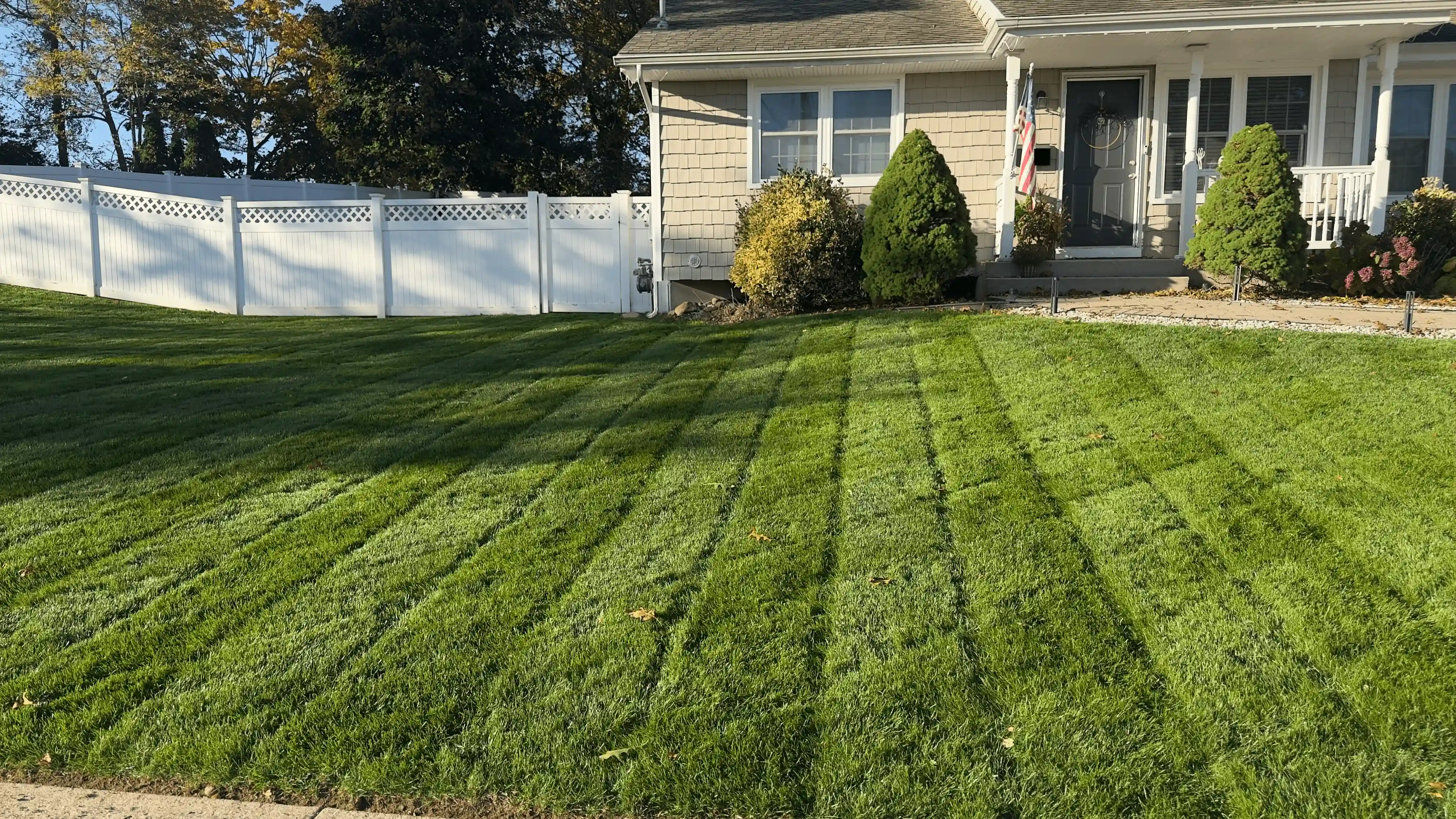
Join Blade Boss free and get instant access to MowMaster Pro, the Fertilizer Calculator, Lawn Map Pro, and 20+ other precision tools. Preview everything, explore the dashboard, and see what data-driven lawn care looks like.
Join Free →Chris is a Combat Search and Rescue pilot turned airline pilot who built Blade Boss to bring aviation-level precision to lawn care. Every recommendation on this site is backed by zone-specific data and real science, not marketing copy. Read the full story.
Create a free account to join the conversation.