
Most lawn care calendars on the internet are useless for Long Island homeowners. They're written for "the Northeast" or "cool-season grasses" with vague advice like "apply fertilizer in spring" and "mow when the grass is growing." That's like telling a pilot to "fly toward the airport." Technically true. Completely useless for actually landing the plane.
Long Island has its own rules. Sandy outwash soils that leach nutrients twice as fast as clay. A pre-emergent window that opens 8 days earlier than outdated estimates suggest. Suffolk County fertilizer blackouts that don't exist anywhere else in the state. And a growing season that runs approximately 200 active days, with 17 peak growth weeks where the real work happens.
This calendar is different. Every date, every threshold, and every recommendation is built on 30-year NOAA climate normals from the Islip weather station, calibrated against Cornell Cooperative Extension Suffolk County's soil monitoring data, and cross-referenced with research from Rutgers, Penn State, and Michigan State turf programs. This is what a lawn care calendar looks like when you stop guessing and start using data.
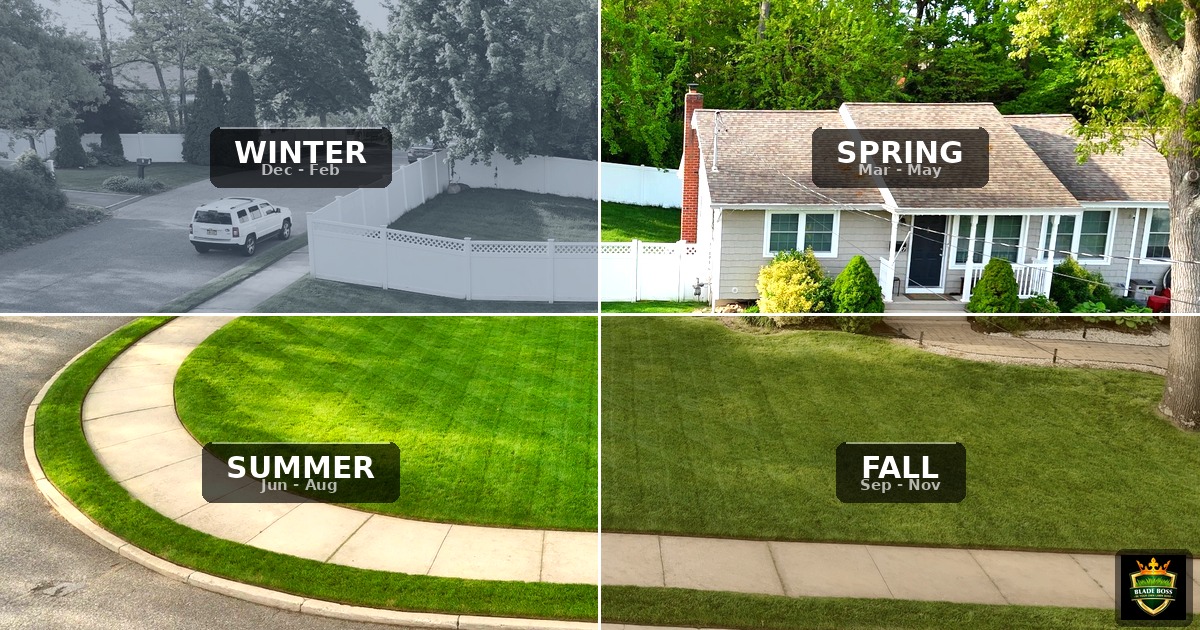
On Long Island (USDA Zone 7B), the lawn care year breaks into four phases: Winter Planning (December through February), Spring Activation (March through May), Summer Survival (June through August), and Fall Power Season (September through November). The six highest-impact tasks are: pre-emergent by late March, first fertilizer after April 1, mow at 3.5 to 4 inches all summer, core aerate in September, overseed by October 15, and get your last fertilizer down before the November 1 Suffolk County blackout. Fall is your power season. September aeration plus overseeding is the single best investment you can make in your lawn.
The Complete Year at a Glance
Bookmark this table. Screenshot it. Tape it to your garage wall next to the spreader. This is your entire lawn care year on Long Island, driven by real-time USDA Zone 7B data and 30 years of NOAA climate records.
| Month | Avg Soil Temp (4 in.) | Priority Tasks | Phase |
|---|---|---|---|
| January | 37°F | Plan, sharpen blades, order soil test | Winter Planning |
| February | 36°F | Service equipment, monitor for early thaw | Winter Planning |
| March | 43°F | Cleanup, lime if needed, pre-emergent watch | Spring Activation |
| April | 53°F | Pre-emergent, first fertilizer (after Apr 1), first mow | Spring Activation |
| May | 61°F | Second pre-emergent, grub preventive, disease watch | Spring Activation |
| June | 70°F | Mow high, reduce nitrogen, start deep watering | Summer Survival |
| July | 78°F | No fertilizer, mow 4 inches, survival mode | Summer Survival |
| August | 76°F | Plan fall renovation, check for grubs | Summer Survival |
| September | 68°F | Aerate, overseed, fall fertilizer, broadleaf control | Fall Power Season |
| October | 57°F | Finish seeding by Oct 15, winterizer, leaf management | Fall Power Season |
| November | 50°F | Final mow, blackout begins Nov 1, broadleaf deadline | Fall Power Season |
| December | 42°F | No fertilizer, protect turf, plan next year | Winter Planning |
All soil temperatures in this calendar are modeled averages at 4-inch depth, derived from NOAA 1991 to 2020 climate normals for the Islip station (USW00004781), calibrated against Cornell CCE Suffolk County's Jamesport soil monitoring data. Your actual soil temps will vary based on aspect, shade, proximity to pavement, and whether you're on the North Shore (heavier soils, slower to warm) or South Shore (sandy, warms faster). See the live Blade Boss Calendar for real-time zone data.
Why Long Island Needs Its Own Calendar
Generic "Zone 7" calendars miss three things that make Long Island unique. First, our soil. Most of Nassau and Suffolk County sits on glacial outwash plains with sandy loam soils from the Haven, Riverhead, and Plymouth soil associations. These soils drain fast, warm fast, and leach nutrients fast. A fertilizer rate designed for New Jersey clay doesn't work here.
Second, our regulations. Suffolk County Local Law No. 41-2007 prohibits lawn fertilization from November 1 through April 1. Nassau County's blackout runs November 15 through April 1. New York State bans phosphorus in lawn fertilizers for established lawns unless a soil test shows a deficiency. These aren't suggestions. They're law. And Long Island sits over a sole-source aquifer, which means the NEIWPCC (New England Interstate Water Pollution Control Commission) sensitive-area guidelines apply to every yard here.
Third, our microclimate. Maritime influence from the Atlantic moderates our temperatures, but it also creates higher humidity that drives disease pressure in summer. The North Shore's heavier glacial moraine soils warm 7 to 14 days later than the South Shore's deep sand. A calendar that says "apply in April" without knowing which part of Long Island you're on is rolling the dice.
January: The Planning Month
Soil temperature is sitting around 37°F. Your lawn is fully dormant, surviving on stored carbohydrates from last fall's fertilizer. There is absolutely nothing to apply, spray, or spread. But there's plenty to do.
- Review last year's soil test results. If your pH is below 6.0, plan a lime application for early spring. Cool-season grasses perform best between 6.0 and 7.0.
- Order a new soil test kit if you haven't tested in the last 2 to 3 years. Cornell Cooperative Extension offers mail-in tests through their Nassau and Suffolk offices.
- Sharpen your mower blade. A dull blade tears grass rather than cutting it cleanly, increasing disease susceptibility. Do this now while you have time.
- Inventory your products. Check expiration dates on pre-emergent, fertilizer, and herbicide. Prodiamine and dithiopyr are stable for years if stored dry, but liquid products can degrade.
- Plan your annual program. Map out your application dates, product needs, and budget for the year. Our Stripe Master members get the complete month-by-month Playbook that covers exactly this.
Clear any branches, leaves, or objects sitting on dormant turf. Anything left on the surface through winter creates a microclimate that promotes snow mold. Long Island's intermittent snow cover (averaging about 23 days total) means freeze-thaw cycles can trap moisture under debris and damage crowns.
February: Prep and Patience
Soil is at roughly 36°F, the coldest month underground. The lawn is still fully dormant. February is the "itchy trigger finger" month where warm days in the 50s make you want to do something. Resist the urge. Your grass doesn't care about one warm afternoon. It cares about sustained soil warmth.
- Service your mower. Change the oil, replace the air filter, check the spark plug. A well-tuned mower makes cleaner cuts, and clean cuts reduce disease entry points.
- Calibrate your spreader. An uncalibrated spreader is how lawns get burned or underfed. Run a test pattern on your driveway with a measured amount of product to verify output.
- Pull soil samples when ground thaws. If you're testing this year, grab samples from 4 to 6 spots across your lawn at 4-inch depth and mix them into one composite sample.
- Watch for early green-up. If you see patches of bright green grass emerging weeks before everything else, that's likely Poa annua (annual bluegrass). Mark those areas. You'll deal with them in fall.
One thing you can do in February on a mild day above 50°F: spot-treat any winter annual weeds like chickweed or henbit that survived fall treatment. These weeds germinate in fall and bloom in early spring. Hitting them now, before they set seed, prevents next year's problem. Use a standard broadleaf herbicide on a calm day above 50°F.
If you applied fall pre-emergent back in late August, the barrier is degrading by now. On sandy Long Island soils, prodiamine breaks down in roughly 4 months. For lawns with a history of Poa annua, a late winter bridge application of pre-emergent (February or early March when snow clears and ground is workable) catches the secondary germination wave before your spring crabgrass app goes down at GDD50 of 100. This is not necessary for every lawn, but if you've seen bright green Poa patches popping up in late February or March despite a fall application, the bridge app closes that gap.
Track Soil Temperature and GDD Live
The Blade Boss Weather Hub inside Lawn Map Pro™ monitors soil temperature and growing degree day accumulation for your ZIP code in real time. Start watching in February so you're ready when the March triggers hit.
March: Spring Activation Begins
This is where the year really starts. Soil climbs from about 43°F at the beginning of March toward 50 by early April. Grass breaks dormancy around March 15 when soil consistently exceeds 40°F. By the last week of March, you should see visible green-up across most of the lawn.
- Spring cleanup. Light rake to remove winter debris, matted leaves, and any dead grass. Don't power-rake or dethatch now. That's a fall job.
- Check irrigation system. If you have in-ground sprinklers, schedule your spring activation for late March or early April. Walk each zone and check for broken heads, misaligned nozzles, and leaks from winter frost heave. Suffolk and Nassau County enforce odd/even watering by address and prohibit irrigation between 10 AM and 4 PM year-round. Get your system dialed before you need it in May.
- Apply lime if pH test showed below 6.0. Pelletized lime is easiest to apply with a broadcast spreader. Don't lime if the ground is still soggy.
- Pre-emergent watch begins. Pre-emergent timing is driven primarily by growing degree days (GDD), with soil temperature as a secondary confirmation. You're watching for GDD50 approaching 100, which historically falls around April 6 on Long Island. Soil temperature approaching 50°F at 4-inch depth confirms the window is open. Start monitoring both in mid-March.
- Check your irrigation system. Turn on zones one at a time, check for broken heads, adjust spray patterns, and verify coverage before you need it.
Know Your Soil Before You Start
The Blade Boss Soil Test Module translates your lab results into exact amendment rates for your lawn's square footage. No guessing, no generic advice.
Spring aeration conflicts with pre-emergent herbicide. Pre-emergent works by creating a chemical barrier in the top inch of soil. Aeration punches holes through that barrier, creating gaps where crabgrass can germinate. If you need to aerate, wait until September.
Track It Live with Weather Hub
The Blade Boss Weather Hub inside Lawn Map Pro™ monitors growing degree day accumulation and soil temperature estimates for your exact location on Long Island. Set alerts and never miss a window.
April: The Critical Month
April is when everything happens at once. Soil temperature climbs from 50 to nearly 55°F, crossing the crabgrass germination threshold around April 21. The Suffolk County fertilizer blackout ends April 1. Broadleaf weeds become actively growing targets. And your grass hits its first spring growth surge. Get April right and you're ahead for the entire year. Get it wrong and you're chasing problems until fall.
- Apply pre-emergent herbicide by mid-April at the latest. Target GDD50 reaching 100 (approximately April 6 on Long Island), with soil temperature approaching 50°F at 4-inch depth as secondary confirmation. If you're past GDD50 of 200 (approximately April 21) without a barrier down, switch to dithiopyr (Dimension) which has early post-emergent activity on young crabgrass seedlings.
- First fertilizer application after April 1 (2/3 split rate). Apply 0.75 lbs of nitrogen per 1,000 square feet using a slow-release formula. This is the first half of a split application at a total spring rate of 1.25 lbs N per 1,000 sq ft. The second application (0.5 lbs N) goes down 6 weeks later in mid-May. Splitting prevents growth surges, reduces leaching on sandy soil, and keeps feeding steady. Our NitroCalc Pro™ tool calculates your exact split rates automatically. If your lawn received a strong winterizer last fall, you can reduce the total spring rate.
- First mow of the season. Most Long Island lawns reach mowable height (3.5 to 4 inches) in mid to late April when GDD50 hits 200 and soil exceeds 50°F. Set your mower to 3 inches for spring. Mow every 5 to 7 days as growth ramps up. Always follow the one-third rule: never remove more than one-third of the blade height in a single cut.
- Spray broadleaf weeds if needed. Mid-April through May is the spring window for dandelion, clover, plantain, and ground ivy. Use a 3-way herbicide (2,4-D + MCPP + dicamba). Add triclopyr for stubborn ground ivy or clover. Fall is actually the better window, but spring catches visible problems.
- Begin irrigation if conditions are dry. Target 1 inch per week including rainfall. Deep, infrequent watering encourages deeper root growth. Remember Suffolk County's odd/even watering schedule and the 10 AM to 4 PM no-watering rule.
May: Finishing Spring Strong
Soil temperature hits 61°F on average. Crabgrass germination is peaking. Disease pressure starts building as humidity rises. This is the month where your spring program either holds together or falls apart.
- Second pre-emergent application (if doing split apps). On Long Island's sandy soils, your first application from late March is degrading. A second application between May 1 and May 15 refreshes the barrier through peak germination season.
- Second spring fertilizer (1/3 split rate). Apply 0.5 lbs nitrogen per 1,000 square feet, completing your spring split application. This goes down approximately 6 weeks after your April feed. This lighter follow-up rate maintains steady nutrition heading into summer without pushing excessive top growth.
- Apply grub preventive. May through early June is the window for preventive grub products containing chlorantraniliprole (GrubEx) or imidacloprid (Merit). These products target next generation grubs before they hatch. If you had grub damage last fall, this is mandatory.
- Crabgrass post-emergent window opens May 15. If any crabgrass breaks through your pre-emergent barrier, spot-treat between May 15 and June 4 when plants are still young and killable. After June 4, crabgrass tillers and becomes much harder to control.
- Disease monitoring begins. Leaf spot (Drechslera/Bipolaris) peaks in May when temperatures hover around 50 to 65°F. Watch for dark purple to black spots on grass blades. Mow at proper height and avoid evening irrigation to reduce risk.
- Maintain mowing at 3 inches or slightly higher. As temperatures warm, start thinking about raising mowing height toward 3.5 inches by late May.
June: The Transition to Survival Mode
Soil hits 70°F. Summer stress onset for cool-season grass on Long Island begins around June 25 when soil reaches 70 to 75°F and daytime air exceeds 85°F. This month is about shifting your mindset from "grow" to "protect."
Everything you do from June through August is about keeping your grass alive, not making it grow. Stop pushing nitrogen. Stop mowing short. Stop worrying about perfection. Your lawn is going to slow down. Let it.
- Raise mowing height to 3.5 to 4 inches. Taller grass shades the soil, retains moisture, and develops deeper roots. This is the single most impactful summer survival strategy.
- No heavy nitrogen. Your spring split application is complete. If you're irrigating and the lawn is actively growing, a light organic application (0.25 lbs N) in early June is acceptable. Otherwise, hold off. You don't want to push growth heading into summer stress.
- Water 1 inch per week including rainfall. Water early in the morning (before 10 AM on your assigned odd/even day). Deep, infrequent soaking is better than shallow daily sprinkles. Avoid evening irrigation completely. Wet grass overnight invites disease.
- Dollar spot alert window opens. Dollar spot peaks around 70 to 80°F with heavy morning dew. Unlike brown patch, dollar spot thrives when nitrogen is LOW. Proper fertilization is your first line of defense. Look for small, silver-dollar-sized bleached patches.
- Monitor chinch bugs. Chinch bugs become active in June and peak in July and August. They cause irregular brown patches that don't respond to watering. Part the grass at the edge of a brown area and look for tiny black and white insects.
July: Survival Mode
Soil temperature peaks at 78°F. July is the single most stressful month for cool-season grass on Long Island. Average daily highs hit 83°F and nighttime lows stay around 67°F. Your grass may go dormant if unirrigated, and that's perfectly fine. KBG (Kentucky Bluegrass) will brown out but survives via its crown tissue and recovers quickly with fall moisture.
- No fertilizer. Period. Applying nitrogen during July heat stress is one of the top five lawn care mistakes on Long Island. Nitrogen forces top growth when roots are already struggling. It also feeds brown patch fungus.
- Mow at 4 inches or higher. If your lawn is dormant and not growing, don't mow at all. Mowing dormant grass just damages it. If you're irrigating and it's still growing, mow in the evening when temperatures are lower to reduce stress.
- Water deeply if you choose to irrigate. 1 to 1.5 inches per week, applied in one or two deep soakings before 10 AM. If you choose NOT to irrigate, let the lawn go fully dormant. Don't alternate between watering and not watering, which forces the grass to break dormancy and re-enter it repeatedly.
- Brown patch peak risk. Brown patch (Rhizoctonia solani) peaks in July when nighttime temperatures exceed 60°F and humidity tops 90%. Look for circular brown patches 6 inches to several feet across with a darker "smoke ring" border in early morning. Avoid excess nitrogen, improve air circulation, and water early in the morning.
- Stay off stressed turf. Minimize foot traffic, don't park on the lawn, and avoid any heavy work. Compaction on heat-stressed soil takes months to recover from.
On Long Island, 60 to 80% of unirrigated Kentucky Bluegrass lawns go dormant in a typical summer. This is normal. Dormant grass looks dead but is alive at the crown. It will green up within 2 weeks of consistent fall moisture. The mistake is watering inconsistently, which forces your grass to repeatedly exit and re-enter dormancy, depleting its energy reserves.
August: Transition Planning
Soil begins cooling from 76°F. August is a bridge month. Your lawn is still stressed, but fall is within sight. The single most important thing you do in August is plan your fall renovation. September is the most valuable month on the entire lawn care calendar, and you need to be ready to execute on day one.
- Plan your fall renovation. Decide now whether you're overseeding, doing a full renovation, or just maintaining. Order seed, rent or buy an aerator, and stock up on starter fertilizer and fall-blend fertilizer. September fills up fast at equipment rental shops.
- Check for grubs. Late August through mid-October is peak grub damage risk on Long Island. Cut a 1-square-foot section of turf and peel it back. If you find more than 5 to 7 grubs, treat with a curative product (trichlorfon/Dylox). Skunks and raccoons digging up your lawn is another telltale sign.
- Poa annua planning. Annual bluegrass germinates when soil temperature drops below 70°F, which happens around September on Long Island. If Poa annua is a recurring problem, plan a fall pre-emergent application for early September.
- Maintain consistent moisture. Even though growth is slow, keeping soil consistently moist heading into September sets up ideal conditions for overseeding and aeration.
- Fall armyworm watch begins. Fall armyworm risk peaks in August and September on Long Island. These migratory pests arrive from the south and can devastate a lawn in days. Look for irregular brown patches and green caterpillars feeding on grass blades, especially in the evening.
Calculate Exact Seed and Fertilizer Amounts
SeedGenius Pro™ calculates your exact seed rate by grass type and zone size. NitroCalc Pro™ handles fertilizer split-application math automatically. Enter your measurements from Lawn Map Pro and get precise product amounts for your fall renovation.
September: The Power Month
Soil cools to 68°F. This is it. September is the single most impactful month on the entire Long Island lawn care calendar. Everything you do this month has more return on investment than any other time of year. Cool-season grass enters its peak fall growth period. Weed competition drops as summer annuals die off. Soil temperature is perfect for seed germination. If you only get one month right, make it September.
September aeration plus overseeding is the number one investment you can make in your Long Island lawn. New seed gets 6 to 8 weeks of ideal growing conditions before the first hard freeze around November 4. Every other month of the year exists to protect what September builds.
- Core aerate between September 1 and October 1. Use a core aerator (not a spike aerator) that pulls plugs 2 to 3 inches deep. Leave the cores on the surface to break down naturally. This relieves compaction, improves oxygen flow to roots, and creates perfect seed-to-soil contact for overseeding.
- Overseed immediately after aeration. The window is September 1 through October 15, with earlier being better. Use SeedGenius Pro™ to calculate your exact seed rate by grass type and zone size. For Long Island, tall fescue and Kentucky Bluegrass blends work best. Water lightly 2 to 3 times daily to keep seed moist until germination (7 to 14 days).
- Fall fertilizer application. Apply 0.75 pounds nitrogen per 1,000 square feet. This is the most important fertilizer application of the year. Fall nitrogen builds root reserves that fuel next spring's green-up. Use a balanced formula with potassium for stress tolerance.
- Broadleaf weed spot treatment. Early fall is the highest-leverage window for broadleaf herbicide. Perennial weeds like dandelion, clover, and ground ivy are actively transporting nutrients to their roots for winter storage. Herbicide applied now gets pulled down into the root system, killing the entire plant, not just the leaves.
- Fall pre-emergent for Poa annua. If annual bluegrass is a problem, apply prodiamine or isoxaben in early September when soil cools below 70°F. Note: this conflicts with overseeding. Choose one or the other for each area of your lawn.
Pre-emergent herbicide prevents ALL seeds from germinating, including your grass seed. You cannot overseed and apply pre-emergent in the same area at the same time. If you need both, treat different zones of your lawn separately. Overseed thin or damaged areas, and apply fall pre-emergent to areas with healthy turf but Poa annua history.
October: Finishing the Fall Season
Soil cools to 57°F. October is your last chance to get fall work done before the window closes. Overseeding must be finished by October 15. After that, new seedlings don't have enough time to establish before winter dormancy. The broadleaf weed control window is wide open, and your winterizer fertilizer needs to go down this month in Suffolk County.
- Finish any overseeding by October 15. Seed planted after this date has poor odds of surviving winter on Long Island. If you missed the window, wait until next September.
- Apply winterizer fertilizer. Apply 0.75 pounds nitrogen per 1,000 square feet. This is the second most important fertilizer application of the year (after September's). Use a formula with potassium. In Suffolk County, this MUST go down before November 1 when the fertilizer blackout begins. Aim for the first two weeks of October.
- Fall broadleaf weed control window: October 15 through November 15. This is the BEST time of year to kill perennial broadleaf weeds. Young fall seedlings of chickweed, henbit, and Poa annua are most susceptible. Dandelion and clover are pulling herbicide deep into their root systems. Two treatments spaced 4 to 6 weeks apart give the best results.
- Leaf management. Mulch leaves in place with a mulching mower if the layer is thin (one pass should chop them fine enough to fall through the grass canopy). If leaves are thick enough to smother the grass, remove them. A thick leaf mat blocks light and traps moisture, inviting snow mold.
- Continue mowing at 3 inches. Return to weekly mowing as fall growth picks up. Keep mowing as long as the grass is actively growing.
November: Closing Down the Season
Soil drops to about 50°F and growth slows dramatically. The first hard freeze typically arrives around November 4 on Long Island. This month is about finishing the last few tasks and putting the lawn to bed properly.
- Suffolk County fertilizer blackout begins November 1. Absolutely no fertilizer of any kind on the lawn after this date in Suffolk County. Nassau County's blackout begins November 15. Non-nitrogen products like lime, potassium-only amendments, and compost are exempt.
- Complete broadleaf herbicide treatments by November 15. After mid-November, weeds are entering dormancy and herbicide efficacy drops significantly. Get your last spray done while daytime temperatures still reach 50°F regularly.
- Final mow around November 20. Gradually lower your mowing height over the last 2 to 3 cuts, finishing at about 2.5 to 3 inches. This reduces the height of the grass canopy heading into winter, which helps prevent matting under snow and reduces snow mold risk. Don't scalp it. Just bring it down slightly from your 3-inch fall height.
- Snow mold prevention. Apply a preventive fungicide before the first permanent snow cover if you have a history of snow mold. Penn State Extension recommends timing this to late November on Long Island.
- Blow out your irrigation system. Drain all lines and evacuate with compressed air before the first hard freeze. Water left in pipes freezes, expands, and cracks fittings. This is the most expensive mistake in fall lawn care.
Cool-season grass on Long Island enters hardening mode around November 19 as canopy temperatures drop to 40 to 34°F. Full dormancy begins in late November to December when soil drops below 40°F. The grass is alive but in biological rest, surviving on the carbohydrate reserves you built with fall fertilization.
December: Winter Rest
Soil settles to about 42°F and continues dropping through winter. Your lawn is dormant. The to-do list is short, but the items on it matter.
- No fertilizer. Suffolk and Nassau blackout periods are in full effect. NY State law also prohibits fertilizer from December 1 through April 1.
- Keep debris off the lawn. Holiday decorations, parked cars, stored firewood, anything sitting on dormant turf causes compaction and can kill the grass underneath.
- Avoid walking on frozen or saturated turf. Foot traffic on frozen grass crushes the brittle crowns. Heavy traffic on wet winter soil creates compaction that takes months to recover from next spring.
- Equipment planning. Clean, oil, and store all lawn equipment. Drain fuel from mowers or add fuel stabilizer. Plan next year's product purchases. Pre-season sales on seed and fertilizer often start in January.
The Five Biggest Mistakes Long Island Homeowners Make
After years of building data-driven lawn care systems, these are the errors I see over and over again on Long Island lawns. Every single one is avoidable with the right information at the right time.
Applying fertilizer during the Suffolk County blackout (Nov 1 to Apr 1)
This isn't just bad advice. It's illegal. Suffolk County Local Law No. 41-2007 prohibits lawn fertilization from November 1 through April 1. Nassau County's blackout runs November 15 through April 1. Fertilizer applied when grass is dormant doesn't get absorbed. Instead, it leaches through Long Island's sandy soils directly into the aquifer that supplies our drinking water. Plan your last application for October and your first for April.
Fertilizing during July and August heat stress
Applying nitrogen when soil temps exceed 75°F and your grass is struggling just to survive is like forcing someone to run a marathon while they have the flu. Nitrogen drives top growth at the expense of roots, and it directly feeds brown patch fungus (Rhizoctonia solani), which peaks in July. Zero nitrogen from July through August. Your lawn doesn't need food. It needs water and shade.
Missing the September aeration and overseeding window
September 1 through October 15 is the renovation window on Long Island. Skip it and you've lost your best opportunity for the entire year. Fall gives you warm soil for germination, cool air for seedling growth, and reduced weed competition. Spring seeding is a distant second choice because seedlings have to survive their first summer immediately, and pre-emergent herbicide conflicts with new seed.
Mowing too short in summer
Cutting below 3 inches during summer heat exposes the soil surface to direct sun, increases evaporation, promotes weed seed germination, and stresses the grass plant. Mow at 4 inches from June through August. Taller grass develops deeper roots, retains moisture, and shades out weed seeds. This single change can be the difference between a green lawn and a brown one.
Ignoring soil pH
Long Island's sandy soils tend to be acidic, often below 6.0. Cool-season grasses need soil pH between 6.0 and 7.0 to access nutrients effectively. If your pH is below 6.0, you could apply the perfect amount of fertilizer at the perfect time and still see poor results because the nutrients are chemically locked in the soil. Test your soil every 2 to 3 years and apply lime as needed.
Track It Like a Pilot
I fly 737s for a living. In the cockpit, we don't eyeball fuel loads or guess at weather. We use checklists, instruments, and real-time data. That same approach is what makes this calendar work. The dates in this guide aren't opinions. They're derived from 30-year NOAA normals, university extension research, and calibrated soil monitoring data. But averages are just starting points. Your actual lawn needs real-time tracking.
Growing degree day accumulation, actual soil temperature readings, rainfall totals, and local weather patterns all shift your timing within the windows this calendar provides. The homeowners who get the best results are the ones who combine a solid plan with real-time adjustments. That's exactly what the Blade Boss Weather Hub and live zone calendar are built to do.
The Bottom Line
A great Long Island lawn isn't about working harder. It's about timing the right action to the right biological window. Pre-emergent before GDD50 hits 100. No nitrogen during July stress. Aerate and overseed in September. Winterizer before November 1. Everything else is secondary.
Print this calendar. Save it. Refer back to it every month. And if you want the complete system with exact product rates, spreader settings, and real-time tracking built for your specific lawn, that's what the Blade Boss Playbook was designed to deliver.
Chris C. is a Combat Search and Rescue pilot turned airline pilot and the founder of Blade Boss. He built this calendar from 30-year NOAA climate normals, Cornell Cooperative Extension research, and three years of obsessive soil monitoring on his own Long Island lawn.
Join Blade Boss free and get instant access to preview our tools, explore Lawn Map Pro, and see what data-driven lawn care looks like. No credit card. No commitment. Just better results.
Start Free →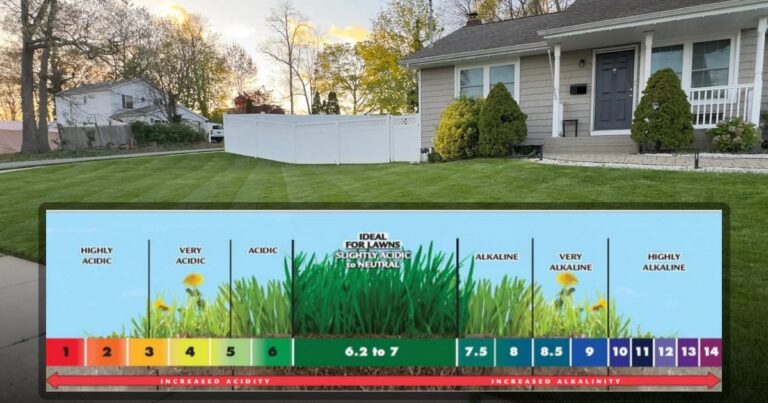
Create a free account to join the conversation.