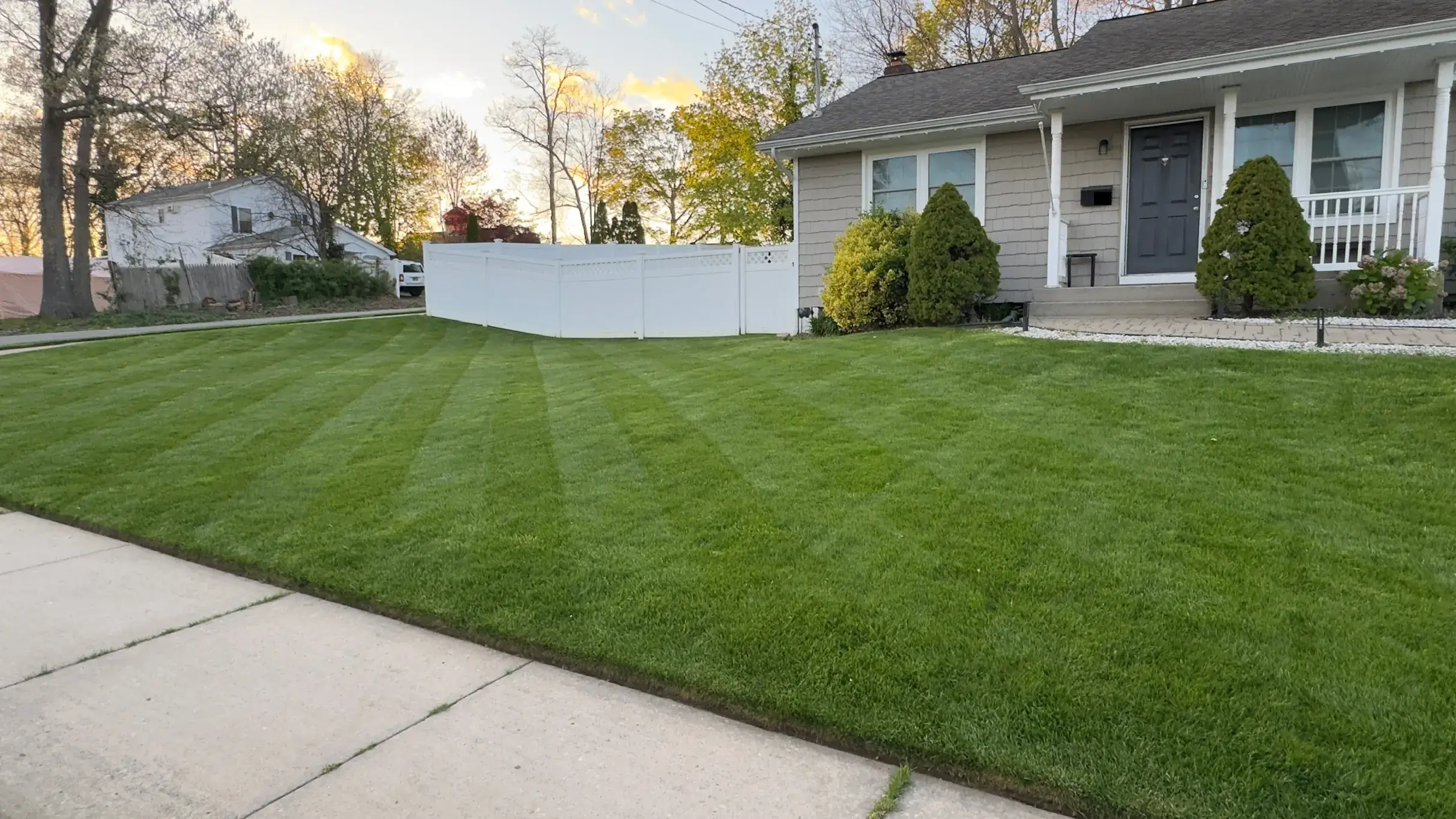
I've landed a 737 in a crosswind that would have grounded most regional flights. I fly combat search and rescue missions for the United States Air Force. I brief emergency procedures before my first cup of coffee. But in the spring of 2023, I was standing in my front yard in Ronkonkoma, Long Island, staring at a lawn I'd just spent $500 trying to fix, and it looked worse than the day I closed on the house.
That's the moment Blade Boss started. Not in a boardroom. Not from some marketing playbook. It started because I was frustrated, embarrassed, and broke from buying products that didn't work for my lawn, my soil, or my USDA zone.
Two years later, people slow down driving past my house to look at the grass. And I'm writing this because if I can figure this out, so can you.
The $500 Wake-Up Call
Here's the scene. Spring 2023. I'd been in my first house for about a year, bought it February 2022. I grew up on Long Island, born and raised, so I thought I understood the climate. Turns out, understanding weather from the cockpit and understanding what your soil needs are two completely different things.
I walked into the garden center and filled the cart. Fertilizer. Grass seed. Weed killer. A bag of lime because the label said something about "acidic Northeast soils." No soil test. No research. Just a guy with a new house and a credit card trying to make his yard look like the neighbors' lawns.
By July, my lawn looked worse than when I started. The fertilizer burned half the front yard because I eyeballed the application rate. The seed never germinated because I put it down at the wrong time for Zone 7B. And the lime? Turns out my soil pH was already sitting at 7.2. I was pushing it more alkaline when my cool-season grass wanted something between 6.0 and 6.8.
Most Long Island soils actually trend acidic, typically ranging from 5.5 to 6.8 pH based on NOAA and Cornell data. My soil was an outlier at 7.2. But I never would have known that without a test. The bag of lime I bought "for acidic Northeast soils" made my specific problem worse. That's why blanket advice is dangerous.
Five hundred dollars. Gone. And my lawn looked like a crime scene.
I wasted $500 on fertilizer, seed, and lime without ever testing my soil or learning what my lawn actually needed. That's when I realized the DIY lawn care industry doesn't have a product problem. It has a knowledge problem.
If you've ever stood in the lawn care aisle at Home Depot staring at 47 different bags of fertilizer, trying to figure out which one actually works for your grass type, your soil, your USDA zone... you know exactly what I'm talking about. That feeling of being completely overwhelmed by options but having zero real guidance? The lawn care industry designed it that way. They want you buying, not learning.
What a Cockpit Teaches You About Grass
Some quick background on me, because it matters for how Blade Boss ended up the way it did.
I'm a United Airlines first officer on the 737. I'm also a combat search and rescue pilot with the United States Air Force, currently serving for about 10 years now. I do both jobs. My entire adult life has been spent in environments where precision isn't a nice-to-have. It's the difference between everyone going home safe and a really bad day.
In the military, we have a saying: "brief it, plan it, execute it, debrief it." You don't just show up and improvise. You study the conditions, build a plan around the data, execute with discipline, and then review what worked and what didn't. Every single time.
My dad was a New York City firefighter. He drilled into me the same mentality from a completely different angle: do the job right the first time. Don't cut corners. Take pride in the work, even when nobody's watching. Especially when nobody's watching.
So when my lawn kept failing, I didn't go back to the garden center for more products. I did what I'd been trained to do my whole life. I started treating my yard like a mission.
Tested the Soil First
I ordered a soil test kit from my local Cornell Cooperative Extension office here on Long Island. No more guessing at pH, phosphorus, or nitrogen levels. Real data from a real lab.
Tracked Soil Temperature and GDD
I bought a soil thermometer and started monitoring growing degree days for USDA Zone 7B. Here on Long Island, the pre-emergent window opens when GDD base-50 hits around 100, which typically lines up with early April. Soil temperature approaching 50 to 55 degrees at depth confirms you're in the zone. That's based on real accumulation data, not a guess on a bag.
Documented Everything
Every application, every mowing height change, every irrigation cycle. Spreadsheets, photos, notes. My dad would've called it the logbook approach. Same discipline I use for flight planning, applied to grass.
Built My Own Calculators
When I couldn't find tools that accounted for my specific zone, grass type, and property layout, I built them. Fertilizer rates by actual square footage. Seeding rates by grass species. Spreader calibration by walking speed. The same precision I apply in the cockpit, applied to my lawn.
And you know what? It worked.
See What Data-Driven Lawn Care Looks Like
Preview our Lawn Map Pro™ dashboard with satellite mapping, soil temperature tracking, and zone-calibrated timing. Free to explore.
The Transformation
 Before
 After
After
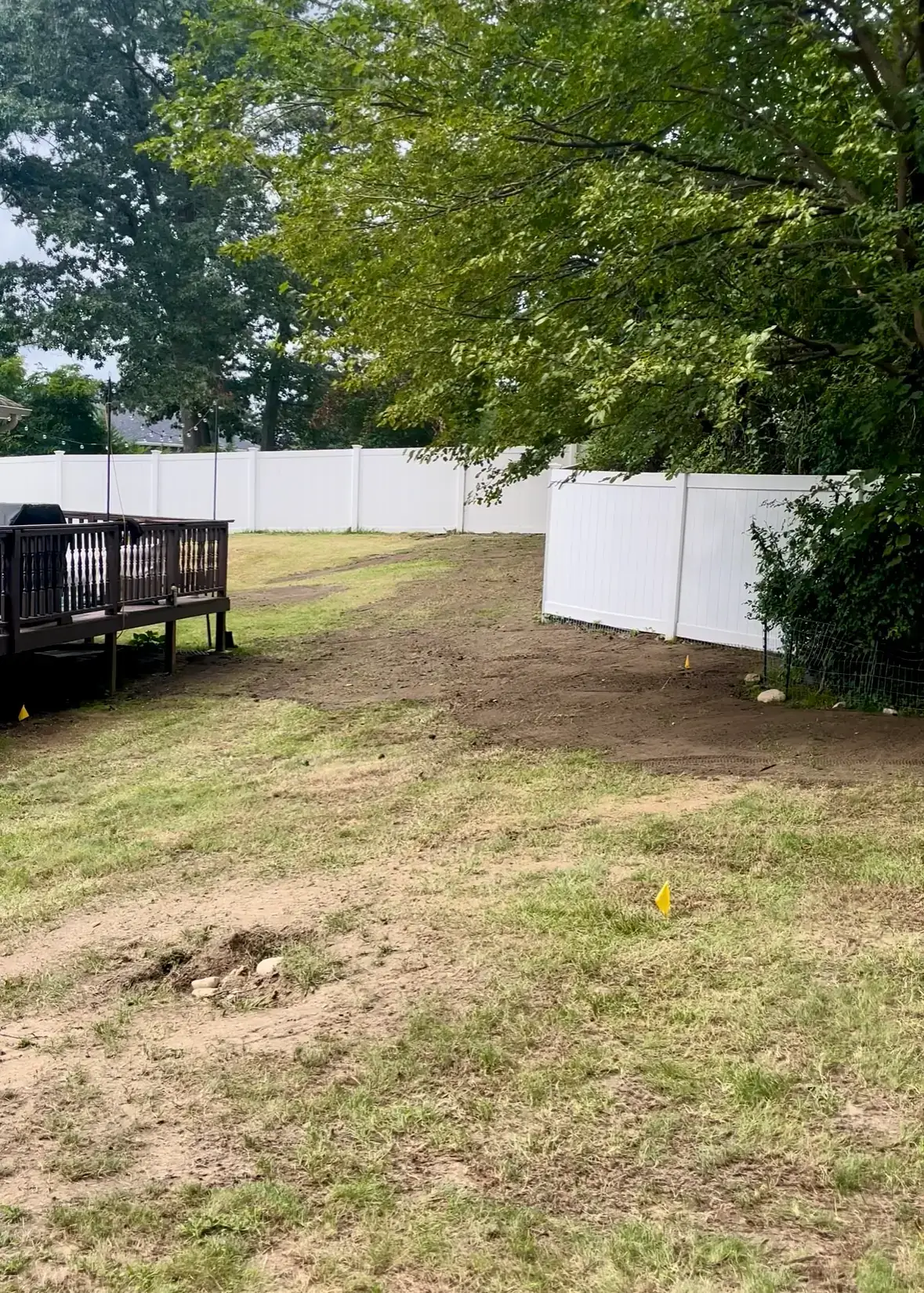
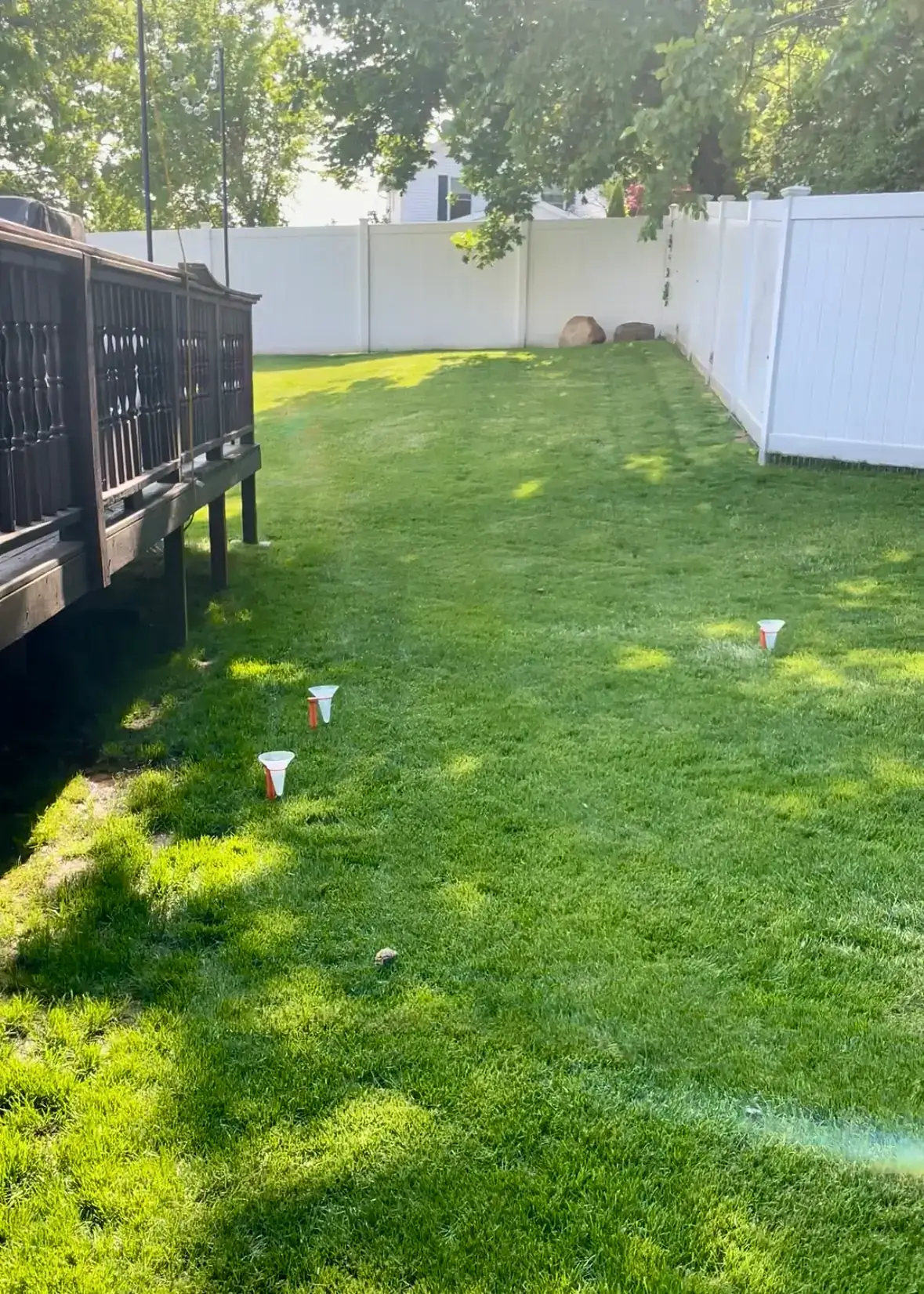
Left: My backyard in Ronkonkoma, August 2023. Rock bottom. Right: The exact same spot, October 2023. Eight weeks of doing things the right way. No Photoshop. No different lawn. Just data, precision, and a plan.
The transformation didn't come from some miracle product. It came from a handful of changes that literally any homeowner can make:
- Tested soil before touching a single product. The results from Cornell told me exactly what my lawn needed and, just as important, what it didn't need. I stopped wasting money on lime my soil didn't want.
- Timed everything to growing degree days, not calendar dates. Here on Long Island, the pre-emergent window opens when GDD base-50 accumulates to around 100. Soil temp at depth approaching 50 to 55 degrees confirms it. That's when crabgrass pre-emergent actually works. Not "early spring" like the bag says, which could mean February in Florida or May in Maine.
- Calculated fertilizer rates by actual square footage. My front yard zones are 3,200 and 2,800 square feet. When you know the real number, you apply the right amount. Precision means zero waste and zero burn.
- Adjusted mowing height with the seasons. 3.5 inches during Long Island's summer stress window from late June through late August, when we average 25 days above 85 degrees. Then down to 2.5 inches for the fall renovation push, which lines up perfectly with Zone 7B's peak fall growth from September 10 through October 10.
None of this is complicated. But nobody was putting it all together in one place, calibrated for the specific growing conditions we deal with here in the Northeast. That gap is exactly why Blade Boss exists.
The Problem With How Lawn Care Works Today
Last spring, I watched a neighbor write a $1,200 check to a lawn care service. By July, his grass looked worse than mine did before I figured any of this out. The company was applying products on a corporate schedule, the same exact program for every lawn from Montauk to Manhattan, without considering what his specific soil, grass type, or microclimate actually needed.
And that's the whole problem with the lawn care industry right now. There's no middle ground between "just buy this bag and hope for the best" and "hire someone for $1,200 who still doesn't test your soil."
Let me be specific about what I've seen out there, because I've tried most of it.
The national lawn services like TruGreen send a technician to your door. That person usually has an iPad, a tank of product, and a production schedule. They're spraying your lawn based on a regional calendar, not based on your soil chemistry, not based on your property's specific conditions, and not based on your USDA zone data. They're measured on how many houses they can hit in a day, not on whether your lawn actually improves. And you're paying premium prices for that.
The big-box approach from brands like Scotts is basically "buy this four-step program." It's the same four bags for everyone in America. A homeowner in Atlanta with Bermuda grass in Zone 8A gets the same schedule as someone in Ronkonkoma with Kentucky Bluegrass in Zone 7B. That doesn't make any sense if you think about it for more than five seconds.
Then there are the app-based platforms. Some of them are genuinely useful for tracking what you've applied, but a lot of them are really just product funnels. You take a soil test through their system, and the recommendations always seem to point back to their own product line. The advice is solid in some cases, but the business model creates an obvious conflict of interest. They're selling you products, not teaching you the science.
And the "advice" you find online? Half of it is written by people in Georgia or Texas whose growing season has absolutely nothing in common with cool-season turf on Long Island. The other half is affiliate content designed to get you to click a link, not to actually help your lawn.
The lawn care industry doesn't have a product shortage. There are plenty of good products out there. What's missing is a platform that teaches homeowners the actual science behind their lawn, calibrated to their specific USDA zone and soil conditions, without trying to sell them something on the back end.
I don't want to be the only guy on my block with a great lawn. I want every homeowner who's ever felt that sting of lawn frustration, the person who avoids the front yard, the new homeowner who doesn't know where to start, the dad whose kids won't play in the grass, to have access to the same tools and systems that turned my lawn around.
That's why I built Blade Boss.
What Blade Boss Actually Is
Blade Boss isn't another lawn care blog with recycled advice. It's the DIY lawn care platform that Long Island and the Northeast have been missing. A complete system built specifically for homeowners in USDA Zones 5A through 7B, covering Long Island, the New York metro area, Connecticut, New Jersey, and the wider Northeast.
And I should mention: I built this entire platform myself, 100% bootstrapped, in my spare time between airline trips and military duty. No investors. No development team. Just one guy who got obsessed with solving this problem and wouldn't stop until it was done. Every calculator, every line of code, every pixel on the screen.
Here's what's inside.
20+ Precision Calculation Tools
Every single tool is calibrated for Northeast growing conditions. Fertilizer calculators that factor in your actual zone and grass type. Seed rate calculators for overseeding and new lawn establishment. Spreader calibration guides for over 200 spreader models, because dropping Scotts Turf Builder on a Scotts Elite spreader at "setting 4" means nothing if you haven't calibrated for your walking speed and spread pattern.
Try the Fertilizer Calculator
Enter your zone size, grass type, and USDA zone. Get exact product amounts and spreader settings in seconds.
Lawn Map Pro: Satellite Property Mapping
This is the feature I'm most proud of. Lawn Map Pro lets you view your actual property on satellite imagery, draw custom zones around different areas of your lawn, and calculate precise square footage. No more pacing off your yard and guessing. No more over-buying product because you rounded up. Your front lawn, side yard, and backyard are different zones with different conditions, and Lawn Map Pro treats them that way.
USDA Zone-Calibrated Schedules
Everything in Blade Boss is powered by a research-backed USDA zone data library that we built from the ground up. We're talking NOAA 30-year climate normals, growing degree day models, Cornell and Rutgers extension research, soil science from the USDA-NRCS, and historical growing degree day data. For Zone 7B on Long Island, that means your schedules account for a 230-day growing season, 209 frost-free days, 46 inches of annual rainfall, and a summer stress window that runs from late June through late August. Not a generic calendar. Real data for your real conditions.
The Blade Boss Playbook
Our Stripe Master members get full access to the Blade Boss Playbook, a complete month-by-month system that takes you from "I'm embarrassed by my lawn" to "my neighbors keep asking what service I use." It's the exact same system I followed for my own transformation, documented step by step so anyone can replicate the results.
Why I Actually Care About This
I want to be honest about something. I could have just fixed my own lawn and moved on. Plenty of people figure out their yard and never think about it again. But that's not how I'm wired.
Growing up, my dad spent 20+ years as a New York City firefighter. The thing he drilled into me more than anything wasn't about being tough or brave or any of that stuff. It was about doing things right. You see a problem, you fix it properly. You have a skill, you use it to help people. And whatever you build, you build it like your name is on it, because it is.
In the Air Force, I fly combat search and rescue. The entire job is built around one principle: nobody gets left behind. That mindset doesn't just turn off when you take the flight suit off. It shapes how you look at everything.
When I realized that there was genuinely nothing out there doing what Blade Boss does, nothing that combined real science, zone-specific precision tools, and actual education for DIY homeowners without a product sales funnel attached, building it stopped feeling like an option. It felt like the obvious next step. So I started coding between trips, testing between flights, and building this thing one feature at a time in whatever hours I had left in the day.
There are thousands of homeowners across Long Island and the Northeast who are spending money they don't need to spend on products that aren't right for their soil, following advice from people who've never dealt with a Zone 7B winter, and getting frustrated results that make them think they're just "bad at lawn care." They're not bad at lawn care. They're just working without the right tools and the right information.
I built Blade Boss to fix that.
What's Coming to This Blog
This blog is going to be different from everything else you'll find in the lawn care space. No fluff. No recycled content from other sites. No affiliate links disguised as recommendations. Here's what you can expect:
Seasonal Playbook Series
Month-by-month guides timed to Long Island and Northeast growing seasons. Specific actions, specific dates, specific products. Calibrated to our climate, not written for the national market.
Lawn Science, Made Simple
Growing degree days, soil pH, nitrogen cycling, grass biology. The science that actually matters, explained so you can use it without a turf management degree.
Long Island Local
Hyper-local content for Nassau and Suffolk County homeowners. The best soil testing labs on the island, where to buy quality seed, which pests and diseases hit our area each season.
Honest Tool and Product Reviews
Real reviews backed by performance data from real Long Island lawns. No affiliate links. No listicles written by someone who's never pushed a mower. Just what works and what doesn't.
The Mission
I get it. You're busy. Between work, family, and trying to have something that resembles a life, becoming a turf scientist isn't on the agenda. You shouldn't need to spend hours on Reddit and YouTube piecing together contradictory advice from people in completely different climates just to figure out when to put down crabgrass preventer.
That's exactly why Blade Boss exists and why I'm writing this blog. To make DIY lawn care on Long Island and across the Northeast something any homeowner can get right. The right information, at the right time, for the specific conditions outside your front door.
No filler articles stuffed with ads. No product funnels pretending to be advice. Just straight talk from a guy who's been in the trenches, made every mistake, and built the tools to make sure you don't have to.
Think of Blade Boss as flight school for your lawn. We teach the fundamentals. We give you the instruments. We build the checklists. And we make sure you have everything you need to get results. The blog is live. The tools are built. The platform is ready.
Welcome to Blade Boss. Let's get to work.
Chris
Founder, Blade Boss
United Airlines First Officer | USAF Combat Search and Rescue Pilot | Long Island, born and raised
Ready to Transform Your Lawn?
Join Blade Boss free and get instant access to preview our precision tools, explore Lawn Map Pro, and see what data-driven lawn care looks like.
Join Free →Already convinced? Our Stripe Master membership ($77/mo) unlocks everything: all 20+ tools, the complete Playbook, USDA zone-calibrated schedules, and priority support.
See what's included at every tier. Whether you're just getting started with DIY lawn care on Long Island or ready to go all in, there's a plan built for where you are right now.
See Pricing →
Create a free account to join the conversation.