Every lawn care forum on the internet will tell you to "just plant KBG" or "Tall Fescue is the way to go." They're both right and they're both wrong. The best grass for your Long Island lawn depends on your specific conditions: how much sun you get, how sandy your soil is, whether you're willing to irrigate through July, and how much time you actually want to spend on maintenance. Picking the wrong grass type is the most expensive mistake you can make, because you won't find out until next summer when your lawn is brown, thin, or full of weeds.
For most Long Island lawns in USDA Zone 7B, the best grass is a blend of Kentucky Bluegrass (60 to 70%), Perennial Ryegrass (15 to 20%), and Fine Fescue (15 to 20%). This combination gives you KBG's self-repairing density, ryegrass's fast germination, and fine fescue's shade tolerance. For lower-maintenance yards or sandy soils that drain fast, Turf-Type Tall Fescue (TTTF) is an excellent standalone choice that handles drought, shade, and Long Island's sandy outwash soils better than any other species.
Why Long Island Is Cool-Season Territory
Long Island sits in USDA Zones 7A (eastern tip around Montauk) and 7B (everywhere else from Hempstead to Riverhead). This is firmly cool-season grass country. The transition zone, where warm-season grasses start becoming viable, begins at the 7A/8A border, which is well south of here. Cool-season grasses thrive when air temperatures are between 60 and 75°F and soil temps sit in the 50 to 65°F range. On Long Island, that describes our entire spring (April through May) and fall (September through October), which is exactly when your lawn should be doing its best growing.
The challenge is summer. Based on 30-year NOAA climate data from the Islip station, Long Island averages about 18 days above 85°F and 15 nights above 70°F per summer. Soil temperature peaks at 78°F in July. That's moderate stress for cool-season grass, not severe, but enough to push unirrigated lawns into summer dormancy. The grass type you choose determines how well your lawn handles this annual stress test.
The Four Cool-Season Grasses That Work on Long Island
There are exactly four cool-season grass species (plus their subtypes) that perform well on Long Island. Each has distinct strengths and weaknesses. The right choice depends on your yard's conditions and your personal maintenance commitment. Here's the honest breakdown of each one, backed by performance data from Rutgers, Cornell Cooperative Extension, and Penn State turf programs.
Kentucky Bluegrass (KBG): The Gold Standard
If you want the lawn that makes your neighbors hate you (in the good way), Kentucky Bluegrass is how you get there. KBG produces the densest, most uniform turf of any cool-season grass. Its blue-green color is distinctive, and its texture is fine enough to walk barefoot on without flinching. It's the grass you see on magazine covers and in sod farms across the Northeast.
KBG's secret weapon is its rhizome system. Unlike bunch-type grasses that stay where you plant them, KBG spreads laterally underground through rhizomes, sending up new shoots to fill bare spots and repair damage. Got a dog digging holes? KBG fills them back in. Ripped up a patch with a wheelbarrow? It grows back. No other cool-season grass does this as aggressively.
The tradeoff is maintenance. KBG demands full sun (6+ hours of direct sunlight minimum), consistent watering through summer, and more nitrogen than any other cool-season grass. On Long Island, 60 to 80% of unirrigated KBG lawns go dormant in July and August. The grass browns out, but it survives through its crown tissue and bounces back within two weeks once fall moisture arrives. If you're not irrigating, you need to accept that summer dormancy is part of the deal.
KBG is more susceptible to summer patch (Magnaporthe poae) than any other cool-season grass on Long Island. Summer patch infects roots when soil exceeds 65°F but doesn't show symptoms until soil hits 70°F or higher, typically late June through September. If you're running a pure KBG lawn, monitor for irregular brown patches in summer and consider preventive fungicide if you've had problems before.
| Attribute | Kentucky Bluegrass |
|---|---|
| Mowing Height | 2.5 to 3.0 inches (raise to 4 inches in summer) |
| Annual Nitrogen | 2 to 4 lbs N per 1,000 sq ft |
| Seeding Rate (New) | 4 lbs per 1,000 sq ft |
| Seeding Rate (Overseed) | 1.5 to 4 lbs per 1,000 sq ft |
| Germination Time | 14 to 30 days |
| Sun Requirement | Full sun (6+ hours direct) |
| Drought Tolerance | Low to moderate (dormancy common) |
| Shade Tolerance | Poor |
| Traffic Tolerance | Good (self-repairs via rhizomes) |
| Spread Type | Rhizomes (aggressive lateral spread) |
| Best For | Show-quality lawns in full sun with irrigation |
Turf-Type Tall Fescue (TTTF): The All-Around Workhorse
If KBG is the sports car, Turf-Type Tall Fescue is the pickup truck. It may not turn heads at the car show, but it does everything well and doesn't break down when conditions get tough. Modern TTTF varieties (not your grandfather's K-31) have been bred with finer blades, darker color, and improved density that rivals KBG from a distance. Up close, you'll notice the wider blade, but at curb appeal distance, a well-maintained TTTF lawn looks fantastic.
TTTF's biggest advantage on Long Island is its root system. Tall Fescue sends roots 4 to 6 inches deep in our sandy outwash soils, compared to KBG's 2 to 3 inches. Those deep roots mean TTTF handles drought dramatically better, pulls moisture and nutrients from deeper in the soil profile, and stands up to Long Island's fast-draining sandy loam without constant irrigation.
The downside? TTTF is a bunch-type grass. It does not spread via rhizomes. If a section dies, it stays dead until you reseed it. This means TTTF lawns need periodic overseeding (typically every fall) to maintain density. It's also coarser than KBG, which some homeowners find less appealing. But for the majority of Long Island homeowners who want a good-looking lawn without babysitting it through summer, TTTF is hard to beat.
| Attribute | Turf-Type Tall Fescue |
|---|---|
| Mowing Height | 2.5 to 3.5 inches (raise to 4 inches in summer) |
| Annual Nitrogen | 2 to 3.5 lbs N per 1,000 sq ft |
| Seeding Rate (New) | 6 to 9 lbs per 1,000 sq ft |
| Seeding Rate (Overseed) | 3 to 6 lbs per 1,000 sq ft |
| Germination Time | 6 to 12 days |
| Sun Requirement | Full sun to partial shade (4+ hours) |
| Drought Tolerance | High (deep root system) |
| Shade Tolerance | Moderate |
| Traffic Tolerance | Very good |
| Spread Type | Bunch-type (no lateral spread) |
| Best For | Low-maintenance lawns, sandy soils, mixed sun/shade |
Perennial Ryegrass (PRG): The Speed Demon
Perennial Ryegrass germinates in 3 to 7 days. Read that again. While KBG is still thinking about sprouting three weeks in, ryegrass is already up, green, and filling your lawn. That speed makes PRG the go-to "nurse grass" in seed blends: it establishes quickly to prevent erosion and weed invasion while the slower species catch up.
As a standalone lawn, PRG has limitations on Long Island. It's a bunch-type grass (no rhizomes), has moderate drought tolerance, and can be less winter-hardy than KBG in severe cold snaps. But in a blend, it's invaluable. PRG contributes a fine texture, dark green color, and rapid establishment that complements KBG's slow-and-steady spread. It's also the grass of choice for quick-fix overseeding of bare or thin spots.
| Attribute | Perennial Ryegrass |
|---|---|
| Mowing Height | 2.5 to 3.0 inches |
| Annual Nitrogen | 2 to 4 lbs N per 1,000 sq ft |
| Seeding Rate (New) | 8 lbs per 1,000 sq ft |
| Seeding Rate (Overseed) | 3 lbs per 1,000 sq ft |
| Germination Time | 3 to 7 days |
| Sun Requirement | Full sun to light shade |
| Drought Tolerance | Moderate |
| Shade Tolerance | Low to moderate |
| Traffic Tolerance | Good |
| Spread Type | Bunch-type (no lateral spread) |
| Best For | Quick establishment, blend component, overseeding patches |
Calculate Your Exact Seeding Rate
Enter your lawn's square footage, grass type, and whether you're doing a new install or overseeding. Seed Genius gives you the exact pounds of seed you need, with rates calibrated for USDA Zone 7B conditions.
Fine Fescue: The Shade Specialist
Got trees? A north-facing yard? A section behind the house that never sees direct sun? Fine Fescue is your answer. Cornell Cooperative Extension recommends seeding a 100% Fine Fescue blend for areas receiving less than 4 hours of direct sunlight. No other cool-season grass performs as well in shade.
Fine Fescue is actually a group of related species: Creeping Red Fescue, Chewings Fescue, Hard Fescue, and Sheep Fescue. Creeping Red and Chewings are the most common in lawn blends. They produce very fine, needle-like blades that create a soft, dense turf when properly maintained. Fine Fescue also requires the least nitrogen of any cool-season grass: just 1 to 2 lbs per 1,000 square feet per year, which is half of what KBG demands.
The limitation is traffic tolerance. Fine Fescue does not hold up to heavy foot traffic, dogs running laps, or kids playing football. In high-traffic areas, it will thin out and won't recover without reseeding. Use Fine Fescue for shaded borders, side yards, and low-traffic areas. Pair it with KBG or TTTF in blends for the sunny, high-use zones.
| Attribute | Fine Fescue |
|---|---|
| Mowing Height | 2.5 to 3.5 inches |
| Annual Nitrogen | 1 to 2 lbs N per 1,000 sq ft |
| Seeding Rate (New) | 5 lbs per 1,000 sq ft |
| Seeding Rate (Overseed) | 3 lbs per 1,000 sq ft |
| Germination Time | 10 to 14 days |
| Sun Requirement | Shade to partial sun (2+ hours) |
| Drought Tolerance | Good (goes dormant gracefully) |
| Shade Tolerance | Excellent (best of all cool-season) |
| Traffic Tolerance | Poor |
| Spread Type | Varies (Creeping Red has stolons, Chewings is bunch) |
| Best For | Shaded areas, low-traffic zones, low-maintenance yards |
The Head-to-Head Comparison
Here's every species side by side. This is the table you'll reference when deciding what to plant this fall. All nitrogen rates reflect NEIWPCC sensitive-area guidelines that apply to Long Island's sole-source aquifer, meaning your actual cap is 2.0 lbs N per 1,000 square feet annually unless you're on a high-maintenance program with slow-release nitrogen.
| Factor | Kentucky Bluegrass | Tall Fescue | Perennial Ryegrass | Fine Fescue |
|---|---|---|---|---|
| Overall LI Rating | ★★★★★ (with irrigation) | ★★★★★ (all-around) | ★★★★ (in blends) | ★★★★ (shade areas) |
| Mowing Height | 2.5 to 3.0 in. | 2.5 to 3.5 in. | 2.5 to 3.0 in. | 2.5 to 3.5 in. |
| Annual N (mod. maint.) | 2 to 3 lbs | 2 to 2.5 lbs | 2 to 3 lbs | 1 to 1.5 lbs |
| Germination Days | 14 to 30 | 6 to 12 | 3 to 7 | 10 to 14 |
| New Seeding Rate | 4 lbs/1,000 sq ft | 6 to 9 lbs | 8 lbs | 5 lbs |
| Drought Tolerance | Low | High | Moderate | Good |
| Shade Tolerance | Poor | Moderate | Low-Mod | Excellent |
| Self-Repair | Yes (rhizomes) | No (bunch) | No (bunch) | Some (Creeping Red) |
| Traffic Tolerance | Good | Very Good | Good | Poor |
| Summer Dormancy Risk | 60 to 80% (unirrigated) | Low | Moderate | Moderate |
| Disease Vulnerability | Summer patch, leaf spot | Brown patch | Gray leaf spot | Red thread, dollar spot |
Full sun with irrigation? Go heavy on KBG. Full sun without irrigation? Tall Fescue wins. Partial shade? Tall Fescue or a KBG/Fine Fescue blend. Deep shade? Fine Fescue only. Quick fix needed? Perennial Ryegrass. Most Long Island lawns have mixed conditions, which is exactly why blends exist.
What About Zoysia? (The Warm-Season Exception)
You'll see Zoysia mentioned on lawn forums, and yes, it can survive on Long Island. It's the only warm-season grass that reliably makes it through Zone 7B winters. Meyer Zoysia is the most common variety here. It creates a thick, carpet-like lawn that crowds out weeds and handles foot traffic extremely well.
But here's the reality check: Zoysia goes completely dormant and turns brown from roughly November through April. That's five months of looking at a dead-looking yard. It's also painfully slow to establish (you plant plugs, not seed, and it can take two to three growing seasons to fill in). Once established, it's aggressive enough to invade flower beds. And if you ever decide you don't want it anymore, removing Zoysia means digging up the entire lawn.
Zoysia works on Long Island if you can tolerate 5 months of brown dormancy and have the patience for a multi-year establishment period. For most homeowners who want a green lawn from March through November, cool-season grass is the better choice. If you're committed to Zoysia, dedicate your entire lawn to it. Mixing Zoysia with cool-season grass creates an ugly patchwork of green and brown in both summer and winter.
The Long Island Blend Recommendations
Most successful Long Island lawns don't plant a single species. They plant blends. A blend combines the strengths of multiple grass types so no single weakness dominates. Here are the three blends that work best for the most common yard types on Long Island, based on Rutgers FS684 seed selection research and Cornell CCE lawn care guidance.
The Premium Sun Blend (Full Sun, Irrigated)
This is the "neighborhood legend" blend. Use this if your yard gets 6+ hours of direct sun and you have irrigation or you're willing to water through summer.
65% Kentucky Bluegrass
Core species. Provides density, self-repair, and that blue-green color. Use a blend of 2 to 3 KBG cultivars for genetic diversity and disease resistance.
15% Perennial Ryegrass
Nurse grass. Germinates in 3 to 7 days to hold ground while KBG takes 14 to 30 days. Contributes fine texture and quick green-up.
20% Fine Fescue
Insurance policy for any shaded corners, north-facing edges, or areas near buildings. Creeping Red Fescue is the best variety for this role.
The Low-Maintenance Blend (Mixed Conditions, No Irrigation)
This is the "set it and mostly forget it" blend. Ideal for larger properties, homeowners who don't irrigate, or yards with a mix of sun and shade.
80% Turf-Type Tall Fescue
Deep roots handle Long Island's sandy soils and summer drought without irrigation. Use a blend of 2 to 3 TTTF cultivars. Annual nitrogen drops to 2 to 2.5 lbs per 1,000 square feet.
10% Perennial Ryegrass
Fast establishment to prevent weed invasion while TTTF fills in at 6 to 12 days.
10% Fine Fescue
Handles any shaded sections. Chewings Fescue works best in this blend due to its upright growth habit.
The Shade Blend (Less Than 4 Hours Sun)
Cornell Cooperative Extension's recommendation for shaded lawns is straightforward: go 100% Fine Fescue. But if you want some traffic tolerance and faster establishment, this modified blend works.
70% Fine Fescue
Core shade-adapted species. Mix Creeping Red Fescue (50%) and Chewings Fescue (20%) for both spreading and upright growth habits. Needs just 1 to 2 lbs N per year.
20% Perennial Ryegrass
Adds traffic tolerance and fast germination. Will thin in the shadiest spots over time, but Fine Fescue fills behind it.
10% KBG (shade-tolerant variety)
Look for shade-adapted cultivars like Midnight, Award, or Blueberry. Provides some rhizome-based spread even in partial shade.
Get Exact Product Amounts for Your Lawn
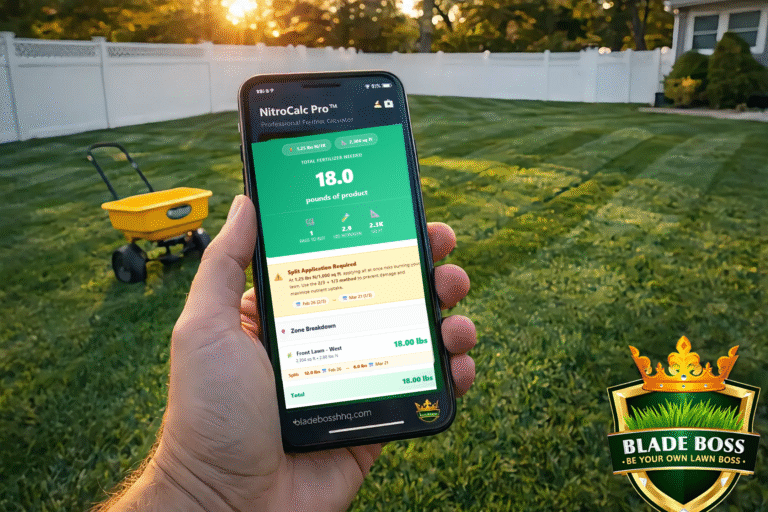
Enter your total square footage, grass type, and maintenance level. The Blade Boss Fertilizer Calculator gives you exact product amounts and spreader settings calibrated to NEIWPCC guidelines for Long Island.
Why Long Island's Sandy Soil Matters for Grass Selection
Most of Nassau and Suffolk County sits on glacial outwash plains with sandy loam soils from the Haven, Riverhead, and Plymouth soil associations. This isn't just trivia. Sandy soil directly impacts which grass types succeed here.
Sandy soils drain fast, which means water and nutrients pass through the root zone quickly. A grass with shallow roots (like KBG at 2 to 3 inches) loses access to moisture faster than a deep-rooted species (like TTTF at 4 to 6 inches). Sandy soils also warm faster in spring, which is why Long Island's pre-emergent window opens 8 days earlier than old charts suggest. And they leach nitrogen faster, which means your fertilizer doesn't last as long. This is why TTTF performs so reliably on Long Island: its deep roots extract moisture and nutrients from soil layers that KBG's roots can't reach.
Before you buy a single bag of seed, get a soil test from Cornell Cooperative Extension. Your pH needs to be between 6.0 and 7.0 for any cool-season grass to thrive. Sandy Long Island soils tend to run slightly acidic (5.5 to 6.5), so lime amendments are common. A $20 soil test prevents hundreds of dollars in wasted seed and fertilizer. Our pre-emergent timing guide covers soil temperature monitoring if you want to get serious about data-driven timing.
Nitrogen Requirements and Long Island Regulations
Every grass type has different nitrogen requirements, and Long Island has some of the strictest fertilizer regulations in the country. You need to match your grass choice to what you're legally allowed to apply.
Long Island sits over a sole-source aquifer, so NEIWPCC sensitive-area guidelines cap annual nitrogen at 2.0 lbs per 1,000 square feet, with a maximum of 0.7 lbs per application and no more than 0.5 lbs of water-soluble nitrogen per application. Suffolk County's fertilizer blackout runs November 1 through April 1. Nassau County's runs November 15 through April 1. New York State bans phosphorus on established lawns unless a soil test shows a deficiency.
What this means for grass selection: if you're choosing KBG, which wants 2 to 4 lbs N per year at medium to high maintenance, you're bumping against regulatory limits. TTTF and Fine Fescue, which perform well at 1.5 to 2.5 lbs N, fit within the guidelines comfortably. This is one more reason TTTF is such a smart choice for Long Island: it delivers strong results within the legal nitrogen cap.
Seeding and Overseeding on Long Island
The best time to plant grass seed on Long Island is September 1 through October 15. Soil temperatures during this window range from 68°F down to 57°F, which is right in the 50 to 65°F optimal germination zone. Fall seeding gives you three massive advantages: no crabgrass competition (crabgrass dies at first frost), natural rainfall from fall storms, and a full fall plus spring growing season before the next summer stress period.
If you're seeding KBG-heavy blends, start by early September. KBG needs 14 to 30 days to germinate, and you want established seedlings before soil drops below 50°F (around October 17 on Long Island). TTTF and PRG are more forgiving with later seeding since they germinate much faster.
Always core aerate before overseeding. On Long Island's compacted sandy loam, aeration pulls 2 to 3 inch plugs that create perfect seed-to-soil contact. Overseed the same day you aerate while the holes are fresh. Top-dress with a thin layer (0.25 inches) of compost for moisture retention. Then stay off the lawn for 3 to 4 weeks while seedlings establish. Our complete Long Island lawn care calendar maps these windows month by month with exact soil temperature data.
Grasses to Avoid on Long Island
Not every grass sold at the big box stores works here. Avoid these on Long Island:
Bermudagrass
Warm-season grass that cannot survive Zone 7B winters. Will winterkill. If you see it in a "sun and shade" mix at a garden center, pass. The only warm-season grass that survives Long Island winters is Zoysia, and even that's marginal.
St. Augustinegrass
Tropical grass. Cannot survive temperatures below 20°F. Long Island gets well below that most winters. Not even close to viable here.
Centipedegrass and Bahiagrass
Both are southeastern warm-season grasses that need Zone 8 or warmer. They will not survive a Long Island winter.
Annual Ryegrass (Lolium multiflorum)
This is NOT the same as Perennial Ryegrass. Annual rye is a temporary cover crop that dies after one season. It germinates fast (which is why cheap seed mixes include it) but leaves you with bare dirt when it dies out. Always check the seed label for "Perennial Ryegrass" specifically.
K-31 Tall Fescue
The old-school, wide-bladed, clumpy Tall Fescue your dad might have planted. Modern Turf-Type Tall Fescue (TTTF) varieties are dramatically improved with finer blades, better color, and denser growth. Always look for "Turf-Type" on the label. K-31 is cheap for a reason.
How to Read a Grass Seed Label
The seed label tells you everything. Here's what to look for before you spend a dollar.
- Germination rate above 85%. Premium seed runs 90% or higher. Anything below 80% means you're paying for dead seed.
- Weed seed below 0.5%. Cheap seed mixes hide high weed percentages. Zero weed seed is ideal but hard to find. Under 0.5% is acceptable.
- "Other crop" at 0%. This is where they sneak in Annual Ryegrass. If you see any percentage here, check what species it is.
- Named cultivars, not just species. "Kentucky Bluegrass" is vague. "Midnight Kentucky Bluegrass" or "Mazama KBG" tells you they're using proven, high-performing cultivars. Check NTEP trial data for cultivar performance ratings.
- Test date within 9 months. Seed viability drops over time. The fresher the test date, the higher your actual germination rate.
- No "VNS" (Variety Not Stated). VNS means they're using the cheapest generic seed available. This is the grass equivalent of "mystery meat." Pass.
The Decision Framework
Still not sure? Answer these four questions. Your answers determine your grass type.
How much sun does your lawn get?
Walk your yard on a sunny day and note hours of direct sunlight in each zone. 6+ hours: KBG, TTTF, or PRG all work. 4 to 6 hours: TTTF or KBG/Fine Fescue blend. Under 4 hours: Fine Fescue, period.
Will you irrigate through summer?
Yes: KBG-dominant blend. KBG stays green and gorgeous with consistent water. No: TTTF. Its deep roots handle Long Island's summer drought without irrigation. KBG will go dormant (survivable, but brown).
How much maintenance are you willing to do?
High effort (weekly mowing, 3 to 4 fertilizer apps, disease monitoring): KBG-dominant blend. Moderate effort (regular mowing, 2 to 3 fertilizer apps): TTTF or mixed blend. Low effort (mow when needed, 1 to 2 fertilizer apps): Fine Fescue or TTTF.
How do your kids and dogs use the yard?
Heavy traffic (daily play, dog runs): TTTF or KBG. Both handle wear well. Light traffic (occasional use): Any species works. Very low traffic (mostly look, don't touch): Fine Fescue is fine.
Making It Happen
Knowing your grass type is step one. I built Blade Boss because choosing the right grass is only 20% of the equation. The other 80% is timing: when to seed, when to fertilize, when to when to mow, and when to leave your lawn alone. Get the timing wrong and even the best cultivar in the world underperforms.
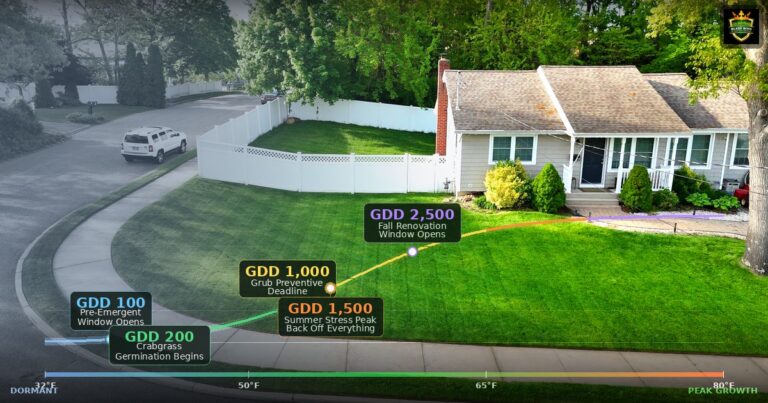
Our complete Long Island lawn care calendar maps every activity to exact soil temperature windows based on 30-year NOAA data. The Blade Boss Weather Hub inside Lawn Map Pro™ tracks your growing degree day accumulation and soil temperature in real time so you never miss a window. And the live zone calendar adjusts recommendations dynamically based on current conditions, not generic national averages.
The best grass in the world, planted at the wrong time or fed with the wrong rate, still gives you a mediocre lawn. Data changes that.
Chris C. is a Combat Search and Rescue pilot turned airline pilot and the founder of Blade Boss. He tests these grass varieties on his own Long Island lawn and backs every recommendation with university extension research and USDA Zone 7B performance data.
Join Blade Boss free and get access to Seed Genius, the Fertilizer Calculator, and real-time zone tracking for your Long Island lawn. See what data-driven lawn care looks like before you spend a dollar.
Start Free →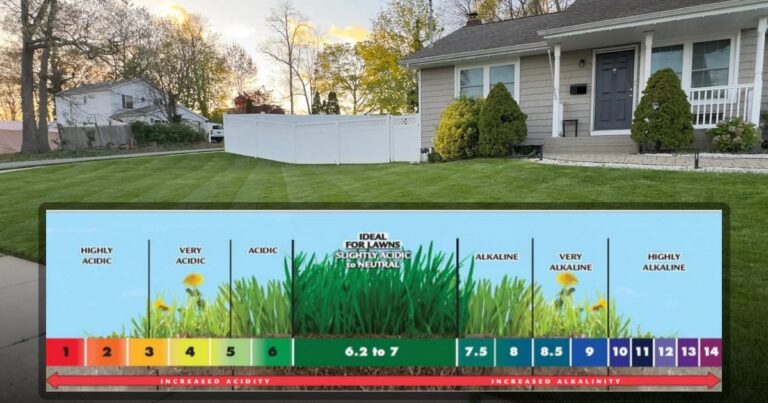
Create a free account to join the conversation.