

GUIDE DIAG-04 · REV A
How to Get Rid of Moss in Your Lawn
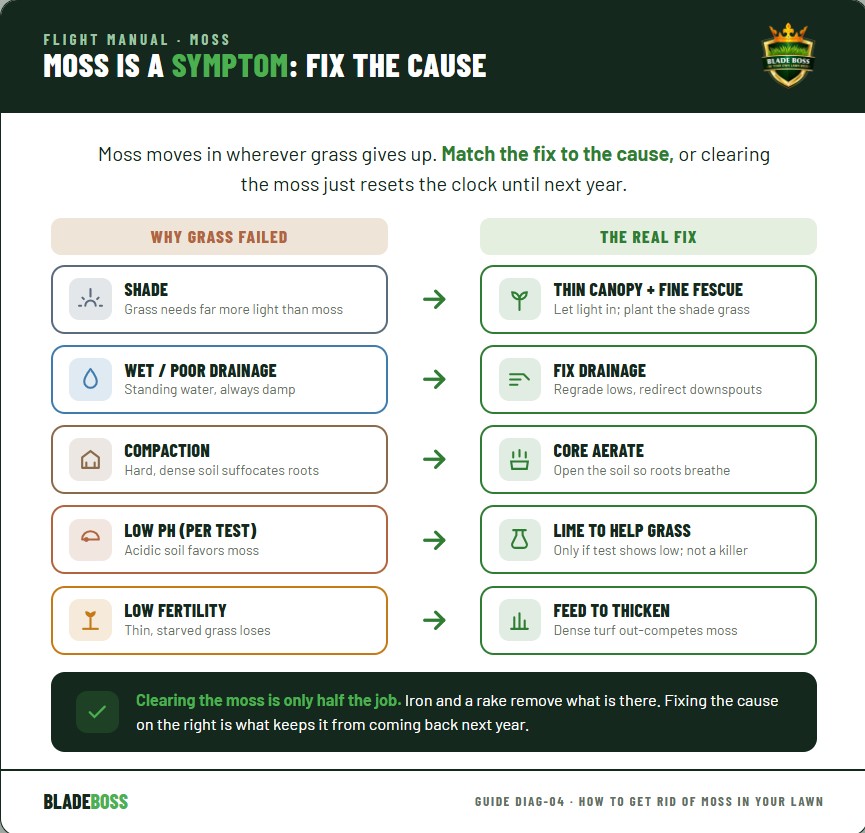
Here is the truth almost nobody tells you about moss: the moss is not really the problem. Moss is a symptom. It moves into the exact spots where grass is struggling, too shady, too wet, too compacted, too acidic, or too starved to compete. You can scrape it all out or torch it with iron, and it feels great for a week, but if you do not fix why the grass gave up there, the moss walks right back in. This guide shows you how to clear the moss AND fix the real reason it showed up, so grass wins the spot back for good.
Pre-Flight Checklist - What You Need

As an Amazon Associate, Blade Boss earns from qualifying purchases. It never costs you a penny more.
Rules of Engagement (ROE's)
The Flight Plan - Step by Step
Diagnose Why the Moss Is There
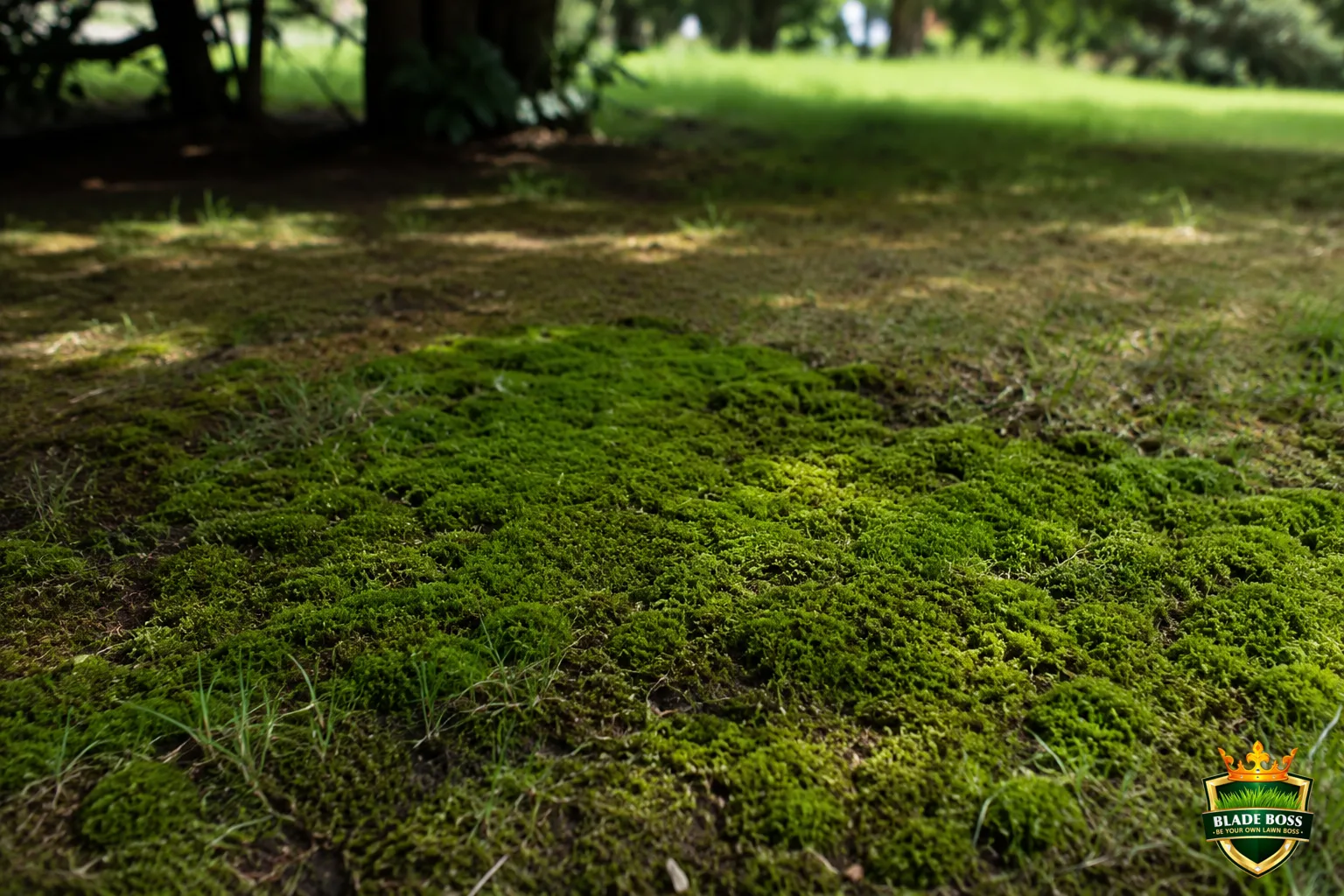
This is the step that separates a real fix from a temporary one. Moss thrives exactly where grass struggles, so the presence of moss is a map to what is wrong with that spot. Before you touch it, figure out which of these conditions (often more than one) is letting moss win.
- Shade: is the spot under trees or on the north side of the house, getting only a few hours of light? Grass needs far more light than moss does.
- Wet or poor drainage: does water sit there, or is the soil always damp? Moss loves constant moisture.
- Compaction: is the soil hard and dense (heavy traffic, clay)? Compacted soil suffocates grass roots but suits moss fine.
- Low pH or low fertility: acidic, hungry soil favors moss over grass. A soil test tells you if this is part of the picture.
Clear Out the Existing Moss
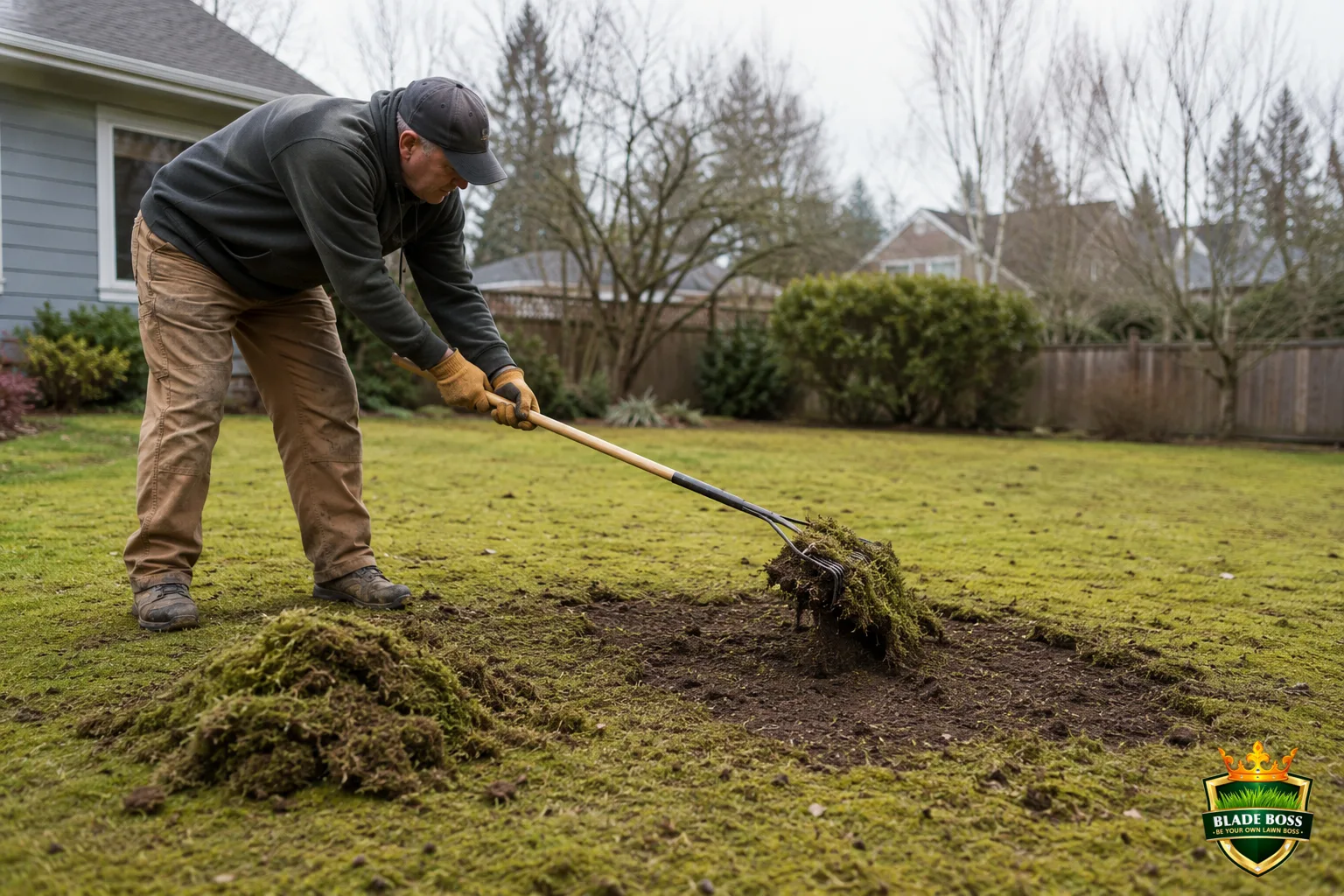
Once you know the cause, remove the moss that is there. You have two ways to do it, and they combine well: knock it back chemically with iron first, then physically rake it out. The goal is to strip the moss mat off so you have clean ground to fix and reseed.
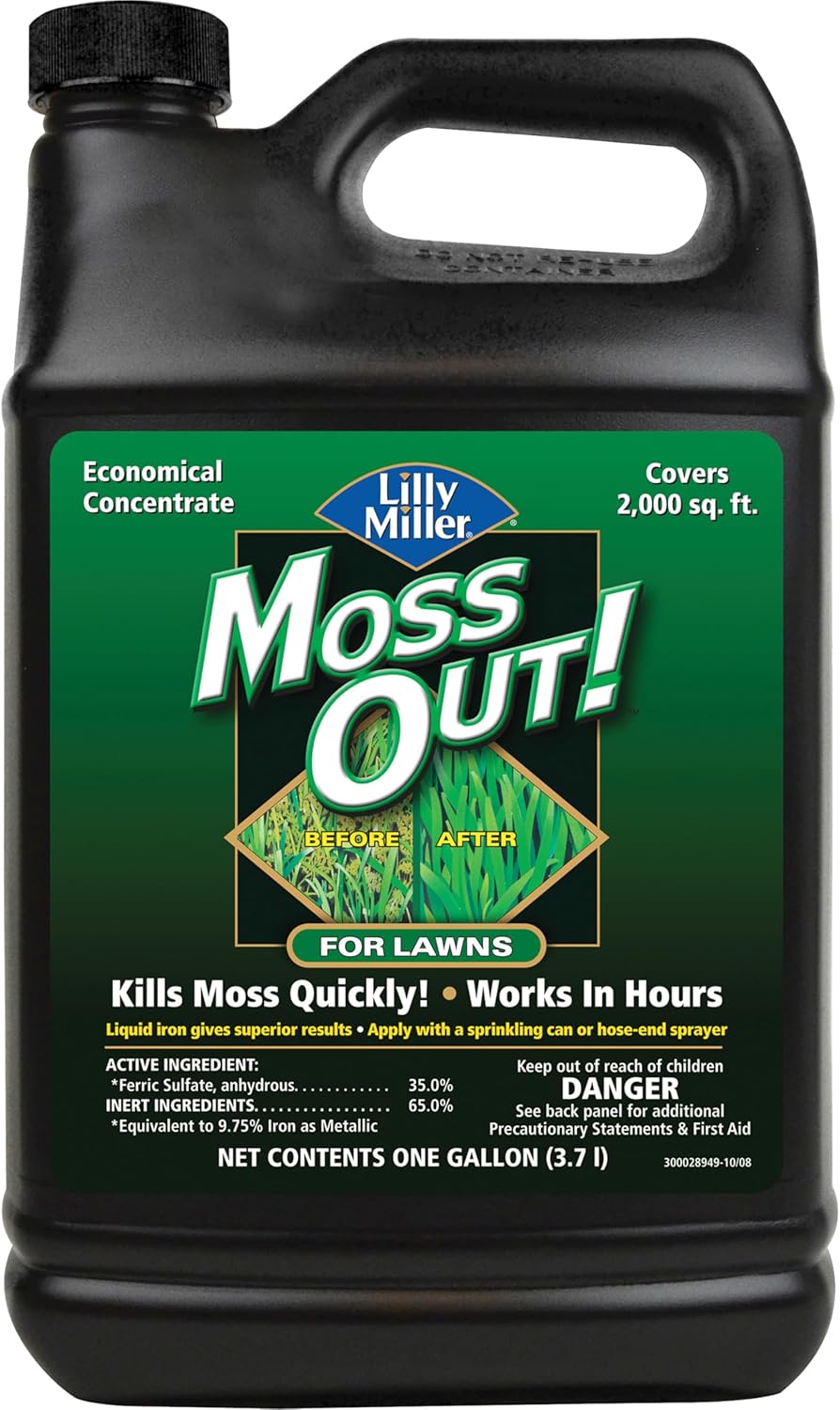
- Optional first move, iron: a ferrous sulfate (iron) product blackens and kills moss on contact within a day or two, which makes it much easier to rake out. Iron kills the moss but does not fix why it was there.
- Wait for firm ground: do not rake soggy soil. Let the area dry out so you are not tearing up and compacting wet dirt.
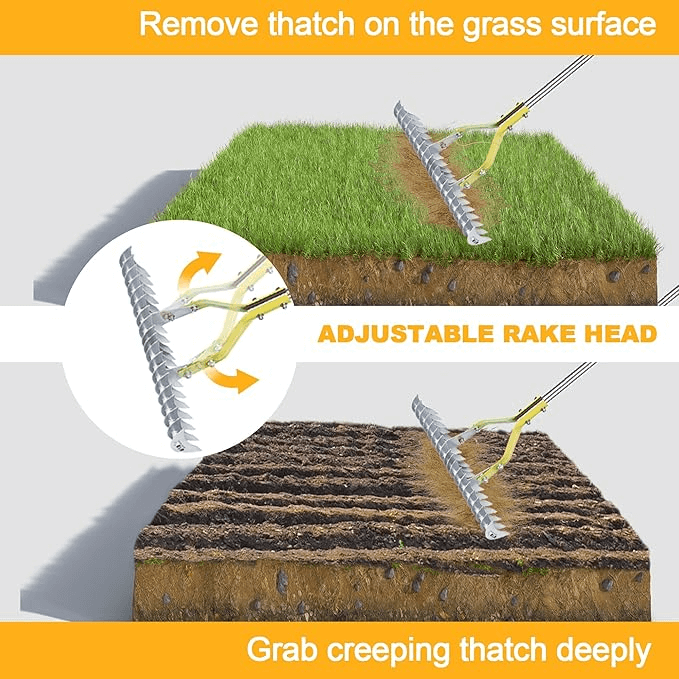
- Rake it out aggressively: use a thatch or moss rake to pull up as much of the mat as you can, down to the soil.
- Bag and remove the moss, do not leave the raked mat lying on the lawn.
Fix the Real Cause
This is the half that actually matters, and the half most people skip. Match the fix to the cause you diagnosed in Step 1. You may have more than one to address, tackle the ones that apply to your spot.
- Shade: prune and thin overhanging branches to let more light in. If it stays deeply shaded, plan to reseed with fine fescue, the one grass that tolerates shade.
- Wet or poor drainage: fix where water sits, regrade a low spot, redirect a downspout, or improve the drainage. Moss will keep returning anywhere water pools.
- Compaction: core aerate the area to open up hard soil so grass roots can breathe and grow.
- Low pH or fertility: if your soil test showed low pH, apply lime per the results to help grass compete (lime is not a moss killer, it just favors the grass). If fertility is low, a balanced feeding thickens the grass so it out-competes moss.
Reseed and Keep Grass Winning
You cleared the moss and fixed the cause, now fill the space with grass before moss (or weeds) reclaim it. Bare ground in a formerly mossy spot is an open invitation for the moss to come back, so get desirable grass established and keep it thick.
- Reseed the cleared area once conditions are right (fall is ideal on Long Island), matching the seed to the spot: fine fescue for shade, a quality blend for sun.
- Keep the new seed moist through germination, then ease off, you want the grass established, not the area kept swampy.
- Feed the grass so it grows in thick. Dense, healthy turf is the best long-term moss defense there is.
- Stay ahead of it: if the conditions that caused it creep back (shade grows in, soil compacts again), address them before moss re-establishes.
Abort Criteria - Common Mistakes
Mission Complete. Now Fly the Plan.
Moss is not the enemy, it is a signal. It is telling you that grass cannot win in that spot as things stand. So clear the moss (iron then rake), but spend your real effort on the cause: light, drainage, compaction, pH, and fertility. Fix that, reseed with the right grass, keep it fed and thick, and the moss has nowhere to move back into. Start by figuring out your soil with a soil test, correct pH if it is low, and for shady spots, plant the one grass that can handle it with how to grow grass in shade.
Want This as a Printable Field Manual?
Drop your email and the print-ready PDF version lands in your hands. Take it to the lawn, no phone required.
Crew Questions - FAQ
How do I permanently get rid of moss in my lawn?
The only way to get rid of moss permanently is to fix the underlying condition that let it move in, because moss is a symptom, not the root problem. It thrives where grass is struggling: in shade, in wet or poorly drained soil, in compacted ground, and in acidic or low-fertility soil. So the permanent fix is two-part: clear the existing moss (rake it out, optionally after knocking it back with an iron product), and then correct the actual cause, whether that is thinning shade, improving drainage, aerating compaction, adjusting pH per a soil test, or feeding to thicken the grass. If you only remove the moss without fixing the cause, it will return, usually within a season.
Does lime get rid of moss?
Not directly, and this is one of the most common lawn myths. Lime does not kill moss. What lime does is raise soil pH, which can help grass compete better against moss, but only if your soil is actually acidic to begin with. If a soil test shows your pH is low, correcting it with lime is a legitimate part of the fix because it favors the grass. But if your pH is already in a good range, adding lime does nothing to the moss and can push your soil too alkaline, creating a new problem. Always test your soil before liming, and treat lime as a grass-helper, not a moss killer.
What actually kills moss?
Iron, specifically ferrous sulfate, is the active ingredient in most moss killers, and it kills moss on contact, typically blackening it within a day or two. That makes the moss much easier to rake out. You can also remove moss purely mechanically by raking the mat out with a thatch or moss rake. Both work for clearing the moss that is present. The critical point, though, is that killing or removing the moss only handles the visible symptom. Unless you also correct why grass could not grow there (shade, moisture, compaction, pH, or fertility), the moss simply returns, so removal should always be paired with fixing the cause.
Why do I keep getting moss in the same spot every year?
Because the condition that favors moss in that spot has not been fixed. Moss returns to the same places year after year when those spots have a persistent problem that keeps grass from thriving, most often deep shade, chronic moisture or poor drainage, compacted soil, or acidic, low-fertility ground. Each spring the moss simply reoccupies the ground that grass cannot hold. Breaking the cycle means identifying which of these conditions applies to that specific area and correcting it, then reseeding with grass suited to the spot (for example fine fescue in shade) and keeping the turf dense and fed so it out-competes the moss.
Can I just rake the moss out?
Raking is an important part of removing moss, but by itself it is only half the job. You can absolutely rake the moss mat out with a thatch or moss rake, and doing it on firm (not soggy) ground, optionally after killing the moss with an iron product first, gives you clean soil to work with. But raking only removes what is there now. If the spot is still shady, wet, compacted, or acidic, moss will grow right back into the bare ground you just cleared. So rake the moss out, yes, but always pair it with fixing the underlying cause and reseeding, or you will be raking the same spot again next year.
Will grass grow back where the moss was?
Yes, but only if you fix the conditions that let moss take over in the first place. Once you have cleared the moss and corrected the cause, whether that is adding light by thinning shade, improving drainage, aerating compaction, adjusting pH, or feeding the soil, you reseed the cleared area with grass suited to the spot. In heavy shade that means fine fescue, the one cool-season grass that tolerates low light; in sun, a quality blend. Keep the new seed moist through germination and then feed the grass so it fills in thick. Established, dense, well-fed turf is what holds the ground against moss long term. If you reseed without fixing the cause, though, the new grass will struggle just like the old grass did.