
BLADEBOSS
FLIGHT MANUAL · HOW-TO SERIES
GUIDE SEED-01 · REV A
Flight School for Your Lawn

How to Overseed Your Lawn

Overseeding is how a thin, tired lawn gets thick again. It is also the step people fumble the most, because they buy the wrong seed, guess at the rate, throw it on hard ground, and then let it dry out on day four. Seed does not care how much you spent. It cares about soil contact and constant moisture. Get those two right in the fall window and you will not recognize the lawn next spring.

Updated Jul 2026
Difficulty
★★★★★
Active Time
2-4 Hours
Best Season
Late Summer / Fall
Cost
$100-$250

Pre-Flight Checklist - What You Need
DON'T WALK SLOW
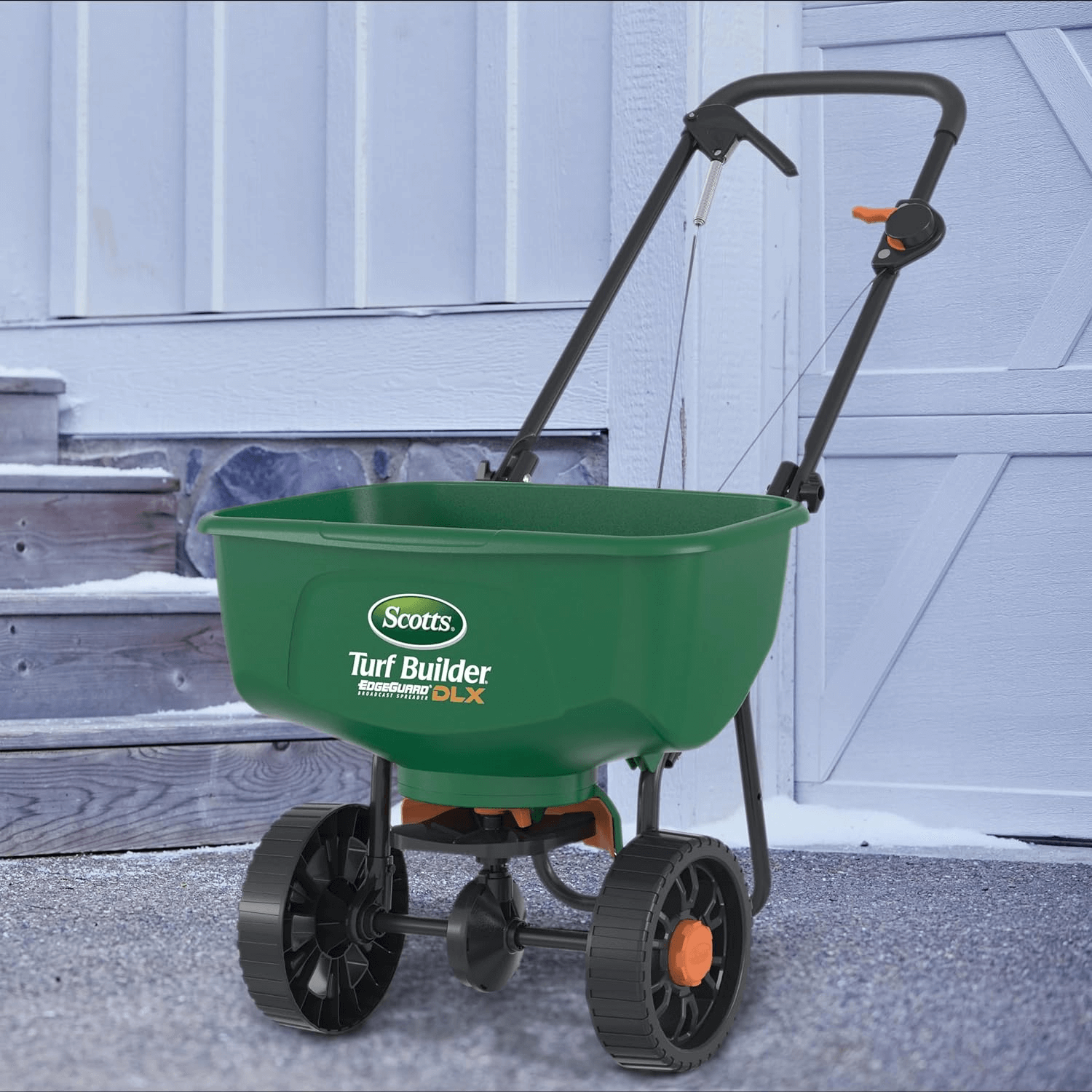
Scott's Deluxe Broadcast Spreader
$89.97
VIEW ON AMAZON →
STARTER
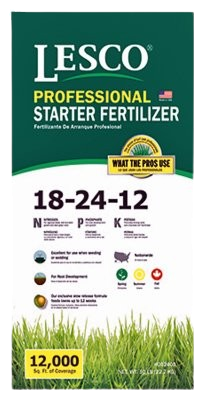
Lesco Starter Fertilizer (18-24-12)
$79.97
VIEW ON AMAZON →
BUDGET FRIENDLY
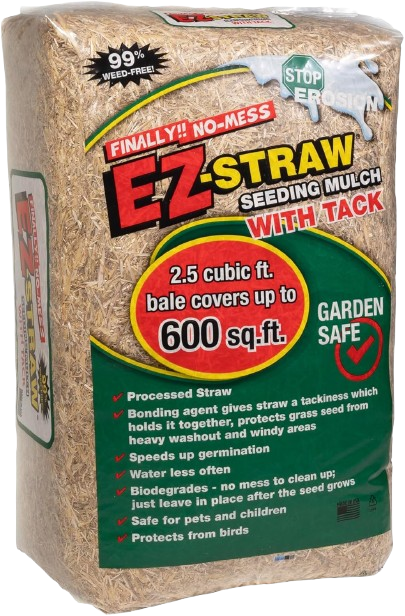
EZ-Straw Seeding Mulch with Tackifier
$21.32
VIEW ON AMAZON →

As an Amazon Associate, Blade Boss earns from qualifying purchases. It never costs you a penny more.

Mission BriefingTwo things decide whether overseeding works, and neither one is the price of the seed: seed-to-soil contact and constant moisture until germination. Seed lying on top of hard ground or thatch will not grow, and seed that dries out once for a single afternoon after it sprouts is dead. That is why this guide comes after dethatching and aerating. Those two steps build the seedbed this one depends on.

Rules of Engagement (ROE's)

Always
Overseed in the fall window: late August through late September on Long Island.
Buy seed with a named cultivar on the label, not a generic contractor mix.
Open the soil first: dethatch if needed, then core aerate.
Run your exact rate before you buy. Overseeding uses far less seed than a new lawn.
Spread half the seed in each of two perpendicular passes.
Put down starter fertilizer at seed-down.
Keep the top inch of soil damp until germination, then taper off.
Never
Let the seed dry out after it germinates. One hot afternoon will kill the whole stand.
Apply pre-emergent (crabgrass preventer) anywhere near seeding. It blocks grass seed too.
Buy a bag with no cultivar names or a high percentage of weed seed and inert filler.
Bury the seed. A quarter inch of soil contact is plenty. Deeper and it never surfaces.
Throw seed on hard, unopened ground and hope. That is birdseed.
Mow too early. Wait for the new grass to reach mowing height.
Apply phosphorus without a soil test. New York bans it on established lawns, and most LI soil is already high.

The Flight Plan - Step by Step

Buy Seed That Is Actually Worth Planting

Flip the bag over. Good seed lists named cultivars, specific varieties bred for disease resistance and color. Cheap contractor mixes name only a species and hide weed seed and inert filler in the fine print. A bargain bag is not a deal, it is paying to plant weeds into a lawn you just spent a weekend preparing.
Cleared to LandMembers buy seed at wholesale. We will not point you at one bag and call it the answer, because the right seed depends on your soil, your sun, and what is already growing. Instead, Blade Boss members get our corporate wholesale pricing, at cost, no markup. Tell us what the lawn needs and we source it. Pickup preferred, local delivery available.
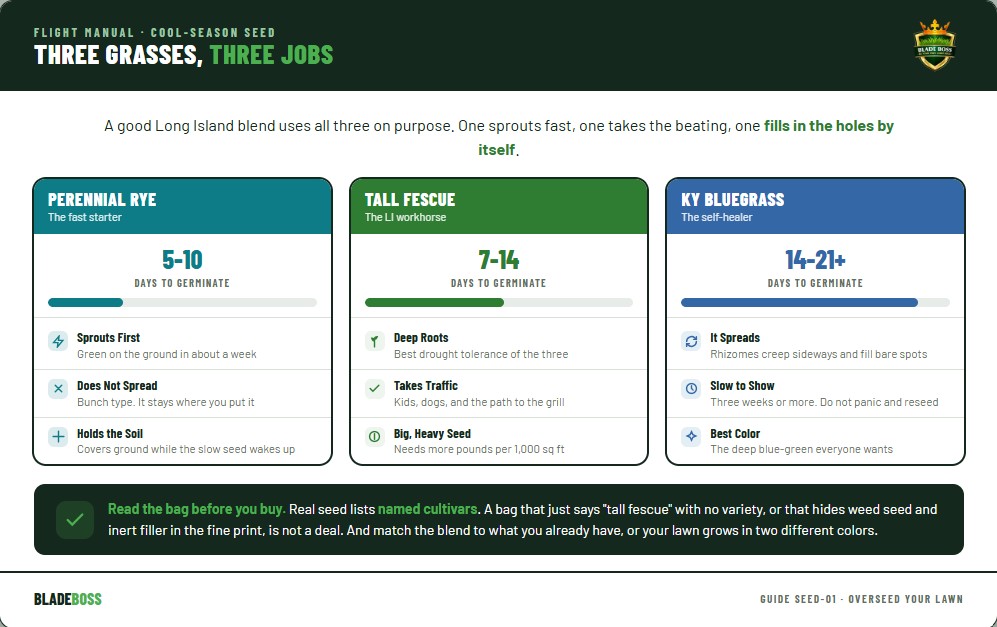
Comparison diagram of tall fescue, Kentucky bluegrass, and perennial ryegrass showing germination speed, spreading habit, and drought tolerance for cool-season lawns
Three cool-season grasses, three different jobs. Most good Long Island blends use all three.

Open the Soil Before You Spread a Thing

Seed needs to touch dirt. Seed sitting on top of thatch or hard, compacted ground will germinate on a wet morning, send a root into nothing, and die. This is the number one reason overseeding fails, and it has nothing to do with the seed.

So run the prep in order: dethatch if your thatch is over half an inch, then core aerate so you have thousands of open holes. Then mow low, down to about one and a half to two inches, and bag the clippings so seed can fall all the way to the ground instead of hanging up in the canopy.
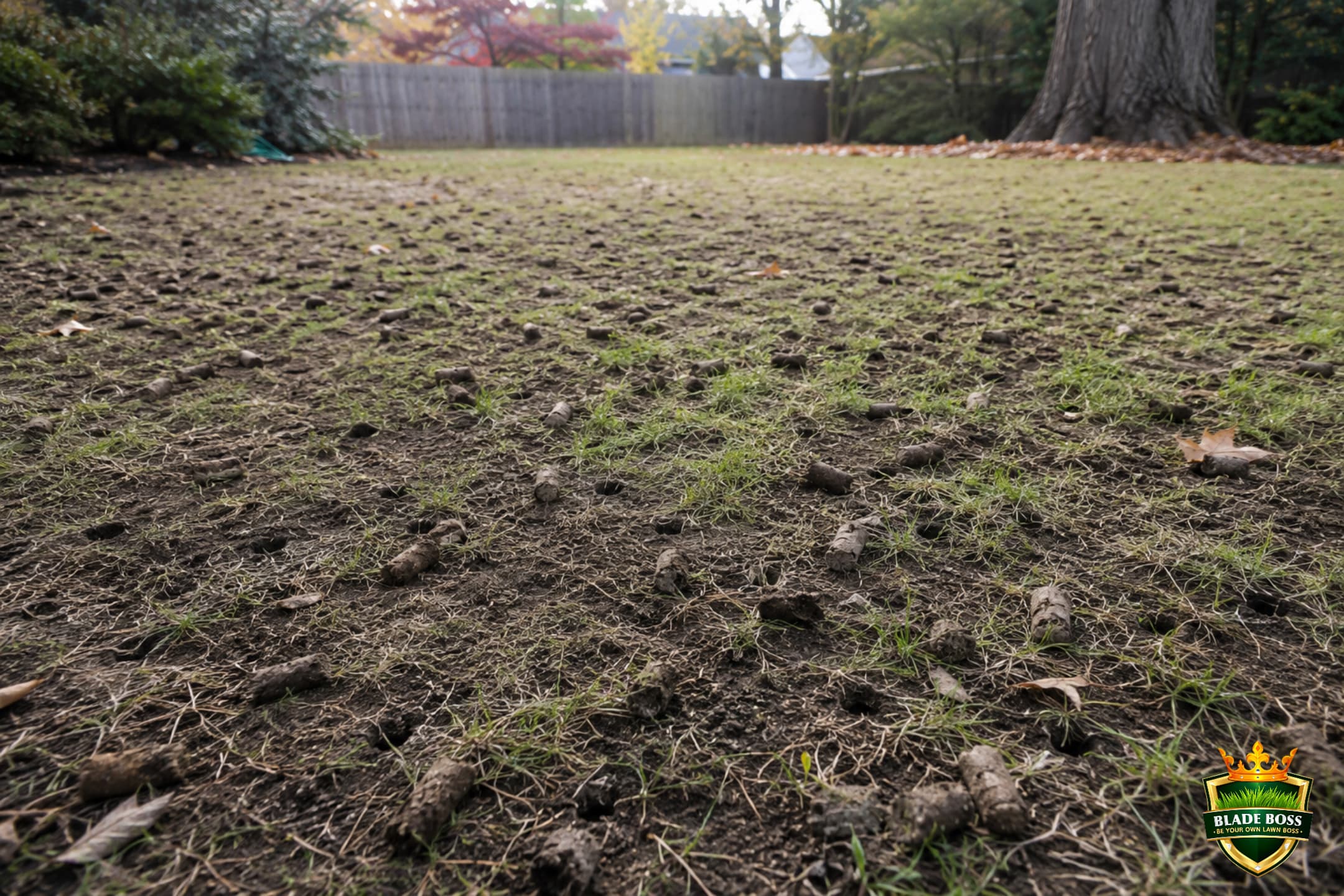
Freshly core aerated lawn mowed low with soil plugs and bare soil exposed, prepared for overseeding
This is what a seedbed looks like. Open soil, not thatch. Seed needs to touch dirt.

Get Your Rate Right Before You Buy

This is where money gets burned in both directions. Overseeding uses roughly half the seed of a brand new lawn, because you already have turf out there. Too little seed and you get a thin, disappointing result. Too much and the seedlings choke each other out competing for water and light, which looks great for three weeks and then thins right back out.

Rates change by grass species too. Kentucky bluegrass seed is tiny and goes a long way. Tall fescue seed is big and heavy and needs far more pounds to cover the same ground. Do not eyeball this, and do not trust the bag's generic coverage number, which assumes a new lawn.

Pro TipKnow your square footage before you shop. If you have not measured, map your zones in Lawn Map Pro and the number comes straight off the satellite image, no tape measure and no guessing.

Spread It in Two Perpendicular Passes

Never dump the whole bag walking in one direction. Set the spreader to half your target rate, walk the entire lawn north to south, then reload and walk it again east to west. Two half-rate passes at right angles cancel out your streaks and give you even coverage. One full-rate pass gives you stripes, and you will see every one of them in October.
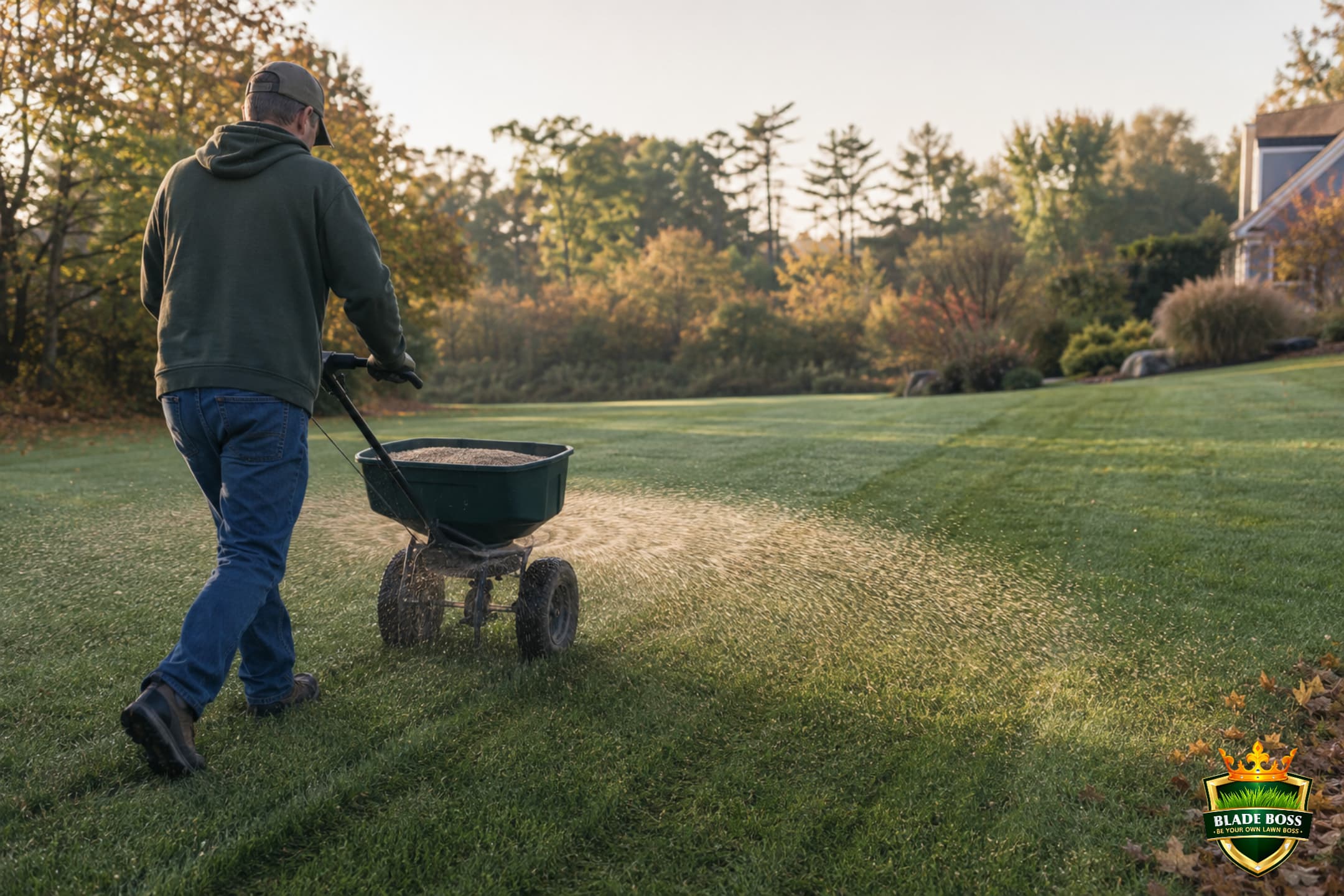
Hold ShortHold Short: walk at a steady, normal pace and keep it consistent. A broadcast spreader meters by wheel speed, so if you dawdle you dump a heavy stripe, and if you speed up you starve that strip. Start walking before you open the hopper and close it before you stop, or you will pile seed at both ends of every pass.
Broadcast spreader fanning grass seed evenly across a lawn during overseeding
Half rate, two perpendicular passes. One full-rate pass gives you stripes you will see all fall.

Starter Fertilizer Goes Down With the Seed

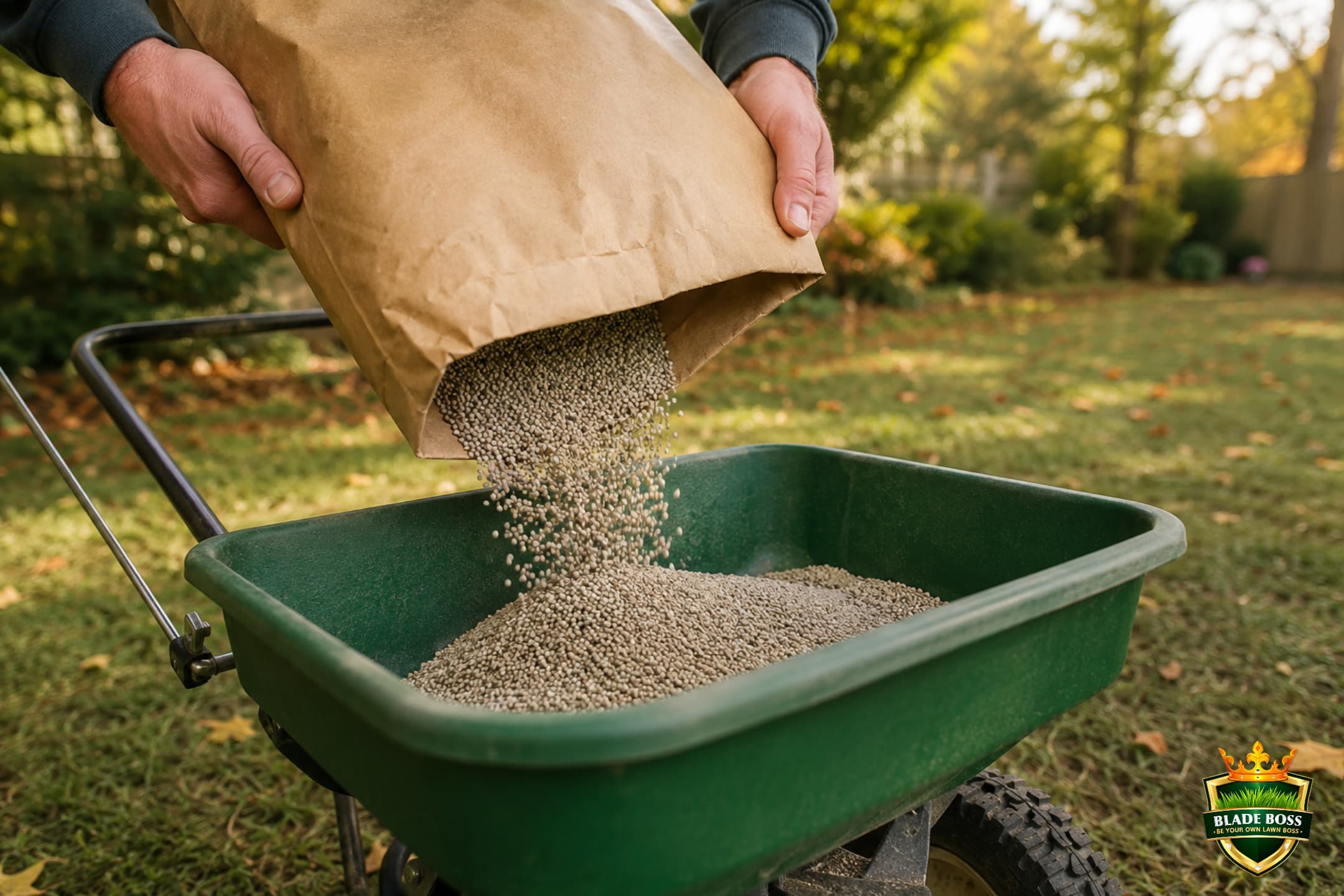
Put fertilizer down the same day you seed. New seedlings have no roots and no reserves, and they need feeding immediately. Starter formulas are built for exactly that. Skip the seed-and-fertilizer combo bags though: they lock you into one ratio and one rate, and they cost more per pound of actual seed.
Hold ShortHold Short - check the middle number: that is phosphorus, and on Long Island it is a legal issue, not a preference. New York State bans phosphorus fertilizer on established lawns unless a soil test shows a deficiency, and overseeding an existing lawn counts as established. Cornell found 86% of Suffolk County soil samples already test high in phosphorus, so for most people here, adding more does nothing for the grass anyway. Phosphorus does not leach out like nitrogen, it just builds up and runs off into the aquifer.
Pro TipSo which bag do you buy? Get a soil test first. If your phosphorus is high, like most Long Island lawns, buy a zero-phosphorus starter (middle number 0: 32-0-4, 24-0-11, 29-0-5) and let the nitrogen and potassium do the work. A high-phosphorus starter like 18-24-12 is the right call only when your soil test actually shows a deficiency, or when you are establishing a brand new lawn from bare soil rather than overseeding.
Granular starter fertilizer being poured into a broadcast spreader hopper on a freshly seeded lawn
High phosphorus, down the same day as the seed. New roots need it now, not next month.

Water Like the Whole Thing Depends On It

Because it does. This is where almost every overseeding job dies. Once a seed absorbs water and cracks open, it has committed. If it dries out even once, it is gone. Not stressed. Dead. And you will not know until two weeks later when nothing comes up.

So change how you think about watering. Forget deep and infrequent, that is for established lawns. New seed wants light and frequent: short cycles two or three times a day, just enough to keep the top inch of soil constantly damp, never puddling. Once the seedlings are up and growing, start backing off: water longer, less often, and push those young roots down to chase it.
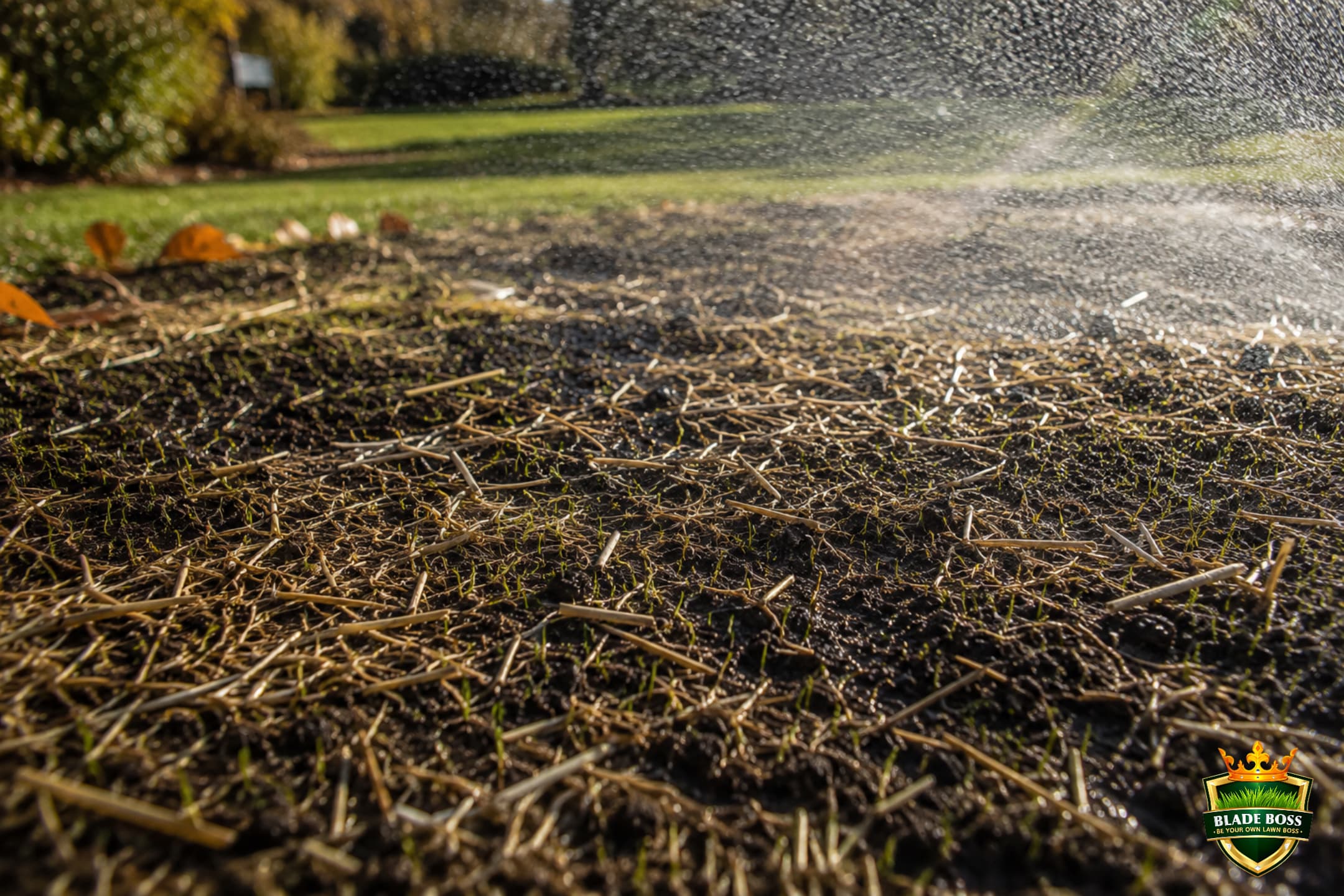
Hold ShortHold Short: the killer is a hot, windy afternoon in week one, when the surface dries out while you are at work and nobody notices. Germinating seed sits in the top quarter inch of soil, which is exactly the layer that dries first. If you cannot water midday, put down a light straw or seeding mulch to hold the moisture in. That thin blanket is what saves the stand.
Fine spray of water landing on newly seeded lawn covered with thin straw seeding mulch as seedlings emerge
Keep the top inch damp. A thin straw layer is what saves the stand on a hot, windy afternoon.

Leave It Alone While It Grows In

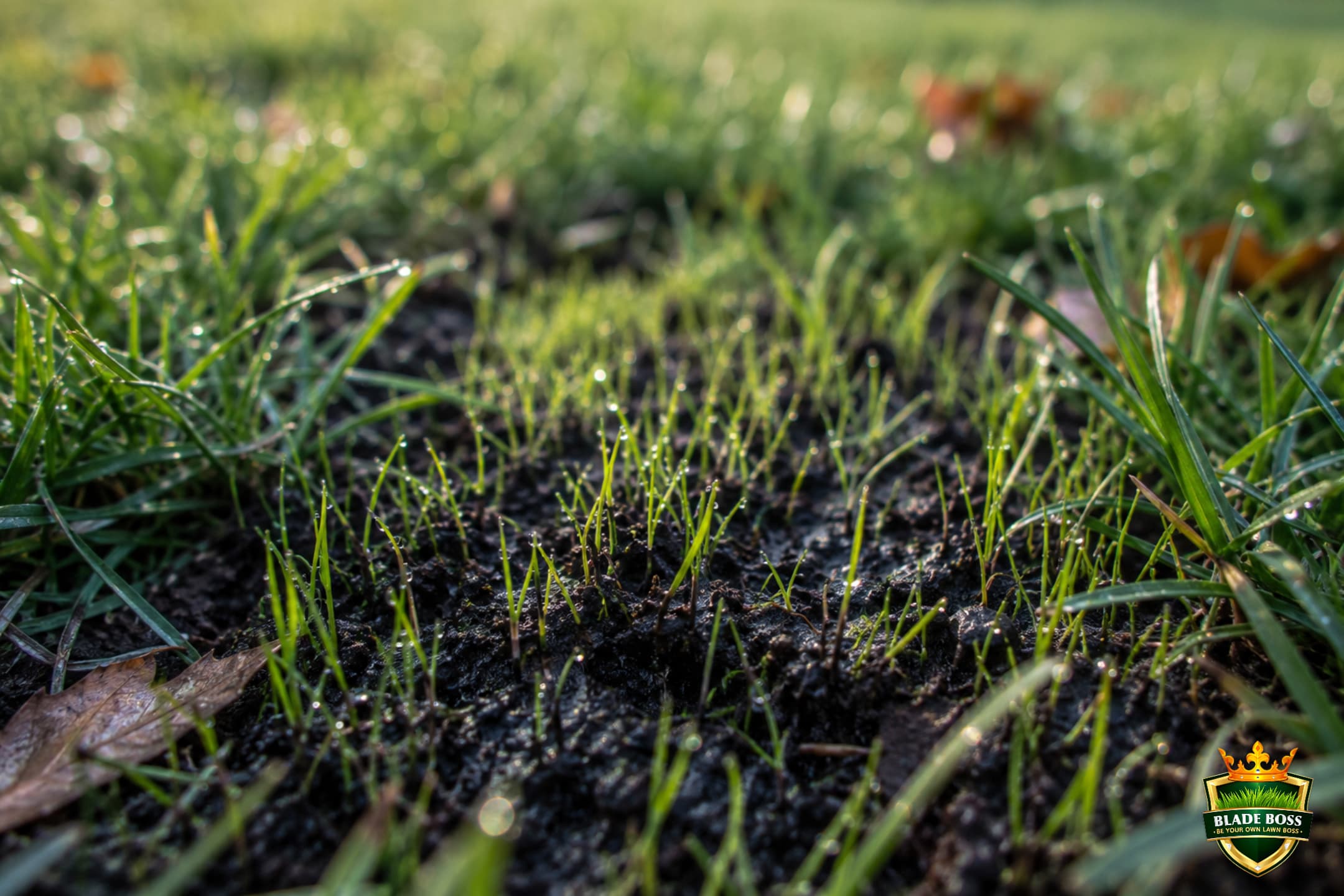
Your job now is patience. Perennial ryegrass shows up in about 5 to 10 days, tall fescue in 7 to 14, Kentucky bluegrass takes 14 to 21 days and sometimes longer. If you seeded a blend, the lawn will come in unevenly and look patchy for a couple of weeks. That is normal. Do not panic and reseed on top of it.

Wait for the new grass to reach about three to three and a half inches before the first mow, use a sharp blade (a dull one will yank young plants clean out of the ground, roots and all), and never take off more than a third of the blade. Keep foot traffic and the dog off it as long as you can stand to.
Hold ShortHold Short: do not put down crabgrass pre-emergent on a lawn you just seeded. Pre-emergent does not know the difference between crabgrass seed and grass seed, and it will stop your new lawn cold. Wait until the new grass has been mowed a few times, and plan your spring pre-emergent around this fall seeding.
New bright green grass seedlings emerging from dark soil among established turf after overseeding
Patience. A blend comes in unevenly over several weeks. That is normal, not a failure.

Run Your Exact Seed Rate in SeedGenius Pro

Punch in your square footage, your grass type, and whether you are overseeding or starting fresh. SeedGenius Pro gives you the exact pounds you need and how many bags to buy, so you stop guessing and stop overpaying for seed you do not need.

Open SeedGenius Pro →
What are you actually trying to fix?
IF Lawn is thin but mostly there
Straight overseed. Aerate, spread at the overseeding rate (about half the new-lawn rate), starter fert, and water. Run the numbers first so you buy one bag instead of three. Get your rate in SeedGenius Pro →
IF Bare patches and dead spots
Spot-seed at the full new-lawn rate on the bare areas only, and rough up the soil surface first so the seed makes contact. Cover with a thin layer of seeding mulch, and water those patches separately since they dry out faster than the rest of the lawn.
IF More than half the lawn is dead or weeds
Overseeding will not save it. You are looking at a full renovation: kill it off, dethatch, aerate, and seed at the full new-lawn rate. Doing it right once beats overseeding a losing lawn three years in a row.

The Zone 7B Seeding Window and the Watering Schedule

Members get the Long Island soil-temperature seeding windows, germination timelines by species, and the day-by-day watering schedule that takes new seed from spread to first mow without losing the stand.

Unlock with Membership →

Abort Criteria - Common Mistakes

Letting the seed dry out after it germinates. The number one killer. Once a seed cracks open it is committed, and one hot afternoon ends it. Short cycles 2 to 3 times a day until it is up and growing.
Throwing seed on hard, unopened ground. That is birdseed. Dethatch if needed, core aerate, and mow low first so the seed reaches actual soil.
Applying crabgrass pre-emergent near a seeded lawn. Pre-emergent cannot tell your grass seed from crabgrass seed. It will stop your new lawn cold. Keep it far away from fall seeding.
Grabbing a high-phosphorus starter fertilizer without a soil test. New York bans phosphorus on established lawns unless a soil test shows deficiency, and 86% of Suffolk soils already test high. If yours is high, the phosphorus does nothing. Get a soil test, then buy zero-P unless it says otherwise.
Buying a cheap contractor mix with no cultivar names. Read the label. No named cultivars means you are paying to plant filler, weed seed, and inert matter into your lawn.
Guessing the seeding rate or trusting the bag. The bag assumes a new lawn. Overseeding takes roughly half that, and it changes by species. Run it in SeedGenius Pro.
Dumping the full rate in one direction. You will get stripes. Set the spreader to half rate and make two perpendicular passes.
Burying the seed with topsoil. Grass seed needs light contact, not a blanket. A quarter inch is plenty. Buried seed never surfaces.
Mowing too early or with a dull blade. Wait for 3 to 3.5 inches. A dull blade rips young seedlings out of the ground by the roots.
Panicking at week two and reseeding on top. Kentucky bluegrass can take 21 days or more. A blend comes in unevenly. Give it time before you dump more seed.

Mission Complete. Now Fly the Plan.

Overseeding is the payoff for every hour you spent dethatching and aerating. Do not gamble it on a guess at the bag. Run your square footage and grass type through SeedGenius Pro to get the exact pounds you need, then keep that top inch damp until it is up. Next spring you will be looking at a lawn nobody on the block can figure out.

Open SeedGenius Pro →▶ VIDEO WALKTHROUGH - COMING SOON

Crew Questions - FAQ

When is the best time to overseed a lawn on Long Island?

Late August through late September. Soil temperatures are still warm enough for fast germination while the air is cooling, weed pressure is dropping, and the new grass has time to root before frost. Spring works as a backup but it conflicts with crabgrass pre-emergent and summer heat arrives before the lawn is established.

How much grass seed do I need to overseed?

Roughly half of what a brand new lawn requires, because you already have existing turf. The exact rate depends on your square footage and your grass species, since Kentucky bluegrass seed is tiny and tall fescue seed is large and heavy. The coverage number on the bag usually assumes new seeding, not overseeding, so it will lead you to buy too much.

Do I need to aerate before overseeding?

It is the single best thing you can do for your results. Seed needs direct contact with soil, and core aeration creates thousands of open holes that act as protected seed pockets. Seed broadcast onto hard, compacted ground mostly feeds the birds.

How often should I water new grass seed?

Light and frequent, not deep and infrequent. Two to three short cycles a day to keep the top inch of soil constantly damp until the seed germinates. Once seedlings are up, gradually water longer and less often to drive the roots deeper. If germinating seed dries out even once, it dies.

Can I put down crabgrass preventer after overseeding?

No. Pre-emergent herbicide works by preventing seeds from germinating, and it cannot distinguish crabgrass seed from the grass seed you just paid for. It will stop your new lawn cold. Plan your spring pre-emergent application around your fall seeding schedule.

How long does grass seed take to germinate?

It depends on the species. Perennial ryegrass emerges in about 5 to 10 days, tall fescue in 7 to 14, and Kentucky bluegrass takes 14 to 21 days or longer. If you planted a blend, expect the lawn to come in unevenly over several weeks. That is normal and not a reason to reseed.

Should I cover grass seed with topsoil?

No, do not bury it. Grass seed needs light and only a fraction of an inch of soil contact to germinate. A quarter inch is plenty. If you want to protect the seed and hold moisture, use a thin layer of straw seeding mulch rather than a layer of topsoil.

What starter fertilizer should I use when overseeding on Long Island?

One with zero phosphorus. New York State law bans phosphorus fertilizer on established lawns unless a soil test shows a deficiency, and overseeding an existing lawn counts as established. Cornell's soil testing found that 86 percent of Suffolk County samples already test high in phosphorus, so it is both non-compliant and useless for most Long Island lawns. Look for a middle number of zero, such as 32-0-4, 24-0-11, or 29-0-5, and buy for the nitrogen and potassium instead.

All Guides