

GUIDE PREP-02 · REV A
How to Aerate Your Lawn
Compacted soil strangles a lawn from below. Roots cannot push through it, water runs off instead of soaking in, and fertilizer sits on top doing nothing. Core aeration pulls thousands of plugs out of the ground and gives the soil somewhere to breathe. Do it in fall, on moist soil, right after you dethatch and right before you seed, and it is the single highest-return thing you can do for a tired lawn.
Pre-Flight Checklist - What You Need
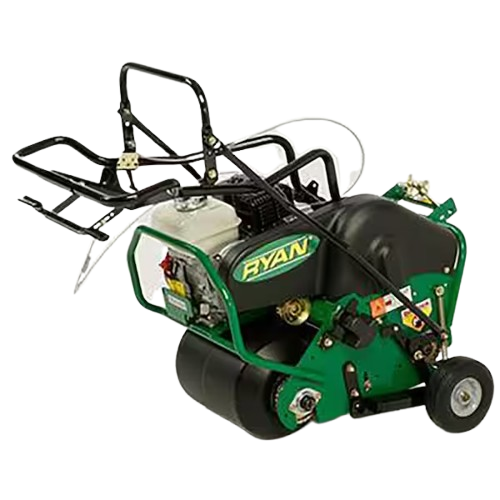
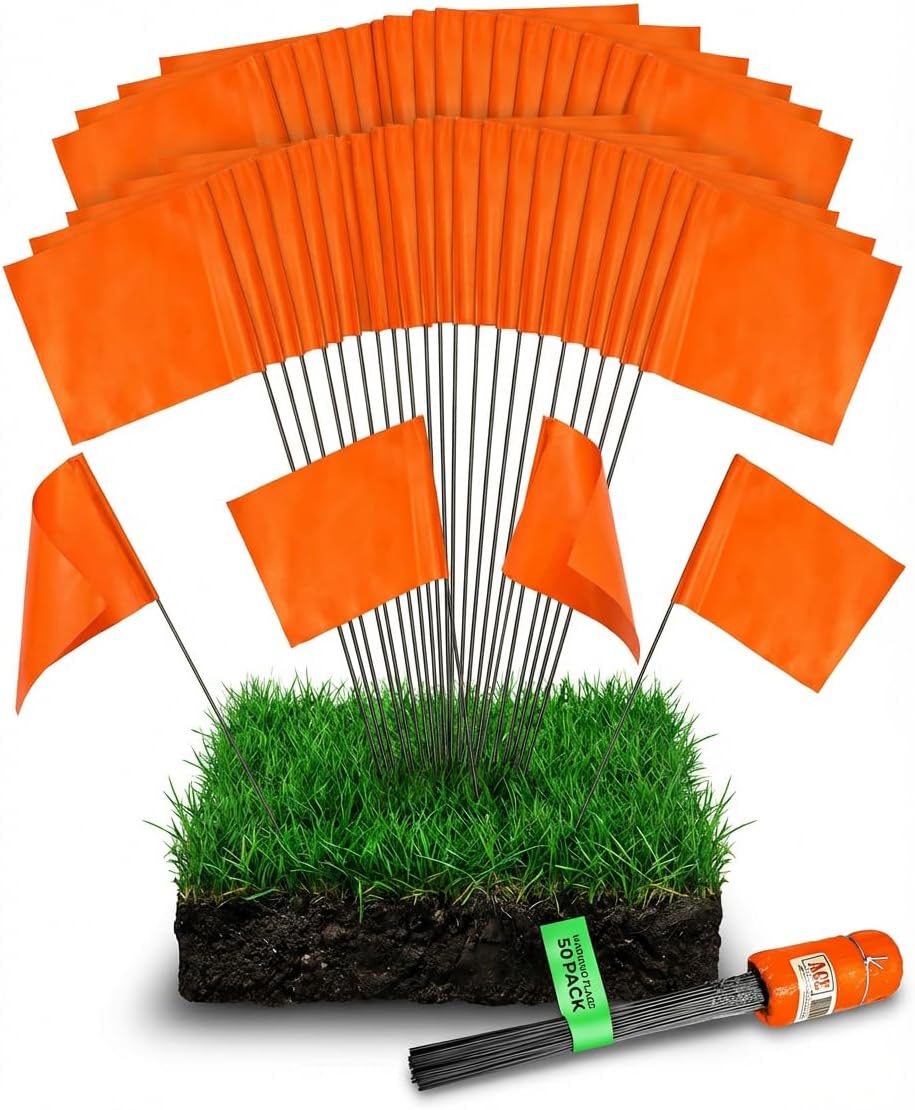
As an Amazon Associate, Blade Boss earns from qualifying purchases. It never costs you a penny more.
Rules of Engagement (ROE's)
The Flight Plan - Step by Step
Confirm the Soil Is Actually Compacted
The screwdriver test settles it. Push a long screwdriver straight into the lawn with steady hand pressure. In healthy soil it slides in six inches with almost no fight. If you have to lean on it, or it stops dead at two or three inches, your soil is compacted. Other tells: water pools or runs off instead of soaking in, the lawn thins in the paths everyone walks, and the turf feels hard as a sidewalk in summer.
Water the Lawn One to Two Days Before
This is the step that decides whether the whole day works. Aerator tines cannot punch into dry, hard ground. They skip, bounce, and pull short, crumbly little plugs, and you will swear the machine is broken. It is not. The soil is.
Give the lawn a good soak one to two days before, roughly half an inch to an inch of water, then let it drain. You want soil that is moist all the way down, but not muddy. Rain the day before does this for free. A soggy lawn is just as bad in the other direction: the tines smear the hole walls shut and you will tear up turf turning the machine.
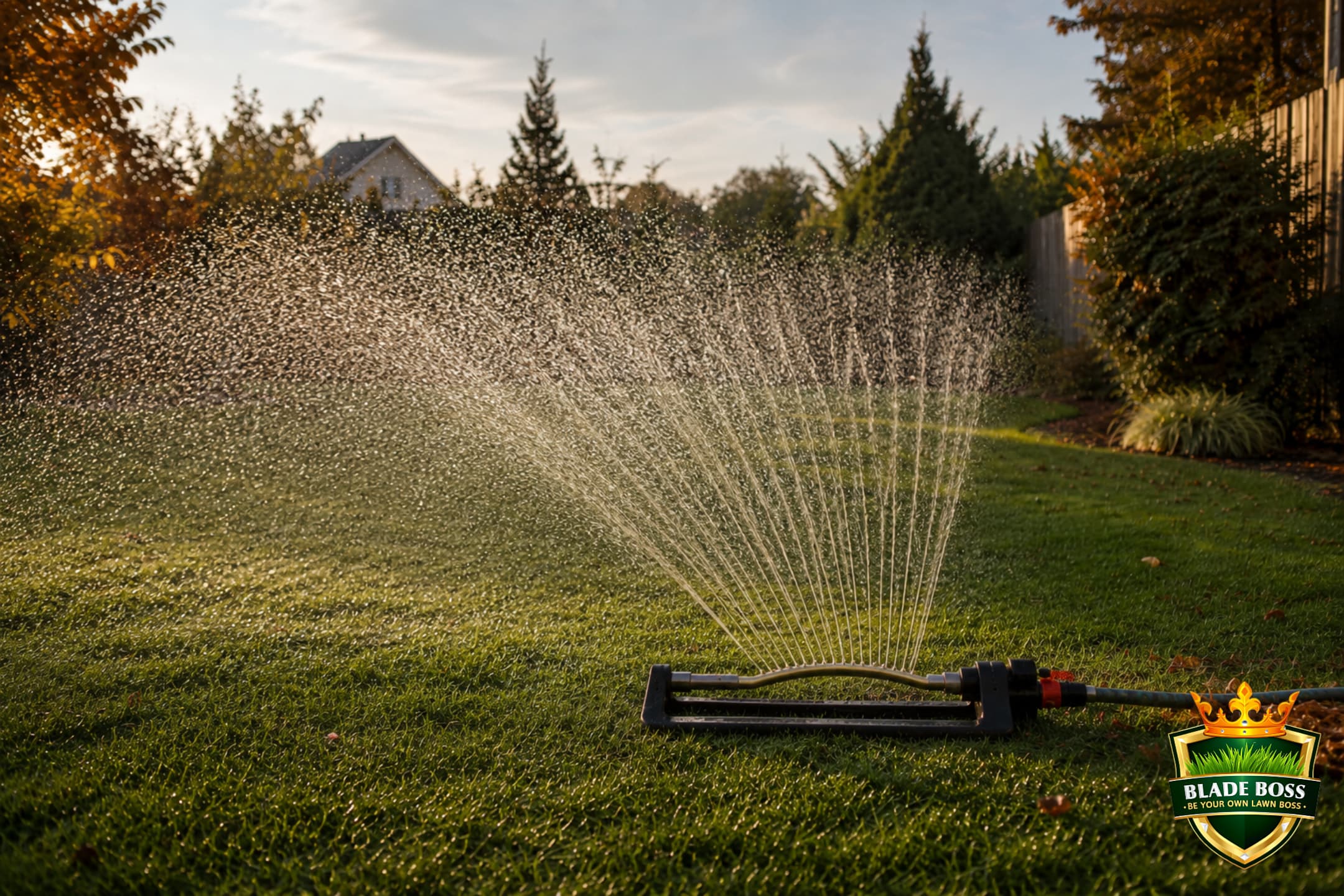
Flag Everything That Can Get Shredded
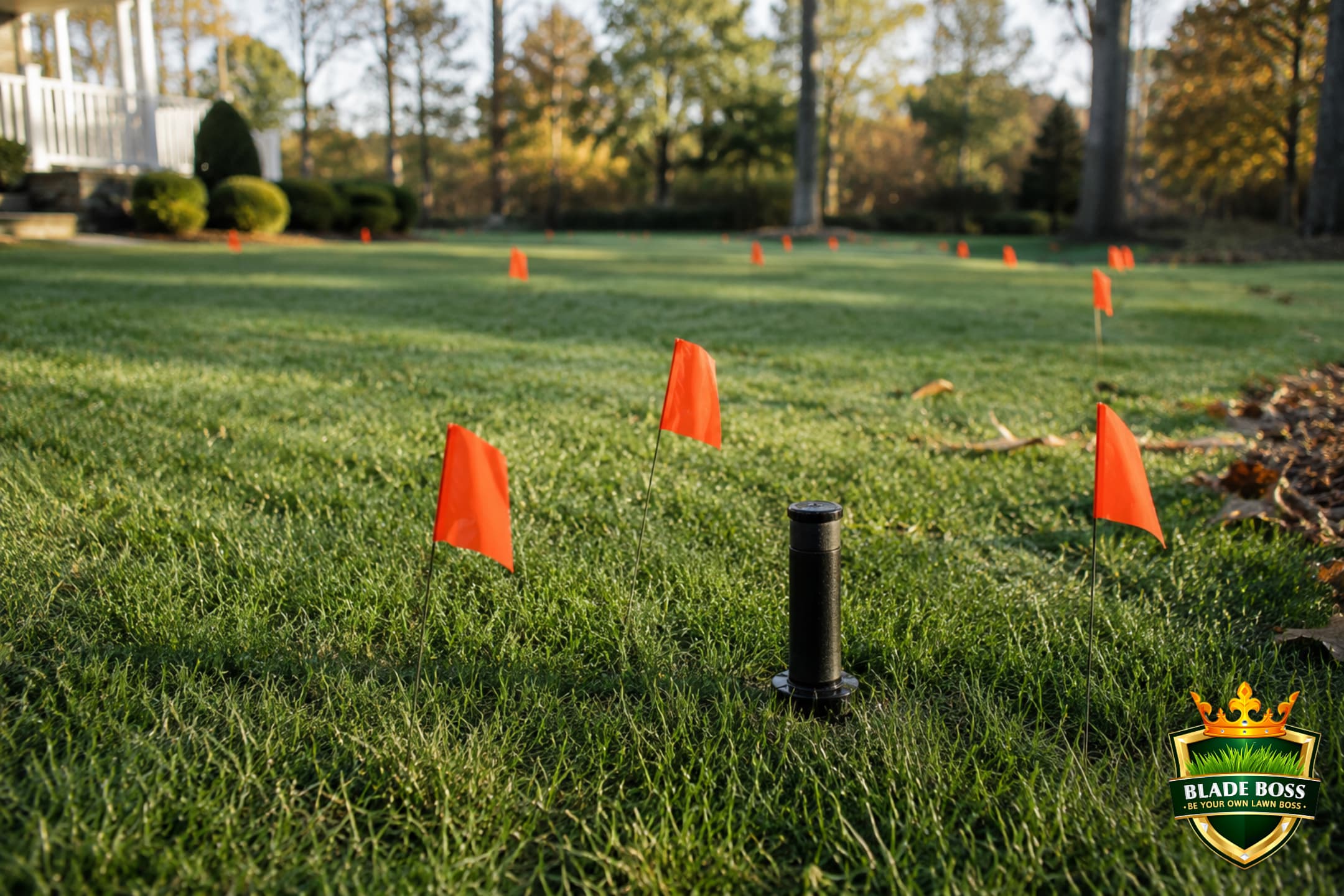
Same drill as dethatching, and it matters even more here because aerator tines punch two to three inches straight down. Run each irrigation zone for a few seconds so every head pops up, then drop a marking flag on it. Flag shallow irrigation lines, the invisible dog-fence wire, and any shallow cable or low-voltage lighting run.
And do not stop at your own irrigation. Call 811 before you dig if you have not had underground utilities marked recently. It is a free call, they come mark the lines, and aerator tines go deep enough to matter. Flag valve boxes too.
Get the Machine Home in One Piece
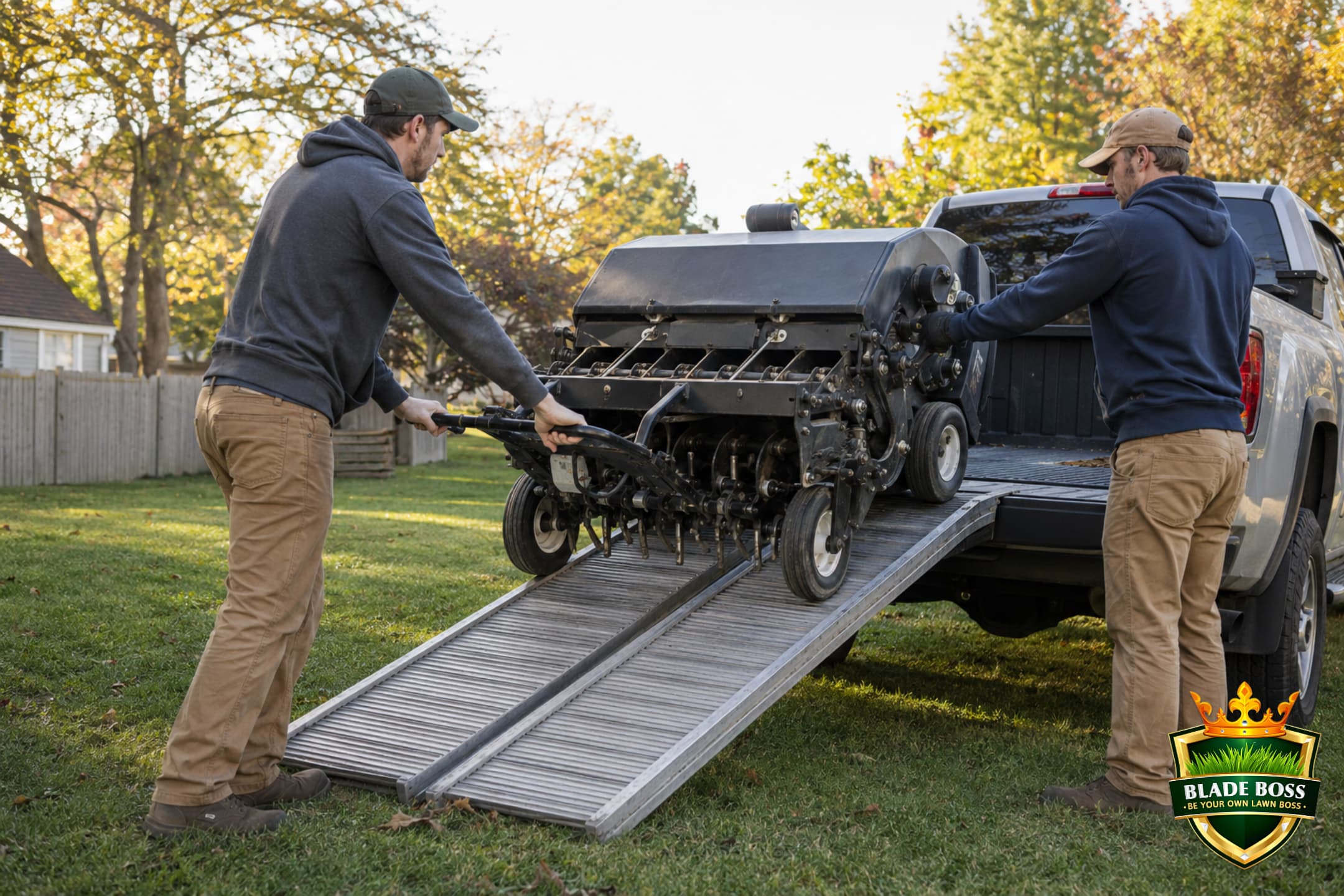
Nobody warns you about this part. A commercial core aerator is a heavy, awkward, top-heavy machine, and the drum is loaded with steel weight on purpose so the tines can drive into the ground. Loading it into a truck or trailer is genuinely the most dangerous part of the entire job.
Bring a second person and a ramp. Not a plank, a real ramp. Let the machine drive itself up under power if it is self-propelled, and never try to muscle it up on your own. A four hour rental window is plenty of time for two passes on a typical homeowner lawn, so you are not in a rush.
Make Two Perpendicular Passes
One pass is not enough. A single pass leaves the holes too far apart to make a real difference. Run the whole lawn in one direction, then run it again perpendicular to the first pass, like mowing a checkerboard. That doubles your hole density and is the difference between actually fixing compaction and just poking at it.
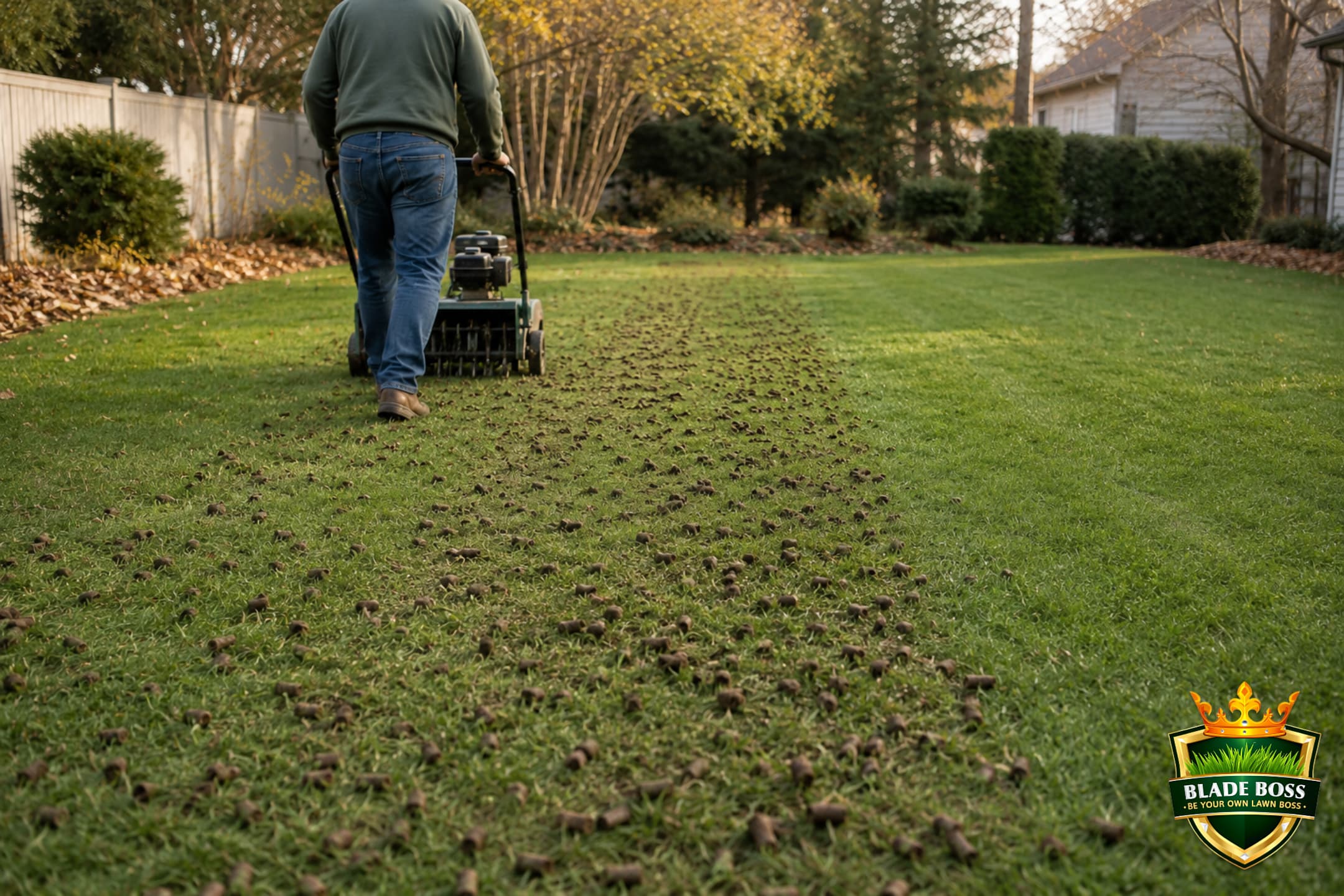
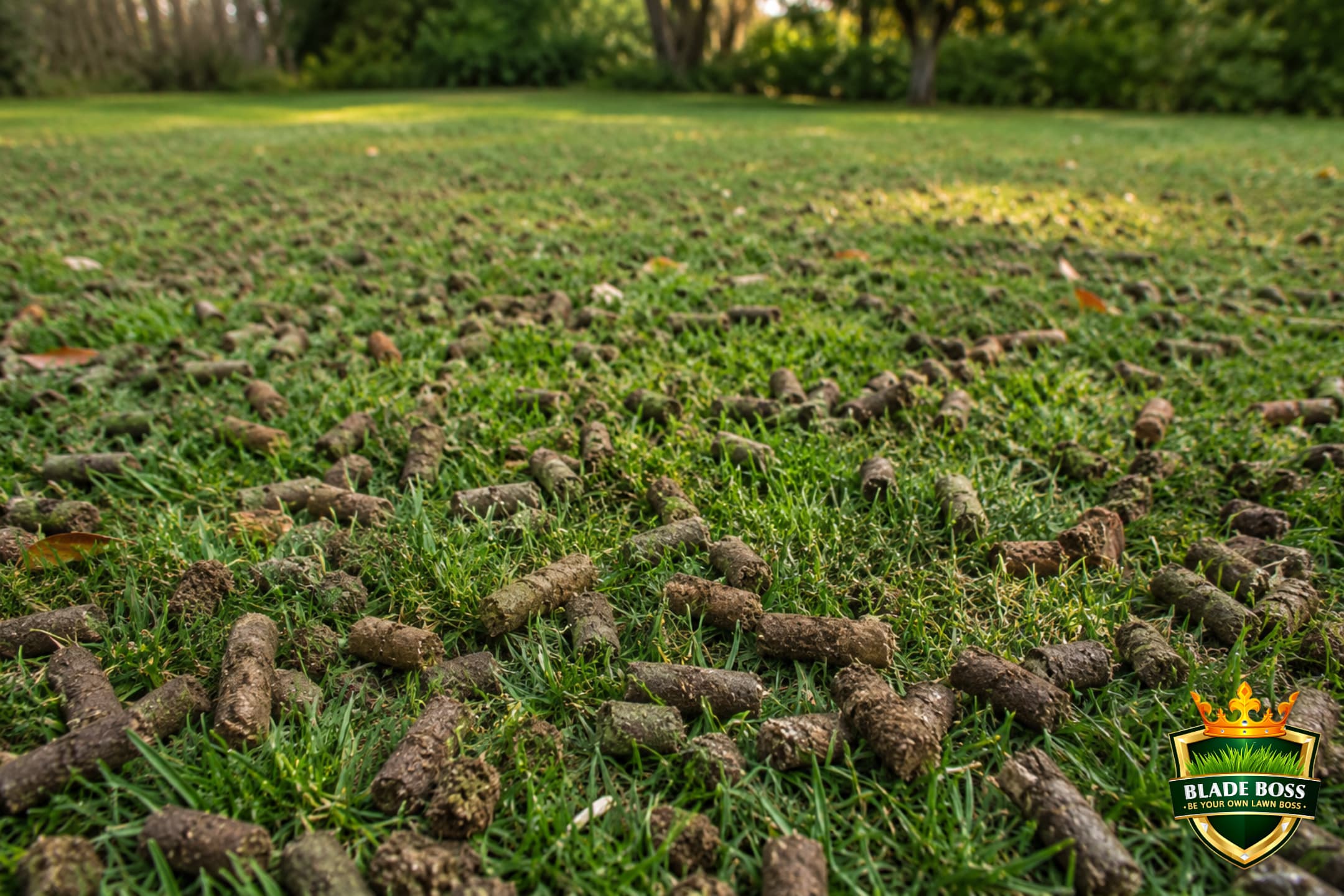
You are aiming for cores roughly two to three inches deep, spaced a few inches apart. When you are done, the lawn should look like it has been carpet-bombed with plugs. If it looks tidy, you did not do enough.
Leave the Cores Alone
Here is where almost everyone gets it wrong: they rake up the plugs because the lawn looks messy. Do not do that. Those cores are the best free thing your lawn will get all year.
Left in place, they break down over about two to three weeks, and every rain melts them back into the turf. They return the soil, the organic matter, and the living soil microbes right back where they came from. That is free topdressing, and it is one of the mechanisms that actively digests thatch. Rake them up and you are literally hauling your own topsoil to the curb.
Seed and Feed the Same Day
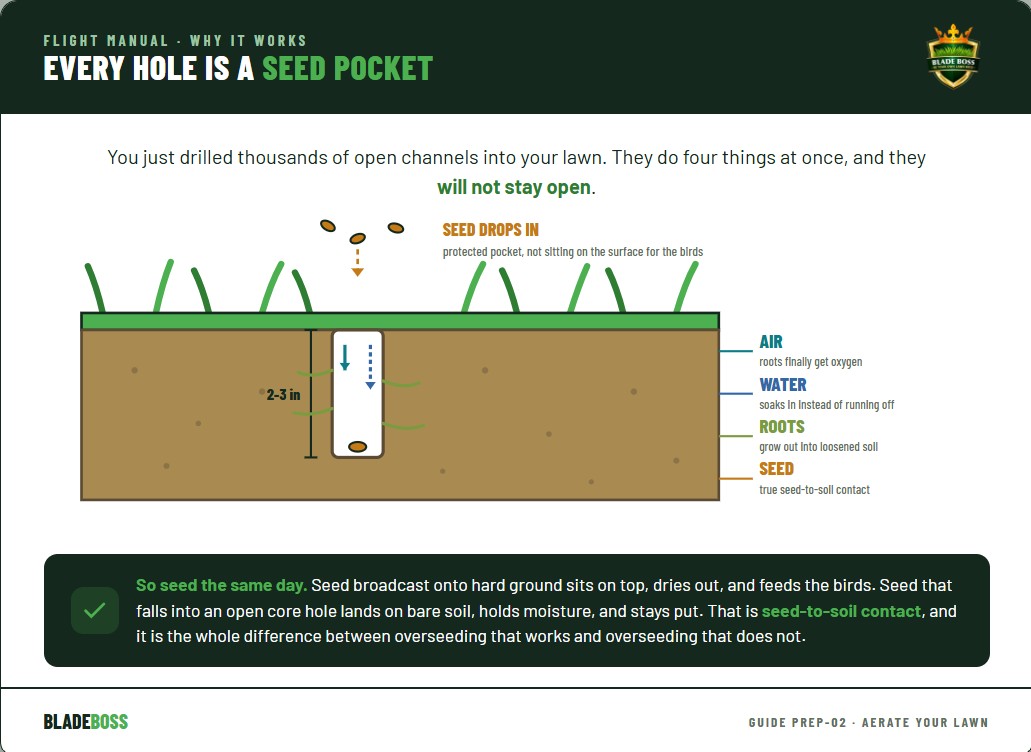
You just drilled thousands of perfect little seed pockets into your lawn, and they will not stay open forever. Every hole is a protected pocket of bare soil where a seed can drop in, stay put, hold moisture, and make direct contact with the ground. That is exactly the seed-to-soil contact that decides whether overseeding works or whether you just fed the birds.
So do not wait. Overseed and drop starter fertilizer the same day, while the holes are open. Then keep the top inch of soil damp with short, frequent waterings until the seed germinates. This is the payoff for the entire day of work.
Abort Criteria - Common Mistakes
Mission Complete. Now Fly the Plan.
Aeration only pays off if you seed into the holes while they are open. That is the entire point of doing it in fall. Run your exact seeding rate in SeedGenius Pro so you know the right seed and the right pounds for your grass type and zone, and turn those thousands of open holes into thousands of new plants.
Want This as a Printable Field Manual?
Drop your email and the print-ready PDF version lands in your hands. Take it to the lawn, no phone required.
Crew Questions - FAQ
Should I dethatch or aerate first?
Dethatch first, then aerate. Thatch is a physical barrier, so you pull the mat out of the way and then punch holes through clean soil. Aerating through a thick thatch layer just perforates the thatch instead of the ground underneath.
Should I pick up the plugs after aerating?
No. Leaving the cores on the lawn is the correct move and raking them up is the most common mistake people make. They break down in about two to three weeks, returning soil, organic matter, and microbes to the turf. That is free topdressing and it helps digest thatch.
Can I aerate in spring if I put down crabgrass pre-emergent?
No. Wait until fall. Pre-emergent works by forming a chemical barrier in the top half inch of soil, and core aeration punches dozens of holes per square foot straight through that barrier, opening gaps where crabgrass and other summer annuals germinate freely. If you applied pre-emergent this spring, do not aerate until September. This is the single biggest reason fall aeration beats spring: in September there is no pre-emergent conflict at all.
When is the best time to aerate a lawn on Long Island?
Late August through September is the best window for cool-season lawns in Zone 7B. The soil is still warm, the air is cooling, the grass is actively growing, and it lines up perfectly with overseeding. Spring works as a backup but it can open the door for crabgrass.
Do I really need to water before aerating?
Yes. It is the difference between the machine working and the machine wasting your money. Aerator tines cannot penetrate dry, hard soil, so they skip along the top and pull short, crumbly cores. Water deeply one to two days ahead so the soil is moist but not muddy.
How often should I aerate my lawn?
Most lawns benefit from once a year in the fall. If you have heavy clay, new construction fill, or a lot of foot traffic, do it every fall. If the screwdriver test slides in six inches with no resistance, your soil is not compacted and you can skip it that year.
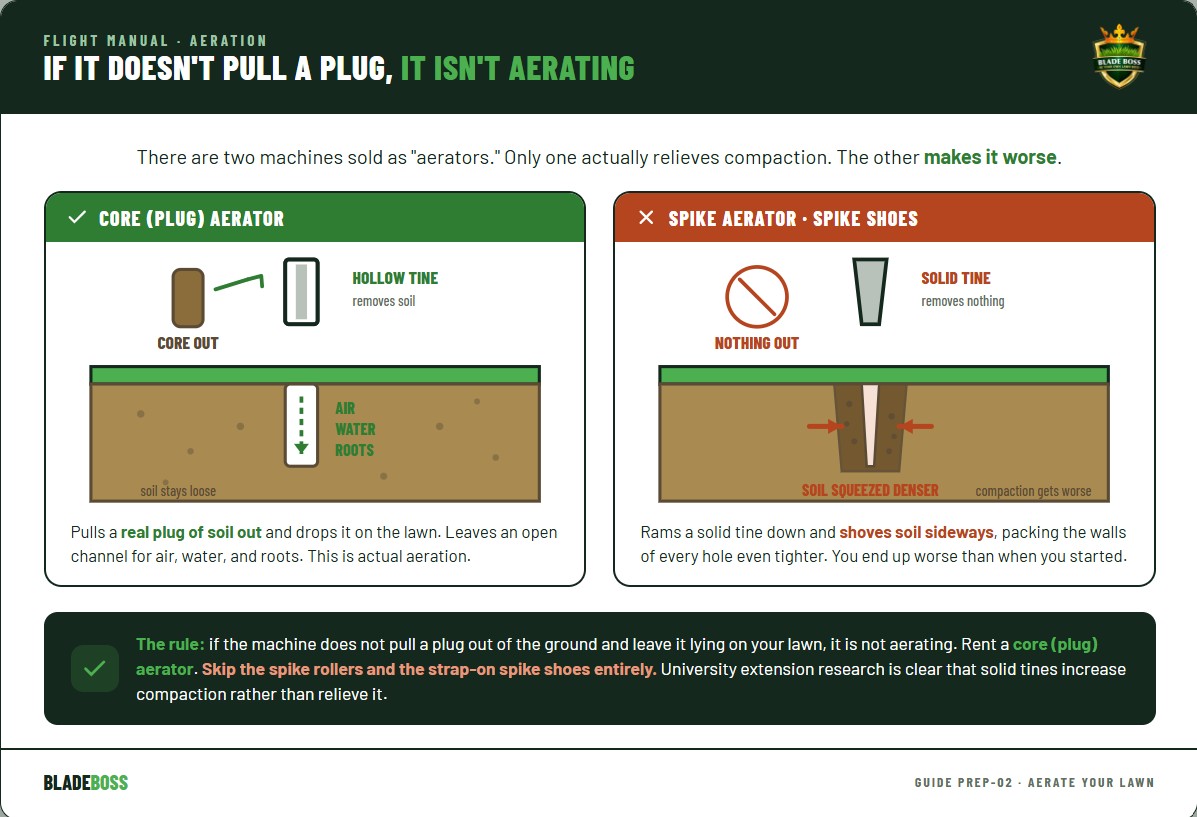
Is core aeration the same as spike aeration?
No, and the difference matters. Core aeration pulls actual plugs of soil out and drops them on the surface, which relieves compaction. Spike aeration just drives a solid tine into the ground, shoving soil sideways and downward, which compacts it further. Spike shoes and spike rollers make the problem worse.