

GUIDE BB-001 · REV A
How to Do a Soil Test
Everything that happens on your lawn starts underground. A soil test is the single highest-value 20 minutes you'll spend all year. It tells you exactly what your soil has, what it's missing, and what to stop wasting money on.
Pre-Flight Checklist - What You Need
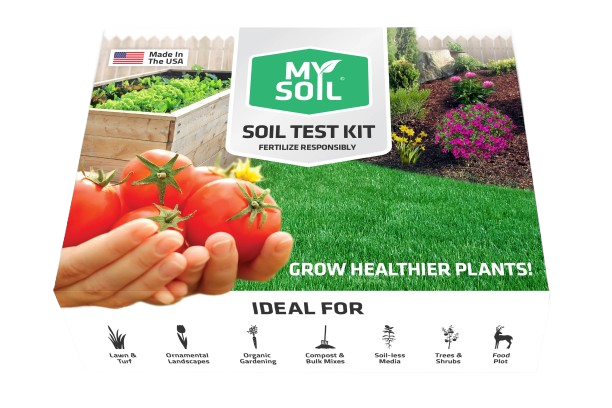
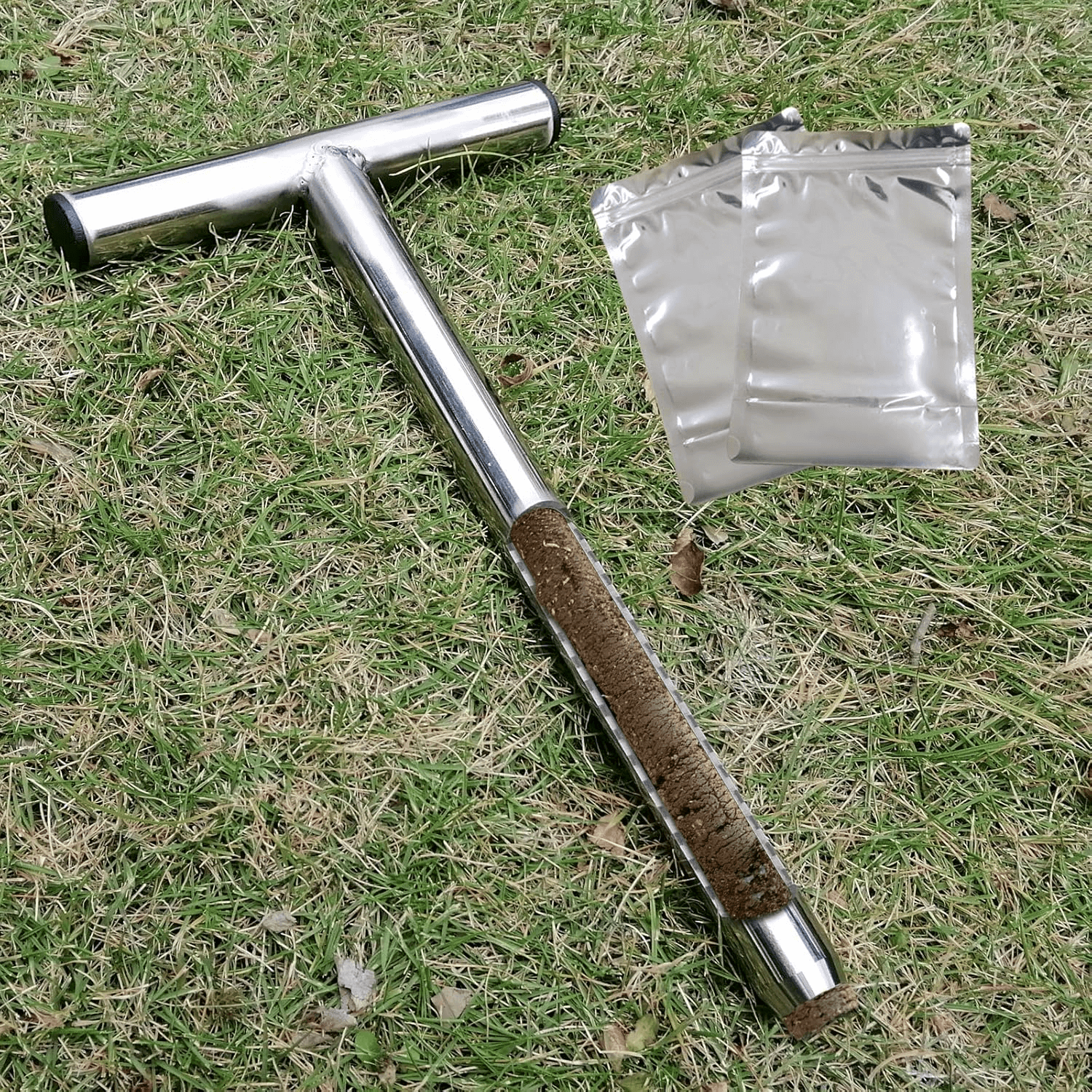
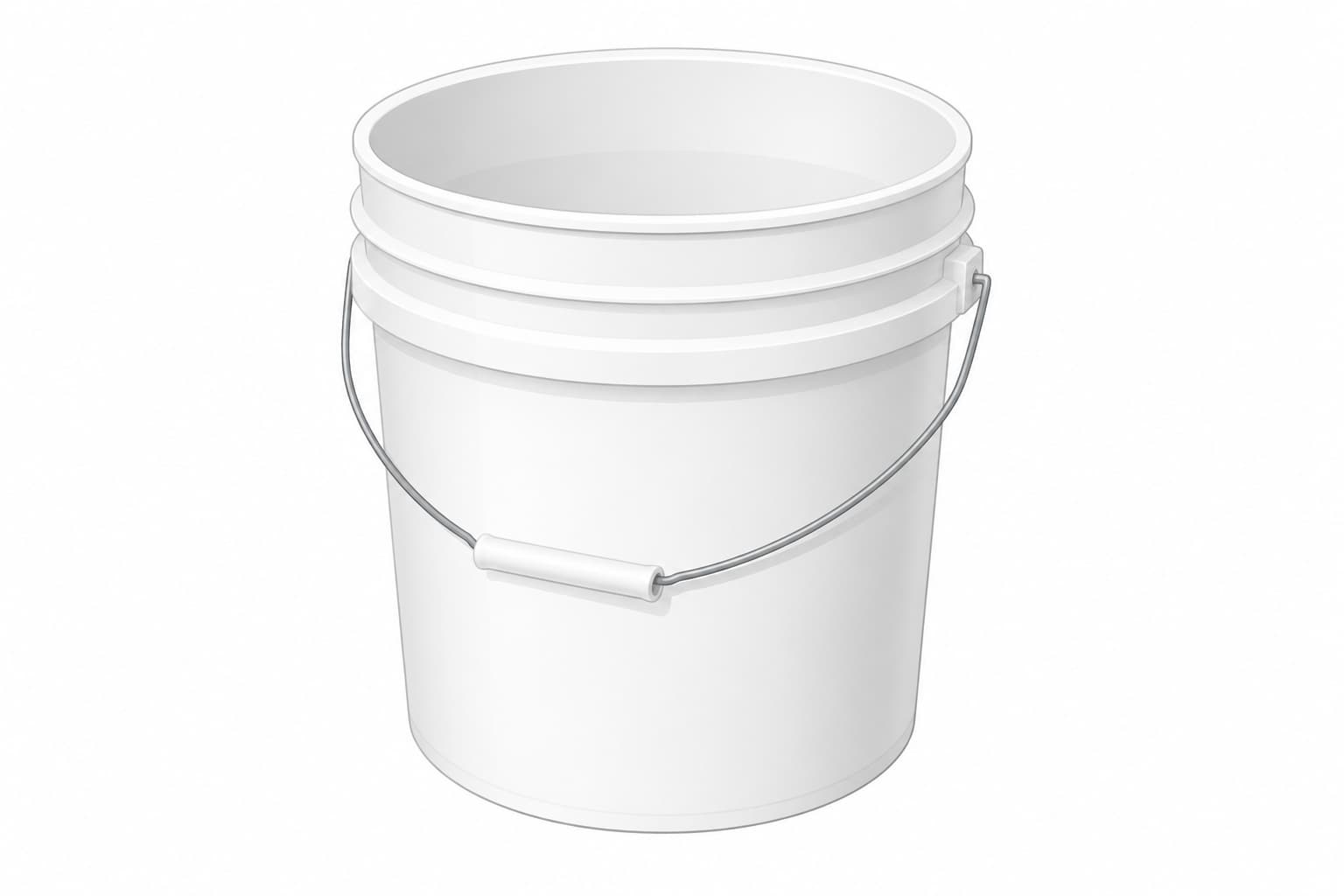
As an Amazon Associate, Blade Boss earns from qualifying purchases. It never costs you a penny more.
The Flight Plan - Step by Step
Pick Your Timing
The best windows are early spring (soil thawed, before your first fertilizer app) or early fall. The soil should be moist like a wrung-out sponge: not soggy, not bone dry.
Map Your Sampling Spots
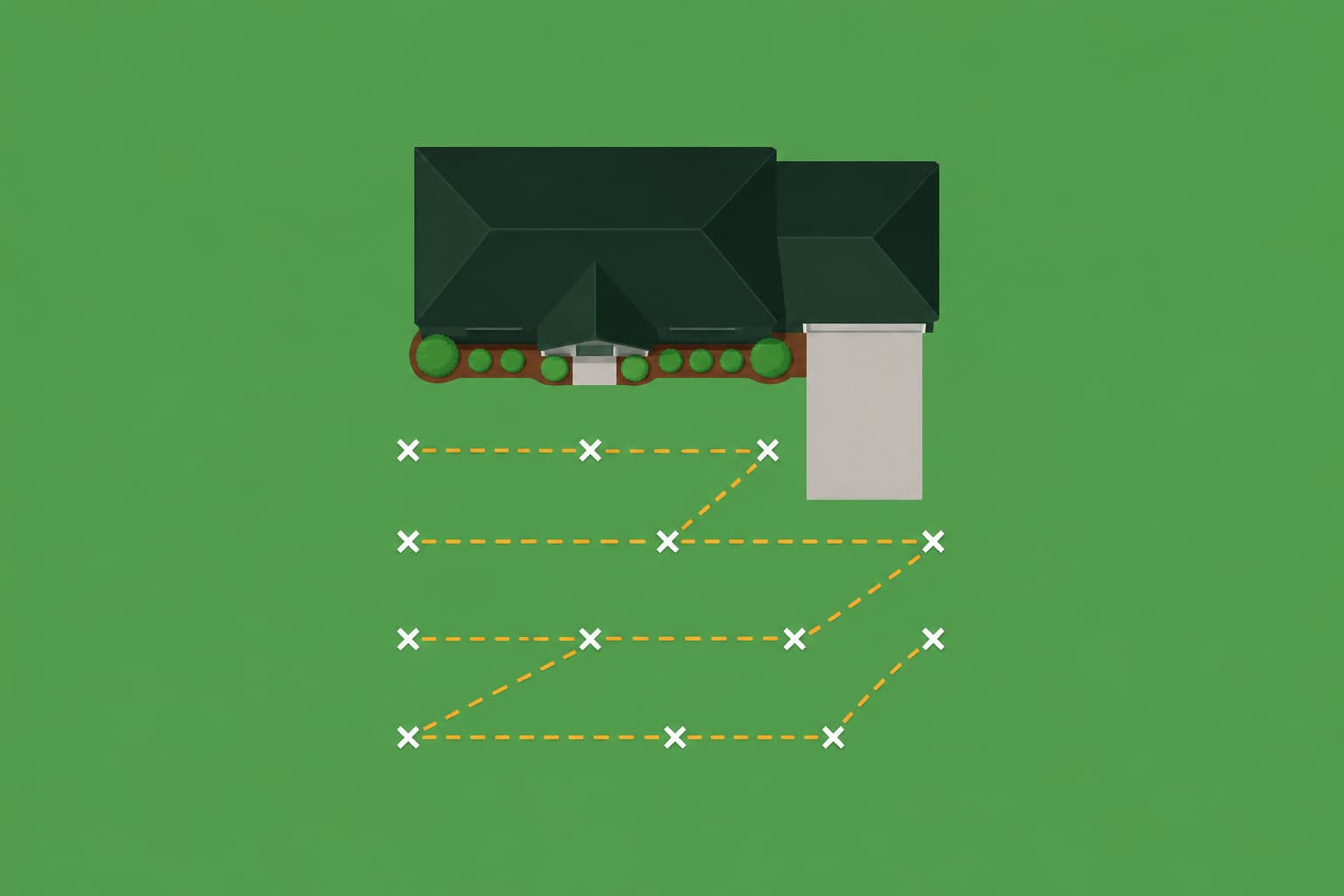
You're not testing one spot. You're testing the average of your lawn. Walk a zigzag pattern across the area and plan to pull a plug from 10-15 different spots.
- Front yard and back yard behave differently? (Different sun, different grass, one struggles?) Test them as two separate samples with two kits.
- Skip the weird spots: stay 3+ feet away from driveways, dog spots, compost piles, and anywhere you spilled fertilizer.
Pull Your Soil Cores
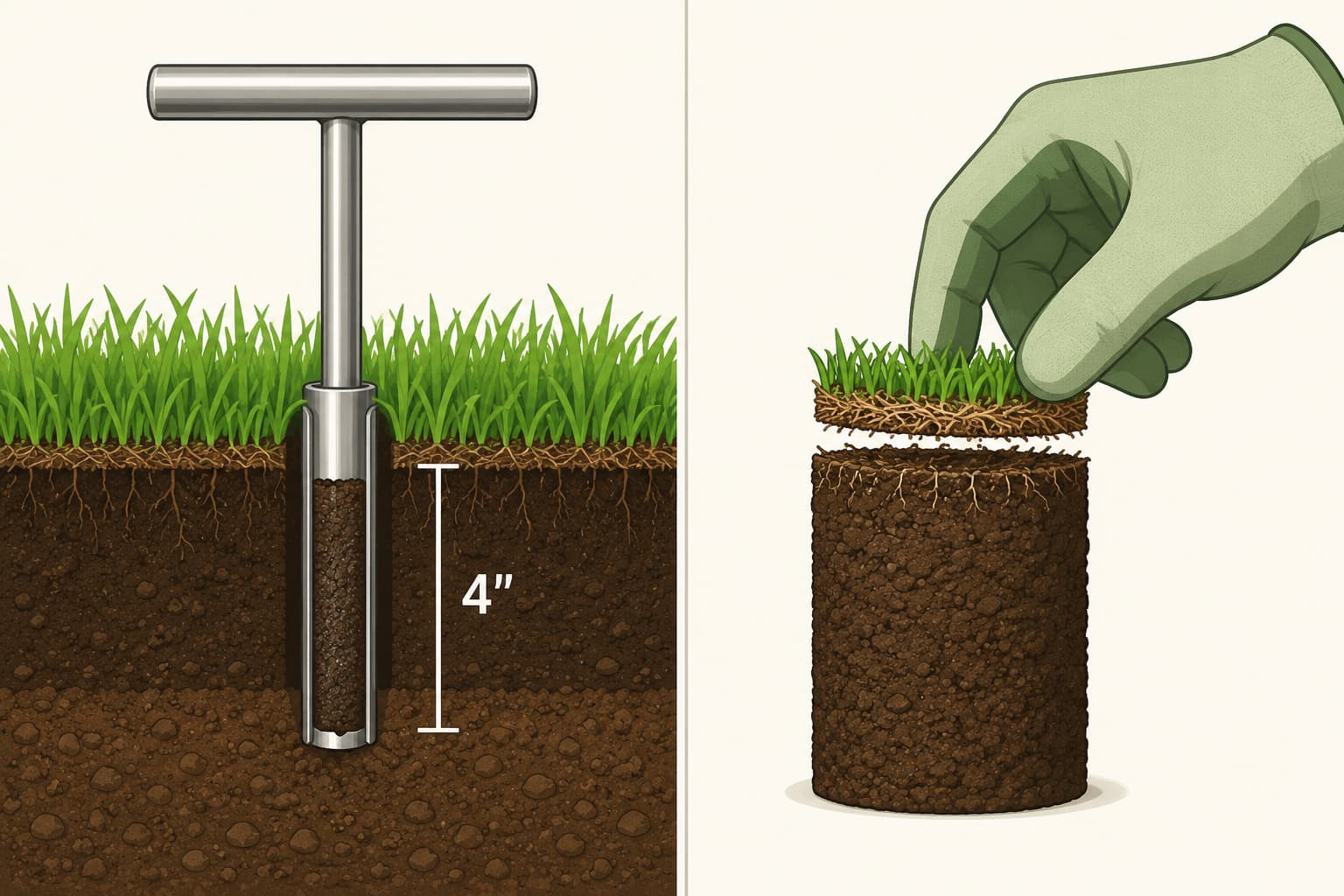
At each spot, push the soil probe straight down to a depth of 4 inches. That's the root zone where your grass actually eats. Twist, pull it out, and you've got a core.
- Knock off the top layer. Grass blades, thatch, and roots don't go in the sample. Soil only.
- Drop each core into your clean plastic bucket.
- No probe? A garden trowel works: dig a small V-shaped hole 4 inches deep and shave a 1/2 inch slice off the side wall.
Mix the Master Sample
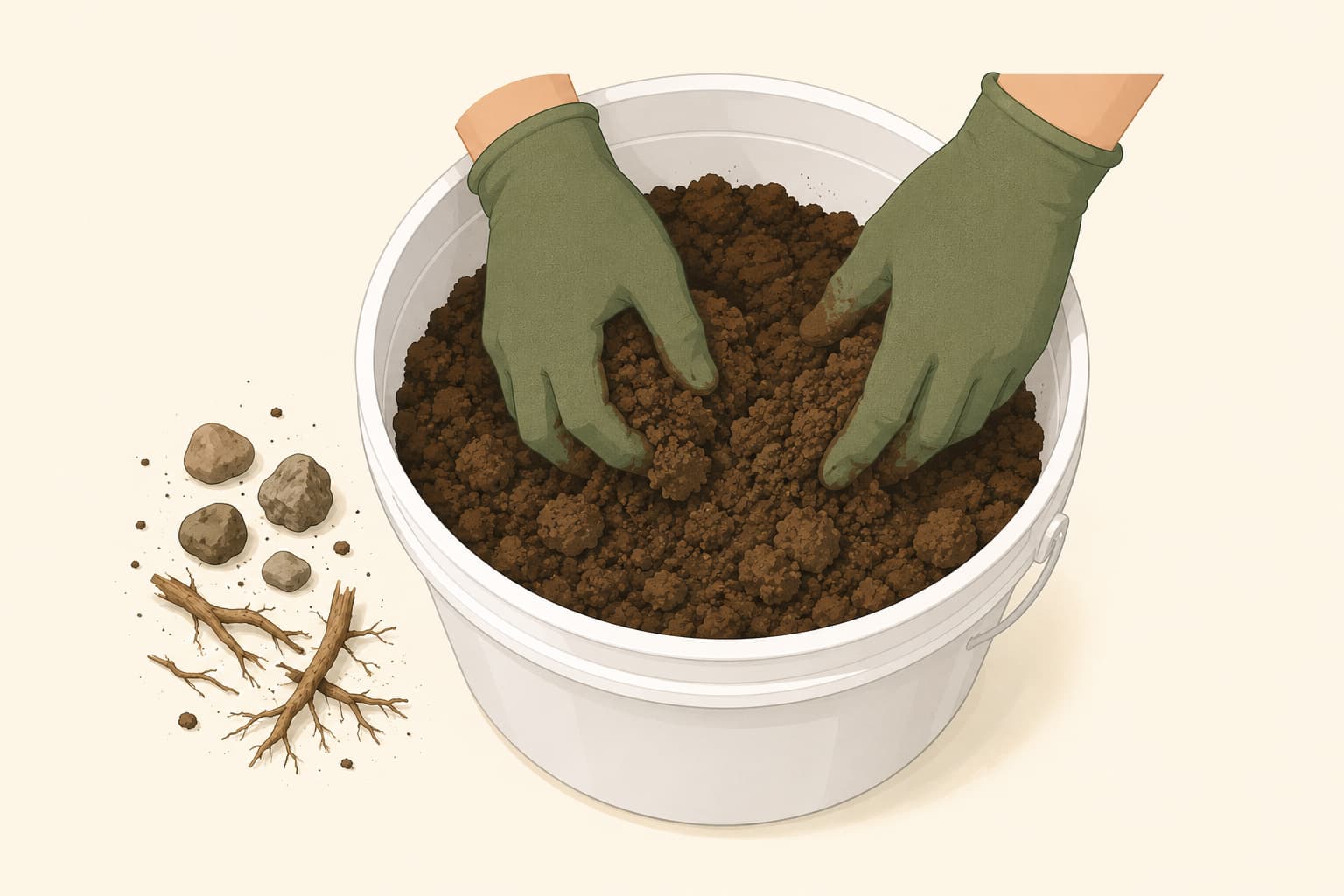
Break up every core in the bucket with your hands and mix thoroughly. This blend is your lawn's average. Pull out rocks, roots, grass, and grubs (gross, but it happens).
Fill the Kit and Register It
Fill the MySoil jar with your mixed soil up to the fill line. Then, before you mail anything, scan the QR code on the kit and register your sample online. Unregistered samples = lost results.
Mail It and Wait for Wheels Down
Drop the prepaid mailer in any USPS box. Results land in your email and the MySoil app in about 6-8 days: pH, nitrogen, phosphorus, potassium, and micronutrients, with readings for each.
Turn Numbers Into a Plan
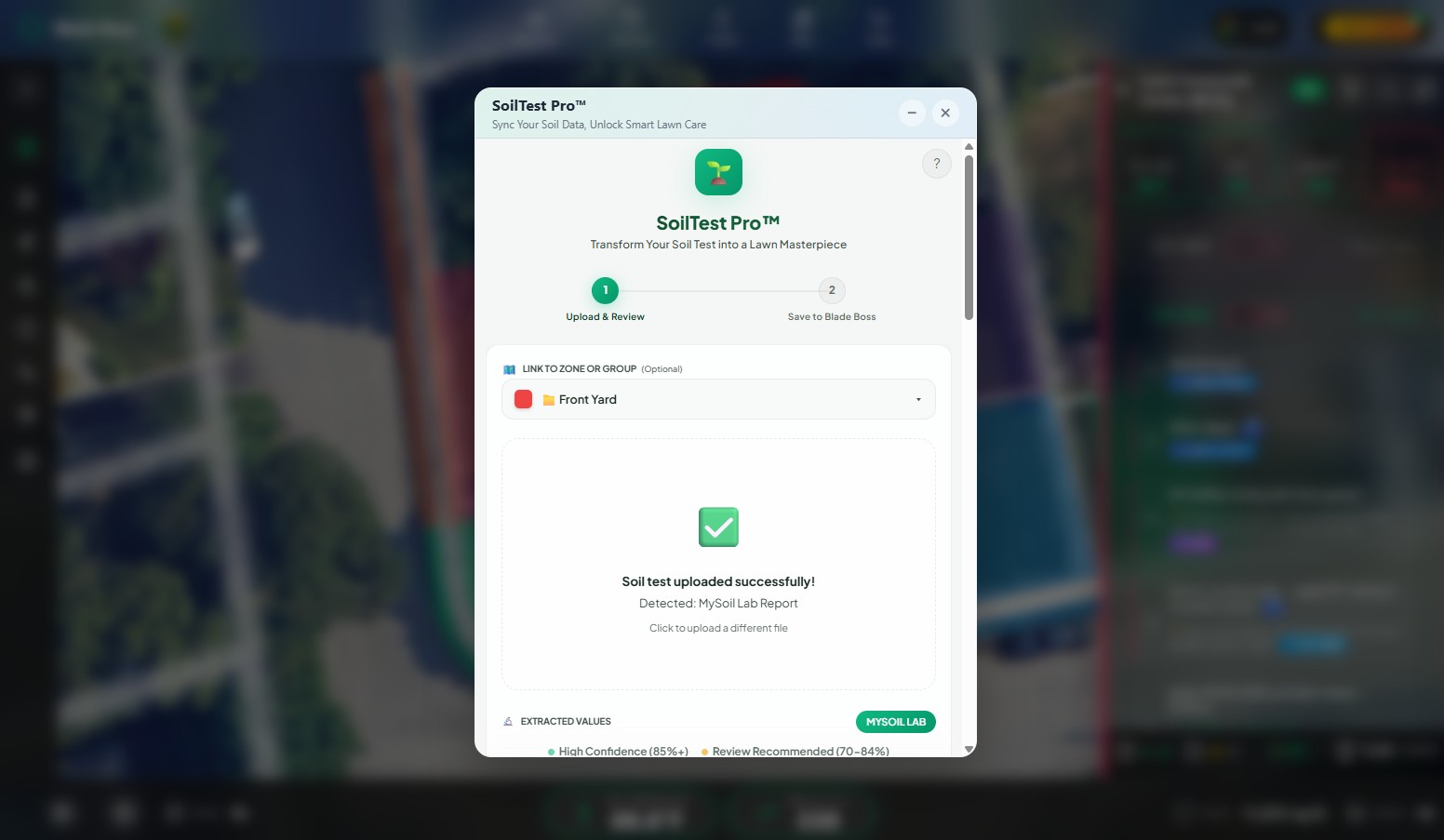
Raw numbers don't fix lawns. Plans do. Log in to Blade Boss, open SoilTest Pro, and enter your results. The platform builds your exact correction plan: what to buy, how much to apply, and when, calibrated to your soil, your grass, and your zones.
Decode Your Results
Your report lands with a pH number front and center. Here's what it means for a cool-season lawn in the Northeast, and what to do next.
Abort Criteria - Common Mistakes
Mission Complete. Now Fly the Plan.
Your results are only as good as what you do with them. Enter your numbers in SoilTest Pro and let Blade Boss build your correction plan, dialed to your exact soil, your zones, and Long Island's 7B climate.
Want This as a Printable Field Manual?
Drop your email and the print-ready PDF version lands in your hands. Take it to the lawn, no phone required.
Crew Questions - FAQ
How often should I test my soil?
Once a year, every fall, in the same month. Soil chemistry moves slowly, so annual same-season tests give you a clean trend line. Testing in random seasons makes year-over-year comparison worthless.
Are the cheap pH strips and probe meters any good?
For real decisions, no. Home strips and $15 probe meters are rough estimates at best and wildly wrong at worst. A lab test measures pH plus the full nutrient panel, which is what actually drives your correction plan. Spend the $30 once a year.
Should I test my front and back yards separately?
If they behave differently, yes. Different sun exposure, different grass types, or one area that struggles while the other thrives are all signs they need separate samples and separate kits. If both look and act the same, one combined test is fine.
How deep should soil samples be for a lawn?
4 inches. That's the turf root zone where your grass actually feeds. Shallower and you're reading thatch; deeper and you're reading subsoil your lawn never touches.
When is the best time to soil test on Long Island?
Early fall (September to mid October) is prime: results come back in time for fall lime and feeding, which is when corrections work best in Zone 7B. Early spring is the backup window. Avoid the dead of summer when soil is dry and stressed.
What does a soil test actually cost?
About $47 all-in for the recommended setup: roughly $32 for a MySoil mail-in kit (lab fee included) and $15 for a soil probe you'll reuse for years. The bucket is free from your garage. Just make sure it's plastic.