
GUIDE WEED-09 · REV A
How to Get Rid of Clover in Your Lawn
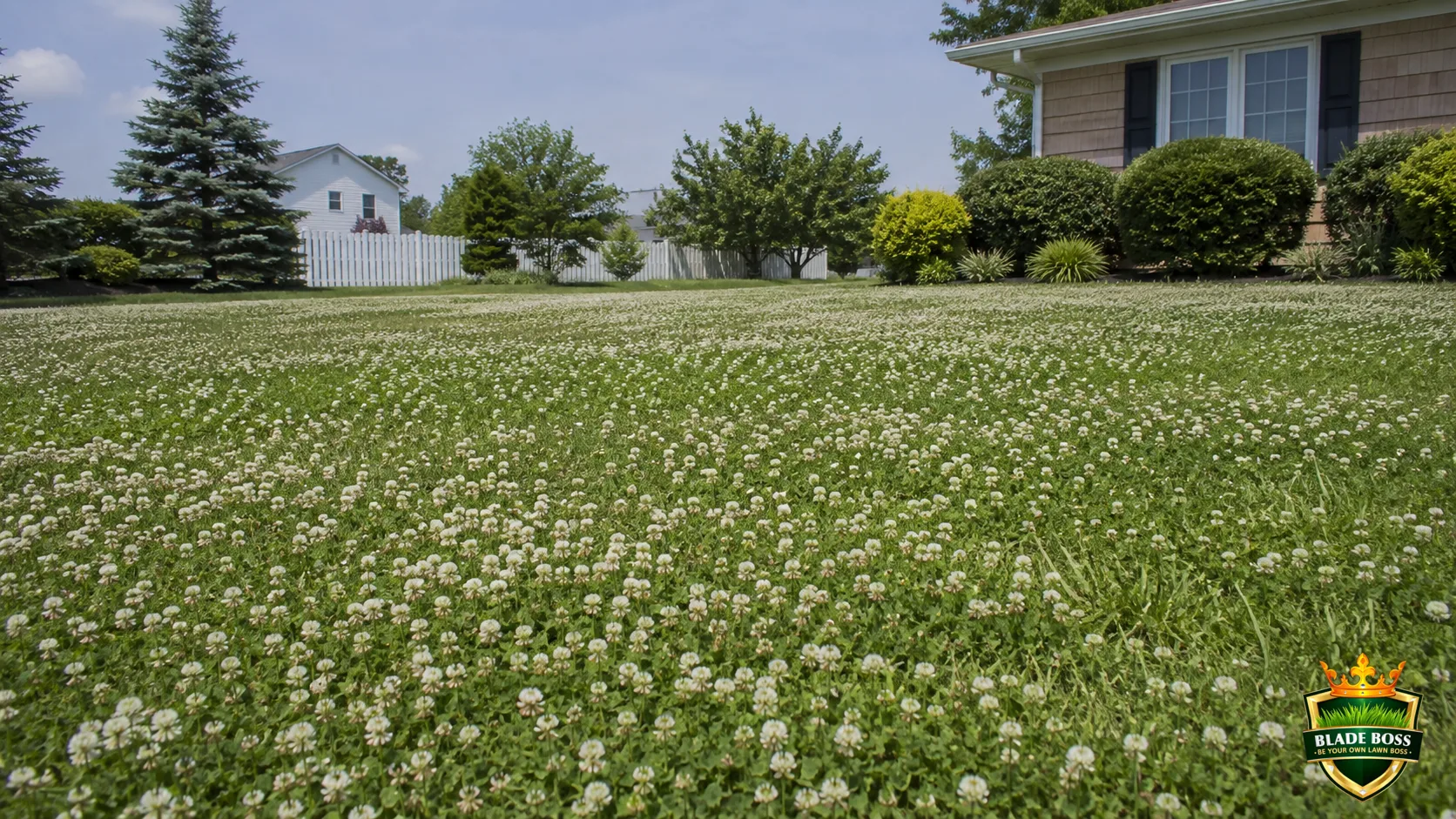
Those low, creeping patches of three-leaf clover with little white puffball flowers are easy to kill, but here is the twist most guides skip: clover is telling you something. It is a legume that makes its own nitrogen, so it only takes over when your grass is underfed. Spray it wrong (or skip the real fix) and it comes right back. This guide does both halves: the exact product and rate to kill it, and the feeding that keeps it gone for good.
Pre-Flight Checklist - What You Need
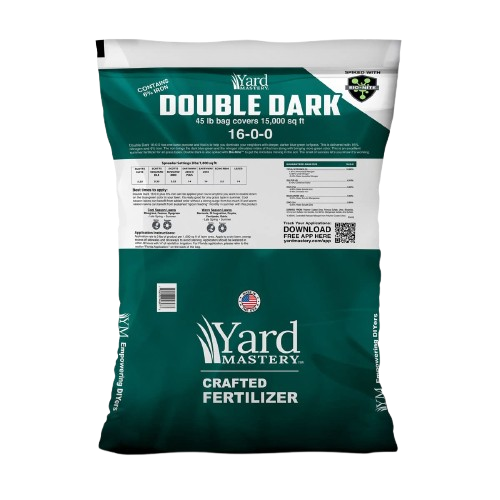
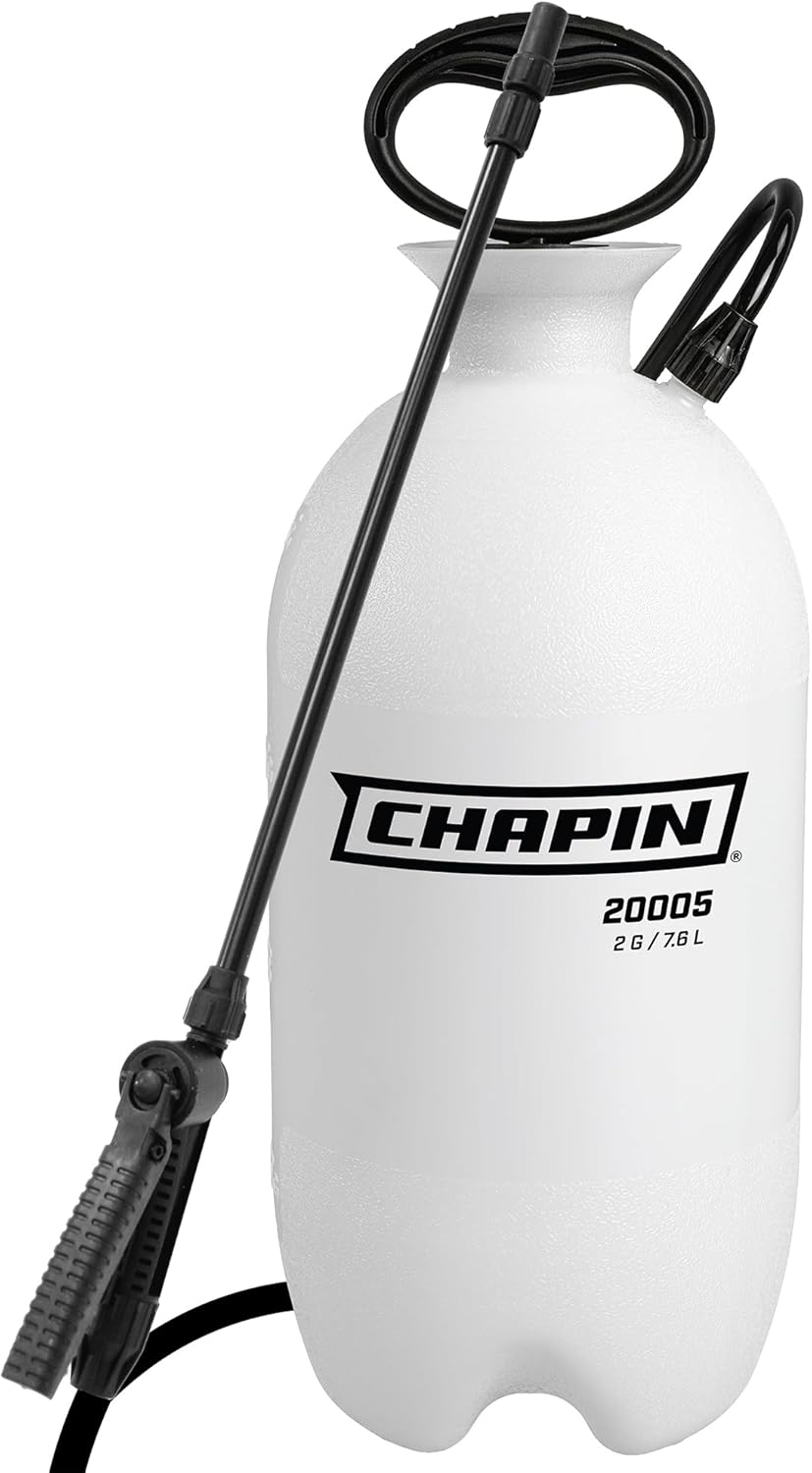
As an Amazon Associate, Blade Boss earns from qualifying purchases. It never costs you a penny more.
Rules of Engagement (ROE's)
The Flight Plan - Step by Step
Confirm It Is Clover
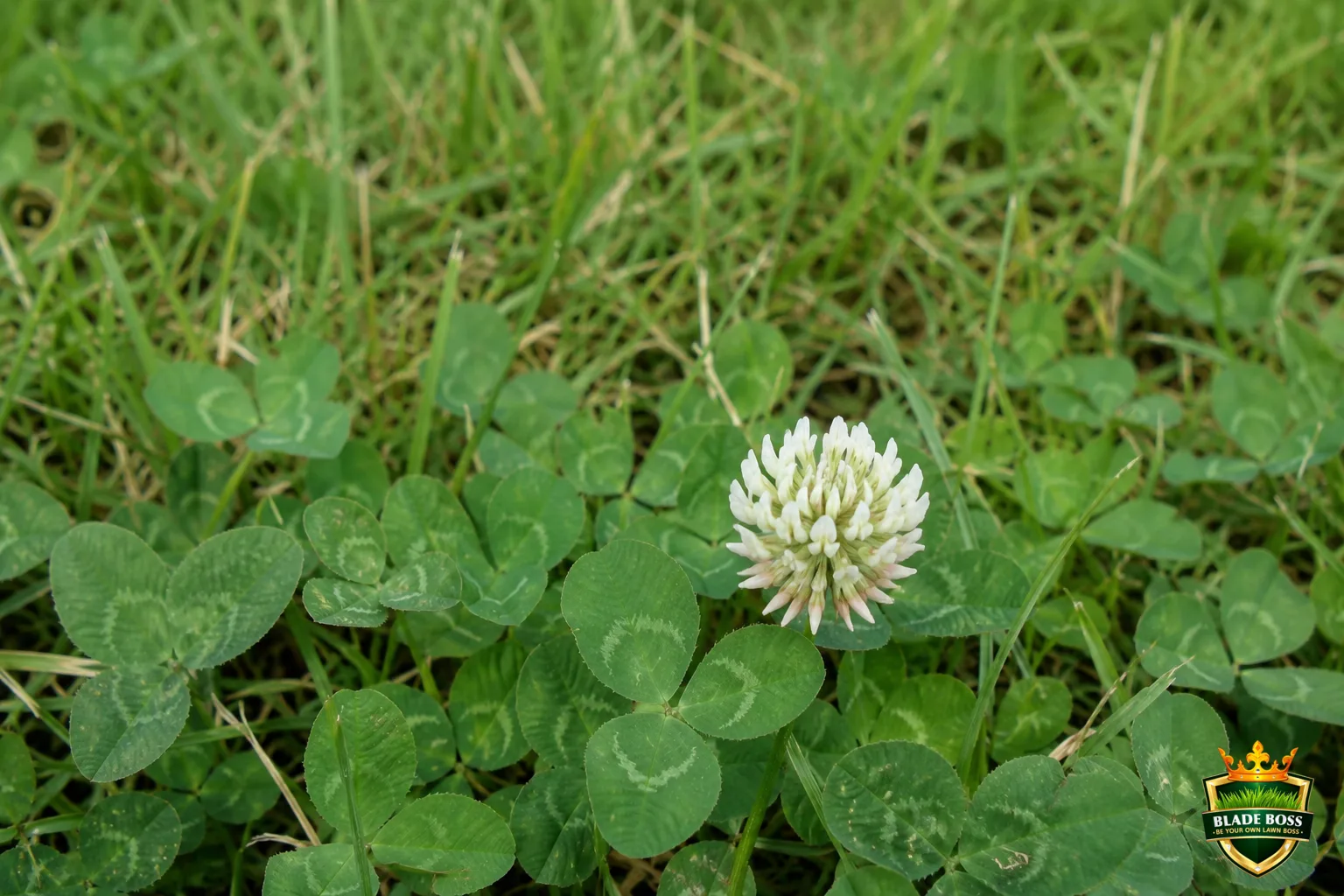
White clover (Trifolium repens) is by far the most common lawn clover, and it is easy to spot once you know the tells. Confirm it before you spray.
- Three round leaflets: the classic three-leaf clover, each little leaflet often has a pale, whitish crescent or watermark across it.
- White puffball flowers: round white flower heads on short stems, often with a faint pink tint, mostly in spring and fall.
- Low, creeping mats: it hugs the ground and spreads sideways by runners (stolons) that root as they go, forming dense patches.
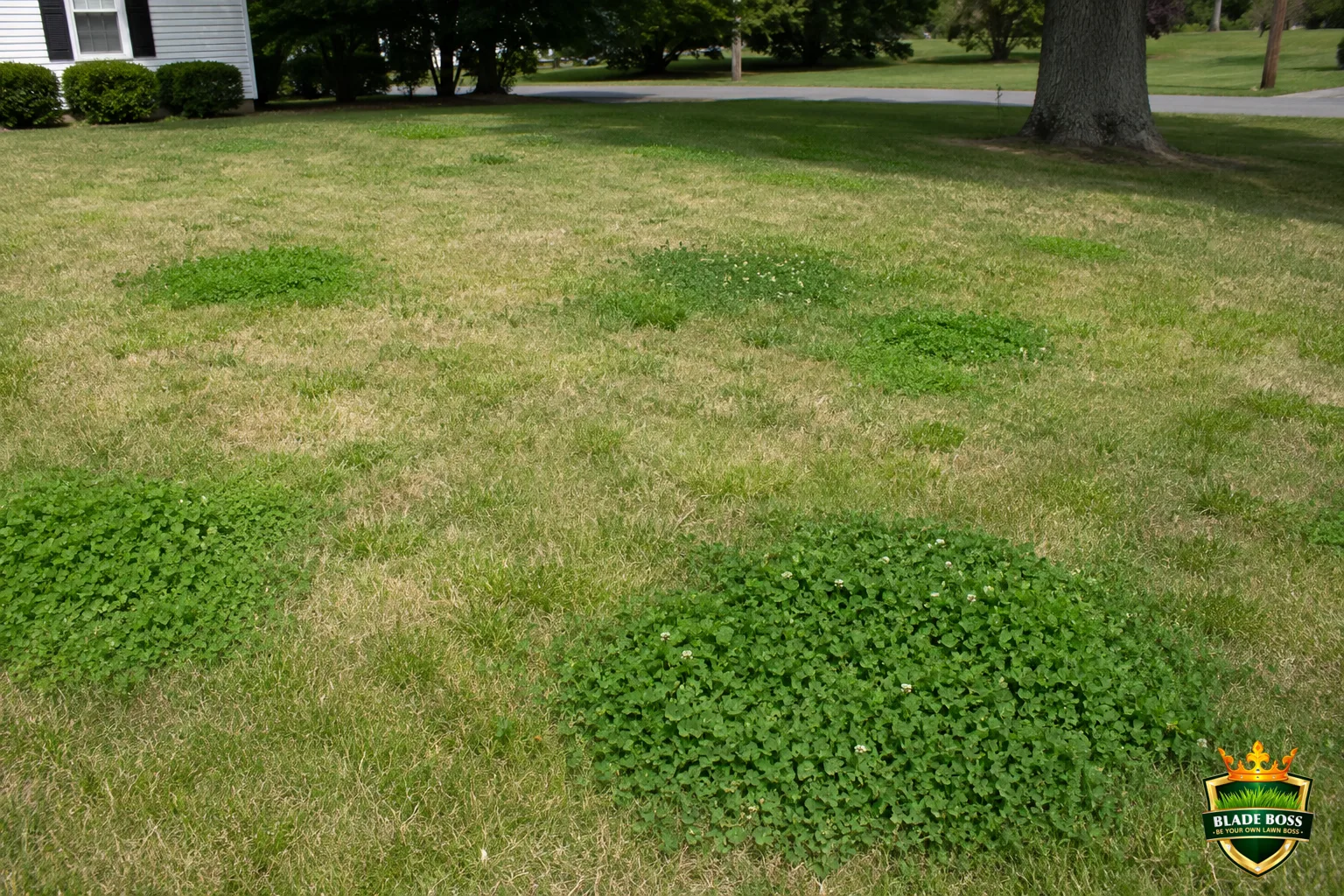
- Darker green than the grass around it: because it feeds itself nitrogen, clover often looks lusher and greener than the hungry grass beside it. That contrast is a big clue (more on that next).
Know Why It Showed Up (The Nitrogen Clue)
This is the step that actually solves clover for good, and almost every other guide skips it. Clover is a legume: it makes its own nitrogen from the air. So it does not need a well-fed soil the way grass does, which means it wins wherever your lawn is underfed. Clover in your lawn is almost always a low-nitrogen signal.
- The plug test: pull a small plug that has both grass and clover in it. If the grass is pale and thin while the clover is dark and vigorous, your lawn is nitrogen-starved. That is your answer.
- Why it matters: if you kill the clover but leave the soil hungry, new clover just germinates back into the same weak turf. You have treated the symptom, not the cause.
- The real fix is fertility: feed the lawn (Step 6) and dense, well-fed grass out-competes clover. Do both, kill AND feed, and it does not return.
- The good news: a properly fed lawn often crowds clover out on its own within one or two seasons, even without spraying.
Pick Your Product
Clover is not hard to kill, but you need the right chemistry. Plain 2,4-D barely touches it, clover has a waxy leaf and shrugs it off. Triclopyr is the fix, and the strongest products combine several actives. Here is the honest lineup for a Long Island homeowner.
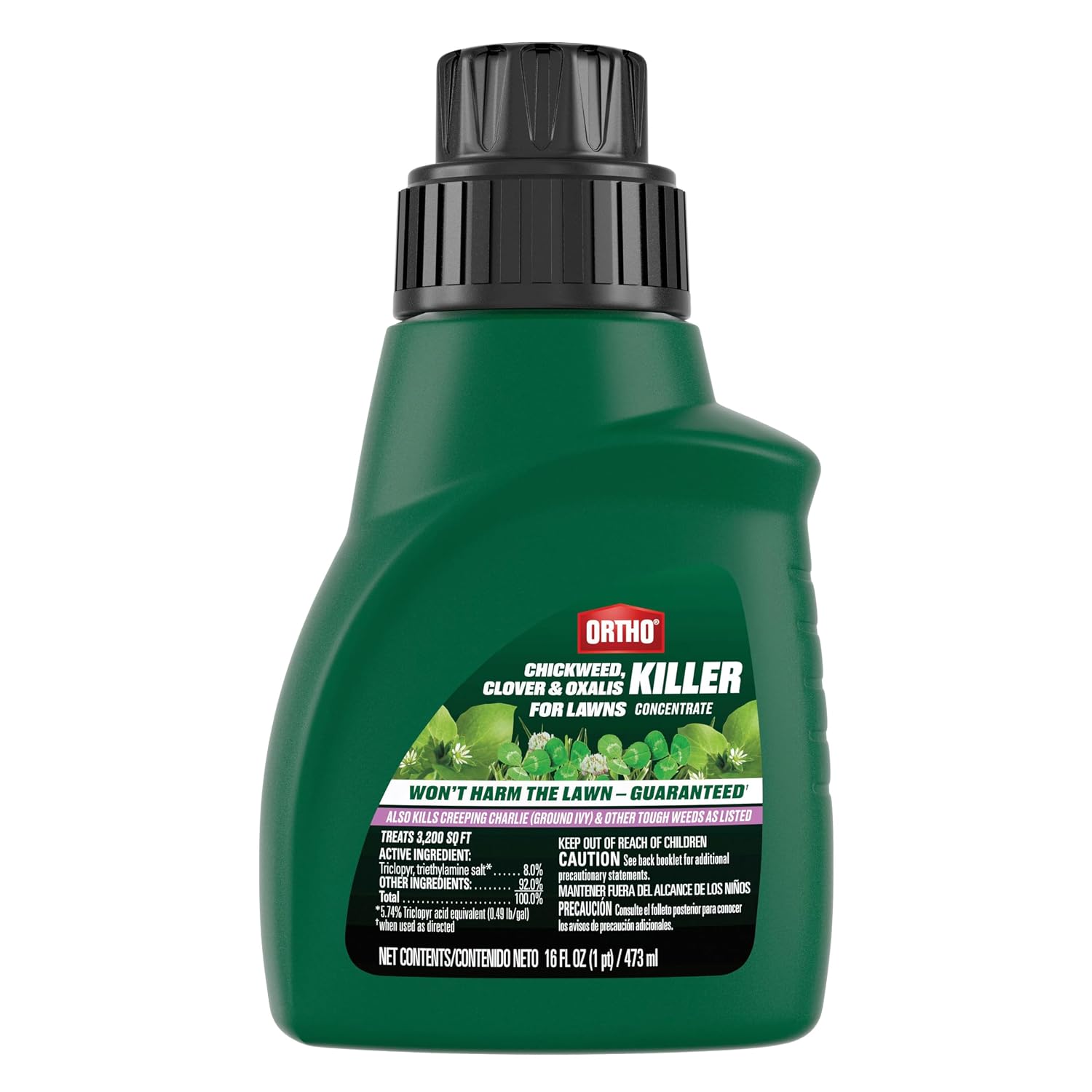
- Best pick, and it is literally named for clover: Ortho Weed B Gon Chickweed, Clover and Oxalis (8% triclopyr). It lists clover right on the label, it is affordable, and it is legal and sold in Suffolk County. Start here.
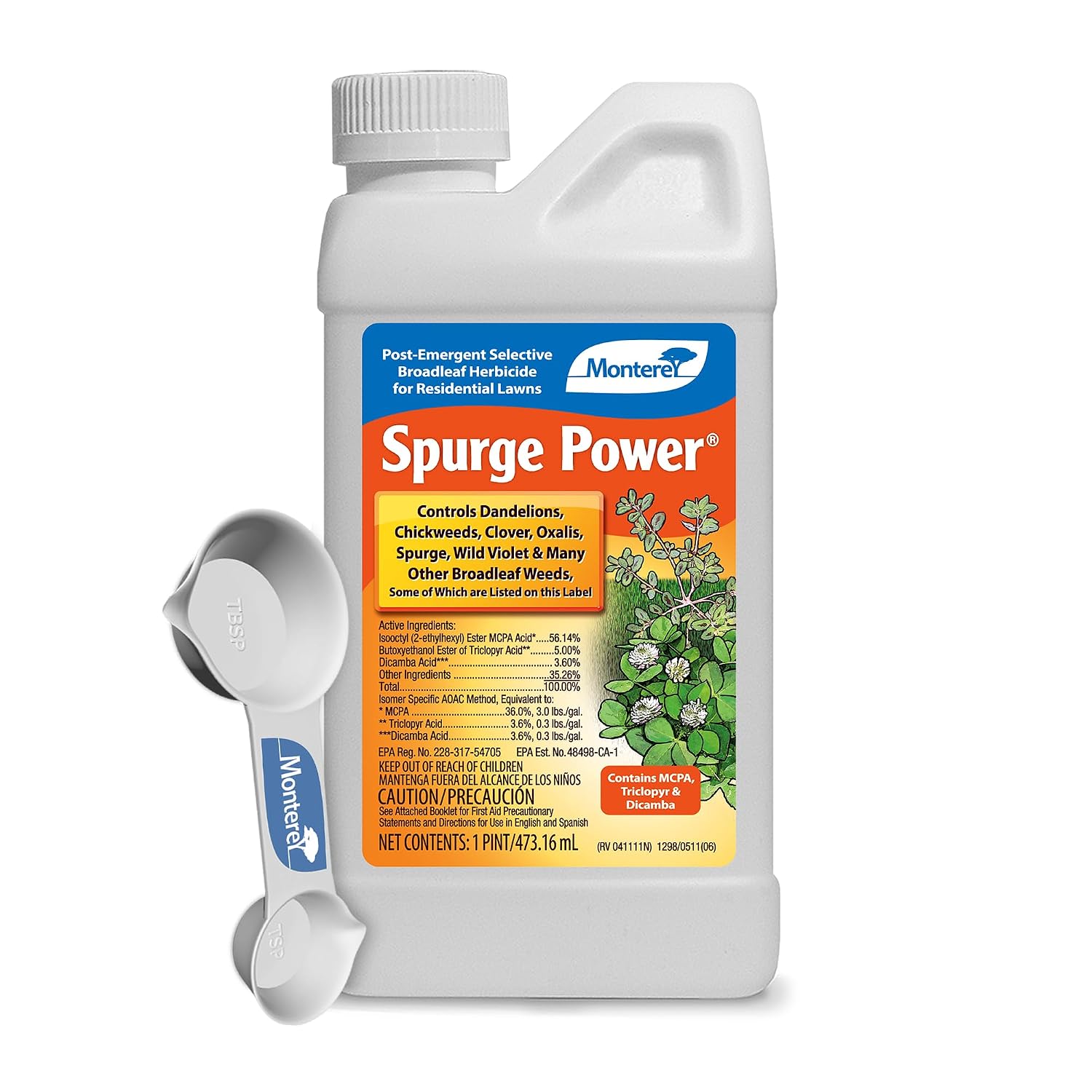
- Stronger, for thick or stubborn clover: Monterey Spurge Power, a three-way of MCPA, triclopyr, and dicamba. The multiple actives hit clover from several angles, great for heavy patches.
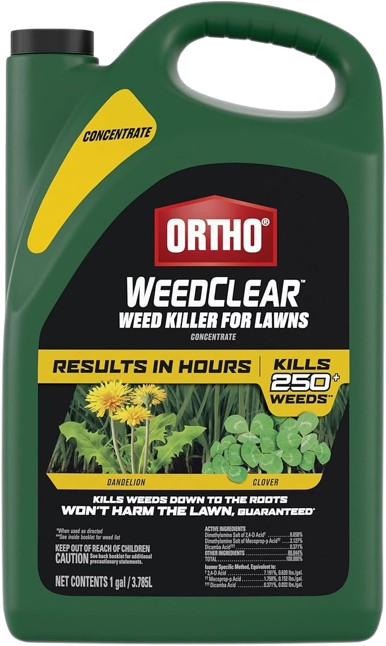
- Budget option: regular Ortho Weed B Gon (2,4-D, MCPP, dicamba). The MCPP gives it decent clover control, better than 2,4-D alone, though not as strong as the triclopyr picks above. Fine for light, scattered clover.
- Strongest (pro-grade, restricted here): products like SpeedZone and T-Zone hit hardest, but T-Zone is restricted in Nassau and Suffolk and Turflon Ester is commercial-applicator-only in New York. They work, just know the status and decide for yourself.
- No surfactant to add: the Ortho and Spurge Power already contain one. Clover's waxy leaf is why a surfactant matters, and these have it built in.
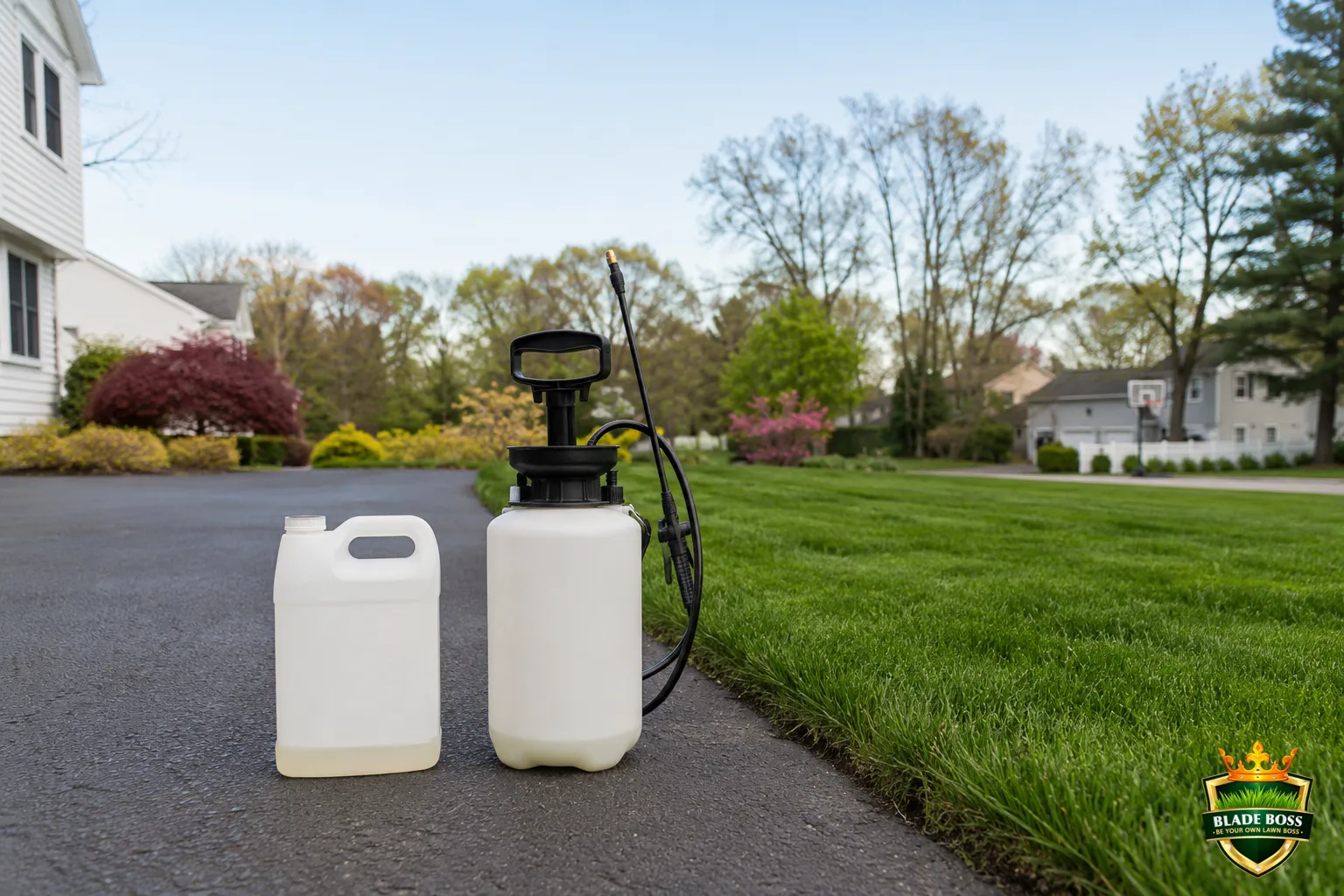
Mix It Exactly Right
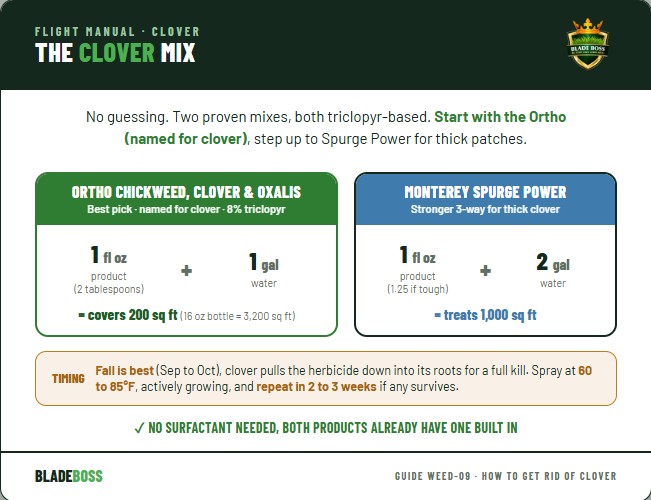
No guessing. Here are the exact mixes. Measure your treatment area first (length times width equals square feet), then mix to match.
- Ortho Chickweed, Clover and Oxalis: 1 fl oz (2 tablespoons) per 1 gallon of water covers 200 sq ft. A 16 oz bottle covers about 3,200 sq ft.
- Monterey Spurge Power: 1 fl oz (2 tablespoons) in 2 gallons of water treats 1,000 sq ft (use 1.25 fl oz for tough, thick clover).
- How to load the sprayer: fill halfway with water, add the measured product, then top off and shake to mix evenly.
- Do not add a surfactant, both already have one built in. Extra can injure your lawn.
- Respect the label limits: do not exceed the yearly maximum on whichever product you choose, and space repeat applications per the label (usually 2 to 3 weeks).
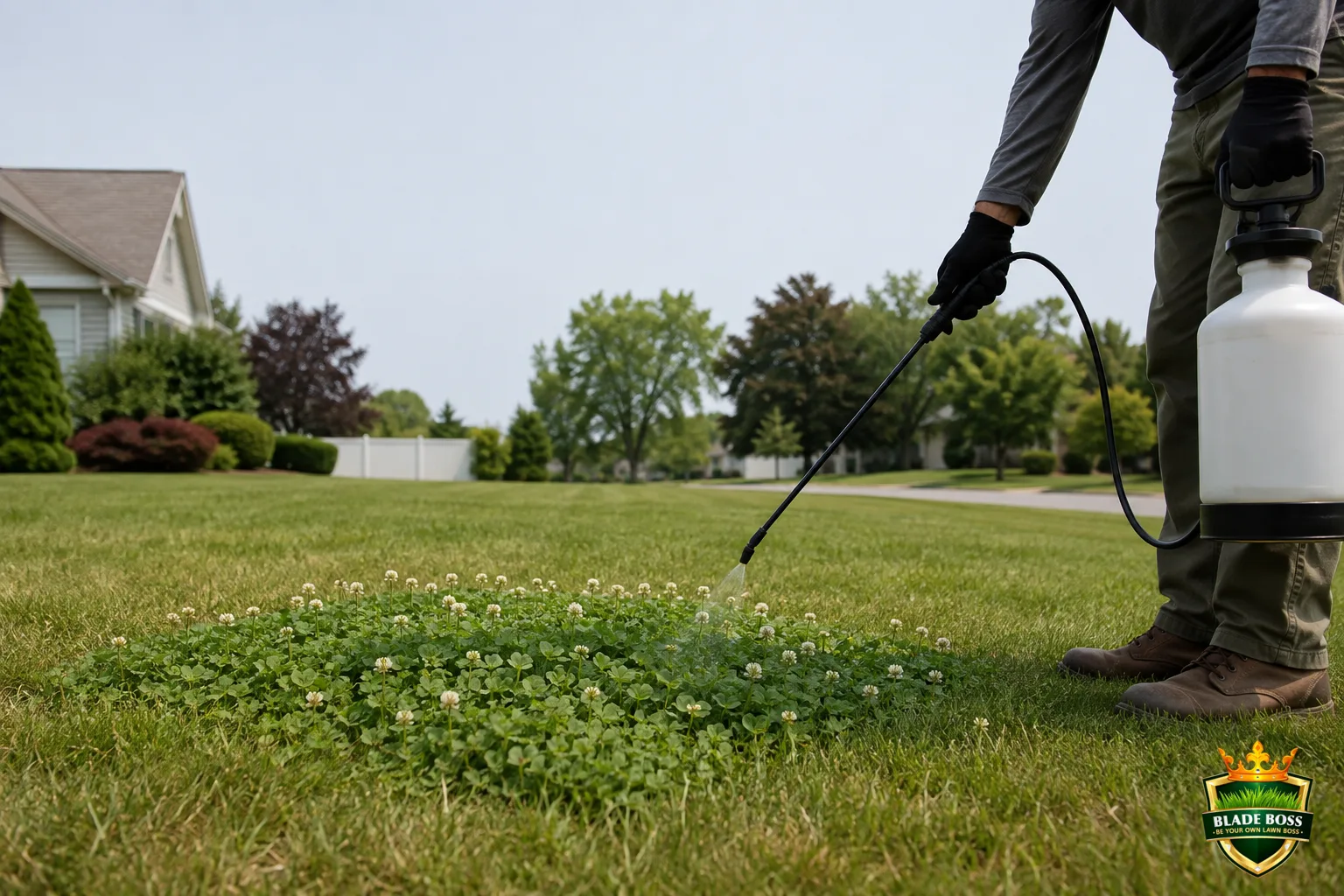
Spray It the Right Way (Fall Is Best)
Timing decides whether clover dies for good or grows back. Fall is the best window because clover is pulling nutrients down into its roots for winter, so it carries the herbicide down with it and the whole plant dies. Spring works too, but a spring spray often only burns the top and the roots push up new leaves.
- Best time: fall (September to October), when clover is actively storing energy in its roots. Spray then and you kill the roots, not just the leaves.
- Spray actively growing clover, 60 to 85°F: not in a heat wave, not during drought, and not on stressed turf. A healthy, growing plant takes up the most herbicide.
- Wet the clover foliage thoroughly, until just covered, not dripping. Full coverage on the leaves is what matters.
- Calm day, no rain for 24 hours: avoid wind drift onto garden beds, and give it a day to absorb.
- Repeat in 2 to 3 weeks if any survives: tough clover mats often need a second pass. That is normal, not a failure.
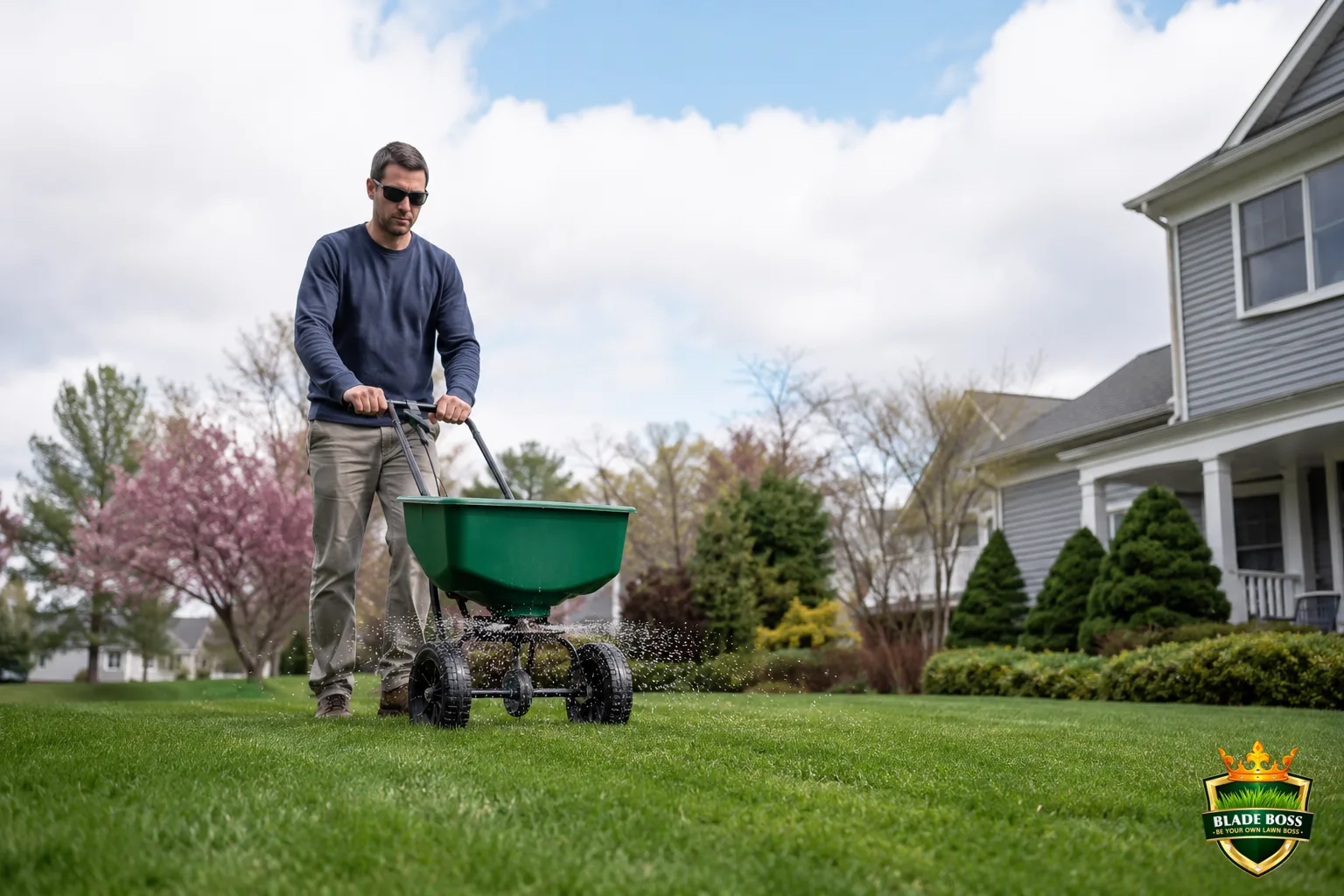
Feed the Lawn to Keep It Gone
This is the half that makes clover stay dead. Clover moved in because the grass was hungry, so once you have killed it, you feed the lawn to make sure grass, not clover, claims that open space. A well-fed, dense lawn is clover-proof.
- Feed nitrogen: a nitrogen-forward product like a 16-0-0 gives the grass what clover was living without. Follow your fertilizer plan, most of your nitrogen goes down in fall on Long Island.
- Overseed the bare spots the dead clover leaves behind, so grass fills in instead of new clover.
- Mow tall (3 to 4 inches): taller grass shades the soil and out-competes low, creeping clover.
- Give it a season or two: a properly fed lawn crowds clover out on its own. Kill plus feed is what ends the cycle for good.
The Clover Battle Card
Members get the quick kill-and-feed reference, the product picks with Long Island legal status, and the fertility checklist that keeps clover from coming back.
Open this with a free account →Abort Criteria - Common Mistakes
Mission Complete. Now Fly the Plan.
Clover is beatable, and now you know the part most people miss: it is a low-nitrogen signal, so you kill it AND feed the lawn. Spray a triclopyr product in fall when it is actively growing, hit it again if it is thick, then feed nitrogen so dense grass claims the space for good. Do both halves and the clover does not come back. Track your feeding and spray timing with the Weather Hub, and if you are clearing other broadleaf weeds too, see how to kill broadleaf weeds or the closely related spurge guide.
Crew Questions - FAQ
What is the best way to kill clover in a lawn?
Use a selective broadleaf herbicide that contains triclopyr, because plain 2,4-D alone barely touches clover, its waxy leaf gives it moderate resistance. For a Long Island homeowner, the best and most affordable pick is Ortho Weed B Gon Chickweed, Clover and Oxalis (8 percent triclopyr), which is literally named for clover, lists it on the label, and is legal and sold in Suffolk County. Mix it at 1 fluid ounce (2 tablespoons) per gallon of water, which covers 200 square feet, and do not add a surfactant since it already contains one. For thick or stubborn clover, step up to Monterey Spurge Power, a three-way of MCPA, triclopyr, and dicamba that hits it from several angles. Spray on a calm day between 60 and 85 degrees when the clover is actively growing, ideally in fall, and repeat in 2 to 3 weeks if any survives. But here is the key that most people miss: clover grows where grass is underfed, so after you kill it you must feed the lawn nitrogen, otherwise new clover simply moves back into the hungry turf.
Why do I have clover in my lawn?
Almost always because your lawn is low on nitrogen. White clover is a legume, which means it pulls its own nitrogen out of the air and does not depend on the soil the way grass does. So in a nitrogen-starved lawn, clover has a built-in advantage: it stays lush and green while the underfed grass goes thin and pale, and it spreads into the weak spots. An easy way to confirm this is the plug test: dig up a small plug that contains both grass and clover, and if the grass looks pale and thin next to dark, vigorous clover, your lawn is nitrogen-deficient. This is why clover is often called an indicator weed, its presence is a symptom of a fertility problem, not a random invasion. It also explains why spraying alone never fully works: if you kill the clover but leave the soil hungry, new clover germinates right back into the same weak turf. The lasting fix is to feed the lawn so dense, healthy grass out-competes clover, which it will do on its own within a season or two once it is properly fed.
When is the best time to kill clover?
Fall, specifically September into October, is the best time to spray clover, and the reason is rooted in how the plant behaves. In fall, clover is actively pulling nutrients down into its root system to store energy for winter. When you apply herbicide during that window, the plant carries the chemical down into its roots along with those nutrients, which kills the entire plant, roots and all. A spring application, by contrast, often only burns off the top growth, and the surviving roots push up fresh leaves within a few weeks, so it looks like the herbicide failed. Beyond the season, spray when the clover is actively growing and daytime temperatures are between about 60 and 85 degrees, and avoid spraying during a heat wave (over 90 degrees) or a drought, because a stressed plant takes up very little herbicide. Give it a calm day with no rain expected for 24 hours so the herbicide can be absorbed. And plan to feed your lawn afterward, since fall is also the most important time to put nitrogen down on a Long Island cool-season lawn, which does double duty by helping grass reclaim the space.
Will clover come back after I kill it?
It will come back if you only spray and never address why it was there in the first place. Clover invades lawns that are low in nitrogen, because as a legume it makes its own and out-competes underfed grass. So if you kill the visible clover but leave your lawn hungry, new clover simply germinates back into the same weak, thin turf, and you are back where you started. To keep it gone, you have to pair the kill with a feed. After you spray, put nitrogen down (a nitrogen-forward fertilizer like a 16-0-0 is ideal), overseed the bare spots the dead clover leaves behind so grass fills them instead of new weeds, and mow tall (3 to 4 inches) so your grass shades out low, creeping clover. A properly fed, dense lawn is essentially clover-proof, and it will crowd clover out on its own within one or two growing seasons. The short version: kill it, then feed it, and it stays gone.
Should I kill clover, or is it good for the lawn?
That is genuinely a personal choice, and clover has real upsides worth knowing before you spray. Because it fixes its own nitrogen, clover feeds the soil and can green up a lawn during drought when grass goes dormant, and its flowers are excellent for pollinators like bees. For those reasons, deliberately mixing microclover into a lawn has become a popular low-input, sustainable choice, and some people are happy to leave it. So killing clover is a choice, not a requirement. That said, plenty of homeowners want a uniform grass lawn, dislike the bee traffic near play areas, or simply do not like the look of clover patches, and all of those are perfectly valid reasons to remove it. If you do want it gone, this guide's approach (kill it with a triclopyr product in fall, then feed the lawn) is the reliable way to do it. If you are on the fence, remember that the same fix that removes clover, feeding your lawn well, is good practice either way, so you can start by feeding and see whether you even mind the clover that remains.