
GUIDE WEED-06 · REV A
How to Kill Broadleaf Weeds in Your Whole Lawn
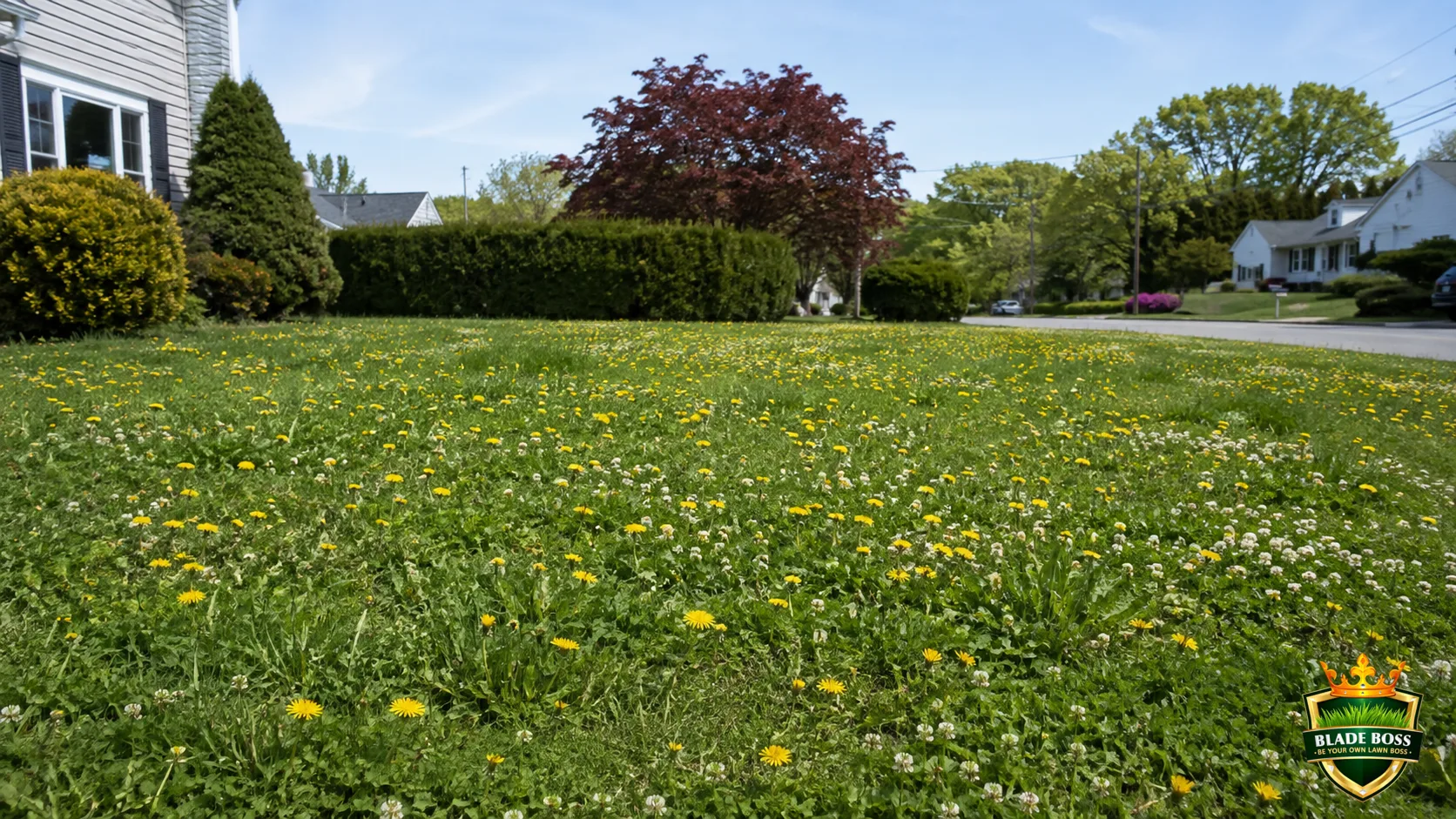
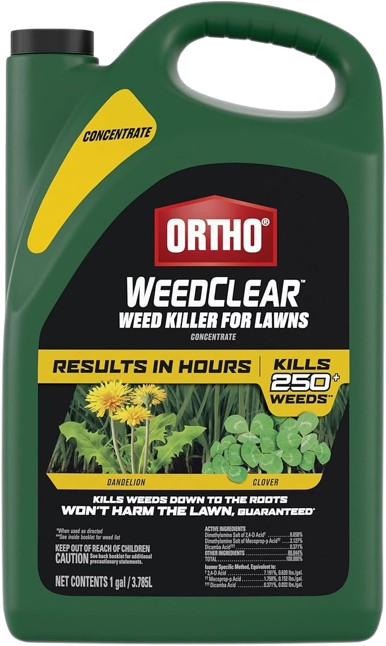
Dandelions, clover, plantain, chickweed, oxalis, ground ivy: the wide-leaf weeds scattered across your lawn are broadleaf weeds, and one product handles almost all of them at once. A 3-way selective herbicide like Weed B Gon kills over 250 broadleaf weeds down to the root without hurting your grass. This guide shows you how to blanket-treat the whole lawn safely with a hose-end sprayer, get the rate right, and avoid the drift and timing mistakes that turn a simple job into a damaged garden.
Pre-Flight Checklist - What You Need
As an Amazon Associate, Blade Boss earns from qualifying purchases. It never costs you a penny more.
Rules of Engagement (ROE's)
The Flight Plan - Step by Step
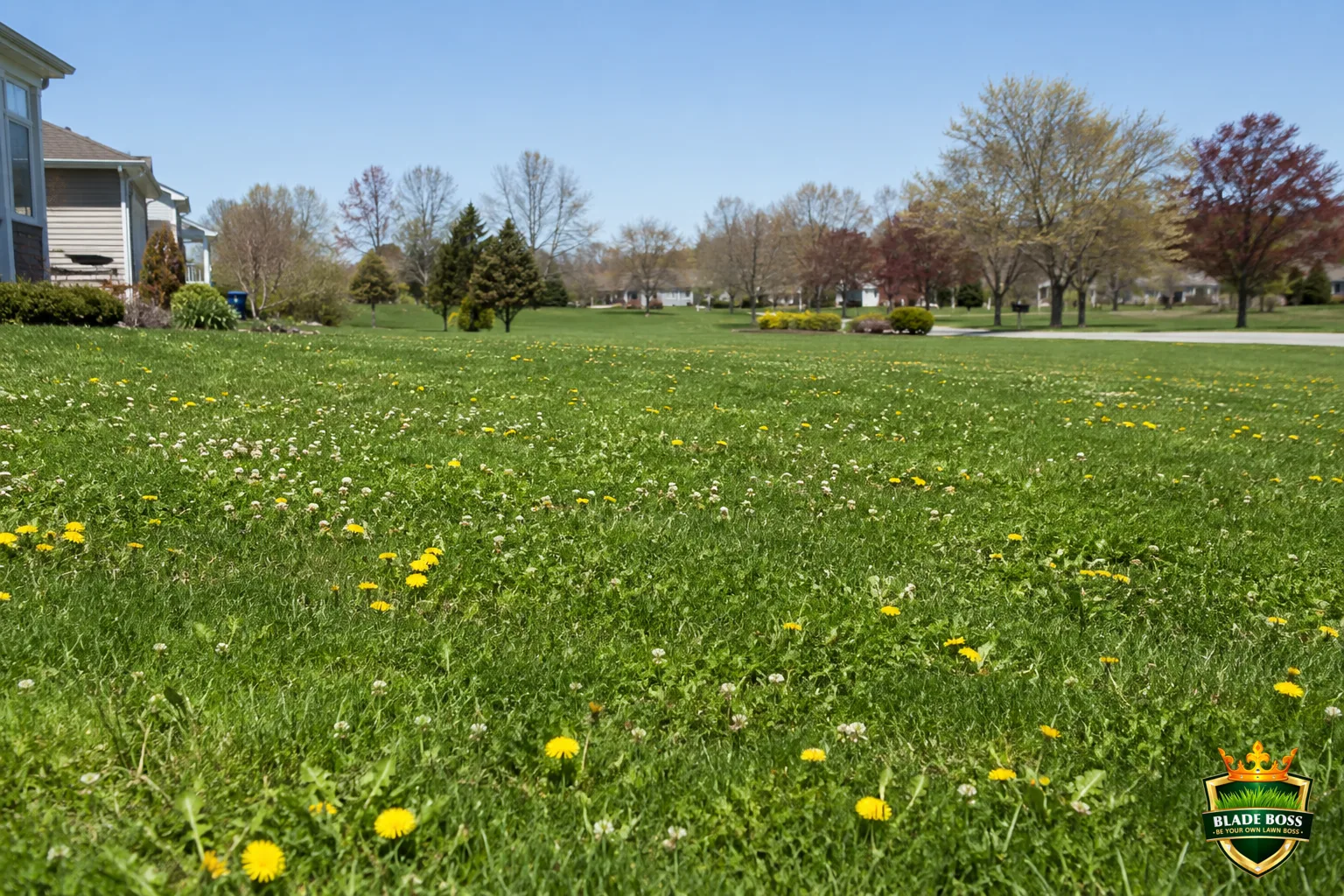
Confirm You Have Broadleaf Weeds
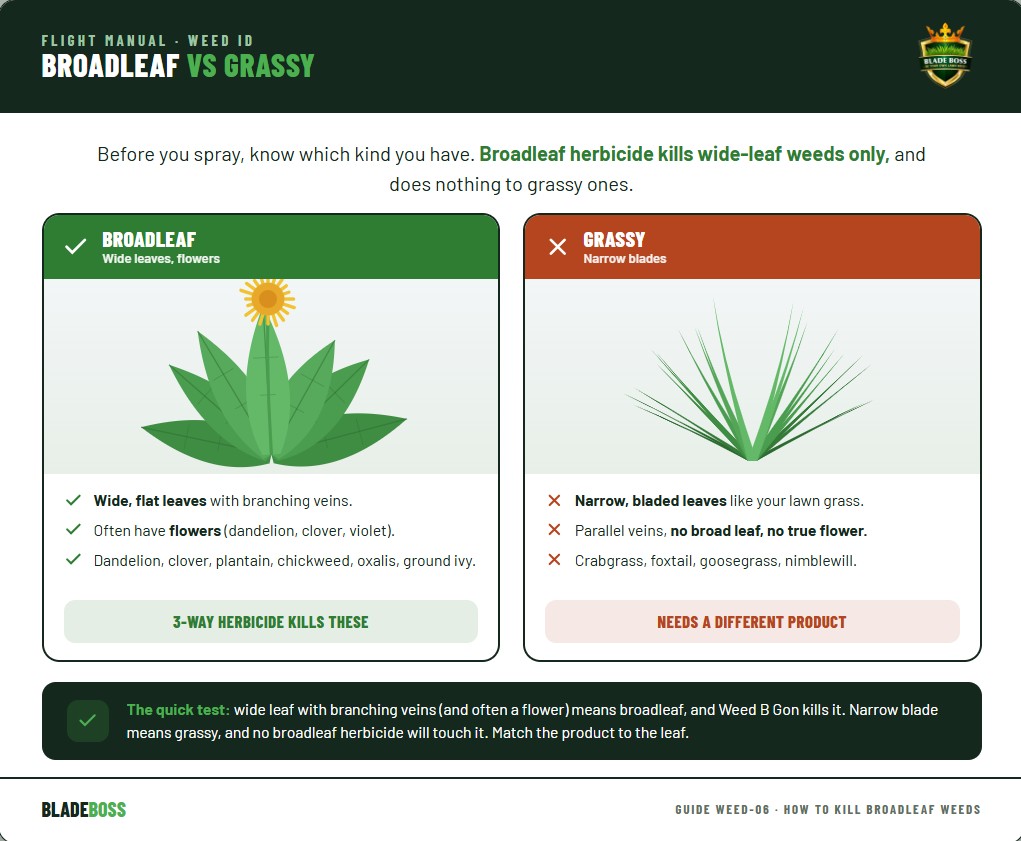
This product only kills broadleaf weeds, so first confirm that is what you have. The rule is simple: broadleaf weeds have wide, flat leaves (often with branching veins) and usually flowers, while grassy weeds have narrow blades like your lawn grass.
- Broadleaf (this kills these): dandelion, clover, plantain, chickweed, oxalis, ground ivy, wild violet, and 250+ others.
- Grassy weeds (NOT killed): crabgrass, foxtail, goosegrass, nimblewill. These need different, specific products.
- Nutsedge (NOT killed): the glossy, triangular-stemmed sedge needs its own herbicide.
Pick Your Day: Timing and Weather
Broadleaf herbicide is only as good as the conditions you spray it in. Get the timing right and it works with one application, get it wrong and you either fail to kill the weeds or damage your lawn and everything around it. Wait for the right window before you mix a drop.
- Weeds actively growing: spray when the broadleaf weeds are green and growing, which is when they absorb and move the herbicide. Spring and early fall are the best windows.
- Temperature 45°F to 90°F: below that and the weeds are not growing, above that and you risk stressing your lawn. Avoid heat waves.
- Calm and dry: pick a windless day (to prevent drift) with no rain expected for a couple of hours (it is rainproof in about 1 hour).
- Do not mow for 2 days before, the weeds need full leaves to absorb the spray.
Gear Up and Set the Rate
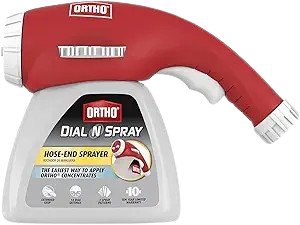
You have two ways to blanket-treat a whole lawn: a hose-end sprayer (easiest for big areas, the concentrate meters itself as water passes through) or a tank/pump sprayer (more control, better for precise coverage). Either way, the rate is what matters, and for our Northern lawns it is straightforward.
- The rate (Northern lawns): 2 fl oz of concentrate per gallon of water, which treats 500 sq ft.
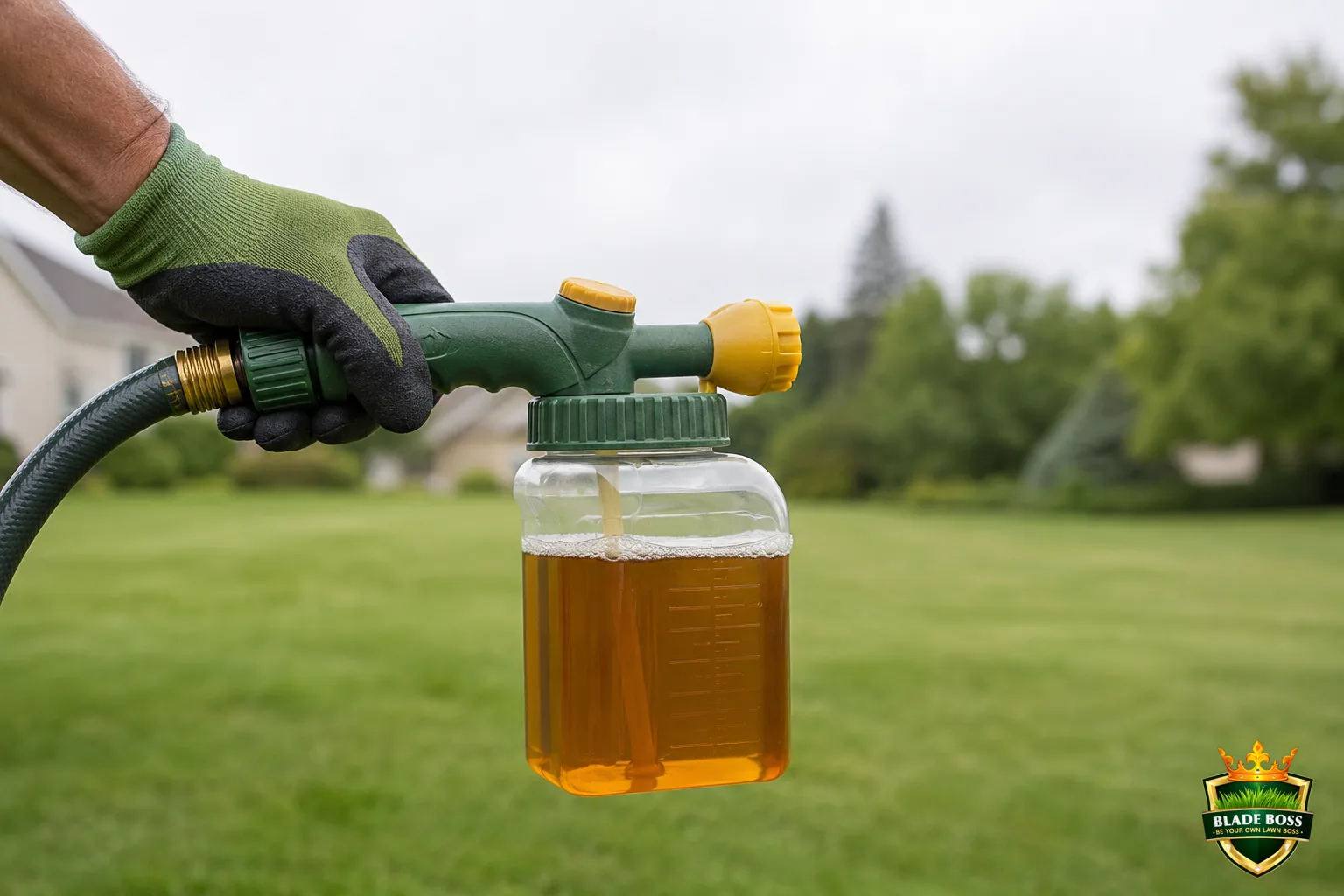
- Hose-end sprayer: set the dial to 2 oz, pour the concentrate into the jar, do NOT add water (the sprayer mixes it with the hose water), connect, and spray until the lawn surface is just wet.
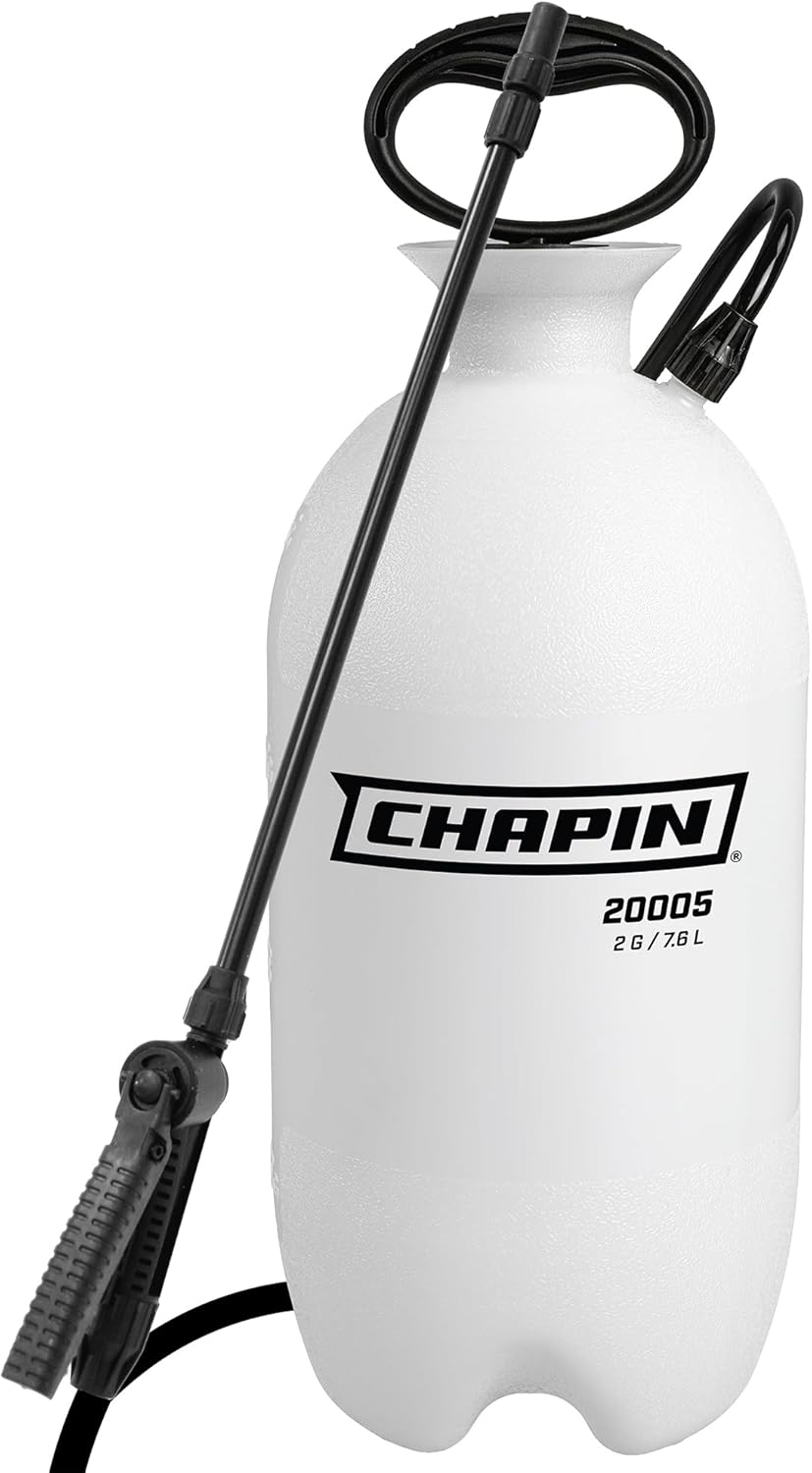
- Tank sprayer: mix 2 fl oz of concentrate per gallon of water and spray to lightly, evenly wet the weeds and lawn over 500 sq ft per gallon.
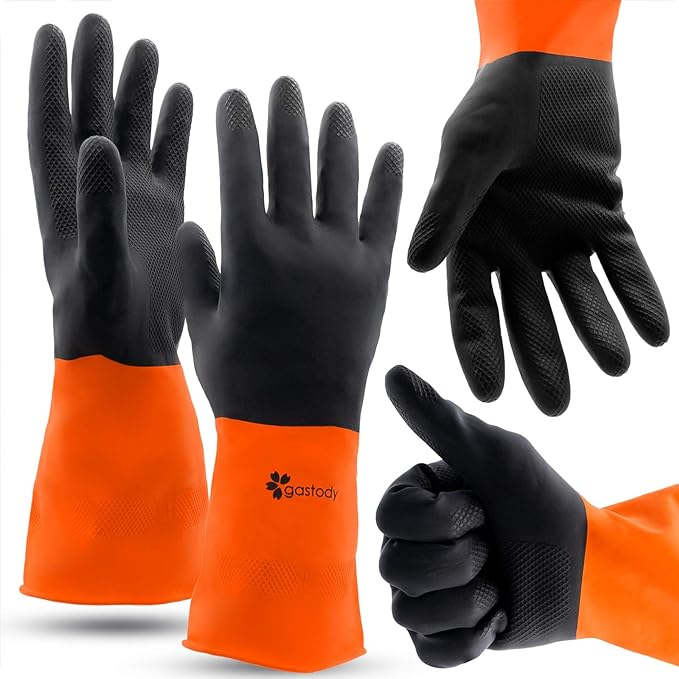
- Gear up: chemical-resistant gloves, eye protection, long sleeves, pants, and closed shoes.
- Know your square footage so you mix and cover the right amount without over-applying.
Blanket-Spray the Lawn
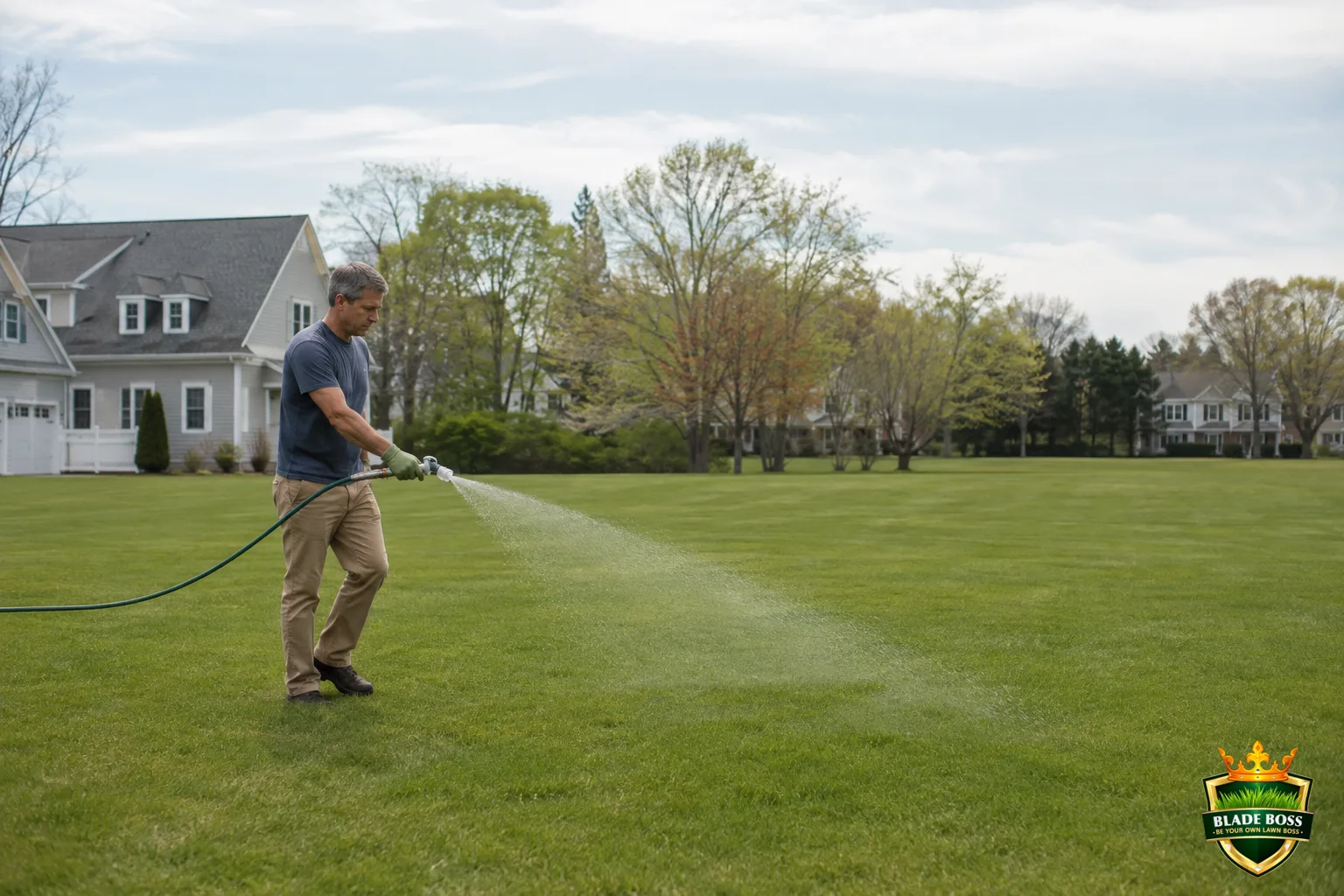
Now treat the whole lawn evenly, working methodically so you cover everything once without overlapping heavily or missing spots. The goal is to lightly wet the surface, not soak it to runoff. Broadleaf weeds absorb the herbicide through their leaves and carry it down to the roots.
- Spray to lightly wet the surface, an even coating over the grass and weeds. Do not drench it to the point of runoff.
- Work in rows, walking a steady pace and slightly overlapping each pass so you do not leave untreated strips.
- Keep well away from garden beds, vegetables, flowers, trees, and shrubs, and shut off the sprayer near them. This is where drift damage happens.
- Watch the wind constantly, if it picks up, stop. Even a light breeze carries dicamba onto plants you care about.
- Let it dry completely before letting kids or pets back on the lawn.
Wait, Assess, and Repeat if Needed
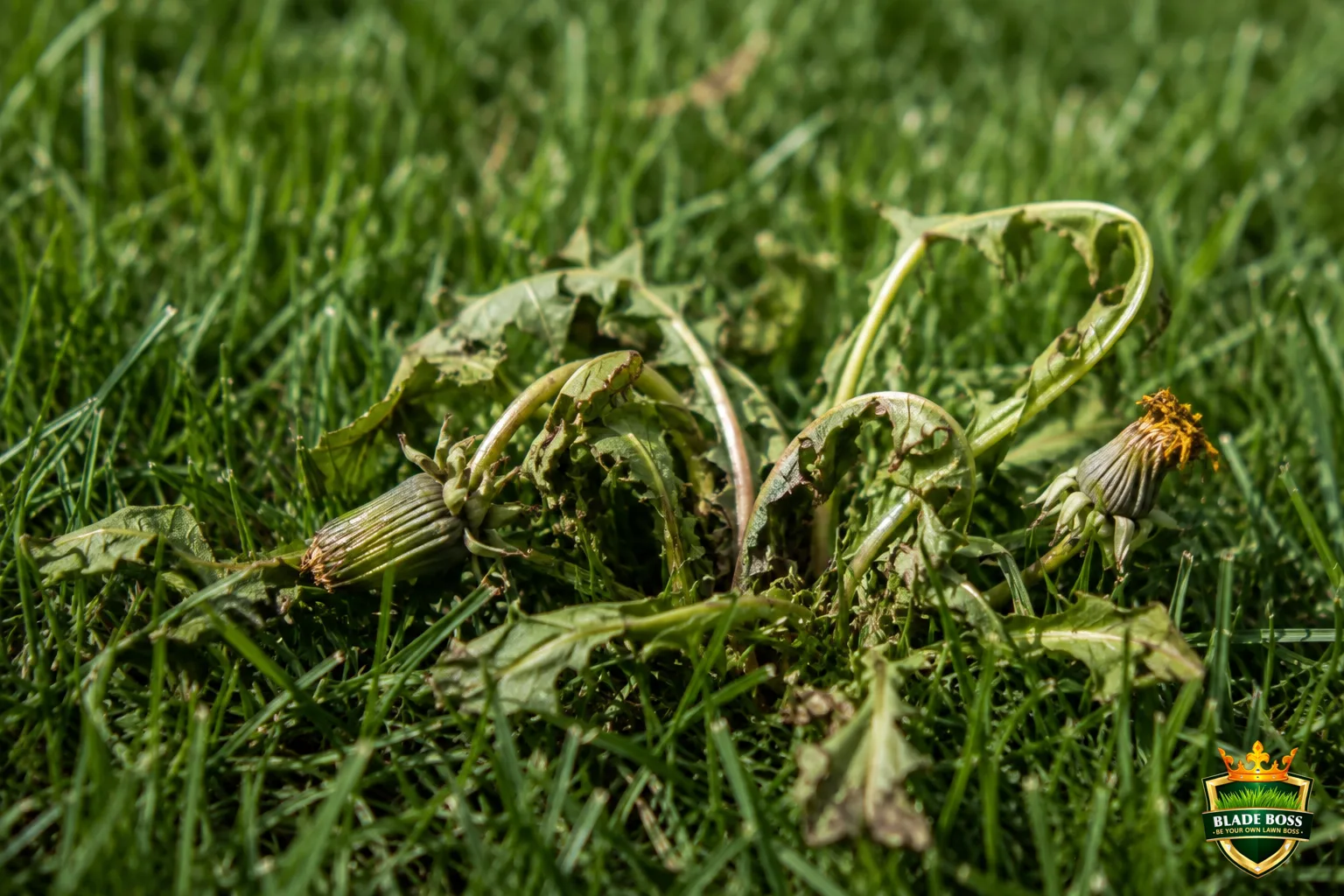
Broadleaf herbicide works fast on the surface but takes time to fully kill the root. You will see wilting and curling within a day, but full death takes one to two weeks. Do not judge it too early or re-spray too soon.
- See results in about 24 hours: the weeds twist, curl, and wilt as the herbicide moves through them.
- Full kill takes 1 to 2 weeks as it reaches the roots. Be patient before deciding anything survived.
- Do not water for 12 hours after applying, and do not mow for 2 days after.
- Spot-treat survivors after 2 to 3 weeks if a few tough weeds (like violet or ground ivy) hang on. Some stubborn broadleaf weeds need a second hit.
- Stay under 2 broadcast applications per year as the label requires.
The Broadleaf Blanket-Spray Playbook
Members get the broadleaf-versus-grassy ID guide, the hose-end and tank-sprayer rate reference, the safe-spraying conditions checklist, and the tough-weed follow-up plan so nothing survives.
Open this with a free account →Abort Criteria - Common Mistakes
Mission Complete. Now Fly the Plan.
Broadleaf weeds are the easiest category to beat: one 3-way selective herbicide clears dandelions, clover, plantain, and 250 more in a single blanket spray, without touching your grass. The whole job comes down to doing it safely: confirm they are broadleaf, spray on a calm mild day when weeds are growing, get the rate right, and keep every drop away from your garden. Then be patient for the 1 to 2 week full kill and spot-treat the stubborn survivors. For the broader rules on spraying without harming your lawn, see how to spray weeds without killing your lawn, and for the grassy weeds this will not touch, start with how to kill crabgrass.
Crew Questions - FAQ
How do I kill broadleaf weeds in my whole lawn?
Use a 3-way selective broadleaf herbicide such as Weed B Gon, which contains 2,4-D, MCPP (mecoprop), and dicamba and kills over 250 broadleaf weeds down to the root without harming your lawn grass. For a whole lawn, the easiest method is a hose-end sprayer: set the dial to 2 ounces, add the concentrate (no water, the sprayer meters it), and spray until the lawn surface is lightly wet. The rate for Northern lawns is 2 fluid ounces of concentrate per gallon of water per 500 square feet. Spray on a calm, mild day (45 to 90 degrees) when the weeds are actively growing, avoid drift onto gardens and trees, and do not mow for 2 days before or after. You will see results in about 24 hours, with full kill in 1 to 2 weeks.
Will Weed B Gon kill my grass?
No, not when used as directed on the listed lawn grasses. Weed B Gon and similar 3-way broadleaf herbicides are selective, meaning they are designed to kill broadleaf weeds while leaving common lawn grasses like Kentucky bluegrass, fescue, and ryegrass unharmed. The key phrases are as directed and listed grasses: you must apply at the correct rate (not doubled up), in the right conditions (45 to 90 degrees, not in a heat wave), and only on tolerant grass types. Notably, it should NOT be used on bentgrass lawns, on newly seeded lawns until they have been mowed several times, or on grass types not listed on the label. Applied correctly on an established, tolerant lawn, it targets the weeds and leaves your grass standing.
What broadleaf weeds does Weed B Gon kill?
It controls over 250 broadleaf weeds, which covers the vast majority of the wide-leaf weeds you will see in a lawn. Common ones include dandelion, white clover, plantain, common chickweed, henbit, oxalis (yellow woodsorrel), ground ivy (creeping charlie), wild violet, purslane, and many more. What it does NOT kill is grassy weeds, because those are not broadleaf. Crabgrass, foxtail, goosegrass, nimblewill, and other grass-like weeds are unaffected by broadleaf herbicides and require different, specific products. Nutsedge, a sedge with triangular stems, also needs its own herbicide. So Weed B Gon handles the broadleaf category comprehensively, but it is only one piece of total weed control.
Can I use a hose-end sprayer to apply Weed B Gon to my whole lawn?
Yes, and it is the easiest way to blanket-treat a large lawn. A hose-end sprayer attaches to your garden hose and automatically meters the concentrate as water flows through, so there is no pre-mixing. With the Ortho concentrate, you set the dial to 2 ounces (for Northern lawns), pour the concentrate into the sprayer jar without adding water, connect the hose, and spray until the lawn surface is just wet. The alternative is a tank or pump sprayer, where you mix 2 fluid ounces of concentrate per gallon of water and spray to cover about 500 square feet per gallon. The hose-end is faster for big areas; the tank sprayer gives you more precise control and is better near garden beds where you want to avoid drift.
When is the best time to spray broadleaf weeds?
The best time is when the weeds are young and actively growing, which is typically spring and early fall, on a calm, mild day. Actively growing weeds absorb and move the herbicide most effectively, so a lush, growing dandelion dies far more reliably than a stressed one. Aim for daytime temperatures between 45 and 90 degrees Fahrenheit: below 45 the weeds are not growing, and above 90 you risk stressing your lawn and increasing herbicide drift. Choose a windless day to prevent the spray from drifting onto gardens and ornamentals, and make sure no rain is expected for at least an hour or two, though most products are rainproof within about an hour. Fall spraying is especially effective on perennial broadleaf weeds because they are moving energy to their roots, carrying the herbicide down with it.
Why do some weeds survive Weed B Gon?
A few tough broadleaf weeds are simply harder to kill and often survive a single application. Wild violet, ground ivy (creeping charlie), and oxalis are the usual culprits, because they have waxy leaves or deep, persistent root systems that resist the standard 3-way formula. Other times survival comes down to conditions: spraying weeds that were drought-stressed, dormant, or not actively growing, applying in too much heat or wind, or mowing right before or after, which removes the leaves that absorb the herbicide. The fix is usually to spot-treat the survivors after 2 to 3 weeks, sometimes with a product containing triclopyr, which is stronger on these stubborn species. Just remember to stay within the label limit of 2 broadcast applications per year.