
GUIDE DIAG-03 · REV A
How to Fix Fertilizer Burn
You fed your lawn to help it, and days later it is streaked with yellow and brown. That is fertilizer burn, and the sinking feeling is real, especially after you put in the work. Here is the good news: if you move fast, most of it is fixable, and the fix is simple. The bad news is that the clock is ticking, the first day or two matters most. This guide shows you how to confirm it is actually burn, flush it out before it gets worse, nurse the lawn back, and make sure you never do it again.
Pre-Flight Checklist - What You Need
As an Amazon Associate, Blade Boss earns from qualifying purchases. It never costs you a penny more.
Rules of Engagement (ROE's)
The Flight Plan - Step by Step
Confirm It Is Actually Fertilizer Burn
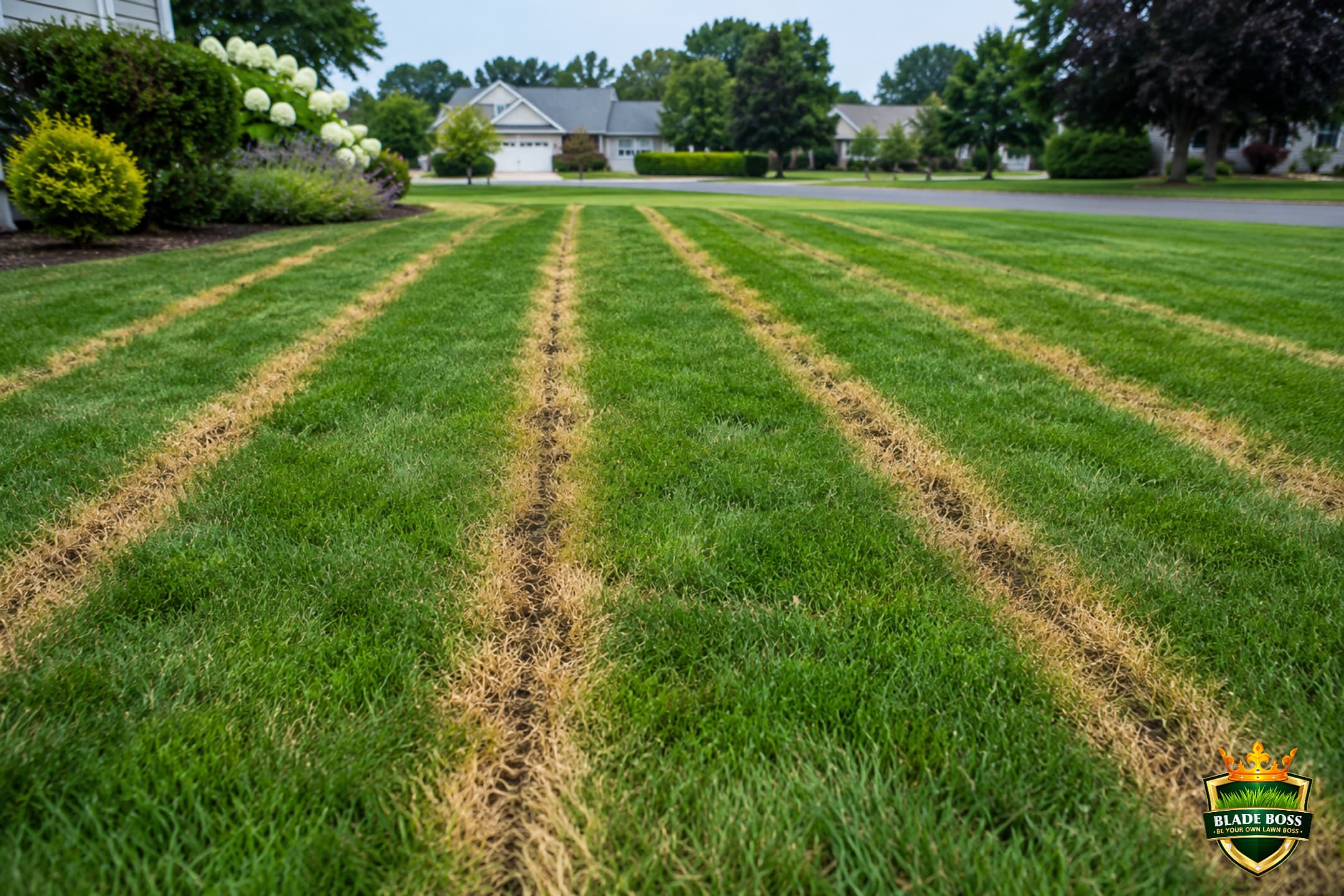
Before you treat, make sure you are treating the right thing, because burn, drought, disease, and dog spots can all look similar at a glance but need different fixes. Fertilizer burn has a signature that nature does not make: it follows the pattern of how you spread.
- Straight lines and stripes: burn shows up in spreader rows, wheel tracks, and along the edges where passes overlapped and doubled the rate.
- Concentrated spots: a dark scorched patch where you stopped, turned, or spilled a pile of granules.
- Fast onset after feeding: burn appears within a few days of fertilizing, not randomly weeks later.
- Yellow to brown, from the tips down: blades scorch and crisp, often yellow first then brown, unlike the round patches of most lawn diseases.
Rake Up Any Visible Fertilizer
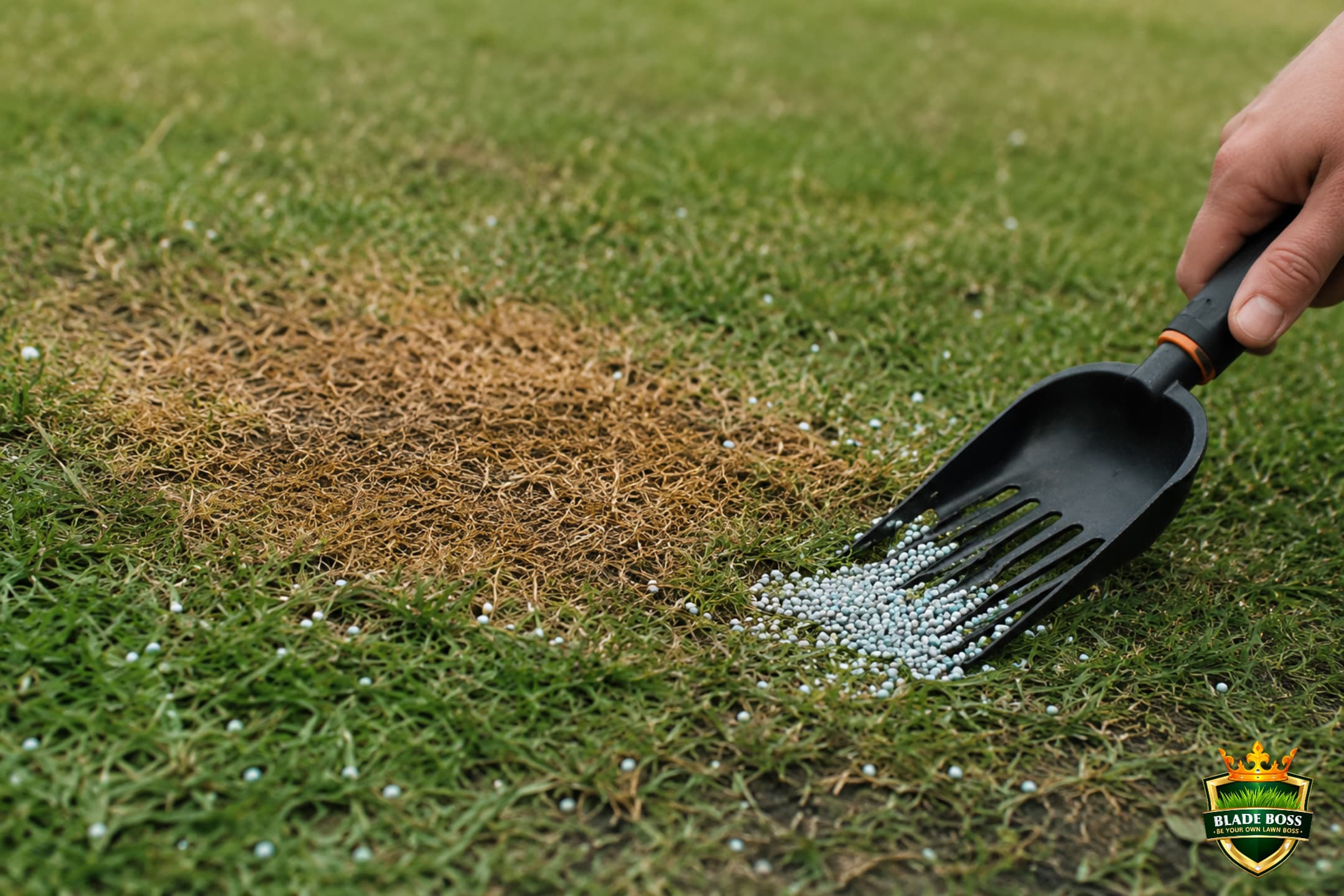
If you can still see fertilizer granules sitting on the soil (especially in that spot where a pile dropped), get them off the lawn before you water. Every granule left behind is more salt waiting to dissolve into the soil and deepen the burn, so removing them stops the damage from getting worse.
- Gently rake or sweep up visible granules and piles, and remove them from the lawn.
- Do not work the soil hard, you are lifting granules off the surface, not digging.
- Then move straight to watering, the granules you cannot see are already dissolving and need flushing.
Flush It Heavily and Immediately
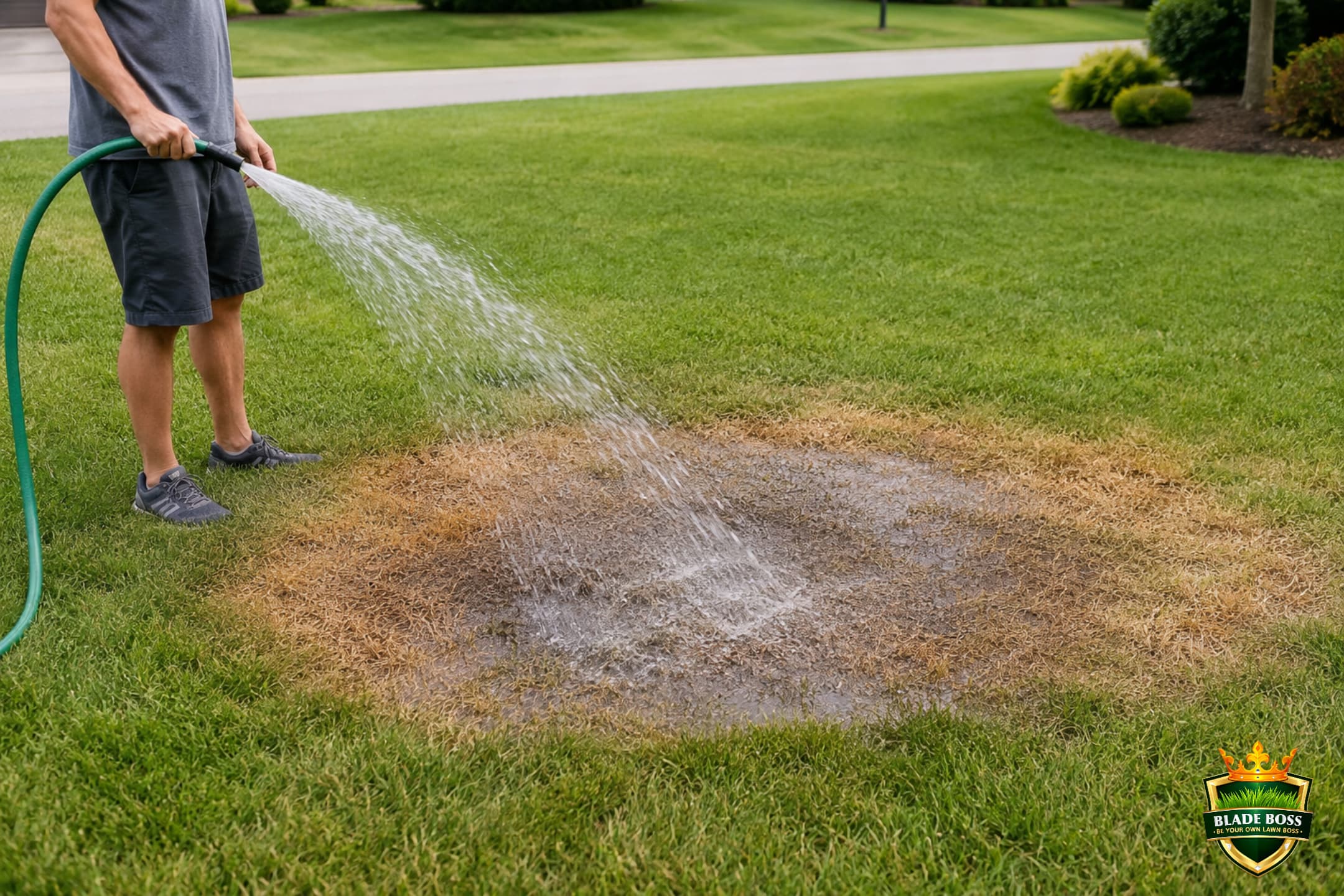
This is the whole ballgame. Fertilizer burn is a salt problem, and the cure is to dilute that salt and flush it down below the root zone with a lot of water, right now. The first 24 to 48 hours are critical, so do not wait for the weekend. Grab a hose and soak the affected areas the moment you realize what happened.
- Apply about an inch of water right away to the burned areas, a deep, slow soak, not a quick misting. You want the water carrying salt down and out, not just wetting the surface.
- Water deeply every day for the next 3 to 5 days to keep leaching the excess salt past the roots.
- Hand-water the spots with a hose if your sprinklers do not fully cover them, the burned areas specifically need the extra water.
- Aim for soaked, not swampy, deep watering leaches salt, but you do not need to create standing water or runoff carrying fertilizer off your property.
Let It Rest and Watch for Recovery
Once you have flushed it, the hardest part is leaving it alone. The lawn is stressed, and piling on more stress (mowing, traffic, more product) slows recovery or kills turf that would have survived. Give it about a week of rest and watch closely for signs of life.
- Do not mow for about 5 to 7 days, cutting weak, crunchy blades adds stress the lawn does not need right now.
- Keep foot traffic off the recovering areas.
- Absolutely do not fertilize, adding more product to burned turf is the worst thing you can do.
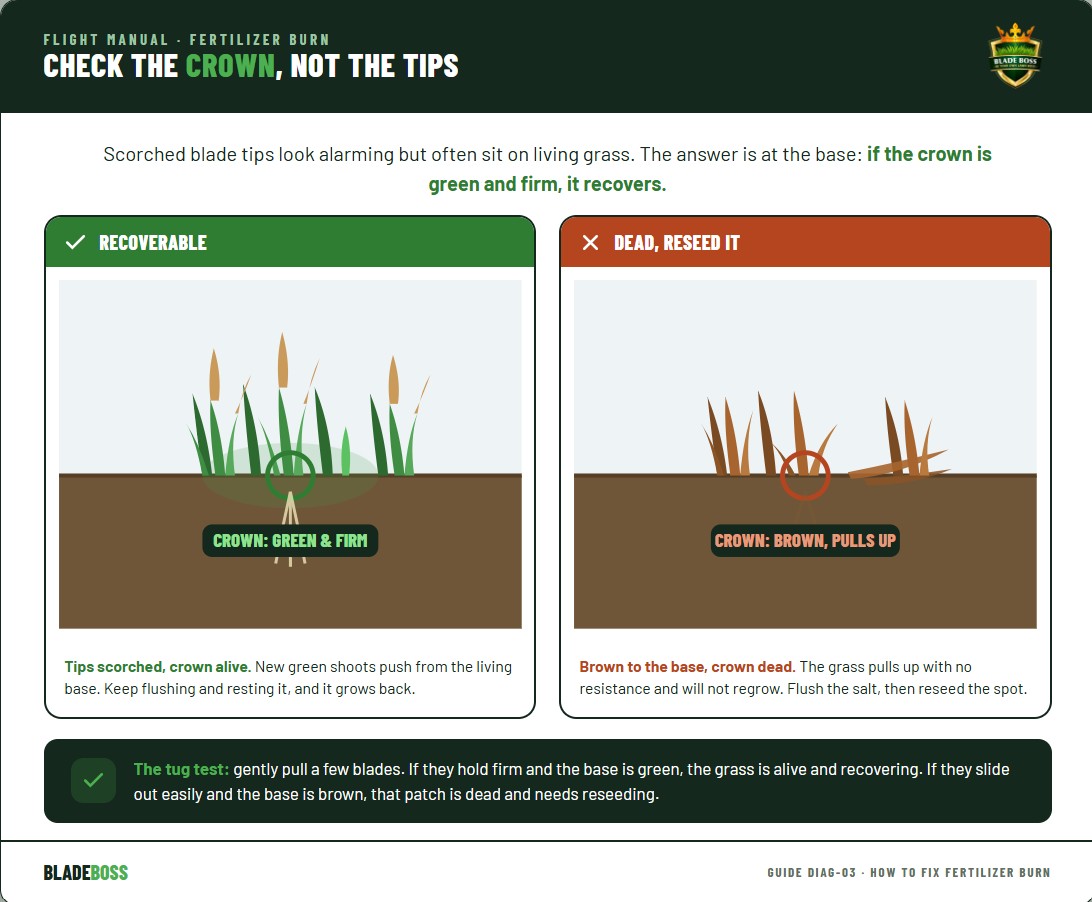
- Look for recovery signs at days 7 to 14: new green shoots at the base, less crisping, and burned patches shrinking. If you see improvement, keep watering deeply every 2 to 3 days.
Prevent the Next Burn with NitroCalc Pro
Fertilizer burn almost always comes from applying too much, and the fix is knowing your real number. NitroCalc Pro takes your lawn size and your fertilizer's nitrogen percentage and tells you exactly how much product to spread to hit the right nitrogen rate, instead of guessing off the bag. Dial in the rate, spread evenly, water it in, and you will not burn your lawn again.
Open NitroCalc Pro →The Fertilizer Burn Playbook
Members get the burn-versus-disease diagnostic table, the hour-by-hour rescue timeline, the recover-or-reseed decision guide, and the prevention checklist so you never burn your lawn again.
Open this with a free account →Abort Criteria - Common Mistakes
Mission Complete. Now Fly the Plan.
Fertilizer burn feels like a disaster, but it is one of the most fixable lawn problems if you move fast: confirm it is burn, rake up granules, and flush deep and immediately to leach the salt out. Rest the lawn, watch for new growth, and reseed only the spots that are truly gone. Then prevent the repeat by dialing in your rate with NitroCalc Pro and applying it right. If you are still not sure what you are looking at, start by diagnosing the damage, and lock in clean feeding with how to apply granular fertilizer.
Crew Questions - FAQ
How do I fix fertilizer burn on my lawn?
Move fast, because the first 24 to 48 hours matter most. First confirm it is actually burn (it follows spreader lines, stripes, and spill spots, and appears within days of fertilizing). Rake up any visible granules so they stop dissolving. Then water heavily and immediately, applying about an inch of water right away and deep watering daily for 3 to 5 days to flush the excess salt down below the root zone. After that, rest the lawn: no mowing, no traffic, and absolutely no more fertilizer for about a week while you watch for new green growth. Spots where the grass is truly dead can be reseeded once the salt is flushed out.
Will grass grow back after fertilizer burn?
Often, yes, if you act quickly. A lot of what looks burned is just scorched blade tips over living crowns, and that grass will push new green growth within one to two weeks once you have flushed the salt and let it rest. The way to tell is to check the base of the plant: if the crown is still green and firm, it will recover; if it is brown and the grass pulls up easily, that spot is dead and needs reseeding. The faster you flush the area with water after the burn, the more of the lawn survives, which is why immediate deep watering is so important.
How long does it take for a lawn to recover from fertilizer burn?
For recoverable burn (living crowns), you will usually start seeing new green shoots within about 7 to 14 days of flushing and resting the lawn, with fuller recovery over the following weeks as you continue deep watering every 2 to 3 days. Areas where the crowns were killed will not regrow on their own and need reseeding, which is often best done in fall on Long Island. So light burn can look normal again in a couple of weeks, while severe burn that killed patches is more like a full repair timeline tied to your seeding season.
Should I water my lawn after fertilizer burn?
Yes, immediately and heavily, water is the single most important treatment for fertilizer burn. Fertilizer burn is caused by excess salt pulling moisture out of the grass, and deep watering dilutes that salt and flushes it down below the root zone where it can no longer harm the grass. Apply about an inch of water to the burned areas right away, then water deeply every day for the next 3 to 5 days. The key is deep, heavy watering rather than light sprinkling, because you are trying to leach the salt down and out, not just wet the surface.
How do I tell fertilizer burn apart from lawn disease?
The biggest tell is the pattern. Fertilizer burn follows how you spread: straight stripes, wheel tracks, overlap edges, and concentrated spots where you stopped, turned, or spilled, and it appears within days of fertilizing. Lawn disease, by contrast, tends to show up in random round patches or circles that spread outward, often in shady or damp areas, and without any connection to recent feeding. Color helps too: burn goes yellow to brown from the blade tips down, while diseases often show grayish, orange, or ringed patches. If the damage does not follow spreader patterns, treat it as a possible disease and diagnose before flushing, since water will not fix a fungus.
Can I fertilize again to fix a burned lawn?
No, absolutely not. This is the most common and most damaging mistake people make with fertilizer burn. The burn is caused by a salt overload from too much fertilizer, so adding more fertilizer just adds more salt and makes the damage dramatically worse, potentially killing turf that would otherwise have recovered. The correct response is the opposite: flush the excess out with deep watering and then leave the lawn completely alone on the fertilizer front while it recovers. Do not feed a burned lawn again until it has fully recovered and you have corrected whatever caused the over-application in the first place.