
GUIDE DIAG-01 · REV A
What's Wrong With My Lawn? Brown Patches and Dead Spots, Diagnosed
Before you spray a single drop of fungicide, read this. The brown patch spreading across your lawn is fungus maybe half the time. The rest of the time it is grubs, drought, dog urine, a dull mower blade, or a sprinkler that misses that spot, and every one of those needs a completely different fix. Spraying fungicide on a grub problem wastes your money and kills nothing. This is how to tell what you are actually looking at, in five checks, before you spend a cent on treatment.
Pre-Flight Checklist - What You Need
As an Amazon Associate, Blade Boss earns from qualifying purchases. It never costs you a penny more.
Rules of Engagement (ROE's)
The Flight Plan - Step by Step
Read the Shape and the Scale
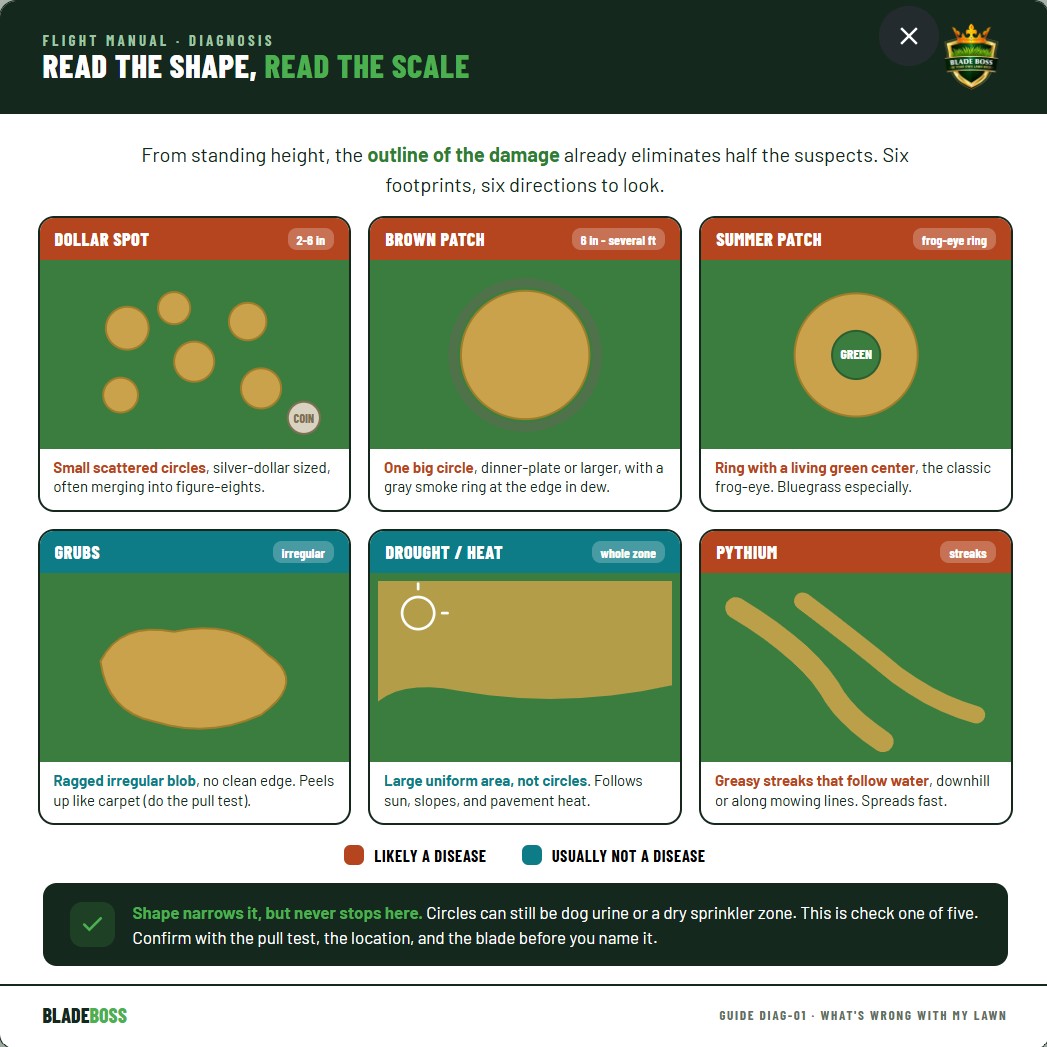
Start from standing height and read the outline. The shape alone eliminates half the suspects. Small circles the size of a silver dollar point to dollar spot. Large circles the size of a dinner plate or bigger point to brown patch. Rings with a green center (a frog-eye) point to summer patch.
Irregular ragged blobs that follow no clean circle are usually grubs or drought. Streaks running downhill or along your mowing lines point to pythium, which travels with water. And stripes or spill shapes mean you spilled or misapplied something, not a living organism at all.
Do the Pull Test (The Ten-Second Answer)
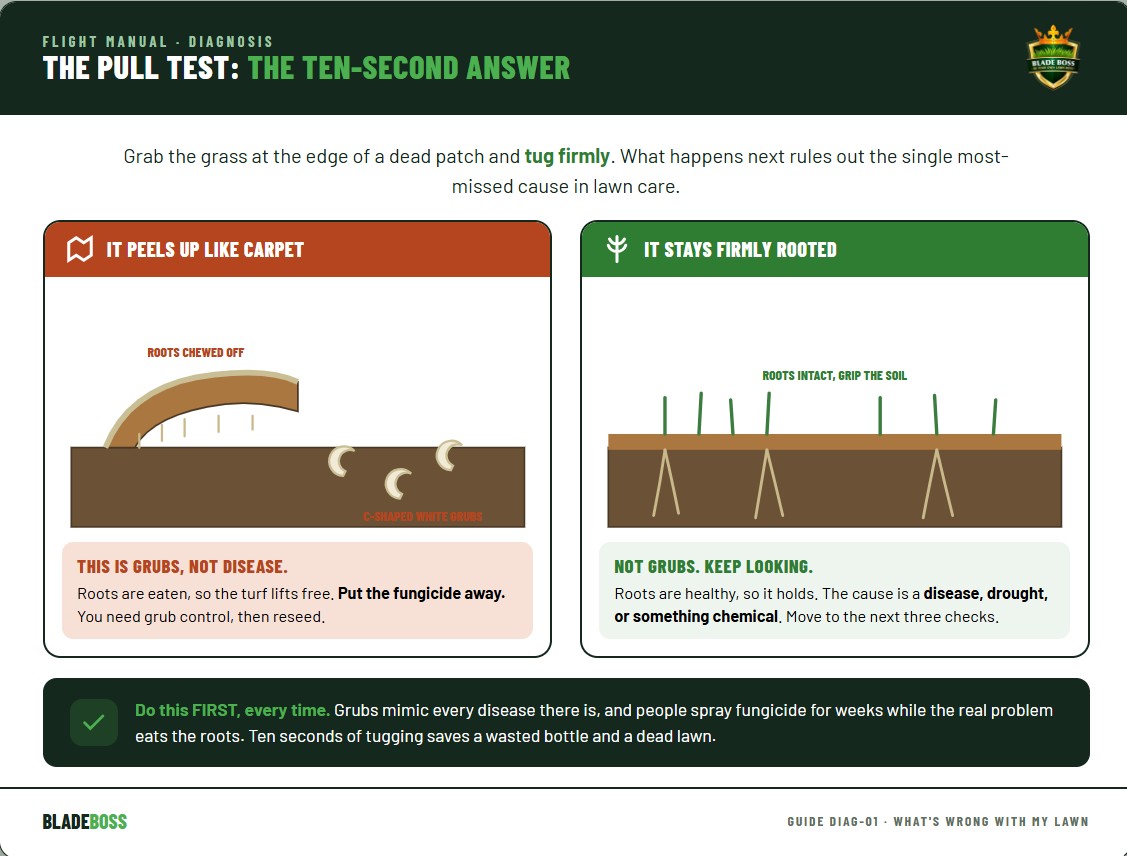
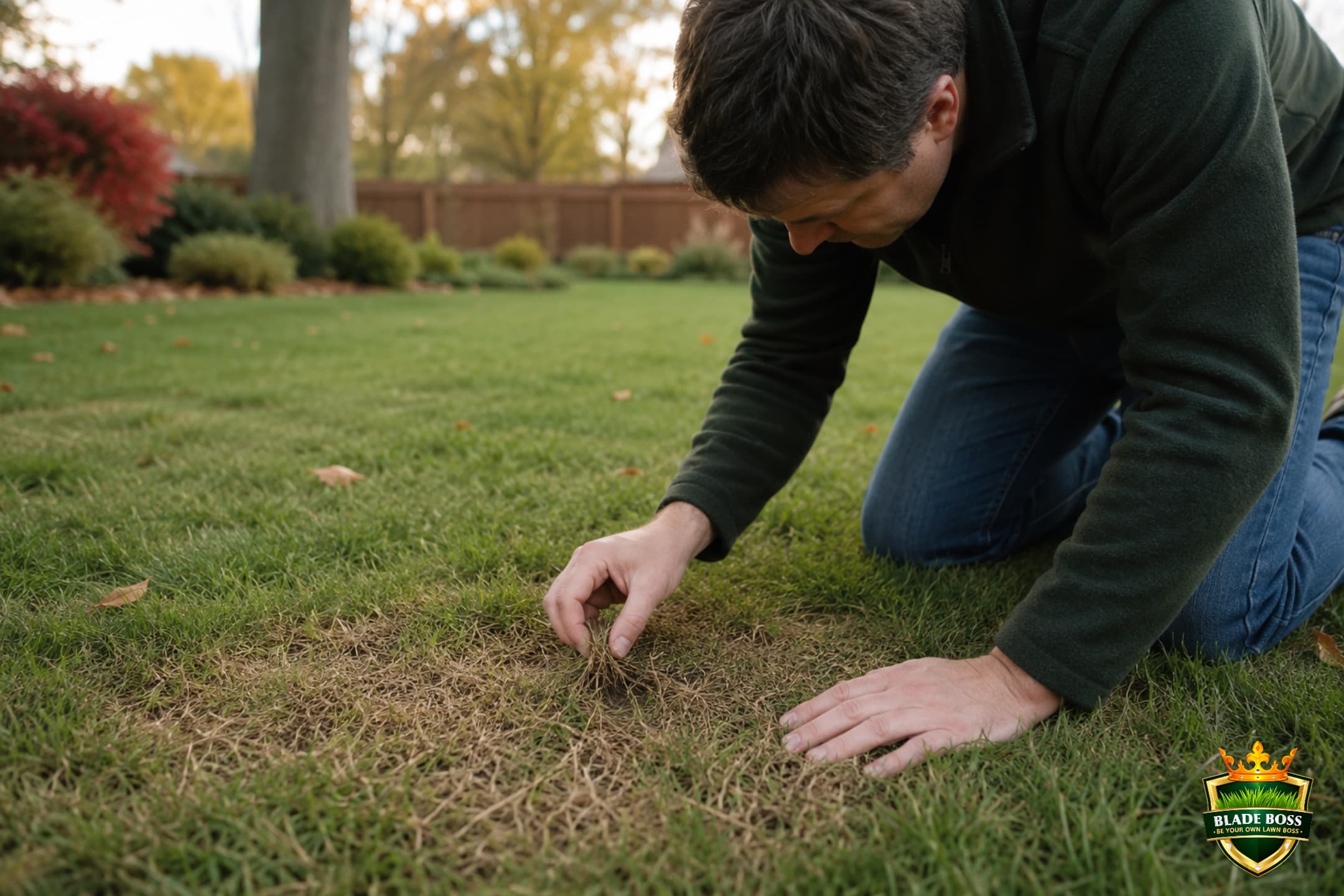
This is the single most decisive test in lawn diagnosis, and almost nobody does it. Grab a handful of grass at the edge of a dead patch and tug firmly. What happens next tells you more than any photo.
If the turf peels up like a loose carpet, rolling back with no resistance because the roots underneath have been chewed off, you have grubs. Flip it over and you will usually see the fat C-shaped white larvae in the top inch of soil. If the turf stays firmly anchored and the blades tear rather than lift, the roots are intact, and your problem is a disease, drought, or something chemical, not grubs.
Check Where It Shows Up
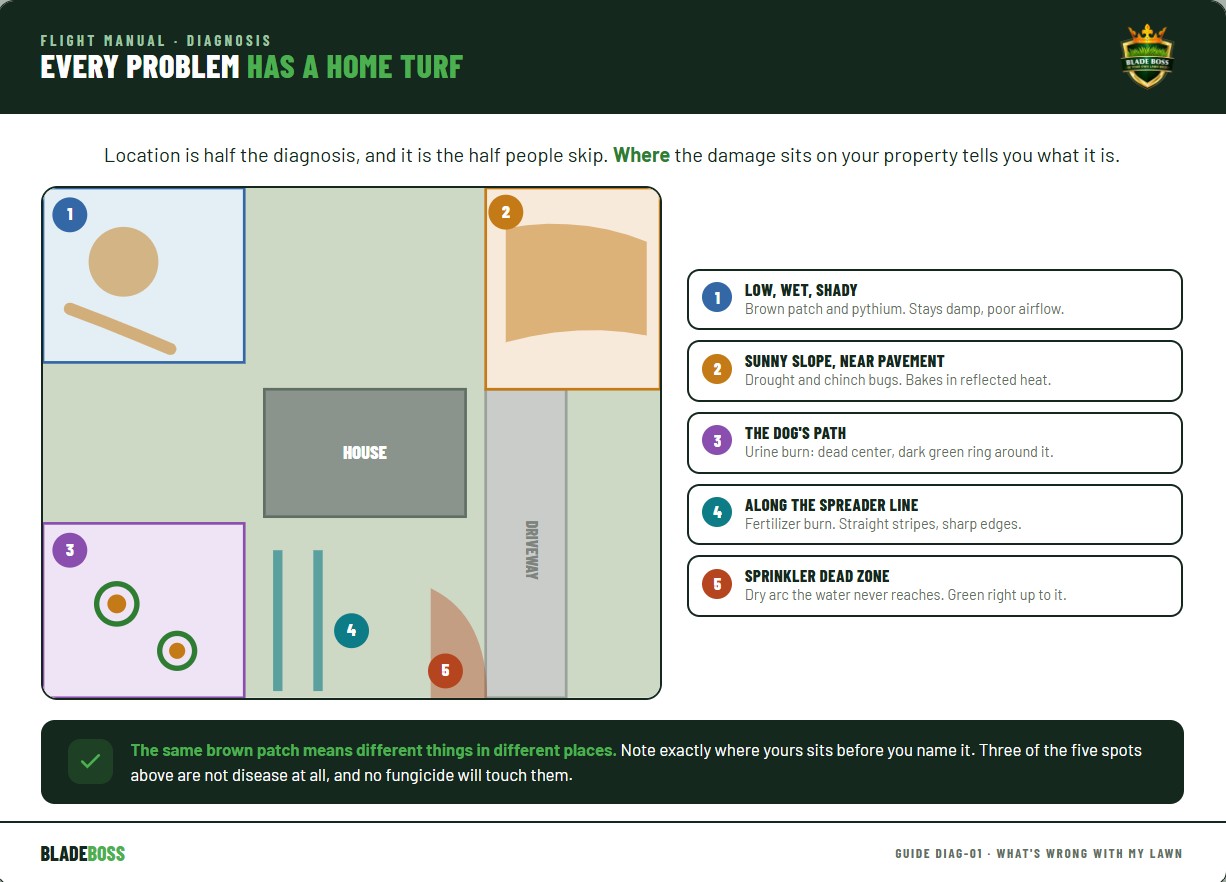
Location is half the diagnosis, and it is the half people skip. The same brown patch means different things depending on where on your property it appears, because each cause has a home turf.
- Low, shady, poorly drained spots that stay wet favor brown patch and pythium.
- Sunny slopes, high spots, and strips along the driveway that bake in reflected heat point to drought or chinch bugs.
- Small dead spots with a dark green ring, along the dog path, are urine, not disease.
- Straight brown lines matching your spreader passes are fertilizer burn.
- Dry patches exactly where your sprinkler cannot reach are a coverage problem, not a sickness.
Get Down and Read the Blades
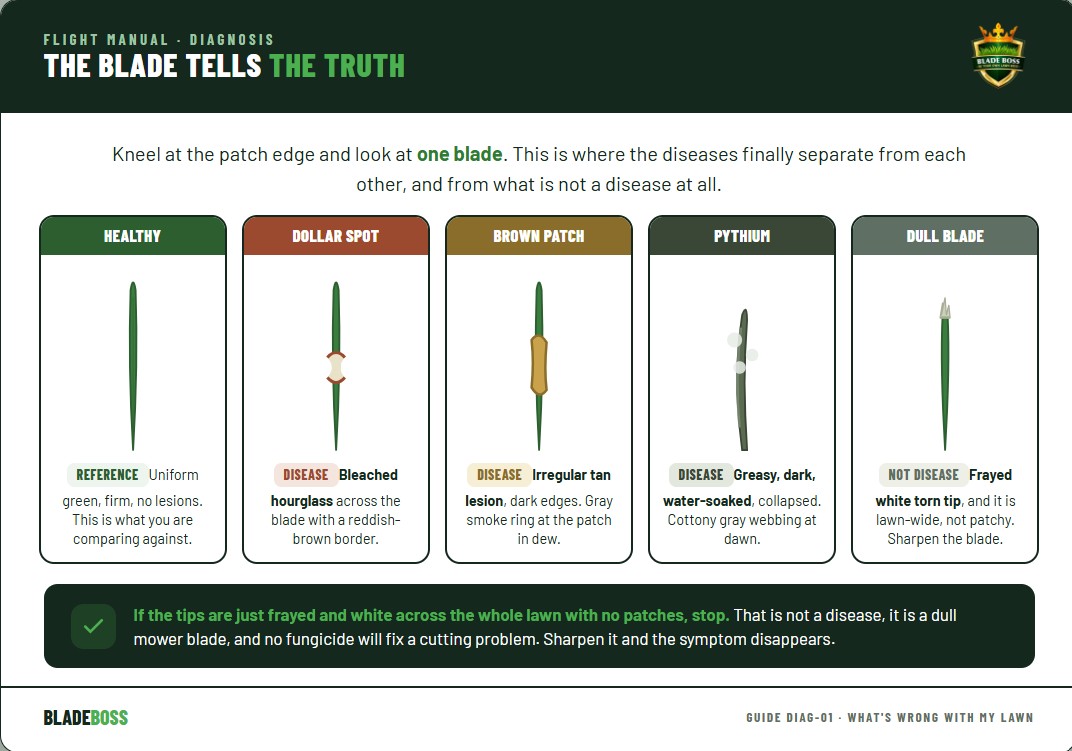
Now kneel down at the edge of the patch, where the living grass meets the dead, and look at individual blades. This is where the diseases finally separate from each other, and from everything that is not a disease. The naked eye is enough, though a cheap hand lens helps.
- Dollar spot: a bleached, straw-colored lesion straight across the blade, often pinched in the middle like an hourglass, with a reddish-brown border.
- Brown patch: irregular tan lesions with dark edges, and on a dewy morning, a gray smoke ring of wilted grass at the patch edge.
- Pythium: grass that looks greasy, dark, and water-soaked, sometimes with a cottony gray webbing in early morning humidity.
- Dull mower blade (not a disease): frayed, whitish tips across the whole lawn with no patches at all. Sharpen the blade.
Match It, Then Fix the Actual Cause
Put the four checks together and the answer is usually obvious. Shape plus location plus the pull test plus the blade lesion narrows almost every case to one cause. Now treat that cause, not the symptom.
If it is genuinely fungal, most of the fix is cultural before it is chemical: water deeply but infrequently and only in early morning, ease off the nitrogen, improve airflow and drainage, and mow with a sharp blade. Fungicide is the last resort for confirmed active disease, not the first move. If it is grubs, drought, dog urine, a coverage gap, or a dull blade, no fungicide on earth will help, and now you know exactly what will.
Confirmed It Is Fungal? Time It With FungusDefender Pro
Once you have actually confirmed a disease, treatment is a timing and rotation game, not a spray-and-pray. FungusDefender Pro reads your local weather and growing degree days to tell you when disease risk is climbing, which FRAC group to rotate to, and the exact preventive or curative rate, so you spray the right product at the right time instead of guessing. Diagnose first here, then treat right there.
Open FungusDefender Pro →The Complete Lawn Problem Differential
Members get the full printable differential chart covering every common cause of brown patches and dead spots, the disease-versus-not quick reference, and the cultural-fix checklist that stops most disease without a drop of fungicide.
Open this with a free account →Abort Criteria - Common Mistakes
Mission Complete. Now Fly the Plan.
The whole game is diagnosis before treatment. Run the five checks, name the actual cause, and you will fix it once instead of spraying at it for a month. If your checks confirm real disease, the fix is cultural first and chemical last, so start with the beginner fungicide guide and use FungusDefender Pro to time the rotation. And if the tips are just frayed lawn-wide, the answer is the simplest one of all: sharpen your blade.
Crew Questions - FAQ
Why does my lawn have brown patches?
There are about a dozen common causes and only some are fungal disease. Brown patches can come from lawn diseases like brown patch, dollar spot, summer patch, or pythium, but they are just as often caused by grubs eating the roots, drought and heat stress, dog urine, fertilizer burn, sprinkler coverage gaps, or a dull mower blade. Each has a different fix, so the first job is diagnosis, not treatment. Start with the pull test: if the turf lifts like a carpet, it is grubs, not disease.
How do I know if my lawn has a fungus or grubs?
Do the pull test. Grab the grass at the edge of a dead patch and tug firmly. If it peels up like a loose carpet with no root resistance, and you see fat C-shaped white larvae in the soil, you have grubs, not a fungus. If the turf stays firmly rooted and the blades tear instead of lifting, the roots are intact and your problem is disease, drought, or something chemical. Grubs mimic disease, so this ten-second test is the most important one.
Should I spray fungicide on brown spots in my lawn?
Not until you have confirmed the problem is actually fungal, because most brown spots are not. Fungicide does nothing for grubs, drought, dog urine, fertilizer burn, or a dull mower blade, and those cause more brown patches than disease does. Even when it is fungal, the fix is usually cultural first: correct your watering, reduce nitrogen in hot weather, sharpen the blade, and improve airflow. Fungicide is the last resort for confirmed active disease, applied on a proper rotation.
What does lawn fungus look like up close?
It depends on the disease, which is why you look at individual blades. Dollar spot leaves a bleached straw-colored lesion across the blade, often pinched like an hourglass with a reddish-brown border. Brown patch leaves irregular tan lesions and a gray smoke ring of wilted grass at the patch edge in morning dew. Pythium makes blades look greasy, dark, and water-soaked, sometimes with cottony gray webbing at dawn. If the blade tips are simply frayed and whitish across the entire lawn with no patches, that is a dull mower blade, not a fungus.
Why is my lawn dying in circles?
Circular dead areas can be several things. Small circles the size of a silver dollar are usually dollar spot; large circles the size of a dinner plate or bigger suggest brown patch; rings with a surviving green center in the middle are summer patch. But circles are not always disease: dog urine leaves small dead circles with a dark green ring around them, and a sprinkler that misses a spot leaves a dry circular or arc-shaped patch. Check the pull test, the location, and the individual blades to tell them apart.
When should I send my lawn to a diagnostic lab?
When the damage is spreading fast or valuable, and your own checks leave you genuinely unsure, a lab identification beats spraying blind. On Long Island, Cornell Cooperative Extension of Suffolk County and Nassau County operates diagnostic services that can identify the exact disease or pest from a sample. It is worth it before you invest in a fungicide program, since treating the wrong problem costs far more than a lab fee.