
GUIDE IRR-02 · REV A
How to Read a Sprinkler Nozzle Chart and Size Your Zones
This is the part of irrigation that scares people off: the chart full of tiny numbers and the math behind how many heads you can run. It is simpler than it looks. Once you can read one nozzle chart and do one piece of division, you can design or fix a zone on any system, any brand, with confidence.
Pre-Flight Checklist - What You Need
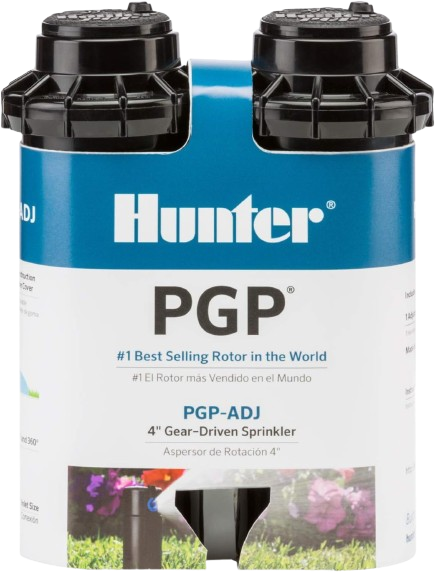
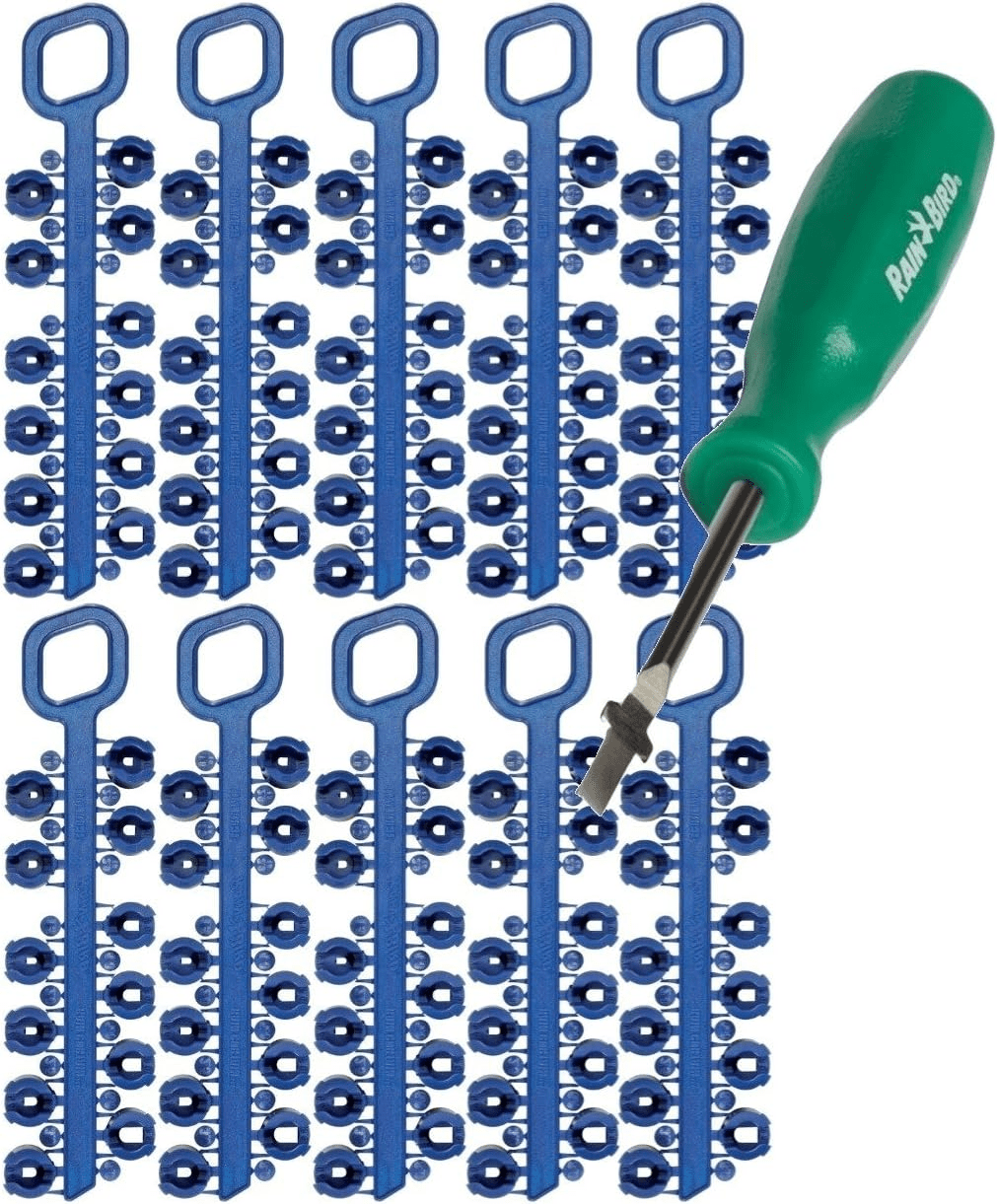
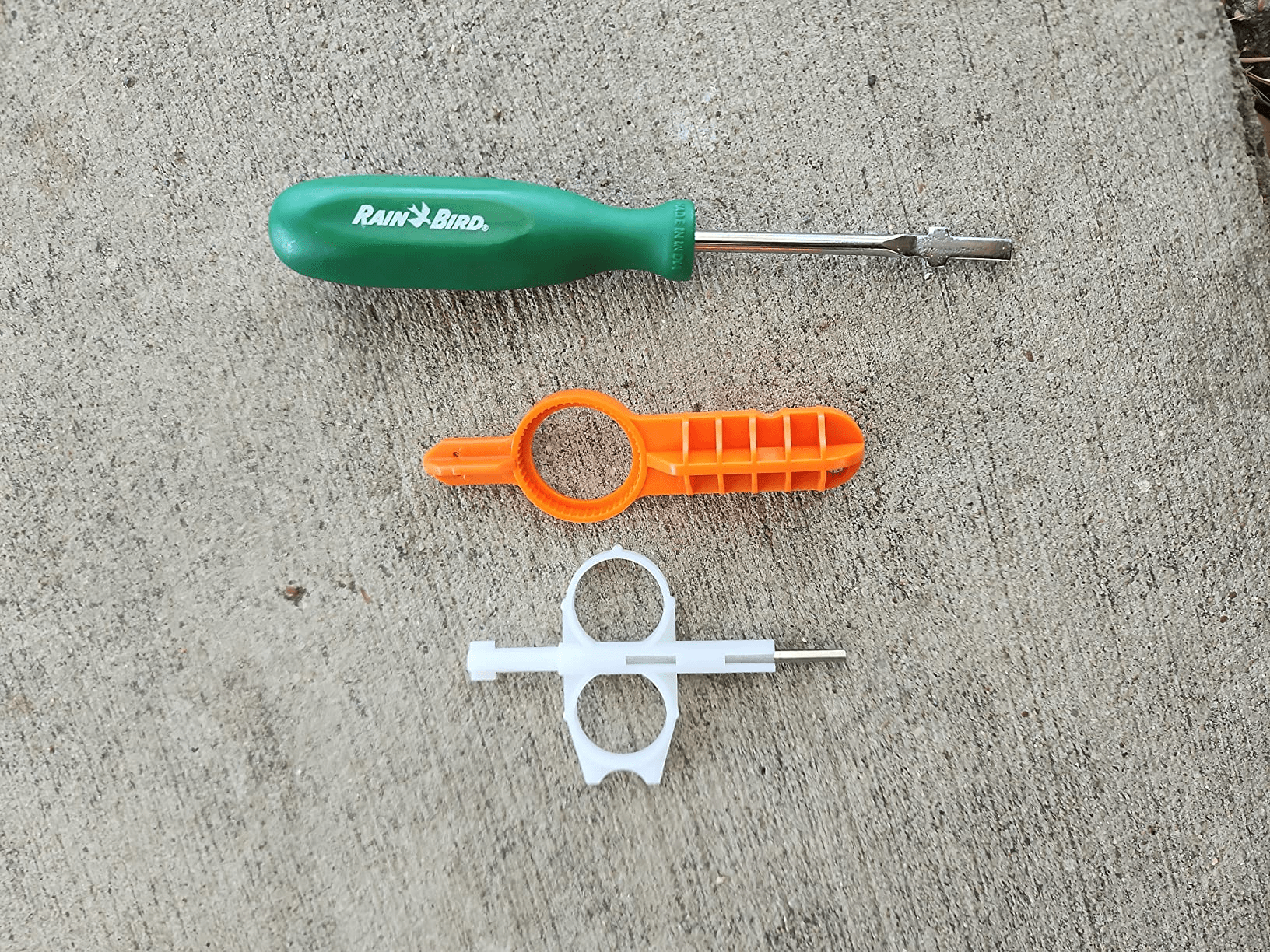
As an Amazon Associate, Blade Boss earns from qualifying purchases. It never costs you a penny more.
Rules of Engagement (ROE's)
The Flight Plan - Step by Step
Start With Your Pressure
A nozzle chart is useless until you know your operating pressure, because every number on it changes with PSI. If you have not measured yet, go back to the flow and pressure guide and get your number first. Use your dynamic pressure, the reading while the system is actually running, not the static at-rest number. That is the pressure your heads really see.
Know What the Chart Is Telling You
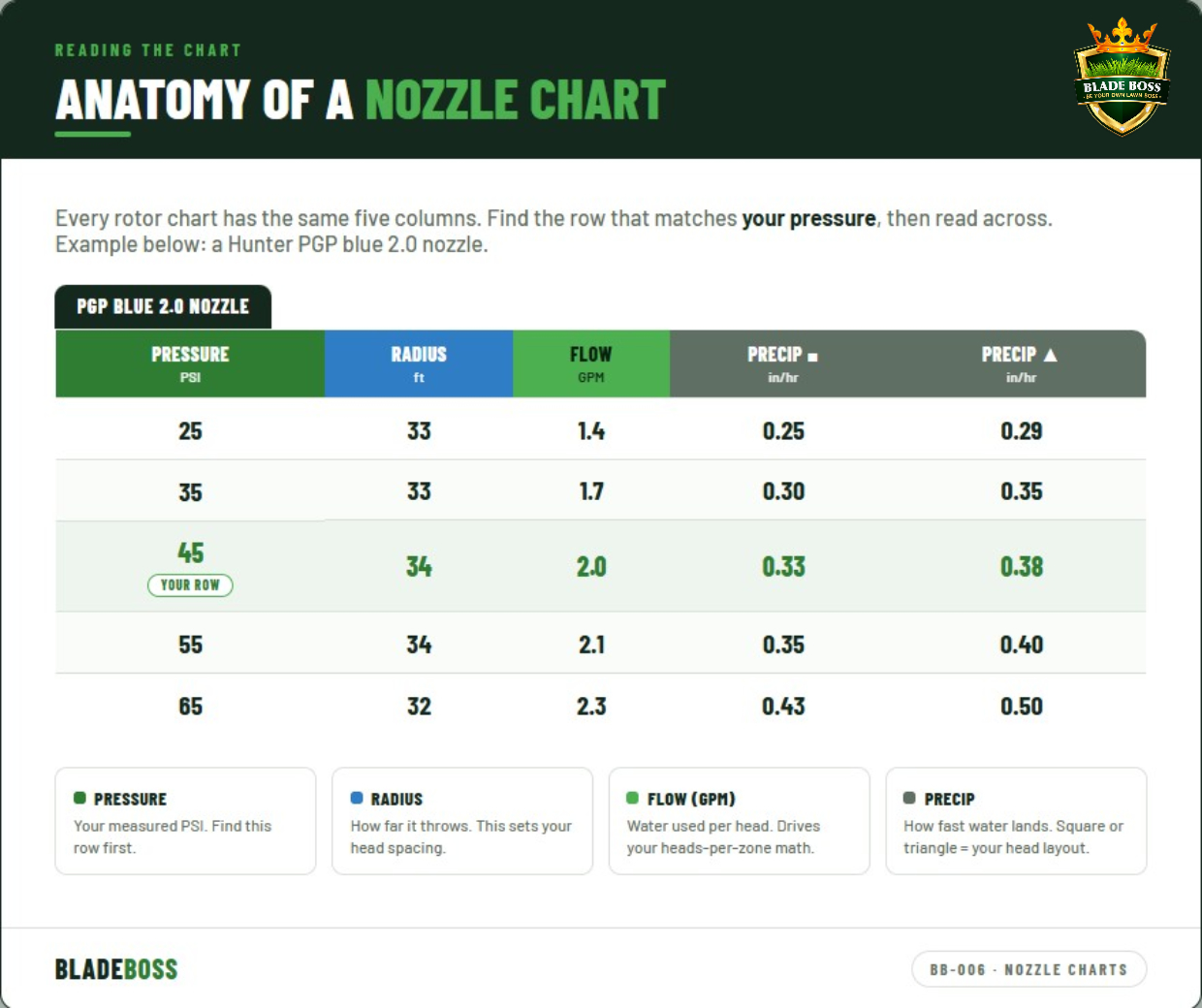
Every rotor nozzle chart has the same five columns. Once you know what each one means, every brand reads the same way.
- Nozzle: the size number stamped on the nozzle (and color-coded). Bigger number = more water and usually more distance.
- Pressure (PSI): the rows. You read across the row that matches your measured pressure.
- Radius (ft): how far the head throws at that pressure. This sets your spacing.
- Flow (GPM): how many gallons per minute that nozzle uses. This is the number you do the head-count math with.
- Precip (in/hr): how fast water lands on the ground. There are two precip columns, and the next steps explain why.
Find Your Row
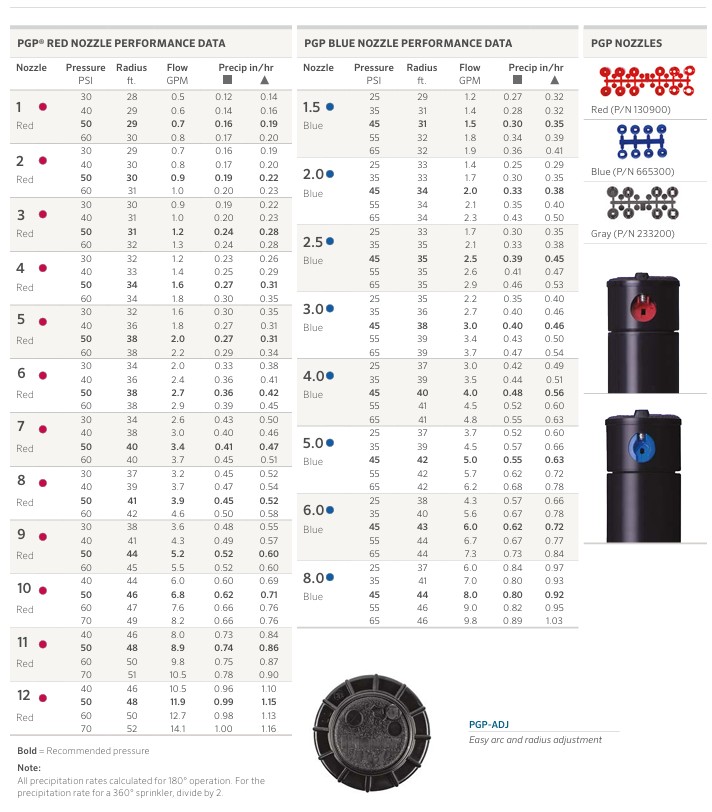
Time to read it for real. Say your dynamic pressure came out to 45 PSI and you are running a Hunter PGP with a blue #2.0 nozzle. Find the 45 PSI row, find the 2.0 nozzle, and read across.
That is the entire skill. At 45 PSI, that head throws 34 feet and uses 2.0 gallons per minute. Those two numbers, radius and GPM, drive everything that follows: radius sets how far apart your heads go, and GPM sets how many of them fit on a zone.
Square vs Triangle: The Two Precip Columns
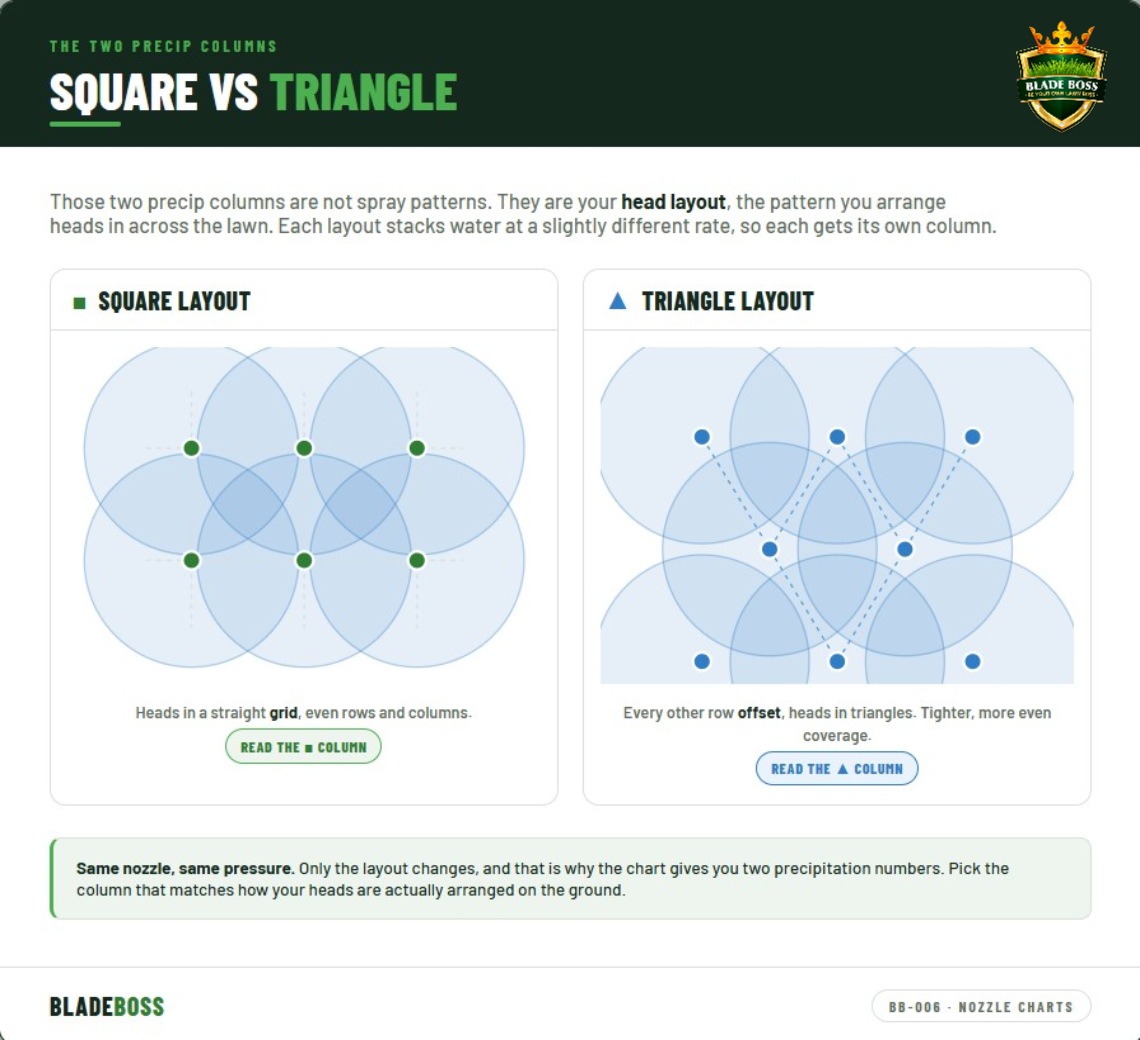
Those two precipitation columns confuse everyone, and they have nothing to do with the spray pattern. The little square and triangle symbols are your head layout, the pattern you arrange your heads in across the lawn.
- Square layout: heads in a grid, straight rows and columns. Read the square precip column.
- Triangle layout: every other row offset, so heads sit in triangles. More efficient coverage, slightly higher precip rate. Read the triangle column.
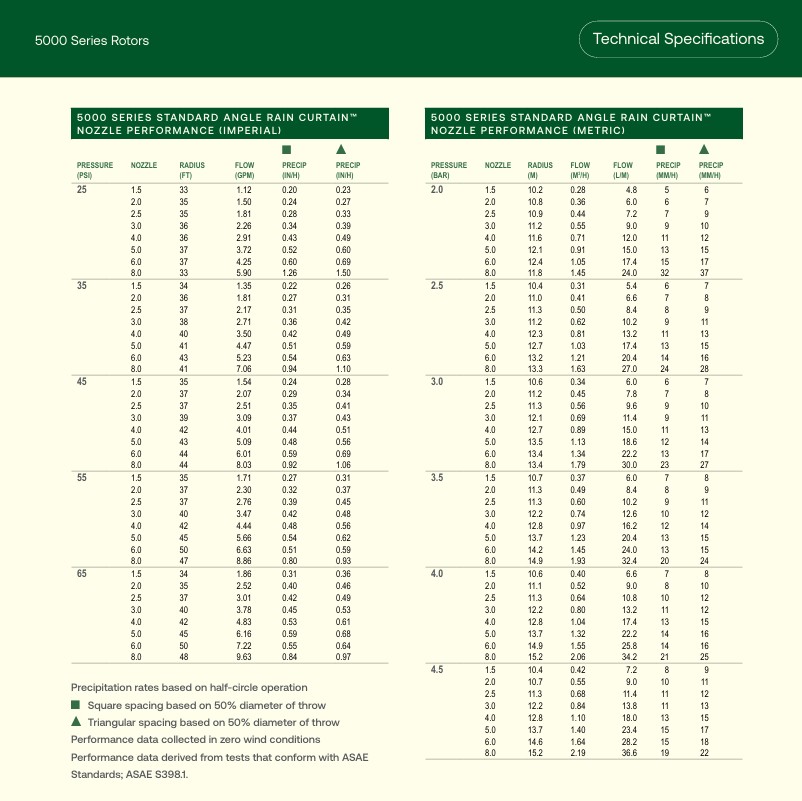
Same nozzle, same pressure, but the layout changes how fast water stacks up on the ground, which is why there are two numbers. Rain Bird prints these as a small square and triangle right in the column headers, and the chart reads exactly like the Hunter one.
Space Heads to Cover Each Other
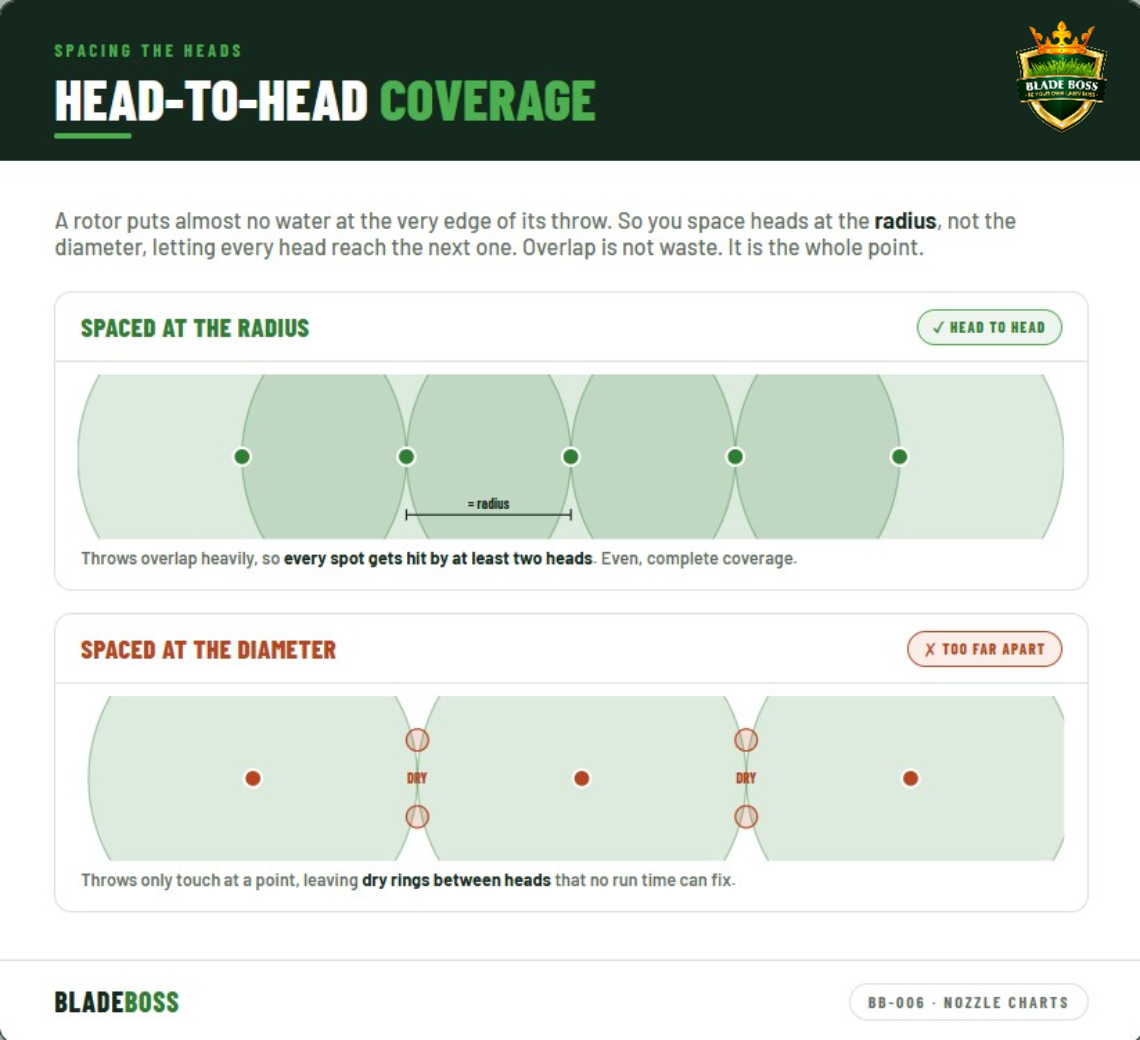
Here is the gotcha that ruins more DIY systems than anything else. A rotor barely puts any water at the very edge of its throw, so you do not space heads at their full reach. You space them so each head throws all the way to the next head. That is called head-to-head coverage, and it means your spacing is roughly the radius, not the diameter.
Our 34 ft PGP example does not mean heads 68 feet apart. It means heads about 34 feet apart, so every spot on the lawn is hit by at least two heads. Space them at the full diameter and you get dry donut rings between them every single time.
Do the Heads-Per-Zone Math
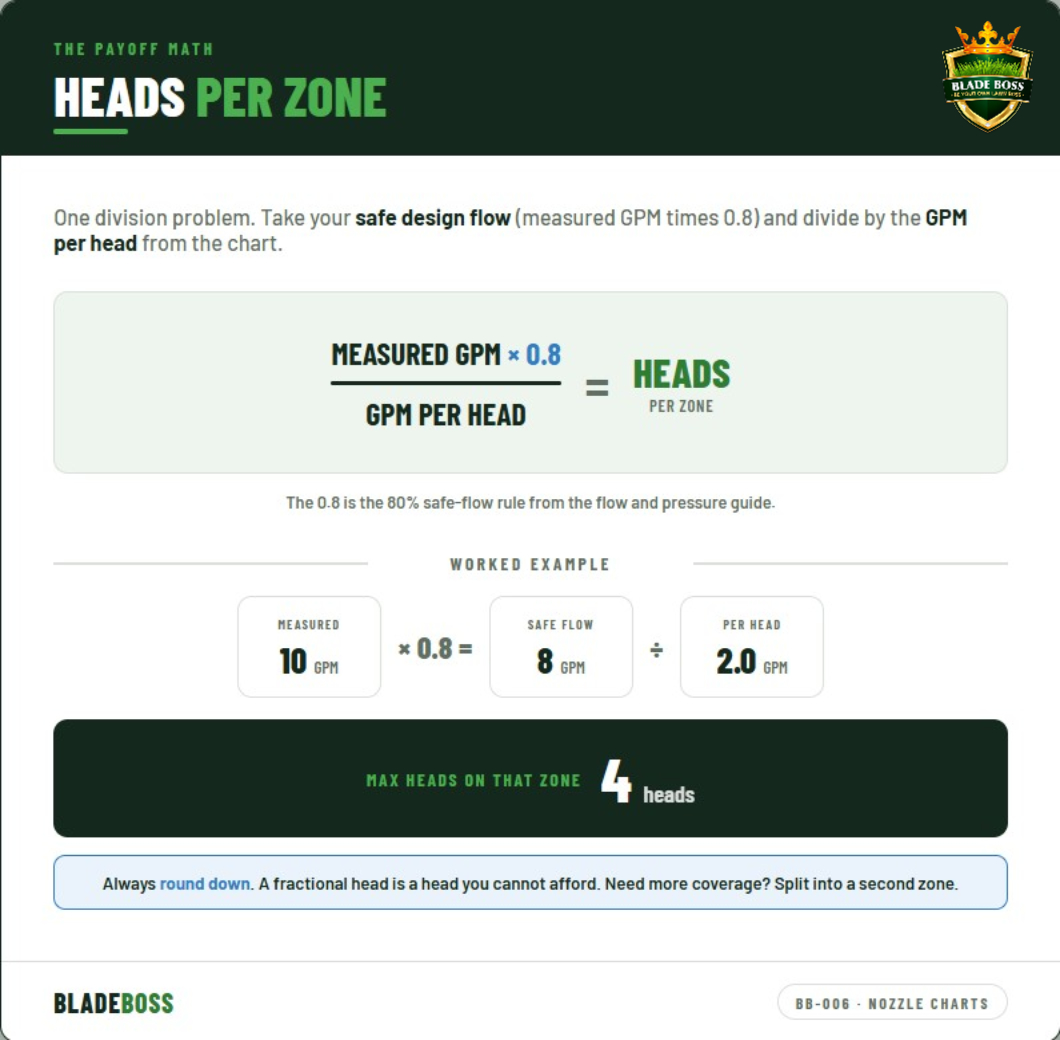
This is the payoff, and it is one division problem. Take the safe design flow you got in the flow and pressure guide (your measured GPM times 0.8), then divide it by the GPM each head uses from the chart. Always round down. A fractional head is a head you cannot afford.
Example: your bucket test measured 10 GPM, so your safe design flow is 10 x 0.8 = 8 GPM. Your PGP at 45 PSI uses 2.0 GPM per head. 8 divided by 2.0 = 4. You can run 4 heads on that zone. Need 6 heads to cover the area? Then you split it into two zones.
Match Your Precipitation
Last principle, and it is the one that separates an even lawn from a blotchy one. Every head on a single zone must put down water at the same rate (the same in/hr) so the whole zone gets even coverage when it runs for the same amount of time. The trap is arcs. A quarter-circle head covers one quarter of the area a full-circle head covers, so to apply the same in/hr it must use about one quarter of the GPM.
Use a small nozzle on quarter-circle heads and a proportionally bigger nozzle on full-circle heads, so every head applies the same in/hr. Or use matched-precip nozzles (like Rain Bird MPR) that handle the ratio for you automatically.
Put the same nozzle on a quarter-circle head and a full-circle head on the same zone. The quarter dumps four times the water per square foot, giving you soggy corners and a dry middle no matter how you set the run time.
Let BucketFlow Pro Run the Numbers
You do not have to do this by hand every time. Enter your measured flow and BucketFlow Pro applies the 80% rule and tells you how many heads of each type (rotors, spray heads, MP rotators) your zone can carry. It turns the whole chart-and-math exercise into one screen.
Open BucketFlow Pro →Heads-Per-Zone Quick Reference
Skip the long division. Members get the at-a-glance head-count table for common flow rates, plus the matched-nozzle selector that tells you which nozzle size to put on quarter, half, and full heads to keep precipitation even.
Open this with a free account →Abort Criteria - Common Mistakes
Mission Complete. Now Fly the Plan.
You can now read any nozzle chart and size a zone on any brand. Put it to work: drop your measured flow into BucketFlow Pro and let it return your safe head count by head type, so you can design or fix your zones with the numbers backing you up.
Crew Questions - FAQ
How do I read a sprinkler nozzle performance chart?
Find the row that matches your operating pressure (PSI), then find your nozzle size, and read across to get the radius (how far it throws) and the flow in GPM (how much water it uses). The radius sets your head spacing and the GPM drives your heads-per-zone math. Every brand uses the same five columns.
How many sprinkler heads can I put on one zone?
Take your measured flow rate, multiply by 0.8 for the safe 80% design flow, then divide by the GPM each head uses from the nozzle chart, and round down. For example, 10 GPM measured gives 8 GPM safe flow, and at 2.0 GPM per head that is 4 heads per zone. BucketFlow Pro does this automatically.
What do the square and triangle symbols mean on a nozzle chart?
They are your head layout, not the spray pattern. The square is a grid layout (straight rows and columns) and the triangle is an offset layout (every other row staggered). Each layout has a slightly different precipitation rate, which is why the chart lists two precip columns. Pick the column that matches how your heads are arranged.
How far apart should sprinkler heads be?
Space them head-to-head, which means roughly the radius of the head, not the diameter. A head with a 34-foot radius gets spaced about 34 feet from the next head so their throws overlap. A good rule of thumb (Stryker's Rule) is that spacing in feet should not exceed your pressure in PSI.
What is matched precipitation and why does it matter?
Matched precipitation means every head on a zone applies water at the same rate (in/hr) so the whole zone waters evenly in a single run time. Because a quarter-circle head covers a quarter of the area, it needs about a quarter of the GPM of a full-circle head. Mismatch them and you get soggy corners and dry middles. Matched-precip nozzles like Rain Bird MPR handle the ratio for you.
Is the Hunter PGP better than the Rain Bird 5000 or Orbit Voyager?
They are all quality gear-drive rotors and their charts read identically, so the skill in this guide works on any of them. The Hunter PGP is the best-selling rotor in the world and the one we recommend. The Orbit Voyager II is essentially a PGP-compatible clone, so its numbers track very closely. Pick based on availability and price, then read its chart.