
GUIDE IRR-01 · REV A
How to Measure Your Sprinkler System's Flow and Pressure
Before you design a zone, fix a dry spot, or set a single run time, you need two numbers: how much water your system produces (flow) and how hard it pushes that water (pressure). Both take about 15 minutes and under $30 of gear. Skip them and every watering decision after is a guess.
Pre-Flight Checklist - What You Need
As an Amazon Associate, Blade Boss earns from qualifying purchases. It never costs you a penny more.
Rules of Engagement (ROE's)
The Flight Plan - Step by Step
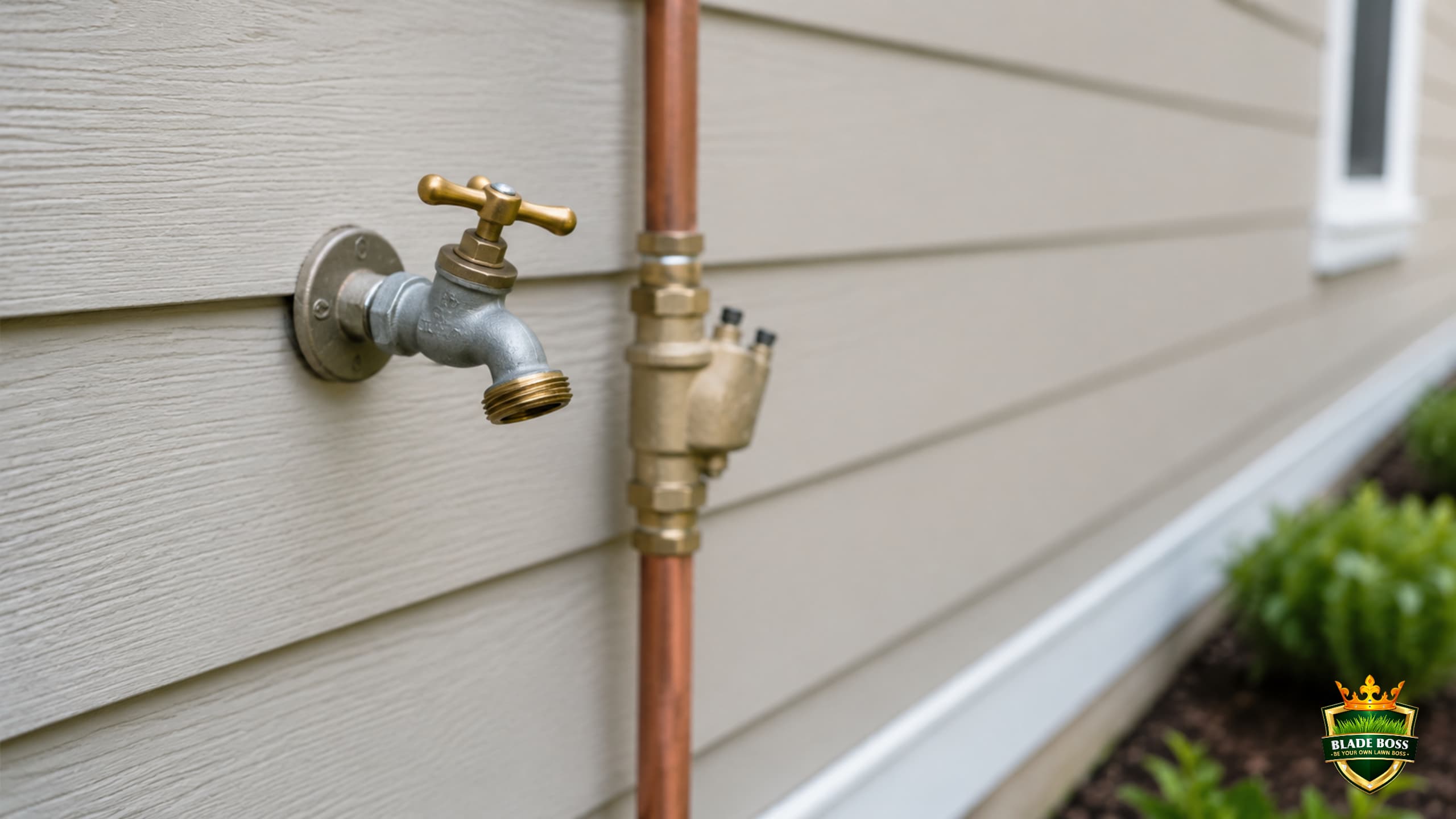
Pick the Right Spigot and Grab a Bucket
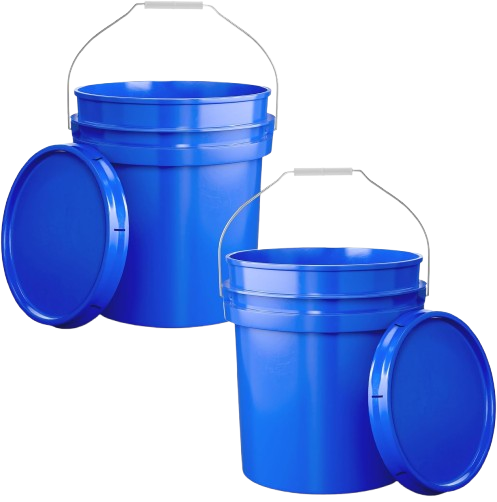
Use the outdoor spigot closest to where your irrigation system ties into the house. That is the truest read of what your sprinkler zones actually have to work with. Any standard 5-gallon bucket works, and your phone has the only timer you need.
- A 5-gallon bucket (most garages have one).
- Your phone's stopwatch.
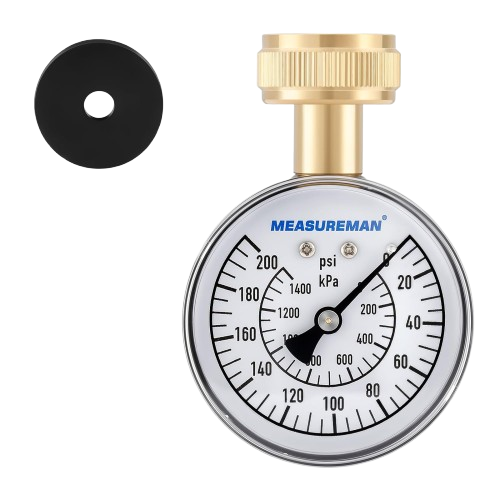
- Later in this guide, a $10 pressure gauge for the second test.
Run the Bucket Test
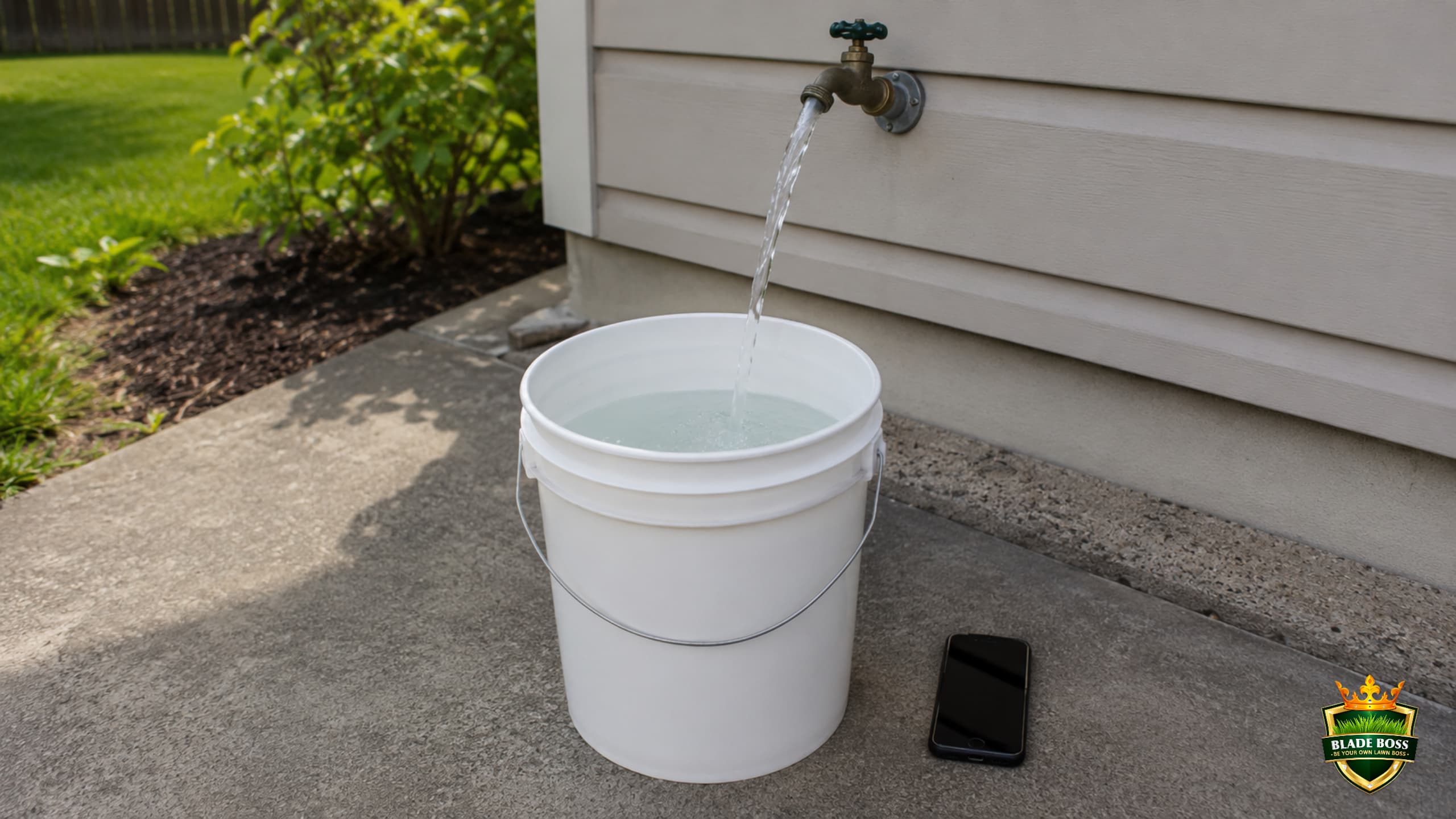
Set the empty bucket under the spigot. Open the spigot all the way. Start your timer the instant water hits the bottom of the bucket, and stop it the moment the water reaches the 5-gallon line.
- Open the valve fully. A half-open spigot gives you a false low reading and ruins the whole test.
- Very slow flow? Time the fill to the 1-gallon mark instead (roughly 3.5 inches up in a standard bucket), then multiply your result by 5.
- Run it 2 to 3 times and average the fill times. A single trial can be off by a second or two of reaction lag.
Get Your GPM
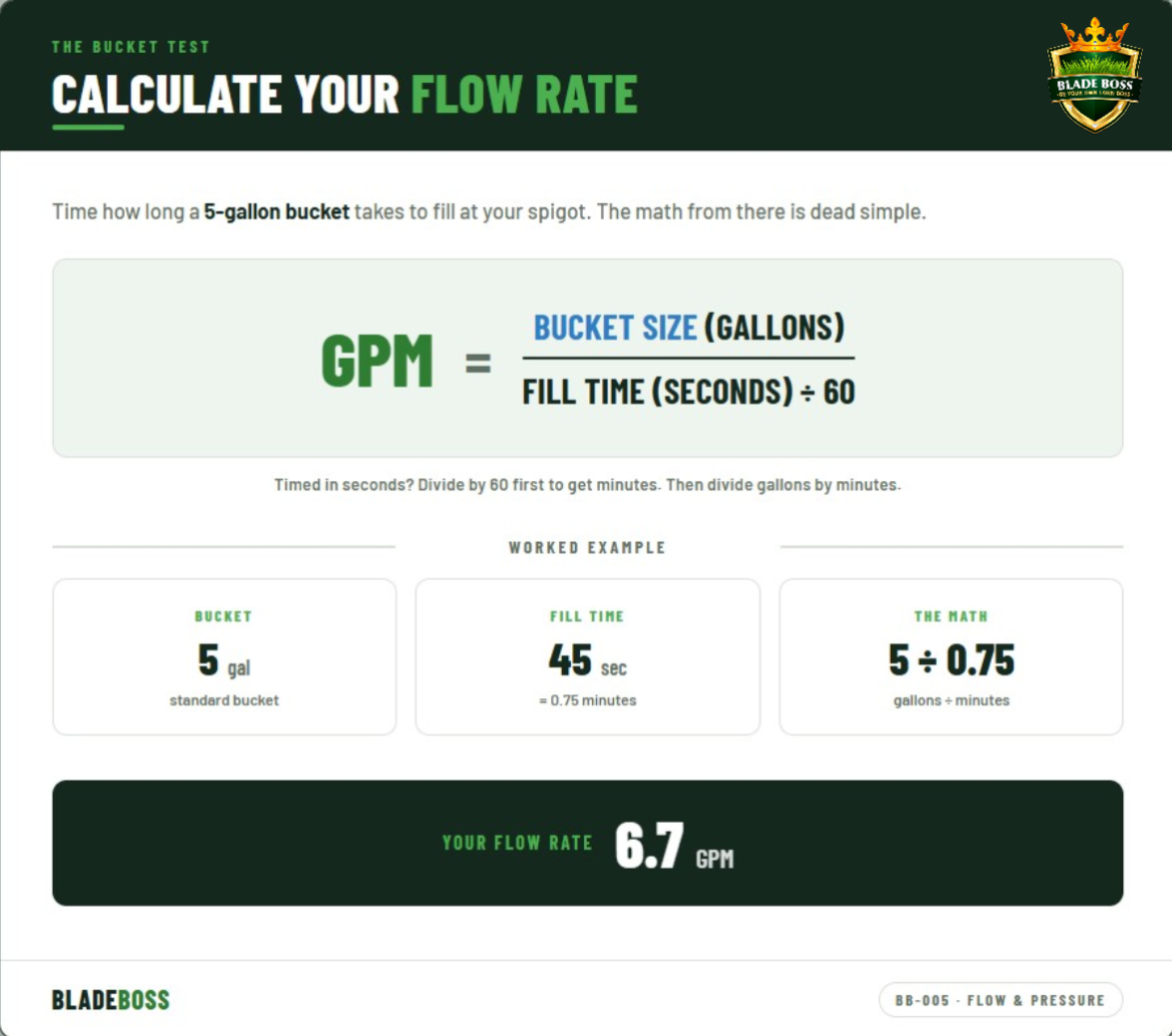
The math is dead simple. Divide 5 (your bucket size in gallons) by your fill time in minutes. If your fill time was in seconds, divide the seconds by 60 first.
Example: the bucket fills in 45 seconds. That is 0.75 minutes. 5 divided by 0.75 = 6.7 GPM. That is your flow rate.
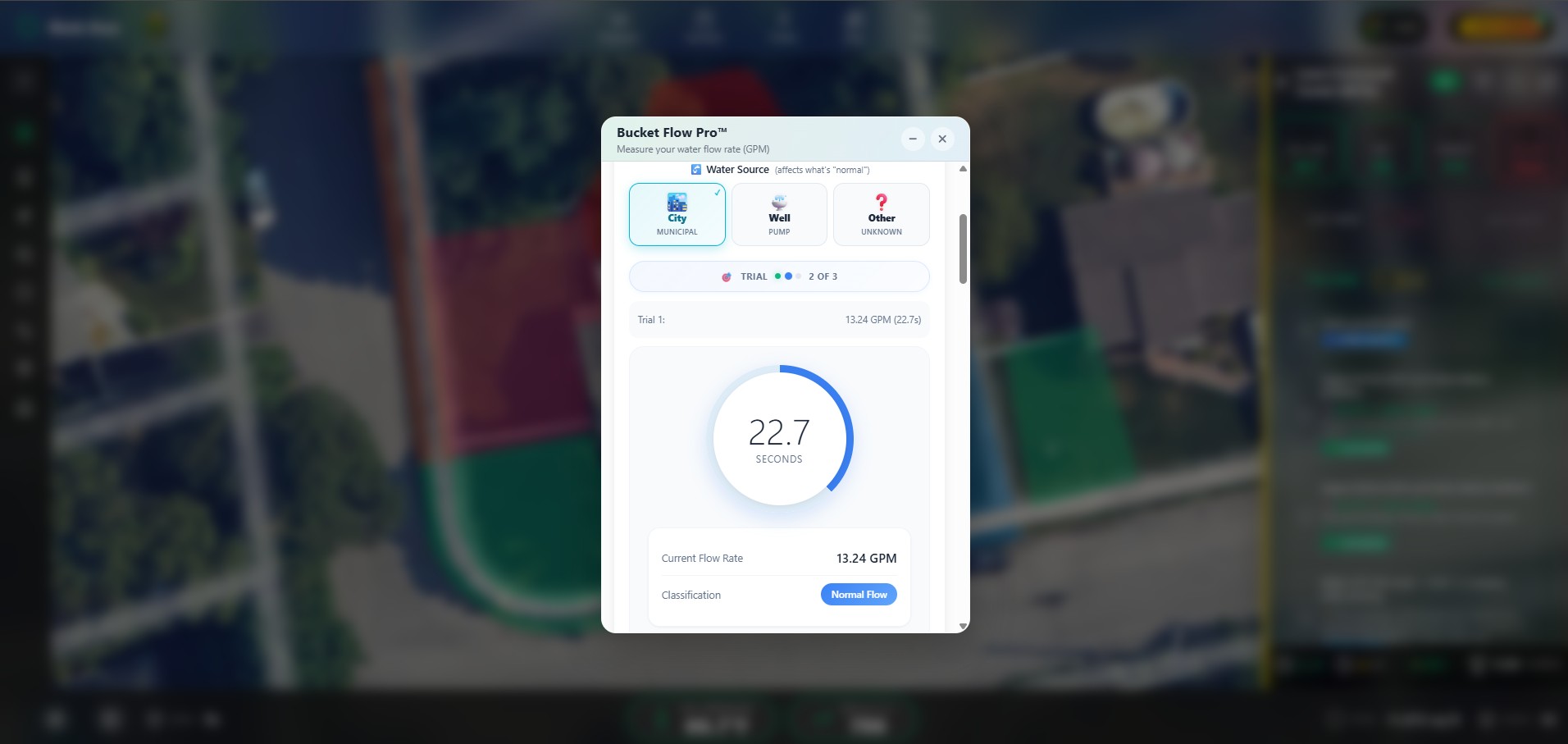
Let BucketFlow Pro Do the Math
Punch in your fill time and BucketFlow Pro returns your exact GPM, applies the 80% safe-flow rule automatically, and tells you how many sprinkler heads of each type your system can run on one zone. It even averages multiple trials for you so reaction-time error disappears.
Open BucketFlow Pro →Read Your Flow Classification
The bucket test measures your total water supply at the spigot. What counts as normal depends on your water source. Well systems naturally run lower than municipal city water, so a number that is low for the city can be perfectly healthy for a well.
| Water Source | Low | Normal | High |
|---|---|---|---|
| Well system | Under 6 GPM | 6 to 12 GPM | Over 12 GPM |
| City water | Under 12 GPM | 12 to 22 GPM | Over 22 GPM |
Anything under 6 GPM total is a red flag for any source. That usually means a clog, a partially closed valve, a worn well pump, or a pressure regulator problem, and your system may not have enough water to run all the heads on a zone properly.
Apply the 80% Rule
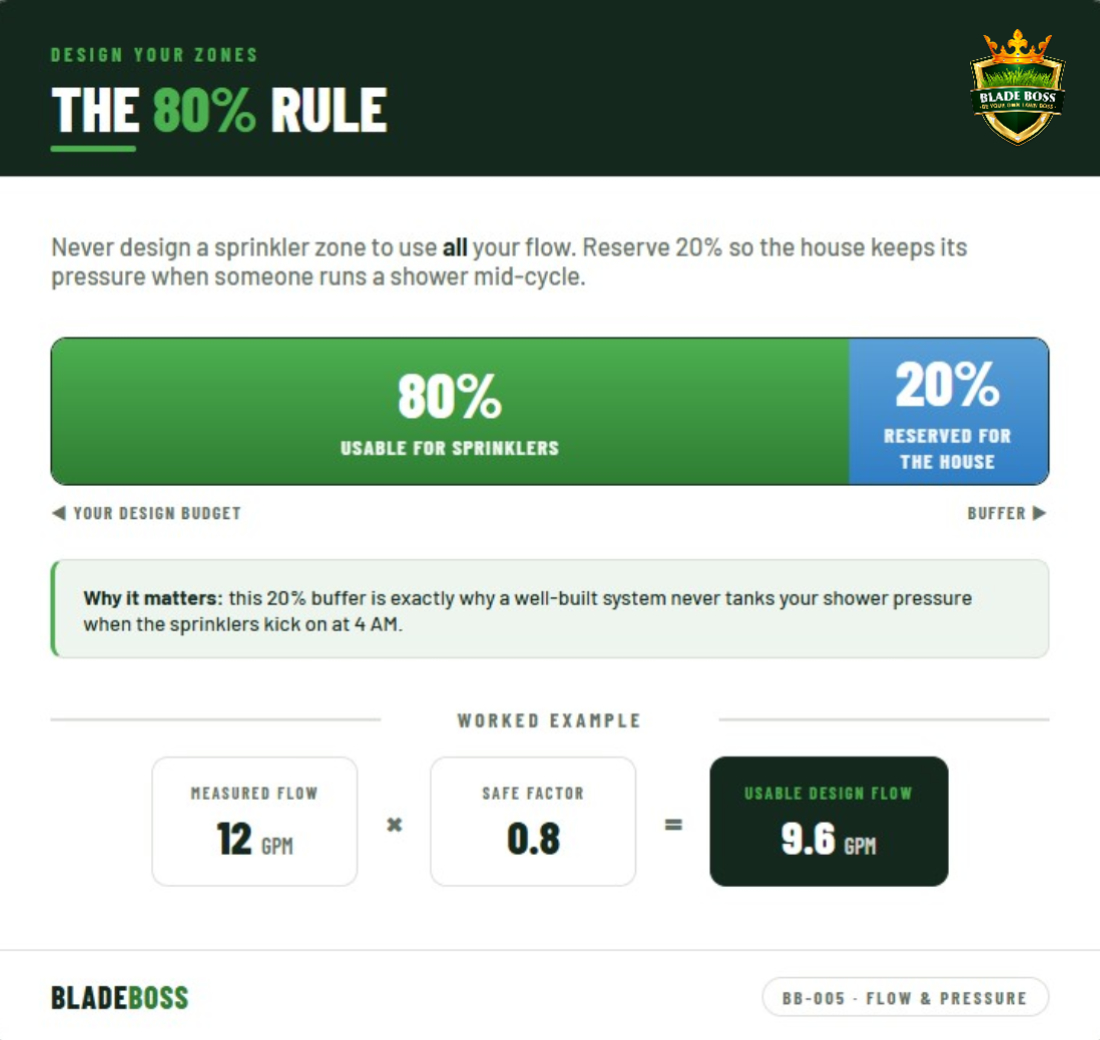
Never design a sprinkler zone to use 100% of your flow. Reserve 20% as a buffer so the house keeps its pressure when someone runs a shower mid-cycle, and so your heads never get starved. Your usable design flow is simply your measured GPM times 0.8.
Example: you measured 12 GPM. Your usable design flow is 12 x 0.8 = 9.6 GPM per zone. Most residential zones are built around 8 to 12 GPM of heads, so that 9.6 comfortably runs a normal zone.
Screw On the Gauge and Read Static Pressure
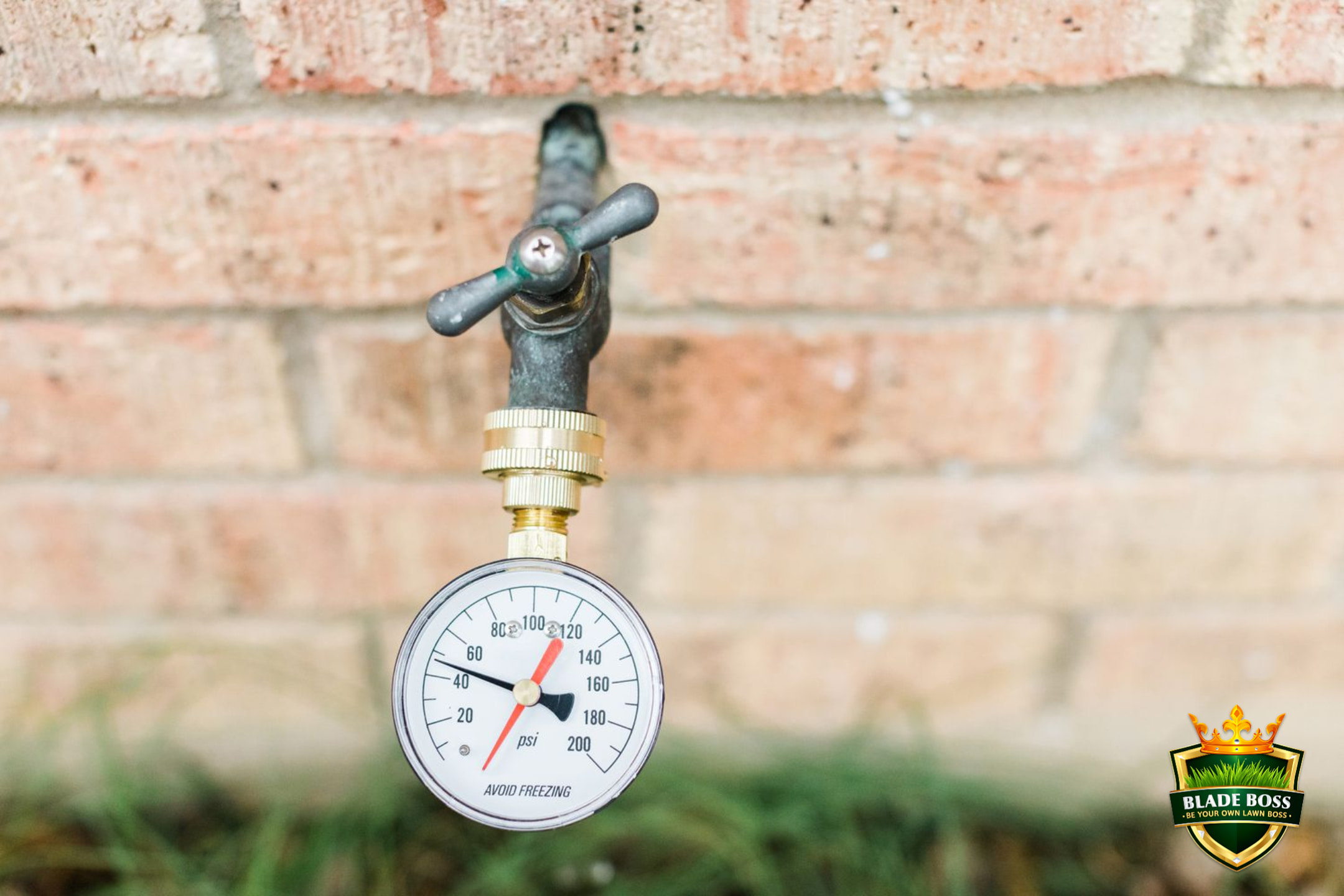
Flow is only half the picture. Now check pressure. A $10 brass gauge screws straight onto your outdoor spigot exactly like a garden hose. Use the spigot closest to where your irrigation connects, and turn off every water source inside the house first.
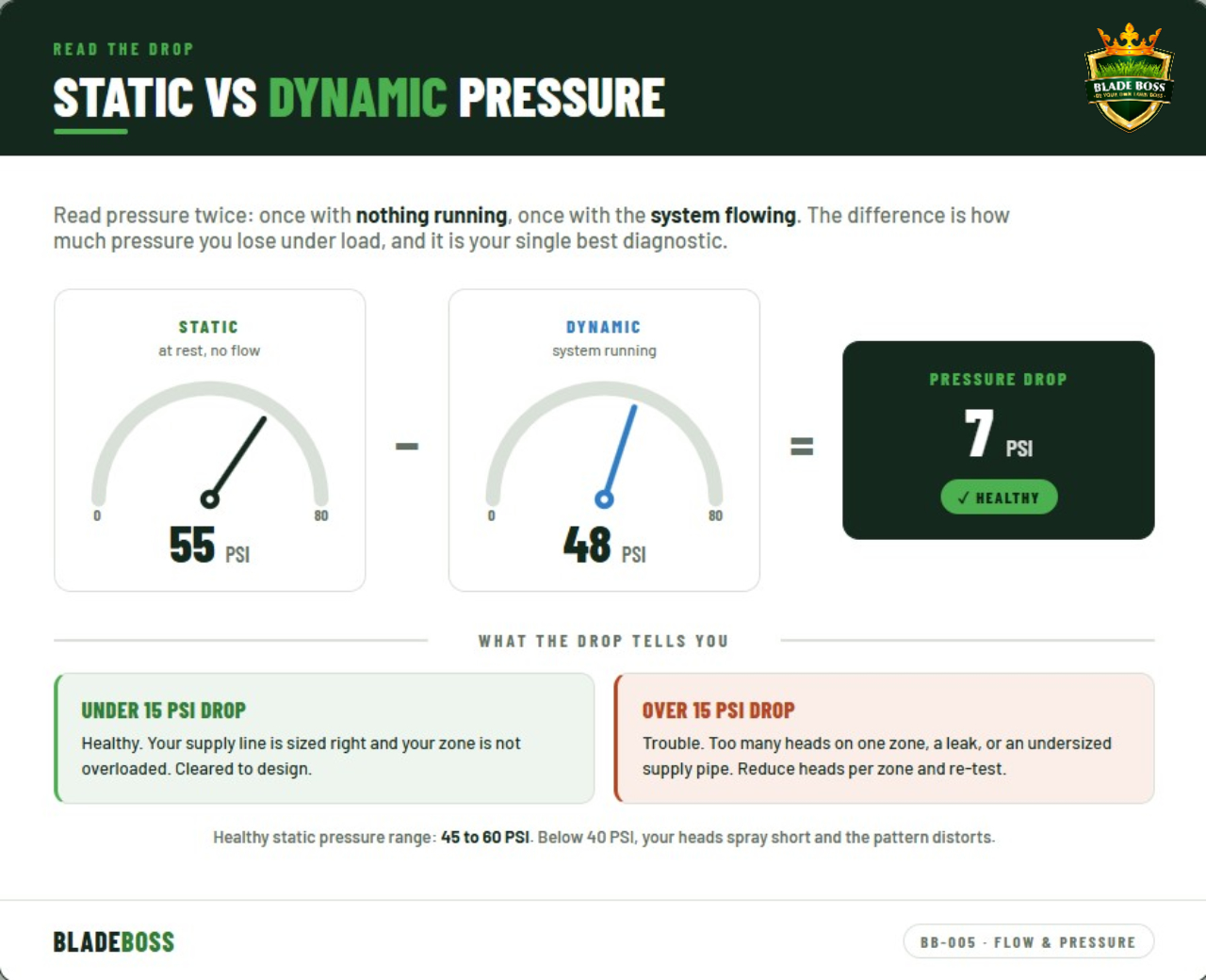
Open the spigot fully with nothing else running and read the dial. This is your static pressure, the pressure in your pipes at rest. Write it down. Normal residential range is 45 to 60 PSI.
Read Dynamic Pressure and Check the Drop
Now read pressure under load. Leave the gauge on, then run your irrigation system (or open another faucet to simulate demand). Read the dial again while water is flowing. This is your dynamic pressure.
Subtract dynamic from static. That difference is how much pressure your system loses when it works. A small drop is normal. A drop of more than 15 PSI means trouble: too many heads on one zone, a leak somewhere, or an undersized supply pipe.
Zone 7B Watering Cheat Sheet
You measured your system. Now here is exactly how much to run it. Members get the Long Island season-by-season watering targets, the sandy-soil split-session rule, and the Suffolk County restrictions that decide which days you are even allowed to water.
Open this with a free account →Abort Criteria - Common Mistakes
Mission Complete. Now Fly the Plan.
You have your flow and your pressure. Now turn them into a system that actually works. Drop your numbers into BucketFlow Pro and it builds your safe per-zone head count and usable design flow, calibrated to your supply and Long Island's 7B reality.
Crew Questions - FAQ
How do I measure my sprinkler system's flow rate?
Put a 5-gallon bucket under your outdoor spigot, open it all the way, and time how long it takes to fill to the 5-gallon line. Divide 5 by the fill time in minutes to get gallons per minute. For example, a 45-second fill is 0.75 minutes, and 5 divided by 0.75 is 6.7 GPM. BucketFlow Pro does this math for you and averages multiple trials.
What is a good GPM for a sprinkler system?
Most residential irrigation zones are built around 8 to 12 GPM of heads. At the spigot, city water commonly reads 12 to 22 GPM total and well systems 6 to 12 GPM. Anything under 6 GPM total is a red flag that usually points to a clog, a worn pump, or a partly closed valve.
What is normal water pressure for a house?
The normal residential range is 45 to 60 PSI, measured with a $10 gauge on an outdoor spigot with no other water running. Below about 40 PSI your sprinkler heads will underperform, spraying short and distorting their patterns.
How many sprinkler heads can I run on one zone?
It depends on your flow. Take your measured GPM, multiply by 0.8 for the safe 80% design flow, then divide by the GPM each head uses. Reading nozzle performance charts to nail down the exact head count is its own topic, and we cover it in the nozzle chart guide.
Why does my water pressure drop when the sprinklers run?
Some drop is normal, but a drop of more than 15 PSI between static (at rest) and dynamic (running) pressure signals a problem: usually too many heads on one zone, a leak, or an undersized supply pipe. Reduce the heads per zone and re-test.
Do I need a pressure gauge if I already did the bucket test?
Yes. Flow and pressure are different measurements. The bucket test tells you how much water you have, the gauge tells you how hard it pushes. You can have plenty of flow but low pressure, which still leaves you with weak, short-throwing heads. You need both numbers.