
GUIDE SEED-04 · REV A
How to Grow Grass in Shade (What Actually Works)
Grass struggling under your trees is not a fertilizer problem or a watering problem, it is a light problem, and most of the advice out there ignores that. Cool-season grass needs a real minimum of daily light, and below that floor no amount of seed or feeding will save it. The good news: with the right grass, the right light, and honest expectations, most part-shade areas can carry a respectable lawn. This is what actually works, and where to stop fighting and change the plan.
Rules of Engagement (ROE's)
The Flight Plan - Step by Step
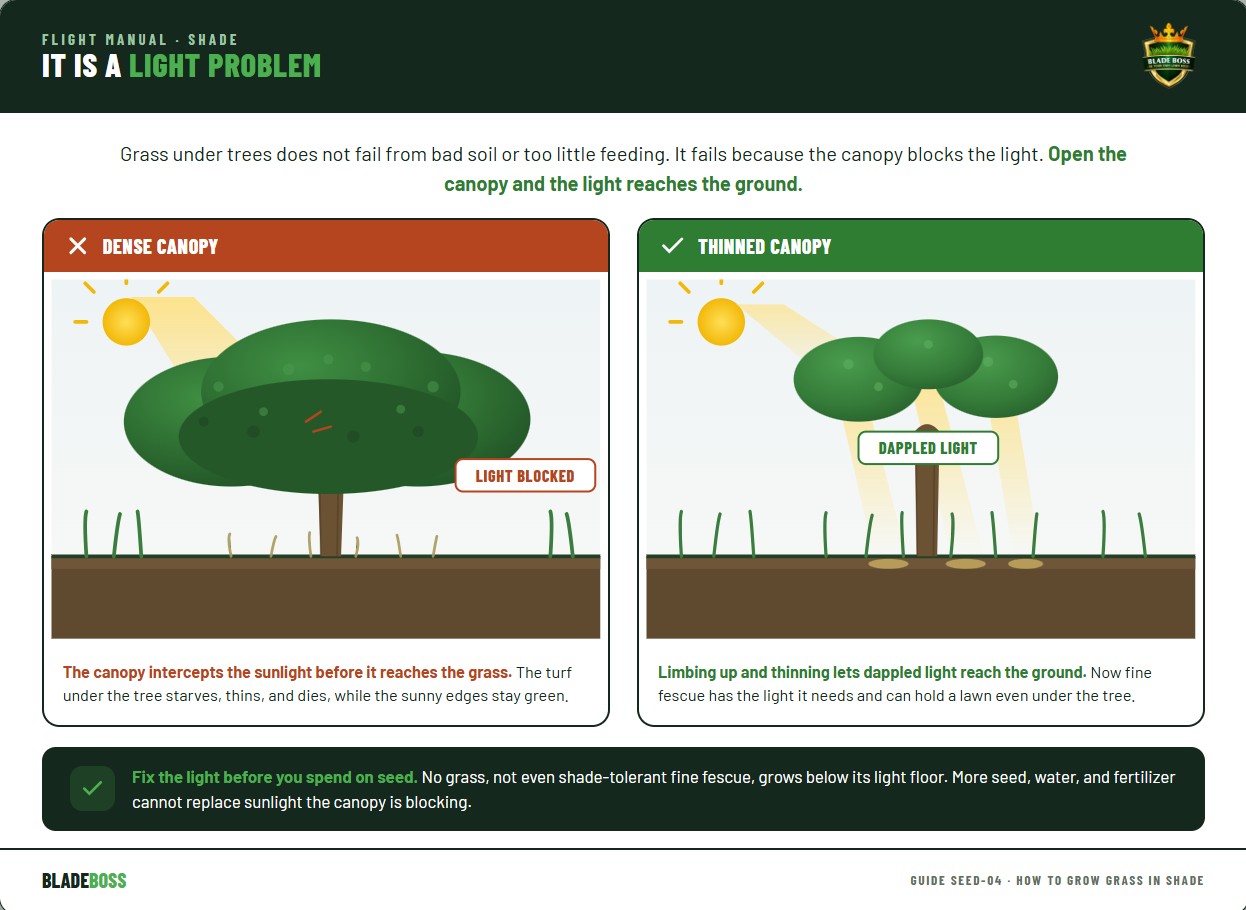
Get More Light In First
This is the step everyone skips and the one that decides everything. Grass in shade is starved of light, so the highest-value move is not seed, it is letting more light reach the ground. Watch the area through a day: full shade all day is a different problem than a few hours of morning sun.
- Thin the canopy: selectively prune or limb up lower tree branches to let dappled light through. You do not need to remove trees, just open the canopy.
- Clear what blocks side light: overgrown shrubs and fence-line growth cast more shade than people realize.
- Keep leaves and debris off constantly: in shade they smother thin grass fast and hold disease.
Plant the Right Grass (Fine Fescue)
Grass type is the whole game in shade. Most lawn seed and most contractor blends are built around sun-loving Kentucky bluegrass, which is exactly why they fail under trees. The one cool-season grass that genuinely tolerates shade is fine fescue, because it simply needs less light to survive than bluegrass or ryegrass do. Even so, it is not magic: fine fescue still wants roughly four hours of filtered or dappled light a day to hold, which is the practical floor for any grass in shade.
Seed the shaded area with fine fescue, or a dedicated shade mix that is heavy in it. A workable shade blend runs at least a third fine fescue, and the more shade you have, the higher that share should be. There are several fine fescues (creeping red, chewings, hard, and sheep fescue), and shade mixes usually blend a few of them, which is fine. If you are overseeding an existing thin shade lawn, matching fine fescue thickens what is holding on instead of adding a grass that cannot survive there.
Mow High and Water Light
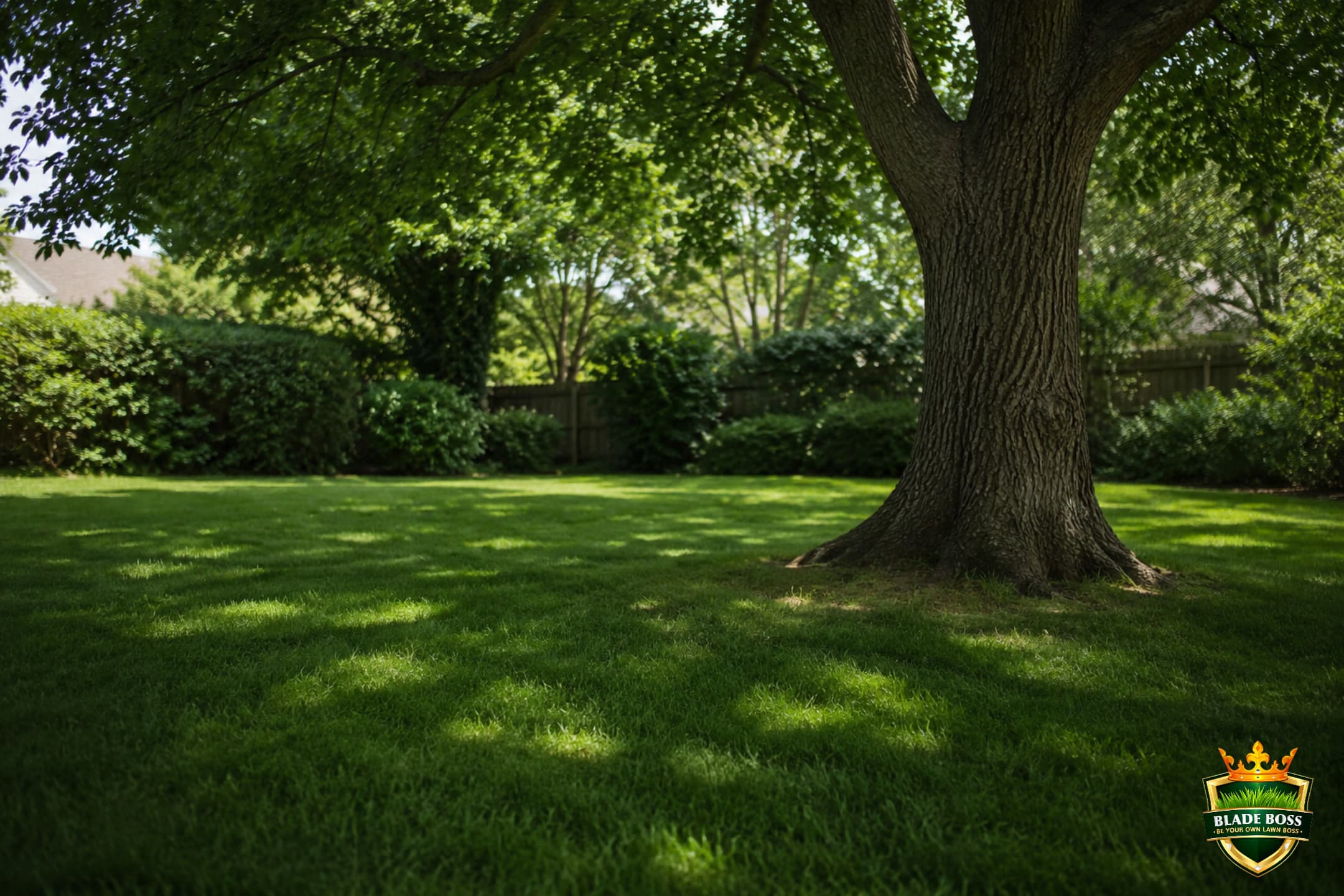
Shade grass lives or dies on how you maintain it, and the rules flip from your sunny lawn. The two that matter most are height and water, and both go the opposite direction from what people expect.
- Mow high: keep shaded grass at the top of its range or higher (think 3.5 to 4 inches). More leaf surface means more of the scarce light captured. Low mowing in shade starves it.
- Water less, not more: shade holds soil moisture far longer and shaded grass transpires less, so it needs noticeably less water than sun. Overwatering a shady spot invites moss and disease.
- Go easy on nitrogen: shaded grass cannot photosynthesize enough to support fast growth, so heavy feeding just produces weak, disease-prone tissue. Feed light.
Know When to Stop Fighting
Here is the honest part almost no one will tell you: there is a light floor below which no cool-season grass survives, and some spots are below it. Deep shade on the north side of the house, dense evergreen cover, the dark ground right against a tree trunk where roots also compete for water: these can be genuinely ungrowable, and reseeding them every year is a slow way to waste money and weekends.
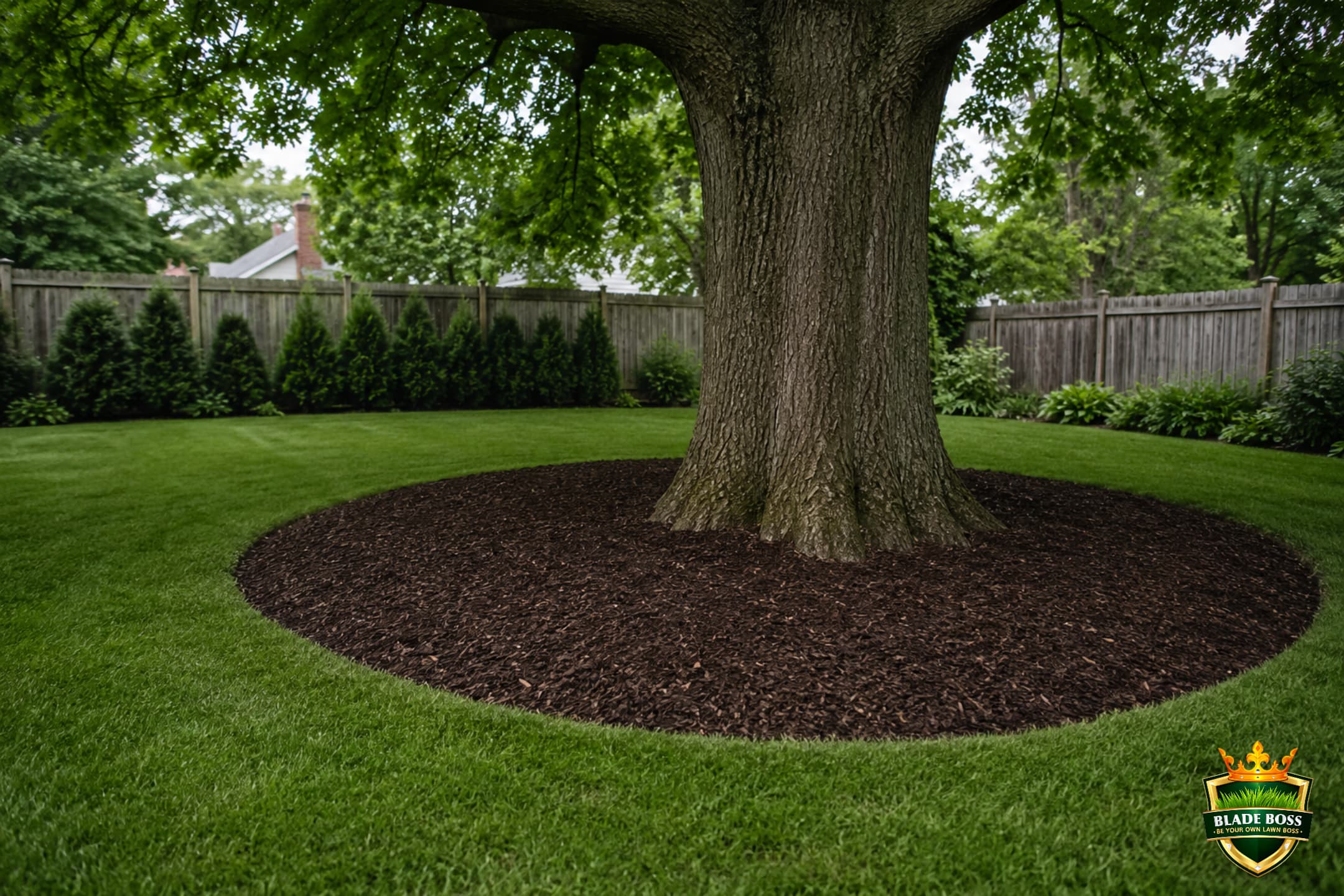
If you have thinned the canopy as much as you reasonably can, planted fine fescue, mowed high and watered light, and the grass still fails after a full season, that spot has told you the truth. The smart move is to change the plan for that area: a shade-loving groundcover, a mulched bed around the tree, flagstone, or a shade garden. That is not defeat, it is matching the planting to the light, which is the same principle that made the rest of the lawn work.
Match a Real Shade Blend in SeedGenius Pro
Shade seeding only works if the seed actually fits the light you have, and most bags on the shelf are the wrong grass for the job. Tell SeedGenius Pro your conditions, how much shade, how much light gets through, your goals, and it matches you to a fine-fescue shade blend and the right seeding rate for that area, instead of a sun mix that is doomed under your trees. Get the light right, then get the seed right.
Open SeedGenius Pro →The Shade Lawn Playbook
Members get the shade light-level reference, the sun-versus-shade care cheat sheet that flips your mowing and watering, and the full shade establishment checklist so you fix the light before you spend on seed.
Open this with a free account →Abort Criteria - Common Mistakes
Mission Complete. Now Fly the Plan.
Shade is a light problem, so fix the light before you spend on seed: thin the canopy, plant fine fescue, mow high, and water light, then use SeedGenius Pro to match a real shade blend to your conditions. And when a spot is truly below the light floor, changing the plan beats fighting it every year. Not sure fine fescue is even what you have back there? Start by identifying your grass type, then overseed it right.
Crew Questions - FAQ
Why won't grass grow in the shade under my trees?
Almost always because of light, not soil or care. Cool-season grass needs a daily minimum of direct or bright filtered light to photosynthesize enough to survive, and a dense tree canopy drops the light below that floor. Tree roots also compete for water and nutrients right around the trunk. That is why feeding and watering harder does not help: the limiting factor is light, so the real fixes are opening the canopy to let more light through and planting a shade-tolerant grass.
What is the best grass seed for shade?
Fine fescue is the best cool-season grass for shade by a wide margin. Its thin, wispy blades and low light and water requirements let it survive under conditions where Kentucky bluegrass, which needs full sun, thins out and dies. For a shaded lawn, plant fine fescue or a dedicated shade blend that is heavy in fine fescue (a good shade mix is at least about a third fine fescue). Matching the seed to the low light is the single most important choice you make.
How much sun does grass actually need?
Most cool-season lawn grasses want several hours of direct sun or bright filtered light per day to thrive, and even shade-tolerant fine fescue needs a real minimum of daily light. Below that floor, in deep or full shade such as the north side of a house or under dense evergreens, no cool-season grass will hold, no matter what you plant or how you care for it. If an area gets a few hours of sun or bright dappled light, it is workable part shade; if it is dark most of the day and you cannot open the canopy, it is time to consider a groundcover instead.
Should I mow shade grass differently?
Yes, and it is the opposite of what most people assume. Shade grass should be mowed high, around 3.5 to 4 inches, because taller blades have more surface area to capture the limited light. Cutting it short removes the leaf area it depends on and starves it. You should also water shaded areas less than sunny ones (shade holds moisture and the grass uses less) and keep nitrogen feeding light, since low light cannot support the fast growth heavy fertilizer forces.
Can I just add more fertilizer to help shaded grass?
No, and it usually backfires. Weak shaded grass is short on light, not nutrients, so adding nitrogen forces the plant to try to grow when it does not have the light to sustain that growth. The result is thin, tender, disease-prone tissue that fails faster. In shade you feed lightly, mow high, and water sparingly. The only feeding that truly helps is more light, which you get by thinning the canopy, not by opening a bag of fertilizer.
What can I plant instead of grass in deep shade?
When an area is below the light floor and grass has failed even with the right seed and care, switch to a planting that suits the shade rather than fighting it. Good options include a shade-tolerant groundcover, a clean mulched bed or ring around the base of the tree, flagstone or a stepping-stone path, or a shade garden with shade-loving plants. This is not giving up: it is matching the planting to the available light, the same logic that makes the sunny parts of your lawn succeed.