
GUIDE PREP-01 · REV A
How to Dethatch Your Lawn
Thatch is the half-inch of dead stems and roots choking your lawn from the soil line up, and once it passes half an inch it blocks water, air, and fertilizer while it hides disease underneath. Dethatching pulls that mat out of the way so everything you do next actually reaches the soil. Do it in the right season, flag your sprinkler heads first, and pull it before you aerate and seed, and it is the single best move for resetting a tired lawn.
Pre-Flight Checklist - What You Need
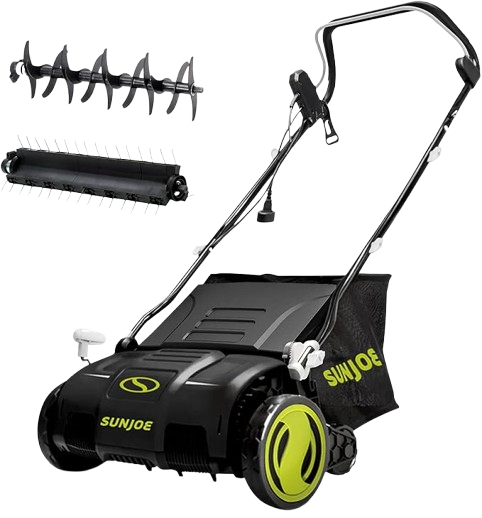
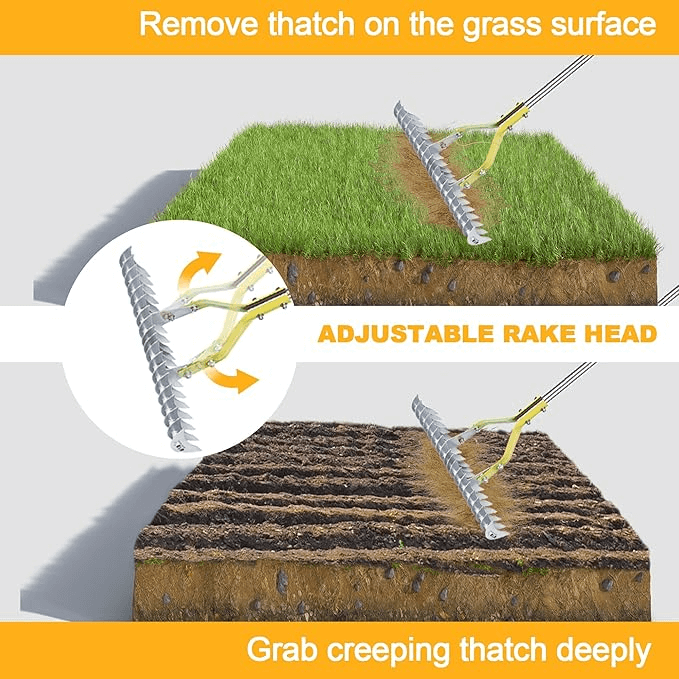
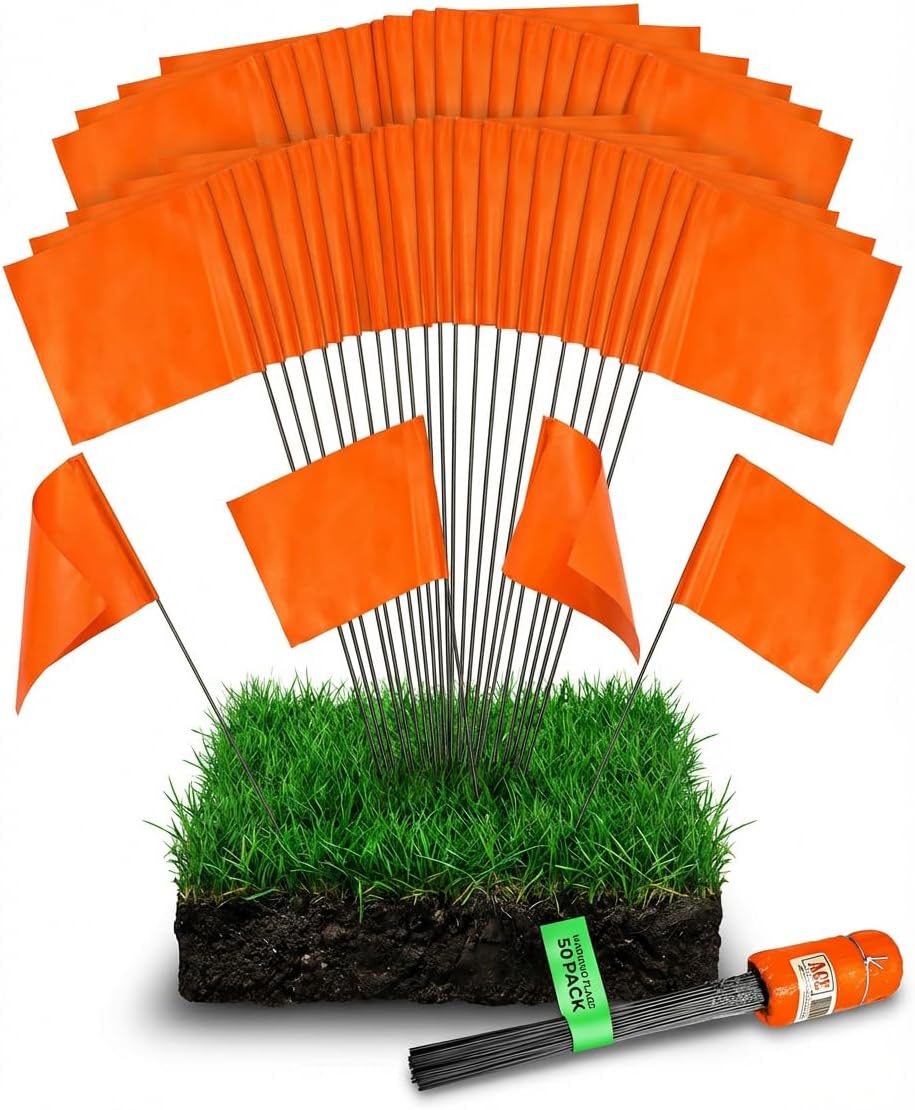
As an Amazon Associate, Blade Boss earns from qualifying purchases. It never costs you a penny more.
Rules of Engagement (ROE's)
The Flight Plan - Step by Step
Confirm You Actually Need It
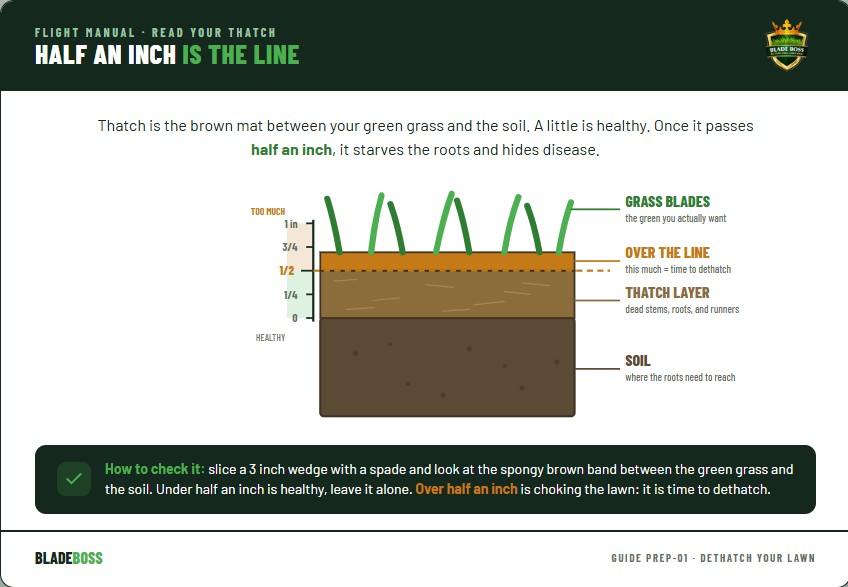
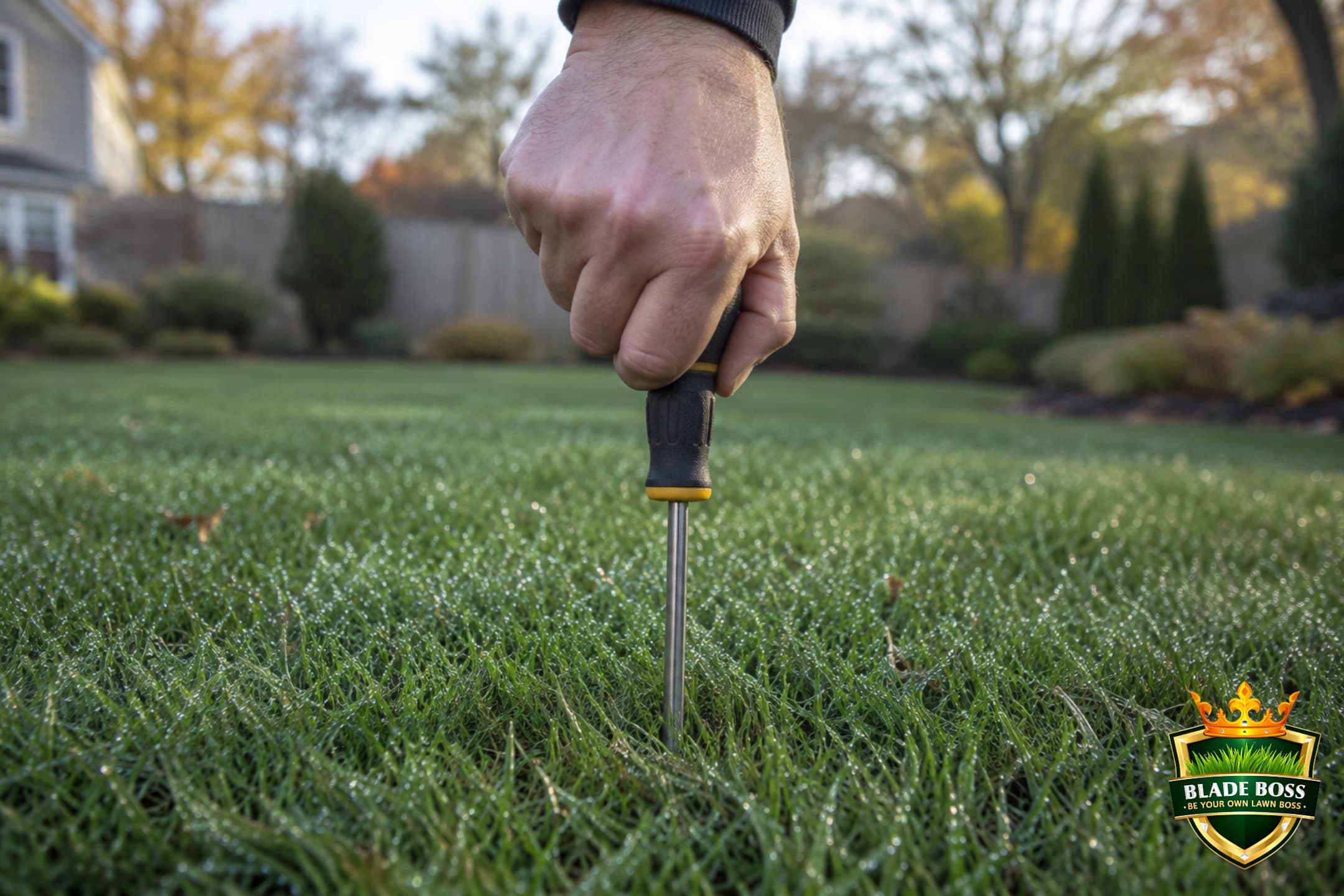
Do not dethatch on a hunch, measure first. Cut a small wedge of turf about three inches deep with a spade and lift it out. Between the green grass and the dark soil you will see a spongy brown fibrous layer. That is your thatch. Under half an inch is healthy, leave it alone. Over half an inch is choking the lawn and needs to come out.
Time It Right
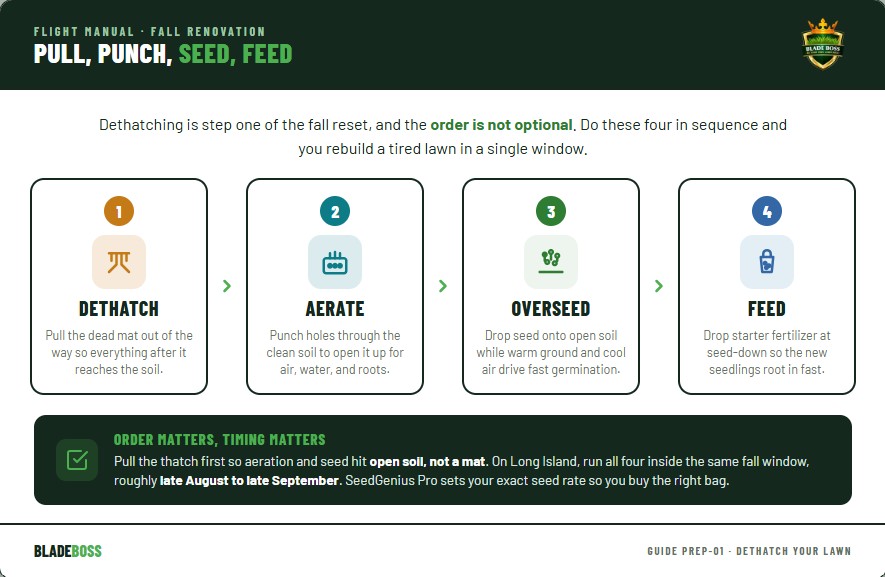
Dethatching is surgery. The lawn only heals if it is actively growing when you do it. For cool-season grass on Long Island that means late summer into early fall, roughly late August through September, or a secondary window in early spring once the lawn greens up and starts pushing.
Water lightly a day or two before so the soil is moist but not soggy. Bone-dry soil fights the tines; saturated soil lets them rip out live crowns along with the thatch. The grass blades themselves should be dry when you run the machine.
Mow Low and Clear the Deck
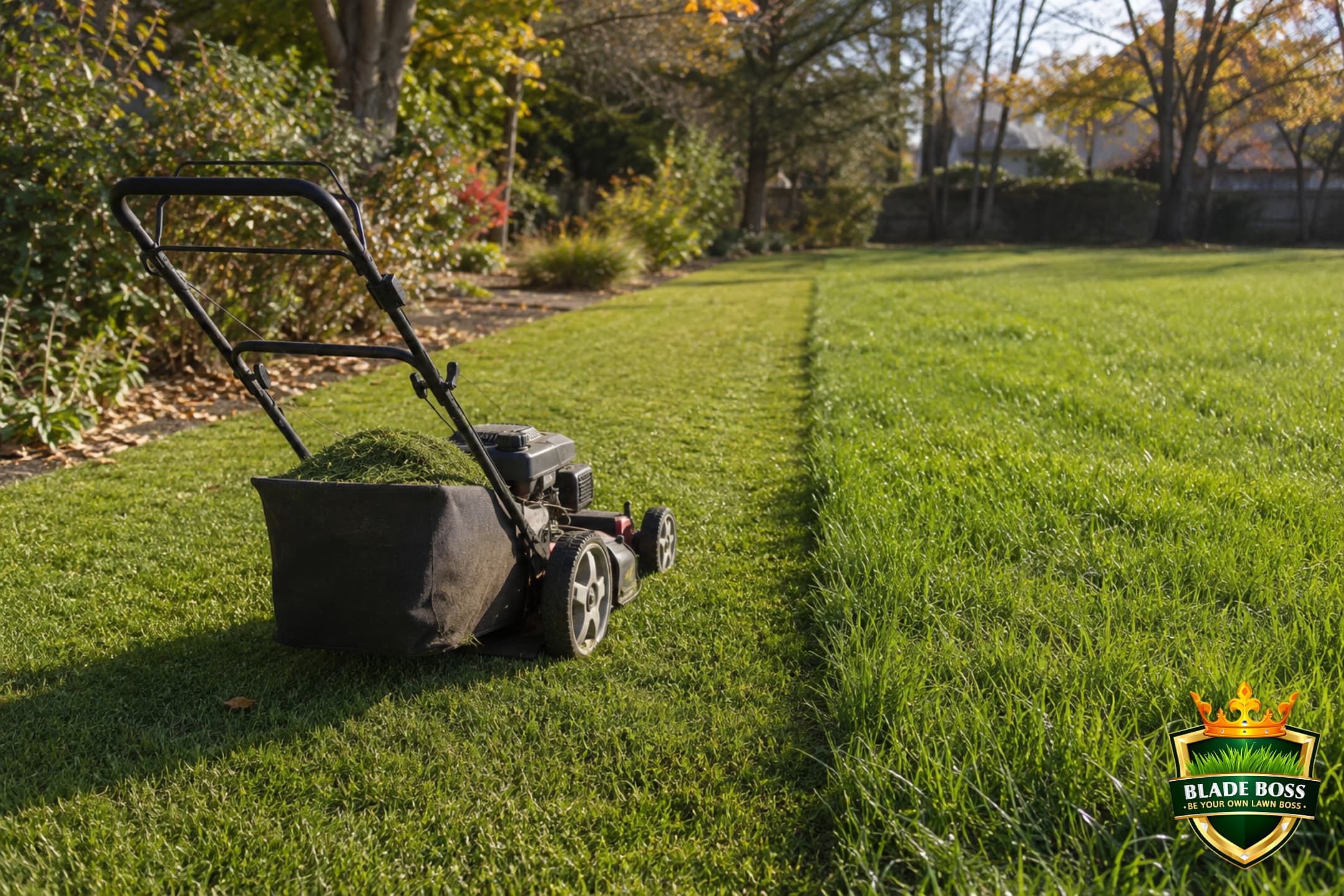
Drop your mower one or two settings and cut the lawn to about one and a half to two inches, roughly half its normal height. This gets the green canopy out of the way so the dethatcher reaches the thatch instead of just combing the grass.
Bag the clippings and clear any sticks, rocks, or toys off the lawn. You want a clean deck before the blades start spinning.
Flag Everything That Can Get Shredded
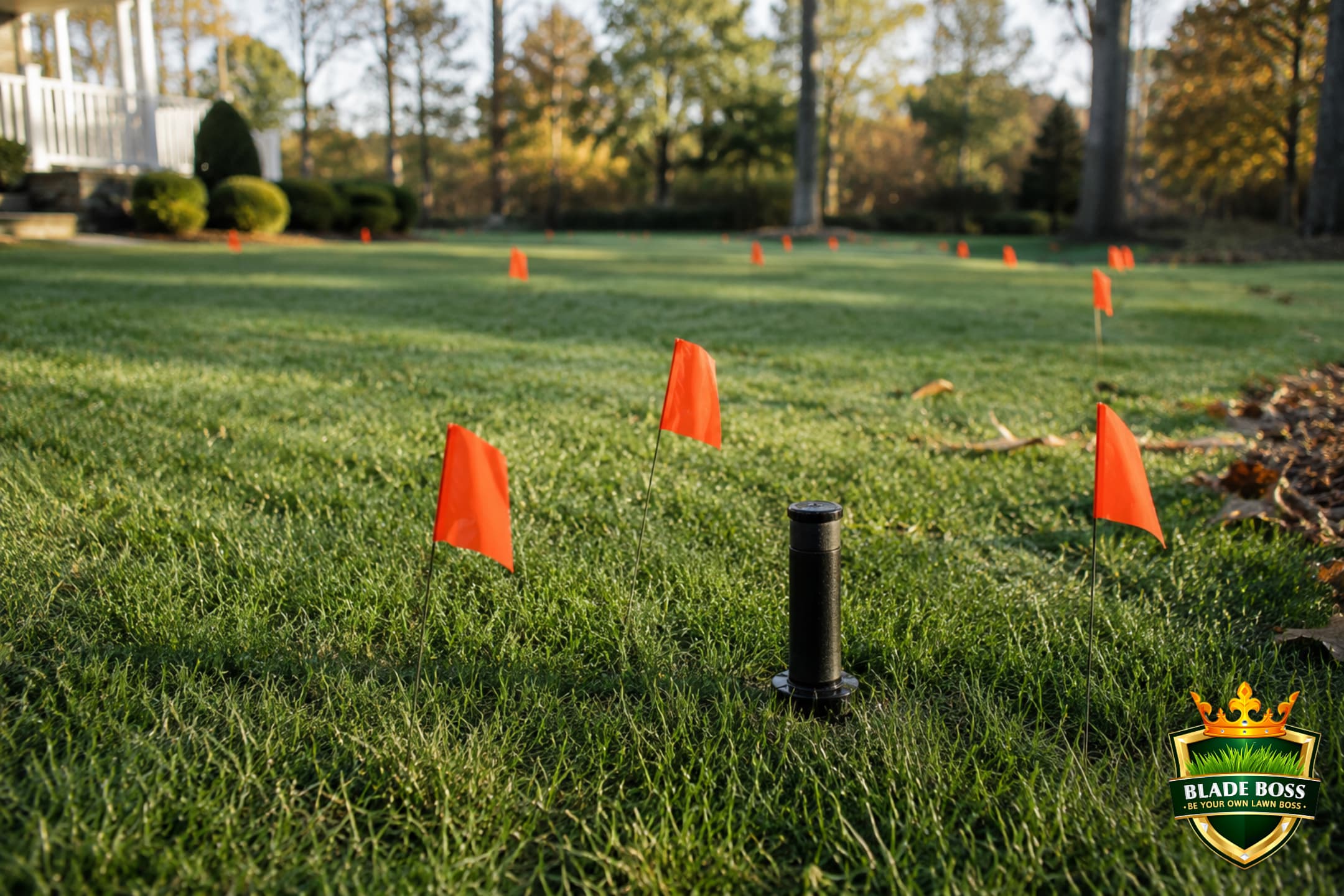
This is the step that saves you a very bad afternoon. Walk the entire yard and drop a marking flag on every sprinkler head, shallow irrigation line, invisible dog-fence wire, and shallow cable or utility line. Run your irrigation zones for a few seconds first so every head pops up and you can see it.
Set Your Depth and Make Your Passes
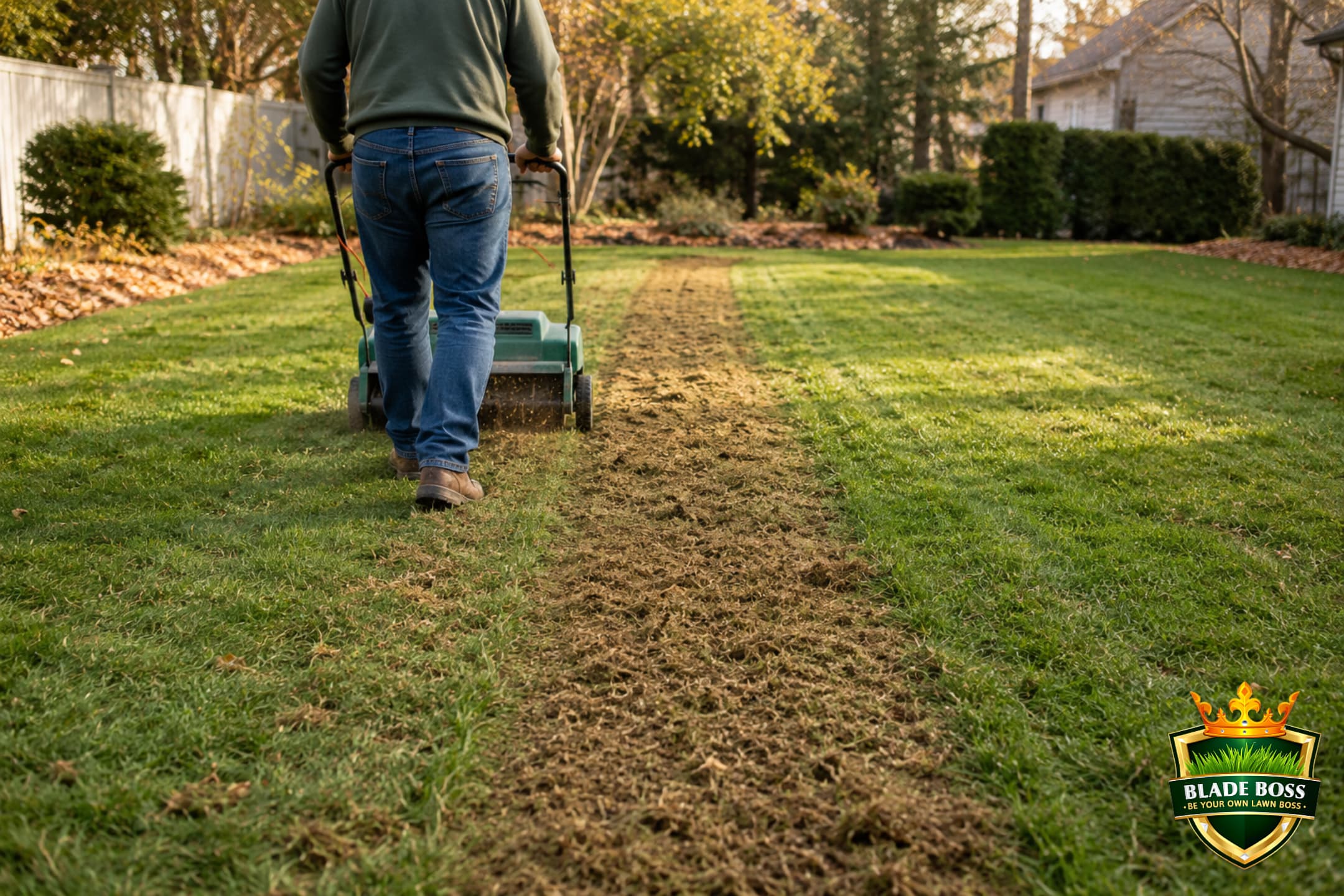
Set the blade or tine depth shallow to start, just deep enough to nick the thatch layer, not to dig into the soil. Run one test strip and look at what comes up. If it is pulling brown thatch, you are set. If it is flinging dirt and green crowns, raise it.
Make one pass across the whole lawn. For a heavy, matted thatch layer, make a second pass at a perpendicular angle, like mowing a checkerboard. A typical homeowner lawn takes both passes and about four hours if you are renting the machine.
Rake Up and Haul Off the Debris
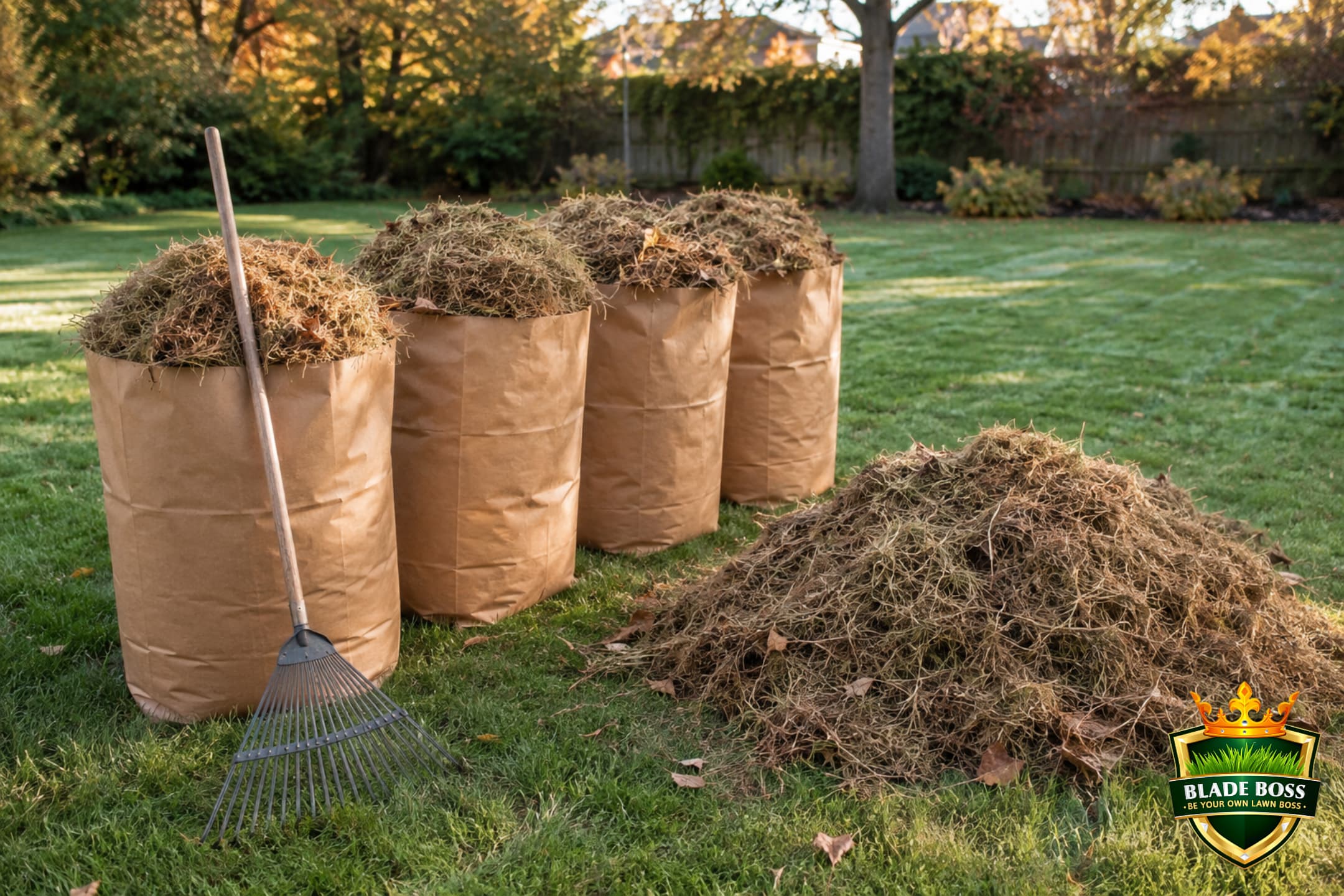
Dethatching pulls up a shocking amount of material. First-timers are always stunned by the pile. Rake it all into rows, bag it or tarp it, and get it off the lawn the same day. Left in place, it mats back down and smothers the grass you just worked to save.
Move Straight Into Aerate, Seed, and Feed
You just built the best seedbed you will have all year: bare soil, exposed and ready. Do not waste it. The correct order is dethatch, then aerate, then overseed, then starter fertilizer, all inside the same fall window. Pulling the thatch first is what makes the aeration and the seed-to-soil contact actually work.
This is exactly where your seeding rate matters. Too little seed leaves bare spots, too much wastes money and causes seedlings to fight each other. Run your numbers before you buy a single bag.
The Zone 7B Fall Renovation Window
Members get the exact Long Island date windows and the full dethatch-to-seed sequence, tied to soil temperature instead of guesswork, plus the printable field checklist.
Open this with a free account →Abort Criteria - Common Mistakes
Mission Complete. Now Fly the Plan.
Pulling the thatch is step one of the fall reset. The payoff comes when you aerate, overseed, and feed that open soil in the same window. Run your exact seeding rate in SeedGenius Pro so you buy the right amount of the right seed for your grass type and zone, and leave no bare spots behind.
Crew Questions - FAQ
How do I know if my lawn needs dethatching?
Cut a three-inch wedge of turf and look at the brown spongy layer between the green grass and the soil. Under half an inch is healthy and should be left alone. Over half an inch is choking the lawn and should come out.
Do grass clippings cause thatch?
No, and this is the most common thatch myth there is. Grass clippings are 80 to 85 percent water and break down within days. Research from Cornell, Rutgers, and Penn State all confirms that mulching your clippings does not increase thatch. It actually helps: mulched clippings return up to a pound of nitrogen per 1,000 square feet per year back to your lawn. Real thatch comes from aggressive rhizome-producing grasses like Kentucky bluegrass, over-fertilizing, and skipping core aeration. Keep mulching.
Should I dethatch or aerate first?
Dethatch first. Thatch is a physical barrier, so you pull it out of the way, then aerate through clean soil and drop seed. Aerating through a thick mat just punches holes in the thatch instead of the soil.
When is the best time to dethatch a cool-season lawn?
During active growth so it recovers fast. On Long Island (Zone 7B) that means late summer to early fall, roughly late August through September, or early spring. Never in summer heat or when the lawn is dormant or drought-stressed.
Will dethatching hurt or kill my grass?
Done at the wrong time or too aggressively, yes. Dethatching in heat or dormancy, or gouging into the soil, tears out healthy crowns. Done during active growth at a shallow depth, the lawn comes back thicker, especially if you overseed right after.
How often should I dethatch my lawn?
Only when thatch exceeds about half an inch, not on a fixed schedule. Bunch-type grasses like tall fescue and perennial ryegrass rarely need it. Aggressive spreaders like Kentucky bluegrass may need it every few years. Measure first, every time.