
GUIDE SOIL-02 · REV A
How to Adjust Your Soil pH (Lime or Sulfur)
Your soil test came back and the pH is off. On Long Island that usually means too acidic, and it matters more than almost any product you can buy, because when pH is wrong the grass cannot even use the fertilizer you are paying for. The fix is straightforward: lime raises a low pH, sulfur lowers a high one, and the right amount comes from your test, not a guess. The one thing you cannot do is rush it. This is how to correct your pH the right way and actually make it stick.
Pre-Flight Checklist - What You Need
As an Amazon Associate, Blade Boss earns from qualifying purchases. It never costs you a penny more.
Rules of Engagement (ROE's)
The Flight Plan - Step by Step
Read Your Number and Pick a Direction
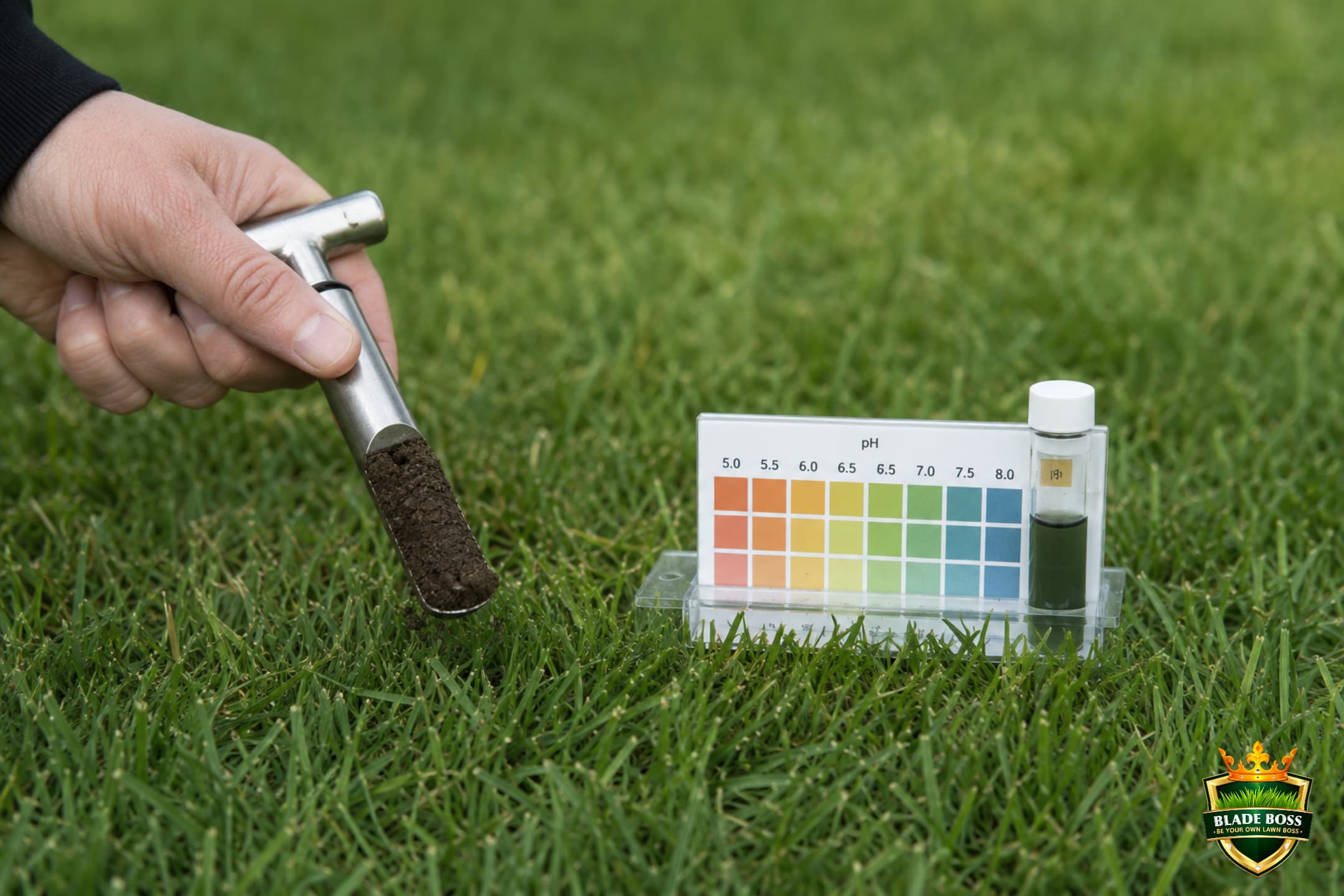
Everything starts with your soil test pH. Cool-season grass wants roughly 6.0 to 7.0, with about 6.5 as the sweet spot. On Long Island this matters because our native soils are naturally acidic (pH 4.5 to 5.5), and even most maintained lawns test around 5.9 to 6.2 from years of past liming, so odds are you need to move up.
- Below 6.0 (acidic): you need lime to raise it. This is the common case on Long Island's naturally acidic soils.
- Above 7.2 (alkaline): you need elemental sulfur to lower it. Less common here, but it happens near concrete, new construction, or heavy wood-ash areas.
- Between 6.0 and 7.0: you are in range. Do not correct pH you do not need to move.

Calculate the Amount (Do Not Guess)
How much product you need depends on how far your pH is off, your target, and your soil type, because sandy soil (common across Long Island) and heavier clay soil respond differently to the same amount. As a real-world anchor, raising pH by one full point on sandy soil takes roughly 15 pounds of ground limestone per 1,000 square feet, and calcitic lime generally runs 15 to 25 lbs per 1,000 per pH unit depending on soil.
Enter your current pH, your target, your lawn size, and your soil type into pH Balance Pro and it does this math for you, giving the exact amount and keeping you from over-applying. It also flags the hard ceiling: never more than 50 pounds of lime per 1,000 sq ft in a single application. If you need more than that, you split it into rounds.
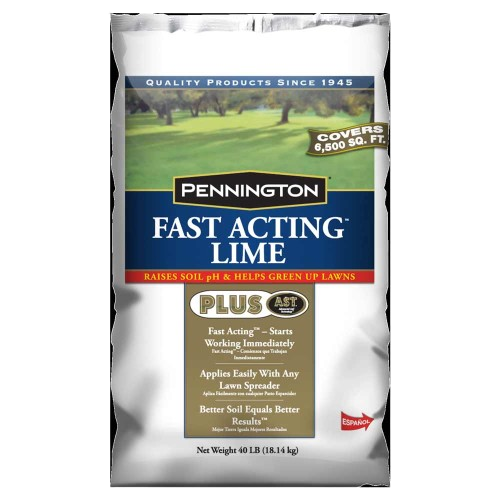
- Calcitic lime: about 36 to 40 percent calcium, very little magnesium. The default choice for most Long Island lawns, which already have enough magnesium.
- Dolomitic lime: about 22 percent calcium plus 12 percent magnesium. Use only if your soil test shows low magnesium, or you can overload it.
- Pelletized (fast-acting) lime: the same material ground finer and pelletized, easier to spread evenly and it reacts faster than powdery ground limestone.
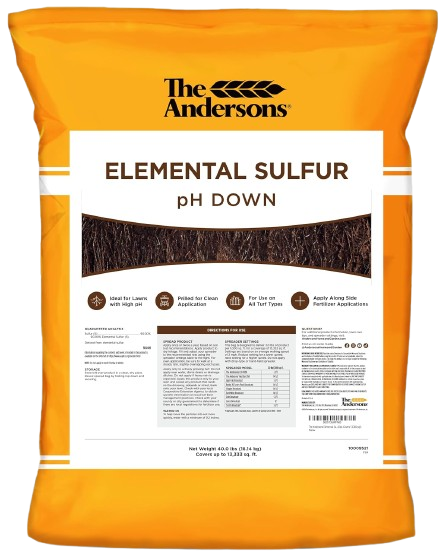
- Elemental sulfur (to lower pH): the tool for alkaline soil, applied at a much lower rate than lime and worked in slowly.
Apply It Evenly and Water It In
Application is just like fertilizing: even coverage with a calibrated spreader, then water it in to kick off the reaction with the soil. Uneven spreading gives you a patchy, blotchy pH, which is as bad as not correcting at all.
- Load a broadcast spreader at the setting for your product and pH Balance Pro's rate.
- Spread in two directions, half the rate each way in a crossing pattern, for even coverage.
- Keep it off hard surfaces and sweep any stray product off walks and drives back onto the lawn.
- Water it in with about a quarter inch so the lime or sulfur starts reacting with the soil instead of sitting dry on top.

Wait, Then Retest Before You Do More
This is the step that separates people who fix their pH from people who wreck it: patience. Lime and sulfur react with the soil slowly, over several months, so the number on your test today is not where your soil will settle. Judging the result too early and reapplying is the single fastest way to overshoot.
Apply, then leave it alone. Fall is the ideal time to apply, because the correction has all winter to react before the growing season, and fall testing lets you correct before spring. Retest the following season (a few months out) before deciding on another round. If you are still low, apply the next capped dose. If you have hit your target, you are done, but retest every year or two, because Long Island acidic conditions and winter road salt slowly pull pH back down over time.
Get Your Exact Lime or Sulfur Amount in pH Balance Pro
The whole correction turns on one number: how much product to apply. Enter your current pH, your target, your lawn size, and your soil type, and pH Balance Pro tells you exactly how much lime or sulfur to spread, and caps it so you do not overshoot. Correct with math, not a guess, and retest before you ever reapply.
Open pH Balance Pro →The pH Correction Reference
Members get the pH target and direction quick reference, the lime-vs-sulfur decision guide, and the full correct-and-retest timeline so you fix your pH once instead of chasing it.
Open this with a free account →Abort Criteria - Common Mistakes
Mission Complete. Now Fly the Plan.
Fixing your pH is one of the highest-payoff jobs on the lawn, because it unlocks every nutrient and every dollar of fertilizer you spend. Read your test, move the right direction, let pH Balance Pro set the amount, apply it evenly, water it in, and then wait and retest before doing more. Slow and correct wins. Want the deeper Long Island rate science, lime types, and timing windows? That lives in our full Long Island soil pH guide. And if you have not tested yet, start with how to soil test. On Long Island, Cornell Cooperative Extension of Suffolk County in Riverhead runs accurate soil tests for about $5 per sample.
Crew Questions - FAQ
How do I raise my soil pH?
You raise a low (acidic) soil pH by applying lime, which is the common need on Long Island's naturally acidic soils. The key is to start from an actual soil test, use a calculator like pH Balance Pro to determine the correct amount for your current pH, target, lawn size, and soil type, apply it evenly with a calibrated spreader, and water it in. Lime works slowly over months, so apply the recommended amount (respecting the per-application cap), then wait and retest the following season before applying any more, rather than adding more too soon and overshooting.
How do I lower my soil pH?
You lower a high (alkaline) soil pH by applying elemental sulfur. This is less common on Long Island but happens near concrete, new construction fill, or heavy wood-ash areas. As with lime, base the amount on a soil test and a calculator rather than guessing, apply evenly, and water it in. Sulfur also works slowly over months, so apply a capped amount, be patient, and retest before deciding whether a second round is needed. Do not try to force a fast, large correction, since overshooting alkaline-to-acidic is just as much of a problem.
What is the ideal soil pH for a lawn?
Cool-season lawn grasses do best in a soil pH of roughly 6.0 to 7.0, with about 6.5 being the sweet spot for nutrient availability. Within that range, the nutrients in your soil and your fertilizer are most available for the grass to absorb. If your pH drifts too far below 6.0 (acidic) or above about 7.2 (alkaline), nutrients get chemically locked up and the grass cannot use them even when they are present, which is why correcting pH is often more impactful than adding more fertilizer.
How long does it take to change soil pH?
Months, not days or weeks. Lime and sulfur react with the soil slowly, so a correction applied now will continue shifting your pH over the following several months. This is exactly why fall is the ideal time to apply, since it has all winter to work, and why you should never judge the result too early. Retest the following season before deciding whether you need another application. The most common mistake is reapplying after a few weeks because nothing seems to have changed yet, which leads to overshooting the target.
Can I add too much lime to my lawn?
Yes, and it is a real problem. Over-liming pushes your soil past neutral into alkaline territory, where nutrients get locked out just as they do in overly acidic soil, so you trade one problem for another. Because pH is hard to pull back once you have pushed it too far, you should always base the amount on a soil test, respect the per-application cap, and split large corrections into rounds with retests in between rather than dumping a big dose at once. Correcting slowly and retesting is how you avoid overshooting.
Should I fix my pH or just add more fertilizer?
Fix your pH first. When soil pH is out of range, the grass physically cannot absorb nutrients efficiently, so adding more fertilizer to a lawn with bad pH largely wastes the fertilizer, since much of it stays locked up and unavailable. Correcting pH into the 6.0 to 7.0 range unlocks the nutrients already in your soil and makes every future feeding more effective. Test first, correct pH if it is off, then build your fertilizer program on top of soil that can actually use it.